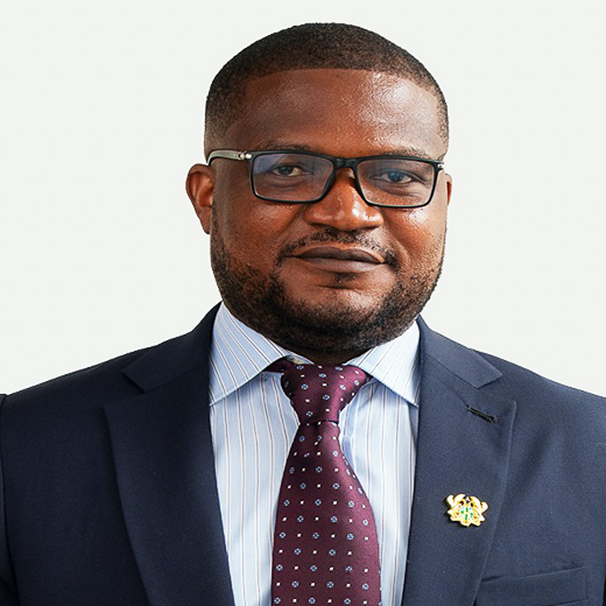
The Chief Executive Officer of the Minerals Commission, Isaac Andrews Tandoh, has mounted a strong call for deeper Ghanaian ownership and control of the country’s mineral resources, questioning whether 70 years after independence the nation has truly taken charge of its mining wealth.
Addressing stakeholders at the ongoing Local Content Summit in Takoradi, the CEO said it was time for the country to confront uncomfortable truths about foreign dominance, regulatory loopholes and the growing menace of “fronting” in the mining sector.
“Seventy years after independence, we must ask ourselves whether we have demonstrated that we are capable of managing our own affairs and taking ownership of our mineral resources,” he stated.
He criticised the practice where foreign interests allegedly hide behind Ghanaian identities to satisfy regulatory requirements while retaining full control and benefits of mining operations. According to him, the phenomenon has significantly contributed to illegal mining activities, popularly known as galamsey.
“More than half of what we describe as skull-job galamsey today is as a result of this unfortunate and unethical practice,” he said, urging Ghanaians who lend their names to such arrangements to reconsider.
“You are not empowering yourself; you are being used to disempower your own people.”
Employment Not Enough
While acknowledging improvements in local employment figures reported by the Ghana Chamber of Mines, the CEO stressed that employment alone does not translate into meaningful participation.
“Some companies now employ up to 40 per cent of their workforce from local communities, and we commend that. But employment is not the same as ownership. Labour is not the same as control,” he emphasised.
Mr Tandoh questioned why Ghanaians continue to hold minimal or no equity in mining projects operating on their own soil, even as companies extract billions of dollars in value.“We watch companies extract billions in value whilst our people hold little beyond the promise of employment,” he lamented.
The CEO also raised concerns about long-term mining leases spanning 15 to 30 years, arguing that such arrangements often restrict future policy flexibility and limit the meaningful benefits accruing to communities.
Reforms Underway
He indicated that the Commission, under the leadership of the sector minister, had begun sweeping reforms to address systemic weaknesses in the industry. Among the measures outlined was the revocation of more than 300 small-scale mining licences that were fraudulently acquired or improperly held. “This was not a political exercise, but a professional one, with all due process followed,” he clarified.
He also revealed that District Mining Committees, as provided under the law, have now been operationalised to ensure that no licence is processed without their input — a move aimed at strengthening local oversight.
In addition, he announced a comprehensive overhaul of the Minerals and Mining Act 2006 and the Minerals and Mining Policy 2014, with new legislative instruments introduced to tighten regulatory loopholes.
Significantly, the Commission has revoked LI 2462, which previously permitted mining in forest reserves.
A new medium-scale mining licence category has also been introduced to bridge the gap between small-scale and large-scale operations, creating expanded opportunities for responsible Ghanaian miners.
Furthermore, the Commission has proposed a new royalty regime aimed at ensuring that the state and host communities capture greater value during periods of high commodity prices.
“When prices are high, this is not about punishing investors,” he explained. “It is about ensuring that when God blesses us with high prices, Ghanaians also share in the blessing.”
Local Content as Strategic Imperative
The CEO underscored that local content provisions would no longer be treated as mere compliance requirements, but embedded as strategic obligations in mining agreements, procurement decisions and employment policies.
“We are ensuring that local content is not a checkbox, but a strategic imperative,” he said, adding that the reforms include tougher in-country procurement rules to support Ghanaian firms.
He reaffirmed the Commission’s readiness to enforce the laws “with no fear or favour,” support genuine investors and empower Ghanaian entrepreneurs willing to meet global standards.
“We are ready to partner investors who see Ghana not merely as a destination for extraction, but a partner in progress,” he declared.
For more news, join The Chronicle Newspaper channel on WhatsApp: https://whatsapp.com/channel/0029VbBSs55E50UqNPvSOm2z