Four Forces That Run This Country, and the One Question Nobody in Power Wants Asked
Stand on Liberation Road in Accra at 7am and watch the city come alive. On one side, you’ll see sleek glass towers, foreign bank headquarters, and luxury apartments that cost GH₲5,000 to GH₲8,000 a month, paid two years in advance. On the other side, a kayayei carries 20 kilograms on their head for GH₲30, a commercial driver struggles with fuel prices that jumped 17 percent, and a student skips lunch to pay transport fare to a university with rising fees.
Same road, same country, different worlds. And the same question hangs in the air that nobody in power wants to answer directly: Who really runs this place?The official answer is Ghana’s elected government. But the honest answer is more complicated and uncomfortable. In Accra, like many African capitals shaped by colonialism, debt, and elite consensus, power doesn’t just live in parliament or the presidency. It lives in four places that rarely appear in election manifestos. Four sets of hands that are always present, almost never photographed, and almost never held accountable. This is their story.
The First Hand: The Men Who Buy the Election Before You Vote
Ghana’s democracy is one of Africa’s most celebrated, with nine consecutive peaceful elections and four transfers of power between rival parties. But every December, when Ghanaians vote for their president, the most important decisions have already been made in private meetings months earlier. Businesspeople, contractors, and party financiers decide how much to invest in a candidate and what they expect in return.
Research shows that campaign expenditures in Ghana’s elections often exceed legal limits, and neither the NPP nor the NDC has ever published complete financial accounts. The Electoral Commission rarely sanctions parties for non-disclosure. This creates a system where the visible democracy is just the front end of a transaction whose back end involves contractors, financiers, and party insiders. The voter chooses the face, but the money chooses the agenda.
Ghana is not the property of NPP or NDC. It is a nation of 33 million people. But we have governed it as though it were a family estate.
The SML scandal, where the former Finance Minister faces 78 counts of corruption, is not an exception. It’s the system working as designed. The invisible hand of political financing doesn’t steal in the shadows; it installs itself in the Ministry of Finance and writes contracts in daylight.
The Second Hand: The Creditors Whose Conditions Govern What No Manifesto Can
Every four years, Ghana’s political parties publish manifestos promising transformation. But these promises are conditional on the permission of institutions that no Ghanaian voted for. The IMF’s Extended Credit Facility, which Ghana entered in 2023 and is now exiting in 2026, contains structural benchmarks that reach into the most intimate corners of economic policy.
None of these conditions appeared on any ballot or were debated in any campaign. They were negotiated in Washington by technocrats and agreed to by Finance Ministers in quiet meetings. When President Mahama says Ghana will never return to the IMF, he’s speaking the language of sovereignty. But when the IMF extends Ghana’s programme, it’s exercising the leverage that debt creates.
Ghana has entered and exited IMF programmes multiple times, in 1966, 1969, 1987, 2003, 2015, and 2023. This pattern is not evidence of failure, but a structural trap: an economy whose export base is too narrow and whose institutions are too weakened to generate domestic revenue. The second invisible hand doesn’t create Ghana’s problems; it manages them and shapes the policy space within which every elected government must operate.
The Third Hand: The Foreign Interests That Extract the Wealth Before It Becomes Yours
Walk through Accra’s streets, and you’ll see the footprints of the world’s economy everywhere. South African banks, French supermarkets, British telecoms, and Chinese construction firms. Of Ghana’s 23 commercial banks, 15 are foreign-controlled. Ghana’s gold is mostly mined by multinational corporations whose profits leave the country.
This is not investment; it’s extraction with a business card. The galamsey crisis has driven one of the most destructive environmental catastrophes in Ghana’s history. Chinese nationals have polluted 60 percent of Ghana’s water bodies, destroyed cocoa farmland, and left rivers running brown with mercury and silt.
The third invisible hand doesn’t hate Ghana; it’s indifferent. It’s here for the gold, cocoa, oil, market access, and cheap regulatory environment. When those conditions change, it will move elsewhere. Ghana must answer whether it will continue to price its sovereignty at the level of what foreign capital is willing to pay or demand that its wealth stays long enough to transform the country.
The Fourth Hand: The Elite Consensus That Ensures the Hands Never Change
The most insidious invisible hand is the one that connects the other three. Ghana’s NDC and NPP have taken turns in power since 1992. They have different backgrounds, supporters, and ways of speaking. However, over the past three decades, they have both been funded by similar business networks, used many of the same contractors for public projects, and had similar relationships with foreign investors and creditors. From the outside, the parties seem different, but from the inside, the system looks very similar.
Oxfam found that one of Ghana’s richest men makes more money from his wealth in a month than one of the country’s poorest women could make in 1,000 years. Ghana’s recent economic recovery has produced impressive numbers, but as Development Economist Cindy Nortey of PIED Africa noted, “Do these good statistics really show the quality of life for Ghanaians?” For most of the 33 million people living outside the wealthy areas, the answer is no.
The cost of living in Accra has risen by nearly 24 percent in the past two years. Rent in areas like East Legon and Cantonments can be as high as GH₲8,000 per month, and landlords often ask for two years’ rent in advance. A student at the University of Ghana struggles to pay rent and buy food. Meanwhile, politicians in Parliament earn GH₲233,000 a year, which is more than enough to pay for a decade of accommodation that the student cannot afford. The fourth invisible hand is the system that allows these two different Ghanas to exist without threatening each other.
It is the agreement among elites to share enough benefits to keep their supporters loyal, enough development to prevent unrest, and enough democratic processes to maintain legitimacy in the eyes of foreign investors and creditors. This hand abandoned projects like the half-built hospital, the old railway, and the frozen factory, not because Ghana lacked money, but because starting new projects was more valuable politically than finishing old ones.
This is not unique to Ghana. Similar invisible hands operate in almost every post-colonial state that gained political independence before economic independence. The names, scandals, and contracts may change, but the structure remains. However, Ghana has something that many of its neighbors do not: working democratic institutions, a free press that exposes the truth when it can, civil society organizations that track the money and publish the numbers, and a public that has shown it will remove governments that betray their trust. These are not insignificant. They are the only tools that can make the invisible hands visible.
The GH₲21 billion audit scandal was made public. The SML corruption charges were filed. The IMF’s conditions are public documents. The galamsey crisis is photographed and published daily. The inequality data exists and is cited. The information is available. What is lacking is not knowledge, but consequences.
Until the invisible hands face real consequences, such as prosecution and enforcement, and accountability that lasts beyond the next election, they will continue to pull the strings in Accra. And the kayayei on Liberation Road will keep carrying the weight.
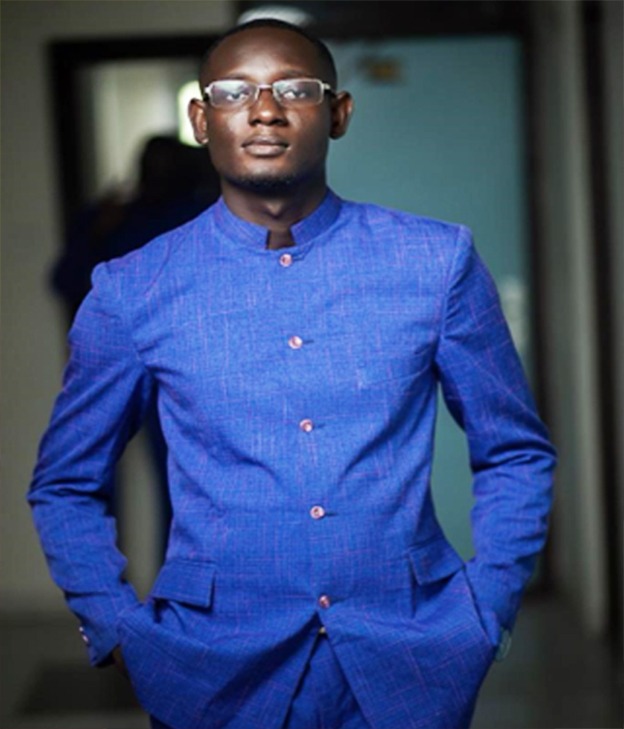
By Obed Kog
The author is a Graduate Student in International Relations and Diplomacy, GIMPA, and Public Policy Analyst.He is also a Ghanaian researcher focused on international relations, diplomacy, trade, and development policy.
For more news, join The Chronicle Newspaper channel on WhatsApp: https://whatsapp.com/channel/0029VbBSs55E50UqNPvSOm2z