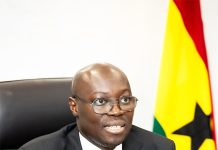
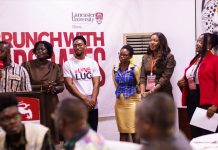
The President of the Western Regional House of Chiefs (WRHC), Nana Kobina Nketiah, has delivered a passionate call for a “people-centered revolution” in Ghana’s mining sector, urging stakeholders at the Local Content Summit 2026 in Takoradi to pursue bold reforms that will ensure the country’s mineral wealth truly benefits its citizens.
Addressing participants under the theme: “Strengthening Local Content and Indigenisation; Building a Resilient Mining Sector in Ghana,” Nana Nketiah declared that the gathering must be “ground-breaking,” warning against what he described as “intellectual sterility”, at a time when history is watching.
“If you are not here for a revolution, then we better as well leave,” he said, recounting his excitement upon being invited to serve at the summit.
Quoting the late Burkinabè leader, Thomas Sankara, he noted that “you cannot carry out fundamental change without a certain amount of madness,” stressing that stakeholders must be “mad for Ghana” in their quest to transform the mining industry.
Nana Nketiah emphasised that while mining has long been a mainstay of Ghana’s economy and a significant contributor to national revenue, host communities continue to grapple with poverty.
“The wealth of the land must first feed the children of the land,” he stated, echoing sentiments often expressed in mining communities across the Western Region.
Referencing historic mining towns such as Tarkwa, Prestea, Bogoso and Nsuta, as well as Obuasi, he described them not as mere geographical locations, but as pillars of Ghana’s economic history.
Yet, he lamented, many of these communities show little evidence of the wealth extracted from their soil. “The gold leaves, but it leaves poverty behind. It cannot go on like this,” he stressed.
Drawing inspiration from Ghana’s first President, Kwame Nkrumah, Nana Nketiah recalled the phrase – “the paradox of poverty in the midst of plenty,” arguing that the Western Region cannot continue to sit on gold, while its people struggle.
He also invoked the example of Martin Luther, whose historic reform movement began on February 18, to illustrate that transformative change often requires courage and conviction.
The WRHC President challenged participants to clearly distinguish between “investment” and “exploitation” in the mining sector.
According to him, true investment uplifts communities and builds capacity, while exploitation merely extracts resources for profit without leaving sustainable development behind. He further underscored the importance of indigenous ownership and participation, noting that deeper local linkages would reduce capital flight and strengthen domestic industrial capacity.
Education, he said, must also serve community advancement rather than individual gain. “If your education is about you and that is all, then you have been poorly educated,” he remarked.
Nana Nketiah observed that across Africa, a renewed consciousness is emerging, with leaders advocating economic sovereignty and greater control over natural resources. Ghana, he said, must not allow its wealth to be controlled by external interests, but rather harness it for national development.
He concluded by urging stakeholders to remain hopeful and committed to building a mining sector anchored in justice, equity and resilience.
“What you build with your own hands will stand much longer than what is given to you,” he said.
The maiden Local Content Summit 2026, being held in Ghana’s gold-producing Western Region, continues with deliberations aimed at redefining local participation and strengthening Ghana’s mining sector for generations to come.
For more news, join The Chronicle Newspaper channel on WhatsApp: https://whatsapp.com/channel/0029VbBSs55E50UqNPvSOm2z