For many residents of Aboso, the three-wheeled tricycle popularly known as Pragya is more than just a means of transport—it is a daily lifeline. From early morning market runs to late-night trips home, these riders keep the community moving. But behind the convenience lies a growing concern over safety.
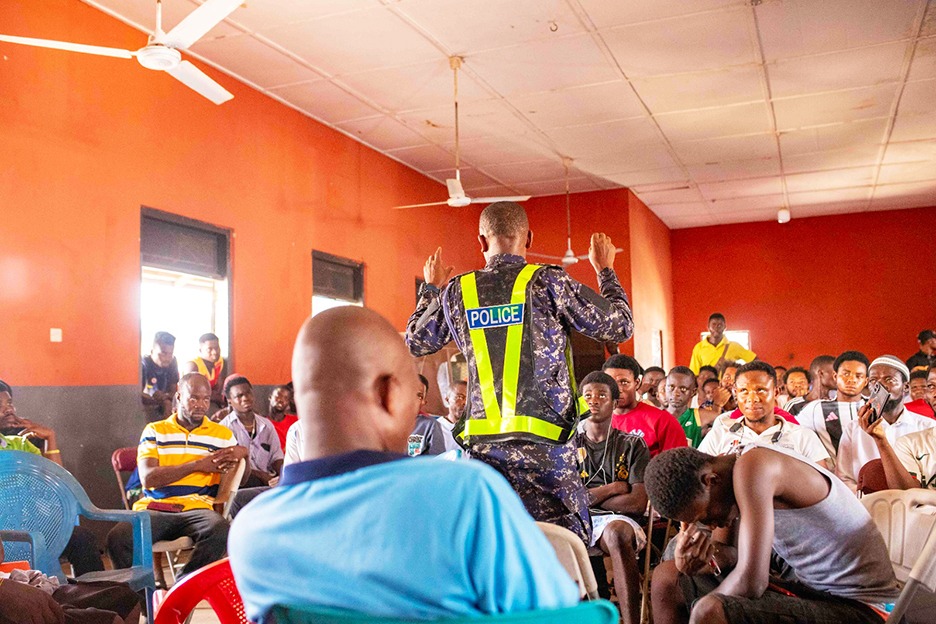
Last Friday, that concern took centre stage as the Gold Fields Ghana Foundation, in collaboration with the National Road Safety Commission (NRSC) and the Motor Traffic and Transport Department (MTTD) of the Ghana Police Service in Tarkwa, organized a road safety awareness programme for Pragya operators in the community.
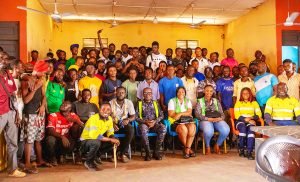
A total of 121 riders gathered under the Aboso Pragya Association, not just to listen, but to reflect on their role in keeping themselves and their passengers safe. For many of the riders, the training was personal.
“I ride every day to feed my family,” one participant shared quietly after the session. “If anything happens to me, they suffer. So this training has opened my eyes.”
The workshop focused on practical safety measures often overlooked in the rush to make daily earnings. Facilitators stressed the importance of proper licensing and registration, consistent use of helmets and protective gear, and strict adherence to speed limits. They also addressed the dangers of riding under the influence of alcohol or drugs—habits that have contributed to avoidable accidents in many communities.
Speaking at the event, Safety Officer of the Gold Fields Ghana Foundation, Mr. Peter Owusu, delivered a message that resonated deeply with the riders.
“Your life is valuable, beyond the work you do, there are families who depend on you. Prioritizing safety is not just about you—it is about those waiting for you at home.”
His words were echoed by the Regional MTTD Commander in Tarkwa, Mr Joseph Akpaloo, who did not mince words about the consequences of negligence on the road.
He pointed out that many accidents involving tricycles stem from preventable mistakes, describing such behaviours as unacceptable. He assured participants that the Ghana Police Service in Aboso would intensify enforcement to curb traffic violations and reduce accidents.
The training ended on a hopeful note, with a renewed commitment from both riders and authorities to work together towards safer roads.
For Aboso, where Pragya riders are an essential part of everyday life, the message was clear: safety is not a luxury—it is a responsibility. And for the men behind the handlebars, every careful ride is a step toward protecting not just passengers, but their own futures.