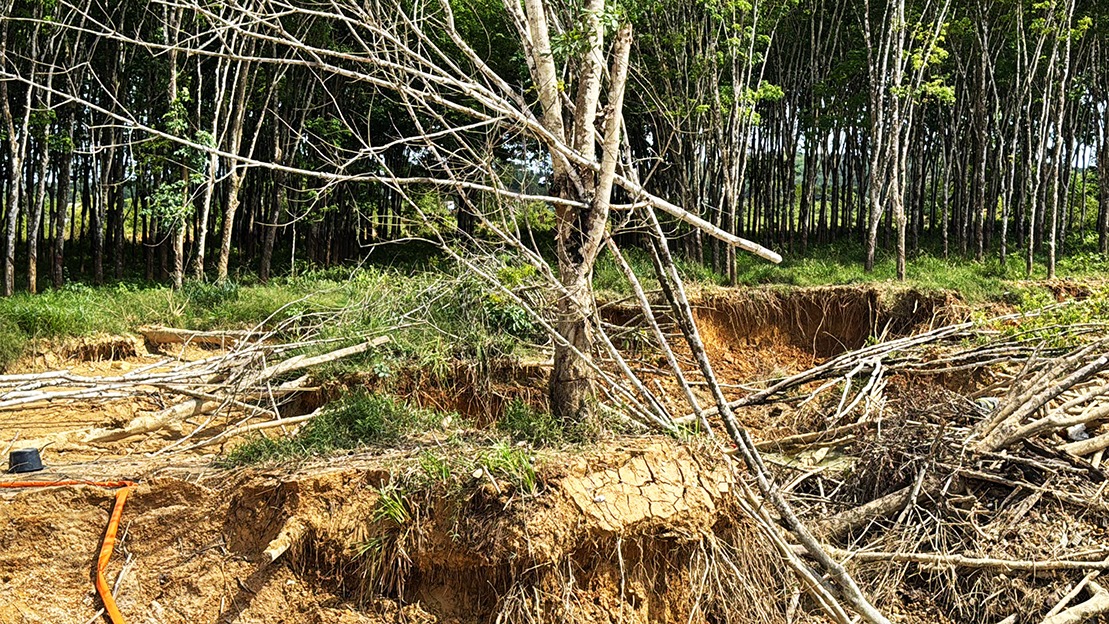
What should have been a thriving expanse of carefully cultivated rubber trees has been reduced to a landscape of scars and destruction, as illegal mining continues to ravage the Ghana Rubber Estate Limited (GREL) plantation in the Western Region.
Across the plantation, the signs of devastation are unmistakable. Deep, gaping pits cut through the once fertile land, filled with murky water and abandoned tools of illegal miners. The orderly rows of rubber trees that once defined the estate have been violently disrupted – uprooted, chopped down, and in many places, completely wiped out.
In some sections, only stumps and exposed roots remain, clear evidence of the scale of destruction. Plantation managers estimate that more than 10,000 rubber trees have been destroyed, erasing years of careful investment and growth in a matter of months.
Beneath what still appears, from afar, to be a green canopy lies a hollowed-out landscape where illegal miners have tunnelled and dug extensively in search of gold. The damage goes beyond the visible loss of trees. The soil structure has been severely compromised, making future cultivation difficult and, in some areas, nearly impossible.
For workers and management of GREL, the impact is both economic and emotional. Entire sections of productive farmland have been lost, threatening livelihoods tied to the plantation and disrupting the supply chain of rubber production.
The company’s Corporate Affairs Manager, Perry Acheampong, describes the situation as overwhelming. Despite daily efforts to drive out illegal miners, he says they continue to return, leaving behind fresh destruction each time.
According to him, more than 70 separate illegal mining incidents were recorded within the plantation in just the first quarter of the year, underscoring the relentless nature of the incursions.
Beyond the immediate loss of trees, the long-term implications are dire. Rubber trees take several years to mature before they can be tapped, meaning the destruction represents not just present loss, but also future revenue wiped out. Replanting efforts will require significant time and resources, with no guarantee that restored areas will fully recover due to soil degradation.
The environmental cost is equally severe. The unchecked digging has left the land vulnerable to erosion, while stagnant water in abandoned pits poses risks to both human safety and local ecosystems. The Corporate Affairs Manager expressed his heartfelt appreciation to the Western Regional Minister, Joseph Nelson, for the swift manner and the NAIMOS team for the swift response.
It is against this backdrop that calls are intensifying for authorities to act decisively. GREL is urging the police and the Judicial Service to expedite the prosecution of arrested illegal miners, arguing that delays in the justice system are emboldening perpetrators.
A recent visit by the Western Regional Security Council (RESEC), led by Regional Minister, Joseph Nelson, revealed the full extent of the destruction. Visibly disturbed by the scene, he warned that such attacks on critical national assets would not be tolerated.
Meanwhile, the Director of Operations at the National Anti-Illegal Mining Operations Secretariat (NAIMOS), Colonel Dominic Buah, has indicated that plans are far advanced to deploy personnel to the area, raising hopes of a more sustained crackdown on the illegal activities.
For now, however, the plantation remains under siege – its once orderly rows of rubber trees steadily giving way to the chaos of illegal mining, and with each passing day, the cost of inaction becoming more profound.