Home Blog Page 2544

DR Congo reports Rwanda to Ghana over conflict

0
A guard in his honour

The Democratic Republic of Congo (DRC) has reported Rwanda to Ghana, accusing its neighboring country of funding the insurgency against it. According to the DRC, fact-finding reports have indicted Rwanda for its role in the political instability.

Both Presidents in a meeting at Jubilee House

The President of the DRC, Felix-Antoine Tshisekedi Tshilombo, made the report to President Akufo-Addo on Thursday, October 20, 2022 when he visited Jubilee House, as part of his official visit to Ghana, which ends today.

Addressing President Akufo-Addo and his officials, as well as some ministers, including the Minister of Foreign Affairs and Regional Integration, the DRC President wants Ghana to take the matter to the United Nations. He wants the United Nations to sanction Rwanda for the said accusation.

The DRC is embarking on this move because Ghana represents the continent on the Security Council of the United Nations.

Another concern was the embargo placed on the DRC, preventing it from importing arms and ammunition. The country wants Ghana to put in a word at the UN Security Council for the embargo to be lifted.

Felix-Antoine is worried the DRC will not be able to fight the insurgence without ammunition, which is the reason why the country wants the ban lifted.

WELCOME

President Akufo-Addo’s remarks preceded those of his counterpart, in which he recalled the longstanding relations between the two countries.

President Akufo-Addo spoke of the security issues confronting the continent and opined that they create an opportunity for the two countries to work together to rid the continent of the menace.

At the meeting, whose opening included the Presidential Press Corps, Ghana’s President did not respond to the accusation or the demand.

It is, however, unknown what further transpired as the meeting moved into conclave, after the opening remarks and then ended with the signing of the visitor’s book, before he departed Jubilee House.

The DRC President had earlier inspected a guard of honour mounted by the Navy. The national anthems of both countries were played, accompanied by gun salutes.

READ WORLD BANK’S OVERVIEW BELOW

The Democratic Republic of Congo (DRC), about the size of Western Europe, is the largest country in Sub-Saharan Africa (SSA). DRC is endowed with exceptional natural resources, including minerals such as cobalt and copper, hydropower potential, significant arable land, immense biodiversity, and the world’s second-largest rainforest.

Most people in DRC have not benefited from this wealth. A long history of conflict, political upheaval and instability, and authoritarian rule have led to a grave, ongoing humanitarian crisis. In addition, there has been forced displacement of populations. These features have not changed significantly since the end of the Congo Wars in 2003.

DRC is among the five poorest nations in the world. In 2021, nearly 64 % of Congolese, just under 60 million people, lived on less than $2.15 a day. About one out of six people living in extreme poverty in SSA lives in DRC.

Political Context

In 62 years of independence, DRC did not experience its first peaceful transition of power until January 2019. Félix Antoine Tshisekedi Tshilombo, son of Etienne Tshisekedi, the country’s longstanding opposition leader, won the December 2018 presidential election and succeeded Joseph Kabila, who had led the country for 18 years.

There are indications that a new social contract may be emerging between the state and its citizens, through the roll-out of free primary education, increased transparency and public sector reforms, and an emphasis on conflict prevention and stabilization in the East.

However, despite conflict prevention and stabilization efforts, pockets of insecurity still persist in the country, particularly in the eastern region. The country is preparing for the next general election which is slated for late 2023.

The smooth running of the election could allow the country to continue on the path of political stability and to pursue the necessary reforms to enable most of its people to benefit from the enormous potential that the country abounds.
Africa should leverage fossil fuels towards a more practical transition -GNPC Boss

0
Africa

Mr Opoku A. Danquah, Chief Executive of Ghana National Petroleum Corporation (GNPC) says Africa should not be pressured into transitioning at the pace of the West but should leverage its fossil fuels towards a more practical transition. He said the continent’s energy needs should determine the way it secures and uses capital.

Mr Danquah made the call during a presentation at the African Energy Week (AEW) in Cape Town, South Africa. AEW is the African Energy Chamber’s annual event, uniting African energy leaders, global investors and executives from across the public and private sectors for four days of intense dialogue on the future of the African energy industry.

An interactive conference, exhibition and networking event, AEW was established in 2021 under the premise to make energy poverty history by 2030, hosting panel discussions, investor forums, industry summits and one-on-one meeting opportunities, and driving the discussions that will reshape the trajectory of the continent’s energy development.

Mr Danquah said, beyond the energy transition, access to funding for fossil fuel projects in such a volatile industry would only become more difficult.

He said the energy transition had a broad overwhelming consensus due to the global nature of its main drivers namely the ramifications of climate change, technological advancements in providing cheaper and cleaner energy and geopolitical response to public opinion.

The CEO said, according to Climate Watch, 76 per cent of global CO2 emissions come from the energy sector and in this regard, there was a clear global drive to move away from fossil fuel production to achieve Net Zero emissions by 2050.

The International Energy Agency’s (IEA) current Net Zero Emissions scenario forecasts that the global energy mix will comprise 58.98 per cent and 41.02 per cent fossil fuels by 2050.

He said this represented an astronomical movement from their 2020 numbers recorded under the same scenario and at the same time energy investment trends were tracking these perspectives.

Mr Danquah said the IEA’s 2022 World Energy Investment Report highlighted a 42 per cent fall in global upstream oil and gas investment from around US$680 billion in 2015 to US$395 billion in 2021.

Similarly, global investment in renewable power has seen a 67 per cent rise from US$310 billion to US$520 billion in the same period.

Africa is expected to play its part in decarbonising its energy industry in the face of a potential decline in fossil fuel demand, price, and investment over the medium to long term.

“This pressure to move at the global pace of transition is very real,” he said.

Between 2016 and 2021, US$132 billion was invested in African fossil fuel projects and 87 per cent of this came from the Global North (North America, Europe, and Australia) and Asia.

Additionally, non-African companies are projected to control 67 per cent of African production between 2020 and 2050, if our policies do not change.

The CEO said every dollar of public financing going to fossil fuels had an outsized impact, attracting more private-sector finance and African governments needed to invest their fair share.

He said regional fossil fuel collaborative developments and trade, especially natural gas projects, could catalyze and grow financing by reducing risk and increasing project attractiveness.

Mr Danquah said the financial sector participation among African Oil and Gas companies should be encouraged and incentivized to enable access to new capital through equity financing and debt instruments.

He said Africa must seek greater control of its assets and encourage more financing from within the continent and less from without to support oil and gas projects.

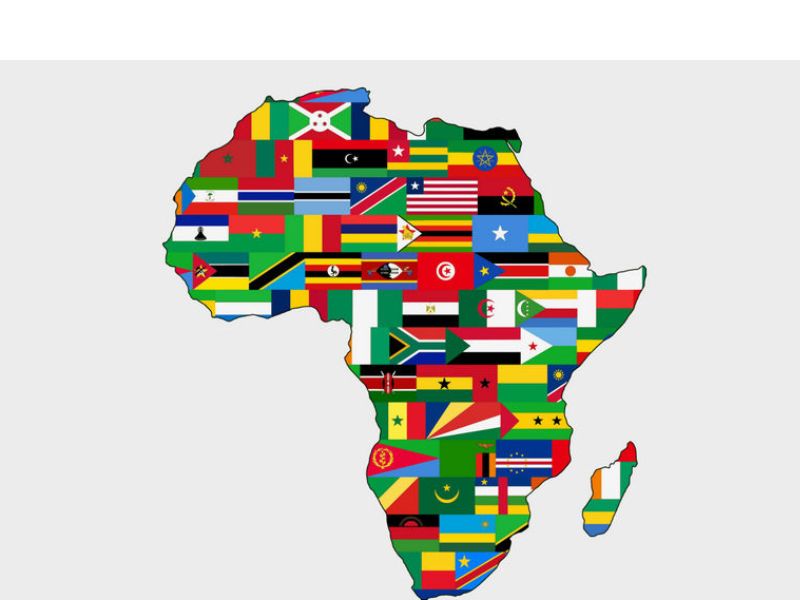
The CEO said in sharing the burden of reduced emphasis on fossil fuels, it must be noted that, the whole of Africa contributes just about 3.8.per cent of global carbon dioxide (CO2) emissions.

These small contributions underscore how little impact this region has on climate change compared to 32 per cent of global emissions produced by China in 2020 and 13 per cent produced by the United States in the same year.

He said Africa would need to improve the cost competitiveness of its projects to offer attractive risk-reward profiles to prospective financiers and Governments could use fiscal regimes as a key lever to reduce high initial cost outlays.

He said incentives such as tax exemptions on oil and gas services and imports for new projects could lower front-end costs.

GNA

Samira fights for empowerment of women

0
Dignitaries at the gathering

The Second Lady, Samira Bawumia, yesterday urged the Ghanaian media to encourage and foster safe space for women to freely express themselves.

“This is a reality we cannot run away from, but the solution is not to ignore those who shy away when given the platform. We need to keep trying; provide encouragement and foster a safe space for women to freely express themselves,” she charged.

The Second Lady was speaking at the opening ceremony of the West Africa Media Excellence Conference and Awards (WAMECA) 2022, under the theme, “Media and Women Empowerment” in Accra.

According to her,  there were increasing and conscious attempts by the media to ensure women’s inclusion and balance in programming, and the media were now increasingly conscious of women’s issues, and some were taking practical steps to be gender sensitive and tackle stereotypes.

She noted that there were several factors, including socio-cultural, that inhibit women’s participation in the media, and that there was the need for collective solution to the problem.

“On this issue, some female newsmakers have indicated that the times when morning shows and late evening discussions are held are probably the times they are most likely to prepare their children for school or for bed. Even in this era of virtual appearances on media programmes, not every woman has the luxury of speaking from their home,” Samira Bawumia bemoaned.

Another reason, she said, “is how female newsmakers are framed and reported about. Not many women can endure the insults, sexism, and some stereotypical news angles customised for only female newsmakers. Being a woman in the media limelight I know exactly what they go through and I empathise with all the challenges women have to endure and the difficult decisions required of them.”

The Executive Director of Media Foundation for West Africa, Sulemana Braimah, in his welcome address, noted the importance of involving women in all roles in life and not discriminating against them.

“The building of better societies begins with the empowerment of women. Therefore, the ongoing talks of rebuilding and confronting the challenges of our time, will lead us nowhere if we continue to shut the door to women and fail to have their voices, ideas and power in the rebuilding efforts,” he said.

Mr. Braimah further added that changing the dynamic to empower women begins with amplifying the voices of women as there is the need to let the views and ideas of women be heard, acknowledged and known by all.

He also said there was the need to create fair and equitable opportunities for women to compete and succeed on the basis of the superiority of their views and ideas. One key enabler of women empowerment, he noted is the media as it remains the most powerful tool for information dissemination and a powerful agenda setter.

The media in Africa, according to the Executive Director, were among the culprits of women disempowerment. “Women’s voices make up less than one quarter of those whose views and voices are heard in the news media. Women make up just about 22% of news sources in Africa. Coverage of women in top positions remains characterised by stereotypes and controversies.” he said sadly.

Background

The Media Foundation for West Africa (MFWA) is hosting the 6th edition of its flagship programme, the West Africa Media Excellence Conference and Awards (WAMECA) from October 20 to 22, 2022 in Accra.s

The WAMECA is an initiative of the MFWA to promote media excellence in the sub-region annually. It brings together media practitioners, academics, civil society activists, representatives from government, ECOWAS and the diplomatic community to reflect on the challenges and changing trends in the area of free expression, media development and access to information across West Africa.

Ports being choked with State-Owned Agencies consignments -GSA

0
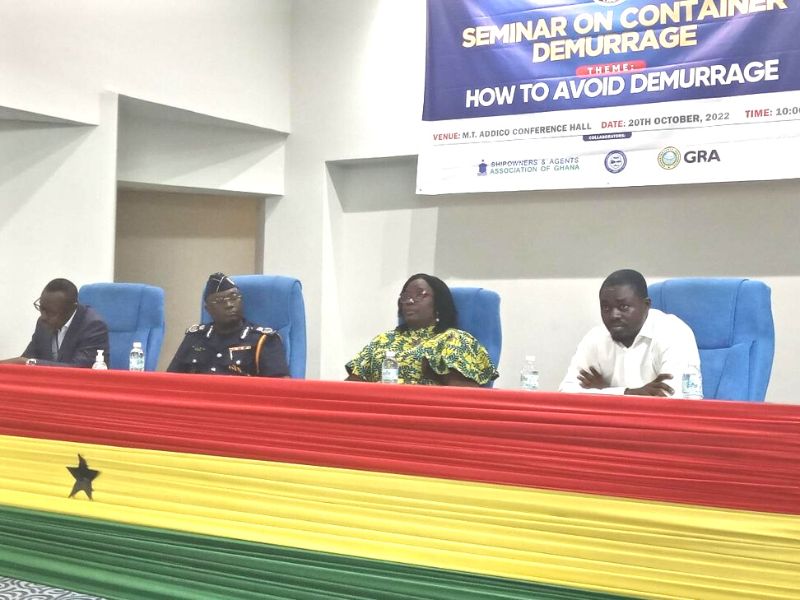
The high table
Participants at the seminar

Over 500 containers belonging to State-Owned Agencies (SOAs) have since the last five years remained uncleared at the ports, the Ghana Shippers Authority (GSA) has reveals.

The Authority says 49 containers have been at the ports for over 2,000 days (5 years, 6 months, and 20 days); 116 containers; 1,000 to 1,999 days (3 to 5 years), 78 container, 500 to 999 days (1 year, 5 months to 3 years), 205 containers, 100 to 499 days (3 months, 10 days to over 1 year); and 60 containers, 99 days (over 3 months).

These figures were randomly collected from five shipping lines and agents operating in the country.

This revelation was made in a speech delivered by the Head of Shippers Services and Trade Facilitation of the GSA, Monica Josiah, on behalf of the Chief Executive (CE) of the Authority, Benonita Bismarck, at a seminar held under the theme: “Demurrage is avoidable”, in Accra yesterday.

Mrs. Josiah expressed grave concern over the development, as it would impose further constrains on the country’s scarce resources.

She indicated that while these consignments would not be forfeited to the state for the purposes of auction, their eventual clearance would be accompanied by huge demurrage and rent charges that had accumulated over the period at the ports.

“I would like to use this opportunity to appeal to the Chief Directors, Chief Executives, Managing Directors and other relevant officers of Ministries, Departments and Agencies (MDAs)/State-Owned Enterprises (SOEs) to take urgent action to ensure that these consignments are expeditiously cleared from the ports to mitigate the use of state resources ro avoid costs,” she added.

These challenges are sailing against successes chalked by the Authority to reduce demurrage from US$76 million in 2017 to US$27 million in 2019, and further down to US$19 million in 2021.

Mrs. Josiah added that the downward trajectory of the figures was as result of initiative taken by the Authority to sensitise the shippers, as well as the paperless regime and Integrated Customs Management System (ICUMS) introduced by the government.

“These improvements, notwithstanding, the goal of the Authority to pursue a further reduction to the barest minimum in the interest of shippers and the national economy, especially in the face of recent increases in the demurrage daily rates by some shipping lines, coupled with the current exchange rate volatility,” she added.

According to her, there was a need for further engagement with stakeholder, since the Authority had been dealing with pertinent industry issues bordering on costs, delays and general service quality within shipping and cargo.

On the seminar, she explained that demurrage-free days commence when the cargo is discharged and made accessible to the consignees or agent at the designated terminal, saying, “this viewpoint, while reflecting global best practice, is also held by the majority of the shipping lines/agents engaged. We urged all the others to align to ensure certainty for shippers at the ports.”

On his part, the Deputy Commissioner of Suspense Regimes of the Customs Division of the Ghana Revenue Authority (GRA), Emmanuel Ohene, added that the detention charges applied to containers that had been taken out of the ports and not retained within a specific date.

He said detention charges, which is US$70.00/day per 40” container, is avoidable if importers made the necessary resources available before the arrival of the consignment.

Editorial: Are investors buying & stashing the dollar in their homes?

0
Editorial

Members of the Ghana Union of Traders Association (GUTA) have currently shut their shops in the Central Business District of Accra in protest against the continuous fall of the local currency, the Ghana Cedi, against the major world currencies, especially the United States of American Dollar.

Earlier their counterparts in Kumasi had embarked on a similar exercise, but following the intervention of Manhyia Palace, the decision was reversed.

Just yesterday, the Association of Sachet and Packaged Water Producers also issued a strongly worded press statement over the free fall of the Cedi, and called on the government to, as a matter of urgency, take strategic steps to stabilise the exchange rate.

According to the Association, the packaged water industry relies heavily on imported plastic pallets/granules used in the manufacture of the Polythene films and pet bottle preforms that are used to package the treated water for consumers.

Signed by Magnus Nunoo, President of the Association, the statement contended that packaging alone formed about 60% of the production cost for sachet and bottled water. Diesel fuel used for distributing the products to market centres for consumers was around 15% of the cost, as at the third quarter of last year.

“Due to [the] high increase of diesel and other petroleum products, diesel fuel for distributing packaged water to consumer centres now exceeds 25% of the product price. Electricity cost, which used to be around 15% of the product price, has increased to 20%, as a result of the recent increase in utility tariffs.

“All the above sum up beyond 95% per the last packaged water new prices announced in September 2022 without considering cost of capital, salaries and wages, taxes, bank charges, regulatory fees, machine and equipment cost/depreciation/parts replacement, distribution vehicles and its maintenance costs and other overheads,” the statement noted.

Though the water producers fell short of announcing new retail price for the commodity, it is obvious that they are preparing the grounds for another increment due to the fall of the cedi against the dollar.

Much as The Chronicle agrees that the current economic crisis facing the country is part of the larger world economic meltdown, a number of factors have contributed to make our situation worse.

The down grading of our financial standing from CCC to CC or to junk status by international rating agency, Fitch, meant we can no more go back to the capital market to borrow dollars and use it to shore-up the cedi. Having noticed this, the local investors quickly started investing in the dollar by buying them from the market.

In a nutshell, traders who genuinely need the dollar to import essential commodities are not getting them because a few people are suspiciously holding the American bucks in their homes.

The recent $1.3 billion cocoa syndicated loan and the $750 million secured from the African Export-Import Bank has not helped to stabilise the situation because people appear to be buying the dollar and stashing them at home. The conundrum here is that whilst the importers are not getting the dollar from the banks, it is thriving on the ‘black market’.

The big question is, where are these black marketers getting the dollar from? Are the banks smuggling it to them for hyper-profit or what?

It is trite economic knowledge that when demand outstrip supply, prices of goods and services will shoot up. With the demand for the dollar far outweighing what the market can supply, the strength of the cedi will obviously become weak.

It is, therefore, high time, in our opinion, that the Bank of Ghana (BoG) starts controlling the distribution of the dollar in the country. The Chronicle suggests that importers who are crying foul over the loss of their capital as a result of the weak cedi should furnish their bank documents backing the products they are importing. The BoG, through their respective banks, will then transfer the dollar to the seller of the products being imported.

We know that this kind of arrangement is already in place, but it is not rigidly enforced. The way things are going, The Chronicle is afraid that worse things can befall this country if remedial measures are not put in place to ameliorate the plight of the people.

For our currency to be described as the worst performing currency in the world is not an achievement we should be proud of and that is why an innovative ways must be adopted to arrest the free fall of the cedi.

Whilst direct foreign investment in our country is welcome, we should also be smart to insert into some of the agreements the amount of dollars investors can repatriate as profit within a year. This will minimise the flight of the dollar out of the country and thereby putting pressure on the local currency.

Letter to Senior Opupulepu (206) “A Vehicle You Sat In Before…” The Great Leopard Roars!

0
Opinion

Dear Senior Opupulepu,

How are you do? I hope you are do fine, fine. As me and my mine, we are all do fine, fine.

Senior, I have to recall your memories to those days when your Sweetie-Sweetie Muah-Muah would walk out on you, because some ugly man had appeared on the scene. What his looks could not steal and capture, his money would.

Senior, this your heartbeat, had promised you on her honour to be faithful and loyal to you all the days of her life, to be a mother to your children and wife to you.

Senior, but soon inflation entered the scene and the bowl of boiled cassava and green sauce, abomo for short that you used to buy for her for five cowries is now fifty cowries. And your darling like this dish more than a Hausa man like kola.

Senior, now the price of a simple bowl of boiled cassava with abomo which now has smaller piece of kobi tail, two miserable dry fish who are senior brothers of Chorkor rascals, and a few crab legs, which used to go for five cowries now goes for fifty cowries because of inflation. And that is for lower economy class.

Senior, to maintain standards you have not yet achieved just to impress this your future wife, you started buying boiled cassava and abomo on credit and please I am not talking about crediting yorke gari. Allow someone to rest in peace.

Senior, soon and very soon, your liabilities exceeded your assets and according to the financial theory of Ken the Free Tar, you should declare bankrupt and be liquidated.

Senior, soon, the Mame womaning the bush canteen, decided to withdraw services to you and vowed to visit your abusuapanin and seize your inheritance to offset the external loan you owed her.

Senior, so soon and very soon, you start giving excuses which do not hold water to your future wife.

Senior, every afternoon this your wife to be would just walk around that bush canteen social distancing herself,just to inhale the sweet aroma moving around in the air in and immediately around the canteen. She did this just to satisfy her heart’s desire and make her mind think that she had consumed a bowl of boiled cassava and abomo.

Senior, as for you, because of the debt you owed you kept a full village distance from the bush canteen. You just sat coolly waiting for your Sweetie-Sweetie Muah-Muah to come and just quarrel with you. You just wanted to hear her raging anger about your inability to be a man. She is certainly not referring to…..yah….you know what I mean?

Senior, one day a certain very ugly hungry man landed in the hamlet. He was in a very classy beautiful and expensive modern iron donkey, which in fact does not reconcile with his looks.

Senior, this guy man was very hungry and saw your baby standing somewhere, looking lonely. He called her and introduced himself as very new in town and very hungry. If she could show him where he could get a good meal, he will buy some for her. In fact, they will both eat together.

Senior, your baby thought Yahweh had smiled down on her that day, because she was starving more than the people in a war-torn famine area. She accepted the offer to sit in the iron donkey. She assumed she was in Heaven.

Senior, at the bush canteen, this ugly but wealthy man ordered double size first class dish of cassava and abomo which was meant for kings. Your baby ate everything up and licked the bowl. Mr Ugly Man, ordered take-away for her to take home. It was enough to feed her whole family.

Senior, as things went, your future wife started giving you social distance until one day you saw her in that ugly man’s vehicle, sitting, talking and laughing with him. When you confronted her later, she was honest to say that it was over between you and her.

Senior, your world collapsed. You have lost your future wife and you have a huge loan to pay while you have no money. Your buddies came to you to ask what happened.

Senior, in vain pride you told them, you are not moved at all, because a vehicle that you sat inside before, if it moves away and leaves you behind, you are not bothered.

Senior, some villagers served notice to the Great Leopard that since he decided not to level their footpaths, they will not cast lots for him ever again.

Senior, the Nana Onsurowuo, just laughed at the stupidity of those lamenting villagers and said, a bone shaker that you have sat inside before, if it moves away without you, you don’t gee. Moreso, he is not contesting the Omanhene stool again, so if they will not cast lots, they can sit at home. What stupidity supreme!

Senior, why is it that when people are angry they do not take their time before they speak? Our Omanhene is not contesting and so why threaten him with lot to be cast? And our Omanhene too, he must talk with humility small. Humility is free and carries no e-levy.

Senior, I am Dan, sorry I am done.

It’s me!

1, 950 youth receive jobs & skills training in Bono Region

0
Some beneficiaries of the training programme

The Ghana Enterprise Agency (GEA), formerly National Board of Small-Scale Industry (NBSSI), has launched a Jobs and Skills Project in Sunyani in the Bono Region to train 1,950 youth between the ages of 18 and 40 at the basic level of entrepreneurship.

The aim of the programme, funded by the World Bank, is to sensitise, train and equip the youth, most especially women, with the requisite capacity building skills in entrepreneurship and employment programmes.

Mr. Baffour Akufo Ankamah, Director of Finance at the GEA, speaking at the ceremony, indicated that the project was free, and called on the youth, irrespective of their political leanings, to join the programme by logging onto the online portal from Monday 17th to 27th November 2022 to apply.

He noted that paper applications would be given to applicants who would not be able to access the online portal at the various districts and regional offices. Mr. Ankamah advised the youth that grants given to participants at the end of the training must be used for the purpose.

He urged women and persons with disabilities to patronise the project to be equipped with skills to earn an income for survival.

Madam Vanessa Afia Asomea Takyi, GEA Deputy Regional Manager, said the project would be held mostly at the district level.

She said the youth would be equipped with entrepreneurship skills, and supported with start-up grants (with certification from the Registrar General Department and Food and Drugs Authority) and machines for those who had the potential to start their businesses.

Afia Asomea Takyi noted that priority would be given to persons with disabilities, Nation Builders Corps (NABCo) and service personnel, and that 50% of the beneficiaries would be women.

On the selection of beneficiaries for various apprenticeships, she said that a needs assessment would be conducted by consultants to screen participants to know the skills they were endowed with to serve as a focus area.

To qualify under the project, the Deputy Regional Manager said a person must be a Ghanaian within the age of 18 to 40 years, and completed Junior High School, Senior High School or Tertiary, and must also be willing to be enrol for any skill of their choice.

She encouraged Ghanaians to create awareness on the project because entrepreneurship was a lasting solution to Ghana’s youth unemployment as reviewed by the Ghana statistical Service.

Zoomlion releases $100k to promote sanitation among children

0
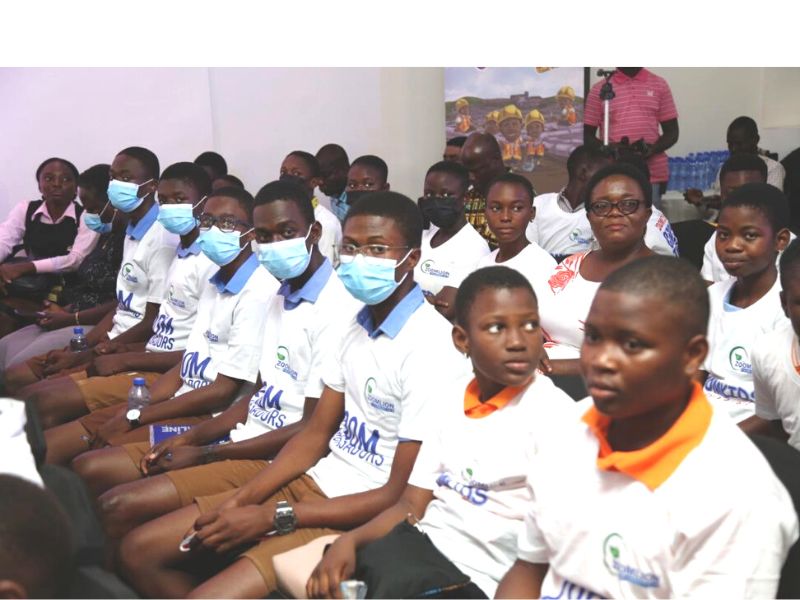
The children who attended the programme
Dr Siaw Agyapong addressing the children

Waste management company Zoomlion Ghana Limited, a subsidiary of the Jospong Group of Companies (JGC), has announced a $100,000 package to support school children to learn more about sanitation and the need to protect the environment.

The Executive Chairman of the Jospong Group of Companies (JGC), Dr. Joseph Siaw Agyepong, who made the announcement, indicated that Zoomlion was also sensitising school children more through its Zoomkids.

“The whole idea of Zoomkids is to catch the kids young and educate them on good sanitation practices and hygiene,” he explained. The Executive Chairman of JGC made the announcement at the launch of Waste Water Education, organised by the Ministry of Sanitation and Water Resources (MSWR) in Accra yesterday, Thursday, October 20, 2022.

According to him, through Zoomkids, Zoomlion inculcates the culture of sanitation and hygiene into children. He said since its inception in 2008, Zoomlion Foundation can boast of about 526 Zoomkids in various schools in the country.

In 2016, he said, Zoomkids organised a quiz competition where a young girl emerged as the winner and was sponsored to Dubai to continue her education. “The 2022 winner will be sent to Hungary for further studies,” he disclosed. Dr. Siaw Agyepong gave a firm assurance that Zoomlion will also continue to sponsor schools that have Zoomkids with facilities that to aid them in learning as well.

The Minister of Sanitation and Water Resources, Mrs. Cecilia Abena Dapaah, cautioned farmers who farm on the banks of water bodies in the country to put an end to such a practice. She said such a practice would contribute to polluting water bodies.

She reinforced that the fight against illegal mining (popularly known as galamsey) was a collective commitment, hence urged Ghanaians to support President Nana Addo Dankwa Akufo-Addo on that front.”We should all help fight against the few selfish people who want to destroy our water bodies and lands,” she charged.

The galamsey war, she asserted, cannot be won without the support of Ghanaians.

According to Mrs. Dapaah, President Akufo-Addo had shown massive commitment in tackling sanitation, stating that the evidence was obvious for all to see, especially as the country has been recording zero cases of cholera and other sickness relating to sanitation, for some time now.

Further, she maintained that her ministry was equally not relenting on its efforts to bring an end to irresponsible mining across the country.

She stressed that it was crucial that “we start inculcating good sanitation practices and protection of our water bodies and environment into our children.”This, she pointed out, will sink deep into the minds of children to consciously and always protect the environment.

For his part, the Chief Executive Officer of Pureco Group, Mr. Balint Horvath, stated that it was important for such programmes to be organised to protect Ghana’s environment. He lamented the damage galamsey was causing to Ghana’s environment and water bodies.

Pureco Group seeks to let children know the importance of sanitation and hygiene through games,” he said. “We want to bring a new way or alternative way of teaching in Ghanaian classrooms on sanitation and hygiene,” he further added.

Mr. Balint Horvath indicated that his outfit was in collaboration with Zoomlion to organise other projects aimed at helping the country to safeguard its environment.

PDP senator removed, Tunde Bakare, others in as APC updates campaign council

0
Vice President Yemi Osinbajo (left) and All Progressives Congress presidential candidate, Asiwaju Bola Tinubu

The All Progressives Congress (APC) has released an updated presidential campaign council list for the 2023 election.

President Muhammadu Buhari retained his position as chairman while APC presidential candidate Bola Tinubu and chairman Abdullahi Adamu were named as the deputy chairmen I and II of the council.

APC vice presidential candidate, Kashim Shettima, will serve as vice chairman.

Governor Simon Lalong of Plateau State will serve as the director general of the campaign council and will be assisted by former Edo State governor, Adams Oshiomhole.

The list dated October 19 was signed by APC national secretary Iyiola Omisore.

The initial list released by James Faleke, a House of Representatives member and secretary of the council, had elicited displeasure among top members of the party. It had a senator of the opposition People’s Democratic Party (PDP) representing Enugu East Senatorial District Chimaroke Nnamani.

Some APC governors were reportedly displeased over the exclusion of their nominees from the campaign council list which had 422 members at the time.

The new list released by the party has over 600 names, including presidential aspirant Pastor Tunde Bakare, all the members of the national working committee (NWC), the federal executive council (FEC), the APC National Assembly caucus and chairmen of the party in the states.

Bayo Onanuga is listed as the deputy director-general (operations) and director of media and publicity while Faleke retained his position as secretary of the APC presidential campaign council.

Notable absentees in the initial and updated list are Yakubu Dogara, former speaker of the house of representatives, Babachir Lawal, former secretary to the government of the federation, and Chukwuemeka Nwajiuba, former minister of state for education.

Dogara and Lawal had distanced themselves from the ruling party’s Muslim-Muslim ticket of Bola Tinubu and Kashim Shettima.

Buhari is scheduled to unveil the party’s manifesto and inaugurate the APC campaign council on Friday.

Credit: guardian.ng

Interpol arrests 75 suspected cyber criminals linked to Nigeria’s Black Axe cult

0
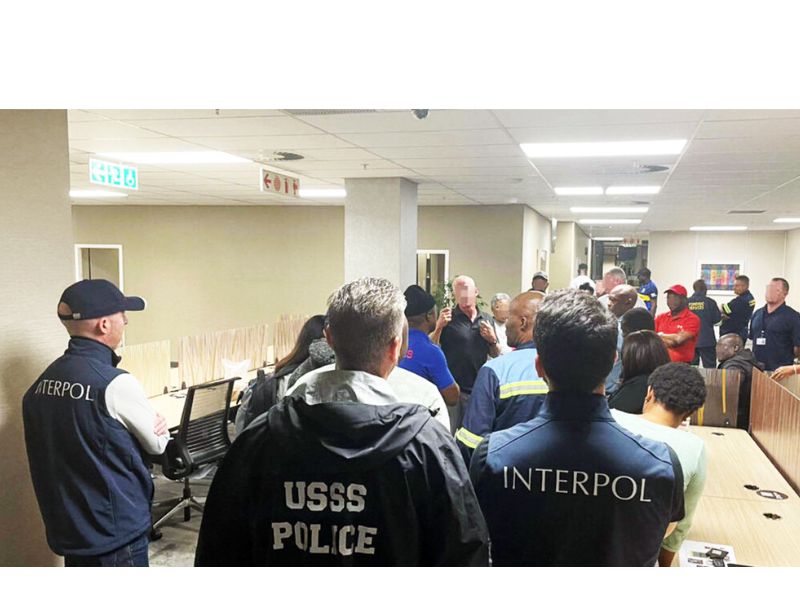
Police carried out some 49 searches at several places in Operation Jackal, which took place across five days, from September 26 to September 30

An Interpol-led operation involving 14 countries across the world netted 75 individuals believed to be linked to a Nigerian cybercriminal group that stole millions from its victims, according to a statement released Friday.

Police spotted the lavish lifestyles and greed of many of the suspects and carried out 49 searches, seizing, among other, 12,000 SIM cards during the execution of Operation Jackal, which took place from September 26 to September 30.

Officers also seized various luxury assets, including a residential property, three cars and tens of thousands in cash.

The coordinated operation targeted Black Axe cells – one of Nigeria’s mightiest criminal groups – as well as others from West Africa. Apart from the 75 people arrested, police intercepted 1.2 million euro in several bank accounts.

In South Africa, police arrested two suspects who had swindled at least US$1.8 million from victims through online scams. Three alleged members of this cyber fraud ring were also arrested in Italy.

Black Axe and similar groups are allegedly behind the majority of the world’s cyber-enabled financial fraud as well as many other serious crimes, according to Interpol’s Financial Crime and Anti-Corruption Center.

Authorities say the group is becoming a “major security threat worldwide.”

The immense quantity of assets seized during the operation also provided new investigative leads into organized crime groups involved in financial cyber fraud.

“Illicit financial funds are the lifeblood of transnational organized crime, and we have witnessed how groups like Black Axe will channel money gained from online financial scams into other crime areas, such as drugs and human trafficking,” said Stephen Kavanagh, Interpol’s executive director of police services.

According to the United Nations, up to $2 trillion in illicit funds are laundered through the global financial system every year, and it is estimated that less than 1% of these funds are intercepted and recovered.

People are more likely to fall victim to fraud or cyber offenses above any other crime. Online fraudsters are not worried if their victims are going to lose their life savings. Thousands usually lose their money in various scams executed by using email, romance apps, buying and selling, and investments.

Credit: premiumtimesng.com

The Ghanaian Chronicle