Home Blog Page 1261

TikTok sued for ‘massive’ invasion of child privacy

0
A girl child holding a phone

The US government has filed a new lawsuit against TikTok, accusing the social media company of unlawfully collecting children’s data and failing to respond when parents tried to delete their children’s accounts.

The Department of Justice said the firm’s practices amounted to a “massive-scale” invasion of child privacy, in defiance of laws that require online companies to obtain parental consent to gather information for those under the age of 13.

Officials said the firm, and parent company Byte Dance, were “repeat offenders”, noting a similar case brought in 2019.

TikTok disputed the claims and said it was “proud” of its efforts to protect children.

It said it proactively removed underage users and had voluntarily put in place protections, such as default screen-time limits and additional privacy guards for minors.

“We disagree with these allegations, many of which relate to past events and practices that are factually inaccurate or have been addressed,” a spokesperson said.

“We are proud of our efforts to protect children, and we will continue to update and improve the platform.”

The complaint ramps up the pressure on TikTok and Chinese parent company Byte Dance, which were already battling the US over a law that threatens to ban the company from the country.

In the filing, the US accused TikTok of implementing “deficient” ways of screening for accounts created by children and obstructing parents when they tried to delete them.

A review of 1,700 requests from parents to cancel accounts that were made between 2019 and 2020 found that 30% were still active in November 2021, according to the filing.

It said moderators charged with reviewing accounts flagged as underage were only authorised to act if they saw explicit admission of a child’s age, while being given limited access to user videos.

It said they typically had only a few seconds to make their decisions.

Officials asked the court to order a stop to TikTok’s actions and determine penalties for each violation.

“This action is necessary to prevent the defendants, who are repeat offenders and operate on a massive scale, from collecting and using young children’s private information without any parental consent or control,” said principal deputy assistant attorney general Brian Boynton, head of the Justice Department’s Civil Division.

TikTok is among the most popular social media platforms in the world, claiming more than 1 billion users globally and more than 170 million in the US.

Surveys by Pew Research have found that more than 60% of US teens aged 13-17 use the platform, more than half of them on a daily basis.

The lawsuit states the US government seeks “to put an end” to TikTok’s alleged “unlawful massive-scale invasions of children’s privacy”.

The company has faced fines in the UK and Europe over similar issues.

Source:bbc.com
Ufeministi Anyidado trains HR Practitioners on Sexual Harassment and GBV

0
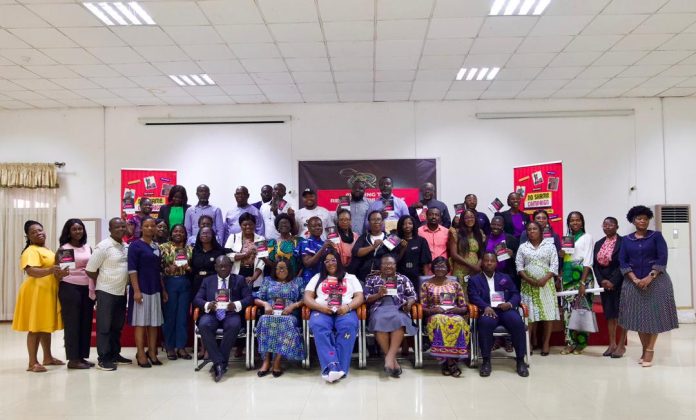
Dignitaries and participants who participated in the workshop in a group photograph

Ufeministi Anyidado for Vulnerable Women and Children, a Non-Profit Organisation(NGO), has organised a training workshop on preventing and responding to sexual harassment and Gender-Based Violence (GBV) at workplaces.

The workshop, which took place on Thursday, August 1, 2024 focused on equipping Human Resource leaders with the necessary knowledge, tools and strategies to foster safe and respectful work environments.

The primary aim of the NGO includes promoting the rights of women and children and helping to combat Gender-Based Violence in Ghana.

In her opening remarks, Mrs. Marina Carmen Kelly, Executive Director of Ufeministi Anyidado highlighted the significance of the recently passed Affirmative Action Bill by Parliament.

“The historic signing of the Affirmative Action Bill by Parliament marks a significant milestone in our journey towards gender equality,” Mrs. Kelly stated.

“This legislation paves the way for a more inclusive and equitable society and we must ensure its effective implementation in our workplaces.”

Mrs. Kelly emphasised the pivotal role HR practitioners play in creating a culture of zero tolerance towards SGBV and supporting survivors.

“As HR leaders, you play a vital role in creating safe and respectful work environments. This workshop is designed to equip you with the knowledge, tools and strategies to prevent and respond to SGBV, promoting a culture of zero tolerance and support for survivors,” she said.

“Let’s work together to create workplaces where everyone can thrive, free from fear of violence and discrimination,” Mrs. Kelly urged the attendees.

“Thank you for your commitment to this ideal. Let’s make a meaningful impact, starting today.”

Addressing participants, Lawyer Alex Nartey Esq. stressed that issues of sexual harassment are contemporary democratic and human rights concerns, and the active participation of HR managers is crucial in mitigating these challenges.

Mr. Nartey underscored the importance of a holistic approach in managing sexual harassment, which should encompass law, ethics, professionalism, culture, and values.

“If you manage sexual-related issues short of some of these principles I have mentioned, you will fail,” he warned.

He also addressed the misconception that Ghana lacks sufficient legislative measures to tackle sexual harassment, urging HR practitioners to recognize the existing provisions and take proactive steps.

“The legislative framework that we need to enable us to do what is expected of us does not need to be explicit. It only needs to establish enabling grounds for the HR practitioner who is actually the key stakeholder in managing this to navigate into efficient management of the issue at hand,” Mr. Nartey explained.

He cited various constitutional articles, including Article 17 and Article 18, which, though not explicitly mentioning sexual harassment, provide the foundation for interventions against it.

Highlighting the societal attitudes and cultural norms that complicate the issue, Mr. Nartey called for a shift in perception and greater responsibility among individuals.

He pointed out the need for empathy and understanding of the dynamics between genders, particularly in the context of sexual behavior and harassment.

Mr. Ebenezer Korli, a clinical psychologist, also addressed participants on the profound effects of sexual and gender-based violence (SGBV) at an event organized by E-feminisity.

Drawing from his extensive experience working with vulnerable groups, Mr. Korli provided a comprehensive overview of the physical, emotional, and cognitive repercussions of SGBV.

Mr. Korli emphasized the multi-faceted impact of SGBV on individuals, noting significant health challenges as a primary concern.

“Victims of abuse often mask their health issues, leading to recurrent health problems that are difficult to diagnose and treat,” he explained.

He also highlighted the potential for SGBV to trigger pre-existing mental health conditions. “Abuse can exacerbate underlying issues like depression, anxiety, and social phobias, severely affecting a person’s ability to function in their daily lives,”Mr. Korli said.

He underscored the necessity of creating safe and confidential spaces for victims to share their experiences without fear of repercussions.

He stressed the importance of professional psychological support in workplaces to navigate these complex situations effectively.

A rape survivor who also shared her story described the intense trauma and mental strain that followed.

“It wasn’t easy. It was tough and if you don’t take care you might get a mental problem because every time you think about it, you feel like committing suicide,” she said.

Despite the pain, she found a glimmer of hope in her child, born when she was just 15 years old. The birth brought mixed emotions—pride and happiness, coupled with societal stigma.

“People will be like, why are you giving birth as a teenager? And they will mock you. But I didn’t give up because I said to myself, I wanted to be someone,” she explained.

Reflecting on the support system that aided her recovery, she emphasised the importance of parental support.

“Parents should embrace their children when something like that happens. You have to just talk to your child. Let her pick her pieces together,” she advised.

‘No Network No Vote’ -Sissala East community warns

0

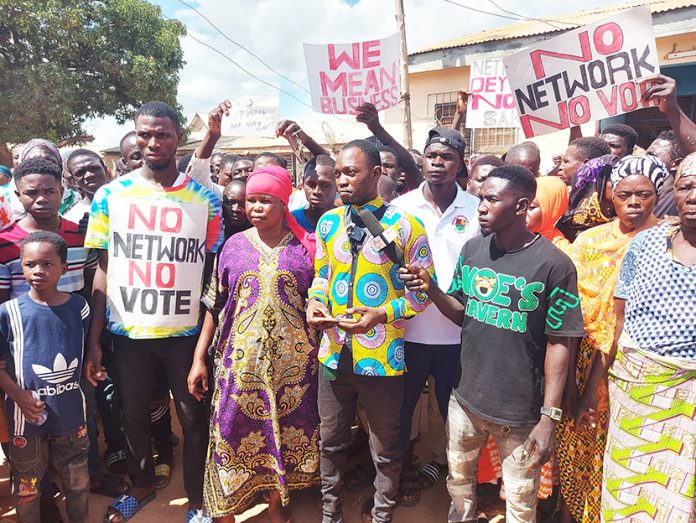
Residents of Sakai, in the Sissala East District of the Upper West Region have expressed their disappointment at the poor telecommunications network and have issued a stark warning that they would boycott the 2024 general elections if the issue is not solved.

The community has been grappling with severe mobile network issues, which significantly impact their daily lives.This problem hinders the use of mobile phones and other essential devices that affect the entire community.

Without reliable communication channels, healthcare and education services suffer and the residents cannot make emergency calls or conduct business over the phone.

Despite Vice President Dr. Mahamudu Bawumia’s advocacy for a digital shift to spur national development, Sakai remains disconnected. Dr. Bawumia has emphasised the necessity of digitalization for progress, but this policy requires universal telecommunication access, which Sakai lacks.

The youth of Sakai, frustrated by the neglect of government, held a press conference on Friday, August 1, 2024. They expressed their disappointment and issued a stark warning that they would boycott the 2024 general elections if their network problem remained unresolved.


“No Network, No Vote” is their rallying cry, which underscores their demand for inclusion in the digital future of the nation.The enthusiasm of the youth was overwhelming during the press conference as they held placards, some of which read:‘No Network, No Vote’ and ‘We Mean Business.’

The press conference by the youth of Sakai highlights the general issue of network connectivity in rural areas, which calls for urgent government action to bridge the digital divide.

Addressing the press conference, Mr. Saani Kantongboku, the youth president of Sakai, highlighted the severe consequences of the problem.He explained that nurses sometimes have to leave the health facility to verify patients’ health insurance cards at designated spots with network connectivity.

He added that this situation has also deterred some nurses and government officials from accepting postings in Sakai.He painted a grim picture of the local economy while emphasising that businesses cannot thrive under these conditions, as the situation creates a significant developmental gap between Sakai and other regions.

Kantongboku Gbene Elijah, the assembly member for the area, echoed the same concerns. He believes that the neglect of Sakai by the government stems from a perception that they are not truly part of Ghana, despite their contributions through taxes.

The national security ministry has initiated a campaign called “See Something, Say Something,” urging the public to remain vigilant and report any suspicious activities or individuals to security agencies.

The Sissala East District, which borders Burkina Faso, has seen a surge in terrorist activity. Elijah expressed concerns about this risk, noting that if terrorists were to infiltrate the community, residents would be unable to make emergency calls.

“If we hear terrorists are coming, the only thing we can do in the community is to run into our houses because you can’t go to the bush to make calls to report the matter,” the assembly member remarked.

Despite writing multiple letters to the assembly about the network issue, he is yet to receive a response, saying“I started talking about it when I got in as assembly member. For now, I have not received any response.”He added that the urgency of the situation prompted the community to organise the press conference to bring their concerns to the authorities.

The Sakai community, surrounded by several other communities such as Nankpawie, Kong, Lilixia, Sakallu, Sentie, Jijen, Bandei and Bakwala collectively comprise of approximately 30,000 residents, all without network coverage.

Sakai itself, the third largest community in the Sissala East Municipal, has around 9,000 residents who face numerous challenges due to network constraints.The residents of Sakai are calling for immediate government intervention to ensure they are not left behind in the digital age.

6 Symptoms of Women’s Heart Attacks

0

A heart attack occurs when the flow of blood to the heart is severely reduced or blocked. The blockage is usually due to a buildup of fat, cholesterol and other substances in the heart (coronary) arteries.

When a heart attack strikes, it doesn’t always feel the same in women as it does in men.

Women don’t always get the same classic heart attack symptoms as men, such as crushing chest pain that radiates down one arm. Those heart attack symptoms can certainly happen to women, but many have vague or even “silent” symptoms that they may miss.

These six heart attack symptoms are common in women:

  1. Chest pain or discomfort. Chest pain is the most common heart attack symptom, but some women may experience it differently than men. It may feel like a squeezing or fullness, and the pain can be anywhere in the chest, not just on the left side. It’s usually “truly uncomfortable” during a heart attack, says cardiologist Rita Redberg, MD, director of Women’s Cardiovascular Services at the University of California, San Francisco. “It feels like a vise being tightened.”
  2. Pain in your arm(s), back, neck, or jaw. This type of pain is more common in women than in men. It may confuse women who expect their pain to be focused on their chest and left arm, not their back or jaw. The pain can be gradual or sudden, and it may wax and wane before becoming intense. If you’re asleep, it may wake you up. You should report any “not typical or unexplained” symptoms in any part of your body above your waist to your doctor or other health care provider, says cardiologist C. Noel Bairey Merz, MD, director of the Barbra Streisand Women’s Heart Center at Cedars-Sinai Medical Center in Los Angeles.
  3. Stomach painSometimes people mistake stomach pain that signals a heart attack with heartburn, the flu, or a stomach ulcer. Other times, women experience severe abdominal pressure that feels like an elephant sitting on your stomach, says cardiologist Nieca Goldberg, MD, medical director of the Joan H. Tisch Center for Women’s Health at NYU Langone Medical Center in New York.
  4. Shortness of breath, nausea, or lightheadedness. If you’re having trouble breathing for no apparent reason, you could be having a heart attack, especially if you’re also having one or more other symptoms. “It can feel like you have run a marathon, but you didn’t make a move,” Goldberg says.
  5. Sweating. Breaking out in a nervous, cold sweat is common among women who are having a heart attack. It will feel more like stress-related sweating than perspiration from exercising or spending time outside in the heat. “Get it checked out” if you don’t typically sweat like that and there is no other reason for it, such as heat or hot flashes, Bairey Merz says.
  6. Fatigue. Some women who have heart attacks feel extremely tired, even if they’ve been sitting still for a while or haven’t moved much. “Patients often complain of a tiredness in the chest,” Goldberg says. “They say that they can’t do simple activities, like walk to the bathroom.”

Not everyone gets all of those symptoms. If you have chest discomfort, especially if you also have one or more of the other signs, call 911 immediately.

What NOT to Do

If you feel heart attack symptoms:

  • Don’t delay getting help. “Women generally wait longer than men before going to the emergency room,” says Rita F. Redberg, MD, MSc, FACC, director of Women’s Cardiovascular Services for the UCSF Division of Cardiology in San Francisco. Even if you think your symptoms aren’t that bad or will pass, it’s too risky to wait.
  • Don’t drive yourself to the hospital. You need an ambulance. If you drive, you could have a wreck on the way and possibly hurt yourself or someone else.
  • Don’t have a friend or relative drive you, either. You may not get there fast enough.
  • Don’t dismiss what you feel. “Don’t worry about feeling silly if you’re wrong,” Goldberg says. Seek medical attention right away.


Moringa Clarifies Issues With Former CEO

0
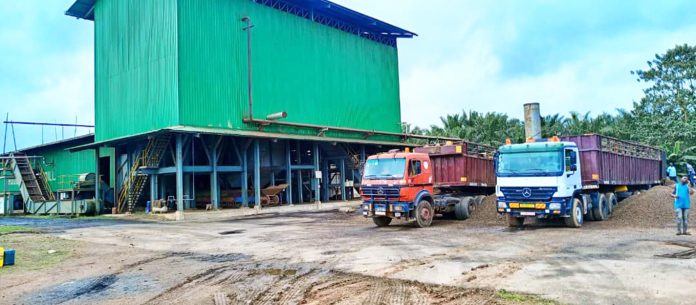
Part of the factory

Introduction

Moringa SCA SICAR/Moringa Mauritius Africa (‘Moringa’) is deeply concerned by the numerous publications in print and online media of allegations made by Issa Ouedraogo (‘Issa’) against it. The allegations deliberately misrepresent both Moringa’s business practices and legal proceedings that have unfolded between Moringa as investors, and Issa.

Issa has maliciously designed these publications to cast aspersions on Moringa’s integrity in the business marketplace and sadly, on the ethical conduct of Moringa’s legal representatives, Bentsi-Enchill, Letsa & Ankomah (‘BELA’). Moringa therefore wishes to address Issa’s allegations and to correct the inaccuracies and misrepresentations made to the public.

Presentation
Moringa is an investment fund launched in 2013 that aims to finance agroforestry projects in sub-Saharan Africa and Latin America to support the development of sustainable agricultural value chains and reduce poverty in often isolated rural zones. In Africa, Moringa has invested in agribusinesses to reinforce their financial structure, supply chain and modernize their plant. In Ghana, B-Bovid buys fresh fruits bunches from smallholders and processes them into red crude palm oil for the local market.

Investment
In 2018, Moringa invested over ₡24,000,000 (the equivalent of $5,000,000 at the time) in B-Bovid Limited (‘B-Bovid’), a palm oil processing company that Issa founded. At the time, B-Bovid owed money a bank, and both B-Bovid and Issa’s properties, which had been used to secure the debt, were to be sold to pay the debt. Moringa and Issa Ouedraogo therefore entered into an Investment Agreement and a Shareholder’s Agreement, for Moringa to invest in B-Bovid and become a large majority shareholder.

BELA’S First Instruction
Moringa’s Paris-based lawyers engaged BELA to provide legal advice on the investment to ensure compliance with Ghanaian law. BELA’s role was confined to conducting due diligence on B-Bovid, reviewing transaction documents, and amending B-Bovid’s constitution to reflect the terms of the agreements between Moringa and Issa. BELA did not negotiate the commercial terms of the transaction or the investment documents between Moringa and Issa Ouedraogo.

Issa’s Mismanagement
Moringa invested in B-Bovid on the basis of a business plan set out in the Investment Agreement and Shareholders’ Agreement, under which B-Bovid was to meet specified financial and operational targets under Issa’s leadership as CEO. However, after Moringa’s investment, B-Bovid (under Issa’s leadership), consistently failed to meet the agreed operational and financial targets, which was the purpose of the investment.

Issa failed to properly manage B-Bovid and placed the company on the verge of insolvency. Moringa then discovered that Issa’s mismanagement had started well before Moringa’s investment, so that the representations made by Issa, and on which Moringa had based their investment, were inaccurate. Nevertheless, in an effort to ensure the sustainability of B-Bovid, Moringa was compelled to extend a loan to B- Bovid, in addition to the investment already made into the company.

Further Investment
In 2019, Moringa engaged BELA to advise on a debt investment in B-Bovid, a EUR 1,200,000 Convertible Loan Agreement with B-Bovid to enable the company make up for shortfalls in the 2019 financial year, provide an opportunity for growth in its operations in the 2020 financial year and also, to finance the company’s needs as budgeted in the business plan. Moringa simultaneously entered into a Share Charge Agreement with Issa and B-Bovid, under which Issa charged all his present and future shares in B-Bovid as security for the loan.

Issa’s Removal as CEO
Despite the fresh capital injection, B-Bovid, under Issa’s leadership, again failed to meet all the key operational and financial targets required under the business plan. This was wholly attributable to Issa’s underperformance and mismanagement of B- Bovid. Indeed, it soon became clear to Moringa that Issa Ouedraogo simply lacked the requisite skills to run B-Bovid as a profitable business.

This led to discussions about appointing a new and better qualified CEO, so that Issa would take on the role of President of B-Bovid but on the same salary he enjoyed as CEO, and also maintain his role as director and Chairman of B-Bovid’s board. Issa however refused to resign as CEO, and eventually, was duly removed by B-Bovid’s board.

Issa’s removal was lawful and was in B-Bovid’s best interest. B-Bovid’s board also subsequently removed Issa Ouedraogo as an authorised signatory to the company’s bank accounts because he had announced that he would use any means, including illegitimate actions, to challenge the board’s decision.

Issa’s Misbehaviour
Following Issa’s removal as CEO, he refused to vacate his office and stationed armed security personnel at B-Bovid’s premises with instructions to prevent the new CEO and Moringa’s representatives from accessing premises.

He forbade B-Bovid’s management personnel from communicating with Moringa’s appointed directors and effectively engaged in a forcible takeover of the company’s operations, managing/operating B-Bovid to the total exclusion of Moringa, its majority shareholder. He directed B-Bovid’s customers to pay proceeds from the company’s sales into his personal bank accounts and took a number of unilateral decisions without consulting or involving Moringa.

Eventually, Issa unilaterally shut down the Company and purported to place the company’s workers on redundancy, with no compensation. Moringa has always tried to ensure continuity of operations and to support B-Bovid’s employees. Moringa continued to pay workers’ salaries for a year while operations were halted by Issa.

Arbitral proceedings
1. On 16 June 2021, Moringa instructed BELA to institute arbitration proceedings against Issa, pursuant to the provisions of the Shareholders’ Agreement and the Investment Agreement. This was after Moringa had extensively attempted amicable settlement with Issa, who refused to cooperate. The reliefs sought by Moringa include a declaration that Issa was validly removed as CEO and a perpetual injunction restraining him from holding himself out or acting as the CEO of the Company. Moringa also filed an injunction application to prevent Issa from interfering in B-Bovid’s management during the arbitration proceedings. The High Court granted the injunction, restraining both Issa and the new CEO from interfering in the administration and management of B-Bovid until arbitration proceedings had concluded. Subsequently, the Court appointed a Receiver/Manager as interim CEO until the arbitration had been determined. Despite the injunction and the appointment of a Receiver/Manager, Issa continued to refuse to allow Moringa’s appointed directors access to the Company’s premises. The High Court appointed Receiver took over a factory where some of the critical machines, equipment and vehicles had been burnt into ashes. The Receiver was therefore compelled to establish a permanent security detail at B-Bovid’s factory premises to ensure safety and security, because lssa continues to threaten workers and farmers of B-Bovid.
Enforcement of Share Charge Agreement
2. In April 2021, Moringa instructed BELA to assist with enforcing the Share Charge Agreement because B-Bovid had breached the loan agreement. BELA, acting on those instructions, enforced the Share Charge Agreement and facilitated the transfer of Issa’s shares to Moringa, in accordance with the Borrowers and Lenders Act, 2020 (Act 1052). This is because under article 14 of the Shareholders’ Agreement, that Agreement became automatically terminated and extinguished Issa’s right to serve on the company’s board of directors. The shareholders of B-Bovid therefore held an Extraordinary General Meeting in 2022 to approve a new constitution, which removed all references to the Shareholders Agreement, since it no longer existed.
Unfounded Allegations Against BELA
3. Similarly, the accusations of unethical behaviour and conflicts of interest against BELA are without merit. BELA has filed a full response to Issa’s allegations with the Disciplinary Committee of the General Legal Council, which shows that Issa’s allegations are unfounded and that BELA has strictly complied with legal and professional ethical obligations. What Issa is trying to do, is to give himself the power to dictate who our lawyers should be and how they should comply with our instructions. That cannot be allowed.

Moringa’s Commitment
4. Moringa reaffirms its commitment to ethical business practices and the pursuit of justice. We entreat the discerning public to ignore Issa Ouedraogo’s smear campaign against Moringa and trust in the legal process to unveil the truth. Moringa remains dedicated to resolving the ongoing disputes constructively, in accordance with legal standards, and in the best interest of B-Bovid and all involved parties.
5. After the arbitration, Moringa will continue developing B-Bovid’s activities in Ghana as part of its poverty reduction strategy, which is Moringa’s priority.

South Korean Olympian cries as he fails to avoid military service after missing out on a medal

0
South Korean Kim

Tom Kim failed to achieve a podium finish in the men’s Olympic golf event, despite finishing 13 under par after four very tidy rounds.

The 22-year-old was pictured crying in a club house at Le Golf National following his final round. Not only had he missed out on an Olympic medal but he had also failed to secure exemption from military service in his native South Korea.

It is law in South Korea that all men – unless exempt – must complete 18-21 months of military service and they must enlist before the age of 28.

Some men are given exemptions based on physical and mental health issues, while it is not uncommon for rich families to send children to foreign schools to gain duel citizenship.

Another way to get excused from conscription in South Korea is to win an Olympic medal of any colour, or a gold at the Asian Games.

Tottenham Hotspur forward Son captained South Korea to gold in the men’s football event at the 2018 Asian Games and therefore only had to complete three weeks of basic training, instead of 21 months.

A Marine Corps officer later praised Son for his commitment during his training and the Spurs ace was presented with the ‘Pilsung’ prize, given to the top five performing trainees.

Kim could yet follow Son’s path by earning an exemption if he wins gold at the 2026 Asian Games in Japan, or any medal at the 2028 Olympics in Los Angeles.

If not, he could be forced to spend a big chunk of time away from the PGA Tour.

Credit: dailymail.co.uk

Biles falls and misses out on beam medal

0
Biles falls in gymnastics balance beam final

Simone Biles fell off the beam to miss out on a medal for the first time at the Paris Olympics as Alice d’Amato took gold.

The American, 27 – who won team, all-around and vault gold – lost her balance at the end of an aerial series and placed fifth, in a final where half of the gymnasts fell off the 10cm-wide apparatus.

It was a brilliant gold for Italy’s D’Amato, who won with 14.366. China’s Zhou Yaqin took silver with 14.100 and another Italian, Manila Esposito got the bronze with 14.000.

Biles, who has won three golds in Paris, has one more chance for another medal in Monday’s floor final (13:23 BST).

She looked unhappy with the crowd after her beam routine, speaking animatedly to her coach and her team-mate Sunisa Lee.

Shouts of “come on Simone” while she performed had drawn “shush” sounds from others in the audience.

Lee, another of the four gymnasts to fall off the beam, explained to reporters: “You could feel the tension in the room.

“The crowd shushing us for cheering. We didn’t like that as it was just so silent in there. I love hearing my team-mates cheer for me. Simone and I were both upset.”

Credit: bbc.com

Gender row boxer breaks down in tears qualifying for medal

0
Algerian boxer Imane Khelif

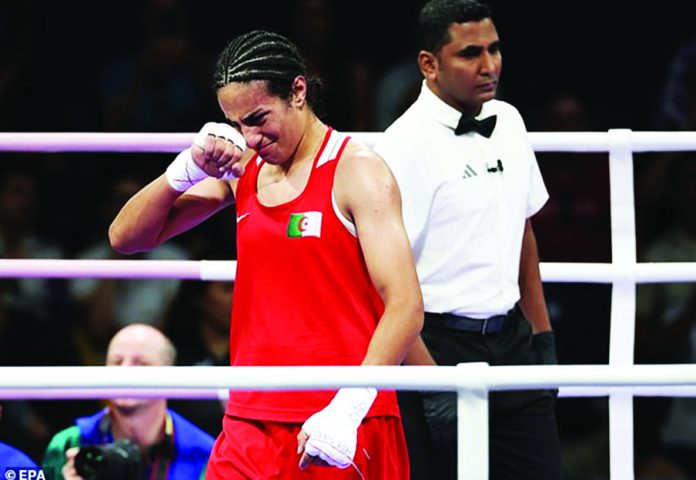
Algerian boxer Imane Khelif sobbed after her victory against Hungary’s Anna Luca Hamori in the 66kg category at the Olympics guaranteed her a medal.

Khelif is one of two boxers competing in Paris despite being banned from last year’s World Championships by the International Boxing Association (IBA) after allegedly failing gender eligibility tests – a storm that has sparked controversy.

Khelif was cleared to fight with IOC president Thomas Bach defending her inclusion.

She had earned her spot in the quarter-finals after her previous opponent Angela Carini abandoned their fight after just 46 seconds. Italian Carini later revealed she had never been hit harder and dropped out to ‘preserve her life’.

On her return to the ring, Khelif was given the backing of a raucous crowd and after earning a dominant victory, she sobbed as she embraced her team.

Hamori embraced Khelif in a warm moment between both competitors.

Ahead of the bout, Hamori stated she was not fazed by the prospect of facing Khelif.

The fighter, however, provoked anger on social media after re-posting a controversial image shared across online platforms labelling Khelif a man.

Credit: dailymail.co.uk

Pole vaulter who was eliminated due to his bulging manhood given advice

0
Algerian boxer Imane Khelif

The former coach of tennis icon Serena Williams has advised an Olympic pole vaulter to recruit the services of a ‘drag queen’ after Anthony Ammirati endured a nightmare mishap at the Games.

Frenchman Ammirati was competing in the men’s event at the Stade de France when he was trying to clear a 5.70 metre jump that would have put him in with a chance of making the final.

However, he and thousands of others watching the events unfold were stunned when his manhood caught the pole and caused him to fail the high-pressure jump.

The 21-year-old looked set to clear the obstacle until the sensitive part of his body denied him during his third attempt, leaving viewers in hysterics on social media after watching replays.

Later, following the viral moment, the 21-year-old admitted his frustration at missing out on a medal in Paris, albeit without directly referencing his unfortunate mishap.

Now the former coach of Williams has offered advice on the situation, with Rennae Stubbs giving her verdict on what Ammirati should do differently to avoid a repeat in the future.

Posting on X, the 53-year-old hilariously tweeted: ‘Seriously!!! When your sport is all about getting your body over a bar and it’s a matter of millimetres!

‘My man! Call a drag queen! She’ll teach u how to tuck it! This is unbelievable!’.

Credit: dailymail.co.uk

Construction equipment won’t end at galamsey sites -Naa Torshie

0
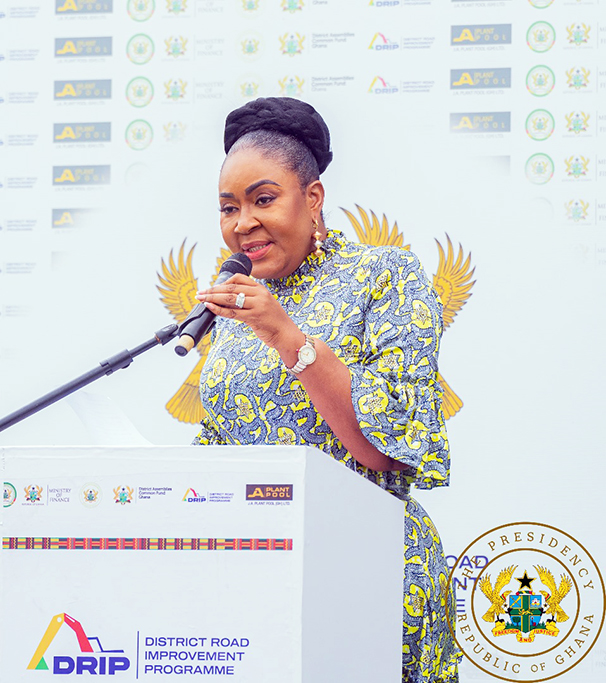
Administrator of the DACF, Irene Naa Torshie Addo-Lartey speaking the launch of DRIP

The Administrator of the District Assemblies Common Fund (DACF), Irene Naa Torshie Addo-Lartey, has assured Ghanaians that the road construction equipment given to the 261 assemblies will not be used for illegal mining.

According to her, the equipment deployed under the District Road Improvement Programme (DRIP), which was launched on Wednesday, July 31, 2024 are to improve road networks in the district to facilitate free movement of goods and people, but not for illegal mining, also known as galamsey.

“Again, to Mr. President, I say thank you for making this project come true. I want to assure you that the MMDCEs will put these machines to good use and none of them will be found at any galamsey sites,” she said in her address at the launch of the DRIP.

Some of the equipment on display

SUPPORT

She assured the gathering of the commitment of her outfit, the DACF, that funded the initiative to significantly improve the road networks in the districts across the country.

Naa Torshie added that DACF was committed to supporting the initiative to enhance transportation of farm produce to reduce post-harvest losses, open new markets for local farmers and improve access to health care, among other benefits, thereby contributing to the overall improvement of quality of life.

The DACF Administrator remarked that the delivery of the equipment is a huge step in capacitating the MMDAs to be self-reliant to fulfil their mandate, leading to economic growth.

“It is envisaged that resourcing the MMDAs with these equipment would also create employment, enhance local capacity for infrastructure maintenance, facilitate the completion of road projects, reduce delays in road maintenance and provide better access to essential services at the districts,” he asserted.

President Akufo-Addo in one of the vehicles

APPRECIATION

She took a moment to express appreciation to everyone who contributed to the materialisation of the idea.

Naa Torshie singled out President Akufo-Addo for mention, together with Vice President Dr. Mahamudu Bawumia, “who gave me all the support when I proposed the initiative.

“This is part of the Akufo-Addo/Bawumia Government’s long-term strategy to structurally build the capacity of the MMDAs to achieve economic independence at the district level,” she added.

UPGRADE

She indicated that following the allocation of the construction equipment to the MMDAs per the specific needs of each district, the government is confident that “we will see massive upgrading of the road infrastructure, which will in turn boost local businesses, improve accessibility, and stimulate regional economies, among others.”

She observed that investing in the capacities of MMDAs has become crucial for sustainable development and progress at the district level and the country as a whole.

According to her, empowering the MMDAs to improve road infrastructure transcends improving the lives of their constituents to creating more resilient and self-sufficient communities to promote local economic development.

The Chinese manufacturing company, Luigu Company of China, sold the equipment to Ghana through Zoomlion/JA Plantpool.

Further, the Luigu Company, according to Mad. Naa Torshie, has sent over 30 engineers to care, train, and service the equipment for two years “at their own cost.”

DRIP

The District Road Improvement Programme (DRIP), which was launched on Wednesday, is a significant move towards bolstering Ghana’s road infrastructure.

President Akufo-Addo, in his address, remarked that the initiative marks a pivotal milestone in the government’s ongoing efforts to decentralise development and improve the quality of life for Ghanaians.

The DRIP is designed to empower MMDAs with the necessary resources and equipment to rehabilitate and maintain roads within their areas and align with the government’s commitment to decentralisation, providing local authorities with the tools to effect meaningful change.

A four-member committee at each MMDA will oversee the implementation of the programme, ensuring high standards of quality and accountability.

The committees will include technical officers from the Ministry of Local Government, Decentralisation, and Rural Development and the Ministry of Roads and Highways, along with a representative from the 48 Engineer Regiment of the Ghana Armed Forces.

The Metropolitan, Municipal, and District Chief Executives (MMDCEs) will chair these committees.

The Ghanaian Chronicle