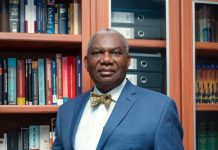
A Private Legal Practitioner, Mr. George Sarpong, has urged the media to go beyond covering the public activities of political parties and investigate the financial interests behind political campaigns.
He warned that the increasing monetisation of Ghanaian politics was weakening democratic institutions and creating opportunities for wealthy individuals with questionable interests to gain political influence and eventually capture the state.
According to Mr. Sarpong, Ghana’s political system must promote individuals with sound ideas, integrity, character and commitment to public service rather than create an environment where those with the “deepest pockets wield the greatest influence.”
He made the remarks at a workshop on political party financing and campaign expenditure organised by the Ghana Centre for Democratic Development (CDD-Ghana) in Accra.
The workshop formed part of CDD-Ghana’s efforts to build public support for a draft Model Political Finance Law developed with support from the British High Commission.
The proposed law seeks to strengthen transparency, accountability and regulation in political party and campaign financing. Mr. Sarpong said journalists had a critical role to play in exposing the financial interests influencing politics.
He urged the media to investigate who finances political candidates, how much is spent on campaigns and what expectations donors may have in return for their financial support.
He cautioned that individuals whose wealth was derived from activities detrimental to the public interest could use their financial resources to acquire political influence and ultimately control state institutions established to regulate their activities.
To reduce the influence of what he described as “political oligarchs,” Mr. Sarpong proposed the introduction of some form of public financing for political parties.
He said such a system would require consensus among political parties and other stakeholders on what should constitute legitimate campaign expenditure and the level of financial support the state could provide.
He expressed optimism that such consensus could be achieved, noting that representatives from different political traditions had already participated in discussions surrounding the proposed model law.
GH¢4.6m cost of NPP presidential ticket
Meanwhile, the Executive Director of the Africa Centre for International Law and Accountability, Mr. William Nyarko, disclosed that the cost of seeking political office in Ghana had reached what he described as a historic high.
He said aspirants seeking the New Patriotic Party’s (NPP) 2028 presidential nomination were required to pay GH¢4.6 million, comprising a GH¢600,000 filing fee and a GH¢4 million development fee.
Mr. Nyarko said the figure represented a dramatic increase compared with the cost of presidential nominations in previous elections under the Fourth Republic.
Data presented at the workshop showed that in 2016, the National Democratic Congress (NDC), then in government, charged GH¢60,000, while the NPP, then in opposition, charged GH¢85,000.
In 2020, the NPP, then in government, charged GH¢220,000, while the NDC charged GH¢420,000. By 2024, the NPP’s fee had risen to GH¢350,000, while the NDC charged GH¢530,000. For 2028, the NPP figure has risen sharply to GH¢4.6 million.
“One of the things you see is if a party is in government, their filing and nomination fees go up. So this would continue to escalate. And one of the reasons is the delegate system,” Mr. Nyarko said.
He stressed that filing fees represented only a fraction of the actual cost of pursuing political office. Citing a study from Zambia, he said the political lifecycle could become a nine-year financial burden, involving three years of donations and visibility-building before contesting, two years of servicing delegates and four years in office while continuing to meet financial obligations.
Mr. Nyarko said the situation had changed considerably compared with the early years of the Fourth Republic, identifying vote buying and the delegate system among the factors driving the escalating cost of politics.
He warned that the increasing financial barriers to political participation could eventually lead to state capture.“The more money you have to put in to get in, the more money you want to take out of the state,” he cautioned.
Four-pillar reform proposal
The experts at the workshop proposed a Model Political Finance Law anchored on four key measures.
Mandatory disclosure: Political parties and candidates should publish details of all funds received and identify their sources within three months after every election.
Five per cent single-source cap: No individual, company or candidate should contribute more than five per cent of the total funds raised by a political party or candidate, in order to limit the influence of dominant financiers.
State-funded primaries: The state should assume the cost of organising internal party primaries, which experts argued was currently borne by political parties and subsequently used to justify high nomination and filing fees.
Curbing abuse of incumbency: Strict sanctions should be introduced against the use of public resources for partisan political campaigns.
The experts warned that without comprehensive reforms to political financing, Ghana risked turning its democratic process into a competition for wealth rather than a contest based on ideas, competence, integrity and commitment to public service.
For more news, join The Chronicle Newspaper channel on WhatsApp: https://whatsapp.com/channel/0029VbBSs55E50UqNPvSOm2z