The National Commission for Civic Education (NCCE) has called for stronger collaboration with the media to promote constitutional awareness, responsible citizenship and national cohesion amid growing challenges in Ghana’s digital information environment.
The Commission said the media had a critical role to play in helping citizens navigate an increasingly complex information space characterised by misinformation, disinformation, hate speech, online harassment and deepfake content.
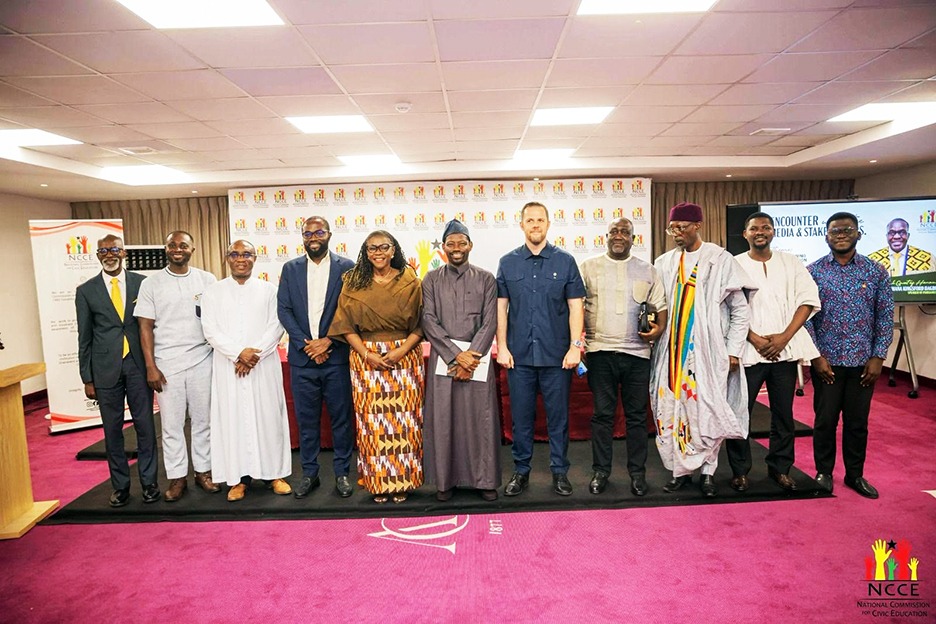
The NCCE Chairperson, Kathleen Addy, made the call at a Press Soirée organised by the Commission in Accra on Thursday, August 27, 2026, on the theme, “Strengthening Civic Education through Strategic Partnerships.”
The event brought together journalists, editors, producers, media executives, social media content creators, development partners, members of the diplomatic corps and representatives of civil society organisations.
Ms Addy said the media should be regarded as a strategic partner rather than merely an audience in the Commission’s efforts to advance civic education and strengthen Ghana’s democratic culture.
“Beyond reaching audiences, the media has the power to inform, educate, influence public discourse and shape national conversations,” she said.
She noted that through radio, television, print and digital platforms, the media had the ability to take the work of the NCCE into homes, workplaces, schools and communities across the country.
According to her, Ghana’s 1992 Constitution provides the foundation for the country’s democratic order, rights, freedoms and civic responsibilities, but developments in the digital environment were creating new challenges to information integrity and social cohesion.
The Commission’s 2026 theme, “Upholding the Constitution in the Digital Age: A Collective Responsibility,” reflects the need for citizens and institutions to adapt civic education to the changing information landscape.
Ms Addy said misinformation, disinformation, hate speech, intolerance, online harassment and deepfake content posed risks to informed public discourse and national cohesion.
She, therefore, called on media partners to create more spaces for conversations on responsible digital citizenship, the Constitution and civic responsibilities, democratic values, national cohesion, and informed and respectful public discourse.
She stressed that upholding the Constitution was a collective responsibility requiring the active participation of institutions and citizens. The NCCE, she said, looked forward to deeper collaboration with the media to build a stronger culture of constitutionalism and responsible citizenship both offline and online.
Media calls for decentralisation
For their part, media practitioners called on the NCCE to strengthen its presence at the district and community levels to make its programmes more accessible to citizens.
They argued that decentralising the Commission’s activities would enable it to reach more communities and engage directly with people on issues relating to the Constitution, democracy, governance and civic responsibilities.
The media also urged the NCCE to adopt more innovative approaches to civic education and make greater use of modern communication platforms to engage the public.
They emphasised the need for the Commission to develop strategies that appeal particularly to young people, who form a significant proportion of the population and are increasingly consuming information through social media and other digital platforms.
The engagement highlighted the need for a stronger partnership between the NCCE and the media to ensure that civic education becomes more accessible, relevant and responsive to the changing information environment.
With effective collaboration, both institutions can contribute to building a more informed citizenry, strengthening democratic participation and promoting responsible citizenship across the country.
For more news, join The Chronicle Newspaper channel on WhatsApp: https://whatsapp.com/channel/0029VbBSs55E50UqNPvSOm2z