The National Security Secretariat has proposed a new working relationship with the private media, including the establishment of secure channels for rapid verification of information during security incidents.
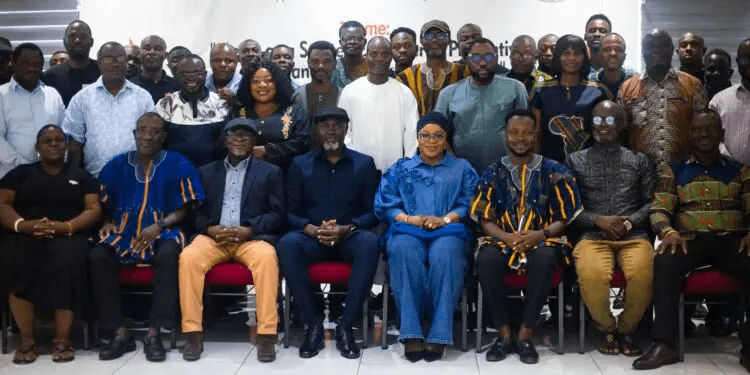
The proposal formed part of calls for closer collaboration between security agencies, government and the media at a training workshop organised by the Private Newspapers and Online News Publishers Association of Ghana (PRINPAG) in collaboration with the National Security Secretariat.
Held under the theme “Media as a Strategic Partner in National Security,” the workshop brought together 45 editors, senior reporters, publishers and media owners from private news outlets and online media platforms.
The workshop focused on five thematic areas: Ghana’s national security architecture and conflict-sensitive journalism; media, national security and strategic communications; security and intelligence legislation; cybercrime, digital threats and information warfare; and ethics, national interests and press freedom.
The engagement ultimately sought to strike a balance between two democratic imperatives: protecting national security without compromising press freedom and exercising press freedom without compromising lives, legitimate security operations or national stability.
Coordinator of National Security, Commissioner of Police (COP) Osman Abdul-Razak, said Ghana’s information space had become as important to national security as its borders, airspace and waters.
He urged journalists to see themselves not merely as observers, but as strategic partners in protecting the country’s peace and democratic stability.
“A free and responsible press is itself an instrument of security,” he said, explaining that journalism could expose corruption, hold power accountable and provide citizens with lawful channels for expressing grievances.
He, however, cautioned that irresponsible reporting, particularly the publication of unverified information could undermine security operations and create tension in society.
COP Abdul-Razak said journalists should recognise that their reports also constitute a source of open-source intelligence for the security and intelligence community.
“So if you think we don’t take your words seriously, you are wrong. We do,” he told participants.
Training, not censorship
The Coordinator stressed that the engagement was not intended to restrict press freedom, but to promote responsible use of the freedoms guaranteed by the 1992 Constitution.
He said journalists require continuous training to develop what he described as “trained intelligence”- the ability to research, verify information, understand complex security issues and report them responsibly.
According to him, courage alone was insufficient for effective journalism.
“Courage may be born in a journalist, but trained intelligence must be built deliberately and continuously,” he said.
He urged journalists to prioritise verified facts, fairness and accountability over sensationalism, particularly when reporting on communal conflicts, terrorism, ethnicity and religious tensions.
He cited the potential exploitation of social and economic grievances by extremist groups, warning that such vulnerabilities could be manipulated to recruit communities into extremist causes. Ghana’s relative stability and democratic credentials, he said, must not be taken for granted.
“Do not destroy it. Because it is the only one you have,” he cautioned.
COP Abdul-Razak announced that his office was ready to work with PRINPAG to organise periodic training programmes for journalists and editors on national security and