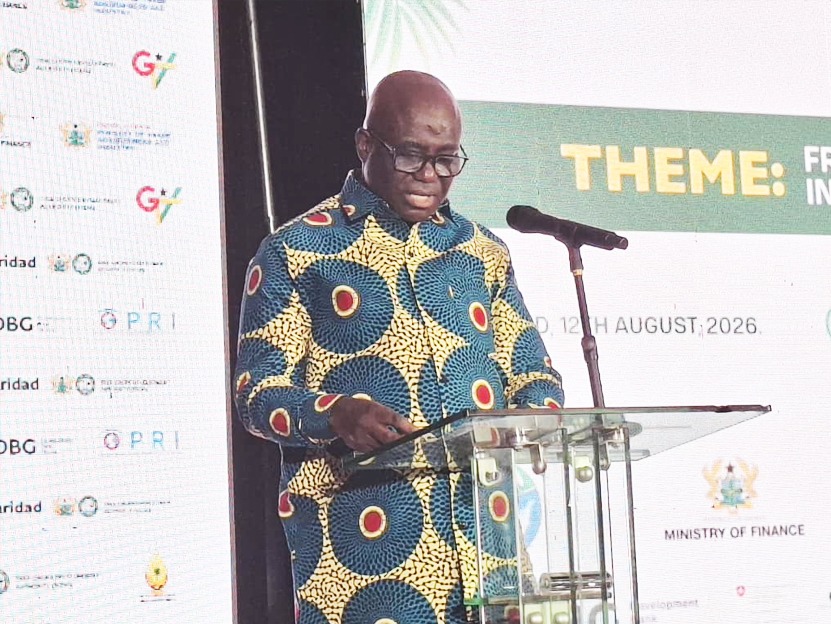
The Minister of Food and Agriculture, Eric Opoku, has challenged stakeholders in Ghana’s oil palm industry to abandon a culture of complaints and become a “generation of troubleshooters” capable of finding practical solutions to the sector’s persistent challenges.
He said Ghana did not lack policies, studies or good intentions, but what was urgently needed was the discipline to implement policies, the courage to coordinate and the determination to measure results.

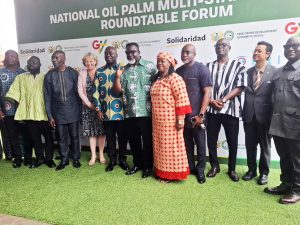
Mr. Opoku made the call at the National Oil Palm Multi-Stakeholder Roundtable Forum in Accra, organised by the Tree Crops Development Authority (TCDA) under the theme: “From Policy to Practice: The Role of TCDA in Resetting Ghana’s Oil Palm Industry.”
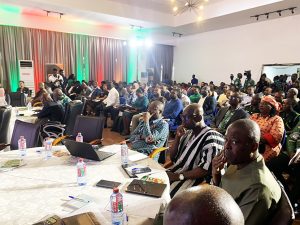
The forum brought together policymakers, farmers, agronomists, processors, agribusiness operators, financial institutions, development partners, traditional authorities and members of the diplomatic corps to deliberate on the development of Ghana’s oil palm sector.
The minister said the forum must not become another platform for discussing problems without producing solutions. “A policy that remains on paper does not create a single job, raise a farmer’s income, supply a processor with raw material or save the nation $1 in imports.”
He urged participants to leave the meeting with a clear understanding of who would do what, by when, with what resources and against measurable targets.
“We must leave the walls of this hall with a mindset of change, transitioning from a generation of whiners to a generation of trouble-shooters,” he stressed.
Closing the production gap
Mr. Opoku described oil palm as a strategic link between agriculture and industry, saying it supported farmers, nursery operators, transporters, processors, traders, manufacturers and service providers, with women playing particularly important roles in processing and marketing.
He noted that palm oil was also a key raw material for cosmetics, pharmaceuticals, confectionery, animal feed, bioenergy and other industries.
Despite Ghana’s favourable climate, farming experience, research capacity and growing processing base, he said domestic demand for palm oil continued to exceed local supply, forcing the country to rely heavily on imports.
The deficit, he said, represented not only lost foreign exchange, but also jobs not created, factories operating below capacity and farmers denied reliable markets.
He also warned that the supply gap created opportunities for smuggling and unfair trade practices.
100,000 hectares target
Mr. Opoku said the government had, in the 2026 Budget, set a target of supporting the establishment of 100,000 hectares of new oil palm plantations.
He stressed, however, that the initiative must go beyond expanding acreage. It must involve the rehabilitation of ageing farms, improved productivity, access to quality planting materials, inclusion of smallholders, women and young people, secure land arrangements, patient finance, efficient processing and stronger market linkages.
He cautioned that expansion must not come at the expense of forests and biodiversity. “We must prove that agricultural expansion and environmental responsibility can advance together,” he said.
The minister charged the TCDA, established under the Three-Crop Development Authority Act, 2019 (Act 1010), to serve as the institutional anchor for the transformation.
It must coordinate registration and licensing, production planning, industry data, traceability, quality assurance and collaboration among stakeholders, he said.
The Chief Executive Officer of TCDA, Dr. Andy Atta Okrah, said the authority was determined to move the industry from discussion to execution.
He said TCDA would operate both as a firm regulator and an active enabler, enforcing licensing, quality and compliance standards while coordinating planting programmes, facilitating access to certified seedlings and promoting investment and market opportunities.
“We are here today not only about discussions or to talk. It is designed and structured to build concrete consensus and establish a clear execution plan,” Dr. Okrah said.
Smallholders, finance and value addition
Mr. Opoku said smallholder farmers must be placed at the centre of the industry, with access to secure markets, transparent pricing, extension services and affordable inputs.
He also called for financial products suited to the long gestation period of oil palm, saying traditional financing arrangements were often unsuitable for the crop.
He urged Ghana to move beyond the production of fresh fruit bunches and invest in processing, storage, logistics and deeper value addition.
The minister further called for deliberate opportunities for women and young people across production, processing, technology, logistics and enterprise development.
Solidaridad Ghana Country Director, Eric Yirenkye, said the organisation was ready to support the sector with technical expertise, digital solutions, partnerships and climate-finance initiatives.
He urged stakeholders to focus on practical commitments, coordinated investments and innovative financing mechanisms.
Mr. Opoku said the ultimate test of the roundtable would be visible results — certified nurseries, productive farms, functioning mills, new businesses, decent jobs, increased local supply and reduced imports.
The message from the forum was clear: Ghana’s oil palm industry must move from fragmented interventions to coordinated action and from identifying problems to solving them.
The era of being a “generation of whiners,” stakeholders were told, must give way to a generation prepared to troubleshoot, implement and deliver results.
For more news, join The Chronicle Newspaper channel on WhatsApp: https://whatsapp.com/channel/0029VbBSs55E50UqNPvSOm2