At this year’s General Assembly, almost no one disputed Africa’s claim to permanent seats on the Security Council. That consensus has become a substitute for reform. The continent needs a strategy built on leverage, not on being right.
At the United Nations General Assembly in New York last month, Africa’s claim to permanent seats on the Security Council met almost no resistance. Secretary-General António Guterres called a Council without them “unjust and indefensible”. The President of the General Assembly said Africa belonged “at the table, not on the menu”. Of the 30 African leaders and delegations who addressed the first three days of the general debate, at least 23 pressed the point.
Nobody rose to rebut them. That is precisely the problem. Twenty-one years after the African Union set out its common position in the Ezulwini Consensus, Africa has won the argument and has nothing to show for it. Formal negotiations on reform began in 2009 and are still going. The longer the world agrees with Africa without acting, the plainer it becomes that persuasion was never the obstacle. Power is.
The case itself is beyond dispute. Africa’s 54 states make up more than a quarter of the UN’s membership and are home to nearly one in five people on earth. South Africa told the Assembly that 70 per cent of Security Council resolutions over the past decade concerned African conflicts.
Kenya’s President William Ruto put the contradiction in a sentence: “The equality proclaimed in this Assembly ends at the doors of the Security Council.” Africa, he said, is “permanently discussed, yet permanently excluded”. Even Washington endorsed two permanent African seats in 2024, and the Pact for the Future adopted that September pledged to “redress the historical injustice against Africa as a priority”.
None of this alters the arithmetic of Article 108 of the UN Charter. An amendment needs the votes of two-thirds of the General Assembly, 129 of 193 states, and then ratification by two-thirds of the membership, including all five permanent members. Reform, in other words, requires the consent of the very states that would lose by it.
The Council’s legitimacy is eroding, as scholars such as Ian Hurd have long argued, but legitimacy is a currency the powerful can afford to spend slowly. Students of bargaining have a blunt term for statements that cost nothing to make: cheap talk. A demand that costs the other side nothing to ignore is not really a demand. It is a petition, and each September Africa files it again.
King Mswati III of Eswatini, whose country lent the Ezulwini Consensus its name, asked the Assembly how many more years’ African leaders must “travel to New York” to make the same plea. The honest answer is: for as long as Africa relies on the plea alone. History suggests a different method, because the Council has been reformed once before.
In December 1963, the General Assembly voted 97 to 11 to enlarge it from 11 to 15 members. Only one permanent member, the Republic of China, then represented by Taiwan, voted in favour. France and the Soviet Union voted against; Britain and the United States abstained. On the logic of Article 108, that should have been the end of it. Instead, all five ratified within two years, and the amendment entered into force in August 1965.
What changed their minds was not a better argument. UN membership had more than doubled since 1945, and states from Africa and Asia now held more than half the seats. A memo to President Lyndon Johnson in March 1965 lays out the calculation with unusual candour. The Soviets, it noted, had “reversed their previous position, primarily because of Afro/Asian pressure”.
If the United States held out, the Afro-Asian states would “raid” Western European and Latin American seats in UN elections, and Washington would “bear exclusive blame” for the delay. The great powers ratified because obstruction had become costly, and because neither side in the Cold War could afford to lose the newly independent world to the other.
It is telling that this happened in the year Africa organised itself. In May 1963, African leaders founded the Organisation of African Unity in Addis Ababa; that same year, Kwame Nkrumah published Africa Must Unite. The conditions that made reform possible then have returned.
The United States, China, Russia, the European Union, Türkiye and the Gulf states are all competing for Africa’s minerals, markets, ports and votes. At this year’s Assembly, Donald Trump claimed credit for ending the war between the Democratic Republic of the Congo (DRC) and Rwanda, and Türkiye announced its next Africa partnership summit, to be held in Libya in December. Africa is being courted more intensely than at any time since decolonisation. It has not yet learned to charge for its company.
The less comfortable truth is that Africa has also stood in its own way. Because an amendment needs 129 votes, Africa’s 54 states already hold a de facto veto over reform. In 2005 they used it. That July, Brazil, Germany, India and Japan proposed a 25-member Council with six new permanent seats, two of them for Africa; the new members would defer use of the veto for 15 years pending a review.
The AU, meeting in Sirte, held out for its full package of two permanent seats with the veto and five non-permanent seats, and an extraordinary summit that August rejected compromise. The plan never came to a vote. Africa got neither the seats nor the veto.
The AU’s position is principled. Why should Africa accept second-class permanence while five states keep a privilege the continent’s leaders rightly regard as a relic? As Zimbabwe’s envoy put it in 2005, the veto should be abolished, “but as long as it exists, we too should have it”. The logic is impeccable; the strategy is not.
Insisting on the veto has handed every reluctant permanent member a ready excuse. When Washington offered two African seats without it in 2024, the AU’s answer did not change, and at this year’s Assembly Seychelles, Sierra Leone, Mozambique, Nigeria and Equatorial Guinea all restated the demand.
Nor has Africa settled who would fill the seats it seeks. The AU has said since 2005 that it will choose; it has not. The general debate exposed how divided the continent remains on almost everything except the slogan. Morocco and Libya announced rival bids for the same non-permanent seat in 2028–29.
African governments split openly over Western Sahara. The DRC accused Rwanda of aggression, while Rwanda said Burundian troops were operating alongside the FDLR, a militia it regards as genocidal, even as Burundi’s president chairs the AU. Senegal and Uganda put forward rival candidates for secretary-general. A bloc of 54 that behaves like 54 separate states is not a bloc. It is a constituency waiting to be divided.
What would a strategy built on leverage look like? First, the AU should decide, and publish, how its permanent seats would be filled, whether by designated states or by a rotation answerable to its Peace and Security Council. A continent that has not chosen its members hands every sceptic an excuse. Second, African states should act as a disciplined bloc wherever their numbers count.
In the General Assembly, decisions on budgets, admissions and Council elections require two-thirds of those voting, so a united African group with a handful of allies can stop almost anything. Inside the Council, where African files dominate the agenda, the three elected African members, this year the DRC, Liberia and Somalia, should vote as one. The aim is not obstruction for its own sake. It is to make the status quo costly, as the Afro-Asian bloc did in the 1960s.
Third, Africa should price the courtship. Every summit with a permanent member, whether in Beijing, Moscow, Washington, Paris or London, should yield a written commitment to support and ratify African permanent seats. The same goes for minerals deals, basing agreements and peace accords. Courtship that costs nothing will go on costing nothing.
Finally, the AU should keep its principle but change its sequence. It could accept permanent seats now, with a binding review of the veto written into the amendment, as the G4 offered in 2005. Or it could lead a wider campaign to restrain the veto for everyone, building on the French-Mexican initiative to suspend it in cases of mass atrocity. Either way, Africa would stop being the reason reform cannot happen.
Ninety years ago, in June 1936, Emperor Haile Selassie stood before the League of Nations in Geneva with international law on his side. Italy had invaded his country with bombers and poison gas. He closed with a warning: “God and history will remember your judgment.” Four days later, the League lifted its sanctions on Italy. At this year’s Assembly, Ethiopia’s president reminded delegates of that betrayal.
Its lesson is not that Africa was wrong, but that being right was not enough. The world is again fragmenting into rival centres of power, each eager for Africa’s favour. That gives the continent more leverage than it has held in six decades. Africa does not lack arguments. It lacks a bloc. The next time its leaders travel to New York, they should bring fewer speeches and more votes.
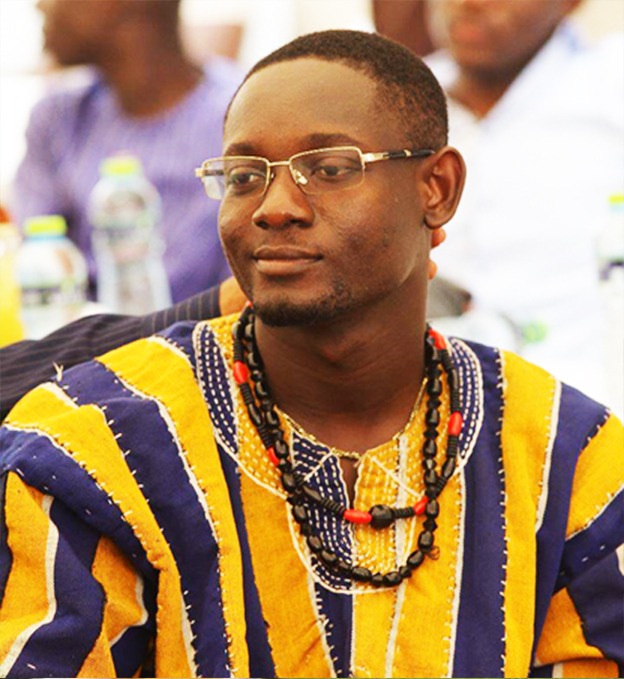
Obed Kog is a graduate student in International Relations and Diplomacy at the Ghana Institute of Management and Public Administration (GIMPA)
For more news, join The Chronicle Newspaper channel on WhatsApp: https://whatsapp.com/channel/0029VbBSs55E50UqNPvSOm2z