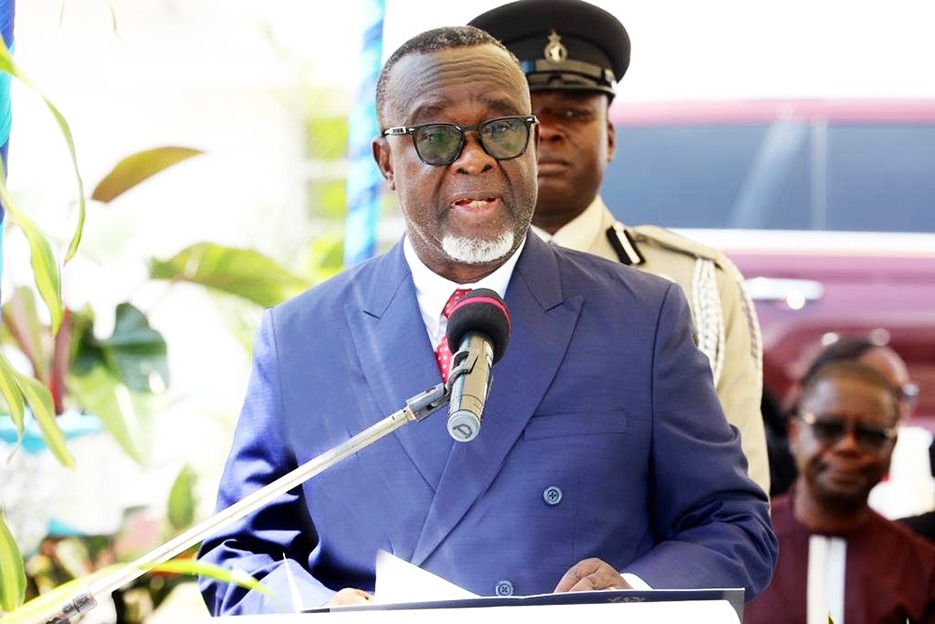
The 69th Legal year opened last Saturday with a call on the Judiciary to embrace E-Justice with moral integrity.
The opening of the 69th Legal Year carries deep historical resonance for the country, as it coincides with the Supreme Court’s 150-year institutional milestone (1876–2026).
This historic legacy traces directly back to the Supreme Court Ordinance of 1876, which formally re-established the Supreme Court of Judicature for the Gold Coast Colony, laying the statutory and structural foundations upon which Ghana’s modern Fourth Republic legal system continues to stand.
Speaking under the theme: “Strengthening the Foundation of Justice through Leadership, Innovation and Technology”, the Chief Justice joined religious, executive and legal leaders in issuing an urgent call to action.
Together, the Bench, Bar and Clergy declared that while artificial intelligence and digital filing systems are indispensable to modern court administration, technological efficiency must never eclipse human dignity or unyielding moral integrity.
Addressing justices, members of the Bar, and judicial staff during the post-service reception at the Supreme Court Forecourt, Chief Justice Justice Paul Baffoe-Bonnie reflected deeply on institutional continuity, judicial reform and his upcoming retirement.
Reflecting on the evolution of the legal year’s focus, the Chief Justice drew a sharp distinction between last year’s theme: “Building the Pillars of Justice through Leadership, Innovation and Technology,” and this year’s imperative: “Strengthening the Foundation of Justice…”.
A foundation, he observed, may be laid in a single day but its true strength and resilience can only be tested over time under the weight of public trust.
Chief Justice Baffoe-Bonnie noted that the judiciary is larger than the courtroom and charged every magistrate, registrar, clerk and practitioner to consider themselves stewards of a public trust, issuing a unified mandate “to leave the judiciary stronger than we found it.”
On the subject of court digitization, the Chief Justice insisted that technological tools must serve human outcomes rather than mechanical efficiency. While electronic dockets, virtual hearings, and automated case tracking streamline court administration, he reminded the audience that no algorithm can carry the moral weight of judging a human life or protecting a vulnerable citizen’s constitutional rights.
The landmark occasion was underscored by a stunning announcement from the head of the country’s third arm of government that he will officially conclude his tenure as Chief Justice later this year.
Contemplating the transient nature of public office, he noted that “no individual builds a judiciary but inherits, builds, and hands it over.”
The Chief Justice paid a heartfelt tribute to his long-time friend and colleague, senior Supreme Court Judge, Justice Gabriel Pwamang, acknowledging his steadfast support, legal acumen and dedicated service on the apex court bench.
Delivering a fiery and morally charged sermon at a church service at the Holy Trinity Cathedral, the Guest Preacher, Rt. Rev. Dr. Daniel Sylvanus Mensah Torto, Anglican Bishop of Accra, confronted the legal community on the ethical risks of rapid technological adaptation, insisting that digital transformation must reinforce rather than erode spiritual and professional standards.
Bishop Torto commended the Judicial Service’s digital expansion, asserting that online filing and e-court platforms reduce systemic corruption and enhance public transparency by empowering ordinary citizens to track case progress in real time.
Issuing a stern caveat to judges and judicial officers, the Bishop warned that “technology is a tool, not a master,” emphasizing that automated processes and digital platforms must remain strictly subordinate to ethical principles and personal character.
Addressing the Bench and Bar directly, Bishop Torto delivered a series of solemn spiritual directives reminding all judges and legal practitioners that “one day every judge will be judged” before a higher divine tribunal and exhorted leaders across the judicial sector to “lead with courage and the fear of God.”
The Bishop urged the Judicial Service to aggressively embrace modern e-justice technologies while vigilantly guarding their personal and institutional integrity.
He invoked the timeless biblical mandate of the Prophet Micah and charged legal custodians to “act justly, love mercy and walk humbly”.
The divine service at the Holy Trinity Cathedral brought together top leadership across all legal sectors, exemplified during the liturgy where representatives of the Executive, Bench, and Bar who actively led the congregation in scripture readings.
Chief Justice Justice Paul Baffoe-Bonnie delivered the First Reading from Deuteronomy 16:18–20; the Attorney-General and Minister for Justice, Dr. Dominic Akuritinga Ayine, read the Second Reading from James 2:4–9; and the National President of the Ghana Bar Association, Mrs. Efua Ghartey, took the Third Reading from Matthew 23:23–24.
Also in attendance was the President of the Law Society of Ghana, Rockson-Nelson Etse Kwami Dafeamekpor, who also doubles as the Member of Parliament for South Dayi.
During the liturgical proceedings, solemn intercessory prayers were led for the current judiciary to uphold righteousness in their rulings.
The assembly also observed a quiet moment of prayer and remembrance to honour the memory of departed members of the Bench and Bar who passed away over the preceding year.
By Mohammed T. Kataba
For more news, join The Chronicle Newspaper channel on WhatsApp: https://whatsapp.com/channel/0029VbBSs55E50UqNPvSOm2z