For most sighted people, a conversation involves more than words. A smile can signal happiness, a frown may suggest displeasure, while a change in facial expression can alter the meaning of what is being said.
But for people who are visually impaired, many of these visual signals are unavailable. Instead, the brain can rely more heavily on information from other senses, particularly sound and touch, to help interpret the emotional meaning behind conversations.
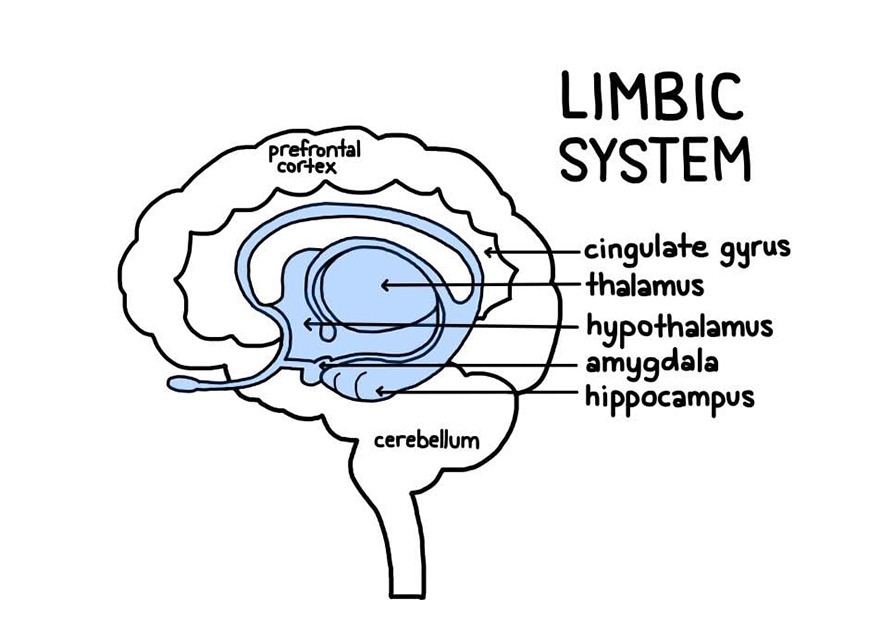
University of Ghana Neuroscientist, Dr Thomas Amatey Tagoe, says the limbic system, a network of brain regions involved in emotional processing and expression plays an important role in this process.
“The limbic system will help you interpret what emotions are on the face,” Dr Tagoe explained to The Chronicle in an interview. “And it’s not just through sight, it will also be through sound.”
For a visually impaired person, therefore, information carried through sound can become particularly important in understanding another person’s emotional state.
From Brain Structure to Network
The limbic system was not originally understood as the broad, interconnected network scientists describe today.
Dr Tagoe explained that early descriptions were largely based on the location of structures within the brain. French Neurologist Paul Broca, for instance, described what he called the “limbic lobe” in the 19th century.
Subsequent researchers expanded the understanding of brain structures involved in emotional processing. The work of scientists such as James Papez and Paul MacLean contributed to models of interconnected regions involved in emotion, memory and bodily responses.
Among the structures commonly associated with the limbic network are the amygdala, hippocampus and hypothalamus, each of which performs different functions.
The amygdala helps the brain assess the emotional significance of information, including whether something may be threatening, rewarding or otherwise important.
The hippocampus is strongly involved in forming and retrieving memories, helping the brain connect present experiences with what has happened before.
The hypothalamus, meanwhile, helps regulate basic bodily functions such as hunger, sleep, temperature and hormonal responses, linking emotional states to physical changes in the body.
Dr Tagoe, however, cautioned against viewing the limbic system as a single, isolated part of the brain.
Modern neuroscience increasingly understands emotional processing as involving interconnected networks rather than one clearly defined anatomical “box”.
“That concept has evolved over time,” he said, explaining that researchers began adding other brain regions when damage to them was found to affect emotional behaviour.
The significance of this network becomes clearer during ordinary human interaction.
While areas such as Broca’s and Wernicke’s regions are strongly associated with language, emotional processing can influence how those words are understood.
The question, “What are you doing?” for example, can be a neutral request, an expression of anger or even a rhetorical question depending on the speaker’s tone.
The words remain the same, but the emotional information surrounding them can change their meaning.
Reading Emotion Without Sight
For people who cannot rely on facial expressions, sound can provide some of the emotional information that sighted people obtain visually.
Dr Tagoe said the brain can process emotional information through sound, while research on whether blind people are categorically better than sighted people at recognising emotions from voices remains mixed.
What is clearer, he said, is that when visual information is unavailable, the brain can place greater reliance on other sensory information.
He said it was therefore more accurate to describe visually impaired people as developing different patterns of sensory reliance rather than simply having “better” senses.
Dr Peter Obeng Asamoah, Executive Director of the Ghana Blind Union, said this reliance is evident in everyday communication.
“A happy voice is normally lighter, faster, and you can virtually feel the smile in the person’s voice,” he explained.
Changes in pace, word choice and inflection can also suggest anger, while hesitation, silence or unusually brief responses may indicate discomfort or another emotional state.
In an interview with The Chronicle at his office, Dr Obeng Asamoah recalled speaking to an elderly woman on the telephone and sensing from her voice that something was wrong.
When he asked whether she was in pain, she was surprised and asked how he had known.
The experience illustrates how information that may be accompanied by facial expression for a sighted person can sometimes be inferred from other signals.
However, Dr Tagoe stressed that this does not mean the limbic system functions exclusively or fundamentally differently in blind people. Rather, the emotional networks continue to process information while the sensory channels providing that information can change in importance.
Memory and Touch
The adaptation extends beyond emotional communication. Dr Obeng Asamoah said memory is particularly important in the daily lives of many visually impaired people because it supports navigation and independence.
“Memory is not just a thing of reference. It becomes a tool for survival,” he said.
A visually impaired person may remember where to cross a road, when to turn left or right, or how many speed ramps occur along a familiar route.
At public events, Dr Obeng Asamoah said, he may also have to listen carefully and retain information because he cannot simply read a speech from a document in front of him.
Touch and other environmental cues can also become significant. Subtle differences in surfaces, objects or pavements can provide information about location and movement, details that may go unnoticed by sighted people who ordinarily depend on vision.
Dr Tagoe said this illustrates the brain’s ability to adjust when one sensory pathway is unavailable.
The adjustment does not mean that visually impaired people communicate through the limbic system alone. Instead, emotional processing remains part of a wider network, while sound, touch and other available sensory information can assume greater importance.
For a person who cannot see a smile or frown, the emotional meaning of an interaction may therefore come through a combination of words, pauses, vocal expression, memory and other non-visual cues.
The eyes may not provide the information, but the brain continues to search for meaning through the senses that remain available.
For more news, join The Chronicle Newspaper channel on WhatsApp: https://whatsapp.com/channel/0029VbBSs55E50UqNPvSOm2z