Speaking to the Russian broadcaster RT, President John Mahama said that some members of his delegation arrived in Moscow expecting bombed-out streets and an economy in ruins, and found Muscovites going about their daily lives instead. He also said he hopes the Russia-Ukraine conflict will end “as quickly as possible,” according to the Business & Financial Times. I take it for granted that every serious person hopes for same.
My argument is that one of the things delaying it is being signed in African capitals. The recruitment channels now spreading across the continent, in the form of scholarship notices, ministry memoranda and bilateral labour agreements are looking like a facade. They look like job creation but work as a supply line of human inputs for a war economy that cannot find enough of its own, and the official stamps allow the supply to scale. Ghana’s recent memorandum with Russia’s Alabuga zone is the latest and clearest example.
What a car window does not show
A country fighting a long war of attrition has to find soldiers for the front and workers for the factories. This is more so when its own citizens are scarce or politically expensive to send; it must look elsewhere. According to the Foreign Policy Research Institute (FPRI), about 1,800 African men have reportedly signed Russian military contracts, drawn from some 36 countries, including more than 1,000 Kenyans and 272 Ghanaians. The share of Russia’s recruitment aimed at foreigners reportedly rose from about 7 percent in 2024 to about 33 percent in 2025.
Interestingly, the pattern appears same on the factory floor. The Alabuga Special Economic Zone in Tatarstan assembles the Iranian-designed Shahed-136 drone. Its recruitment programme, Alabuga Start, targets young women aged 18 to 22 from Africa, Latin America and South Asia. Investigators from the AP and the Global Initiative Against Transnational Organized Crime (GI-TOC) estimate that about 90 percent of participants end up on drone assembly, whatever job they thought they had applied for.
How the facade works
It borrows the state’s credibility, like in South Sudan, the Ministry of Higher Education announced Alabuga places in April 2023 as a scholarship granted by the Russian government, in a notice the BBC has reproduced. GI-TOC reports that Uganda created a bilateral labour agreement with Russia that could cover Alabuga Start. An applicant who sees a ministry letterhead has no reason to suspect what happens after arrival.
It sells a different job from the one that exists. One South Sudanese recruit told the BBC she had chosen tower-crane operation, and that she and her whole cohort were sent to the drone factory on arrival.
It binds people once they arrive. Recruits describe non-disclosure agreements, deductions for rent, transport and taxes, and fines such as 50 dollars for a missed day. Passports have reportedly been seized. For men recruited to fight, a Russian decree of November 2025 reportedly requires foreigners to choose between military service and leaving. Alabuga has denied using deception.
It travels through channels people trust. Influencers promote the programme, applications go through WhatsApp, and FPRI describes fake agencies advertising civilian posts for the military variant. Each layer transfers trust to someone more credible, and by the time the deception shows, it is happening in Tatarstan.
Ghana’s memorandum
According to GhanaWeb, Labour Minister Emmanuel Agyekum has signed a memorandum of understanding with the director of the Alabuga zone to facilitate the recruitment of Ghanaian workers for industrial and manufacturing roles. The zone is said to need more than 75,000 workers across more than 48 companies. The Ministry is to coordinate recruitment, including verification of job offers, skills matching and pre-departure orientation.
I do not impute bad faith, and I do not claim that any Ghanaian has yet been placed on a drone line. My claim is about the channel. The safeguards named are the same ones that exist on paper in every case above, and none reaches the factory floor. Nobody has shown that Ghanaian workers would be kept away from drone production.
It should concern us more because the same government has been candid about the military channel’s cost. In July, Foreign Minister Samuel Okudzeto Ablakwa said that about 272 Ghanaians are believed to have been recruited since 2022, that 55 had been reported dead, and that two are held as prisoners of war. By August 17, he put the dead at about 62, with 15 others missing. Ghana cannot credibly condemn one channel into this war while opening another.
The assurance from Moscow
As recent as November 2, Ghana’s Foreign Ministry said that, following concerns raised by President Mahama at the Moscow summit, President Putin had declared that Ghanaians are no longer allowed to participate in the war, whether through irregular recruitment or voluntary enlistment. If it holds, that is the most important development in this story, and the President deserves credit for raising it.
Three cautions apply though. I could find no Russian confirmation, so for now it rests on one side’s account. A verbal assurance is not a written, verifiable commitment. And as reported, it addresses the war, not the labour channel: nothing in it says whether Ghanaians may still be placed in Alabuga’s drone factories. The memorandum therefore still needs answering.
The summit circuit that carries it
Such memoranda are produced by a diplomatic circuit with few brakes. The Russia-Africa summit in Moscow on 28 and 29 October was the third, with 21 or 22 African leaders reportedly participating. I have not confirmed whether the Alabuga memorandum was signed on its margins, and Parliament should ask. The African Union has tried since 2006 to coordinate how the continent meets partners, but it cannot enforce its rules when partners organise the summits. A continent that arrives without a common text, and without a red line on recruiting its citizens for a war economy, leaves each ministry to negotiate alone. The summits’ record is the subject of a companion article.
Why the facade prolongs the war
I do not claim that trafficked labour is the decisive input to Russia’s war. The case is about the margin, and margins matter in attritional wars. A channel that looks like trafficking gets shut down: Burkina Faso reportedly halted recruitment, and Kenya agreed with Russia in March that no Kenyans would be recruited. A channel that looks like a labour agreement does not, and it can grow to meet a demand of 75,000 workers with the following effects.
First, it removes a brake. The traditional limit on a long war is a government’s fear of what its population will tolerate. Every foreigner placed at the front is one Russian family spared that decision. A state that can import its casualties has less reason to count them.
Second, it sustains industrial output. Labour is a real bottleneck in Russia’s defence economy. If the zone could not recruit this way, it would have to raise wages or accept slower expansion, and each raises the cost of the war.
Third, it postpones the reckoning. Workers bound by deductions, seized passports and non-disclosure agreements let a war economy avoid paying the true price of its labour. Coerced labour makes the arithmetic look better than it is.
The questions that ought to be asked
Before another Ghanaian boards a flight, the government should answer these with evidence rather than assurance.
- Due diligence.What review of Alabuga’s record preceded the signing? Did it take in the AP, GI-TOC, BBC and UN Human Rights Office findings?
- Can the Ministry state in writing that no Ghanaian will be assigned to drone assembly, and who would check?
- The right to leave.Can a Ghanaian worker leave at any time? Who holds the passport, and does a non-disclosure agreement stop workers from telling their families and their embassy what they do?
- Risk to life.If a Ghanaian is killed in a strike on the zone, as happened to a hostel housing African recruits in April 2024, what does the state owe the family?
- One government or two.The Foreign Ministry reports about 62 Ghanaians dead and 15 missing. The Labour Ministry has signed a recruitment memorandum. Who reconciled the two, and were the security services consulted?
- The assurance.What exactly did President Putin say, in what form, and who on the Russian side has confirmed it? Does it cover Alabuga’s factories as well as the front, the missing and the two prisoners of war?
- Who is paid per head.Which agencies, brokers and influencers earn fees for placing workers abroad, and has anyone been prosecuted?
- The numbers.How many Ghanaians are in Russia today, through which channels, and in what work?
What should be done
- Suspend and publish the Alabuga memorandum.Release its text, and make any resumption conditional on independent verification of where Ghanaian workers would be placed.
- Hold Moscow to its word.Obtain Putin’s reported assurance in writing, extend it expressly to Alabuga and to the November 2025 decree, and press for the release of Ghanaian recruits and the two prisoners of war.
- Name it for what it is.Treat deceived recruits as trafficking victims, prosecute the agents and influencers who profit from them, and protect victims on return.
- Map the recruitment chain.Intelligence and law-enforcement agencies should trace the agencies, advertisers, payment flows and travel routes.
- Pressure the platforms.Meta removed thousands of fraudulent job schemes after being pressed. TikTok, Telegram and others should be asked to do the same.
- Act together.The African Union and ECOWAS should adopt a common position and table it as a standing red line at every summit, Moscow’s included.
A necessary caution
Nothing here is hostile to the Russian people. Coercion of foreign workers or fighters would be wrong on any side of any war, and an African government should say so wherever it occurs. The investigations I have drawn on concern Russia, and that is where the evidence points today.
President Mahama has said he hopes the war ends as quickly as possible. So do the families of the 62 Ghanaians reported dead. There is no more direct contribution an African government can make than to refuse, publicly and in practice, to let its citizens become the war’s supply chain, and that begins with what is signed in Accra.
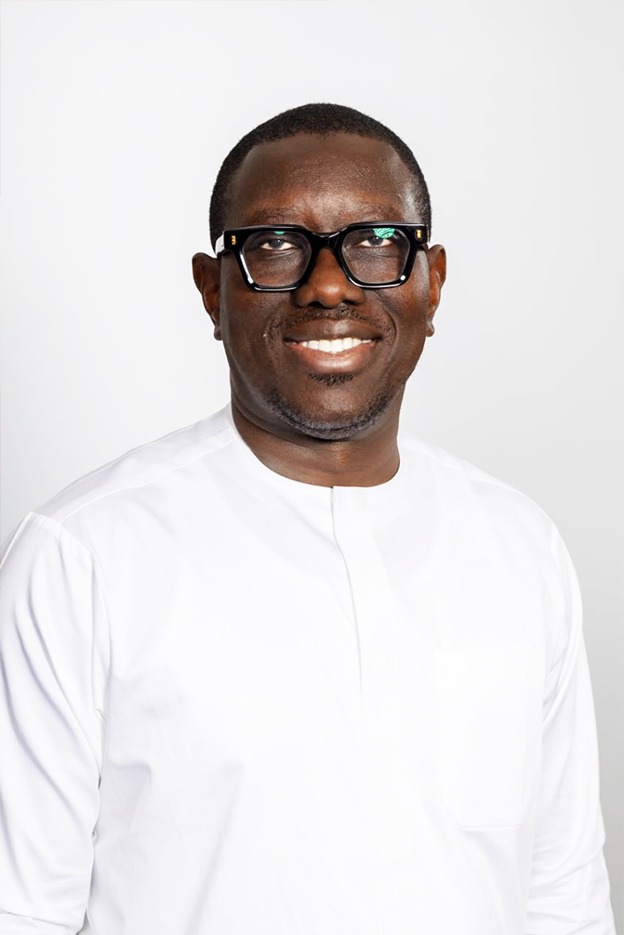
The author, Nana Attobrah Quaicoe, is an Intelligence and National Security Analyst, a former Director General of the Bureau of National Intelligence (2022-2025), and writes on national security and intelligence reforms, risk, integrity assessment and institutional governance in the Ghanaian context.
For more news, join The Chronicle Newspaper channel on WhatsApp: https://whatsapp.com/channel/0029VbBSs55E50UqNPvSOm2z