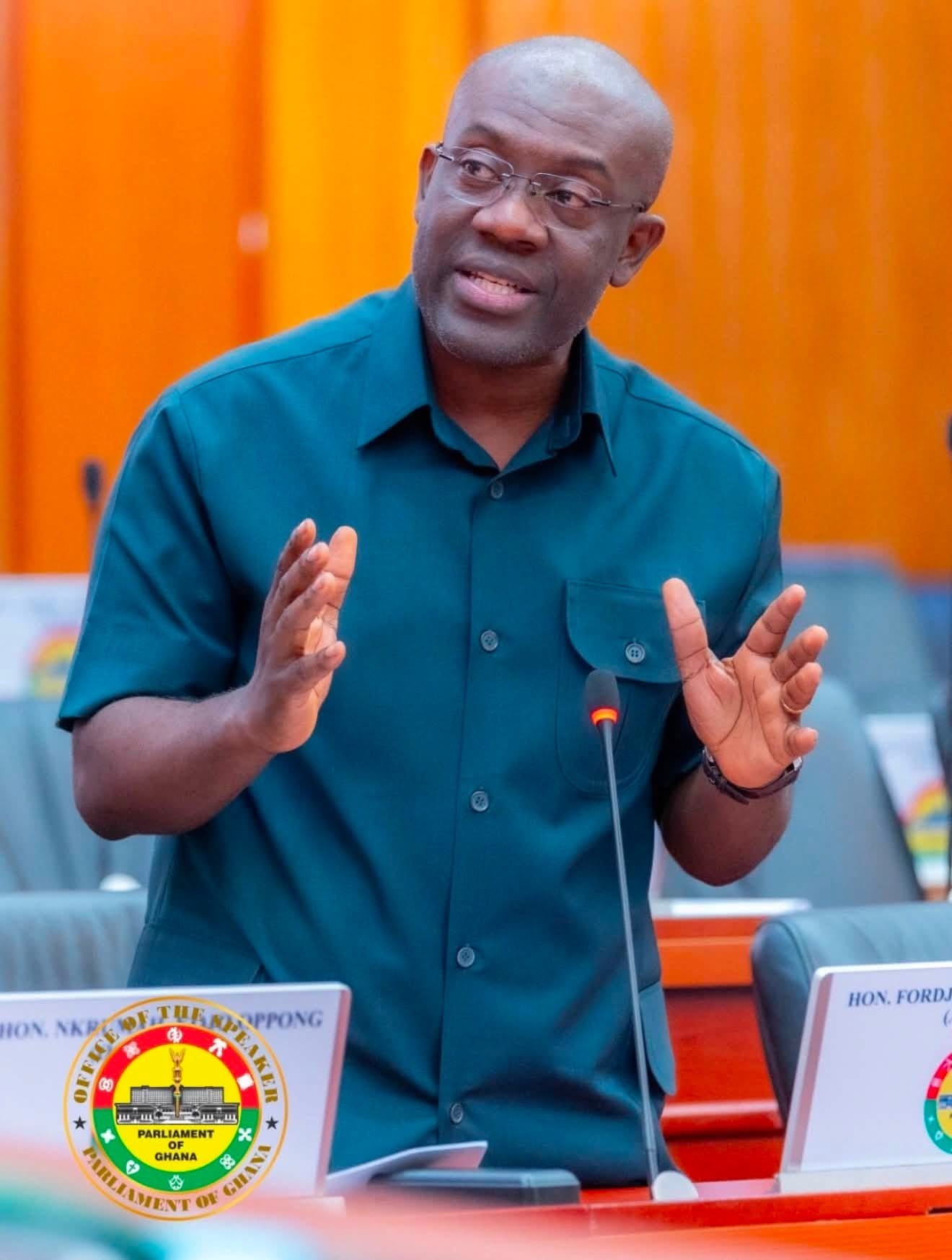
The Minority in Parliament has accused the government of prioritising favourable economic statistics over the financial realities facing households and businesses, insisting that declining inflation has not translated into improved living conditions.
The Ranking Member on Parliament’s Economy and Development Committee, Kojo Oppong Nkrumah, said the government’s celebration of the 5.5 per cent inflation rate ahead of the 2027 Budget presentation ignored the rising cost of essential goods and services.
Addressing a news conference on monetary policy and the economy in Accra yesterday, he argued that the decline in inflation had been driven largely by monetary tightening rather than increased production and improved affordability.
He cited the Bank of Ghana’s 2025 accounts, which showed that GH¢93.56 billion was locked away to manage demand, while GH¢16.73 billion was spent paying banks to keep cedis out of circulation. According to him, these measures had imposed costs on businesses and the central bank without delivering corresponding improvements in employment.
Rising cost of living
Mr Oppong Nkrumah challenged the inflation figure, arguing that it did not adequately reflect the increases in essential household expenses. He cited electricity tariffs, which he said had increased by a cumulative 28.7 per cent since January 2025, against a 19.9 per cent increase in the minimum wage over the same period.
Water tariffs rose by 13.3 per cent in 2026, while transport costs increased by 14.1 per cent between October 2025 and October 2026.
Housing, rent and utilities recorded a 10.5 per cent increase, school fees 9.4 per cent and services overall 11.5 per cent, according to figures cited in the statement. He argued that these increases continued to erode workers’ purchasing power despite the decline in headline inflation.
Credit and cedi concerns
On access to credit, Mr Oppong Nkrumah said lower interest rates had yet to translate into improved lending to businesses. He put private-sector credit at less than eight per cent of Ghana’s gross domestic product (GDP), compared with approximately 32 per cent in Kenya and 36 per cent across sub-Saharan Africa.
He also claimed that banks lent only about 36 pesewas out of every cedi deposited with them, leaving traders, farmers and manufacturers struggling to access financing.
The Ranking Member further questioned the sustainability of the cedi’s performance, saying its approximately 40 per cent appreciation in 2025 had been supported by substantial foreign exchange interventions.
He said the currency had subsequently lost about 10.5 per cent of its value against the US dollar by early November 2026.
Citing market reports, he claimed the Bank of Ghana sold US$9.2 billion into the foreign exchange market between January and August 2026, while international reserves fell from approximately US$14.5 billion in February to US$11.1 billion in August.
He also raised concerns about the environmental implications of the growing reliance on small-scale gold purchases to generate foreign exchange, citing GoldBod figures showing US$1.87 billion in small-scale gold trading in September.
He questioned whether the demand for gold was worsening illegal mining and the destruction of water bodies, particularly in the absence of an effective gold traceability system.
Demands ahead of Budget
Ahead of the 2027 Budget, Mr Oppong Nkrumah called on the Finance Minister to disclose the full cost of the Bank of Ghana’s liquidity operations and provide a clear plan for recapitalising the central bank.
He also demanded regular disclosure of foreign exchange interventions, full traceability of gold purchases, and a minimum wage that reflected the cost of essential goods and services.
Other demands included a credible plan to improve credit access for businesses, verified figures on jobs created under government programmes and full disclosure of the financing arrangements for the proposed New Economy initiative.
He maintained that economic performance should be measured not merely by inflation, exchange rates and interest rates, but by their impact on household incomes, businesses and employment.