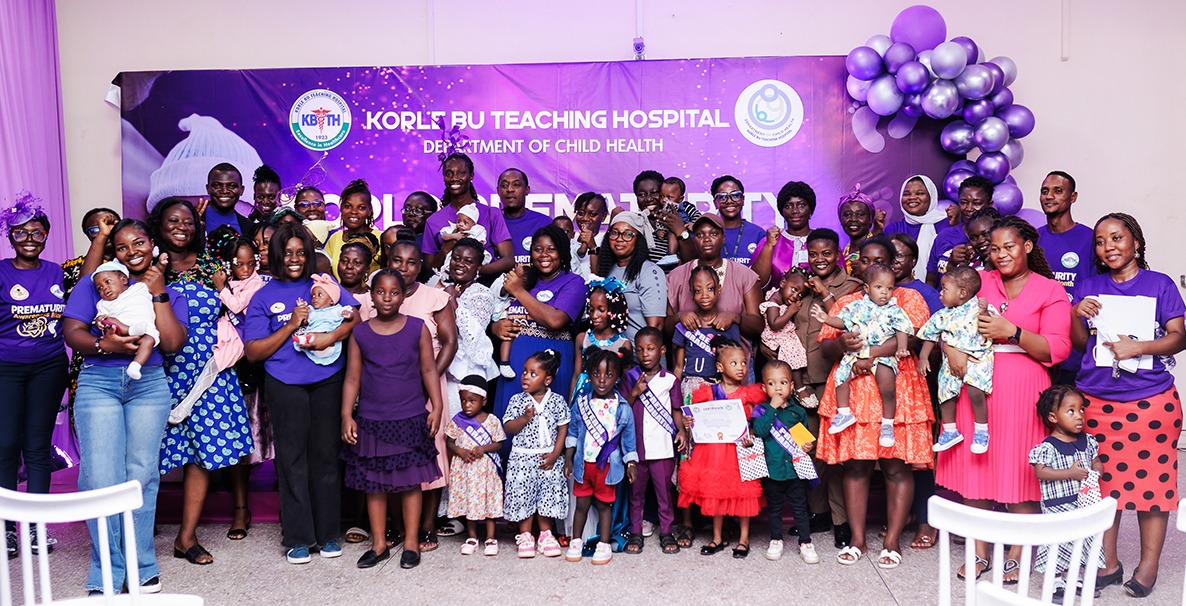
Unsafe transfers and unequal access to specialised neonatal care could threaten the survival of preterm babies, Paediatrician/Neonatologist, Dr. Flora Boakye-Mensah of Korle Bu Teaching Hospital has warned.
She said a baby’s chances of survival should not depend on the facility where the child is born or the financial circumstances of the family, calling for a safer and more coordinated referral system to ensure that every preterm baby receives timely and appropriate care.
Speaking at the 2026 World Prematurity Day celebration at Korle Bu Teaching Hospital on Tuesday, November 17, Dr. Boakye-Mensah highlighted the difficulties confronting babies who require specialised care but are born in health facilities without the necessary expertise and equipment.
To illustrate the disparity, she presented the example of two babies born at 28 weeks. While one may be delivered at a well-resourced facility with access to respiratory support, appropriate nutrition and specialised care, the other may be born at a facility lacking such resources and require an urgent referral.
For the second baby, the process could involve arranging transportation and finding money to facilitate the journey, placing additional pressure on a family already dealing with the uncertainty of having a preterm child.
Dr. Boakye-Mensah said such differences in access to healthcare should never determine a child’s opportunity to survive, insisting that every preterm baby deserves a fair chance, regardless of their birthplace or family background.
She stressed that referral should not be viewed simply as moving a baby from one hospital to another, explaining that the process begins with early recognition of the need for specialised care and must include proper stabilisation before transfer.
She identified effective communication between health facilities, appropriate respiratory support and continuous monitoring as essential elements of a safe referral process.
The paediatrician called for stronger collaboration between referring facilities and referral centres through shared protocols, improved communication and feedback to ensure continuity of care.
She also urged healthcare providers to consider transferring expectant mothers at risk of preterm delivery to appropriately equipped facilities before childbirth whenever possible, noting that this could prevent vulnerable newborns from having to undergo potentially risky transfers after delivery.
Dr. Boakye-Mensah further drew attention to transfers within the same hospital, particularly from maternity units to neonatal intensive care units, cautioning that such movements should not be underestimated.
She called for stronger coordination among healthcare teams, appropriate monitoring and uninterrupted care until a baby is safely received by the next team. Beyond ensuring survival, she said, healthcare providers must also prioritise follow-up care to monitor the growth and development of preterm babies after discharge.
The celebration also provided an opportunity to recognise the progress of children who had been born preterm. Some of the children graduated and received awards in recognition of their journeys and milestones, offering a moment of celebration for families and healthcare workers involved in their care.
The recognition highlighted the importance of looking beyond the immediate survival of preterm babies to the support and follow-up they need as they grow.
Dr. Boakye-Mensah also acknowledged the emotional and financial burden on parents who travel long distances in search of specialised care and spend days and nights at hospitals hoping for their babies’ recovery.
The event, organised by the Department of Child Health and the Neonatal Intensive Care Unit of Korle Bu Teaching Hospital, was held under the theme, “Safe Referral, Equitable Care and Follow-Up for Every Preterm Baby.”
It aimed to raise awareness of preterm birth, strengthen safe referral practices, promote equitable care, including Kangaroo Mother Care, and encourage follow-up appointments for babies after discharge.
By Jesse Otoo