Six in every ten Ghanaian children are facing serious education challenges, a senior academic has warned, describing the situation as a national emergency driven by inequality, poor learning outcomes, weak policy choices and neglect of vulnerable communities.
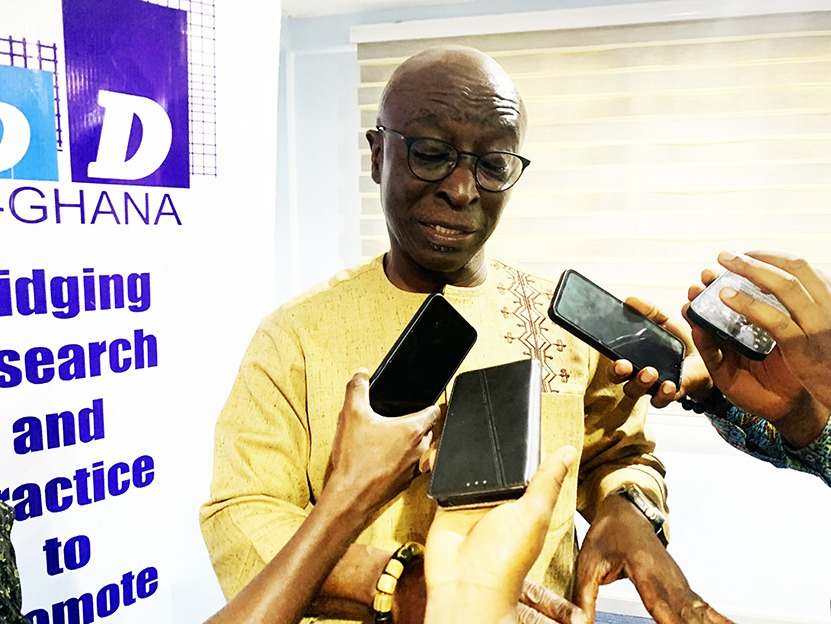
Prof. Kwame Acheampong, Senior Fellow at the Centre for Democratic Development (CDD-Ghana) made the disclosure at a public lecture organised by the Accra-based policy research institute.
The remarks formed part of excerpts from a broader research presentation, rather than a standalone study, titled “Reconceptualising the Learning Crisis in Africa: A Multi-Dimensional Pedagogies of Accelerated Learning Programmes”, co-authored with Sean Haggins.
The lecture, which brought together teachers, politicians, policymakers, journalists and education stakeholders, focused on key themes including inequality in education quality, language barriers in classrooms, curriculum relevance, teacher preparedness, child nutrition and the urgent need for social justice in Ghana’s education system.
The study challenges the widely used global “learning crisis” narrative, arguing that deficit-based models often misrepresent the experiences, identities, knowledge systems and realities of African children.
It contends that such approaches weaken the dignity and agency of learners while limiting their educational opportunities.
Drawing on case studies of Accelerated Learning Programmes (ALPs) in Ethiopia, Liberia and Ghana, the research proposes new models that rethink the purpose and teaching methods of education, particularly for out-of-school children and low-achieving learners.
Quality and Inequality
“If we are getting 60 per cent of our children who are not learning as they should, it is a crisis,” Prof. Acheampong told the gathering adding, “we should not downplay it and just talk about how well we are doing in other sectors.”
He said Ghana had focused too heavily on school enrolment figures while failing to ensure that children are actually learning.
According to him, poorer children, especially those in rural communities, continue to suffer the most.
“Counting children in classrooms is not the same as counting children who are learning,” he stated and called for a national minimum standard of education quality that must be guaranteed to every child, regardless of family income or location.
Language of Instruction
Prof. Acheampong identified language barriers as one of the most overlooked causes of poor learning outcomes.
He said many children begin school in classrooms where teaching is conducted in a language unfamiliar to them.
“The teacher asks a question and all the children are afraid to look stupid because they do not understand. That is the first experience they get when they go to school,” he noted.
He cited evidence from Ethiopia, where children taught in their mother tongue reportedly closed a three-year learning gap in less than a year.
Teachers and Curriculum
He also questioned whether teachers in deprived communities are receiving adequate preparation and support. In many cases, he said, teachers themselves struggle with the prescribed language of instruction.
He added that Ghana’s curriculum often reflects urban realities, making it less relevant to children in rural communities.
Prof. Acheampong said child nutrition and health remain central to learning outcomes. Children affected by stunting or poverty, he explained, are more likely to enrol late, miss school regularly and drop out early.
He rejected the view that poor-performing children or their parents are to blame. “There is no child who cannot learn. Every child is curious. Every child has imagination. It is how education is framed and delivered which is the problem,” he said.
He concluded by urging political leaders to treat the education gap as a moral emergency.
“We have a broken promise when it comes to education in Ghana. It is a social injustice and a failure to deliver on the universal right to free quality education for many poor Ghanaians.”
In his closing remarks, Executive Director of CDD-Ghana, Prof. Henry Kwesi Prempeh, echoed the call for reform, saying Ghana must place social justice at the centre of both education and national development.
He criticised public policies that benefit elites while ordinary citizens struggle with poor roads, weak transport systems and unequal access to opportunity.
He also called for targeted support for disadvantaged students rather than blanket subsidies that benefit both rich and poor alike.
For more news, join The Chronicle Newspaper channel on WhatsApp: https://whatsapp.com/channel/0029VbBSs55E50UqNPvSOm2z