Home Blog Page 999

PWDs are under-represented in leadership roles-ACLiDD

0
The Programmes Manager at ACLiDD-Ghana,Mr.Emmanuel Kumi,

The Advocacy for Children Living with Developmental Disabilities (ACLiDD) – Ghana, a Non-Governmental Organisation (NGO), which seeks for the welfare of Persons With Disability (PWDs) has called for proper implementation of Act 2006 to ensure inclusiveness with PWDs in the Ghanaian society.

According to ACLiDD-Ghana,  Ghana  has made strides in improving the lives of people with disabilities, having passed Persons with Disability Act 2006, however, there exists a problem of under representation.

“Although the Persons with Disability Act (2006) mandates a quota for disabled representation in government institutions, enforcement of this law remains inconsistent.

“There is a need for stronger monitoring mechanisms to ensure that the law is applied fully and that people with disabilities are given the opportunities they are entitled to.”

ACLiDD-Ghana made these disclosures in a statement issued in celebration of World Disability Day under the theme: “Amplifying the Leadership of Persons with Disabilities: A Call for Greater Inclusion and Representation”.

The statement, which was issued in Kumasi, was signed by Mr.Emmanuel Kumi, the Programmes Manager at ACLiDD-Ghana.

Kumi subsequently called for advocacy groups to continue to push for a more comprehensive legal framework that addresses the inter-sectionality of disability and leadership.

Furthermore, ACLiDD-Ghana has asked for more inclusive policies that provide both economic and social incentives for employing qualified PWDs in leadership positions, as well as promoting affirmative action initiatives to increase their representation across all sectors.

Calling for holistic solutions for PWDs, it has called for adequate representation in various levels of socioeconomic and political decision-making structure.

ACLiDD-Ghana further asked for leadership development programs targeted towards empowering and building the capacity of the next generation of leaders with disabilities.

These programs, according to Emmanuel Kumi, should focus on building self-confidence, leadership skills, investing in resources and providing mentorship to help young PWDs overcome the barriers they face in their educational and career journeys,citing physical accessibility in public and private spaces as a major hindrance with transport systems, and even digital platforms as challenges, which remain inaccessible to people with disabilities.

Additionally,it also called for ensuring that public institutions, workplaces, and educational facilities are accessible as a key factor in enabling PWDs to engage in leadership roles.

ACLiDD-Ghana further asked stakeholders to join forces in ensuring that PWDs have access to physical and digital spaces.

“The government, alongside civil society and the private sector must continue to work toward improving accessibility in both physical and digital environments to ensure that PWDs are not excluded from leadership opportunities. “

This will require both infrastructure development and policy enforcement, alongside public education campaigns to challenge misconceptions about disability.

Ghana at risk due to regional insecurity -Mahama

0
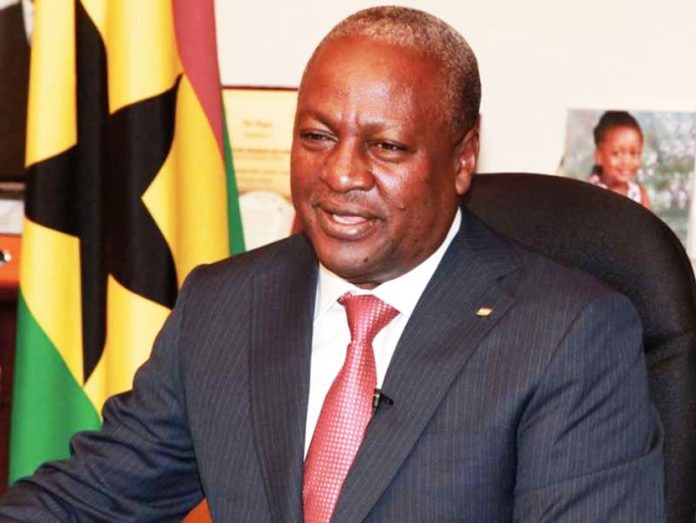
President-elect, His Excellency John Dramani Mahama

The President-elect, His Excellency John Dramani Mahama, has admitted that Ghana is at risk within the Economic Community of West African States (ECOWAS) bloc.

Mr  Mahama admitted in an interview with DW News Africa, last Monday, that “all risk assessment” indicates that Ghana is at risk and stressed the need to be proactive, and also work as quickly as possible to avoid it from spreading into the nation.

He stressed that though Ghana is resilient and has not reached such stage; due to the better spread of development nationwide, it should not be taken for granted and suggested that opportunity must be created for young people to avoid their radicalisation.

To address the unemployment issue, the President-elect disclosed that it is a matter of urgency to stabilise the economy for the private sector to create jobs, as well as open Ghana for business and also direct investment.

Touching on the issue of illegal mining, popularly known as galamsey, the President-elect said the Akufo-Addo government made the mistake of introducing the Legislative Instrument (LI) that allowed mining in forest reserves, following which 37 forest reserves that were preserved had been invaded according to Ghana Forestry Commission.

He emphasised that his government would ban mining in forest reserves as well as in water bodies and restore them. He explained further that small-scale mining will be categorised into small artisanal mining and medium scale mining to regulate them better, as well as the introduction of a technology required to reclaim mined lands.

H.E. John Dramani Mahama disclosed that some countries have offered to provide the technology and funding for the reclamation exercise, which will also create employment especially for “ex-galamseyers”.

From Oswald Pius Freiku, Kumasi

Samuel Inkoom dragged to court again over alleged visa fraud

0
Court gavel

Samuel Inkoom, a 35-year-old footballer, appeared before the Circuit Court in Accra on Tuesday, this week, facing two charges of defrauding by false pretences.

Presided over by Her Honour Susan Eduful, the court granted bail to Inkoom in the sum of GH¢100,000 with two sureties, each earning not less than GH¢5,000.

He was also ordered to deposit his passport at the court registry until the trial concludes.

The case is scheduled to reconvene on January 27, 2025.

Charges and Allegations

Samuel Inkoom is accused of fraudulently obtaining a total of $6,000 from two complainants, Elizabeth Atarime Mboh Awuni and Abigail Owusu, under the pretence of securing U.S. visas for them.

On Count One, the prosecution alleges that in December 2023, Inkoom falsely represented himself as capable of obtaining a U.S. visa for Awuni’s client for $4,000.

Awuni, an Entrepreneur residing at Oyarifa, Accra, allegedly paid the amount to Inkoom, only for him to fail to deliver on his promise.

On Count Two, Inkoom allegedly defrauded Owusu, a public servant, also from Oyarifa, of $2,000 under the same pretence. He promised to deliver the visa within six to eight weeks, but later went into hiding.

Brief Facts

According to the prosecution, Awuni met Inkoom at Achimota while the latter was scouting for football talents.

During their conversation, Inkoom claimed he was involved in travel and tour services, including visa acquisition. Convinced by his assurances, Awuni paid him $4,000 to secure a U.S. visa for her client.

Similarly, Owusu, who later met Inkoom, also paid $2,000 for the same service. When the promised timelines elapsed without results, both complainants reported the matter to the police.

Police investigations revealed that Inkoom had no partner in the U.S. to facilitate the visa acquisition process, as he claimed. Instead, the prosecution alleged that he fabricated the story to swindle the complainants.

During his arrest, police retrieved $2,000 from Inkoom, which was returned to Awuni. However, the remaining amount remain unaccounted for.

Inkoom admitted collecting the money but failed to provide evidence to support his claims of engaging a US-based partner.

Bail Conditions

Judge Susan Eduful emphasised the importance of ensuring Inkoom’s presence in court throughout the trial.

The stringent bail conditions, including the deposit of his passport, reflect the court’s intent to prevent him from fleeing the country.

The trial will resume on January 27, 2025 as the prosecution builds its case against Inkoom.

If found guilty he could face significant penalties under Section 131(1) of the Criminal Offenses Act, Act 29/60.

Top Causes of Eye Problems

0

Most people have eye problems at one time or another. Some are minor and will go away on their own, or are easy to treat at home. Others need a specialist’s care.

Whether your vision isn’t what it used to be, or never was that great, there are things you can do to get your eye health back on track.

Eyestrain

Anyone who reads for hours, works at a computer, or drives long distances knows about this one. It happens when you overuse your eyes. They get tired and need to rest, just like any other part of your body.

If your eyes feel strained, give them some time off. If they’re still weary after a few days, check with your doctor to make sure it isn’t another problem.

Red Eyes

Your eyes look bloodshot. Why? Their surface is covered in blood vessels that expand when they’re irritated or infected. That gives your eyes the red look.

Eyestrain can do it, and so can a late night, a lack of sleep, or allergies. If an injury is the cause, get it checked by your doctor.

Red eyes could be a symptom of another eye condition, like conjunctivitis (pinkeye) or sun damage from not wearing shades over the years. If over-the-counter eye drops and rest don’t clear it up, see your doctor.

Night Blindness

Is it hard to see at night, especially while driving? Is it tough to find your way around in dark places, such as movie theaters?

That sounds like night blindness. It’s a symptom, not a problem in its own right. Nearsightednesscataractskeratoconus, and a lack of vitamin A all cause a type of night blindness that doctors can fix.

Some people are born with this problem, or it might develop from a degenerative disease involving the retina, and that usually can’t be treated. If you have it, you’ll need to be extra careful in areas of low light.

Uveitis

This is the name for a group of diseases that cause inflammation of the uvea. That’s the middle layer of the eye that contains most of the blood vessels.

These diseases can destroy eye tissue, and even cause eye loss. People of all ages can have it. Symptoms may go away quickly or last for a long time.

People with immune system conditions like AIDS, rheumatoid arthritis, or ulcerative colitis may be more likely to have uveitis. Symptoms may include:

  • Blurred vision
  • Eye pain
  • Eye redness
  • Light sensitivity

See your doctor if you have these symptoms and they don’t go away within a few days. There are different kinds of treatment for uveitis, depending on the type you have.

Presbyopia

This happens when you lose the ability, despite good distance vision, to clearly see close objects and small print.

After age 40 or so, you may have to hold a book or other reading material farther away from your eyes to make it easier to read. Sort of like your arms are too short.

Reading glasses, contact lenses, and other procedures can be used to restore good reading vision.

Dry Eyes

This happens when your eyes can’t make enough good-quality tears. You might feel like something is in your eye or like it’s burning. Rarely, in severe cases, extreme dryness can lead to some loss of vision. Some treatments include:

  • Using a humidifier in your home
  • Special eye drops that work like real tears
  • Plugs in your tear ducts to lessen drainage
  • Lipiflow, a procedure that uses heat and pressure to treat dry eyes
  • Testosterone eyelid cream
  • Nutritional supplements with fish oil and omega-3

If your dry eye problem is chronic, you may have dry eye disease. You doctor could prescribe medicated drops like cyclosporine (CequaRestasis), lifitegrast (Xiidra), or Tyrvaya nose spray to stimulate tear production.

Excess Tearing

It has nothing to do with your feelings. You might be sensitive to light, wind, or temperature changes. Try to protect your eyes by shielding them or wearing sunglasses (go for wraparound frames — they block more wind than other types).

Tearing may also signal a more serious problem, like an eye infection or a blocked tear duct. Your eye doctor can treat or correct both of these conditions.

Conjunctivitis (Pinkeye)

In this condition, tissue that lines the back of your eyelids and covers your sclera gets inflamed. It can cause redness, itching, burning, tearing, discharge, or a feeling that something is in your eye.

People of all ages can get it. Causes include infection, exposure to chemicals and irritants, or allergies.

Wash your hands often to lower your chance of getting it.

Corneal Diseases

The cornea is the clear, dome-shaped “window” at the front of your eye. It helps to focus the light that comes in. Disease, infection, injury, and exposure to toxins can damage it. Signs include:

  • Red eyes
  • Watery eyes
  • Pain
  • Reduced vision, or a halo effect

The main treatment methods include:

  • A new eyeglasses or contacts prescription
  • Medicated eye drops
  • Surgery

Eyelid Problems

Your eyelids do a lot for you. They protect your eye, spread tears over its surface, and limit the amount of light that can get in.

Pain, itching, tearing, and sensitivity to light are common symptoms of eyelid problems. You might also have blinking spasms or inflamed outer edges near your eyelashes.

Treatment could include proper cleaning, medication, or surgery.

Credit: webmd.com

Feature: Abolishing E-Levy And COVID-19 Tax; Fiscal Implications And Alternatives 

0
E-Levy

The incoming government’s decision to abolish the COVID-19 Levy and E-Levy has sparked significant debate on the implications for revenue generation and fiscal stability.

The revenue from the levies is projected to be replaced by optimizing tax policies, particularly reviewing and minimizing port exemptions. In the NDC’s Manifesto, on page 22, it is stated as follows:

“We will Scrap the following draconian taxes within our first 100 days in office to alleviate hardships and ease the high cost of doing business: E-levy, COVID levy, 10% levy on bet winnings, Emissions levy, Import duty on vehicles and equipment imported into the country for industrial and agricultural purposes.”

The promise to abolish these taxes was a key part of the campaign message and based on this commitment, Ghanaians entrusted the government with power. However, fulfilling this promise will result in significant revenue losses—approximately GHS 6.4 billion in 2025 based on the budgeted revenue.

Ghanaians wonder where the revenue loss from scrapping these taxes will come from. Recently, the NDC has hinted more clearly that they will focus on reducing tax exemptions to make up for the revenue foregone.

The call to abolish COVID-19 Levy & E-levy 

The COVID-19 Health Recovery Levy, introduced in March 2021, imposed a 1% charge on the supply of goods and services within Ghana and on imports excluding exempt items. Its primary purpose was to generate revenue to support expenditures related to the COVID-19 pandemic. As the immediate health crisis subsided, many Ghanaians began advocating for the levy’s removal, arguing that its initial purpose had been fulfilled.

The Ghana Union of Traders Association (GUTA) notably called for the abolition of COVID-19 and the Special Import Levy in the 2024 budget, reflecting a broader sentiment that these taxes had outlived their necessity.

However, some experts, such as Professor Justice Nonvignon from the University of Ghana, contend that the levy remains essential. The African Centre for Tax Policy Research (ACTOR) has also advocated renaming taxes and directing funds towards critical health issues such as kidney disease.

They argue that the funds collected can bolster the country’s preparedness for future health emergencies, suggesting that the levy serves a continuing purpose beyond the immediate COVID-19 response.

However, most Ghanaians, especially GUTA members, say that while the COVID-19 Levy was initially implemented to address pandemic-related expenses, the public health considerations that led to its acceptance are no longer valid, and hence, it should be abolished.

The Electronic Transfer Levy (E-Levy) was introduced in May 2022 as a 1.5% tax on electronic transactions on mobile money transfers and bank transactions with a daily threshold of GHS 100 for Mobile Money Transfers and GHS 20,000 for bank transfers.

The purpose was to enhance domestic revenue mobilization. The government aimed to widen the tax net, mainly targeting the informal sector, and to generate funds for infrastructure projects, entrepreneurship support, and job creation. However, from day one, this law faced significant public opposition. Parliamentarians engaged in a serious fight over its passage, and the implementation has to be staggered and delayed. There were public town hall meetings to gain its acceptance.

Eventually, it took off in July 2022. Critics said it disproportionately affected low-income individuals relying on mobile money services, potentially hindering financial inclusion and the transition to a cashless economy.

The levy was reduced from 1.5% to 1% in response to public outcry. It did not end there. Political leaders, including Vice President Dr. Mahamudu Bawumia, pledged to abolish the E-Levy, citing its negative impact on digital transactions and financial inclusion. Dr. Bawumia emphasized that removing

the levy would support the vision of a digital and cashless economy. The NDC stated clearly from its inception that they were not in support of this type of tax and promised to abolish it in 2025.

Alternative to cumulative revenue loss in 2025 and beyond if E-levy & COVID-19 is abolished: Considering import exemptions and concessions

Abolishing the levies could result in a loss of approximately GHS 6.4 billion in 2025 and even more in subsequent years, based on projected growth. One potential solution to addressing the revenue gap is through a review of tax exemptions and zero-rated items at the Ports. Cutting down on non-essential exemptions, reviewing zero-rated items and concessions granted to mining companies, and amending existing tax concessions on imported items can potentially recover revenue loss from abolishing these two levies.

Analysis of imports (2023 vs 2022) – Key Insights 

  1. Growth in Total Imports: Total imports increased from GHS 73.4 billion in 2022 to GHS 89.0 billion in 2023, a growth of 21.5%. This indicates an expanding trade environment and potential for higher revenue collection.
  2. Reduction in Total Value Exempted:The value of exempted and zero-rated imports decreased slightly from GHS 22.3 billion in 2022 to GHS 20.2 billion in 2023. This represents a modest decline of 10.3%, reflecting some progress in reducing tax giveaways.
  3. Increase in Taxable Imports:Taxable imports grew significantly, from GHS 51.1 billion in 2022 to GHS 69.0 billion in 2023, an increase of 35%. This highlights a growing taxable base, possibly due to better enforcement or policy adjustments such as the famous Discounts on Benchmark Values.
  4. Rise in Taxes Collected: Taxes collected rose sharply from GHS 22.2 billion in 2022 to GHS 30.7 billion in 2023, a 39% growth. The increase suggests improved compliance, higher trade volumes, or stronger monitoring mechanisms.

Review of concessionary rates for selected industries

Ghana offers various import tax concessions to stimulate investment and growth across multiple sectors, notably mining, manufacturing, and agriculture. Plant, machinery, and equipment exclusively imported for mining operations may benefit from concessionary import duty rates, potentially as low as 5%, to encourage investment in the mining industry. Manufacturers importing essential raw materials and capital goods not readily available locally may be subject to the 5% import duty rate, facilitating industrial growth and development.

In 2023, goods taxed at the 5% import duty rate constituted 44.3% of total imports, 26.6% of the goods benefiting from preferential rates to support the manufacturing sector, and 6% attributed to goods granted concessionary rates to support the mining sector.

Conclusion

Reviewing and rationalizing these exemptions can help the government recover substantial revenue. If the government undertakes a thorough review of direct port exemptions, revisits zero-rated imports, and reconsiders items taxed at 5% due to special concessions, such as imports within the mining sector, there is a substantial potential to generate enough revenue to offset the revenue loss from abolishing the E-Levy and COVID-19 Levy, and still ensure fiscal stability and alleviate the tax burden on citizens.

By Nii Larte Lartey

Source: citinewsroom.com

High-flyers Guimaraes and Fiorentinaclash for top finish

0

As the inaugural league phase reaches its grand finale, Conference League high-flyers Vitoria de Guimaraes and Fiorentina are set for a Thursday night clash at Estadio Dom Afonso Henriques.

Second hosts third, with Vitoria needing just one point to secure a place in the last 16; La Viola can guarantee progress with a victory.

Having impressed throughout their Conference League campaign – averaging over two goals per game and remaining undefeated – Vitoria SC are on course for a cherished top-eight finish following their matchday five success in Switzerland.

The Portuguese side strode past St Gallen last week, recording 30 shots on target – more than half of which were on target – as they made it four wins and one draw from five fixtures so far.

Topping the Conference League in attempts (120) and currently ranked fourth for goals scored (12), Vitoria are earning a reputation as entertainers, and they will now try to finish the job in style in front of their supporters.

A formidable proposition on home turf, Vitoria can expect to pick up the point they need to ensure a last-16 spot.

Credit: sportsmole.co.uk

Chelsea host Shamrock Rovers at Stamford Bridge

0
Chelsea players celebrating a goal

Chelsea will look to complete a perfect league phase campaign in the Conference League when they welcome Shamrock Rovers to Stamford Bridge on Thursday.

This fixture pits together two of the best defences in the competition, with only Legia Warsaw having conceded fewer goals than both of them.

As the clear favourite to win the Conference League this season, Chelsea have backed up that pre-tournament tag with five wins from five on the continent so far. Doing so with a ‘B’ team makes it even more impressive, considering manager Enzo Maresca has guided them to the top of the charts without needing to use the likes of Cole PalmerNicolas Jackson or Moises Caicedo.

The Blues remain the only team in the competition with a 100% record, and that means direct progression to the last 16 is secured, with top spot all that is left to play for.

A point will be enough to see them top the 36-team standings, as long as Vitoria Guimaraes do not beat Fiorentina by a 10-goal margin – an occurrence which simply will not happen.

Chelseawill face an Irish club in Europe for the first time, and will feel confident at condemning Shamrock to yet another defeat against an English club.

Shamrock have been hugely impressive throughout the league phase, but they have not faced a side anywhere near the level of Chelsea, and that could sadly see them drop out of the top eight at the final hurdle.

Credit: sportsmole.co.uk

Tottenham welcome Manchester United to North London

0
Manchester United players celebrate a goal

A place in the last four of the EFL Cup is up for grabs on Thursday night when Tottenham Hotspur welcome Manchester United to North London for a quarter-final showdown.

Both teams enter this contest on a high after picking up maximum points in the Premier League last weekend, with Spurs hitting five past Southampton and the Red Devils claiming the bragging rights over wounded rivals Manchester City.

Ange Postecoglou was coming under increased pressure in the Tottenham dugout following a disappointing run of just one win in eight games across all competitions (D3 L4) – a surprise 4-0 triumph at Man City in the Premier League. However, the Spurs boss got a much-needed reaction from his players – albeit against a struggling Southampton outfit at the foot of the table.

After suffering back-to-back Premier League defeats to Arsenal and Nottingham Forest, Man United have since bounced back under new head coach Ruben Amorim and have won their last two away games by a 2-1 scoreline against Viktoria Plzen and rivals Man City.

Although Man United are still languishing in 13th place in the Premier League table, they will hope that the “belief” shown by his players against Man City can be carried over into their upcoming fixtures.

Tottenham cruised to victory in their last meeting with Man United three months ago, but given the unpredictability and inconsistency of Postecoglou’s side, it is difficult to envisage Spurs having a similarly enjoyable evening again on Thursday.

Credit: sportsmole.co.uk

Minority Begs Majority: We Can’t Pay Workers …If Mini Budget Is Not Approved

0
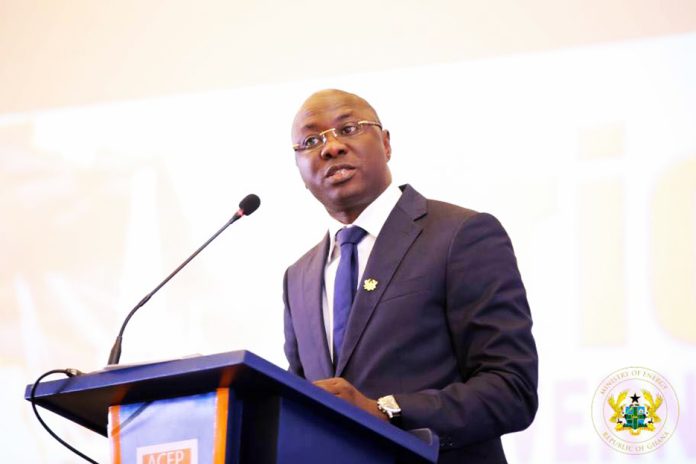
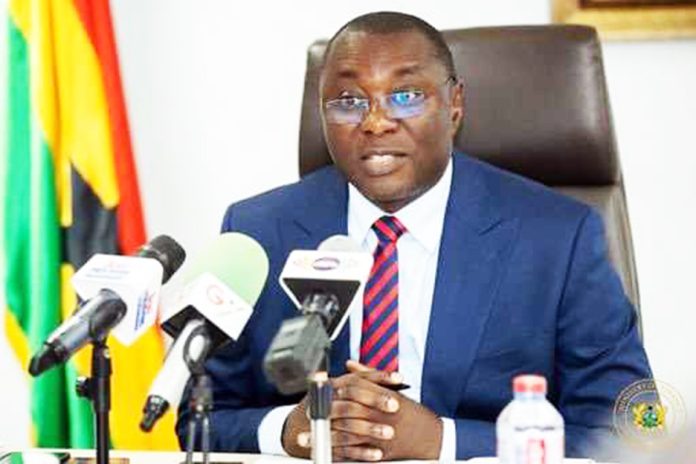
Dr. Mohammed Amin Adam, Minister for Finance

The Minority members in Parliament are begging the Majority side to begin the process for approval of a mini budget for the first quarter of 2025.

According to them, failure of the House to approve the expenditure in advance of appropriation for January to March 2025 before it dissolves could have dire consequences, including the risk of public sector workers not being paid.

Cassiel Ato Baah Forson

“And so, colleagues, I want to beg our brothers and sisters on the other side of the House. In 2016, when it happened to us that we were halved, we came and we supported them to bring the vote on account, and so they should help us to also bring the vote on account so that we can pass it for the coming government,” Member of Parliament for Ho West, Emmanuel Kwasi Bedzrah, said on the floor.

The constitution states that there should be a vote on account approved by Parliament for the first quarter of the year after a general election. This is to give the new government the spending power, while it settles to prepare a comprehensive fiscal policy for the year.

The incoming Mahama administration appears to be scared of suffering such an occurrence, considering the lackadaisical attitude of the majority to lay the necessary papers for the process to commence.

ABSENCE

The Minister for Finance, Dr. Amin Adam, was absent in Parliament on Tuesday, December 17, 2024 to lay the paper, when the Speaker called for it.

None of the leadership of the majority was in Parliament to direct the House on which business to transact, a situation that made it impossible for the House to work.

Members of the majority who were present told the House they did not have the authority of the minister to lay the paper on his behalf.

The Minority Chief Whip, Governs Agbodza, raised concerns about the absence of the minister and the delay for that item to be taken, alleging a conspiracy on the part of the government.

“I hope that there’s no conspiracy to make it impossible for this to be taken until the eighth parliament expires. It is a mystery, Mr. Speaker. It is a mystery,” he stressed.

Member of Parliament for Ellembelle, Emmanuel Armah Kofi Buah, called on the Speaker to compel the majority to perform its constitutional duty.

“Mr. Speaker, you have all the powers to compel these people to perform the duty that they must perform under the constitution,” Armah Buah said.

REPRESENTATION

Responding to the issue of a member of the majority representing the minister for finance, the MP for Manhyia South, Dr. Matthew Opoku Prempeh, reminded the House that even Speaker Bagbin had had cause to declare that his deputies could not represent him on some matters.

Also, the House was reminded that there had been instances where the minority demanded that a sector minister be physically present in the House before motions would be taken.

Asking what had changed, the Manhyia MP stated that the members of the House on the majority side who were present had not been authorised by the minister to lay the paper.

“Mr. Speaker, what we are saying is so fundamental to the issue. We have been in this Chamber when the Speaker has said that even the deputy Speakers cannot represent him on certain issues. “The most serious aspect of this is that if we don’t get the finance minister, we cannot move. Even bills, we have been told that if the minister doesn’t comes, the bill cannot be presented. Haven’t we been told that by our honourable colleagues?” he said.

The MP for Suame, Osei Kyei-Mensah-Bonsu, informed the House that the minister was checking his figures to meet the discussions ongoing at the transition meeting, which is the reason he could not lay the paper.

Some other members of the majority who also commented said the minority had no moral right to force the majority to work, given that some weeks ago, the minority turned the business into fighting over who was in the majority or minority.

TAX WAIVER

The House was thrown into confusion on Monday when the Majority Leader included tax exemptions in the business for the meeting. The minority insisted that they would not support the decision by the government to grant a tax waiver to some factories under the One District, One Factory policy.

During the debate on the floor yesterday, some members on the side of the majority indicated that if the minority wanted to work, then they should start from approving the tax waiver, and then others could follow.

The House adjourned to today to continue proceedings after all indications pointed to the fact that neither the finance minister, nor any of the members on the side of the majority, was ready to lay the paper for the expenditure in advance of appropriation for January to March 2025.

NPP Is Handing Over AResilient Economy To NDC – Amin Adam

0
Dr. Mohammed Amin Adam, Minister for Finance

The Minister for Finance, Dr. Mohammed Amin Adam, says he is confident in the economy the President Akufo-Addo government is bequeathing to the incoming administration, which is going to be headed by former President John Dramani Mahama.

Speaking to the media in Accra yesterday, the Finance minister stressed that the current state of Ghana’s economy reflects significant recovery and resilience, despite global and domestic challenges in recent years.

“We are handing over a strong economy. The first four years of this administration were marked by impressive performance, with the longest period of single-digit inflation, an average GDP growth rate of 7% and strong external balances.

“Even though we faced challenges between 2021 and 2022, the economy has recovered strongly and faster than many anticipated,” he said.

The outgoing Finance minister emphasised key achievements, pointing to Ghana’s Gross International Reserves, which currently stand at $8 billion, equivalent to 3.5 months of import cover.

According to him, this is more than the $6.2 billion of reserves handed over to the current administration by the NDC in 2016, adding that the growth trajectory of the economy has returned to pre-COVID levels.

“The growth rates in 2024 – 4.8% in the first quarter, 7% in the second and 7.2% in the third reflect an average of 6.3%. This is significantly higher than the 3.4% average growth rate we inherited in 2016,” he noted.

He said the private sector credit growth also showcased the recovery, with nominal growth reaching 28.7% in October 2024, a sharp turnaround from the contraction of 7.5% recorded in the same period in 2023.

“In real terms, private sector credit grew by 5.5% in October this year, compared to a contraction of 31.6% last year,” Dr. Amin Adam explained.

On the external front, the Finance Minister highlighted a trade balance surplus of $3.85 billion and a current account surplus of 2.6% of GDP for the first nine months of 2024.

“These are significant improvements from the deficits we saw in 2016, including a trade balance deficit of $1.8 billion and a current account deficit of 6.6% of GDP,” he stated.

Acknowledging challenges with inflation, Dr. Amin Adam noted that headline inflation had reduced to 23% in November 2024 from a high of 54% in December 2022.

“Inflation is still high, but the measures we implemented have significantly stabilised prices and eased the hardship Ghanaians faced,” he assured.

Regarding Ghana’s debt levels, Dr. Amin Adam said the government had made strides in reducing the public debt stock. “The total public debt decreased by GH₵46.8 billion from GH₵807.79 billion in September 2024 to GH₵761.01 billion in October 2024.

“This reduction brought the debt-to-GDP ratio down from 79.2% to 74.6%, and we are on track to reduce it further to 55% in net present value terms, ensuring long-term debt sustainability,” he explained.

Dr. Amin Adam dismissed claims that the country is broke, describing them as “propaganda.” He maintained that Ghana’s economic fundamentals are stronger than when the NPP took over in 2016. “We hope the incoming government will continue with the policies we have implemented to sustain this recovery and ensure that Ghana’s debt sustainability targets are met,” he concluded.

The Ghanaian Chronicle