Home Blog Page 92

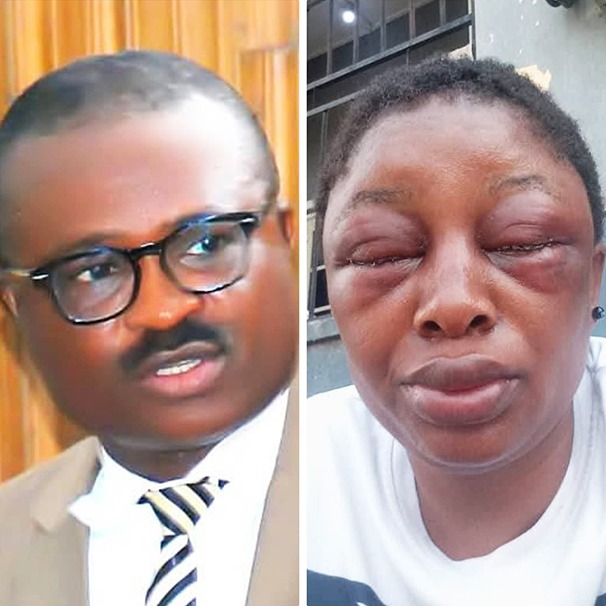
Police arrest Cross River lawmaker over domestic violence, wife battery

0
Cross River lawmaker arrested over wife battery

The Cross River State Police Command has arrested Mr Ovat Dickson Agbor, the suspended lawmaker representing Obubra 1 State Constituency in the Cross River State House of Assembly, over allegations of domestic violence.

Police Public Relations Officer, ASP Eitokpah Sunday Akata, confirmed that Agbor is currently in custody at the State Criminal Investigation Department. He was picked up on Monday morning in Calabar.

The lawmaker was suspended indefinitely by the Cross River State House of Assembly last week following reports that he repeatedly assaulted his wife.

Governor Bassey Otu and his wife reportedly condemned the act as “irresponsible and unbecoming of a public office holder.”

The Speaker of the House, Elvert Anyanbem, also expressed outrage at the incident, describing it as a public disgrace.

Reports say he personally went to Agbor’s residence to ensure the safety of the lawmaker’s wife.

In a statement, Agbor’s wife described the matter as a family issue, but accused the Speaker’s wife of misleading her into making the assault public.

She also renounced her membership of the Legislators’ Wives Association (LEWA).

Women’s rights groups and legal practitioners have condemned the violence, calling for stricter measures against domestic abuse by public officials.

Following the public outcry, Agbor has issued an official apology, expressing remorse for his actions and pledging to seek reconciliation.

The case remains under investigation by the Cross River Assembly as well as State Police Command, and further legal action is expected.

Credit: dailypost.ng

APC takes control of 32 out of Nigeria’s 36 states

0
APC

The All Progressives Congress, APC, is rapidly solidifying its influence across Nigeria, now reportedly controlling 32 of the country’s 36 states.

In the South-South, the APC has achieved a complete sweep in the oil-rich region, governing all six states: Delta, Akwa Ibom, Edo, Cross River, Rivers, and Bayelsa.

North-Central, the party also dominates this region, holding Benue, Niger, Kwara, Nasarawa, Kogi, and Plateau.

In the South-East, APC controls Enugu, Ebonyi, and Imo. Abia remains under the Labour Party (LP), while Anambra is governed by the All Progressives Grand Alliance (APGA), giving APC three out of five states in the region.

In the South-West, the party governs Lagos, Ekiti, Ogun, and Ondo. Oyo remains under the Peoples Democratic Party (PDP) and Osun under the Accord Party, giving APC four of six states here.

In North-East, APC controls Borno, Yobe, Taraba, Gombe, Adamawa, and Bauchi.

Lastly, at the North-West, this region remains a stronghold, with Katsina, Jigawa, Sokoto, Kebbi, Kaduna, and Kano all under APC.

These figures indicates the APC now governs 32 out of Nigeria’s 36 states, further solidifying its national dominance.

Credit: dailypost.ng

Suspected Terrorist Killed As Guard Brigade Troops Rescue 19 Kidnap Victims

0
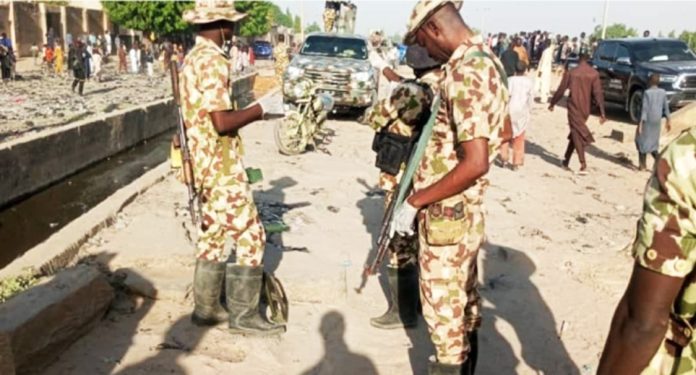
The troops of the Joint Task Force Operation Hadin Kai

Troops of the 7 Guards Battalion, Guards Brigade, Nigerian Army, have rescued 19 kidnapped victims and neutralised a suspected terrorist during a coordinated security operation in the Federal Capital Territory (FCT), Abuja.

The Acting Assistant Director of Army Public Relations at the Headquarters Guards Brigade, Lieutenant Olawuyi Itunuoluwa, disclosed this in a statement on Saturday.

According to the statement, the operation was conducted around Gidan Dogo in the Bwari Area Council following credible intelligence on the whereabouts of terrorists responsible for the recent abduction of residents in the Byazhin area of Bwari.

The troops carried out the operation in collaboration with operatives of the Nigeria Police Force and local vigilantes.

“During the operation, troops made contact with the bandits, leading to a firefight in which one of the criminals was neutralised while others fled the scene with suspected gunshot wounds,” the statement said.

Security operatives recovered one AK-47 and a locally fabricated firearm during the operation.

“Additionally, all 19 kidnapped victims were successfully rescued and evacuated to safety,” the Army spokesman added.

The rescued victims are said to be currently receiving attention, while troops have returned to their Forward Operating Base in Bwari and are continuing patrols in the area to prevent further criminal activities.

Commander of the Guards Brigade, Brigadier General Adebisi Onasanya, commended the troops and other security agencies for their bravery and professionalism.

He reiterated the Brigade’s commitment to protecting residents of the Federal Capital Territory and safeguarding Abuja as the nation’s seat of power.

“The Guards Brigade will continue to intensify operations in collaboration with other security agencies to rid the territory and its environs of terrorism, kidnapping, and other criminal activities,” the statement added.

Credit: channelstv.com

AU Appoints Ghanaian Bizman As Ambassador …For Agenda 2063

0
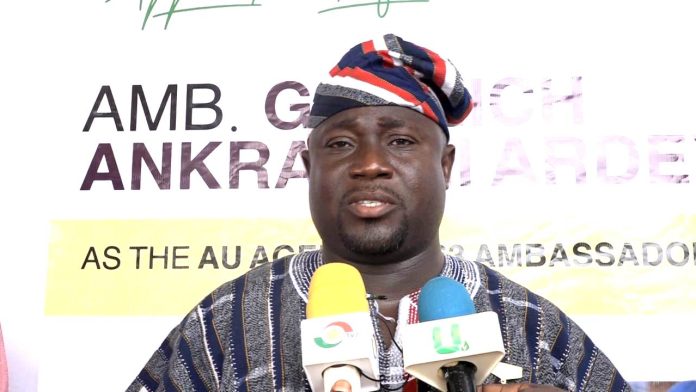
Godrich Ankrah Nii Ardey

The African Union Commission has honoured Godrich Ankrah Nii Ardey, a businessman and philanthropist, as its Agenda 2063 Ambassador.

The investiture of the young philanthropist at Kubekro Number 2 in the Kpone-Katamanso Municipality, Greater Accra Region, followed the recipient’s years of humanitarianism along the corridors of the West African sub-region.

From parts of the Republic of Benin, where he had dug boreholes to provide drinking water to communities, in addition to the provision of financial support to destitute homes, to Ghana where he continues to financially support needy children and children with disabilities and the aged, Nii Ardey’s support continues to touch and change the lives of several young people who need start-up capital for businesses to make them financially independent.

Professor Victor Obodai Anang, an AU Ambassador and a freight forwarder, said one of the continental dreams of the AU Agenda 2063 is to inspire Diaspora communities to reinvest skills and capital into Africa’s development.

Before decorating Godrich Ankrah Nii Ardey, the new Ambassador, Professor Victor Obodai Anang in his keynote address explained that the AU’s Agenda 2063 aims at uniting the continent with respect and good governance and with a strong influence to change its people.

This, he continued, needs the appointment of people with moral courage and intellectual clarity with unwavering commitment.

Being a youth, Professor Anang challenged Godrich Ankrah Nii Ardey to continue to be a global game-changer, shifting the youth on the continent from the old ways to productivity and sustainability through coordination.

He said, “Today, you assume a mantle of advocacy and mobilisation. You are called to champion youth engagement in policy processes and promote women’s leadership and economic participation.”

Ambassador Nii Ardey was also encouraged to work hard to strengthen collaboration between governments, private sector and civil society.

To be able to serve as a bridge between continental policy and grassroots action, Ambassador Godrich Nii Ardey was further challenged to carry the AU’s Agenda 2063 from conference halls into classrooms, from policy documents into market places and from diplomatic communiqués into digital engagements.

Acknowledging the honour and the badge, Ambassador Nii Ardey pledged to do more with some community projects he had started in Togo and Burkina Faso.

“My country should expect more from me,” he said.


For more news, join The Chronicle Newspaper channel on WhatsApp: https://whatsapp.com/channel/0029VbBSs55E50UqNPvSOm2z

Russia-Ukraine And US-Iran Wars: Mahama Trapped By His Own Words

0
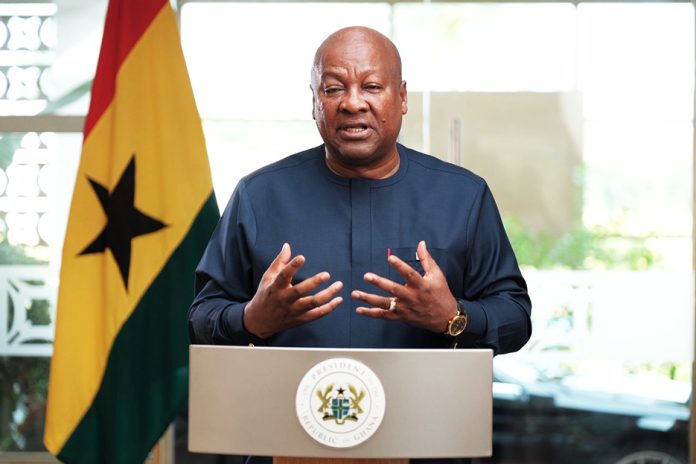
President John Dramani Mahama

President John Dramani Mahama is facing renewed scrutiny over comments he made while in opposition, during Ghana’s economic crisis between 2022 and 2023, following recent remarks in which he warned that geopolitical tensions in the Middle East could negatively impact African economies, including Ghana.

The President’s latest caution about global shocks affecting Ghana’s economy appears to contradict his earlier position that international conflicts had little or no effect on the country’s economic fortunes.

Those earlier remarks were made when he strongly dismissed the then government’s explanation that the global crises caused by the Russian invasion of Ukraine and the COVID-19 pandemic contributed significantly to Ghana’s economic downturn.

The debate has resurfaced after President John Mahama, during a visit to Tanzania earlier this month, warned that escalating military tensions in the Middle East could trigger economic shocks across Africa, through rising oil prices and global market instability.

Earlier Rejection of Global Factors

During the height of Ghana’s economic challenges in 2022 and 2023, the then opposition leader, John Dramani Mahama, repeatedly rejected the claim by the government of former President Nana Addo Dankwa Akufo-Addo that global events such as the Russia-Ukraine war were major contributors to Ghana’s economic woes.

Delivering the 2022 State of the Nation Address on March 30, 2022, the then President Akufo-Addo stated that the conflict between Russia and Ukraine was already having adverse consequences on Ghana’s economy, which had earlier been weakened by the COVID-19 pandemic.

He explained that the war had disrupted global supply chains and caused a sharp increase in the prices of petroleum products, fertiliser, wheat and metal products that Ghana imports in large quantities.

According to the President at the time, about 30 per cent of Ghana’s wheat flour and fertiliser imports came from Russia, while 60 per cent of iron rods and metal sheets used in construction were imported from Ukraine. He also noted that nearly 20 per cent of Ghana’s manganese exports were shipped to Ukraine.

The war, which began in February 2022, had triggered global energy and commodity price hikes, pushing fuel prices in Ghana to between GH¢9 and GH¢11 per litre at the time.

But John Mahama strongly rejected the explanation that the war was a major cause of Ghana’s economic crisis.

Speaking during a programme dubbed “Ghana at a Crossroads” on May 2, 2022 he argued that the economic hardship facing Ghanaians had started long before the outbreak of the conflict in Eastern Europe.

“The Russian-Ukrainian conflict cannot possibly be responsible for the suffering Ghanaians are going through,” he stated.

“The suffering predates the war. Before this conflict, our currency had been depreciating and it was already impacting negatively on fuel and commodity prices in our markets. Fuel prices had gone up on more than forty different occasions since 2017 before the conflict started.”

Earlier, on March 28, 2022 while interacting with executives of the United States chapter of the National Democratic Congress (NDC) in Boston, President Mahama also accused the Akufo-Addo government of deceiving Ghanaians about the true causes of the country’s economic challenges.

He described the government’s claim that COVID-19 and the Russia-Ukraine conflict were responsible for the crisis as a “bloody lie.”

“So there has always been a hole in the budget. If they tell you that COVID and Ukraine have brought us to this situation, it is a bloody lie,” he said at the time.

President Mahama reiterated similar sentiments on March 14, 2023 during engagements with party delegates at Asutifi North in the Ahafo Region.

“If Ukraine and Russia are fighting, how does it concern us? We are minding our business. Travelling from Accra to Ukraine is about 7,000 kilometres before you reach there. So if they are fighting, how does it affect our economy?” he asked.

New Warning on Middle East Conflict

However, in what many describe as a dramatic shift in tone, President Mahama recently warned that rising geopolitical tensions in the Middle East could severely affect African economies.

According to a report by Graphic Online, the President made the remarks on March 2, 2026 during a meeting with his Tanzanian counterpart, Samia Suluhu Hassan, in the city of Arusha.

During the meeting, President Mahama cautioned that escalating military confrontations involving Iran, Israel and the United States could destabilise global energy markets and create economic shocks across the African continent.

“We are watching the geopolitical events with alarm. A few days ago we witnessed attacks on Iran by the US and Israel and counter-attacks by Iran on Gulf countries, creating a new geopolitical situation.

“We know these shocks will come. But when they come, we must prepare ourselves to make sure our people are protected because that region is the epicentre of global oil supplies.”

Also, according to a news story on Agence de Presse Africiane, Mahama further noted that Ghana’s heavy reliance on imported crude oil and refined petroleum products makes the country highly vulnerable to fluctuations in global oil prices.

According to him, any sustained increase in crude oil prices would immediately translate into higher fuel costs, transport fares and food prices, ultimately affecting the general cost of living in Ghana.

Strategic Oil Routes and Economic Risks

The President also highlighted the strategic importance of the Strait of Hormuz, one of the world’s most critical oil shipping corridors.

He warned that any disruption to the shipping route, through which roughly 20 per cent of the world’s oil supply passes daily, could trigger a dramatic spike in global oil prices.

Such an event, he noted, could undermine Ghana’s ongoing efforts to stabilise inflation and strengthen the national currency following the country’s recent debt restructuring programme.

Mahama added that instability in the Middle East could have wide economic consequences for African countries that depend heavily on imported fuel.

Escalating Tensions in the Region

The President’s comments come against the backdrop of escalating conflict in the Middle East involving Iran, Israel and the United States.

Reports indicate that Iran’s Supreme Leader, Ayatollah Ali Khamenei, was recently killed alongside several members of his security detail during joint US-Israel strikes.

In retaliation, Iran launched waves of missile and drone attacks targeting US military bases in several countries, including the United Arab Emirates, Saudi Arabia, Kuwait, Bahrain and Iraq.

Iran has also announced the closure of the Strait of Hormuz, raising fears of severe disruptions to global oil supply.

International media reports indicate that global gas prices have already surged while stock market indices have tumbled amid fears that the escalating conflict could destabilise energy markets.


For more news, join The Chronicle Newspaper channel on WhatsApp: https://whatsapp.com/channel/0029VbBSs55E50UqNPvSOm2z
Feature: NPP-USA Branch Elections: Janis Asare Bediako Poised To Lead As Chairman

0
Ing. Janis Asare Bediako

As the New Patriotic Party (NPP) prepares for the NPP-USA Branch elections, delegates are very aware that their choice of leadership will shape not only the administrative direction of the Branch, but also its strategic influence within the global structure of the Party.

It is not in doubt that among the distinguished contenders, Ing. Janis Asare Bediako stands out as a tested leader, a committed patriot, and a visionary strategist. There is growing confidence across Chapters that his leadership, experience, and demonstrated commitment uniquely position him to serve as the next Branch Chairman of NPP-USA.


BACKGROUND AND ACADEMIC EXCELLENCE OF ING. JANIS ASARE BEDIAKO

Ing. Janis Asare Bediako hails from Adansi Asokwa in the Ashanti Region, where he had his basic education. He is an alumnus of PRESEC, Legon, where he pursued Science before proceeding to the Kwame Nkrumah University of Science and Technology (KNUST), earning a Bachelor of Science degree in Civil Engineering.

In pursuit of global exposure and academic distinction, he relocated to the United States, where he obtained an MBA in Project Management and Finance from the University of Northern Virginia and an MSc in Geotechnical Engineering from George Mason University. He is currently a PhD Candidate at Arizona State University, pursuing a Doctorate in Engineering.

Ing. Janis Asare Bediako’s academic journey reflects discipline, excellence, and a relentless pursuit of knowledge, which qualities mirror his leadership ethos.


PROVEN LEADERSHIP & POLITICAL EXPERIENCE

Ing. Janis Asare Bediako currently serves as Chairman of the Washington, DC Chapter of NPP-USA. Prior to this role, he served as Vice Chairman of the same Chapter and has been an active member of the Party’s Communications Team in the United States.

Under his leadership, the Washington Chapter has emerged as one of the most vibrant and organized Chapters within NPP-USA. Notably:

– The Chapter anchored the historic NPP-USA @30 Anniversary Celebration.

– It hosted the most attended event in the Branch’s history.

– It recorded the highest fundraising contributions among all Chapters during the anniversary celebration.

– It significantly expanded its membership base through an innovative Community Initiative drive.

Beyond partisan leadership, Ing. Janis Asare Bediako also served as President of the KNUST Alumni Association in Washington, DC, further demonstrating his ability to build institutions and mobilize professionals.


PROFESSIONAL DISTINCTION

Ing. Janis Asare Bediako is a registered Professional Engineer in Virginia, Maryland, Washington, DC, and West Virginia. He is affiliated with reputable professional bodies including the American Society of Civil Engineers, the Ghana Institution of Engineering, and the Project Management Institute.

He currently serves as President of Global Geotechnical Consultants, LLC, the largest solely Ghanaian-owned engineering firm in the Washington DC Metropolitan Area.

His professional career embodies technical competence, integrity, and strategic management. These attributes are critical for leading a sophisticated and dynamic External Branch like NPP-USA.


POLITICAL CONTRIBUTIONS AND ACHIEVEMENTS

For over two decades, Ing. Janis Asare Bediako has been deeply involved in NPP-USA activities, contributing both financially and strategically to the Party’s growth.


 His contributions include:

– Spearheading membership expansion initiatives at the Washington Chapter and beyond.

– Providing financial support to newly formed Chapters.

– Serving as an active Patron of the Youth Wing of NPP-USA Branch, providing significant financial support to the Youth Wing in undertaking various party activities.

– In the lead up to the 2024 general elections, Ing. Janis Asare Bediako, on behalf of the NPP-USA Youth Wing, personally donated a brand-new motorbike to the Ashanti Regional Youth Wing of the Party.

– Supporting TESCON initiatives, including Memphis University TESCON and University of Ghana-TESCON

– Providing campaign logistics (motorbikes, T-shirts, aprons, and paraphernalia) to adopted Constituencies during the 2020 and 2024 general elections

– Supporting NPP affiliate groups such as the Loyal Ladies in mobilization efforts.

From all indications, Chairman Janis Asare Bediako’s leadership is not rhetorical. It is practical, measurable, and impactful.


ING. JANIS ASARE BEDIAKO’S VISION AND POLICES FOR NPP-USA

In his media engagements and interactions with members of the NPP-USA Branch, Ing. Janis Asare Bediako has consistently articulated a clear set of far-reaching interventions and strategic policy priorities he intends to pursue if elected as the next Branch Chairman.

Beyond merely outlining proposals, he has demonstrated, through practical leadership and measurable results, his capacity to translate vision into action. His track record reflects not just ambition, but a structured and achievable roadmap for transforming NPP-USA into a stronger, more unified, and strategically positioned Branch.


At the heart of his agenda are the following core com

He proposes allocating a percentage of Branch dues back to Chapters to enhance their operational effectiveness. This decentralization approach will empower Chapters, deepen grassroots mobilization, and promote accountability.


  1. Expanding the NPP-USA Connect Platform

He intends to transform the NPP-USA Connect Platform into a robust networking hub that fosters professional collaboration, mentorship, entrepreneurship, and business opportunities for members both in the USA and Ghana. This initiative aims to move the Branch beyond politics into economic empowerment and professional advancement.


  1. Generational Leadership Anchored on Service and Unity

He envisions a Branch led with humility, mutual trust, selflessness, and commitment to shared purpose. His leadership philosophy is rooted in inclusivity, bridging generational gaps while nurturing emerging leaders.


  1. Institutionalizing Political Education and Orientation

He proposes structured, periodic orientation programmes for members to deepen understanding of the Party’s founding principles, ideology, policies, and organizational structure. This will enhance ideological clarity, discipline, and member engagement.


  1. Collaboration with the NPP Patriotic Institute

He seeks to partner with the NPP Patriotic Institute to provide structured leadership training for Chapter and Branch Executives. This will institutionalize leadership development and create pathways for members to access opportunities in both Ghana and the United States.


  1. Strengthening International Partnerships

Under his leadership, NPP-USA will deepen collaboration with like-minded centre-right political parties and global organizations, particularly under the umbrella of the International Democrat Union (IDU). This will position NPP-USA as a strategic diplomatic and ideological bridge within global democratic networks.


CONCLUSION: Leadership for the Next Phase

The upcoming NPP-USA Branch elections represent more than a routine transition. It represents a defining moment for the Branch’s future direction.

Ing. Janis Asare Bediako combines academic excellence, professional distinction, tested political leadership, and unwavering commitment to Party advancement. His vision is clear, structured, and actionable. His track record speaks for itself.

At a time when NPP-USA requires unity, strategic depth, institutional strengthening, and global relevance, Ing. Janis Asare Bediako offers not just experience but transformational leadership.

For delegates seeking continuity with innovation, strength with humility, and vision with execution, he stands as the compelling choice for the next Branch Chairman of NPP-USA.


For more news, join The Chronicle Newspaper channel on WhatsApp: https://whatsapp.com/channel/0029VbBSs55E50UqNPvSOm2z
New Traffic Management At Tetteh Quarshie

0
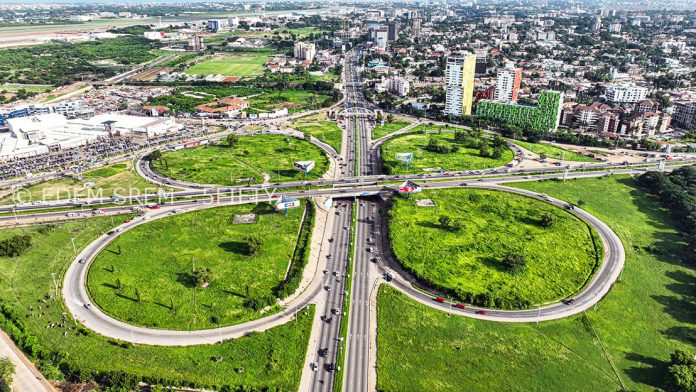
Tetteh Quarshie Roundabout, Accra, Ghana.

Motorists using the busy stretch around the Tetteh Quarshie Interchange should prepare for significant traffic adjustments beginning Monday, March 9, 2026 as authorities begin a critical phase of construction works linked to the expansion of the Accra–Tema Motorway project.

In a public announcement issued by the Public Affairs Division, through the official Facebook page of the Ghana Highway Authority (GHA), it encouraged the public to seek further clarification through its official WhatsApp contact line.

The GHA, acting on behalf of the Ministry of Roads and Highways, said the temporary traffic management arrangement is necessary to facilitate T-beam launching works for the ongoing expansion of the interchange bridge.

Under the new arrangement, lanes on the northbound carriageway of the N4 (Accra to Madina direction) will be temporarily closed to allow construction activities to proceed safely.

To ease traffic flow during the period, the southbound carriageway (Madina to Accra) – which normally carries four lanes – will be reconfigured into two lanes in each direction, allowing vehicles to travel both ways on the same stretch.

According to the GHA, the temporary measure is expected to remain in place for about four months while engineers complete the structural works required for the bridge expansion.

The authority explained that the lane reduction is intended to create a secure working environment for construction personnel while maintaining safety for the thousands of motorists who use the corridor daily.

Drivers are, therefore, being urged to exercise caution, obey traffic signs and directions from traffic management officials, and plan their journeys accordingly to minimise delays.

The road works form part of broader efforts by government to expand and modernise key sections of the motorway corridor linking Accra to surrounding urban communities, including Madina.


For more news, join The Chronicle Newspaper channel on WhatsApp: https://whatsapp.com/channel/0029VbBSs55E50UqNPvSOm2z
Family Of Sammy Gyamfi’s In-Law Grateful To Sympathisers

0

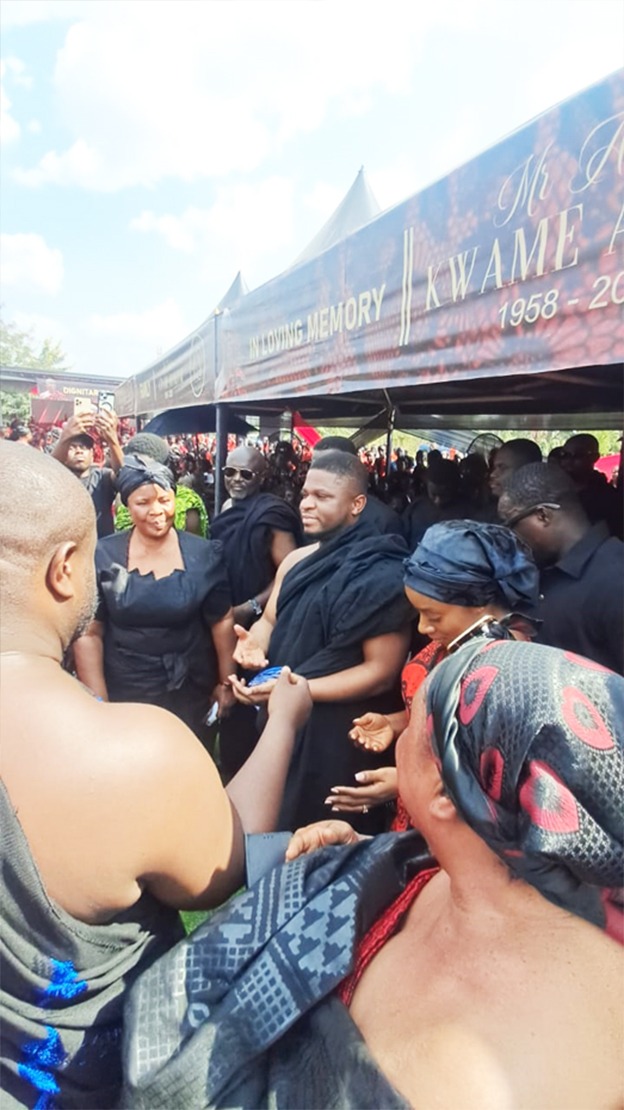
The family of the late Mr. Andrews Kwame Amankwah, father-in-law of Sammy Gyamfi, the Chief Executive Officer of Ghana Gold Board (GoldBod), has expressed appreciation to friends, sympathisers and well-wishers who supported them during the one-week observance of his passing.

In a statement issued by the family, they conveyed profound gratitude to all who joined them during the solemn gathering, noting that the show of solidarity provided comfort and strength as they mourn their loss.

“Your presence, prayers and words of comfort have been a great source of strength during this difficult time,” the family stated.

They added that the overwhelming support demonstrated by friends and loved ones was deeply touching and reflected the respect and affection many held for their departed patriarch.

The family concluded by praying for God’s blessings upon all who stood by them during the period of mourning.


For more news, join The Chronicle Newspaper channel on WhatsApp: https://whatsapp.com/channel/0029VbBSs55E50UqNPvSOm2z
Minority demands return of Ato Forson to the House

0
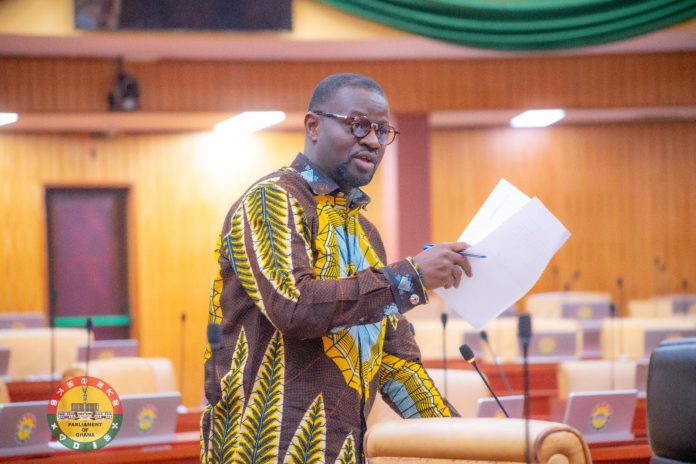
Frank Annoh-Dompreh

Tensions briefly flared on the floor of Parliament over the weekend as the Minority Chief Whip and Member of Parliament for Nsawam-Adoagyiri, Frank Annoh-Dompreh, demanded the immediate return of the Finance Minister, Cassiel Ato Forson, to address pressing concerns about the country’s public finances.

Dr Cassiel Ato Forson- Finance Minister

Speaking during proceedings in the House, the Minority Chief Whip insisted that the Finance Minister must return to Parliament to provide clarity on critical financial matters, particularly issues surrounding the country’s sinking fund and government capital investment.

According to him, the issues raised are of significant national importance and require full transparency before the representatives of the people.

“This is the people’s representative House. The minister must come back to this House,” Annoh-Dompreh declared.

Questions over sinking fund

The Minority Chief Whip specifically referenced the sinking fund, describing it as a crucial national financial mechanism that must be subjected to parliamentary scrutiny.

He noted that developments surrounding the fund raise important questions that the Finance Minister must personally address before Members of Parliament.

“Matters on the sinking fund, which is very important for obvious reasons, must be explained,” he said.

According to him, such matters directly affect the financial stability of the country and therefore cannot be treated as routine government business.

He stressed that Parliament has a constitutional responsibility to demand accountability from government officials on issues affecting the nation’s economic management.

Beyond the sinking fund, Annoh-Dompreh also expressed concern about the level of capital investment undertaken by government.

He revealed that government had reportedly cut capital expenditure significantly in the previous year, a move he said could have far-reaching implications for national development.

“Last year, government slashed about 55 percent of capital investment,” he stated.

The Minority Chief Whip argued that such a drastic reduction in spending on infrastructure and development projects must be properly explained to Parliament.

According to him, Members of Parliament must be fully informed about decisions that affect development priorities and the pace of economic growth.

Meanwhile, the Minority Caucus also strongly opposed a proposal contained in the Business Committee report seeking to allocate speaking opportunities during parliamentary debates based on proportional representation between the Majority and Minority sides.

The proposal recommended that a total of 27 Members of Parliament be allowed to contribute to debates each day, with 18 Speakers from the Majority caucus and nine from the Minority.

Annoh-Dompreh rejected the arrangement outright, describing it as unfair and unacceptable to the Minority.

“We will resist with every strength in us,” he said while formally registering the Minority’s protest.

He argued that such an arrangement would limit the ability of the Minority to fully participate in parliamentary debates and effectively represent their constituents.

“We will resist oppressive rules. We will not allow proportional representation in speaking time in this House,” he declared.

The Nsawam-Adoagyiri legislator further insisted that the controversial portion of the Business Committee report must be removed before the House proceeds with its adoption.

While indicating that the Minority is prepared to support the broader report, he made it clear that acceptance would depend on the removal of the disputed section.

According to him, once the section recommending proportional allocation of speaking slots is removed, the Minority would have no difficulty supporting the rest of the report.

Annoh-Dompreh also cautioned the Majority Leader against attempting to overturn previous rulings of the Speaker through procedural shortcuts.

While acknowledging the Majority Leader’s strong command of parliamentary procedures, he noted that the proper process must always be followed.

“The Leader is very good when it comes to procedure. We respect him for that,” he said.

However, he emphasised that any attempt to challenge a ruling of the Speaker must be done through a substantive motion before the House.

Using a metaphor to emphasise the importance of due process, he remarked: “If you want to enter the chamber, you must come through the door. Don’t come through the window.”

According to him, the Minority Caucus remains determined to defend parliamentary rules and ensure fairness in the conduct of debates in the House.


For more news, join The Chronicle Newspaper channel on WhatsApp: https://whatsapp.com/channel/0029VbBSs55E50UqNPvSOm2z
Assessing the effectiveness of Russia’s security provision to Sahel governments: risks, opportunities and the way forward

0
Lord Mawuko-Yevugah, PhD

Introduction

Over the past couple of years and following the rise of political instability and military takeovers, the security dynamics of the Sahel have become a crucible of global geopolitical competition and rivalry. While Western powers such as the United States and France have historically been in the forefront of countering terrorism and insurgency in the Sahel and the wider West African region, there is a growing recognition, if not frustration in recent times over what is seen as limitations of Western support in security provision. The cases of Burkina Faso, Mali, and Niger illustrate the limitations and, in some instances, failures of the Western security model in producing sustainable stability.

Thus, amid spiralling insurgencies, transnational criminal networks, and historic governance deficits, Sahelian states have opened their doors to non-Western security partners. Most notably, Russia has emerged as a prominent security actor, offering military training, equipment, and strategic advisory services. But with influence comes consequences. It is therefore essential to assess the effectiveness of Russia’s security provision to Sahel governments, considering the risks it presents, the opportunities it offers, and what policy pathways might yield better outcomes for regional peace and stability.


Contextualizing Russia’s strategic entry into the Sahel

Russia’s engagement in the Sahel needs to be situated within the context of shifting global power dynamics and growing attraction of the Sahel in the geopolitical and strategic calculations of global powers.

While Western powers historically established themselves as the natural partners in the region based on long historical connections from the colonialism era through the Cold War period and to the global war on terrorism, over time, the West seems to have lost its influence due to a combination of factors, including the widespread disaffection towards Western-backed governments, many of them deemed unable to provide adequate security and effective development outcomes.

These developments have partly resulted in what has been described as the “backsliding of democracy” in the region with the rise into power of military regimes. These developments have produced two opposing emerging dynamics in the form of the weakening or waning of Western influence on the one hand, and the growing influence of new global powers on the other hand.

Russia, has thus, emerged as a key beneficiary of what is generally seen as the growing unpopularity and retreat of the West. The country has, thus, seen an opportunity geopolitically to expand its influence in West and Central Africa in order challenge Western predominance by establishing new diplomatic and economic ties and partnerships.

Strategically, these partnerships facilitate access to natural resources and defence contracts. Thus, for many Sahelian governments, particularly Burkina Faso, Mali, and Niger, Russia represents a powerful alternative to traditional Western partners whose support has been criticized as insufficient or conditional.


Assessing effectiveness of Russian security provision model

Evaluating Russia’s effectiveness in bolstering Sahelian security requires a multi-dimensional analysis of operational results, governance legitimacy, and sustainable impact. Operationally, Russia’s engagement in the region in the short term, has been visible in the form of supply of weapons and in frontline training and security provision using private military contractors like the Wagner Group. These activities may be credited for growing tactical competence in reclaiming territory from insurgents or breaking sieges.

However, these gains are often short-term and isolated. Reports suggest that troop deployments are limited and that coordination with regular Sahelian forces remains weak. In many cases, Russia-aligned elements have been unable to translate battlefield presence into broader territorial control or sustainable improvements in national security architecture. Thus, operational effectiveness is partial, with Russia boosting capacity at the margins but failing to foster enduring operational excellence across Sahelian militaries.

In terms of political legitimacy and governance outcomes, while Russia’s entry into the region represents diversification of global powers providing security support, at the same time Russia’s engagements and partnerships within the region undermines the quest for democratic governance and accountability.

Many Sahelian states hosting Russian forces are themselves under military rule following coups (e.g., Mali and Niger). Thus, Russia’s support for these regimes, often devoid of strict democratic or human-rights conditions, has bolstered authoritarian governance rather than incentivizing political reforms. This dynamic undermines long-term stability.

Security gains that coincide with weakening civil institutions effectively trade democratic accountability for militarized order. This also have the tendency of undermining modest gains at democratic consolidation within the broader West African region where military regimes offering short-term fixes may become attractive. Thus, by aligning with militarized governments without clear democratic benchmarks, Russia’s growing presence and involvement in the regions risk emboldening regimes that might otherwise pursue political reforms, contributing to democratic backsliding across the region.

Other risks include strategic dependency where Sahel governments risk becoming reliant on Russian support without building sustainable domestic capabilities. This dependency raises the spectre of “security neo-colonialism,” and “security-for-access” where strategic autonomy is replaced by external patronage.

The Way Forward: A Constructive Path

Considering the mixed legacy of Russia’s security provision, a more nuanced and sustainable approach is needed. First, it is important for Sahelian governments to establish clear benchmarks and transparency by clarifying the scope, limits, and performance expectations of any foreign security partnership. Agreements must be transparent, independently monitored, and tied to measurable outcomes.

Second, there is the need to strengthen civil-military relations where security provision is accompanied by governance reforms that reinforce accountability and civilian oversight. This prevents militarization from overshadowing democratic development.

Thirdly, there is the need to foster multilateral frameworks by gradually fostering central roles for the African Union and ECOWAS in coordinating security efforts, ensuring that external partnerships complement regional strategies rather than undermine them.


Conclusion

Russia’s engagement in the Sahel in security provision to Sahel governments comes with risks and opportunities. It has delivered tactical military support that, in some instances, has produced localized gains.

The entry of Russia and any other new actor to the region also helps to diversify partnerships and ensures that no single global power dominates and imposes its priorities and ideals. Yet, the unprincipled embrace of undemocratic and authoritarian traits of global powers such as Russia also risks deepening governance challenges, strained regional cooperation, and introduced pernicious human-rights challenges.

The effectiveness of such engagement cannot be judged solely on battlefield outcomes; it must be assessed against the yardsticks of sustainable peace, accountable governance, and regional resilience.

For the Sahel to chart a secure and sovereign future, its governments must wield external partnerships judicious by demanding transparency, reinforcing democratic norms, and building indigenous capacities that outlast any foreign actor. The way forward is not to reject cooperation outright but to demand partnerships that strengthen, rather than weaken, the foundations of peace and security across the West African region generally.

By Lord Mawuko-Yevugah, PhD

Associate Professor of International Relations and political economy at the Ghana Institute of Management and Public Administration (GIMPA); and Director of Centre for African Diplomacy and Global Engagement (Afro-global)

The Ghanaian Chronicle