Home Blog Page 91

Angélique Kidjo Announces New Album, Features Davido, Ayra Starr

0
Davido, Angélique Kidjo and Ayra Starr

Angélique Kidjo has announced the release of her forthcoming album, ‘Hope!!’ an anticipated project that features Nigerian music stars Davido, Ayra Starr, and highlife duo The Cavemen.

The five-time Grammy-winning singer revealed the project in a post shared on her Instagram page on Wednesday, describing the album as a deeply personal work that has been five years in the making.

In the announcement, Kidjo disclosed that the 14-track album is dedicated to her late mother, Yvonne, who passed away five years ago, and said the project reflects the message of hope she received from her.

Writing on Instagram, the Beninese musician said, “5 years in the making: my new album HOPE!! Dedicated to my mother, Yvonne, is coming out on April 24th.

“She is the one who taught me that every dream I had could be accomplished, that HOPE for a better future is what makes us human. She left us 5 years ago, but her message resonates to this very day.

“I put my whole heart into this album, and I’m so GRATEFUL to all the great artists who have contributed their genius to the album.”

Beyond the Nigerian stars, other artists featured on the project include French singers Florent Pagny and Dadju, Congolese star Fally Ipupa, Tanzanian singer Diamond Platnumz, Brazilian artiste IZA, and American musician PJ Morton. South Africa’s renowned Soweto Gospel Choir also appears on the album.

Credit: channelstv.com

“No-Bed Syndrome (Part 2): Why Patients Get Stuck in the Emergency Department

0
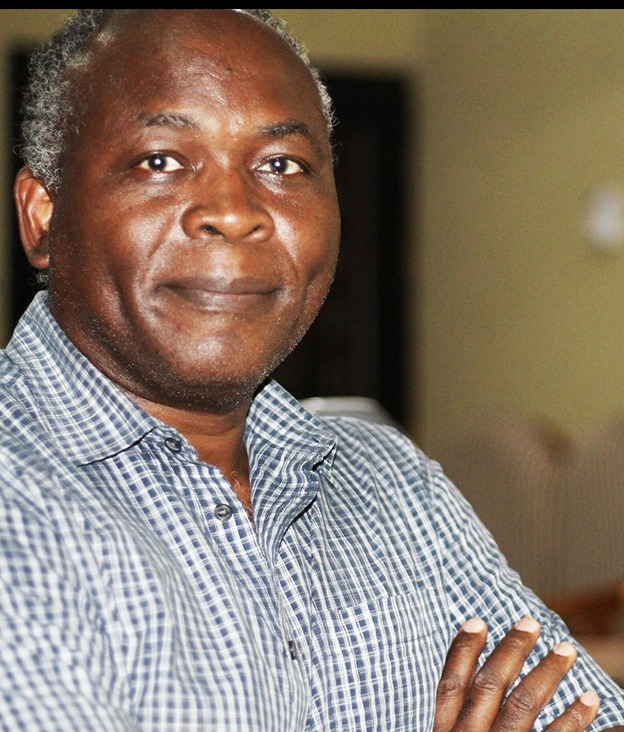
Dr. George Oduro, an Emergency Physician

This series examines why patients sometimes cannot move through hospitals even after the decision to treat or admit them has been made. In this instalment we look at the most visible place where that failure appears: the emergency department.

Many people imagine that the phrase “No-Bed Syndrome,” means that a hospital that has run out of beds. They picture wards filled beyond capacity. They assume the hospital building itself is too small. The instinctive solution is mortar and concrete. Build more space. Add more beds.

Yet in most cases patients remain in the emergency department for a different reason. The hospital has beds, but patients cannot move into them.They get stuck because they cannot move.

Pause briefly to think about a woman who arrives in the emergency department with severe abdominal pain. She is triaged and assessed promptly. Blood tests are sent and scans are arranged. The doctor makes a diagnosis and decides the patient needs to be admitted under the surgical team. She is given pain relief and a drip is started. She is clinically stable. On paper, she is now a hospital inpatient.

Yet she remains on a trolley in the emergency department for hours.As explained in last week’s article, this is called boarding. Boarding occurs when a patient has been admitted but remains physically in the emergency department because no inpatient bed has been vacated. The clinical decision has been made. Responsibility for the patient’s care has shifted to another specialist but the patient cannot be not moved.

Boarding is not just an inconvenience. It is the operational mechanism by which flow failure becomes visible. It is the moment when a hospital’s internal delays become visible in the emergency department.

The patient is no longer waiting for a diagnosis. She is waiting for a bed to open because another patient has not yet been discharged. The ward team may only have reviewed that patient late in the afternoon. A discharge summary may still be incomplete. Relatives may not yet have arrived. Payment or transport arrangements may still be pending. A delay affecting one patient upstream becomes a prolonged wait downstream in the emergency department.

This is how patients get stuck.Hospitals function properly only when patients are able to move through them. Patients arrive, are triaged and assessed, decisions are made, and from there they should move on to a ward before eventually going home. When that movement slows at any point, the effects begin to show up quickly. The emergency department absorbs that pressure because it cannot close its doors.

The most common reason patients remain in the emergency department after admission is delayed discharge upstream.

Discharges that occur late in the day create bottlenecks. When ward rounds start late in the morning rather than early, beds are not vacated in time by discharged patients for new admissions. Discharge processes including medications and bill payments may not be prepared in advance, or may take hours to complete. If insurance authorisation is delayed or payment questions remain unresolved, discharge pauses. Families sometimes travel a distance and cannot collect relatives until later in the day. These can leave hospital beds occupied for hours longer than necessary.

Each of these delays appears minor in isolation. Together, they fill the hospital.There are also delays within inpatient processes themselves. Investigations may be ordered sequentially instead of simultaneously. A specialist review may take hours because one specialist team covers multiple units. Bed allocation may depend on personal phone calls rather than a real-time bed management system. No one step feels catastrophic. The cumulative effect is visible in a crowded emergency department.

Workforce strain magnifies every weakness.When wards are short staffed, discharges slow. When junior doctors cover multiple specialties, reviews are delayed. Some specialists may not have junior staff to assist them. When nurses care for too many patients, documentation and coordination take longer. Fatigue reduces efficiency. Burnout reduces momentum. A system that depends on constant improvisation cannot maintain smooth flow. Temporary adaptations are sometimes necessary, but they are not a substitute for organised capacity.

Financial and social realities also contribute to exit block.Some patients are medically fit for discharge but cannot leave because bills have not been settled. Others require equipment or support at home that is not immediately available. Others wait for relatives to travel from distant towns. These are not trivial issues. They can significantly affect how hospitals operate.

Every occupied hospital bed affects the next patient waiting to be admitted into it from the emergency department.In this way, slowly but surely, the emergency department becomes the holding area for the patients waiting to be admitted.

Another practical question often arises at this stage. A patient has been admitted but is still lying in the emergency department because no ward bed has opened. In that situation it is not always clear who should take responsibility for the patient’s care or for resolving the delay.

Some clinicians assume responsibility is transferred once the admission decision has been made. Others expect it to change only after the patient physically reaches the hospital ward. Uncertainty can also arise about who has the authority to escalate the situation or to override routine processes when the department is under pressure.

Without clarity, admission delays drift. Ambulances are told there is no bed. Families are told to wait. Staff make phone calls searching for bed space that may or may not exist. The system feels uncertain because visibility of beds across the hospital is limited.

In cities such as Accra and Kumasi, emergency departments attached to major referral centres function as pressure valves for entire hospitals. When inpatient occupancy remains near full capacity every day, the effect is that there is no buffer. Therefore, even small increases in demand produce large delays. A road traffic crash. A seasonal malaria surge. A cluster of pneumonia cases. Without margin, boarding increases rapidly.

Research from major health systems shows that emergency department overcrowding is driven more by delayed movement (out of the emergency department) than by new arrivals. The front door is rarely the main problem. The blocked exit is.

Clinical leaders have long argued that health outcomes in low and middle income countries depend not only on access, but on how well hospital systems are organised and how reliably patients move through them. Emergency care fails not simply when resources are scarce, but when coordination across levels of care breaks down. Boarding in the emergency department is one visible expression of that breakdown.

It is important to acknowledge that emergency departments themselves also influence flow. Over‑investigation can delay decisions. Defensive admissions can increase inpatient demand. Incomplete stabilisation before referral can create friction between teams. Poor communication at the point of admission slows acceptance. Flow is not solely a responsibility for inpatient clinicians. It is often shared.

But even a perfectly efficient emergency department cannot compensate for a hospital that operates permanently at full occupancy.

Queueing theory teaches that systems running close to maximum capacity are unstable. When bed occupancy exceeds safe margins, small fluctuations in demand generate disproportionate delays. A hospital that is always full is not efficient. It is fragile. It has no capacity to absorb the unexpected.

An emergency department filled with boarded patients loses functional capacity. Trolleys intended for rapid assessment become temporary ward beds. Cubicles remain occupied by admitted patients. New arrivals wait longer for evaluation. Staff attention is divided between acute resuscitation and ongoing inpatient care tasks. Risk increases quietly.

Over time, what should be exceptional becomes routine. Corridors become care areas. Families adjust expectations. An overcrowded emergency department becomes the baseline rather than the warning sign.

When congestion or overcrowding begins to feel routine, safety is already at risk.As previously stated, these delays accumulate quietly. A late discharge here. A delayed review there. A payment question unresolved. A specialist covering too many wards. Each delay appears small. Together they fill the hospital and leave admitted patients waiting in the emergency department.

The problem is not that hospitals have no beds at all. It is that patients cannot move through the beds that already exist.

Once we recognise that the problem is movement rather than beds, the next question becomes unavoidable: why does movement slow? Patients are assessed. Admission decisions are made. Yet hours later they remain in the emergency department. Somewhere between decision and transfer, patient movement slows.

Hospitals must treat flow through the emergency department as a measurable performance metric. The time between emergency department decision-to-admit and actual transfer to a hospital ward should be measured. Boarding time should be tracked. Discharge timing should be monitored. Bed occupancy rates, for the emergency department and wider hospital, should be measured. Escalation pathways during congestion should be predefined rather than improvised.

These are operational questions, but they can also be cultural ones. They require mutual accountability between emergency clinicians and inpatient teams. They require hospital leadership to recognise that delay at one point in the system creates risk elsewhere.

If you work in healthcare in Accra or Kumasi, where do you see patients getting stuck most often? Is it at the point of inpatient discharge? During specialist review on the wards? In bed allocation? In insurance processing? In communication between teams? What would change tomorrow if flow were treated as seriously as diagnosis?

If you are a patient or family member, were you given clear information while waiting in the emergency department? Did someone explain why a bed was not yet available? Did you feel the hospital knew where space existed? What part of the waiting felt preventable?

These questions are not rhetorical. They are starting points. Sustainable reform begins with honest observation.

Patients get stuck in the emergency department not because care has stopped, but because movement has. The emergency department fills with patients who have already been admitted but cannot yet move to the hospital ward. At that point the problem changes shape. Admission has occurred. Transfer has not. Clinicians call this exit block.

Safe emergency medicine practice depends on safe and timely movement.

By Dr. George Oduro, FRCS, FRCEM (UK), FGCS
Consultant in Emergency Medicine


For more news, join The Chronicle Newspaper channel on WhatsApp: https://whatsapp.com/channel/0029VbBSs55E50UqNPvSOm2z

Causes and Prevention of Heartburn

0
Heartburn

What is heartburn?

Heartburn, sometimes called acid indigestion, is a painful, burning feeling in the middle of your chest or the upper part of your stomach. The pain, which can also spread to your neck, jaw, or arms, can last just a few minutes or stick with you for hours.

What causes heartburn?

There’s a muscle at the entrance of your stomach, called the lower esophageal sphincter (LES), that acts like a gate: It opens to let food move from your esophagus to your stomach, and it shuts to stop food and acid from coming back out.

When the LES opens too often or isn’t tight enough, stomach acid can rise up into the esophagus and cause the burning feeling.

What triggers heartburn?

Triggers vary from person to person, but you may be more likely to get heartburn when you:

  • Overeat
  • Eat spicy, fatty, acidic, or greasy foods
  • Consume caffeine or alcohol
  • Smoke
  • Lie down shortly after you eat
  • Are under stress

Who gets heartburn?

Some people have a higher risk of heartburn, including those who are:

  • Smokers
  • Overweight
  • Pregnant
  • Have a hiatal hernia, where the stomach bulges up into the chest through an opening in the diaphragm

How should I change my diet to avoid heartburn?

You might have noticed that your heartburn gets worse when you eat or drink certain things. Here are a few that can trigger heartburn:

  • Alcohol
  • Chocolate
  • Coffee
  • Fatty or fried foods
  • Greasy foods
  • Onions
  • Oranges, lemons, and other citrus fruits and juices
  • Vinegar, hot sauces, and salad dressings
  • Peppermint
  • Sodas and other bubbly drinks
  • Spicy foods
  • Tomatoes and tomato sauce

Big meals can also set off heartburn. Instead of eating three big meals a day, try to eat several small meals throughout the day.

What else can I do to prevent heartburn?

Here are a few steps to try:

  • Lose weight if you’re overweight. Extra pounds put pressure on your stomach, forcing more acid up into your esophagus.
  • Wear loose clothing. Tight clothes that press on your stomach can trigger heartburn.
  • If you smoke, quit. Cigarette smoke relaxes the muscle that prevents acid from backing up into the esophagus. It also may increase how much acid your stomach makes.
  • Check your medicines. Regular use of anti-inflammatory and pain medicines (other than acetaminophen) contributes to heartburn.
  • Avoid high-impact exercise.

If heartburn bothers you at night:

  • Eat a light dinner and avoid foods that trigger your heartburn.
  • Don’t lie down for at least 2 to 3 hours after you eat.
  • Use blocks or books to raise the head of your bed by 4-6 inches. Or put a foam wedge under your mattress at the head of the bed. Sleeping at an angle will help stop acid from backing up into your esophagus.

Can exercise cause heartburn?

Exercise has more than a few health perks. Among them is weight loss, which can help you avoid getting heartburn in the first place if you are overweight. But some types of exercise can trigger the burning sensation. You’ll be less likely to reach for your heartburn medicine if you avoid crunches and inverted poses in yoga. You may need to find alternatives to high-impact workouts. For example, bicycle or swim instead of going for a run.

Credit: webmd

Today’s UEFA Champions League Fixtures and Previews

0

Newcastle welcome Barcelona to St James’ Park

For the second time in six months, St James’ Park hosts the famous Barcelona, as Newcastle United welcome the Spanish titans to their headquarters for today’s Champions League last-16 first leg.

The Magpies saw off Azerbaijani hopefuls Qarabag in the knockout phase playoffs, while Hansi Flick‘s outfit clinched fifth spot in the league phase to earn a direct ticket to the last 16.

Over four years on from Newcastle’s lucrative Saudi-backed takeover, results both on and off the field have been mixed to say the very least, but Eddie Howe‘s Magpies have finally broken new ground on the biggest continental stage of all.

A 12th-placed league-phase finish – while far from remarkable – saw Newcastle reach the knockout rounds of the Champions League for the first time in their history.

However, domestic chaos continues to reign supreme for the Magpies, who have suffered a crushing 3-2 Premier League home loss to Everton, defeated Manchester United 2-1 with 10 men and most recently been beaten 3-1 by Manchester City in the FA Cup over the past couple of weeks.

Champions League knockout amateurs meet Champions League knockout aficionados, as Barcelona continue their bid to go at least one better than their 2024-25 run to the semi-finals, where Inter Milan broke Blaugrana hearts.

Barca’s league-phase campaign was as frenetic as could be expected, as their eight games saw the joint-highest number of overall goals with 36 – level with Borussia Dortmund.

Flick’s ferocious attack can still fight fire with fire to claim a first-leg advantage, albeit surely only a slender one due to a number of key absences, as Newcastle keep the tie alive before trekking to Camp Nou.

Credit: sportsmole.co.uk


Galatasaray host Liverpool in first leg of round of 16 tie

Liverpool‘s Champions League campaign continues today against Galatasaray, with RAMS Park the staging ground for the first leg of their round of 16 tie.

Dominik Szoboszlai, Liverpool

The Reds are sixth in the Premier League, but they will take confidence from their third-placed finish in the Champions League’s league phase, though their hosts already won 1-0 against the Merseysiders in September 2025 and will be challenging opponents.

Galatasaray had to navigate a playoff round against Juventus in order to advance into the knockouts, and though they won 7-5 on aggregate, they were taken to extra time after Juve took a 3-0 lead, despite playing with 10 men for the majority of the second half.

Perhaps the biggest hindrance for the Turkish outfit in their tie against Liverpool is that they will not be able to bring any supporters into Anfield for the second leg after crowd disturbances against Juve, which will make securing a positive result on Tuesday even more important.

Galatasaray will hope to earn a fourth consecutive victory in all competitions, and a win against Liverpool would be their sixth in a row at home.

While the visitors have the quality to take a first-leg lead, their history against Galatasaray has been poor given they have lost three, drawn two and won just one of their six meetings with the Turkish side.

Galatasaray boss Buruk has indicated that he intends to field a physical side capable of disrupting Liverpool’s defence, and striker Victor Osimhen will be key for the hosts in that regard.

Credit: sportsmole.co.uk


Tottenham travel away to face Atletico Madrid

Taking a break from their Premier League relegation battle, crisis club Tottenham Hotspur venture to the Wanda Metropolitano for today’s Champions League last-16 first leg with Atletico Madrid.

Julián Alvarez, Atletico Madrid

The Europa League holders achieved an impressive fourth-placed league-phase finish despite their domestic disasters, while Diego Simeone‘s crop got the better of Club Brugge in the playoff rounds.

Continental competition has provided Tottenham with safe haven while their Premier League campaign continues to unravel – at least up to this point.

In the eyes of many, Tottenham’s stellar European displays and pitiful domestic performances said a great deal about the quality of football in England compared to other Big Five leagues, as did the fact that five Premier League clubs earned a direct ticket to the last 16 of the competition.

That theory will be put to the test again today, when Tottenham will go in search of a fourth straight UCL victory and a sixth clean sheet from their last seven in the tournament, but travelling supporters will not be holding their breath.

With Romero and Van de Ven back together, Tottenham should not be such a horror show at the back, but the Lilywhites are still lacking in attacking ideas and a clear identity under Tudor.

The visitors’ domestic troubles meant nothing against Dortmund or Frankfurt, but an Atletico team with a taste for goals at home should put one foot firmly in the quarter-finals.

Credit: sportsmole.co.uk


Atalanta and Bayern Munich faceoff in Bergamo

Kicking off their battle for a place in the Champions League quarter-finals, Atalanta BC and Bayern Munich will meet in Bergamo on Tuesday evening.

While Bayern strode straight through to the last-16 stage, La Dea dramatically eliminated another German giant to squeeze through the playoffs.

Harry Kane, Bayern Munich

No strangers to an epic European success, Atalanta pulled off a classic Champions League comeback in this year’s first knockout round, recovering from a two-goal defeat in the first leg.

Facing long odds to turn the tie around, they had overturned that deficit by the hour mark of a thrilling return leg in Bergamo, before Borussia Dortmund levelled the pair’s playoff clash at 3-3.

A penalty was then awarded to La Dea deep in second-half stoppage time, and Lazar Samardzic emphatically dispatched it, sending his team through to the last 16.

Italy’s last representative in this season’s competition, Atalanta, have developed a proud continental record in recent years, and the 2024 Europa League winners have hopes of going further.

However, aside from last month’s 4-1 home win, the Nerazzurri have lost six of their last seven fixtures in the elimination phase; they have also conceded an average of two goals per game across nine knockout matches. Furthermore, since toppling Dortmund, Raffaele Palladino‘s men have started to falter.

Even though Atalanta usually over perform their modest status in Europe, they have leaked goals in recent games and cannot keep Bayern at bay for 90 minutes.

The German giants should score at least twice to seize a lead for next week’s return leg in Bavaria.

Credit: sportsmole.co.uk


FIXTURES

Galatasaray 17:45 Liverpool

Atalanta 20:00 Bayern Munich

Atletico Madrid 20:00 Tottenham Hotspur

Newcastle United 20:00 Barcelona

Ghana Premier League Matchday 25 delivers thrills & shrills

0
Kelvin Osei Asibey, Hearts of Oak

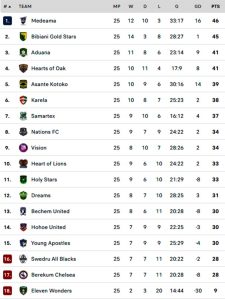
Match day 25 of the Ghana Premier League delivered drama across several centers, with some clubs consolidating their positions while others suffered unexpected setbacks. Match day 25 games produced important wins, a few surprises and a number of tightly contested encounters as the race for points continue to intensify.

Nations FC 3-0 Bechem United
Nations FC produced a commanding performance to dispatch Bechem United 3-0. The home side showed attacking intent from the start and maintained control throughout the encounter. Their dominance paid off with three well-worked goals that ensured a comfortable victory. Bechem United struggled to match the hosts’ intensity and were unable to recover after conceding early.

Vision FC 3-1 Berekum Chelsea
Vision FC continued their impressive run with a convincing 3-1 victory over Berekum Chelsea. The hosts displayed attacking quality and took their chances well to build a strong lead. Chelsea managed to reduce the deficit with a goal of their own but could not mount a comeback as Vision maintained control to secure the win.

FC Samartex 1996 0-0 Dreams FC
Samartex was held to a stalemate by Dreams FC in a match that produced few clear-cut chances.

Mohammed Camara, Asante Kotoko

Both teams approached the contest cautiously, resulting in a tactical battle in midfield. Despite efforts from both sides to break the deadlock, neither team was able to find the decisive goal nor had they to settle for a share of the points.

Aduana FC 2-0 Techiman Eleven Wonders
Aduana FC capitalized on home advantage to record a 2-0 win against Eleven Wonders. The Dormaa-based club looked organized and efficient, scoring in each half to secure the victory. Eleven Wonders tried to respond but lacked the cutting edge in attack as Aduana held firm defensively to protect their lead.

Heart of Lions 1-0 Swedru All Blacks
Heart of Lions claimed a narrow but important 1-0 win over Swedru All Blacks. The encounter was closely contested with both sides showing determination. However, the hosts managed to find the breakthrough and held on resolutely to secure all three points in front of their supporters.

Accra Hearts of Oak 0-0 Holy Stars FC
Accra Hearts of Oak were forced to settle for a goalless draw against Holy Stars in a tense encounter at the University of Ghana Sports Stadium on Match day 25 of the Ghana Premier League.

The Phobians entered the match determined to secure all three points in front of their home supporters and started the game on the front foot. Hearts dominated possession for large spells and attempted to dictate the tempo, pushing forward in search of an early breakthrough. However, Holy Stars remained compact at the back and were disciplined in their defensive organization, making it difficult for the hosts to create clear-cut chances.

The game took a challenging turn for Hearts of Oak when they were reduced to ten men after one of their players was shown a red card. The dismissal forced the home side to adjust their approach as they had to continue the contest with a numerical disadvantage for a significant part of the match.

Despite being a man down, Hearts still showed determination and continued to press forward whenever opportunities arose. They created a few promising situations around the Holy Stars penalty area, but the final ball and finishing touch were lacking, allowing the visitors to maintain their defensive shape.

Holy Stars, sensing the numerical advantage, also attempted to threaten on the counterattack but were unable to capitalize on the spaces available. Their main focus remained on maintaining a solid defensive structure and frustrating the home side.

In the end, neither side could find the breakthrough as the match ended in a stalemate. While Hearts of Oak may feel disappointed after dominating large parts of the game, the result also reflected their resilience after playing a significant portion of the match with ten men.

For Holy Stars, the draw represents a valuable point earned away from home against one of the league’s traditional giants.

Karela United 1-0 Asante Kotoko
Karela United produced one of the standout results of the round with a hard-fought 1-0 victory over Asante Kotoko.

Samuel Attah Kumi, Bibiani Gold Stars

The home side showed discipline and determination to frustrate the visitors before capitalizing on a scoring opportunity. Kotoko pushed for an equalizer but were unable to break through Karela’s solid defensive setup.

Medeama SC 1-2 Hohoe United
Medeama SC surrendered an early lead to suffer a 2-1 defeat to Hohoe United in a dramatic encounter on Match day 25 of the Ghana Premier League. The Tarkwa-based side made a bright start and looked on course for victory after taking the lead, but a determined comeback from the visitors turned the match around.

The home side began the game with purpose and managed to break the deadlock after creating early pressure on the Hohoe United defense. The opening goal lifted the confidence of Medeama as they attempted to build on their advantage and control the tempo of the match.

However, Hohoe United gradually grew into the game and began to threaten going forward. Their persistence eventually paid off when they found the equalizer, silencing the home supporters and bringing the contest back to level terms.

Buoyed by the goal, the visitors continued to push forward and later took the lead with another well-worked effort, completing a remarkable turnaround. The second goal put Medeama under pressure as they searched for a way back into the match.

Medeama responded by increasing their attacking intensity in the closing stages, creating a number of opportunities in an attempt to rescue at least a point. Despite the late pressure, Hohoe United remained organized at the back and defended resolutely to protect their advantage until the final whistle.

The result marked an impressive away victory for Hohoe United, while Medeama were left frustrated after failing to capitalize on their early lead.

Young Apostles FC 3-1 Bibiani Gold Stars
Young Apostles rounded off the round with an impressive 3-1 victory over Bibiani Gold Stars.

Table

The hosts displayed attacking efficiency and created numerous chances, converting three of them to secure a comfortable win. Gold Stars managed to pull one goal back but it was not enough to threaten the hosts’ dominance.

By Jesse Otoo

Israel strikes Hezbollah financial institutions as Lebanon calls for talks

0
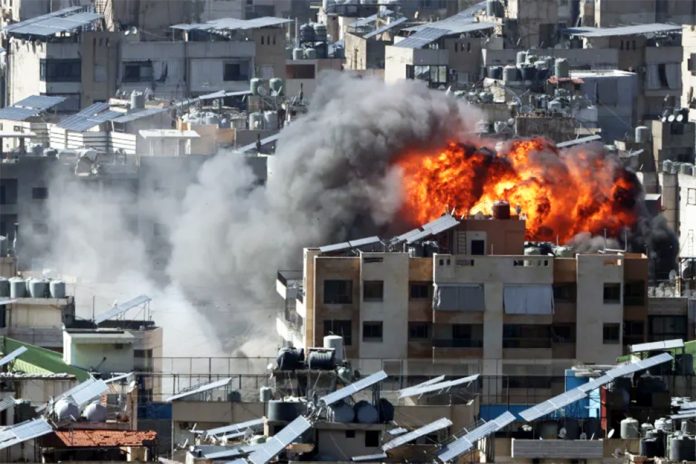
A fireball rises from the site of an Israeli air raid in the southern suburbs of Lebanon

The Israeli military has struck the Al-Qard al-Hasan financial institution in the Lebanese capital, Beirut, after issuing a statement announcing that it would target the branches of the Hezbollah-affiliated charity.

Lebanon’s state-run National News Agency (NNA) reported strikes on Monday on the Al-Qard al-Hasan building in the Bir al-Abed area, in the southern neighbourhood of Haret Hreik, and on another branch along the road to Beirut’s international airport.

The quasi-banking system, which operates outside the Lebanese financial system to provide interest-free loans and other financial services, has been under United States sanctions since 2007.

Lebanese authorities also blocked roads and redirected traffic leading to the Al-Qard al-Hasan branch in Nouairi, a neighbourhood in central Beirut.

Al Jazeera’s Zeina Khodr, reporting from Beirut, said residents were “living on edge”. “While Israel has issued a warning, more often than not, strikes come without any prior notice,” she said.

More strikes were reported from Beirut’s southern suburbs, which have been largely emptied of residents after Israel issued forced evacuation warnings last week. Those affected by the forced evacuation in southern Lebanon make up almost 8 percent of the country’s population.

NNA said Israeli air attacks hit the neighbourhoods of Ghobeiry and Haret Hreik, and the Safir area.

Contrary to Beirut’s southern neighbourhoods, the central Beirut neighbourhood of Nouairi is densely populated, hosting many of the internally displaced people.

Khodr said local authorities told people in the area to leave. “But there is a school housing displaced people nearby, and many of them are choosing not to leave the area,” the reporter added.

Credit: aljazeera.com

Belgian synagogue damaged in blast considered antisemitic act

0
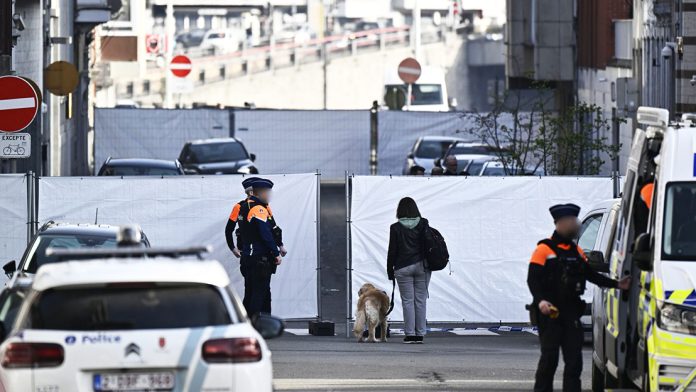
Belgian synagogue damaged in blast

An explosion hit a synagogue in the Belgian city of Liège early on Monday in what authorities said was an antisemitic attack that caused damage but no injuries.

The explosion, which happened around 4 a.m. (11 p.m. Sunday ET), blew out the windows of the synagogue, as well as those of a building on the opposite side of the road, public broadcaster RTBF said.

The cause was not clear, but prosecutors said the case had been passed to federal authorities, which normally investigate incidents linked to terrorism or organized crime.

Belgian Interior Minister Bernard Quintin called the explosion “a despicable antisemitic act that directly targeted the Jewish community of Belgium”.

He said security measures around similar sites will continue to be reinforced.

Eitan Bergman, Vice-President of the Coordinating Committee of Jewish Organisations in Belgium (CCOJB), said the targeting of the synagogue was deeply shocking.

Credit: cnn.com

Istanbul’s ex-mayor on trial for corruption charges

0
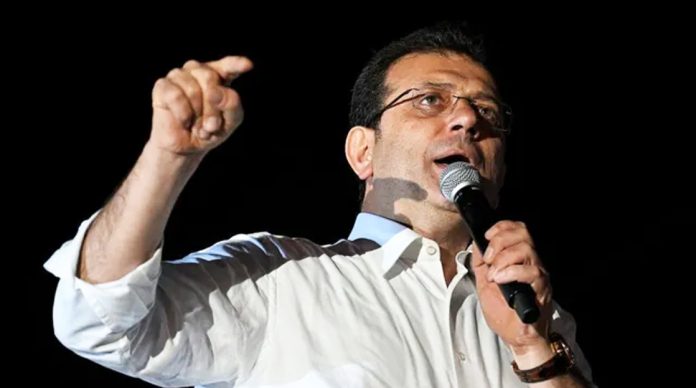
Former mayor of Istanbul

The former mayor of Istanbul has appeared in court as the central defendant in a mass corruption trial that his opposition party and rights groups say is politically motivated.

Ekrem Imamoglu, 55, faces more than 140 charges including corruption and running a criminal organisation. Prosecutors are seeking a jail term of up to 2,430 years.

He and his Republican People’s Party (CHP) deny any wrongdoing. They accuse Turkish President Recep Tayyip Erdogan and his allies of launching a crackdown over the leader’s decline in popularity.

Prior to the trial, which got off to a chaotic start on Monday, Imamoglu was widely seen as one of the few politicians capable of defeating Erdogan, who has been at the top of Turkish politics since 2003.

Another 407 of Imamoglu’s supporters have also been put on trial, accused of running a criminal corruption network headed by the opposition figure, who prosecutors describe as its “founder and leader”.

Imamoglu was greeted by his supporters with cheers and whistles as he entered the courtroom in the Marmara prison on Monday.

But it was not long before proceedings were brought to a halt by the judge after the politician contested the judge’s decision to hear the testimony of other defendants before his in the trial.

The judge called the protest disrespectful and ordered a recess until the afternoon, just 15 minutes after the hearing had started.

Present in the courtroom were Imamoglu’s wife, Dilek, and CHP leader Ozgur Ozel.

Imamoglu was arrested in March last year on the day he was named as the CHP’s presidential candidate for 2028.

Credit: bbc.com

Oil soars past $100 a barrel, stocks plunge as US-Israel war on Iran rages

0
Oil soars past $100 a barrel

Oil prices have surged past $100 a barrel amid the fallout from the United States and Israel’s war on Iran.

Brent crude, the international benchmark, rose by more than 30 percent on Sunday, at one point topping $119 a barrel, as fears grew of prolonged disruption to global energy supplies.

The surge marked the first time oil rose above $100 per barrel since Russia’s 2022 invasion of Ukraine.

Oil prices dropped back to about $110 per barrel after The Financial Times reported that the Group of Seven finance ministers would discuss the release of petroleum reserves in coordination with the International Energy Agency.

US President Donald Trump, who campaigned heavily on cost-of-living concerns before the 2024 election, brushed off the spike in prices.

“Short term oil prices, which will drop rapidly when the destruction of the Iran nuclear threat is over, is a very small price to pay for U.S.A., and World, Safety and Peace,” Trump said in a post on Truth Social. “ONLY FOOLS WOULD THINK DIFFERENTLY!”

US Secretary of Energy Chris Wright also downplayed the prospect of rising energy prices earlier on Sunday, telling the Face the Nation programme on CBS News that any increase in prices at the petrol pump would be “temporary”.

Crude oil prices have surged by about 50 percent since the US and Israel launched joint strikes on Iran on February 28.

Iran has brought shipping in the Strait of Hormuz to an effective halt in retaliation, threatening about one-fifth of the global oil supply.

Iraq, the United Arab Emirates and Kuwait, three of the biggest producers in the Organization of the Petroleum Exporting Countries (OPEC), have cut production amid an accumulating backlog of barrels with nowhere to go due to the effective closure of the waterway.

Attacks on energy production facilities in the region have further threatened supplies.

On Saturday, Israel carried out air raids targeting Iran’s oil infrastructure for the first time since the start of the war.

The strikes hit four oil storage facilities and an oil products transfer centre in Tehran and the province of Alborz, according to Iranian state media.

Iran’s Revolutionary Guard Corps (IRGC) on Sunday threatened to target energy facilities across the region in retaliation, warning that oil could soar to $200 a barrel if the US and Israel “continue this game”.

Credit: aljazeera.com

Leave my kids out of your dramatic spiritual displays –VDM warns Tonto Dikeh

0
VDM

Popular Nigerian influencer, VeryDarkMan, has criticized actress Tonto Dikeh following a viral video showing her leading a “deliverance” session during a school visit.

The incident occurred on Friday, March 6, 2026, when Tonto Dikeh shared several clips on her Instagram page documenting what she described as a spiritual encounter during an evangelism outreach at the school.

In the videos, the actress explained that as she and her team were preparing to leave, she sensed a “spirit of death” in the area.

She said she immediately alerted her team, and the group began praying.

The prayers reportedly evolved into a deliverance session involving some of the students.

Reacting to the clips, VeryDarkMan condemned the event, urging Tonto Dikeh to refrain from involving children in such dramatic spiritual displays online.

He also warned the actress to avoid the school, noting that it is situated within his community.

He added that rather than staging public deliverance sessions, the actress should focus on offering tangible support.

VeryDarkMan highlighted his personal contribution to the school, saying he had renovated parts of the facility to encourage and support the students.

“With all due respect to Tonto Dikeh …..this is a warning do not come to my area to do this again…..na only poor man children good to test your powers, leave my area kids alone, we want to raise kids with real life orientation not an ideology that if you don’t make it there is something following you from village,prayers are good however without work prayers are not useful….Take your new content somewhere else leave ghetto kids alone,”he wrote in the Instagram caption.

Credit: dailypost.ng

The Ghanaian Chronicle