Home Blog Page 805

Nutritional Value and Health Benefits of Bitter Cola

0
Bitter Cola

Bitter Kola or  Garcinia kola, is a small fruit native to West Africa. Bitter Kola has been a staple in traditional remedies for many years due to its powerful therapeutic and healing properties.

Virtually all parts of the kola tree are helpful in traditional African medicine; the most commonly used is the bitter kola nut. Bitter kola nut is an edible seed with a sharp, bittersweet taste and a slight sweetness as you chew it.

Amazing Health Benefits of Bitter Kola

It is a powerful plant medicine known for its various health benefits, ranging from immunity boosting to aiding digestion. Bitter Kola has a lot of great benefits. It contains plenty of vitamins, minerals for your bones and muscles, and protein to help build muscle! This article will delve into the 19 excellent health benefits of Bitter Kola and its active compounds.

Serves as Anti Poison

Chewing bitter Kola is a natural, herbal remedy to all sorts of food poisoning. It works by detoxifying and stopping the bacteria infection from food poisoning. Chewing bitter Kola has been used for hundreds of years and is still used by people today for its antiviral and bacterial infections.

If possible, digest both the nut and the bark of the bitter Kola immediately after consuming contact with a contaminated food source. Taking it will provide effective anti-contamination results and free the user from viral infections.

When eaten, the potent antibiotic in bitter Kola also helps prevent possible poisoning from anything you might consume that is already contaminated.

Cures Sexual Impotence

Bitter Kola helps increase sexual cravings in men, which is why most love potions have bitter Kola as a significant ingredient for libido enhancement.

Traditional medicine has always used bitter Kola as an aphrodisiac to help promote sexual performance, sexual desire, and sexual pleasure. Therefore, you can chew some kola nuts about two minutes before sexual intercourse to boost your sex life.

Valuable in Pregnancy

Bitter Kola is an inexpensive, natural, and safe supplement that benefits pregnant women. The bitter taste of the supplement helps pregnant women avoid the side effects of caffeine, which can lead to headaches and heart palpitations.

Bitter Kola is an incredible remedy for pregnant women, as it helps to prevent vomiting and nausea, which can affect their health. It also helps to ensure a healthier uterus, resulting in better overall well-being. In addition to these benefits, bitter Kola has many other medicinal properties that can help with various illnesses.

Fights Against Inflammation

African people over the years have been chewing  bitter kola seeds to cure inflammation. The plant’s high levels of caffeine and other compounds can relieve arthritis, osteoarthritis, rheumatoid arthritis, and inflammatory bowel disease.

The benefits of regular consumption of  bitter Kola include a reduction in inflammation and joint inflammation or discomfort. These benefits are due to the high potassium level in the herb.

It has Antibacterial Properties

The bitter kola leaf is antibacterial and can inhabit microorganisms in Escherichia coli, Salmonella typhi, Streptococcus pyogenes, and Staphylococcus aureus. These plants also have anti-inflammatory properties that can treat pain and inflammation.

The antibacterial properties responsible for this cure are the bitter Kola’s saponin and tannin bioactive components. These properties also help in isolating all kinds of sexually transmitted diseases.

Remedy For Glaucoma

Glaucoma is becoming increasingly common and can be severe if not properly managed. Bitter Kola is an eye medication because of this plant’s high levels of beta-carotene. Bitter Kola, therefore, helps treat glaucoma by reducing pressure in the eye. Eating bitter Kola twice a day is recommended to treat glaucoma.

hewing bitter Kola or using eye drops made with Kola can help alleviate the symptoms of glaucoma. Always follow your doctor’s advice before you start any treatment! It is also essential to stay healthy and avoid long-term complications such as retinal blindness.

Counteraction from Malaria

Kolaviron, the antimalarial properties in bitter Kola, is a natural anti-inflammatory phytochemical and antioxidant making it a high antimalarial catalyst.

Antioxidants and anti-inflammatories are substances found in a wide variety of plants. They keep your body resilient against free radical damage. Bitter Kola has several antioxidants and anti-inflammatories, making it a great source of antimalarials.

Bitter Kola, bark, and stem are known to have a lot of medicinal properties, including treating malaria. They can work with other natural remedies, making them a powerful choice for treating many diseases and conditions.

Traditionally, traditional healers recommended using bitter Kola for malaria treatment; scientists are also adopting the practice.

Credit: finelib.com

Racism in the Word of God; That Jesus was Black

0
Feature

There is this thing going round that Jesus Christ was Black, meaning when He came down from Heaven and dwelled among men, He wore that beautiful Negroid complexion.

Some people are so obsessed about this that they want everybody on earth to believe that Blacks were the Chosen People of God, that was why He chose to come down to earth as a Black. I may be one of the few who would not take this seriously and I have my reasons, why.

Firstly, when one reads about the genealogy of Jesus, there is no one in His lineage from Abraham to Joseph, His foster father, who was from theNegroid race.

Abraham, originally Abram, was a Chaldean from Ur, in modern day Iraq. Such people are not Blacks.

The only time it can be said that Blacks came to be Jews, was when Makeda, the Queen of Sheba of Ethiopia visited Jerusalem and was said to have bore a son for King Solomon called Menelik, who started the ethnicity ofthe Falashas or Ethiopian Jews. In Jesus’ genealogy, the son of Solomon who was in His lineage was Rehoboam, whose mother was Princess Naamah, an Ammonite. The Ammonites were from modern day Jordan and they are not Blacks.

One can argue that Joseph had no role to play in Jesus’ conception and so, Mary, His mother may have Black blood flowing in her. Mary was from the tribe of Judah and a descendant of King David with her lineage traced through her father Joachim and her mother Anne, who was a Levite. This proves that Jesus could not be Black.

What can be said about Jesus’ complexion? He is divine and the Second Person of Trinity. Here, one can rightly say that His complexion is not of this world. His complexion was what the three apostles saw during the transfiguration. Matthew 17:2 states, “and He was transfigured before them; His face shone like the sun and His clothes became white as light.”Jesus’ complexion shines like the sun and there is no human race with that complexion.

God in His own wisdom, decided to choose a race from which His Chosen People would come from, even though Blacks were around, He chose Abraham,a non-Black.

Some centuries and millennia ago, Black empires held sway over the world and they became world super powers, with Europe kowtowing to them. What happened which cannot easily be explained is what we are witnessing now. Blacks fell from grace to grass, becoming even slaves to other races, who once adored us,right to this day. This is what we must consider reversing and not claiming Jesus as a Black Man.

The world shows no concern about our problems and we think the only way this can be corrected is to prove that Jesus Christ is Black, born in a town called Be-tena-ha, meaning “Come and Sit Here” which was corrupted into Bethlehem? It makes no sense. By the way, Bethlehem may sound like Be-tena-ha, but it means the House of Bread and not “Come and Sit Here.”

To me, this false statement in recent times that Jesus is Black and the original Israelites in Sacred Scriptures were Black, could be the works of anti-Semitics. They want an absolute total global condemnation of Israel and one of the ways to achieve that is to make the Black population, believe that initially the inhabitants of Judah and Israel were mostly Black, but they were driven out by the White Israelites. This is racism.

There is no record of Blacks being among the Jews, driven to the Diaspora after the Fall of Jerusalem; neither is there any record of another exodus, this time of Black Jews leaving the Promise Land and going way down south into Africa, beyond the Sahara.

If indeed there was such an exodus, then why did some of them not settle in North Africa?Northern Africa is composed primarily of non-black ethnicities including the Berbers, Arabs, and Bedouins. In fact, people of these ethnicities are often considered “white” due to their relatively light skin.

Someone wants to deceive Blacks and make us gang up against the Israelis.Blacks are being pushed into creating enemies with Israel and it is for a purpose, but this could backfire in our faces.

Coming back to this Black Jesus issue, the question is what impact will this have on our lives now and our lives hereafter? I cannot see Jesus standing at the Pearly Gates and receiving only Blacks into Heaven irrespective of what state of grace they are in. Sorry, it will not work that way. We are saved by grace, and that grace will never consider anyone wicked, unrighteous and unrepentant and also that grace does not look at colour.

Jesus Christ came for the whole of mankind, Matthew 28:19a, and once the soul in front of Him is clean and filled with the fruits of the Holy Spirit, he or she is saved. It does not matter whether that soul is a Christian, Muslim, Traditionalist or of any religion or even atheist.

Those who changed the complexion of Jesus from Black to White, must be those who are racists.They want people to believe they are correcting an error of the past, which is non-existent anyway, only to create an error in the future, by pitching Blacks against the Israelis.And this cannot work.

Looking at things, there have not been any convincing theory as to who painted the Black Jesus, White and how and when that was done.These are only media pseudo-theoretical wishful dreams meant to create mischief. Things just do not make sense in this world.

Are we saying that when God’s attention is drawn to the fact that His Son Jesus was Black, He would make the Blacks the greatest in the world? We should wake up and find ways of reclaiming our past glory as in the times, of Kush, Axum, Songhai, Mali, Ghana, Great Zimbabwe, Ashanti and many more.

We must unite even with our ethnic,political and ideological differences, and aimed at building a strong and respected society. We are known to be very prayerful and we must turn thisinto our weapon to achieve economic strides and form a strong base with massive developments that the West will watch with awe.

We are been mocked at for always praying. We must not be perturbed but we mustturn the works of our hands, into prayer and thanksgiving to God and we shall surely leap frog into the lead, in this world. Yes, whatever work we do, we must make it a form of prayer and God will richly bless us and correct us whenever we go wrong.

In doing all this, we must resolve to love one other and never allow people of other races to divide and rule us.

Jesus Christ was born into a family, but it was not only His family He came to save, neither did He come to save only His fellow countrymen and women. He came to save the whole world and this is what we as Blacks must bear in mind. We must make use of the graces Jesus gives us and show gratitude to God by doing things that will glorify His Holy Name and stop thinking that Jesus is Black like we are, so that we can tell God that in His cabinet, there is a Black, so all Blacks no matter their state of grace should be given mansions in Heaven. That is not the shortest route to Heaven.

The shortest route to Heaven, is that long, tedious, rough and narrow path which is full of challenges but which must be faced with great perseverance, endurances, repentant hearts and a genuine prayerful life. With life of forgiveness, works of charity and great exhibition of the fruits of the Holy Spirit. A route very difficult to chart, where great sacrifices, fasting and helping all those in need are required. A route where one has to always listen to God and do whatever He tells us (John 2:5).

This is the shortest route to Heaven and not Jesus being Black that will save us. Let those who hate the Israelis come with another idea, because to me, this racist approach will not work.

May every human, Christian and non-Christian enjoy the blessings of Easter and let us remember that racism has no place in the presence of God.

By Hon Daniel Dugan

0
Hearts of Oak head coach, Aboubakar Ouattara

The game wasn’t easy, but we got a point -Coach Ouattara

Accra Hearts of Oak head coach, Aboubakar Ouattara, reacted to his side’s 1-1 draw against Division One side Visions FC, acknowledging the challenging nature of the contest and expressing satisfaction with the effort of his players.

Speaking after the game, Ouattara admitted that although Hearts play their matches at the venue, the fixture was far from straightforward.

We play at this stadium, but it’s not easy for us because of some things I don’t want to say here. But this is football. When we are playing football, we don’t need the handball people here. We played football. Football is high level, it’s physical,” he said, possibly alluding to interference or the condition of the pitch.

Despite failing to secure all three points, Aboubakar Ouattara chose to focus on the positives, particularly the team’s effort and the fact that they were able to avoid defeat.

I think the game was not bad. The two teams tried their best and we got one point.

Ouattara was quick to commend his players for their commitment and refused to be disheartened by the result, highlighting the quality in midfield and acknowledging the performance of their opponents.

Every time, I’m impressed. I told my players we can score; we created some chances. But no problem. The opponent also did well, especially in defence. And the midfield… we did our best. Both teams fought to control the midfield. It was competitive and consistent from both sides.

When asked about the performance of club captain and goalkeeper Benjamin Asare, Ouattara chose not to comment, saying only:

I keep that to myself.

The Phobians will be looking to build on this performance as they continue their preparations for the new season, with fans hoping for more cutting-edge finishing and defensive solidity in the games ahead.

Credit: citisportsonline.com

CAF African Schools Champs: Asamoah Gyan, Clementine Toure to assist with draw

0
Asamoah Gyan

The Confederation of African Football (CAF) has confirmed that African legends, Asamoah Gyan and Clementine Toure, will be involved in the draw for the African Football Schools Championship.

The official draw for the competition is scheduled for Monday, April 21, in Accra.

Ghana is set to host the competition for the first time this year, with the tournament said to be played between April 23 and 26.

Ghana’s Gyan and Toure from Cote d’Ivoire will be handed the responsibility of assisting with the draw of the third edition of Africa’s largest school football competition continental finals.

Also present at the draw will be Abedi Pele, Adjoa Bayor (both Ghana), Robert Kidiaba (DR Congo), as well as Amanda Dlamini (South Africa), who, alongside Gyan and Toure, will play a supporting role to the participating teams throughout the competition.

The CAF African Schools Football Championship Continental Finals mark the culmination of another impactful season of the innovative youth football competition, and will see eight (8) nations in both the Boys and Girls Under-15 age categories contesting for continental honours.

Running parallel to the four-day competition will be various CAF Capacity Building Programmes that have been uniquely designed in a bid to develop future African talent that is equally able to lead both on and off the pitch.

South Africa are the current holders of the CAF African Schools Football Championship Girls U-15 title, after clinching it in a closely contested encounter against Morocco in Tanzania last year.

The Boys U-15 title is held by Tanzania, who lifted the trophy in front of their supporters last year, following their win over Guinea.

Winners of both the Boys’ and Girls’ competition will each receive USD 300,000 prize money, with the runners-up receiving USD 200,000 and bronze medallists USD 150,000 to be utilised for development projects within schools.

A donation of USD 10 million was granted by the Motsepe Foundation at the launch of the CAF African Schools Football Championship in 2022.

CAF African Schools Football Championship Ghana 2025 Teams: 

GIRLS: Ghana (Hosts), Benin (WAFU B), DR Congo (UNIFFAC), South Africa (Champions, COSAFA), Uganda (CECAFA) Gambia (WAFU A), Malawi (COSAFA), Morocco (UNAF)

BOYS: Ghana (Hosts) Algeria, (UNAF), Cote d’Ivoire (WAFU B), DR Congo (UNIFFAC), South Africa (COSAFA), Senegal (WAFU A) Tanzania (Champions), Uganda (CECAFA)

Credit: myjoyonline.com

Former Dortmund goalkeeper names fufu as his favourite

0
Goalkeeper Roman Weidenfeller

Former Borussia Dortmund and Germany goalkeeper Roman Weidenfeller has revealed his fondness for Ghanaian cuisine, particularly Fufu.

The ex-Bundesliga star, who enjoyed a successful career at both club and international level, made the revelation during an interview with Ghanaian journalist Fentuo Tahiru.

Despite spending his entire playing career in Germany and adhering to strict nutritional routines, Weidenfeller confessed that Fufu remains his favourite dish.

“I love Fufu. My good friend always brings Fufu to my house, and we eat it,” he said.

Weidenfeller was part of the Dortmund Legends team that toured Ghana in June 2022. The team played against the African Giants, captained by Abedi Pele, at the Accra Sports Stadium.

The 44-year-old made 453 Bundesliga appearances for Dortmund and won back-to-back league titles in 2011 and 2012. He also lifted two DFB-Pokal trophies and was part of Germany’s 2014 World Cup-winning squad.

However, he missed out on the UEFA Champions League title after losing the 2013 final to Bayern Munich.

Credit: ghanasoccernet.com

Rivalry between Ghana and Nigeria healthy -Jay-Jay Okocha

0
Jay-Jay Okocha

Nigerian football icon Austin “Jay-Jay” Okocha has described the longstanding rivalry between Nigeria and Ghana as a positive and spirited competition.

Speaking ahead of the upcoming Unity Cup semi-final, Okocha emphasized the mutual respect and camaraderie that define the relationship between the two West African nations.

The Black Stars of Ghana are set to face Nigeria’s Super Eagles on May 28 at Brentford FC’s Gtech Community Stadium in London.

This match is part of the four-nation Unity Cup tournament, which also features Jamaica and Trinidad & Tobago.

Okocha, reflecting on the historic and cultural ties between the two countries, noted that their rivalry extends beyond the football pitch.

“I mean, it is always a good match to watch. It is always a healthy rivalry, so I am expecting it to be a good game, and a good banter before and after the game,” he told Joy Sports. He added humorously, “And if we have to involve Jollof rice, we will.”

The Ghana-Nigeria rivalry is deeply rooted in various aspects of culture, including debates over music genres like Afrobeats, culinary contests such as the famed “Jollof rice wars,” and competitive football encounters.

This multifaceted competition has fostered a unique bond between the two nations, characterized by both rivalry and mutual admiration.

Credit: ghanasoccernet.com

Today’s UEFA Champions League Quarter-finals

0
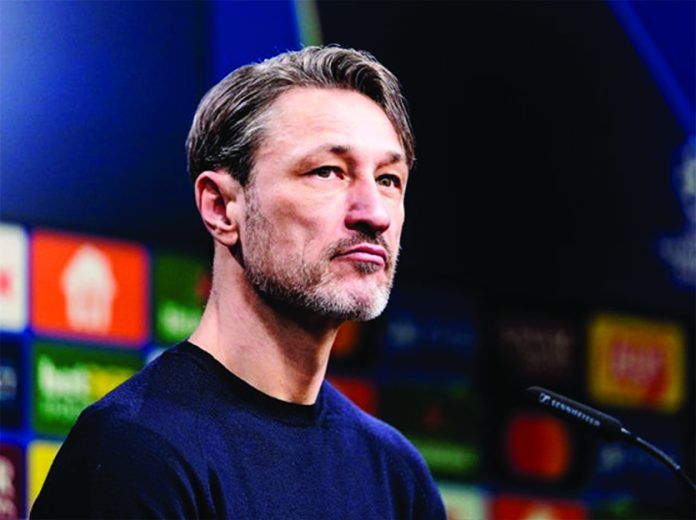
Niko Kovac, Borussia Dortmund

Barca to stroll into the semis as they travel to Dortmund

Needing to serve Barcelona a taste of their own remontada medicine to stay alive in the Champions LeagueBorussia Dortmund host the Catalan giants in Tuesday’s quarter-final second leg at Signal Iduna Park.

The Bundesliga outfit were slaughtered 4-0 by Hansi Flick‘s side in the opening encounter last week, as La Blaugrana put one foot firmly in a semi-final showdown with either Inter Milan or Bayern Munich.

Hansi Flick, Barcelona

The Lionel MessiNeymarLuis Suarez front three at Barcelona may forever be remembered as one of the most fearsome attacking trios in history, but RaphinhaLamine Yamal and Robert Lewandowski sure are giving the terrifying trio a brilliant run for their money in that regard.

All three of Flick’s prolific attackers were on song in last week’s first leg, where Lewandowski struck twice against his old team either side of strikes from Raphinha and Yamal, the former of whom matched Messi’s club record for the most goal involvements in a single Champions League season (19).

Only Barcelona themselves (against Paris Saint-Germain in 2017) have ever completed such an astounding comeback, and Dortmund’s chronic inconsistency throughout a troubled 2024-25 campaign makes it nigh on impossible to envisage Niko Kovac‘s side repeating the Catalans’ trick on Tuesday.

BVB at least left with their pride in tact from Saturday’s Bundesliga Klassiker against Bayern Munich, holding the league leaders to a praiseworthy 2-2 draw at the Allianz Arena, but they can only boast a measly three victories from their last 12 matches at the Signal Iduna Park, where the walls have come crumbling down.

With two wins over Dortmund and a 4-1 thrashing of Bayern to their name this season, Barca have won each of their last three UCL games against German teams after losing their previous five before that, signalling a shift in the balance of power as Flick’s side aim to live up to their favourites tag.

How Dortmund approach Tuesday’s fixture will be fascinating, as the German giants are practically down and out and have serious work to do in the Bundesliga, but nothing is over until it is over in the Champions League.

Last year’s runners-up have our vote to get a couple of goals back, but Barcelona’s phenomenal attack should have the final say as Flick’s side stroll into the semi-finals without too much fuss.

Credit: sportsmole.co.uk


Aston Villa aim at captivating comeback against PSG

A special Champions League story could be written at Villa Park on Tuesday night, where Aston Villa aim to complete a captivating comeback against Paris Saint-Germain in the second leg of their quarter-final.

The Ligue 1 champions hop across the English Channel with a 3-1 advantage from the opening battle, but as Unai Emery knows all too well, the Parisiens are prone to a second-leg catastrophe.

Luis Enrique, Paris Saint-Germain

After showcasing his punditry proficiency alongside Ally McCoist and Rio Ferdinand, His Royal Highness Prince William took his seat at the Parc des Princes, where his beloved Villa side sent the heir to the British throne into raptures through Morgan Rogers‘s back-post finish.

However, on an evening where embryonic attacking talents stole the show in the French capital, two exceptional strikes from Desire Doue and Khvicha Kvaratskhelia turned the first leg on its head, before PSG delivered one final gut punch through Nuno Mendes‘s 92nd-minute finish.

A 3-1 deficit is still far from insurmountable, but the difference between a one goal and two-goal disadvantage in the Champions League can be night and day, and Aston Villa have been eliminated on each of the previous two occasions where they have lost the first leg of a European knockout match by two or more goals.

Villa remain within a shot of qualifying for the 2025-26 Champions League via their Premier League position, and they now return to a ground where they have avoided defeat in each of their last 17 matches across all competitions, one of a few pleasing Villa Park statistics.

Unai Emery, Aston Villa

A side reborn since their disastrous start to the league phase – which even saw them flirt with an early exit from the Champions League – there is now genuine talk of PSG being the favourites for continental glory come the summer, if they can avoid falling back into old habits.

No side has ever been eliminated in four UCL knockout ties when winning the first leg by two goals or more, but the feeling around this current PSG outfit is different, as Luis Enrique and Luis Campos have harmonised a young group after the failures of the galacticos era.

Blessed with a near fully-fit squad for the second leg, Villa’s only injury concern at the minute is Jamaican attacker Leon Bailey, who is actually on the cusp of returning to the squad but will not come into contention for a starting berth.

Expect fireworks to fly at what will be a boisterous Villa Park on Tuesday night, where PSG should witness the best of English atmospheres on Champions League nights and also the best of Aston Villa on the offensive front.

Credit: sportsmole.co.uk

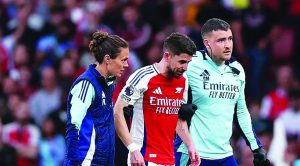
Arsenal’s Jorginho to miss Real Madrid second leg

Arsenal midfielder Jorginho has been ruled out of their Champions League quarter-final second-leg match with Real Madrid on Wednesday with an injury.

The Italy midfielder, 33, was withdrawn in the final few minutes of Saturday’s 1-1 Premier League draw with Brentford with a suspected rib injury, meaning the Gunners finished the game with 10 men.

Arsenal are also assessing a knock picked up by Ghana midfielder Thomas Partey.

Arsenal are 3-0 up against European Champions Real as they head to the Bernabeu for the second leg (kick-off 20:00 BST).

Partey, 31, started the Brentford game at right-back but was taken off in the second half after he “felt something”, according to manager Mike Arteta.

Arteta will hold a news conference on Tuesday before his side’s biggest match of the season, with the Champions League representing Arsenal’s only realistic chance of a trophy in 2024-25.

Credit: bbc.com

FIXTURES

Aston Villa 20:00 PSG

Dortmund 20:00 Barcelona  

IGP Escapes Sniper’s Bullets @ Bawku

0
IGP Yohuno in a meeting with Bawku Naba

The Inspector General of Police (IGP), Mr Christian Tetteh Yohuno, narrowly escaped harm when an unidentified gunman shot at his official vehicle, following a visit to the Bawku Naba’s Palace on Friday, April 11, 2025.

It is not clear the motive behind the brazen attack, which highlights the security challenges faced by not only the ordinary citizens, but also top officials in society.

A dependable source in the conflict ravaged town, who witnessed the near disaster, alleged that the incident occurred barely 30 seconds after the Chief Constable entered his Land Cruiser Command Vehicle, with registration number GP1.

The IGP had gone to the Bawku Naba to apologise to the chiefs and people of the ancient town on behalf of the Ghana Police Service to ask for forgiveness.

The source explained that the Overlord of Bawku was personally not enthused about the shooting incident, after the Police Chief exited the palace. His agile guards reportedly managed to identify the one who opened fire on the IGP’s vehicle.

The said assailant, our source continued, was severely lashed with horsetail whips, almost to the point of unconsciousness, and released to go.

The Chronicle further heard that the Bawku Naba later dispatched a delegation of twelve chiefs to meet with IGP Yohuno at the local police barracks, where an apology was rendered to him over the incident.

The IGP, who was appointed less than a month ago was, however, not perturbed by the incident, as he advanced to the Vineyard Hospital to commiserate with persons who sustained injuries during the recent disturbances in the Bawku Township and settled their medical bills as well.

Mr Yohuno later met with the media and called for the country’s youth, particularly those in conflict prone areas to lay down their arms in order to take part in recruitment processes into the service.

The IGP went on to assure the people of Bawku that they would have the opportunity to join the service, provided the laid down requirements are met.

To ensure this, the police boss noted that, the difficulty in achieving regional balance in the recruitment process is its centralisation at the National Headquarters in Accra, Kumasi and the big cities alone.

He expressed the desire to ensure that people from all parts of the country, including remote regions, are also given the opportunity to apply and successful ones offered admission to the training schools.

The decade old conflict between the two ethnic groups recently got to a fever pitch, following disagreement over the use of a particular market place put up by the Kusaug people. A number of persons, including an opinion leader, lost their lives during a clash with the police.

The irate mob vented their anger on the immediate authorities, setting ablaze the police barracks, vehicles, private residence of the Divisional Police Commander, Assistant Commissioner of Police (ACP) Adamu Seidu.

The rabble topped up their actions by burning the homes of Honourable Mahama Ayariga, Member of Parliament (MP) for Bawku Central who doubles as the Majority Leader and Honourable LaadiAyiiAyamba, the law maker for Pusiga Constituency.

In a related development, the Vice President of IMANI Africa, Kofi Bentil stated emphatically that Asantehene Otumfuo Osei Tutu II, who was appointed to mediate in the Bawku crisis, would not succeed in that enterprise.

Speaking on Joy FM’s Newsfile program on Saturday, the IMANI Africa vice president did not mince words in saying that the Bawku situation has gone beyond policing and mediation, and for that matter a military intervention was required. To him, the military is trained to take territory, hold it and impose peace.

The danger, he said, is that there are elements in Agbogbloshie, Burkina Faso and Northern Nigeria waiting to cash in on the disturbances in Bawku, which we must not allow to happen.

Security Analyst, Col Festus Aboagye (rtd), also commenting on the volatile situation believes that occurrences between February 2023 when the Nayiri enskinned a Bawku Naba at his Nalerigu base, National Security and the respective Court actions, coupled with government support in October 2024 to one of the factions, has dealt a big blow to efforts at bringing peace to Bawku.

On the attack on Mr Yohuno’s Command Vehicle, the security guru, who had had oversight responsibilities on conflicts across the world questioned the use of a non-armoured plated car by the IGP in such a difficult terrain.

He suggests the deployment of the five armoured cars, which have been retrieved from the former military chiefs to these areas, instead of being driven in the cities for fun.

Solving Clinker Poser: Supacem Cement Builds $100m LC3 Plant InTema

0

Ghanaian cement retailers face growing difficulties, with widespread shortages of cement brands limiting builders’ access to essential materials.

Behind this disruption lies a severe shortage of clinker, a crucial raw material imported for cement production.

The current clinker scarcity and its escalating prices stem from a complex interplay of international supply chain disruptions and evolving global market uncertainties, including an increase in the export prices from the Mediterranean rim, a major clinker source.

For Ghana, Africa’s largest clinker importer, these global dynamics directly translate into supply shortages and higher costs, ultimately affecting cement availability and prices for retailers and consumers. However, a significant development offers a path to greater self-sufficiency.

Supacem Cement has built the world’s largest LC3 plant in Tema, a project that provides a homegrown solution to the clinker problem by tapping into Ghana’s abundant raw material resources as a substitute for imported clinker. Breaking Free from Imported Clinker Reliance: Ghana’s cement industry relies heavily on imported clinker, leaving it vulnerable to foreign supply problems and volatile global markets.

Supacem’s $100 million investment into LC3 technology is a key step towards using local raw materials. The new plant processes locally-sourced raw materials to create a reactive material that partially replaces clinker in cement production, reducing the need for costly and logistically complex clinker imports.

A Foundation in National Standards: A significant step in enabling this innovation has been the Ghana Standards Authority’s adoption of the latest LC3 standard in 2024. This landmark achievement followed two years of collaboration between Ghanaian institutions like KNUST, the University of Ghana, and Ghana’s BRRI, alongside various international universities and laboratories.

This new standard, GS PAS 5:2024, paves the way for the widespread use of this more sustainable and locally-sourced cement. Benefits for Ghanaians: Supacem’s innovative approach, now supported by national standards, brings numerous benefits to Ghanaians and our economy:

  • Reduced Cement Shortfalls: By producing a significant portion of their own cementitious material, Supacem reduces the impact of clinker shortages, leading to a more reliable cement supply for Ghanaian retailers and builders.
  • Economic Growth and Job Creation: The project has created over 160 direct jobs through local sourcing and infrastructure development in Tema and Torgome, Supacem is also empowering local women through training programs.
  • Cost-Effective and Potentially More Affordable Cement: While recent price increases stemmed from port charges, a more cost-effective raw material supply chain could provide greater price stability and cement affordability.
  • Environmental Sustainability: The production of LC3 significantly lowers CO2 emissions compared to traditional cement production. This supports Ghana’s climate action commitments and contributes to a greener future.
  • Increased Local Expertise: Supacem’s investment in a world-class cement laboratory is developing Ghanaian talent in advanced LC3 technology. This positions Ghana at the forefront of sustainable cement production in Africa.
  • Stronger Local Economy: By reducing reliance on imports and adding value to local raw materials, Supacem’s project strengthens Ghana’s economy and reduces its vulnerability to external economic factors. Supacem has taken the lead in transforming Ghana’s cement industry.

The company has extended its supply of locally produced LC3 raw materials to Ghacem, Ghana’s largest manufacturer. This move further reduces clinker imports and highlights Supacem’s commitment to industry-wide sustainability and building a more resilient and self-sufficient cement sector in Ghana.

Emmanuel Cherry, CEO of the Ghana Chamber of Construction Industry, has called for the exploration of local alternatives for clinker. Supacem’s investment, supported by the GSA’s adoption of the LC3 standard, answers this call, showing the potential of Ghanaian ingenuity and resources to address critical industry needs.

Supacem’s bold initiative offers a tangible solution to the current cement shortage and builds a foundation for a more sustainable, self-reliant, and environmentally responsible cement industry in Ghana. This major step by a Ghanaian company is about building infrastructure and a stronger, greener, and more prosperous Ghana.

$400m Annual Importation Of Chicken Is A Shame -Mahama

0
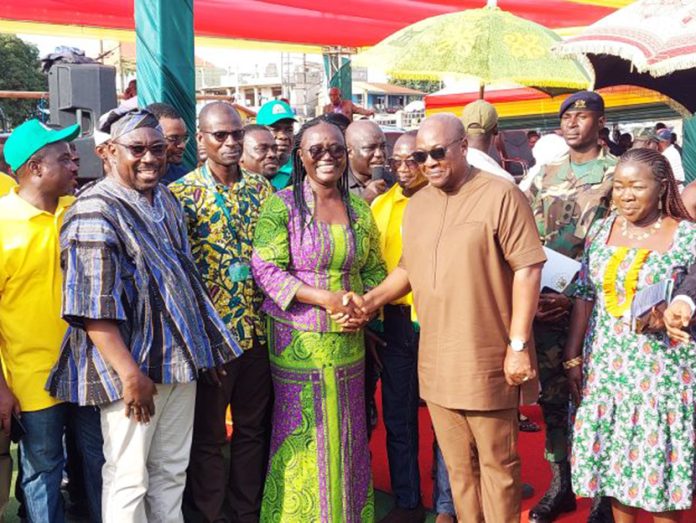
President Mahama a Techiman yesterday

Ghana imports nearly $400 million worth of chicken every year, President John Dramani Mahama has said. The President said the imports ought to be a source of shame for all Ghanaians, reiterating plans to support 54 individuals to produce four million birds that would amount to 10,000 metric tons of chicken.

President Mahama stressed his government commitment to advancing livestock development to improve cattle production and small ruminants, including goats and sheep, and improving access to high-quality breeds alongside.

The President made this known when he launched the government’s Feed Ghana Programme, a flagship initiative in Techiman in the Bono East Region.
He said the livestock production component of the programme would also focus on agro production enclaves and infrastructure.
That involves the execution of irrigation systems, improved road infrastructure, provision of power supply, and establishment of warehousing facilities that would attract private investment.

The President said that the programme would further enhance the production and processing of agricultural produce.
President Mahama presented maize seeds, fertilizers, a Kia truck, and tractors to some institutions including the Ghana Prisons Service, National Service Authority to spearhead the implementation of the programme.
He called for unity and shared commitment in transforming the nation’s agriculture, as a driver of national growth and prosperity, saying the Feed Ghana Programme presented a proactive initiative rather than just a policy.

Admitting some challenges in the sector, the President said he was highly optimistic that the implementation of the programme would achieve successes, and called on farmers, agribusinesses, financial institutions, and development partners to join forces for the programme to achieve desirable outcomes.
The programme aims to implement strategic measures to increase food production, promote the adoption of modern farming techniques, improve infrastructure, and establish agro-industrial zones across Ghana.

President Mahama said key interventions within the Feed Ghana Programme include smart agriculture involving establishment of farmers’ service centres nationwide.

The centres will provide essential services such as mechanization, quality inputs, financial support, market access, primary processing and training for farmers.
President Mahama announced the creation of farm banks or land banks in designated irrigable zones to support young agri-entrepreneurs and contribute to the enhancement of national food production.

He said the second component of the programme, grains and legumes development would also focused on increasing the production of maize, rice, soya beans, and sorghum for consumption, agro-processing, and export.
The third component, which is vegetable development project or ‘Yeredua’ aimed at reducing imports from neighbouring countries by promoting the cultivation of vegetables locally.

President Mahama highlighted the importance of investing in controlled environmental farming, such as greenhouse technologies, urban and peri-urban agriculture, and promoting schools to grow their own vegetables through backyard gardening.
The fourth component of the initiative will focus on promoting institutional farming to empower households and communities to cultivate vegetables such as tomatoes, peppers, and garden eggs to enhance self-sufficiency.

It will also extend support to institutions such as Senior High Schools to access lands to engage in crop production and livestock farming.
The fifth component of the programme involves the revitalization of the poultry industry, known as the “NkokoNketenkete” project.

From Benjamin Akoto, Techiman

GNA

The Ghanaian Chronicle