Home Blog Page 803

Zongo communities must prioritise education -Alhaji Ali Barry

0
Members of the Zongo community at the durbar
Sarki Alhaji Abdullai Ali Barry – Asanteman Zongo Nkosuohene

Leadership and youth of Zongo communities have been advised to prioritize education as a way to sustain development.

Otumfuo Asanteman Zongo Nkosuohene, Sarki Alhaji Abdulai Ali Barry, while addressing a durbar of Muslim communities over the weekend to mark the 16th annual Gargajiya Festival at the Jubilee Park in Kumasi, stressed the need to prioritise education to improve their livelihood.

The celebration of the 16th Anniversary of the Annual Gargajiya Festival was organized by the Zongo Youth Association under the auspices of Asanteman Zongo Nkosuohene.

The occasion witnessed the performance of various traditional dances by the Muslim communities including, Chocosi, Grunshie, Sisala, Mamprusi, Frafra and the Yorubas, among others.

Sarki Ali Barry pointed out that unlike former times when education received less attention in Zongo communities, the enclave can now boast of professionals like Doctors, Engineers and Lecturers, among others.

He, therefore, charged parents to make education a major focal point in the upbringing of their children.

OtumfuoNsumankwahene, Baffour Asabere Kogyawuasu III who represented the Asantehene, Otumfuo Osei Tutu II, reiterated the educational transformation in the Zongo communities.

He, however, deplored the reckless operation of rickshaws (Pragia) within the Kumasi Metropolis and called for compliance of road and traffic regulations to forestall sanity on our streets.

Trump’s 10% Tariff: An eye-opener for Ghana, Africa

0
President Donald Trump

In early April 2025, U.S President Donald Trump invoked the International Emergency Economic Power Act to impose a universal 10 per cent tariff on all imports into the United States, including goods from Ghana.

According to the White House, the policy aims to address the U.S.’s trade deficit and perceived unfair trade practices by trading partners.

Data on Ghana’s Export to the US

As of 2023, according to Trading Economics, Ghana exported approximately $787.79 million worth of goods to the United States. The primary exports included mineral fuels and oils valued at $389.96 million, cocoa and preparations valued at $242.24 million, and apparel (knit and crocheted) valued at $35.89 million.

Also, the initial contact that can potentially lead to a real sales transaction) is valued at $33.50 million, oil seeds and oleaginous fruits valued at $26.28 million, rubber valued at $25.65 million, wood and wood products valued at $8.59 million, and edible fruits and nuts valued at $4.88 million.

Impact on Ghana’s Economy

Ghana’s export sector, particularly industries such as cocoa (cocoa derivatives, including processed cocoa products), textiles (garments and related products), and agricultural products (such as cashew nuts, shea butter, yams, fruits, and vegetables), as well as horticultural products, face significant challenges due to the new tariff.

These tariffs pose challenges for Ghanaian exporters, potentially reducing their competitiveness in the U.S. market and impacting export revenues.

Notably, some major exports like gold and crude oil, may be exempt from these tariffs, but uncertainties remain regarding their status.

The government of Ghana is engaging in discussions with the U.S. trade officials to address these concerns and explore possible exemptions or adjustments to the tariff policy.

A Call for Intra-African Trade Enhancement

The tariff imposition has prompted calls within Ghana and across Africa to strengthen intra-continental trade.

Mr Abraham Koomson, Secretary-General of the Ghana Federation of Labour, describes the tariff as a “wake-up call” for Africa to bolster economic resilience through enhanced trade among African nations.

Mr Koomson called on African leaders to respond with vision and unity, using tools like AfCFTA to chart a new path toward economic independence and shared prosperity.

He, however, cautioned, that the tariffs may end up hurting American consumers through increased production costs and higher prices.

Leveraging the African Continental Free Trade Area (AfCFTA)

The AfCFTA offers a strategic platform for African countries to mitigate the impact of external trade barriers by promoting internal trade. By focusing on the AfCFTA, Ghana and other African nations can reduce dependency on external markets, foster industrialization, and stimulate economic growth within the continent.

Strategic Responses and Opportunities

In response to the tariffs, Ghanaian exporters are exploring alternative markets within Africa. For instance, the Federation of Associations of Ghanaian Exporters (FAGE) is shifting focus from the U.S. market to opportunities within the AfCFTA framework. This strategic pivot aims to capitalize on the growing African market and lessen reliance on traditional partners.

Furthermore, policy think tanks like IMANI Africa have urged the government to diversify its trade partnerships beyond the U.S., emphasizing the importance of regional markets and partnerships with entities like China and the European Union to cushion the economy from external shocks.

Conclusion

While U.S. tariffs present immediate challenges for Ghana’s export sector, they also catalyze the nation and the continent to intensify efforts toward economic integration through AfCFTA. Ghana and its African counterparts can build a more resilient and self-sustaining economic future by enhancing intra-African trade, diversifying export markets, and reducing reliance on external partners.

By Daniel Adu Darko

GNA

Editor’s note: Views expressed in this article do not represent that of The Chronicle


Editorial: Pedestrians Must Be Compelled To Use Newly Constructed Footbridges

0
Editorial

The Accra-Kasoa Highway, which is a part of the ECOWAS Express Highways, is one of the busiest roads in Accra, where motorists move at a top speed, myjoyonline.com has reported.

That crossing, the website continued, previously had an installation of a traffic light with regular police presence to prevent pedestrians from being knocked by speeding vehicles.

However, the installation of the traffic light slowed down the free flow of traffic. The situation, the story continued, compelled the authorities to pull down the traffic light and instead construct an overhead footbridge.

Before the construction of the footbridge at Tetegu, pedestrians struggled to cross the road due to the speeding vehicles. It was thus expected that they would easily opt for the footbridge after its construction.

Although some pedestrians were using it at the time Myjoyonline visited the scene, others carelessly crossed the road in their numbers with varied excuses.Some drivers who spoke to Myjoyonline expressed surprise at the decision of some pedestrians to cross the road, despite the availability of the footbridge. They condemned those pedestrians, insisting that no excuse was tenable.

Irresponsible crossing of roads is one of the major problems confronting government officials in Accra and, as a matter of fact, some of the towns and cities. Pedestrians sometimes disregard zebra crossings and traffic lights and cross the roads the way they want. This has resulted in several avoidable deaths but we, as a country, seem not to have learnt any useful lessons.

Following the rampant knock down of pedestrians on the Madina-Adenta express way, the government raised funds to complete all the foot bridges that had been abandoned due to lack of funds. But today, despite the existence of these footbridges, people who do not apparently value their lives still cross the ten-lane road without using the footbridges.

Meanwhile, before the completion of these footbridges, communities along the corridor kept on complaining that crossing the road was a major problem and that the government should do something about it. At the Madina-Zongo Junction, all the efforts made by the then Greater Accra Regional Minister, Henry Quartey, to ensure safety of pedestrians have been rendered useless.

The community members have succeeded in destroying all the erected steel pillars fastened with barbed wires. As a result of this unfortunate development, majority of traders and community members prefer walking across the road, instead of using the footbridges. Since the street lights on the Legon-Madina road are not working, it is always dangerous to drive in the area, especially during the night.

Even a major intersection like the Adenta Barrier, where speeding vehicles had knocked down and killed several pedestrians in the past, the footbridge constructed at the main gate of the West Africa Senior High School has become a white elephant. To some of these pedestrians, the footbridge is too long for them and that walking across the road is faster.

Meanwhile, when a pedestrian is knocked down and killed after attempting to cross the road with careless abandon, it is in most of the cases, the drivers who are blamed.

To ensure the safety of pedestrians, The Chronicle suggests to the government or the various district municipal and metropolitan assemblies to instruct the police to arrest anyone caught crossing the road, instead of using the footbridges that have been provided. We believe that if this is regularly enforced, all pedestrians will be compelled to use the footbridges.

A claim by one of the pedestrians interviewed by myjoyonline.com at Tetegu, that she was experiencing pains in her leg – the reason why she could not use the footbridge -can never be true.

She was simply lazy and, therefore, decided to walk across the road instead of using the footbridge. This is the reason why we are suggesting to the various assemblies to put mechanisms in place to compel all pedestrians to use the footbridges.

FAWE to Launch Strategic Plan &Phase II of Mastercard Foundation Programme

0
Officials of FAWE and participants in a group photograph

The Forum for African Women Educationalists (FAWE) Ghana Chapter is set to officially launch its 2024–2028 Strategic Plan, alongside the second phase of its partnership with the Mastercard Foundation.

Speaking at a press briefing held ahead of the launch, National Coordinator of FAWE Ghana, Mr. Richard Amoani, highlighted the progress made in girl-child education since the 1990s and underscored the urgency to sustain and expand such gains.

“We all remember the advocacy song Send Your Girl Child to School. Today, we’re proud to see more girls in kindergarten and primary school than boys. But the data still shows gaps, especially at higher education levels,” he stated.

According to Mr. Amoani, the new strategic plan envisions an equitable and inclusive society where girls and women thrive.

The mission is to promote a gender-responsive education system through three key strategic objectives: increasing access to quality education and training, enhancing evidence-based policy through research, and strengthening FAWE Ghana’s institutional capacity.

“In the next five years, we want to see more girls pursuing higher education, benefiting from gender-responsive pedagogy from early childhood, and empowered to speak out against abuse,” he emphasized, citing FAWE’s initiatives like Tusemi (Swahili for “Speak Out”) and school-related gender-based violence interventions.

The second phase of the FAWE/Mastercard Foundation programme will scale up successful models like the Centre of Excellence and Technical and Vocational Education and Training (TVET), building on the government’s own education sector strategic plan.

FAWE Ghana also called on the media to champion gender-sensitive reporting and support advocacy efforts.

“We are counting on your partnership to amplify the voices of young girls, especially in underserved areas where challenges like period poverty still keep many out of school,” Mr. Amoani appealed.

The official launch event is scheduled for April 17, 2025 at Mmofra Place, in Dzorwulu, Accra, where stakeholders will engage on actionable steps toward educational equity.

FAWE Ghana reaffirmed its commitment to sustainability, noting the need for local ownership and community-led resource mobilization as international funding streams shrink.

“We don’t want to go out of business,” Mr. Amoani concluded. “We want to keep transforming lives.”

Navy trains 453 Blue Guards to protect our water bodies 

0
Mr Armah Blay inspecting the parade

A total of 453 Blue Guards have passed out at a ceremony in Jomoro in the Western region.

The Guards would be deployed to the various water bodies in the region to fight illegal mining.

They have been equipped with essential skills such physical endurance, basic arms handling, combat techniques, survival swimming and boat operations after a two week training by the Ghana Navy.

At a passing out ceremony, Minister for Lands and Natural Resources (MLNR), Emmanuel Armah Kofi Buah, indicated the day marked a new dawn in Ghana’s relentless fight against illegal mining activities.

He said the precision and discipline displayed during Water Guards drills were a testament to the rigorous training they have undergone at the Naval Base over the past four weeks.

“You have been equipped with essential skills – physical endurance, basic arms handling, combat techniques, survival swimming, watermanship and boat operations. Your perseverance deserves commendation, and I invite everyone to join me in applauding your dedication”.

The Minister cautioned the Guards that, the knowledge and skills they have acquired were not merely for personal growth, but to arm them as vanguards in our national strategy to safeguard our rivers.

Drawn from the very riverine communities, Minister Armah Buah reminded the Water Guards their role was absolutely critical.

“You are the eyes, ears and first line of defense, working alongside traditional leaders and local youth to protect our waters from the scourge of illegal mining. Your mandate does not include direct engagement with illegal miners. Your duty is to Observe, Report and Escalate any threats or confrontations to the Ghana Navy Riverine Command Centers expeditiously.

“Remember, you have signed a Code of Conduct – a binding commitment to professionalism and integrity. Any breach of this code, any compromise in your duties, will attract stiffer sanctions. The task before you is sacred; the future of our water bodies depends on your discipline and vigilance,” he said.

Under the operational command of the Ghana Navy Riverine Units, the Blue Water Guards will serve as an Early Warning Mechanism, reinforcing our surveillance and deterrence efforts.  Temporary Operational Bases (TOBs) have been established along the Ankobra, Fia, Bonsa and downstream Pra Rivers to ensure rapid response.

Through coordinated boat patrols, road surveillance and intelligence-sharing with other security agencies, Minister Buah was optimistic “we will maintain an unyielding presence to deter illegal activities”.

The Water Guards, he indicated, would operate in teams strategically positioned along designated sectors for effective command and control.

Daily situational reports, weekly summaries, and quarterly evaluations would be channelled through the Ghana Navy to the Minerals Commission and the Ministry, ensuring accountability and continuous improvement.

To strengthen this initiative, additional speedboats, patrol vehicles and motorbikes would be procured, enabling the extension of the Blue Water Guards program to the Central, Eastern, Ashanti, Bono, and Savannah regions.


Beyond safeguarding the environment, this initiative the Minister stressed, is expected to create 2,000 direct jobs, empowering Ghanaians while securing our natural heritage. The Blue Water Guards initiative is just one pillar of a broader, comprehensive strategy to reform Ghana’s mining sector.

To the financiers and faceless individuals behind these destructive acts of illegal mining, Minister Armah Buah, who is also the MP for Ellembelle, warned them to desist immediately from the act. “The full force of the law awaits you. The law will deal with you swiftly and severely”.

The Chief Executive Officer (CEO) of Minerals Commission, Martin Kweku Ayisi

regretted that the scourge of galamsey has been allowed to poison our rivers, transforming life-sustaining waters into toxic streams.

Driven by short-term greed, illegal miners CEO stressed are destroying not only our environment, but also the future of our communities.

“This is not merely an ecological crisis; it is a threat to public health, livelihoods, and the very foundation of our nation”, he said adding the evidence of the scourge of galamsey is undeniable because Communities are losing access to clean drinking water. Farmers struggle to irrigate their crops. Fishermen haul empty nets from dying rivers.

According to him, the degradation of our natural resources undermines food security, economic stability, and social cohesion.

“We can no longer stand idle as turbidity levels reach intolerable thresholds and rivers run brown with pollution. The time for action is now – decisive, collective, and unwavering.”

While government leadership is critical, Mineral Commission CEO maintained this battle could not be won by policy alone. It demands the commitment of every citizen, traditional leader, and stakeholder.

“Protecting our water resources is a duty we owe to both present and future generations,” he said.

Present at the ceremony were the Deputy Minister for Defense,  Brogya Gyamfi, Western Regional Minister, Joseph Nelson, AwulaeAttibr,ukusu III, Omanhene of lower Axim and Emelia Arthur, Minister for Fisheries and Aquaculture.


Peter Obi Visits Plateau Attack Victims, Donates ₦7.5m

0
Obi’s visit came before another wave of attacks on some communities

A former presidential candidate of the Labour Party (LP), Peter Obi, has visited victims and families of those affected by the recent spate of killings in the Bokkos Local Government Area of Plateau State.

In a statement shared via his official X handle on Monday, the 63-year-old expressed sorrow over what he termed “senseless killings,” describing the violence as unacceptable in a country not officially at war.

“Yesterday, I travelled from Abuja to Jos, Plateau State, to condole with and show solidarity with Governor Caleb Mutfwang and the people of Plateau State over the recent senseless killings in the Bokkos area of the state,” he wrote.

The former Anambra governor’s visit included a trip to Bokkos, where he met with displaced persons, children, and survivors of the attacks.

Obi lamented the scale of the destruction and called for urgent action to protect innocent lives.

“What has happened in these communities is very saddening and utterly unacceptable. Nigerians should not be killed or forced to flee their homes when we are not at war. Every life is precious, and no Nigerian, regardless of where they live, should have to live in fear or uncertainty,” the former governor said.

Offering his condolences, the businessman added, “My deepest condolences go to the families and communities who have suffered tragic losses. No words can truly capture the pain and devastation that such senseless violence brings”.

During the visit, he announced a donation of ₦7.5 million to support displaced children, education continuity, and other pressing needs within the community. He noted that this contribution builds upon previous efforts by his supporters.

Credit: channelstv.com

US Court directs FBI, DEA to release records on Tinubu’s probe

0
President Bola Tinubu

The United States Court for the District of Columbia has directed the Federal Bureau of Investigation (FBI) and the Drug Enforcement Administration (DEA) to release records of their investigations of Nigeria’s President Bola Tinubu’s involvement in alleged drug trafficking.

In an April 8, 2025 judgment, the district judge, Beryl Howell, ordered that the FBI and DEA “must search for and process non-exempt records responsive to the FOIA (Freedom of Information Act) requests directed to these agencies.

The judge ruled that the evasive “Glomar responses” previously issued in response to the FOIA requests on the matter must be lifted. Glomar responses are given by government agencies to neither confirm nor deny the existence of a particular information requested.

Back in 2022 and 2023, an American and founder of PlainSite, Aaron Greenspan, sought investigative records about Tinubu, Lee Andrew Edwards, Mueez Abegboyega Akande, and Abiodun Agbele who were allegedly associated with a drug ring.

Greenspan therefore filed 12 FOIA requests with six different US federal government agencies including the FBI and the DEA to request the criminal investigation information of the Chicago heroin ring that operated in the early 1990s.

Other agencies that Greenspan wrote to are the United States Department of State, Central Intelligence Agency (CIA), Internal Revenue Service (IRS), and Executive Office of United States Attorneys (EOUSA).

Five of the agencies, according to the court document, issued Glomar responses to Greenspan’s FOIA requests. The agencies stated that they could neither nor confirm the requested records.

A discontent Greenspan subsequently filed a lawsuit to challenge the agencies’ response to the FOIA requests.

In the judgment, the judge ruled that the Glomar responses issued by the FBI and DEA are “improper and must be lifted”.

Howell ruled that the FBI and DEA failed to provide information to “establish cognizable privacy interest exists in keeping secret the fact that Tinubu was a subject of criminal investigation”.

Howell held that the two agencies failed to provide evidence on the burden to sustain their Glomar responses.

Credit: channelstv.com

Troops rescue 16 kidnapped passengers on Plateau, Jos highway

0
Troops

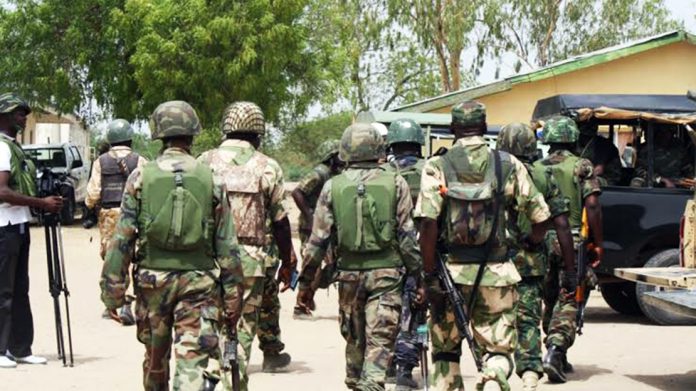
Troops of 3 Division, Operation Safe Haven, OPSH, have rescued 16 passengers kidnapped along the Jos – Mangu road in Plateau State.

Media Information Officer Operation Safe Haven, Major Zhakom in a statement issued Monday revealed that the rescue operation began when troops conducting Operation LafiyanJama’a discovered an empty vehicle abandoned by the roadside at Mararaban Kantoma in Mangu Local Government Area of the State at about 9pm local time on 13 April 2025.

He added that the troops immediately searched the nearby bushes to trace the occupants of the vehicle suspected to have been kidnapped.

The kidnappers, on sighting the troops, opened fire, but the criminals were overwhelmed by superior firepower forcing them to abandon the victims and flee.

Zhakom added: “Troops exploited the general area and rescued all 16 abducted passengers which included 6 children.

“Troops administered first aid to some of the rescued victims who sustained minor injuries during the incident.

“Thereafter, troops escorted the victims to safety to continue their journey to Jos Metropolis.”

Meanwhile, Zhakom noted that the troops are on the lookout for the fleeing kidnappers suspected to have sustained gunshot wounds during the encounter with troops.

Credit: dailypost.ng

Agbakoba proposes 500 trillion naira budget target for nigeria

0
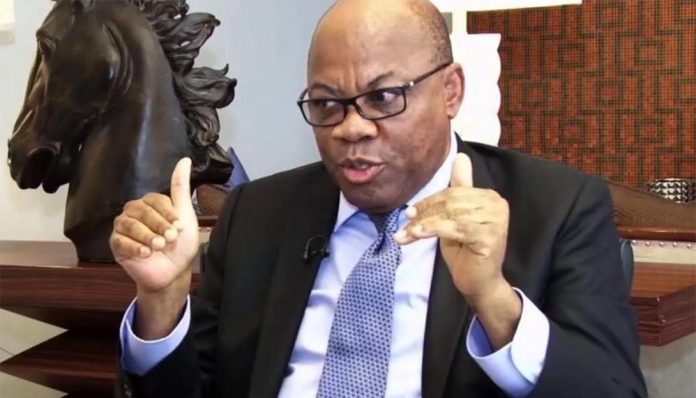
Former President of the Nigerian Bar Association, Olisa Agbakoba

Former President of the Nigerian Bar Association, Olisa Agbakoba, has proposed an ambitious 500 trillion naira national budget target for Nigeria by 2027, urging the federal government to adopt a “disruptive development plan” to achieve it.


Speaking in an interview with ARISE NEWS following the release of his policy report, Governance and Economic Analysis and Forecast 2025, Agbakoba said the goal may seem unrealistic but is achievable if Nigeria abandons “business as usual.”

“We’ve had national development plans for the last 60 or 70 years, and I suggest to you that none have really worked,” he said.

“What I’m suggesting in order to drive this process is an entirely disruptive development plan.”

Agbakoba emphasized that the issue is not Nigeria’s lack of resources but how they are utilized.


He called for structural reforms in both political and economic governance, beginning with a downsizing of the federal government.

“There’s no way Nigeria can be successful unless it decapitates its current political arrangements,” he said.


“The federal government must downsize. If America runs with 16 departments, Nigeria shouldn’t have more than 10.”

He also advocated for the devolution of power to state and local governments, turning them into “economic-bearing entities.”

On economic reforms, Agbakoba criticized the current structure of Nigeria’s oil sector, stating, “Nigeria is one of the few countries in the world that outsources its oil capacity to international oil companies.


We have to own everything so that 80 to 90 percent of the wealth generated from oil stays here. Right now, nothing stays, less than 10 percent.”

Highlighting the recent performance of the Federal Inland Revenue Service (FIRS) under Zacch Adedeji, Agbakoba noted that reforms can yield results.


Credit: dailypost.ng

All is set for Second Edition of Kwahu Business Forum

0
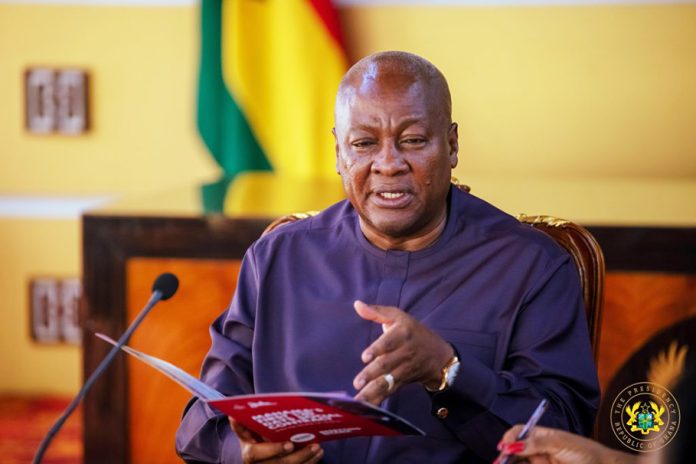
President John Dramani Mahama, expected to grace the occassion

All is set for the Second Edition of the Kwahu Business Forum, slated from Saturday, April 19, to Sunday, April 20 at the Mpraeso Social Centre, in the Kwahu South District of the Eastern Region.

The two-day event, which is the brainchild of President John Dramani Mahama, on the theme: “The Future of Business: The Role of the Financial Sector,” is designed to serve as a platform for dialogue between financial institutions and private sector players.

It will also highlight investment opportunities, discuss policy interventions and chart a path towards building a more resilient and competitive business landscape in Ghana.

Mr Julius Debrah, the Chief of Staff at the Presidency, speaking at the media launch of the event at the Flagstaff House in Accra, reiterated President John Dramani Mahama’s commitment to fulfilling his campaign promises to create a conducive environment for businesses to thrive.

Mr Debrah, an accomplished Kwahu businessman himself, recalled that as part of the programmes and vision of President Mahama, the President wanted to find a way to grow more businesses and that usually Ghanaians talk about this, but they don’t have practical strategy that rolls out to enable them to be able to see the results.

He said the President was looking at developing more Small and Medium Enterprises (SMEs), especially those who were interested in agri-processing, manufacturing, things that were tangible for export, so that that would feed into his vision of leading the Accelerated Export Council.

He said last year, they were in Kwahu, and the President, then a candidate invited the business community and introduced the concept to them by asking them what were some of the things they want him to do if he becomes President?

“Luckily enough, he won the election, and he has become the President; and so, he wants to be a President who walks the talk, not just talking and then leaving it, so it becomes like a talk show,” the Chief of Staff said.

“So, he, as part of fulfilling his promise to the people he met, has requested that this year we’re going to have the Second Edition of the Kwahu Business Forum.”

Mr Debrah noted that this year, the key thing about the Forum was that they had invited all the financial institutions in Ghana, especially the public-owned ones.

It would be recalled that ahead of the Second Kwahu Business Forum, the Chief of Staff on April 3, held a crunch meeting with managers and chief executive officers of key state-owned financial institutions, such as the Agric Development Bank and the National Investment Bank (NIB).

Mr Debrah expressed surprise that at the said meeting, the chief executive officers of the banks indicated their willingness to support Ghana businesses at the Forum.

He said the participating banks had indicated their willingness to each support at least five Ghanaian businesses to help to grow.

He said day one of the Forum would be a gathering like a typical conference style with segments, where the in first segment there would be people who would be talking about agri-processing and the fund they would be able to make available to individuals who were interested.

Added to that the second session would be on manufacturing.

Mr Debrah said the African Development Bank had also shown an interest in participating in the Kwahu Business Forum.

He said the African Development Bank also wants to explain to the private sector participants some of the things that they would be able to do for them.

He said one day of the event, which is Saturday, April 19, the leaders of the banking institutions were coming to explain to the participants the products they had for them and that alongside was going to be the exhibition, where they were mounting a series of exhibition booths.

He said the Sunday morning, the Forum would not be held again, stating that the exhibition would run on Sunday.

He underscored that they were talking about the Kwahu Business Forum at the Presidency level because of the importance President Mahama attaches to it; saying “it is a project that he wants to see succeed”.

“Now, the first strategy the bankers themselves gave us is that at least each of the banks that will show up are going to pick five projects, five bankable projects for this year. And they expect that next year when we return to Kwahu, they will invite those five people that they have helped or assisted to come and testify,” Mr Debrah said.

“So, if this continues for the next five years, each bank picking a minimum of five people, five enterprises to support, the following year doing the same. I’m sure by the end of his four-year tenure, we’ll have over 600 enterprises that we can pinpoint and say that these are things that President Mahama started.”

Mr Debrah said even though the Forum was titled Kwahu Business Forum was an annual event, and that going into the future, it would be national in character, whereby businesspeople would travel from all over the country to converge at Kwahu and to interact with bankers and public institutions.

He cited that it should be possible that somewhere along the line next year, they could have the Commissioner General of the Ghana Revenue Authority (GRA) trying to explain to businesses the advantages they could have.He said that the Forum could just be around how to grow businesses under President Mahama’s watch.

“And I think it’s something that is welcoming, and I support it because without private sector growth, not much will happen apart from creating jobs, people making money.

“Our system itself, I think, will flourish and then automatically to feed into his agenda of leading the export drive in the West African sub-region”.

The Chief of Staff suggested that possibly towards the end of the year, President Mahama could organize Ghana’s International Trade Fair, in say Burkina Faso, in Niger, in Mali and he would take along some of the Ghanaian entrepreneurs to go and showcase their products so that they could import from Ghana.

GNA

The Ghanaian Chronicle