Home Blog Page 467

Lands Minister Inaugurates Timber Validation Committee

0
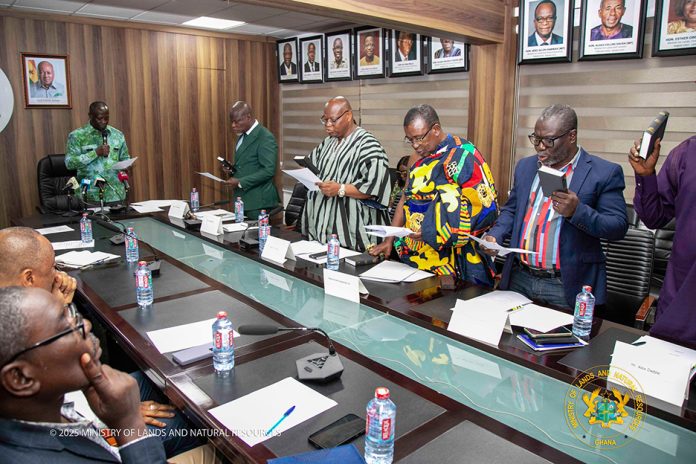
The timber committee being inaugurated

The Minister for Lands and Natural Resources, Emmanuel Armah-Kofi Buah, has officially inaugurated the Timber Validation Committee, as a step in Ghana’s efforts to uphold transparency, legality and sustainability in the timber industry.

The Committee, which is a central pillar of Ghana’s timber legality assurance system, is mandated to oversee the processing of timber licensing applications, ensure compliance with national legal frameworks and make recommendations on the implementation of the Forest Law Enforcement, Governance and Trade (FLEGT) licensing system.

In his inaugural address in Accra last week, Minister Armah-Kofi Buah emphasised the importance of the forestry sector to Ghana’s economy, describing it as a source of employment, livelihoods, foreign exchange and environmental stability.

However, he acknowledged the growing challenges of unsustainable practices that have undermined the credibility of timber exports and jeopardised forest resources.

“As you are all aware, the forestry sector is one of the pillars of our national economy, yet over the years, unsustainable practices have threatened not only the reputation of our timber exports but also the very foundation of our forest resources.”

He mentioned ongoing reforms of the government in collaboration with stakeholders, referencing the 2009 Voluntary Partnership Agreement (VPA) with the European Union under the EU-FLEGT initiative, which commits Ghana to exporting only legal timber products.

The Minister proudly noted that Ghana recently issued its first FLEGT license, becoming the first country in Africa and second globally after Indonesia, to do so. These licenses certify that timber exports meet strict legal and sustainability criteria.

In furtherance of this, the EU is expected to receive its first shipment of Ghanaian timber accompanied by FLEGT licenses on October 8th, 2025 underscoring the country’s dedication to legal and transparent trade.

Minister Armah-Kofi Buah stressed the importance of the Committee’s work, stating that its credibility would underpin the entire legality assurance system: “Our international markets will rely on your work; our local industry will depend on your fairness and efficiency and future generations will judge us by how well we protect and sustain our forest resources today.”

He called on the newly sworn-in members to serve with diligence, impartiality and integrity, urging them to make the Committee “a beacon of good governance and accountability in our forestry sector.”

The inauguration comes at a time when Ghana is intensifying efforts to balance economic growth with environmental preservation.

The Committee is expected to play a pivotal role in ensuring that both domestic and international timber trade aligns with legal standards, further enhancing Ghana’s reputation as a responsible timber-exporting country.

The Minister reaffirmed the Government’s commitment to supporting the Committee with the necessary resources and called on members to always place the national interest above all.

“With your leadership and dedication, we can build a resilient and transparent timber industry that protects our natural heritage and contributes meaningfully to national development,” he said.

The Timber Validation Committee now begins its work with a clear mandate and a significant responsibility to help safeguard one of Ghana’s most valuable natural resources.

Bawku Firearms Case: 10 Granted Bail

0
The Accra Circuit court complex

The Circuit Court in Accra, presided over by Mrs. Susana Eduful, has granted bail to ten individuals accused of unlawful possession of firearms and preparation to commit a violent crime in Bawku, Upper East Region.

Each of the accused has been granted bail in the sum of GH¢100,000 with two sureties required. The court further directed that each surety must earn not less than GH¢3,000 and be able to justify their income.

Additionally, the accused are to report to the Criminal Investigations Department (CID) Headquarters in Accra daily at 3:00 p.m. until the court determines otherwise.

The case is scheduled for Case Management Conference (CMC) on October 15, 2025.

Background

The accused, aged between 17 and 37 years, were arrested on August 5, 2025 during a coordinated cordon-and-search operation led by the Joint Peace Enforcement Team in Zaabu Zongo, a suburb of Bawku.

The operation, conducted under the command of Captain D.Z. Mahama, resulted in the recovery of empty ammunition shells and the arrest of individuals alleged to be loitering during curfew hours.

Among those arrested was 19-year-old Blacksmith, Rauf Naziru, who admitted that the items found in his room belonged to him, but denied they were firearms.

He claimed the recovered items; 15 M16 empty shells, 7 AK47 empty shells and 9 G3 empty shells were scrap materials used for making rings and scrapers.

Other accused persons include – Issaka Tijani, 34; Abdulai Sumaila Gatuso, 17; Muniru Abubakarm Naro, 21; Issaka Yakubu, 19; Sulemana Abdul Basit Ayede, 37; Bukari Salifu Monaaba, 34; Yakim Ibrahim, 35 and Adam Hanisu Hanif, 34.

Legal Proceedings

All the accused made their first appearance in court on August 7, 2025 except for one, and pleaded not guilty to all the charges.

The prosecution, led by ASP Issah Achibari, informed the court that investigations were still ongoing and requested for the accused to be remanded.

The court initially granted that request and adjourned the case to September 1, 2025, pending disclosures.

Following further proceedings, bail was granted under strict conditions and the accused will remain under close observation by the CID.

Torkornoo’s removal: Ayine criticises Bar’s inconsistencies

0
Dr. Dominic Akuritinga Ayine, Attorney-General and Minister for Justice

The Attorney General and Minister for Justice, Dr. Dominic Ayine has urged the Ghana Bar Association (GBA) to recommit itself to the defence of the rule of law and the Constitutional principle, rather than drifting into partisan politics.

Suspended CJ Torkornoo

Addressing an opening of the GBA’s Annual General Conference in Wa under the theme: ‘Sustaining the 4th Republican Constitutional Democracy; the role of the judiciary and the legal profession’ yesterday, Dr. Dominic Ayine said recent developments surrounding the removal of the former chief justice, Madam Gertrude Torkornoo, is worrying signs of inconsistency in the Association’s posture.

He indicated that the Bar had been silent on earlier petition filed under Article 146 of the Constitution, but became vocal when Justice Torkornoo’s removal came under scrutiny, a move he warned, could  project political bias.

“In 2015, Article 146 petition was received by the chief justice in relation to the removal of CHRAJ boss, Mada Lauretta Lamptey. The Bar failed speak out in the process. In the run-up to the 2016 elections, the then opposition NPP engaged the EC in court battles over the voter identification system. This gave rise to Abu Ramadan line of cases.

“Immediately upon assuming office in 2017, Article 146 petition was filed for the removal of the EC chairperson, Madam Charlotte Osei, and her three deputies from office. The Bar saw no basis to speak up about the compliance with due process.

“But in recent times, the Bar found its voice when a petition based on the same constitutionally defined procedures was brought in respect of the removal from office of the former Chief Justice, Madam Gertrude Tokornoo. The honest question we have to ask is, what has changed?

“The three petitions mentioned touch on three Constitutional bodies critical to the sustenance of our democracy. Their independence has been guaranteed by the Constitution. The three occupants were all women of significant repute and members of the noble profession,” he said.

Dr. Dominic Ayine insisted that all three Article 146 committees complied fully with Constitutional procedures, yet the bar chose to publicly intervene in only one instance.

“Three committees established pursuant to Article 146 complied with the Constitutional procedure to the letter, and yet the Bar amplified the voice of the opposition, “ he pointed out.

He reminded lawyers, especially those engaged in politics that their foremost responsibility is to the Constitution and to the Ghanaian people, not partisan politics.

“The lawyers in politics must be a voice of reason, moderation and constitutionalism. The Bar must speak up, not to parties, but to defend the rule of law and the independence of the citizens,” he stated.

From Musah Umar Farouq, Wa

Reset Ghana: Meet The Press Or Meet And Greet?

0
Opinion

Once upon a time in the Republic of Uncommon Sense, there lived a farmer in Tegbi who owned a radio.
One day, it fell silent. Each morning, he pressed the reset button. The radio blinked, crackled, and promised: “Welcome to Radio Hope, bringing you stability and change.” But within seconds, the sound faded into static.

Day after day he pressed reset, and day after day the static returned. At last, a wise elder told him:
“Young man, the problem is not the reset button. It is the batteries. Until you change them, you will only be resetting noise.”

And so it is with us. We can press reset every quarter, and clap at every encounter. But unless the batteries of accountability, delivery, and courage are changed, we shall only be resetting promises, and receiving the same static.

Meet the Stress

Yesterday’s “Meet the Press” was billed as a conversation with the nation. By the third hour, it felt more like “Meet the Stress.” Some reporters prayed ECG would pull the plug and save them.

To his credit, John Mahama showed up himself. No camouflage of technocrats, no spokesmen to do the heavy lifting.

In an era where leaders duck scrutiny, that is commendable. Our elders say: the brave mother hen does not send its chick to test the hawk’s claws.

But after the claps, the question lingered: did this encounter sharpen our understanding of the reset agenda, or did it simply exchange polite notes?

Education Without Textbooks

The President outlined noble ambitions: free tertiary for persons with disabilities, PhD scholarships, a research fund to keep Ghanaian brains at home.

Laudable. Yet classrooms in Lawra remain short of textbooks, teachers in Mampong still chase arrears, and lecture halls in Cape Coast overflow.

It is like importing a chandelier when the roof is leaking. The child who cannot crawl should not be asked to run a marathon.

Health: Budgets and Bandages

Billions were pledged for NHIS, hospitals, and supplies. Impressive on paper. But a budget, however glossy, is only an invitation card. The true test is the jollof that lands on the plate.

Until the nurse in Navrongo no longer reuses gloves, or the mother in Sefwi finds medicine instead of apologies, these billions remain ghost names. When the yam is ready, it must be served hot; cold promises feed no one.

Economy: Charts and Stomachs

Mahama boasted of inflation falling and a stronger cedi. Encouraging signs. Yet the market woman in Agona Swedru knows a different arithmetic. Tomatoes still float like balloons, rent in Adenta keeps climbing, and trotro fares mock pay slips.

A hungry man does not debate statistics; he debates the size of his kenkey.

Corruption: Forever Loading

Over 200 cases are “under investigation.” A bold announcement, yes. But in Ghana, corruption cases are like trotro buses — always loading, rarely moving.

If the drum is beaten too softly, the dancers will sleep before the music ends.

Galamsey: The Trumpet That Fell Silent

Citizens leaned forward for a declaration of war, perhaps a State of Emergency on galamsey. But the trumpet never sounded. Instead, a drizzle: nine reserves reclaimed, patrols on rivers. Commendable, yes, but the Birim still runs brown, the Pra still coughs sludge, and cocoa farms in Dunkwa vanish under mud.

When the python enters your bedroom, you do not sing lullabies; you reach for the stick.

The nation waited for thunder. What it got was a flute.

The 24-Hour Economy: Awake but Dozing

The 24-Hour Economy is sprouting in Tema Port and Tamale passport offices. Progress. But Ghana cannot industrialise by keeping clerks awake at midnight.

If the lamp burns all night without fuel, dawn will find only smoke.

The Missed Questions

Yes, the President touched on ECG’s losses, Cocobod’s excesses, Bawku’s grief. But the press scratched gently, like a chicken too polite to find the worm.

No grilling on ECG’s 40% revenue leak. No scrutiny of Cocobod’s champagne budget while cocoa farmers in Goaso chew dry gari. No firm demand for timelines to heal Bawku.

A house is not built with nods of approval but with hammers striking nails. Yesterday, the press nodded. The hammers stayed home.

Meet the Press or Meet and Greet?

Mahama was composed, presidential, steady. But never unsettled. Not because he had solved all problems, but because the press chose to stroke rather than press.

So was this a Meet the Press, or a Meet and Greet? Eight months into the reset, Ghana deserves more than eloquence. It deserves evidence. More than statistics. It deserves stew.

For in the Republic of Uncommon Sense, we know: a nation cannot be reset by speeches alone. It must be powered by the batteries of accountability, honesty, and hard truths. Otherwise, we shall keep pressing reset, only to hear static again.

Written by Jimmy Aglah
Republicofuncommonsense.com

The views expressed in this article are the author’s own and do not necessarily reflect The Chronicle’s stance.

Editorial: MASLOC Must Impose Stricter Sanctions On Loan Defaulters

0
Editorial

The Microfinance and Small Loans Centre (MASLOC) has issued a stern reminder to individuals, groups and institutions with outstanding loan repayments to settle their debts by September 30, 2025 without further delay, according to a story published by Citinewsroom.

In a publication signed by its management on Monday, September 15, 2025 MASLOC warned that failure to comply will attract strict sanctions, including the publication of names of defaulting clients in newspapers, on radio and on television.

The Centre stressed that non-compliance will not be tolerated and that it reserves the right to take appropriate legal and enforcement actions to recover funds. These actions may include recovery proceedings, restrictions on accessing future funding opportunities and other measures deemed necessary.

“Beneficiaries are cautioned that MASLOC funds are public resources intended to support the growth of small businesses across Ghana. Abuse or neglect of repayment obligations undermine this national effort and will be met with firm corrective measures,” the statement read.

MASLOC further emphasised that the loan scheme was established to empower small and medium-sized enterprises and urged beneficiaries to honour their commitments to safeguard the sustainability of the program.

The warning from MASLOC must not be taken lightly. These funds were established by government with one aim, to provide support for individuals and groups who may not otherwise have access to traditional bank loans, especially small-scale entrepreneurs trying to build livelihoods and create jobs. It is, therefore, worrying that some beneficiaries treat these loans as though they are political handouts or free money.

Loans, by definition, must be repaid. If borrowers fail to meet this obligation, they not only shortchange the state but also deny other deserving entrepreneurs the opportunity to benefit from the scheme. Ghana has countless young men and women with brilliant business ideas who cannot access capital. MASLOC exists to bridge that gap, but the pool of resources is not unlimited. For every cedi that goes unrecovered, another entrepreneur is left stranded.

It is important for beneficiaries to understand that MASLOC loans are public funds, collected through the sweat of taxpayers. Misusing them or refusing to pay back is nothing short of sabotaging a national initiative designed to uplift small businesses. If repayment defaults persist, the sustainability of the program will be threatened. Soon, government may no longer be able to extend loans to others who genuinely need them.

We commend MASLOC for taking a firm stance, including the decision to publish names of defaulters and pursue legal recovery. Such deterrent measures are necessary to protect the integrity of the scheme. However, enforcement must be done fairly and transparently. The system should not shield politically connected individuals or institutions. Accountability must cut across all beneficiaries, big or small.

At the same time, MASLOC must continue improving its monitoring mechanisms. Beyond just issuing loans, the Centre should put systems in place to ensure that beneficiaries put the funds to proper use. When loans are invested wisely, repayment becomes easier.

But ultimately, the responsibility lies with the borrowers. Ghanaians who have benefited from MASLOC must rise above the culture of entitlement and honour their obligations. Repaying these loans is not only a legal duty but also a moral responsibility. It ensures that other businesses get their turn and that the vision of supporting small enterprises continues to thrive.

Nana Nketsia V urges Navy High Command to preserve history of GNS Yogaga 

0
Nana Kobina Nketsia V

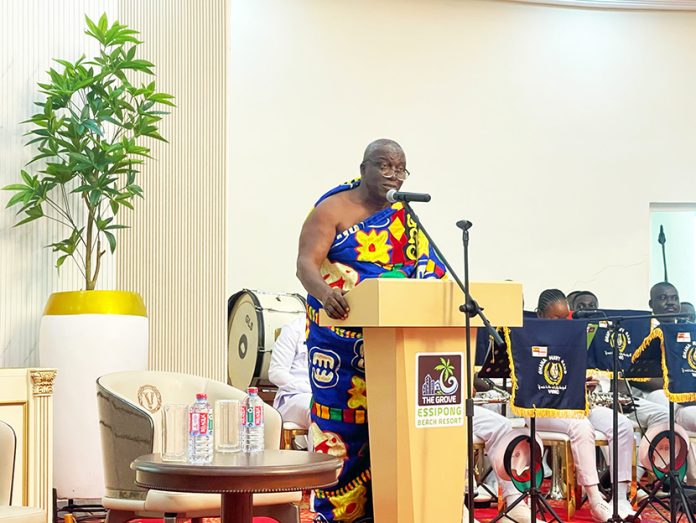
Nana Kobina Nketsia V, the Paramount Chief of Essikado Traditional Area, in the Western Region, has called on the leadership of the Ghana Navy to preserve the history of the Ghana Navy Ship (GNS) Yogaga for its role in the quest for regional and global peace.

He made the call when he delivered a keynote lecture at the Ghana Navy Memorial Day celebration and 35th Anniversary of the bombing of the Ghana Navy Ship (GNS) Yogaga in Liberia, in September 1990.

The lecture, held at Essipong in the Sekondi-Takoradi Metropolis was on the theme: “Sacrifice, Service and Sovereignty: Legacy of the Ghana Navy.”

In an attempt to end the civil war in Liberia, a group of West African nations under the auspices of the Economic Community of West African States (ECOWAS) took steps to send a peacekeeping force to Monrovia, in August 1990.

The Task Force was known as the ECOWAS Monitoring Group (ECOMOG) with troops drawn from Ghana, Nigeria, Sierra-Leone, Gambia, Guinea, Burkina Faso and Niger.

The Ghana Armed Forces provided the first Force Commander, General Arnold Quainoo and contributed two ships from the Ghana Navy, namely; GNS Achimota and GNS Yogaga.

On September 14, 1990 a Ghanaian delegation visited the troops in Liberia and when they were scheduled to sail back with GNS Yogaga, the ship was requested to evacuate casualties from the battlefield to the 34 Military Hospital in Sierra-Leone.

Just as the casualties were being brought onboard the ship, it was bombed by a faction involved in the civil war, killing three crew members on the spot, with another dying, enroute to Freetown.

In all, fifteen ECOMOG personnel lost their lives and about 25 were also wounded.

In that regard, Nana Nketsia V stated that the sacrifice and services of those who lost their lives for peace should be an inspiration and serve, as a guiding principle for both current and future generations of personnel.

He said: “I will urge the Navy to try to get a book on Yogaga, if possible, so that we will preserve this in our national and African interests to awaken some of us from what I call historical amnesia.”

Rear Admiral Godwin Livinus Bessing, the Chief of Naval Staff (CNS), said the Ghana Navy has had its share of trying times and the fatal incident that happened in Liberia in September 1990 was one of them.

According to him, the memorial lectures sought to highlight the contributions of the Navy’s forebears and provide a unique opportunity to connect the younger generation to veterans who lived through those trying times.

He said the Ghana Navy, from its humble beginning as a colonial naval volunteer force, to its contributions to peacekeeping and maritime security, had stood as a pillar in sovereignty and national stability.

“The men and women we remember today gave their all not for personal gains, but for the greater good of our country and for peace in our sub-region and beyond,” Rear Admiral Bessing added.

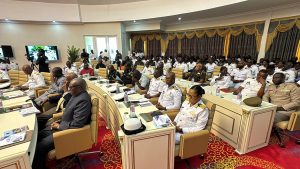
The event was attended by high-ranking military officers, retired senior naval officers and ratings, surviving crew members of the GNS Yogaga, families of the fallen, traditional leaders and students among others.

From Emmanuel Gamson 

GNA 

Goldfields Foundation reconstructs 10.4 km Samahu-Pepesa road

0
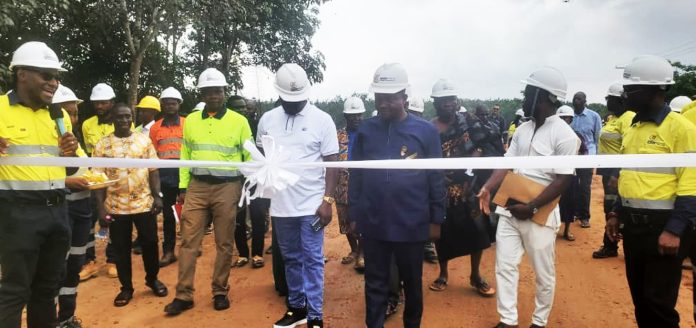
MP Robert Wisdom Cudjoe (white) and MCE Dr. Matthew Ayeh together Nana Adarkwa cut the tape for the sod cutting

A SOD cutting ceremony has been performed for the re-construction of a 10.4 kilometer bitumen surfaced road linking Samahu to Pepesa in the Prestea-Bogoso Municipal Assembly.
The scope of work includes construction of drains and culverts along the road.

The road, sponsored by Gold Fields Ghana Foundation (GFGF) at a cost of GHC63 million is expected to be completed in two years.

When completed, it is expected to aid the transformation of economic activities in the area like Pepesa, Huniso, Semahu and Abekwase.

GFGF is sponsoring the reconstruction of the 10.4 kilometer road, after its recent ambitious transformational and sustainable economic empowerment project, launched at the community by the Foundation.
Named ‘ECOPALMS’, a community owned oil palm seedling production enterprise where about 500 farmers drawn from the area are expected to benefit.
With support from the community, who gave out land for the ECOPALMS project, GFGF invested an amount of GHC180m covering land development, seed procurement and others.

The road reconstruction would aid easy transportation of the palm fruits when harvested, a reason the road is undergoing re-construction.

Present at the sod cutting ceremony included; Nana Adarkwa Bediako III, Gyasehen of Apinto, Nana Nyamikeh, Bekoase chief, Nana Yaa Damoah, Hunniso Queenmother, Nana Kwabena Siaw Sekyi, Development and Community Affairs Manager, Abdel Razak Yakubu, GFGF Executive Secretary, Wisdom Cudjoe (MP), Dr. Matthew Ayeh, MCE, Patrick Asmah, Assembly Member of the area, among other dignitaries.

Nana Kwabena Siaw Sekyi, Sustainability and Community Relations Manager of the mine alluded to the fact good relationship enjoyed by the mine had helped to shape its operations.

The mine, he said, intends to improve upon everything it does for the communities in the area and that they have so far expended $70 million on infrastructural projects.

Abdel Razak Yakubu, Executive Secretary for the Foundation said for years, the Foundation had been doing spots improvement on the road.

This time round, the Foundation decided to reconstruct the whole stretch.  This, he noted, was a testament of the mine’s commitment to community development and expressed the hope that, the resources being channelled would open economic activities in the area.

Nana Adarkwa Bediako, Gyasehene of Apinto, conceded that most of the infrastructure development projects in terms of schools and health facilities were built by GFGF.

“When companies come to our environment or communities like ours, we expect them to contribute to the development”, he said, adding that he was particularly interested in the road re-construction and new things the Foundation was doing.

“They’ve taken their steps to do bold development projects like roads. We know in the past, most CSR contributions from organizations have been on small, small projects. It was very, very difficult to have organisations taking up a project that we usually expect the government to do, like roads”.

Describing the re-construction as a bold step, Nana Adarkwa said “we need to commend GoldFields for this particular work. We saw the development of the Tarkwa Damang Road. It was a major one. It was the first of its kind to be done by any Foundation in Ghana.”

Four dead, six rescued in Lagos building collapse

0
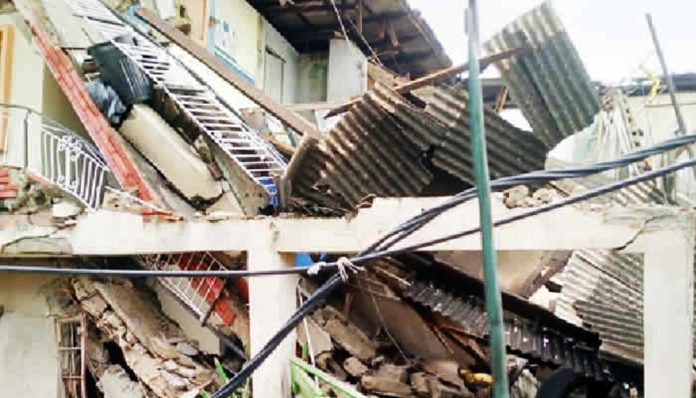
Lagos building collapse

The Lagos State Emergency Management Agency, LASEMA has confirmed that six persons were rescued and four died following the recent collapse of a three-storey building in the state.

The building is located at No. 325, Bornu Street, Ebute Meta, Lagos State.

At the scene of the incident, Mr Olatunde Akinsanya, Director of Operations, LASEMA, told newsmen that the agency received a distress call at 6:00 pm on Friday and immediately deployed a team to the scene.

“Emergency scene management is highly complex, and casualty figures often change as rescue operations progress.

“So far, six people have been rescued alive, while four have unfortunately lost their lives,” Akinsanya said.

He said that coordinated efforts of multiple agencies helped to contain the situation and ensure a timely rescue.

He listed the agencies to include the Lagos State Building Control Agency, the police, the Lagos State Fire Service, and the Federal Road Safety Corps.

Akinsanya said that in spite of the magnitude of the collapse and the number of people in the building at the time, the swift intervention of the agencies prevented much loss of lives.

“The emergency services of Lagos State, under the leadership of Governor Babajide Sanwo-Olu, have proven to be highly effective and efficient. As operations continue, we will keep updating the public.

“We urge Lagosians to remain calm and assured that the state government has state-of-the-art equipment to manage situations like this,” he added.

Credit: dailypost.ng


Nigeria’s inflation rate drops for 5th time amid falling food prices

0
Inflation rate drops

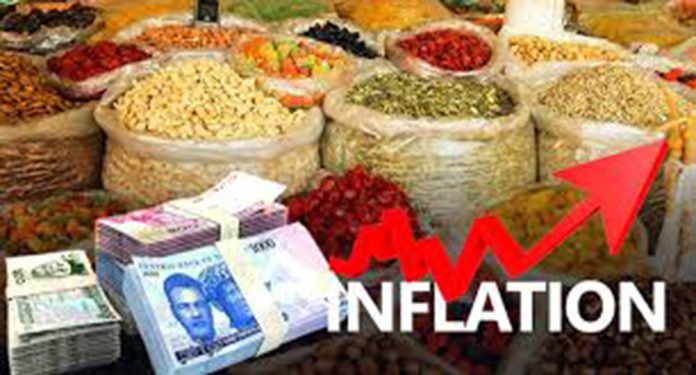
Nigeria’s inflation rate declined for the fifth consecutive time to 21.12 percent in August, down from 21.88 percent in July 2025 amid a drop in food prices.

This is according to the National Bureau of Statistics, NBS, August Consumer Price Index and inflation rate data released on Monday.

On a month-on-month basis, Nigeria’s inflation eased by 0.74 percent.

Similarly, food inflation rate stood at 1.65 percent on a month-on-month basis.

In August 2024, the country’s inflation stood at 32.15 percent but eased to 21.12 percent in the same period this year.

“In August 2025, the headline inflation rate eased to 20.12 percent relative to the July 2025 headline inflation rate of 21.88 percent,” NBS wrote on X on Monday.

This means that the Central Bank of Nigeria, CBN, Monetary Policy Committee in its next meeting may either retain the interest rate, which stood at 27.50 percent, and other parameters, or cut the rate.

Credit: dailypost.ng

Early Campaigns: INEC Required To Charge Violators To Court, Says Falana

0
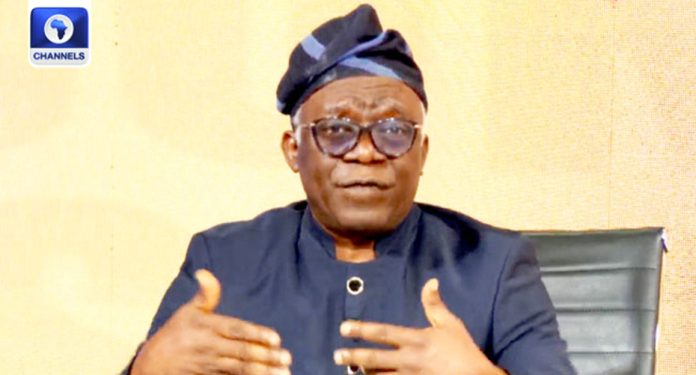
Femi Falana

A human rights lawyer, Femi Falana, wants the Independent National Electoral Commission (INEC) to be stricter in regulating early campaigns, asking it to charge violators to court.

Falana spoke on Sunday, describing campaigns ahead of the 2027 elections as abnormal.

“The law cannot cover all situations. The lawmakers thought they were dealing with a civilized political class. No. Now that they are violating the law, it makes it a duty — empowered by the Constitution and the Electoral Act — to bring out rules and regulations.

“By the way, INEC is required to charge some of these guys before the court. Let them come to court and say, ‘Sorry, my Lord, there is no provision for punishment,’” Falana, a Senior Advocate of Nigeria (SAN), said on Sunday Politics. 

“If you fail to comply with the order of the court, you have committed contempt and you will go to jail,” he told the host, Seun Okinbaloye.

Last week, INEC decried premature campaigns by political parties ahead of the next elections.

The electoral umpire, however, said its hands are tied, which means it cannot prosecute offenders.

Citing Section 94(1) of the Electoral Act 2022, which stipulates the 150-day campaign period, the chairman of the commission, Mahmood Yakubu, revealed that “there is no sanction whatsoever concerning breaches for campaigns earlier than 150 days to an election. Here lies the challenge for the Commission.”

However, Falana wants INEC to map out plans to counter the “illegality”.

Credit: channelstv.com

The Ghanaian Chronicle