A former teacher of Mab International Nursing School, Elijah Phinehas Ayitey Okine, has once again come under public scrutiny after being arraigned before the Dansoman Circuit Court on charges of conspiracy to commit crime and defrauding by false pretence in connection with a visa scam amounting to GH¢90,000.00.
Okine, 48, who allegedly promised to secure a Finland visa and work permit for a nurse, has pleaded not guilty to the charges when he appeared before Her Honour Basilia Adjei-Tawiah on Friday. His alleged accomplice, Eugene Oppong, is currently at large.
According to the prosecution led by Chief Inspector Christopher Wonder, the case revolves around Beatrice Yayra Cooper, a nurse who was introduced to Okine in January 2024 by a mutual contact, Janice Afrancho.
At the time, Cooper was based in Saudi Arabia, but returned to Ghana after being assured by Okine, that he could facilitate her travel to Finland within six months.
In their initial meeting at Weija, Okine allegedly demanded GH¢90,000.00 for the full processing of the visa and work permit. He reportedly collected an initial GH¢2,000.00 from the complainant for an application form.
Later, on October 22, 2024 Cooper was directed by Okine and his alleged accomplice to deposit €4,500 (equivalent to GH¢43,815.00) into an account, bearing the name Reliance Frontier Limited at the GT Bank, Airport Branch.
She was told the remaining amount (GH¢44,278.00) would be used for travel to Nigeria for documentation, interviews and biometric processes necessary for her Finland relocation.
After completing the supposed process in Nigeria and returning to Ghana, Cooper was unable to reach either of the two accused persons.
They had gone into hiding, prompting her to lodge a complaint with the Regional Criminal Investigations Department (RCID) in Accra.
Investigations revealed that Okine had already been detained in connection with a similar visa fraud case.
During interrogation, he admitted to receiving the money, but claimed he handed it over to Oppong, whom he could not help police locate.
The accused was formally charged under Sections 23(1) and 131(1) of the Criminal Offences Act, 1960 (Act 29) for conspiracy and defrauding by false pretence.
Okine pleaded not guilty to the offences and was admitted to bail in the sum of GH¢50,000 with two sureties to be justified.
The prosecution was led by Chief Inspector Christopher Wonder. The case has been adjourned to October 29, 2025, for further hearing.
Godfred Mawuli Tettey, convener, Advocate for Indigenous Freight Forwarders
The persistent malfunctioning of the Integrated Customs Management System (ICUMS), despite repeated assurances of improvement from its managers, has sparked mounting frustration among importers, agents and freight forwarders.
Importers say they are incurring heavy demurrage charges due to delays caused by the unstable ICUMS platform, which continues to experience fluctuations in its operations.
Clearing agents and freight forwarders have also come under pressure from disgruntled clients, many of whom are demanding faster clearance of goods.
The hitches have drawn strong reactions from the Advocate for Indigenous Freight Forwarders, whose Convenor, Godfred Mawuli Tettey, told The Chronicle that the group might lead a demonstration to press home their demands.
The group, by this, wants the government to step in immediately to salvage the situation, stressing that if ICUMS cannot deliver as promised, alternatives should be explored or competition introduced to enhance efficiency.
“The delays are crippling our business. Importers are paying needless demurrage and agents are being harassed by clients who are losing money daily. We cannot sit idle while this continues,” Mr Tettey explained.
The ICUMS system, introduced as a single-window platform to streamline customs processes and improve revenue collection has faced repeated criticism since its rollout, with freight forwarders citing operational inefficiencies and poor user experience.
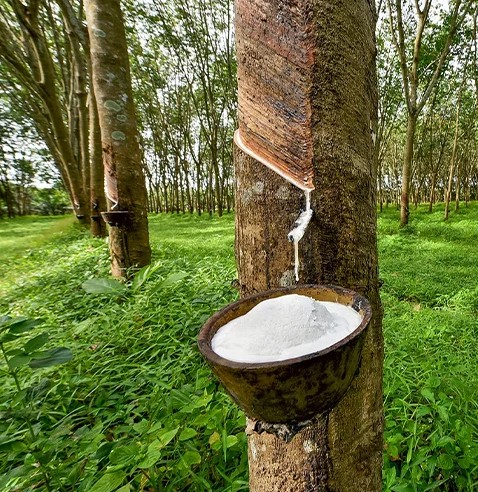
Ghana loses an estimated $100 million annually through the export of raw rubber without value addition and the non-repatriation of foreign exchange, according to the Association of Natural Rubber Actors of Ghana (ANRAG).
The Association made this revelation during a presentation at the Ghana Industrial Summit and Exhibition held under the theme: “Unlocking Industrial Potential: Strategic Approaches for Ghana’s Economic Transformation.”
ANRAG has, therefore, called for a deliberate policy to restrict the export of raw rubber, stressing that such a move would stimulate investment in local processing facilities, create jobs and ensure greater value retention within the country.
The Association also urged strict enforcement of the Tree Crop Development Authority (TCDA) Act, 2019 (Act 1010) and specifically the export regulations in Legislative Instrument LI 2471, to curb the illegal export of raw rubber.
“With policy reforms in place, Ghana stands to attract both local and foreign investments in modern processing plants, technology transfer and related infrastructure,” ANRAG noted.
AGI Raises Alarm
In a related concern, the Association of Ghana Industries (AGI) echoed ANRAG’s sentiments, describing the current trend of raw rubber export as “unbridled” and detrimental to domestic rubber processors.
The Chief Executive Officer of AGI, Mr. Seth Twum Akwaboah, lamented that local industries are being denied access to critical raw materials due to unchecked exports.
“This is a blatant violation of the Tree Crop Development Authority Act and has the potential to undermine the entire rubber industry,” Mr. Akwaboah stated.
He disclosed that many rubber processing factories, which previously operated three production shifts daily, have now scaled down to a single shift due to raw material shortages.
“At this point, may I entreat our Honourable Ministers here present to kindly look into this and collaborate with the Tree Crop Authority to bring an immediate halt to the export of raw rubber,” he appealed.
Broader Concerns Shared by Stakeholders
The AGI’s concerns were echoed by the Rubber Processors Association of Ghana (RUPAG), which had earlier sounded the alarm over the same issue.
Recently, the Western Regional Minister, Joseph Nelson, also joined calls for a clampdown on raw rubber exports.
“It makes no sense that local processors lack raw materials, while the TCDA sits aloof and does nothing to stop the export of raw rubber,” the Minister said.
Impact of Currency Fluctuations and Import Surge
Mr. Akwaboah also touched on the broader challenges facing local manufacturers, noting that while the recent appreciation of the Ghana cedi has lowered foreign exchange costs for importers, it has exposed local producers to increased competition from cheaper, often unregulated parallel imports.
“These imports bypass regulatory checks or evade appropriate duties, giving them an unfair cost advantage over local manufacturers, who comply with tax and quality standards,” he explained.
He warned that without deliberate regulatory intervention, local industries risk losing their competitive edge — a development that could derail Ghana’s industrialisation agenda and broader economic transformation goals.
Policy Recommendations
The AGI has recommended several policy actions, including strict enforcement of import quality standards to prevent the influx of low-grade parallel imports;
Incentivising local manufacturing through favourable tariff and regulatory regimes;
Balancing electricity tariffs with investment in energy infrastructure to enhance reliability and industrial competitiveness.
“The time to act is now. Government must create a fair and predictable business environment to protect domestic industries,” Mr. Akwaboah concluded.
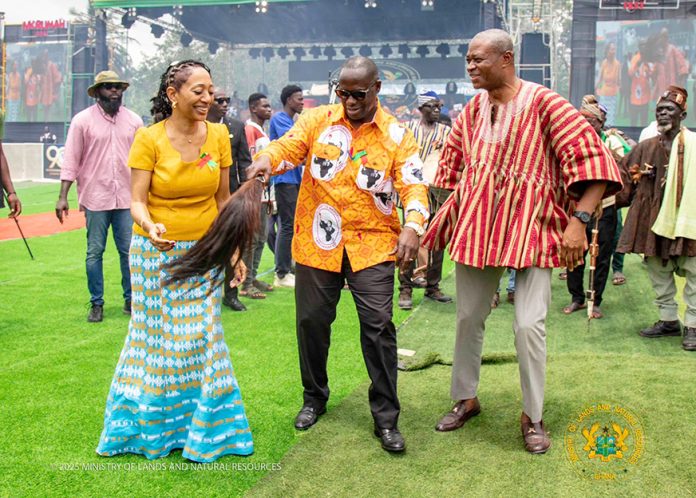
Armah Kofi Buah (middle) Samia Nkrumah and Deputy Minister for MLNR take to the floor
This year’s journey to Nkroful, dubbed “NKRUMAHFEST 25”, marking the 116th birthday of Osagyefo Dr. Kwame Nkrumah, the Founder of the Republic of Ghana, drew a massive and diverse crowd.
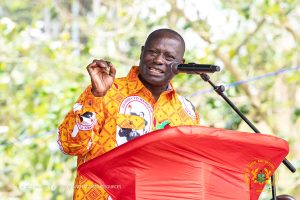
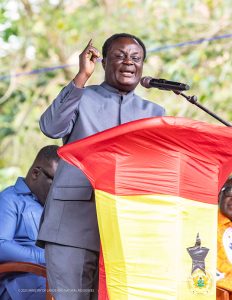
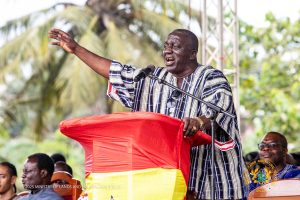
Minister of Lands Emmanuel Armah-Kofi Buah addressing the gathering
The celebration brought together a stellar cast of dignitaries from the political sphere, traditional leadership and the creative arts industry.
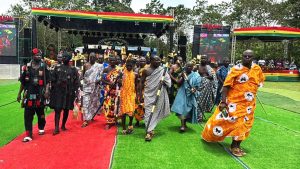
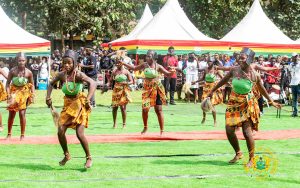
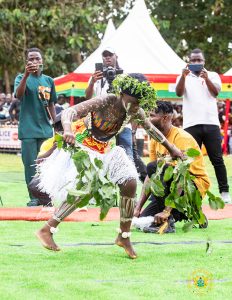
A vibrant display of Nzema culture and tradition featured prominently during the celebration. The host chief of Nkroful, Nana Kwasi Kutu V, led a grand procession of chiefs, showcasing the rich customs and heritage of the Nkroful people.
Traditional Nzema cuisine was also exhibited and enjoyed by the thousands who converged for the event.
Monuments and Military Honour
A highlight of this year’s festival was the unveiling of a giant statue of Osagyefo Dr. Kwame Nkrumah and the rehabilitation of the Nkrumah Museum in Nkroful – projects spearheaded by Emmanuel Armah Kofi Buah, the Member of Parliament for the area and also Minister for Lands and Natural Resources.
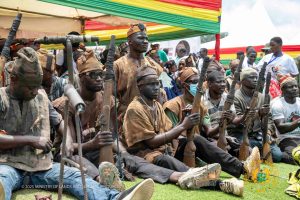
The Gonja Warriors were also there
Adding a symbolic layer of historical pride, the Yagbonwura of Gonja dispatched Gonja warriors, who fired sporadic musketry, thrilling the crowd and bringing historical pageantry to life.
A Powerful Tribute by Emmanuel Armah Kofi Buah
In a passionate keynote address, Emmanuel Armah Kofi Buah paid glowing tribute to the legacy of Dr. Nkrumah, declaring: “Nkrumah’s projects were not for the next election, but for the next century.”
Historian and lawyer, Yaw Anokye Frimpong
He continued: “We are not here merely to celebrate a birthday, but to commune with a vision – a vision that defied the confines of a single lifetime.
Today, on what would have been his 116th birthday, we honour the enduring, undeniable, immortal impact of the African of the Millennium, Osagyefo Dr. Kwame Nkrumah.”
In his speech, the Minister reflected on the far-reaching legacy of Dr. Nkrumah from the Akosombo Dam, Tema Motorway, Adomi Bridge and Tema Oil Refinery, to educational institutions like KNUST and University of Cape Coast, all of which he described as “building blocks of a modern, self-sufficient nation.
“These were not mere projects,” he said. “They were visionary investments for future generations,” he added.
Nkrumah’s Pan-African Legacy
Mr. Armah Kofi Buah reminded the audience of Nkrumah’s continental vision: “He knew Ghana’s independence was meaningless unless it was tied to Africa’s total liberation.
Arrival of sections of traditional chiefs
“That is why monuments in his honour stand across the continent and why streets bear his name in Nairobi, Addis Ababa, Lusaka and Dar es Salaam.”
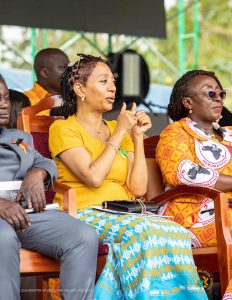
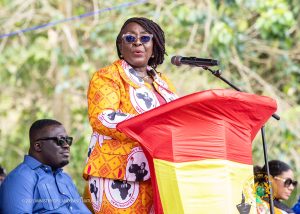
Minister of Tourism Culture and Creative Arts, Abla Dzifa Gomashie
He praised the efforts of President John Dramani Mahama and the NDC government for supporting the institutionalisation of “The Journey to Nkroful”, as part of Ghana’s official tourism calendar, adding: “We are grateful for the collaboration with the Ministry of Tourism, Culture and Creative Arts, which has helped enrich this year’s celebration.”
A Personal Connection and a Call to Action
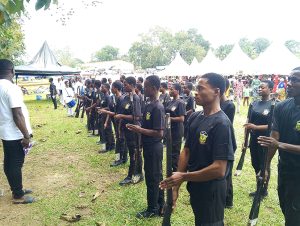
Nkroful SHS Police Cadet on stage
Mr Armah Kofi Buah also spoke of his personal connection to Dr Kwame Nkrumah, recounting how his grand-uncle, G.W. Anaman, a businessman and CPP financier, worked closely with the late leader.
Through his family’s stories, he said, he learned firsthand about the selflessness and patriotism that defined Nkrumah’s leadership.
Ending on a stirring note, Armah Kofi Buah called on the youth and all Ghanaians to embrace Nkrumah’s values: “The journey to Nkroful is not merely physical. It is a mental and spiritual return to the ideals of self-determination, Pan-Africanism, and nation-building.”
Paramount Chief of Essikado Traditional area, Nana Kobina Nketsia V
He urged all to join the fight against illegal mining (galamsey) which he referred to as “environmental terrorism” and to become stewards of Ghana’s natural heritage.
“Nkrumah would have wanted us to defend our environment with courage and integrity. Let us be the generation that built the industries he envisioned, the scientists who innovated for Africa, the teachers who educated with a Pan-African conscience, and the leaders who served selflessly.”
Closing Words
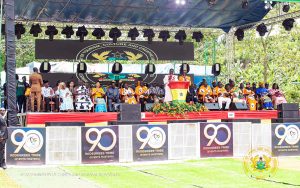
Durbar held to commemorate the 116th birth anniversary of Dr. Kwame Nkrumah
He ended his address with a resounding call: “Let us walk in the light of the Osagyefo. Let us give oxygen to his dreams. Let us carry forward the unquenchable fire of freedom, unity, and progress. Long live the Spirit of Kwame Nkrumah! Long live Ghana! Long live Africa!
Forward Ever, Backward Never!”
Distinguished Guests Grace the Occasion
The festival, themed “Celebrating Nkrumah’s Enduring Impact”, was hailed as one of the most well-attended and organised in recent memory.
Cultural display
Among the distinguished guests were; Nana Kobina Nketia V, President of the Western Regional House of Chiefs, Tetretteh Okuamoah Sekyim, Omanhene of Wassa, Samia Nkrumah, daughter of Dr. Kwame Nkrumah, Kofi Totobi Quakyi, former National Security Minister.
Others were Dr. Frank Amoakohene, Ashanti Regional Minister, Joseph Nelson, Western Regional Minister, Dorcas Afo-Toffey, MP for Jomoro and Deputy Minister of Transport,
Tradition and Culture in full display
Dr. Grace Ayensu-Danquah, MP for Essikado and Deputy Minister for Health and Dzifa Abla Gomashie, Minister for Tourism and Creative Arts.
Prof. Samuel Akainyah, Professor Emeritus at Kennedy-King College in Chicago, Lawyer Yaw Anokyi Frempong, both delivered speeches at the occasion.
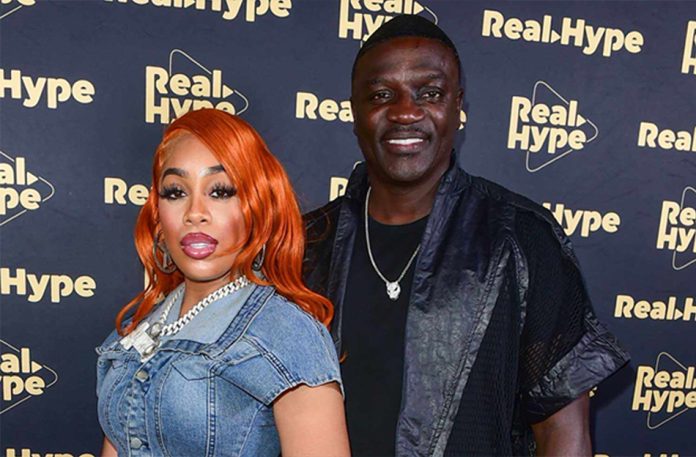
Akon and Tomeka Thiam are going their separate ways.
Three days before their 29th wedding anniversary, the “Smack That” singer’s wife filed for divorce, citing irreconcilable differences as the reason for the split, according to court documents obtained by Billboard Sept. 12.
Tomeka is seeking joint legal custody and sole physical custody of her and Akon’s 17-year-old daughter Journey, per the outlet. She is also seeking spousal support from the 52-year-old (whose legal name is Aliaune Badara Thiam) and has requested to block the court’s ability to award him any spousal support.
The divorce news is a rare bit of insight into Akon’s love life given that there has been speculation for years that he is a polygamist with multiple wives, though he purposefully allows that gossip to persist.
“I’mma let it stay a rumor,” he said during a 2022 interview with VladTV. “I like the fact that people are guessing now, I love it. I’m not confirming nor denying. You go online, you may see nine, you might see seven, you might see four. I love it, though.”
Akon also stated that he has “seven boys and two girls,” with the divorce filing confirming he has nine kids.
The role of being a dad is one the “Lonely” singer has been more vocal about, relating his experience of having multiple children with various women to that of Nick Cannon, who is dad to 12 kids with six women.
“That’s how life is supposed to be,” Akon explained during a 2023 appearance on The Zeze Mills Show. “Why not? [Nick’s] rich. He’s responsible. He takes care of every one of those children.”
He added, “The baby mothers are with it. They hurt for nothing. And they live comfortably. He’s there for every single one of those kids. I got nine and I’m there for every one of mine.”
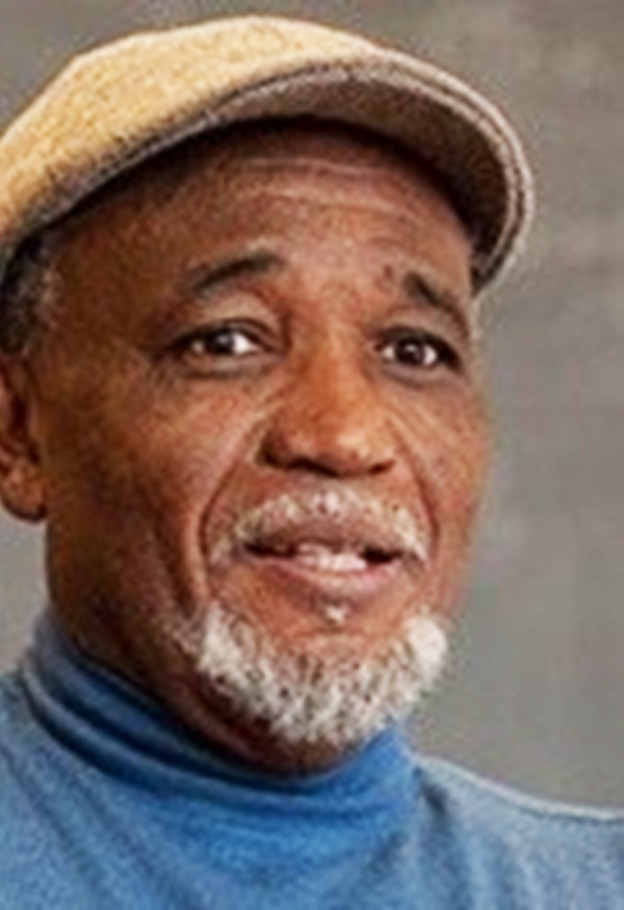
Celebrated Ghanaian playwright and theatre scholar, Dr. Mohammed Ben Abdallah, has died at age 81.
The news of his passing was announced by his daughter, Akosua Abdallah, in a Facebook post on Friday, September 19, 2025.
She revealed that Dr. Mohammed Ben Abdallah died on Thursday, September 18, 2025.
‘Inna Lillahiwainnailayhiraji’un (Surely we belong to Allah and to Him shall we return).’
“With deep sorrow and a heavy heart, I announce the passing of my beloved father, Dr. Mohammed Ibn Abdallah, who returned to his Maker yesterday.
“A man of wisdom, humility and unwavering faith he served his people, his family and his country with honour and grace,” she wrote, sharing a video of joyous moment with her late dad.
The announcement said he will be laid to rest today, Friday, September 19, 2025 following Jumu’ah prayers, in accordance with Islamic rites in Kumasi.
The 3-day Dua will also be held in Kumasi.
“Please remember him in your prayers. May Allah forgive his shortcomings, illuminate his grave, and grant him the highest rank in Jannah. Ameen,” she added.
Dr. Mohammed Ben Abdallah was born on 25th April, 1944 in Kumasi. He obtained a Teacher’s Certificate ‘A’ from Wesley College, Kumasi, before pursuing Drama and Theatre Studies at the University of Ghana, Legon, where he earned a diploma.
He later studied in the United States, obtaining an MFA in Theatre Arts from the University of Georgia in 1976 and a PhD in Theatre Arts from the University of Texas at Austin in 1980.
Widely regarded as one of Ghana’s foremost playwrights, he played a pivotal role in the creation of the National Theatre of Ghana. He supervised its construction, established its organisational framework and ensured it had resident companies, including the National Drama Company, the National Dance Company and the National Symphony Orchestra.
He also served as Head of the School of Performing Arts at the University of Ghana. His theatrical style blended traditional African performance with European elements, often reflecting post-colonial themes.
In politics, he served under the Provisional National Defence Council (PNDC) as Secretary for Education and Culture in the 1980s and 1990s.
Dr Mohammed Ben Abdallah’s plays and writings include; ‘The Slaves’, ‘The Fall of Kumbi’, ‘Verdict of the Cobra’ and ‘The Trial of Mallam Ilya’, among others.
As tributes continue to pour in for Ghanaian inventor and religious leader Apostle Kwadwo Safo Kantanka, who passed away on 11th September, 2025 at the age of 77 years, much focus has been on his contributions to education, agriculture and technology.
It is equally important to recognise how deeply he influenced Ghana’s cultural and creative sectors.
Concert party theatre
After founding the Kristo Asafo Mission in 1969, as a prayer group and later expanding into an African-initiated church and industrial organisation, Apostle Safo, later in 1970s established the Kristo Asafo Concert Party.
This was a troupe that evangelised through comedy, sketches and music. It immediately became one of Ghana’s most popular drama outlets.
Through its stages, many actors and comedians found their footing, and figures such as Mercy Asiedu, Akrobeto, Bob Okala and Nkomode are among those influenced by performance traditions forged under Kristo Asafo.
Music and performance innovations
Apostle Safo was himself an accomplished guitarist and keyboardist. He founded the Kristo Asafo Band, one of Ghana’s early gospel-highlife bands.
The types of songs they produced were fusions of traditional rhythms and Christian messages. Their songs were mainly tagged as “gospel highlife.”
This made gospel music more accessible and commercially viable in Ghana.
Indigenous technology and film-related arts
While he is largely known for his inventions and manufacturing acumen, Apostle Safo also inspired more visual and technical arts creations.
His innovations pushed boundaries in film prop and stage equipment, electronics used in theatre, sound systems, audiovisual tools and so on. These innovations indirectly supported the growth of film and stage arts by providing local alternatives.
Talent grooming and cultural transmission
Through his concert parties, bands, and annual technology exhibitions, Apostle Safo created platforms that gave visibility to comedians, actors, musicians, and technicians at a time when the mainstream entertainment infrastructure was less developed.
Many of these talents later transitioned to Kumawood (Ghanaian local film industry), TV comedy shows, gospel music and stage drama.
His church mission also ran training centres and workshops that encouraged youth in technical, artistic and performance skills.
Legacy in media ownership
Besides theatre and music, Apostle Safo founded Kantanka TV, which has served as a broadcast outlet for his church’s programmes, innovations, concert party performances and creative arts content.
Its role in giving artistic and Christian content more airplay has been part of his broader impact on Ghana’s entertainment and media industries.
It is worthy of note that Apostle Dr Kwadwo Safo Kantanka did more than lead a church or invent machines. He built bridges between faith, culture, performance and industry.
He inspired artists, engineers, actors, musicians and everyday Ghanaians to believe in home-grown creativity.
Though he has passed on, his creative legacy continues to shape Ghana’s arts, entertainment and innovation for years to come.
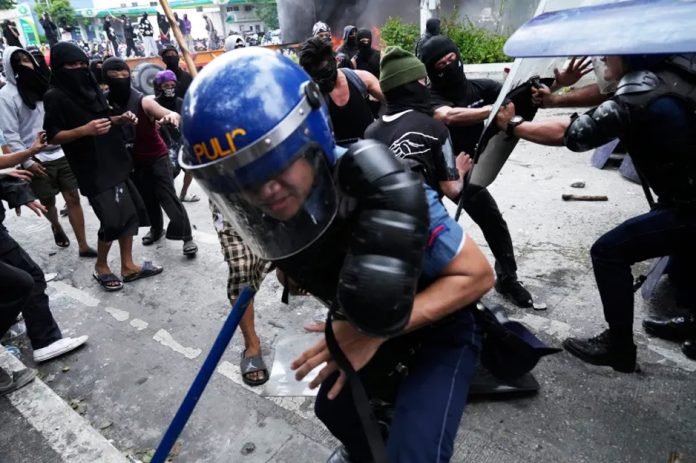
Police engage protesters during a scuffle in Philippines
More than 200 people have been arrested following clashes between police and masked protesters at an anticorruption demonstration in the Philippine capital, Manila.
In a statement on Monday morning, the regional police said while most rallies the day before were peaceful, the gathering in Ayala Bridge and Mendiola “even though unprovoked, turned very violent”.
“Protesters turned mobs assaulted police officers with stones and anything they could get their hands on. Not satisfied with harming police officers in uniform, violent protesters set motorcycles on fire, vandalised and ransacked a business establishment,” the statement read.
It added that police arrested 224 suspects, some of whom were minors.
At least 131 officers were wounded in the clashes, some of whom were “very serious”, but are now receiving medical treatment.
Reporting from Manila, Al Jazeera’s Barnaby Lo explained that while some sense of normalcy returned to the streets of Manila on Monday morning, “there is a heavier police presence than usual”.
“Schools are closed, a curfew for minors has been imposed as investigations into alleged corruption in flood control projects continue, more protests are expected, and at this point they could be unpredictable,” Lo said.
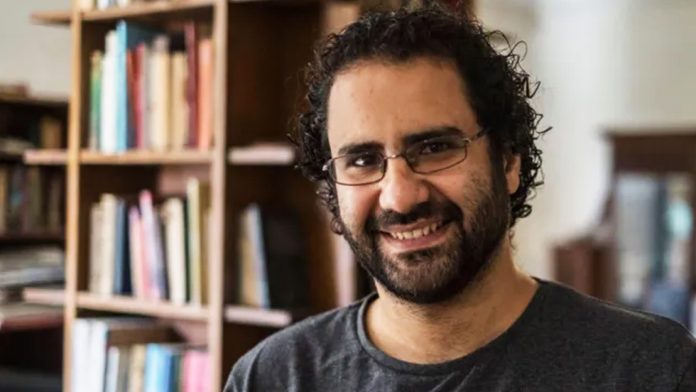
Egypt’s president has pardoned prominent British-Egyptian activist Alaa Abdel Fattah, who has been imprisoned for six years, state media and his lawyer say.
Abdel Fattah is one of six people whose sentences President Abdul Fattah al-Sisi commuted following a request from the National Council for Human Rights, according to Al-Qahera News. His lawyer confirmed the news and wrote on X: “Praise be to God.”
The 43-year-old blogger and pro-democracy activist is one of Egypt’s best known political prisoners.
He was arrested in 2019, months after finishing a previous five-year sentence, and convicted in 2021 of “spreading false news” for sharing a Facebook post about torture in Egypt.
He should have been released in September 2024. However, Egyptian authorities refused to count the more than two years he spent in pre-trial detention towards his time served.
He and his mother, Laila Soueif, staged hunger strikes to protest against his imprisonment.
A deep tissue massage may be described as a “next-level” massage – scuba diving versus a casual swim.
Deep tissue massage is more than skin deep. Your muscles are lower in your body. Massage therapists use slower strokes and direct pressure to help relieve pain, stiffness, and tension.
When you have regular tension or pain, bands of rigid tissue are normally to blame. These bands (or adhesions) can block blood flow and cause pain, limit movement, and increase inflammation. In a deep tissue massage, your therapist will work to break down these bands to relieve pain and help you to move your body with ease.
Classic massage therapy is different from deep tissue massage. One focuses on stress relief and relaxation, while the other (deep tissue) helps you with a specific problem like pain, stiffness, limited movement, or an injury.
What’s the difference between a Swedish massage and a deep tissue massage?
You may be surprised to know that there are more than 80 types of massage. These range from more relaxing (think spa day) types to more intense kinds for rehab or pain relief.
Swedish massage and deep tissue massage are two common types. So, what’s the difference?
Swedish massages are used for relaxation, to improve blood flow, and to relieve muscle tension. The intensity is gentle, with long, gliding strokes, along with some tapping and kneading. Usually, anyone gets them, especially if you’re older, an athlete, or you’re pregnant.
Deep tissue massages are used for pain relief, especially for chronic or long-term pain. The intensity is vigorous. The strokes are slow, with your masseuse using their fingers, thumbs, and elbows. Usually, athletes, runners, and people who sit for long periods of time get deep tissue massages.
What Happens During a Deep Tissue Massage?
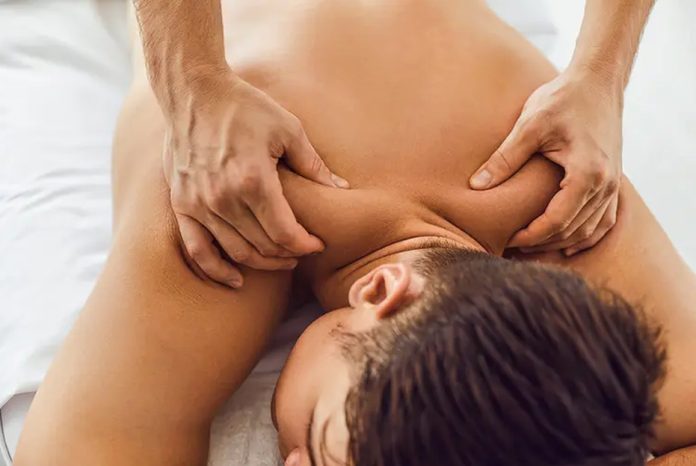
Massage therapists use their fingers, thumbs, or elbows to apply pressure. It is especially helpful for areas of your body that are subject to muscle tightness, like your neck, lower back, and shoulders. Some of the same strokes are used in classic massage. But with deep tissue, the pressure is deeper and concentrated on areas of tension and pain. Think of kneading bread.
What Are the Benefits of Deep Tissue Massage?
While deep tissue massage may not always feel as relaxing as other types of massage, the benefits may be worth it. More research is needed to understand exactly how or why massage therapy may help.
BENEFITS
Reduced pain and muscle tension. The No. 1 reason people get a massage may not be all that surprising. Studies show a whopping 94% of people believe massage can help with pain, and more than 30% say they have gotten a massage for that reason.
Deep tissue massage targets deeper layers of muscles and connective tissues to relieve chronic pain and muscle tension. The American College of Physicians even lists massage therapy as a remedy for temporary back pain.
Improved sleep. Some studies have suggested regular monthly massages can increase oxytocin (the feel-good hormone) and possibly decrease cortisol (the stress hormone). The combo can lead to a better mood and good sleep, especially for those with insomnia due to menopause or congestive heart failure. If you’re sleeping better, you may see a decrease in depression or anxiety too!
Strengthened immune response. Can regular massages keep you from getting sick? One recent study showed an increase in white blood cells after a massage, which work to fight off viruses and infections.
“It may seem like massage therapists are just rubbing, but we move with purpose,” says Dionna Freeman of Los Angeles, a licensed massage therapist for 20 years. “I’ve seen people who couldn’t move their neck side to side or were having trouble sleeping who now say they’re doing so much better. It’s not just a luxury. Massage can truly be therapy, or ‘church for the body,’ I like to call it.”
Talk to your doctor before seeing a massage therapist to ensure it’s right for you.