The Central Bank of Nigeria (CBN) has announced the revocation of operating licenses of two mortgage banks.
In a circular issued on Tuesday and signed by its Ag. Director, Corporate Communications Department, Hakama Ali, the apex Bank, noted that the move was part of its efforts to reposition the mortgage sub-sector and promote a culture of compliance with relevant laws and regulations.
It cited Section 12 of BOFIA 2020 and Section 7.3 of the Revised Guidelines for Mortgage Banks in Nigeria, which allows it to exercise its powers.
The affected banks are: Aso Savings and Loans Plc and Union Homes Savings and Loans Plc.
The CBN said, “The affected institutions had violated various Sections of BOFIA 2020 and the Revised Guidelines for Mortgage Banks in Nigeria, including: failure to meet the minimum paid-up share capital requirement for the category of the bank licence granted to them by the CBN, and having insufficient assets to meet their liabilities.
Other violated guidelines include being critically undercapitalised with a capital adequacy ratio below the prudential minimum ratio as prescribed by the CBN, and failure to comply with several directives and obligations imposed upon them by the CBN.
“The CBN remains committed to its core mandate of ensuring financial system stability”, the circular added.
The Chairman of Dangote Group, Aliko Dangote, has formally submitted his petition against the Managing Director of the Nigerian Midstream and Downstream Petroleum Regulatory Authority, NMDPRA, Ahmed Farouk, to the Independent Corrupt Practices and other Related Offences Commission, ICPC, accusing him of corruption and financial impropriety.
In the petition submitted on December 16, through his lawyer, James Onoja, SAN, Dangote demanded the arrest, investigation and prosecution of Ahmed for allegedly living above his means as a public servant.
The petition was received by the office of the Chairman of the ICPC, Dr Musa Adamu Aliyu, SAN.
The Dangote Group chairman specifically accused the NMDPRA boss of spending, without evidence of lawful means of income, sums amounting to over 7 million USD on the education of his four children in different schools in Switzerland for a period of six years upfront.
Dangote in the petition named the four children and their schools in Switzerland including the amount paid for each of them, to establish his allegations.
He alleged that Farouk Ahmed was using the instrumentality of the NMDPRA to embezzle and divert public funds for self gains and pursuit of private interest to the detriment of the Nigerian people, which orchestrated uproar and protest by different groups recently.
The billionaire businessman claimed that Farouk Ahmed throughout his lifetime as an adult worked in the public sector in Nigeria and that the totality of his earnings over the years was nothing close to 7 million USD, allegedly diverted from the public coffers to pay for the education of his teenage children abroad.
Former U.S Army officer, Captain Bish Johnson (retd.) says there is foreign support for banditry in Nigeria.
Johnson, who spoke during an interview with Channels Television’s The Morning Brief on Monday, however, said some of the sponsors may not necessarily be Nigerians.
“I also believe that there are some foreign sponsors of this banditry that we see in the country where they kidnap and abduct people just to divert our attention to the abduction while they are abusing, illicitly mining our mineral resources in connivance with highly placed individuals in Nigeria.”
“Some of whom may be in the government, some retired, and some top-level government officials,” he said.
The former officer maintained that most of the security problems were syndicated operations that involved so many components, people, and elements all working together for the same purposes, which are commercial.
Johnson said that banditry, kidnapping had become a commercialised enterprise where people made a lot of fortune over the misfortune of others.
“Nigerians have always had this impression that the insecurity in the country is some kind of complicity from within the government. I have always insisted and maintained that most of the insecurity is syndicated operations that involve so many components, people, and so many elements, all of them working together for the same purposes, which are commercial reasons.
“Banditry, kidnapping has become a commercialized enterprise where people are making a lot of fortunes over the misfortune of others. Some of you are fueled by the unregulated and illicit mining of our mineral resources in the far North, and also fueled by the vulnerabilities in our borders around that sector between Niger, Chad, and northern Cameroon” he added.
He further said information or any allegation about some kind of connivance or complicity from anyone in Nigeria should be a matter of serious concern and should be thoroughly investigated.
However, we should not dismiss such accusations on the basis that it is just a terrorist that is talking or maybe that they are talking under compulsion.
“Every information that we get should be investigated,” he said.
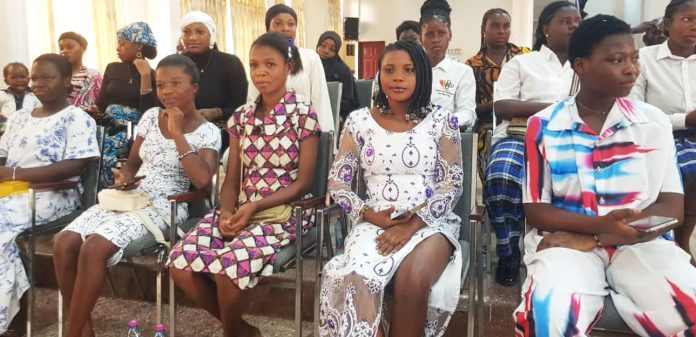
The Resilient City for Adolescent (RCA) Project has offered employable skills training to 90 vulnerable young people in the Sunyani West and Sunyani Municipalities to fetch them decent jobs.
In all, 33 of the beneficiaries between 15 and 25 years were trained in soap making, 17 in bakery, 15 in fashion design, 15 in body makeup, five in hairdressing and an additional five in bead making.
The Sunyani-based Global Media Foundation (GloMeF), an anti-corruption and media advocacy Non-Governmental Organisation (NGO) and its local partners are implementing the RCA project in the two municipalities.
Other partners, the Indigenous Women Empowerment Network (IWEN) and Citizens Watch Ghana (CWG), all NGOs are supporting the project implementation with funding from the Fondation Botnar through Ecorys, United Kingdom, under its Healthy Cities for Adolescents (HCA2).
The implementation of the three-year project, among other objectives, sought to improve the holistic wellbeing of vulnerable adolescent people and also provide them with a voice in the decision-making process.
Speaking at the ‘2025 Show and Tell’ event of the project in Sunyani, Mr Raphael Godlove Ahenu, the founder and Chief Executive Officer of GloMeF said some of the project would provide start-up tools and other support to some of the deserving beneficiaries of the training to set up their own businesses.
Besides, he added that the project would also establish an entrepreneurship hub to provide “work and pay” opportunities for the beneficiaries who could not immediately set their businesses.
Mr Ahenu said the hub would also create opportunities for many of the vulnerable young people interested in employable skills training to learn the various crafts under the project implementation.
He emphasised that employable skills training did not only provide ready jobs, but also lucrative and urged families to encourage their children and wards to leverage on the opportunity and go through the training.
Mr Alhassan Nabila, the Chief Accountant at the Bono Regional Office of the National Youth Authority commended the GloMeF and its partners, saying their training aligned with a broader effort being made by the government to tackle the growing youth employment situation in the country.
Mr George Yaw Ankamah, the Bono Regional Director of the Department of Children urged the beneficiaries to leverage opportunities of the new media to sell their products, asking them to prioritize branding and to enter the international market through social media.
The approval of the Road Traffic (Amendment) Bill, 2025 by Parliament has generated mixed reactions among commercial motorcycle riders and users in Tema and Ashaiman.
Parliament passed the Bill on Wednesday, December 10, 2025 officially legalising the commercial use of motorcycles, tricycles and quadricycles, a move the government says would sanitise the transport sector and enhance road safety.
The legislation, which is awaiting presidential assent, also revises Ghana’s legal alcohol limit for drivers and introduces stricter penalties aimed at reducing drunk-driving incidents.
Explaining the purpose of the amendment on the floor of Parliament, Mr Joseph Nikpe Bukari, the Minister for Transport, said the changes were intended to bring order to the sector that had long operated with regulatory gaps.
The minister noted that the new law was expected to regularise the operations of more than one million commercial motorcycle and tricycle riders, who had worked informally for years, while opening employment opportunities for the youth through a clearer framework for licensing, training and enforcement.
Meanwhile, a cross-section of riders and users interviewed by the Ghana News Agency (GNA) in Tema and Ashaiman have expressed both optimism and concern about how the new law would be implemented.
Mr Shaibu Issaka, a motorist at Ashaiman New York, said he remained uncertain about the Bill, citing safety concerns.
He said he had worked in the sector for about 15 years and had witnessed numerous crashes, adding that he was worried about the safety of both riders and passengers.
Mr Issaka also questioned whether police harassment would truly end or merely take new forms, stressing that his family depended on the income he earned from riding.
Another motorist on the same route, Mr Mahmoud Mohammed, welcomed the passage of the Bill, saying he was encouraged by the prospect of being licensed like commercial vehicle drivers.
He, however, raised concerns about riders who might not be able to afford registration costs, particularly those operating motorcycles owned by others. Mr Joshua Quarshie, a motorist in Tema, expressed satisfaction with the Bill, saying he was hopeful that the arrests of riders would reduce once the law took effect.
Ms Magdalene Apeku, who frequently uses commercial motorcycles, said the legislation would boost public confidence, as riders would now be required to operate under established rules to enhance safety.
Mr Benjamin Antwi, a private motor rider, urged other riders to ensure they obtained the necessary licenses and appealed to the government to improve road infrastructure to support safer transportation.
Former Speaker of Parliament, Professor Mike Oquaye, has cautioned Ghana against approaching its lithium resources as a short-term rescue plan for a struggling economy, warning that weak bargaining positions and outdated thinking could once again leave the country resource-rich but financially constrained.
Speaking on Point of View with Benard Avle on Monday, December 15, 2025 Prof Oquaye took aim at the foundations of Ghana’s extractive sector agreements, arguing that the country has historically short-changed itself and risks doing so again with lithium, by fixing its benefits at the lowest possible level before negotiations even begin.
“It is very painful to say we have something that is of value and then, when you take this commodity, it doesn’t give me more than 5 percent,” he said.
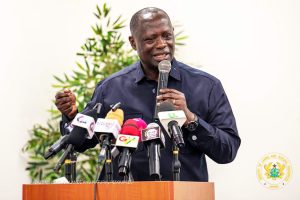
Minister for Lands and Natural Resources-Emmanuel Armah-Kofi Buah
According to the former Speaker of Parliament, setting a cap that limits Ghana’s upside is not negotiation, but surrender.“You cannot fix anything downwards. You have to go to the upper limit or at least leave it open for negotiations,” he insisted.
Prof Oquaye argued that Ghana’s experience with gold, diamonds and bauxite shows a clear pattern: the country has consistently accepted arrangements that benefit foreign investors more than the nation itself.
In his view, the problem is not confined to one mineral or one agreement, but reflects a deeper failure to rethink how Ghana relates to its natural resources.
This failure, he suggested, helps explain why Ghana repeatedly finds itself under financial strain, forced to rely on external support rather than drawing sufficient long-term value from what lies beneath its soil.
Royalties Are the Wrong Argument
While much of the public debate has centred on whether Ghana should receive 5 percent, 10 percent or even 20 percent in royalties, Prof Oquaye dismissed the entire framing as misplaced.
He described royalties as a colonial inheritance, designed at a time when resources extracted from colonies were considered the property of foreign powers.
“Royalties were given because you are my colony,” he explained, adding “They gave you something small.”
According to the former Speaker of Parliament, that mindset no longer fits a modern, independent Ghana. What the country should be pursuing, he said, is ownership.
Central to Prof Oquaye’s argument was the insistence that Ghana’s contribution to any lithium project must be properly recognised.
He argued that the mineral itself is a form of equity and should be treated as such, alongside whatever financial investments companies bring. In his view, it makes no sense for Ghana to contribute the resource, commit funds, and still end up with little control over the final product.
“We turn around and say we don’t have any control over the company,” he said, questioning how Ghana could have no say over what is produced, how it is processed, or what is ultimately shipped out.
Who Really Has the Capital?
Professor Mike Oquaye also challenged the claim that Ghana must accept unfavourable terms because it lacks capital.
Lithium
He argued that investors do not arrive with large sums already secured. Instead, they rely on government approvals, parliamentary backing and contractual guarantees to raise money elsewhere.
In that context, he suggested Ghana could raise capital alongside investors — or even lead the process because the resource itself makes the project bankable.
“We even have a better chance of raising money than them,” he argued, “because it is right down under our soil.”
Local Capacity Should Not Be Ignored
Rejecting the idea that Ghana lacks expertise, Prof Oquaye pointed to Ghanaian mining companies, engineers and service providers already operating across the country.He listed several Ghanaian and African firms active in mining services, arguing that they demonstrate local capacity that could be harnessed through a consortium model rather than side-lined in favour of foreign dominance.
According to him, the state should support such local participation, not discourage it. For Prof Oquaye, the most dangerous outcome would be exporting raw lithium while forfeiting downstream benefits.
He warned that Ghana risks watching its raw materials leave the country, only to buy back expensive finished products later, including batteries and power solutions essential for development.
“We want to buy power from them after they have taken all the raw material away and turned it into a very expensive commodity,” he said.
He linked lithium processing to jobs, clean energy, technology, rural electrification and future industries, arguing that these opportunities would be lost if Ghana focuses only on extraction.
In his view, Ghana’s repeated financial difficulties stem in part from decades of extractive arrangements that prioritised immediate relief over long-term national benefit.
If Ghana gets the lithium framework wrong, he warned, the country will once again surrender a strategic resource and still be left searching for solutions.
Beneficiaries of the project with the Organiser Wendy (in white on extreme right)
Beneficiaries of the project with the Organiser Wendy (in white on extreme right)
The Wenette Hope Foundation has successfully organised the 2nd Edition of its Bronya Attire Project, a Christmas outreach initiative aimed at promoting health, dignity and skills development among vulnerable children.
The event, held on 13th December at the Great Missions International Rehabilitation and Children’s Home at Teshie–Nungua, benefited over 70 children and 15 caregivers, with support from more than 20 volunteers. The project was led by the Founder of the foundation, Ms. Wendy Anna Egyirkoom, through strategic collaboration with health professionals, social enterprises, creative partners and volunteers.
Unlike previous editions, this year’s outreach went beyond clothing donation to provide a holistic package of healthcare, skills training and social support. Beneficiaries received medical screening, optical and dental services, public speaking and communication training, vocational skills exposure, menstrual health education, footwear distribution and festive activities.
One of the highlights of the event was the “Shoes of Hope” experience, organised in partnership with Samaritan’s Feet Ghana, where children participated in a symbolic foot-cleaning exercise before receiving new shoes. The exercise was aimed at restoring dignity, boosting confidence and reinforcing values of compassion and respect.
Medical screening and consultations were coordinated by Dr. Roland E. Eghan, a member of the Wenette Hope Foundation. Optical services were provided by Lenzvision Optical & Eyecare, led by Dr. Raphael Kyei, while dental care was delivered by Peb Dental Clinic, under the leadership of Dr. Esther Priscilla Biamah Danquah.
The project also addressed menstrual health needs, as EcoPeriod, founded by Amdiya Abdul Latiff, donated reusable sanitary pads to adolescent girls and provided education on menstrual hygiene and sustainability.
In addition, NovusCircle Consulting, led by Mr. Mustapha Ibrahim, facilitated public speaking and communication training to build confidence and leadership skills among the children, while Grant Cosmetics, led by Ms. Linda Afiba Grant, provided basic cosmetics skills training. Medication and first-aid support were supplied by Kofikrom Pharmacy.
As part of the clothing component of the project, beneficiaries received custom-made outfits using fabrics donated by Tex Styles Ghana Limited, producers of Woodin and GTP, the official fabric sponsors. The fabrics were sewn into outfits by fashion designers SL Manera, Frankelianth and Wonder By Liz.
The event was documented by Staple Studios, led by Etornam Ahiator, Filmed by Dan, led by Daniel Ayittah, and 233times.net, to ensure wider public awareness of the initiative.
A unique aspect of this year’s project was funding support from Wenette Shop and Wenette Bags, two social enterprises established to support the foundation’s humanitarian work. A portion of sales from the enterprises throughout the year was dedicated to financing the outreach.
The Wenette Hope Foundation expressed gratitude to its members, sponsors, partners and volunteers for their dedication and support, noting that the success of the project reflects the power of collaboration and community-driven development.
The foundation reaffirmed its commitment to expanding the Bronya Attire Project as part of its mission to restore hope and improve the lives of vulnerable children.
Grace Mountain is set to host a powerful two-night worship experience dubbed ‘Alpha Hour Convocation’ at the Accra Sports Stadium from Monday, December 30 to Tuesday, December 31, 2025.
Billed as ‘2 Nights of Worship, Praise and Wonders,’ the convocation will be led by Pastor Elvis Agyemang, the Founder and Lead Pastor of Grace Mountain and the convener of Alpha Hour, one of Ghana’s most impactful prayer movements in recent times.
The upcoming Alpha Hour Convocation will feature an exceptional lineup of seasoned gospel ministers and worship leaders including Tagoe Sisters, Daughters of Glorious Jesus, Esther Smith, Joe Beecham, Uncle Ato, Becky Bonney, MOGmusic, Jojo Arhin, Cynthia McCauley, Isaiah Fosu-Kwakye, Kofi Peprah, Akesse Brempong, Kofi Karikari, Emmitt Konadu, Celestine Donkor, Nana Amoah, Team Eternity, Bernard Twumasi, S.K. Frimpong, Efe Grace, Kwakye Teye and Isaac Frimpong, among others.
The programme is scheduled to begin at 3:00pm on Monday, December 30, and 6:00pm on Tuesday, December 31, offering participants extended moments of worship, fervent prayer and prophetic ministration as the year draws to a close.
According to the organisers, the Alpha Hour Convocation is designed to usher participants into the new year with thanksgiving, spiritual alignment and renewed purpose. The event is expected to be a sacred atmosphere marked by worship, miracles, healing and life-transforming encounters.
Registration is open to the general public, with participants encouraged to register via the official QR code on promotional materials. Further enquiries can be made through +233 599 909 534 or +233 596 920 800.
The Accra Sports Stadium is expected to be filled to capacity as thousands gather for what promises to be a historic end-of-year convocation, further affirming Alpha Hour’s growing influence as a major prayer force in Ghana and beyond.
Pastor Elvis Agyemang is widely known for his strong emphasis on prayer, holiness and intimacy with God. Over the years, he has distinguished himself as a passionate teacher of God’s Word and a prayer leader whose ministry continues to draw multitudes seeking spiritual renewal and divine intervention. Through consistent prayer sessions, teachings and prophetic insights, Pastor Agyemang has inspired a new generation of believers to return to the altar of prayer.
Alpha Hour, which began as an online dawn prayer meeting, has grown into a global spiritual movement, connecting thousands of believers across Ghana, Africa and the diaspora on a daily basis. The prayer platform, which typically runs in the early hours of the morning, is characterised by intense intercession, worship and biblical exhortation. Testimonies of healing, restoration, breakthroughs and renewed faith have become a defining feature of the Alpha Hour experience.
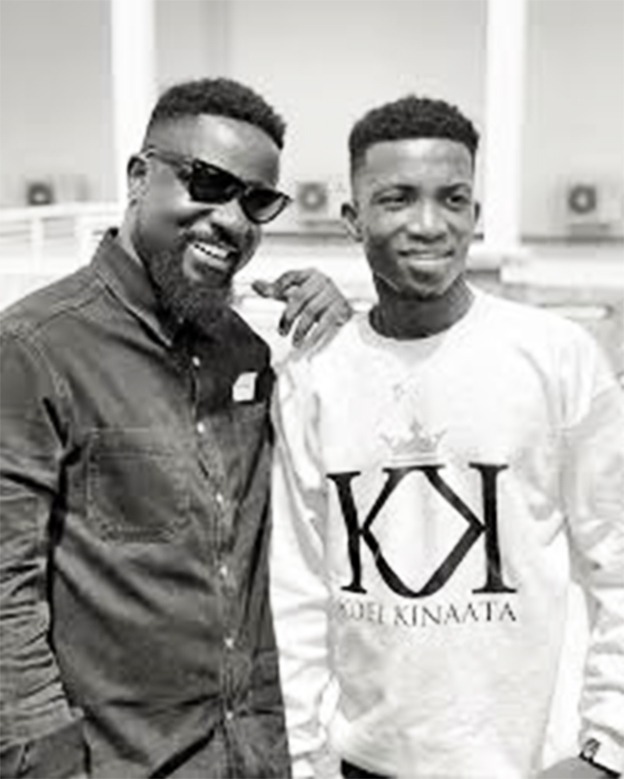
Multiple award-winning Ghanaian musician, Kofi Kinaata, has officially announced the artistes billed to perform at the 2025 edition of his annual Made in Taadi Concert, scheduled for Saturday, 20th December, 2025, at the Takoradi Sports Club.
The much-anticipated concert, which has grown into one of Ghana’s biggest end-of-year music events, is expected to attract over 50,000 music lovers from across Ghana and the diaspora, reaffirming Takoradi’s position as a major hub for arts, culture and entertainment.
Leading the impressive line-up is Kofi Kinaata, joined by some of the most influential names in Ghana’s music industry, including Sarkodie, Kuami Eugene, Medikal, Donzy, Oseikrom Sikani, Abochi, and several other top-tier and emerging artistes. The diverse selection promises an electrifying night of highlife, hiplife, rap, afrobeats and street anthems.
Since its inception, the Made in Taadi Concert has evolved beyond entertainment into a cultural movement that celebrates local talent, youth creativity and regional pride. Over the years, the concert has served as a platform for both established stars and rising artistes, while boosting tourism and economic activity within the Western Region.
Speaking through his team, Kofi Kinaata described the 2025 edition as a special one, noting that the concert remains his way of giving back to the city that nurtured his career. He emphasized that fans should expect top-class performances, world-class stage production and an unforgettable live music experience.
The event has consistently drawn patrons from Europe, North America and other parts of Africa, making it a key fixture on Ghana’s entertainment calendar every December.
With excitement already building online, music lovers are counting down to what promises to be another historic night in Takoradi, as Made in Taadi 2025 once again brings the world to the Oil City.
Ahead of the concert, the Team Move Management organizes youth seminar to empower the youthful fan base of the Artiste. This year’s is happening on 19th December, 2025 with speakers like Philip Osei Bonsu from Asempa FM, MP for Kwesimintsim Constituency, Fiifi Buckman, Kwame A. A. Opoku, Global Speaker, Rachel Gyabaah, Development Practitioner, amongst others.
Rwanda-backed M23 rebels said they would withdraw from the eastern Congo town of Uvira at the request of the US administration, which had criticized the seizure of the town last week as a threat to mediation efforts.
The rebels entered Uvira, on the border with Burundi, less than a week after the presidents of Congo and Rwanda met with US President Donald Trump in Washington and affirmed their commitment to a peace deal known as the Washington Accords.
US Secretary of State Marco Rubio said on Saturday that Rwanda’s actions in eastern Congo violated the Washington Accords and vowed to “take action to ensure promises made to the President are kept.”
Rwanda denies supporting M23 and has blamed Congolese and Burundian forces for the renewed fighting. A report by a United Nations group of experts in July said Rwanda exercised command and control over the rebels.
Corneille Nangaa, leader of the Congo River Alliance of insurgents that includes M23, said in a post overnight on X that the rebels would withdraw.
The move was a “unilateral trust-building measure in order to give the Doha peace process the maximum chance to succeed,” he said.
M23 is not party to the Washington-mediated negotiations but has been participating in separate, parallel talks with the Congolese government, hosted by Qatar.
A civil society activist in Uvira told Reuters on Tuesday that the rebels were still there.