Former Speaker of Parliament, Professor Mike Oquaye, has cautioned Ghana against approaching its lithium resources as a short-term rescue plan for a struggling economy, warning that weak bargaining positions and outdated thinking could once again leave the country resource-rich but financially constrained.
Speaking on Point of View with Benard Avle on Monday, December 15, 2025 Prof Oquaye took aim at the foundations of Ghana’s extractive sector agreements, arguing that the country has historically short-changed itself and risks doing so again with lithium, by fixing its benefits at the lowest possible level before negotiations even begin.
“It is very painful to say we have something that is of value and then, when you take this commodity, it doesn’t give me more than 5 percent,” he said.
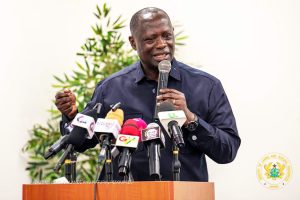
According to the former Speaker of Parliament, setting a cap that limits Ghana’s upside is not negotiation, but surrender.“You cannot fix anything downwards. You have to go to the upper limit or at least leave it open for negotiations,” he insisted.
Prof Oquaye argued that Ghana’s experience with gold, diamonds and bauxite shows a clear pattern: the country has consistently accepted arrangements that benefit foreign investors more than the nation itself.
In his view, the problem is not confined to one mineral or one agreement, but reflects a deeper failure to rethink how Ghana relates to its natural resources.
This failure, he suggested, helps explain why Ghana repeatedly finds itself under financial strain, forced to rely on external support rather than drawing sufficient long-term value from what lies beneath its soil.
Royalties Are the Wrong Argument
While much of the public debate has centred on whether Ghana should receive 5 percent, 10 percent or even 20 percent in royalties, Prof Oquaye dismissed the entire framing as misplaced.
He described royalties as a colonial inheritance, designed at a time when resources extracted from colonies were considered the property of foreign powers.
“Royalties were given because you are my colony,” he explained, adding “They gave you something small.”
According to the former Speaker of Parliament, that mindset no longer fits a modern, independent Ghana. What the country should be pursuing, he said, is ownership.
Central to Prof Oquaye’s argument was the insistence that Ghana’s contribution to any lithium project must be properly recognised.
He argued that the mineral itself is a form of equity and should be treated as such, alongside whatever financial investments companies bring. In his view, it makes no sense for Ghana to contribute the resource, commit funds, and still end up with little control over the final product.
“We turn around and say we don’t have any control over the company,” he said, questioning how Ghana could have no say over what is produced, how it is processed, or what is ultimately shipped out.
Who Really Has the Capital?
Professor Mike Oquaye also challenged the claim that Ghana must accept unfavourable terms because it lacks capital.
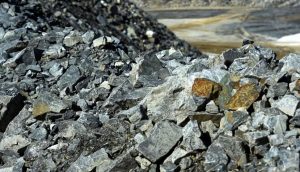
He argued that investors do not arrive with large sums already secured. Instead, they rely on government approvals, parliamentary backing and contractual guarantees to raise money elsewhere.
In that context, he suggested Ghana could raise capital alongside investors — or even lead the process because the resource itself makes the project bankable.
“We even have a better chance of raising money than them,” he argued, “because it is right down under our soil.”
Local Capacity Should Not Be Ignored
Rejecting the idea that Ghana lacks expertise, Prof Oquaye pointed to Ghanaian mining companies, engineers and service providers already operating across the country.He listed several Ghanaian and African firms active in mining services, arguing that they demonstrate local capacity that could be harnessed through a consortium model rather than side-lined in favour of foreign dominance.
According to him, the state should support such local participation, not discourage it. For Prof Oquaye, the most dangerous outcome would be exporting raw lithium while forfeiting downstream benefits.
He warned that Ghana risks watching its raw materials leave the country, only to buy back expensive finished products later, including batteries and power solutions essential for development.
“We want to buy power from them after they have taken all the raw material away and turned it into a very expensive commodity,” he said.
He linked lithium processing to jobs, clean energy, technology, rural electrification and future industries, arguing that these opportunities would be lost if Ghana focuses only on extraction.
In his view, Ghana’s repeated financial difficulties stem in part from decades of extractive arrangements that prioritised immediate relief over long-term national benefit.
If Ghana gets the lithium framework wrong, he warned, the country will once again surrender a strategic resource and still be left searching for solutions.
For more news, join The Chronicle Newspaper channel on WhatsApp: https://whatsapp.com/channel/0029VbBSs55E50UqNPvSOm2z