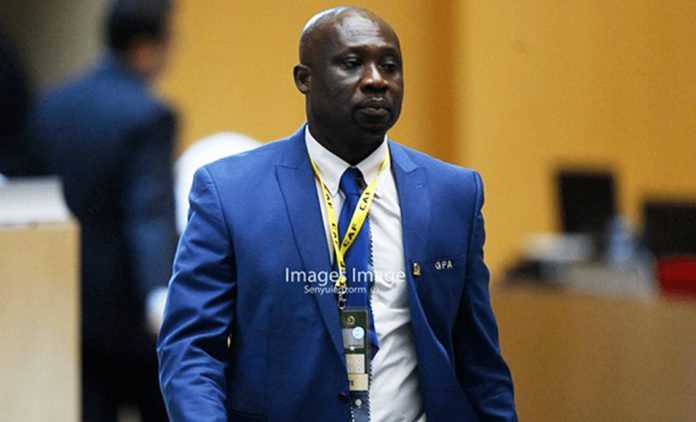
Former Ghana Football Association (GFA) Vice President George Afriyie has expressed confidence in the Black Stars’ ability to overcome all opponents in their 2026 World Cup group.
Ghana has been drawn in Group L alongside England, Croatia, and Panama for next summer’s tournament, which will be jointly hosted by the United States, Canada, and Mexico.
In an interview with Asempa FM, Afriyie acknowledged the quality of Ghana’s group rivals but insisted the national team has what it takes to secure victories against each of them.
“England, Croatia, and Panama are all beatable,” he stated.
Afriyie also emphasized the importance of arranging high-profile friendly matches ahead of the World Cup, noting that such games would give the team valuable preparation.
“Playing high-profile friendlies is the right approach ahead of the World Cup,” he added.
Ghana will begin their campaign against Panama on June 17 in Toronto, take on England in Boston on June 23, and conclude the group stage versus Croatia in Philadelphia on June 27.
After consecutive group-stage exits in Brazil (2014) and Qatar (2022), the Black Stars will be hoping to advance further in this edition.
The Eastern South Regional Police Command has swiftly restored calm in Boadua following a chieftaincy dispute that threatened to escalate across the community.
According to a police statement, on Saturday, December 14, 2025, the Bretuo Abusuapanin of Boadua reported that a group from the Boadua Aduana Family damaged the main entrance of the Boadua Chief’s Palace and forcibly entered to destroy the shrine in an attempt to take over the palace.
Police quickly intervened, restoring order at the palace. Eight suspects were arrested, including Baffour Kwame Agyei Kwabena Twum, Baffour Kwame Annor, Baffour Kofi Dankwa, Maxwell Frimpong, Eric Dankwah, Nana Kwaku Frimpong, Baffour Kwasi Ampaabeng, and Baffour Yaw Anya.
The suspects have been granted police enquiry bail and are expected to be arraigned on Thursday, December 18, 2025.
Dr Bryan Acheampong has expressed strong confidence in his chances of winning the New Patriotic Party’s (NPP) presidential primary, saying his optimism is anchored in historical precedent, careful preparation and a clear understanding of the current political climate.
“My confidence is grounded in history, preparation and a clear reading of the moment we are in,” Dr Bryan Acheampong said, drawing comparisons with past NPP leaders such as Dr K.A. Busia and former President John Agyekum Kufuor, both of whom secured the party’s presidential slot on their first attempt.
Dr Bryan Acheampong
According to Dr Bryan Acheampong, the success of those leaders was driven by timing, clarity of purpose and messages that resonated beyond their immediate base conditions he believes are present within the party today. “I believe this is such a moment for the NPP,” he said.
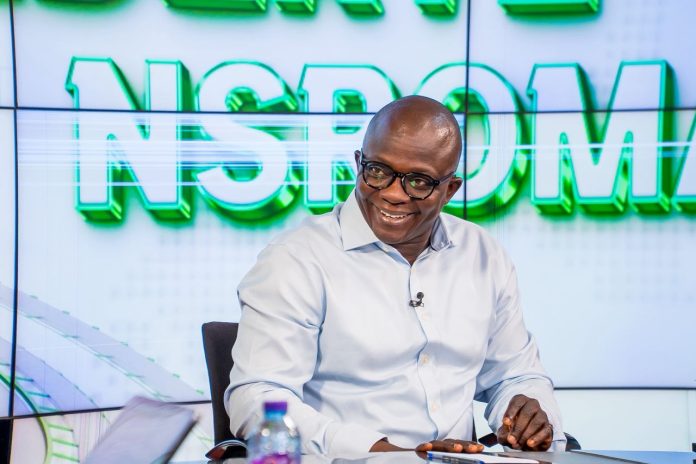
Speaking on UTV’s morning show yesterday, Adekye Nsroma, Dr Bryan Acheampong said his campaign had built significant momentum at the grassroots, insisting that he is well positioned to secure victory.
“I will win the primary. We have engaged directly with 90 per cent of the delegates. We have profiled 180,000 delegates and I can tell you with military-grade precision that we are winning. Give me a constituency and I’ll tell you where we stand today,” he stated.
He said feedback from the party’s base suggests a strong appetite for change, discipline and effective leadership.
“They want change, they want discipline and they want delivery. They want someone who can unify the party, galvanise resources and win power,” Dr Bryan Acheampong said, adding that the NPP is entering a new phase in its leadership journey.
On concerns about regional balance in party leadership, Dr Bryan Acheampong dismissed the idea that geography should influence leadership choice.
“Regional origin doesn’t determine destiny,” he said, citing the party’s history of leadership transitions across different parts of the country. He argued that competence, character, credibility, and the ability to win and govern effectively should be the key considerations for delegates and the wider electorate.
Dr Bryan Acheampong said the party now requires renewal to rebuild trust and reconnect with its grassroots.
“The NPP needs fresh leadership to rebuild trust, reconnect with the base, and win again,” he said.
Reflecting on his political career, Dr Bryan Acheampong described his four terms in Parliament as instrumental in shaping his leadership outlook.
“They have taught me how politics really works in building consensus, managing interests and standing firm when it matters,” he said, adding that his experience across party lines and during challenging moments has prepared him to lead decisively.
“I understand the grassroots, the parliamentary caucus, and the national political terrain. That experience has prepared me to lead the party, win elections and govern with authority,” Dr Bryan Acheampong said.
Nana Kobina Nketsiah V,President WRHC (left) and Veep Kwesi Agyemang
The President of the Western Regional House of Chiefs (WRHC), Nana Kobina Nketiah V, has mounted a strong case for a complete ban on the export of raw rubber, warning that the government’s proposal to merely restrict such exports would weaken domestic industries and undermine Ghana’s broader industrialisation agenda.
Mrs Elizabeth Ofosu-Adare – Minister for Trade and Industry
According to Nana Kobina Nketiah V, who is also the Paramount chief of Essikado Traditional Area, the continued export of raw rubber, particularly from the Western Region, which remains the country’s major rubber-producing enclave, runs counter to the government’s own policy objectives aimed at value addition, job creation and local content development.
Speaking at a general meeting of the House in Sekondi, on Monday, he said the chiefs were unequivocal in their demand for an outright ban, not a partial limitation, on the export of natural rubber in its raw form.
“It was explicitly stated in the 2026 budget statement, and I took note of it, that the discussion was about natural rubber.
“However, the way the Minister framed it suggested a restriction on the export of raw rubber. We are not asking for a restriction. We are asking for a total ban on the export of raw rubber,” Nana Kobina Nketiah V said.
He explained that a ban would support domestic processing, feed local rubber-based industries and align fully with the government’s own industrial transformation programmes, including initiatives under the One District, One Factory (1D1F) and the 24-Hour Economy policy framework.
It is on record that local processors like Ghana Rubber Estate Limited (GREL) in the western region have been starved of raw material to process as a result of the export of the raw material. Due to that, the company has cut down half of it staff and also reduced its three shift system to one.
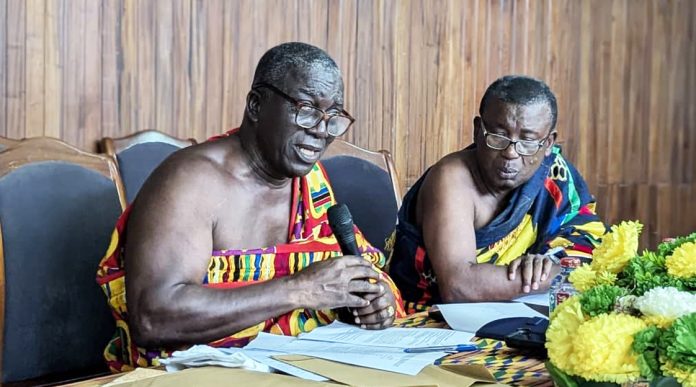
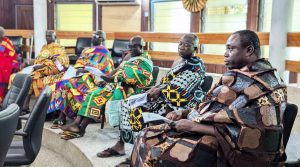
Members of the WRHC
One local processor in the central region, according to Association of Natural Rubber Actors of Ghana (ANRAG) for instance, has run aground because of absence of raw material to process. Recently, a parliamentary select committee on Trade and Industry at a tour of local processors in the region threw its weight behind government decision to restrict raw rubber export in 2026.
The committee said it was ready to help government draft the LI and pass it to make export of raw rubber restricted.
But the revered traditional ruler warned that exporting raw rubber not only deprives the country of value-added revenue, but also directly contradicts government’s declared policy direction, while leaving domestic processors starved of critical raw materials.
“Exporting raw rubber directly contradicts the government’s stated policy direction and undermines the domestic industry.
“If we are serious about industrialization, then we must process our rubber here instead of exporting it in its raw state,” the paramount chief said.
Nana Kobina Nketiah V further called for stricter enforcement of existing laws and regulations governing the export of raw materials, stressing that the challenge lies not in the absence of policy, but in weak implementation.
“There are laws against exporting raw materials in their raw form. We must back government and also sit down with them to ensure that the regulatory framework works,” he noted, adding “This is not only to the benefit of the producing areas, but to the benefit of the whole country.”
Drawing parallels with the mining sector, Nana Kobina Nketiah V lamented what he described as a long-standing pattern of extracting resources from host regions without commensurate local processing or industrial development.
He cited recent public concerns over plans to site a national gold refinery in Accra, rather than in mining communities in the Western Region, describing such decisions as economically and socially unjustifiable.
“We have heard complaints that a gold refinery is being planned for Accra, while the gold itself is mined here.
“If the aim is to stop illegal mining and create jobs, then we must rationalize why such facilities are not located in the producing regions,” he said.
Natural rubber being tapped from rubber tree
According to him, the rubber sector presents Ghana with a clear opportunity to correct past mistakes by ensuring that value addition takes place where the raw materials are produced, thereby creating employment, boosting local economies and reducing rural-urban migration.
Supporting the position of the WRHC President, Awulae Angamatuo Gyan, Paramount Chief of Gwira Traditional Area, disclosed that traditional authorities in the region have repeatedly engaged the Ministry of Trade and Industry and the 24-Hour Economy Secretariat, regarding the export of raw rubber.
“As chiefs, we have on several occasions moved to the Ministry of Trade and Industry and also engaged the 24-Hour Economy Secretariat on the issue of raw rubber exports,” Awulae Angamatuo Gyan stated.
He said although successive engagements had not yielded the desired results, chiefs in the region remained hopeful that government’s current indication to restrict raw rubber exports could be a stepping stone towards a full ban.
“We have heard of the exportation of raw rubber for years and have spoken extensively about it. We are now looking forward to seeing how the law will be shaped and how government’s new position will be implemented.”
For his part, Awulae Attibrukusu, also a respected member of the Western Regional House of Chiefs and Paramount Chief of Axim Traditional Area, welcomed government’s decision to begin restricting raw rubber exports, but stressed that the region must adopt a united front to push for a complete prohibition.
“We are glad that government has indicated its intention to restrict the exportation of raw rubber. However, as a region, we must come together and meet the relevant authorities to clearly state our resolve to have a total ban.”
He proposed a collective petition by traditional leaders, opinion leaders and other stakeholders in the Western Region to formally communicate their position to government and Parliament.
“We must move together, write and petition to show our determination to have raw rubber totally banned,” Awulae Attibrukusu added.
The Western Region remains Ghana’s leading producer of natural rubber, with several large plantations and smallholder farmers depending on the sector for their livelihoods. Chiefs in the region argue that banning raw rubber exports will not only stimulate local processing, but also create thousands of direct and indirect jobs, enhance government revenue and ensure sustainable industrial growth.
Present at the General House meeting were; Awulae Amihere Kpanyile III, Paramount chief Eastern Nzema, Tetretteh Okuamoah Sekyim, Paramount Chief of Wassa Akropong and Osagyefo Kwaw Entsie, Paramount chief of Mpohor.
The rest are Obrempong Hima Dekyi, Paramount Chief of Upper Dixcove and Nana Kwesi Agyemang, Paramount Chief of Lower Dixcove among others.
Flagbearer aspirant for the New Patriotic Party’s (NPP), Dr Mahamudu Bawumia is leading the race to become the New Patriotic Party’s (NPP) next presidential flag bearer, according to a survey conducted by the Konrad Adenauer Stiftung (KAS) Ghana ahead of the party’s January 2026 presidential primary.
The survey, which sampled more than 18,000 respondents, shows Dr Bawumia emerging as the preferred candidate among both NPP delegates and non-delegate citizens, placing him as the clear front-runner at this stage.
The study included responses from over 5,000 NPP delegates and more than 13,000 non-delegates, drawn from across the country.
KAS Ghana said the sample reflects a diverse cross-section of the population, with representation across age groups, geographical locations, educational and employment backgrounds, religious affiliations and ethnic groups.
Respondents were largely within the 26–55 age range, with 41 percent from rural areas. Religious affiliation was recorded as 74 percent Christian and 22 percent Muslim.
Delegates’ Choice
Among NPP delegates, 67.8 percent said Dr Mahamudu Bawumia is best suited to be the party’s flagbearer if the primary were held today. He was followed by Kennedy Agyapong with 21.3 percent and Dr Bryan Acheampong with 6.6 percent, while other aspirants polled less than five percent.
On leadership qualities, 69.7 percent of delegates identified Dr Bawumia as the political figure who best represents the qualities they desire in the next flagbearer. Kennedy Agyapong polled 22.5 percent, while Dr Bryan Acheampong recorded 6.0 percent.
Views of Non-Delegates
Among non-delegate respondents, Dr Bawumia also led the field. 50.6 percent said he is best suited to be the party’s flagbearer, followed by Kennedy Agyapong with 29.8 percent and Dr Bryan Acheampong with 8.7 percent.
On leadership qualities, 52.9 percent of non-delegates selected Dr Bawumia, while 31.2 percent chose Kennedy Agyapong and 7.9 percent chose Dr Bryan Acheampong. Other candidates recorded small single-digit figures.
What Respondents Want in the Next Flagbearer
The survey found that respondents prioritise leadership ability over identity considerations. Competence emerged as the most important quality, accounting for 24.9 percent of responses, followed by experience (20.3 percent), vision (16.9 percent), accessibility at the grassroots level (14.1 percent) and charisma (8.5 percent).
Identity factors such as age, gender, religion and tribe together accounted for less than one percent of responses.
According to the survey, 84.5 percent of NPP delegates said they are very interested in the upcoming primary. Among non-delegates, 37 percent indicated they are very interested.
In addition, 91.6 percent of NPP delegates said they are likely or very likely to vote in the primary.
About KAS Ghana
KAS Ghana is a political foundation that promotes democracy, good governance and political dialogue.
The foundation said the survey forms part of its commitment to providing evidence-based insights into Ghana’s democratic processes and political debate.
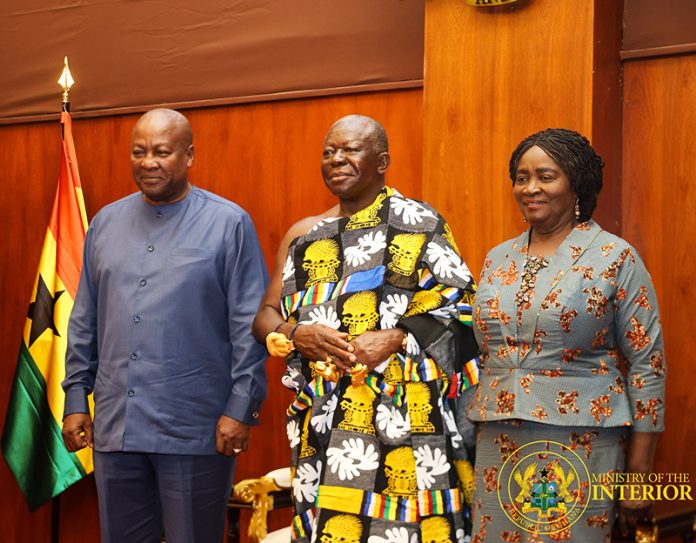
Otumfuo in a group picture with President Mahama and Veep Opoku Agyeman after presentation of the Bawku mediation report
The Bawku conflict mediator, His Royal Majesty Otumfuo Osei Tutu II, has concluded that the law favours the Bawku Naaba, Zugraan Asigri Aburgrago Azoka II. He has thus recommended that the Nayiri, King of Mamprugu, Naa Bohaga Mahami Abdulai Sheriga, accept the law that legitimises the authority of Asigri Aburgrago Azoka II as the chief of Bawku and head chief of the Kusasi Traditional Area.
Otumfuo has also urged the government to enforce the law “until changed in accordance with the 1992 constitution or reviewed by the Supreme Court of Ghana.”
Otumfuo said “The government must enforce the laws distinctly with any person challenging the lawful authority of the Aburgrago Azoka. This is critical to the restoration and maintenance of peace in the Kusasi traditional area.”
At Jubilee House on Tuesday, 16 December, 2025 the Asantehene, Otumfuo Osei Tutu II, presented his report to President John Dramani Mahama, following the mediation process on the protracted issue and gave the chronology of events from the genesis of the conflict, including the various court decisions and government actions to date.
According to him, enforcing the current position of the laws of Ghana and the position of the Supreme Court on the Bawku conflict coincide with the path to lasting resolution.
“Asigri Aburgrago Azoka II is the lawful chief of Bawku and the paramount chief of the Kusasi traditional area. He has been a member of the National House of Chiefs for about 40 years. He has been duly gazetted,” Otumfuo said.
The Asantehene, Otumfuo Osei Tutu II, began his remarks by acknowledging that his report did not determine who was right or wrong, but rather, “present the facts as they are.”
While at it, he said “I have come to the conclusion that the path to a lasting resolution coincides with the enforcement of the current position of the law, by the laws of Ghana and by the constitution enacted in 1992 and by the position of the Supreme Court that the matter should never be litigated before it again.
“His right to rule should not be disturbed, save through a judicial and constitutionally recognised process and, whichas already indicated, appears to be, if any, a review of the pronouncement of the Supreme Court of the Republic of Ghana stated hearing.
“If the pronouncement of the Supreme Court appears not clear enough, a remedy may be sought, if available, for clarification of the same by the Supreme Court,” he added.
REALITY
Having heard both parties, Otumfuo read from his report that he had impressed upon the Nayiri that current realities make it more pragmatic that all accept Kusasi’s rule over the area.
He added that the PNDC Law 75, the 1992 Constitution and the ruling of the Supreme Court in Ibrahim Adam Zangbeo versus Nicheama Aburgrago and Attorney General rendered the argument that Abugrago Azoka was not the Bawku Naaba untenable, and he exercises jurisdiction over the entire Kusasi area.
RESPONSE NAYIRI
In his report, the Asantehene indicated that in spite of the clarity of the law on the matter, he continued to engage the Nayiri on the terms of concessions presented by the latter to him.
“Essentially, he asked for a number of towns in the Kusasi area to be transferred to him to enskin,” Otumfuo stated, adding that the terms created the impression that those towns would prefer to be under the Nayiri, essentially, including Bawku.
However, after meeting the various chiefs of the towns and communities affected, the Otumfuo said he came to the conclusion that there has been significant reconciliation among the various Kusasis and Mamprusis in all the other towns, but, unfortunately, he added that the law as it stands now makes it impossible.
GOVERNMENT
Following the mediation led by the Asantehene and the presentation of his report, the next step is to reconcile both factions.
The Asantehene yesterday urged the government and other stakeholders to do well to reconcile the people while advocating for peace.
Meanwhile, he indicated that people in these areas possess guns, and this situation needs to be addressed. He suggested that the government could mobilise support and convince the people to exchange the guns for some amount of money.
President Mahama, who commended his predecessor, former president Nana Addo Dankwa Akufo-Addo and the Asantehene, committed to taking action on the report.
He stated that the government would, in 24 hours from yesterday, issue its conclusive position on the matter.
He said he had impressed upon the Nayiri to accept that recognition by law in order to ensure lasting peace and eliminate the national and international scrutiny.
The Supreme Court has adjourned the hearing of an application challenging the Kpandai parliamentary election rerun to January 13, 2026, effectively placing a temporary halt on preparations for the rerun.
The adjournment followed a prayer by the New Patriotic Party (NPP) parliamentary candidate for Kpandai, Matthew Nyindam, who argued that the first interested party in the matter had not been served with the relevant court processes.
The case, titled Nyindam v Tamale High Court, is seeking an order of certiorari to quash the judgment delivered by the High Court in Tamale, presided over by Justice Emmanuel, on November 24, 2025 together with all proceedings founded on that decision.
Mr Nyindam was represented by former Defence Minister, Dominic Nitiwul, who informed the court that the applicant was unwell.
Gary Nimako Marfo appeared for the applicant, while Justin Amenuvor represented the Electoral Commission (EC).
Moving the application, Mr Nimako Marfo told the court that the applicant had filed a motion on notice praying the Supreme Court to quash the Tamale High Court judgment.
He further urged the court, pursuant to Section 9 of the Evidence Act, to take judicial notice of a press release issued by the EC, indicating its intention to proceed with a rerun of the Kpandai parliamentary election.
He explained that despite several attempts, bailiffs had been unable to serve the first interested party, alleging that they were prevented from effecting service when they visited his residence.
As a result, the applicant sought leave of the court to serve the processes by substituted service.
The Supreme Court, after considering the application, held that there was sufficient justification to order substituted service on the first interested party.
The court directed that service be effected by posting the processes on the digital address NA-0810-7639 at Aatiejeni in Kpandai, the notice board of the High Court in Tamale, the notice board of the District Court in Kpandai, and through the WhatsApp number provided to the court.
The court ordered that the notices should remain posted for seven days, after which the first interested party would be deemed duly served.
In the meantime, and in view of the pending motion for certiorari and the EC’s decision to conduct a rerun on December 30, 2025, the Supreme Court ordered the Electoral Commission to suspend all arrangements for the Kpandai parliamentary election rerun to avoid overreaching the court.
The motion for certiorari was consequently adjourned to January 13, 2026, for hearing. The court further directed the first interested party, upon service, to contact the Registrar of the Supreme Court for the necessary processes.
The panel of judges hearing the matter is made up of Justices Gabriel Pwamang, Omoro Tanko Amadu, Yonny Kulendi, Samuel Asiedu and Henry Anthony Kwofie.
About a fortnight ago, Ghana’s Supreme Court directed Wesley Girls’ Senior High School to respond to a lawsuit filed by Shafic Osman, a private legal practitioner, who alleges systemic religious discrimination against Muslim students in the Methodist-founded but state-assisted institution. The suit seeks accommodation for Islamic religious practices, including the wearing of the hijab and the observance of fasting.
Even before the apex court’s directive, the matter had ignited intense public debate. Major Christian bodies including the Christian Council of Ghana, the Catholic Bishops’ Conference, the Anglican Church and the Methodist Church of Ghana were swift to defend the school’s autonomy. Their argument is straightforward: mission schools, though publicly funded, retain their faith-based identities and cannot be compelled to adopt practices that contradict their foundational doctrines.
The Attorney-General echoed this position, asserting that Wesley Girls’ remains a church-owned institution with the constitutional latitude to enforce rules aligned with its Methodist ethos. Yet the counter-argument, forcefully articulated by the plaintiff and sections of the public, insists that public subvention carries with it an obligation to uphold inclusivity and religious freedom in line with Ghana’s constitutional guarantees.
This tension between institutional autonomy and individual religious rights lies at the heart of the controversy. But beyond the legal contest, deeper social fault lines are beginning to show.
Former Tamale Central MP and seasoned legal practitioner, Alhaji Inusah Fuseini, has issued a timely caution. Speaking on Joy FM’s widely followed current affairs programme, News File, he warned that allowing such a sensitive matter to be settled purely through judicial pronouncement risks aggravating religious tensions in an otherwise cohesive society. While acknowledging the courts’ constitutional mandate, he stressed that the law, when applied rigidly to emotionally charged religious issues, can unintentionally fracture social harmony.
His concern finds a sobering echo in recent security assessments. Renowned international relations and security expert, Dr Vladimir Antwi-Danso, raised similar alarms at the Centre for Policy Scrutiny’s (CPS) high-level programme titled: “Fighting Terrorism in the Middle East and Africa,” held in Accra. The forum brought together leading academics, diplomats, security experts and governance specialists to examine the evolving nature of global and regional security threats.
In his presentation, Dr Antwi-Danso underscored a disturbing global trend: religion has overtaken ideology as the principal driver of contemporary terrorism. Extremist networks, he explained, now rely heavily on manipulated interpretations of faith to recruit, radicalise and mobilise vulnerable populations. According to him, the ideological motivations that once defined terrorism are steadily giving way to a more potent and dangerous religious fervour.
His most sobering warning focused on West Africa. Dr Antwi-Danso described the Sahel as the epicentre of Africa’s growing belt of instability, where jihadist groups have exploited weak governance, unresolved historical grievances and vast ungoverned spaces to advance a sophisticated politico-religious agenda. Ghana’s neighbours – Burkina Faso, Togo, Benin and Côte d’Ivoire have already borne the brunt of this menace and while Ghana has so far avoided major attacks, the risk of spillover remains acute, particularly along our northern borders.
It is against this backdrop that The Chronicle aligns itself with the call by Alhaji Fuseini and the Christian Council of Ghana for an out-of-court resolution of the Wesley Girls’ matter. This is not a retreat from justice, but recognition that dialogue and compromise are sometimes better guarantors of national cohesion than legal absolutism.
Ghana’s long-standing tradition of religious tolerance must be protected with care. The Chronicle, therefore, urge both the plaintiff and the Methodist Church Ghana to continue engaging in good faith, mindful that how we resolve this dispute may either reinforce our unity or expose dangerous fault lines. In matters of faith and coexistence, the courts alone cannot be the ultimate arbiters. National harmony must remain the higher calling.
As l set out to write this piece, my attention was drawn to the effect that the same brand of Toyota Voxy is christened NOAH.
That set me wondering as anything associated with Noah from the biblical times, connotes safety. But here we are, the duo identities have come under public scrutiny lately for the havoc they have been wrecking on innocent commuters and other road users on our perilous road network.
About three months ago, l used the Accra- Kumasi stretch and witnessed, at least, two incidents involving the duo – one had run into the bushes somewhere along the route and another hit at the rear at Enyinasi in the Eastern Region.
Other accidents/incidents with casualties and severe injuries involving the duo has been reported on the Accra-Takoradi, Techiman-Sunyani-Tamale and Kumasi-Tarkwa routes, among others. A traveler describes the duo as simply “Perfect and Fast Killers”.
WHO IS TOYOTA VOXY/NOAH?
My checks has it that it is typically a 7/8-seater. It comes with a 2.0L petrol engine, specifically, a 1986 cc engine producing 168 horsepower and 202 Nm of torque. Further, it is 4696, 1730, 1855mm in length, width and height respectively and has a ground clearance of 15cm – yah, a cute destroyer.
INFLUX INTO GHANA
From nowhere, these vehicles have suddenly inundated our transport landscape.
As l write, hundreds have been cleared from the Ports and equal numbers awaiting either clearance from the Ports and/or are on the high seas.
At the major lorry stations such as Circle in Accra, Asafo market in Kumasi, one can count as much as forty at any given hour awaiting to either load or offload.
ALTERED STEERING
My checks has it that, most of these “small monsters” dubbed Toyota Voxy/Noah had had their steering wheel altered either locally or in Dubai where most are imported from, that is from Left Hand Drive (LHD) to Right Hand Drive (RHD).
l have very serious issues with those altered locally and for good causes and reasons. Our regulatory, compliance and enforcement regimes can best be described as non-existent. Everybody does what pleases him/her and takes no responsibility. This is to say, DVLA that, in my candid estimation, has relegated its regulatory mandate to the background and embraced the “Cash Cow ideology” and its allied bodies like Ghana Standard Authority (GSA) will not take the trouble to probe the suitability or otherwise of these altered steering systems before certification and subsequent registration.
It becomes more pronounced when such vehicles are being used for long distance trips with drivers who are risk lovers and have nothing to loose at the helm.
Dear reader, in my preparatory interrogations before piecing this piece together, l interacted with some lorry station operatives and their account thereof is not only revealing, stunning, sickening but starling – that the steering of one disengaged at the lorry station after a long journey when the driver only tried to properly park the car. Imagine the consequences thereof if this had occasioned whilst the vehicle was in motion? Your guess is as good as mine. We would have witnessed catchy headlines such as “Eight Perish In A Gory Accident”.
Yah, you read right – the ground clearance is just 15cm and with the sort of unbridled luggage they carry, the clearance could be less.
Situating it in our potholes, sorry ooo, manholes ridden roads, l am of the considered opinion that the authorities must clinically interrogate these flying killers that have suddenly found themselves in the public transport mix.
National Security, Ghana Standard Authority (GSA), National Road Safety Authority (NRSA), the safety units of Ghana Highways Authority (GHA), Department of Urban Roads and, indeed, the Ministry of Transport must take up this issue before it gains topical status.
l wonder and, in fact, it beats my very comprehension why NRSA, with its Act and enabling Legislative Instruments, has not sought to address this issue in collaboration with Ghana Standard Authority and DVLA but are sitting aloof as l piece and is allowing these vehicles to devour innocent souls.
The mere fact that we are in a liberal state does not warrant these vehicles being let loose to wreck havoc all over. At least there must be a defined radius within which, if it is to operate, commercially ply.
I pray that this time round, the authorities will not wait for the casualties figure to soar before they act – they have had the hindsight of my prompting. This will not be the first time such restrictions is being imposed on a class of vehicles, it was done when Nissan Urvan turned killers.
Till NRSA and its allied safety units wake up from their deep slumber, l rest my Fractured Peace.
Written by Osei Kwabena Esq., Etia Street, Asante Edfiduase
The views expressed in this article are the author’s own and do not necessarily reflect The Chronicle’s stance.
At least nine people were injured on Monday after violence broke out between farmers and herders in Loko community of Nasarawa State.
According to a report by Zagazola Makama, the clash happened around noon on December 15 in Bakono village, within the Loko area.
The trouble reportedly started after a disagreement over alleged damage to a farm.
Sources said the farmland involved belonged to a man identified as Bako Usman. The disagreement later escalated into a confrontation between the two groups.
The sources confirmed that five farmers and four herders sustained injuries during the clash.
Security personnel were quickly deployed to the area to restore calm.
All the injured persons were taken to the General Hospital in Loko, where they were admitted for treatment. Hospital sources said they are responding to care.
Community sources also disclosed that a stakeholders’ meeting has been convened to prevent the situation from worsening and to find a lasting solution to the dispute.
According to the sources, security agencies are carrying out confidence-building patrols in the area.
They added that the situation is being closely monitored and that the community is now relatively calm.