Home Blog Page 380

Bono Police Declare Total War On Robbery Gangs

0
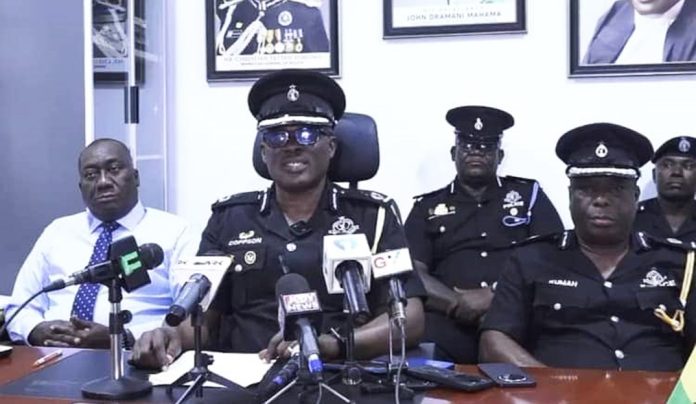
DCOP Joshua Coppson addressing the media

The Bono Regional Police Command has issued a stern warning yet to the criminal elements, announcing an uncompromising and sustained war against robbery gangs and organised crime syndicates operating in the region.

Addressing  a news conference in Sunyani, Regional Commander, DCOP Joshua Coppson declared that the Bono Region was no longer a safe haven for criminals, insisting that the police are fully prepared to “hunt down, break down, and neutralise” all the gangs terrorising communities. His message was clear and forceful: “Criminals can run, surrender or be smoked out – but they will not escape justice.”

DCOP Coppson disclosed that the Command had recorded major breakthroughs with several notorious suspects already arrested in special intelligence-led operations.

This he said had disrupted criminal activities along major highways and within vulnerable communities. As part of these decisive actions, key gang leaders and accomplices, DCOP Coppson noted, have been picked up, interrogated, charged and put before the courts in Sunyani and Fiapre.

One suspected ringleader, Johnson Amponsah Kwame Diawuo, together with his accomplices Shadrach Owusu and Kwafo Samuel, appeared before the Fiapre Circuit Court on charges of conspiracy and attempted robbery.

Presiding Judge Her Worship Akua Adoma Addae wasted no time in remanding them into police custody to reappear on 22nd December, 2025 sending a direct signal that the judiciary is fully aligned with the police in stamping out violent criminality.

In a related operation, the Bono Police arrested Latif Mustapha, alias Star Boy, and Mosby Owusu, after a dramatic attempt by Latif to hide in the ceiling of his residence.

A search of his room uncovered a disturbing collection of weapons and items, including military camouflage uniforms, a toy Glock pistol, a Taser, knives, talismans, laptops, pepper spray and soft foam bullets.

Further investigations revealed a Hungarian-made R-9 Parabellum pistol loaded with live ammunition, allegedly sold to Mosby for GHS 9,000.

Both suspects were arraigned before the Sunyani District Court B, where His Worship Eric Daning also remanded them into custody to reappear on December 15, 2025.

Another breakthrough came with the arrest of Kofi Iddrisa and Baba Kumi Foster at Ewiakrom, near Nkrankwanta.

The duo is believed to be involved in receiving and transporting stolen motorcycles and tricycles to neighbouring Côte d’Ivoire.

Three motorcycles and a tricycle were retrieved as exhibits. They have been granted police enquiry bail pending further investigations.

DCOP Coppson revealed that the Command is actively pursuing the remaining accomplices who have gone into hiding.

He indicated that investigators are following solid leads and will not relent until every member of the criminal syndicates is arrested and every illicit weapon retrieved.

“We have activated all intelligence channels. No fugitive involved in these crimes will be allowed to regroup or resurface. We are closing in,” he assured.

Calling for stronger collaboration from the public, the Bono Police Commander urged residents, traditional authorities, transport unions and community watchdog groups to provide timely and credible information that can help track down criminals.

He noted that community support was essential for sustaining gains made in the fight against organised crime. “The safety of this region is a shared responsibility. We will do our part and we urge the public to stand with us,” he added.

He pledged the Bono Regional Police Command’s readiness to reclaim peace, restore public confidence and dismantle every criminal network operating within the region.

By Edmond Gyebi

Editorial: Crackdown On Illegal Foreign-Exchange Trading Is Good But…

0
Editorial

The Criminal Investigation Department (CID) has arrested 41 suspects in a major crackdown on illegal foreign-exchange (forex) trading in Accra, recovering over GH¢1.2 million in cash during the operation.

The joint raid, carried out with the Bank of Ghana (BoG) targeted known forex “black-market’’ hotspots such as Tudu, Circle, the Airport area and Cantonments. At a press briefing, CID Director-General, Lydia Yaako Donkor, revealed that 29 suspects (including Togolese, Beninois, Nigerians and Ghanaians) were arrested in the initial swoop, with 12 more taken into custody during a follow-up raid.

Alongside the arrests, authorities seized GH¢1,266,770 in cedis, 100,000 CFA francs, 3,383,570 Nigerian naira (some stored digitally) and US $5,105. All cash exhibits have been secured and will be handed over to BoG, with suspects to be charged and brought before court.

The Chronicle finds the mass arrests by the CID and BoG commendable and long overdue. For years, black-market foreign exchange trading has thrived in Accra’s crowded markets and street corners with the kind of illicit activity that undermines formal economic systems.

The operation sends a strong signal that Ghana’s authorities are serious about enforcing the laws laid out under the Foreign Exchange Act, 2006 (Act 723), which prohibits foreign-exchange business without a valid licence from BoG.

But applauding the arrests should not blind us to the deeper structural malaise that fuels the black market. Economic experts, including Godfred Bokpin of the University of Ghana, warn that thriving parallel-market forex activity stems not simply from criminal opportunism, but from a widespread distrust of official exchange-rate mechanisms.

Many Ghanaians, businesses and individuals alike, view rates quoted by banks and licensed forex bureaus as artificially managed, lagging behind real demand and supply. Indeed, the informal forex market continues to draw customers because it offers convenience, quick transactions, flexible pricing and no paperwork. As long as official channels remain slow, bureaucratic, or fail to meet demand, people will gravitate toward illicit dealers.

The damage, however, extends far beyond individual deals. When forex trading is pushed underground: The value of the Ghana cedi weakens, as demand for foreign currency outstrips what official channels can supply. This accelerates inflation, raises import costs and erodes purchasing power.

The informal system becomes a channel for money-laundering, tax evasion, and other illicit financial activities, undermining transparency and regulatory oversight. Businesses especially import-dependent small and medium enterprises find it harder to plan or budget, because of unpredictable access to foreign currency and volatile exchange rates.

What the arrests do, therefore, is not just punish a handful of wrongdoers. They are part of a broader effort to restore trust in the formal forex market, to reinforce the primacy of the Ghana cedi as the sole legal tender, and to bring transparency back into currency exchange.

Yet if Ghana is serious about stamping out the “parallel” forex economy permanently, enforcement alone will not suffice. What is needed urgently is structural reform: Official channels must become more efficient, responsive, and accessible.

This means streamlined processes at licensed forex bureaus and banks, more liquidity and better services that meet real demand.

Transparency in rate-setting: exchange rates quoted by official bureaus must reflect real supply/demand conditions and institutions must rebuild public confidence in their integrity.

Stronger public education: many do business informally because they believe the unofficial rates are “fairer” or more real.

Robust public information campaigns are required to explain why dealing outside the system imposes hidden costs on the currency and ultimately on citizens.

Moreover, the recent policy shift by the government mandating that all government contracts be priced strictly in cedis further underscores the urgency of these reforms.

It is a vital move to defend the cedi and reduce overreliance on foreign currencies in the domestic economy.

The crackdown on 41 undocumented forex traders is a necessary jolt. But if Ghana is to decisively end the era of black-market forex, the authorities must go beyond enforcement.

They need to restore trust, improve official systems, and show that the regulated market can meet citizens’ real-world needs.

Otherwise, today’s arrests will just be a temporary disruption, and the underground forex economy will bounce back because the problem was never just about illegal dealers. It was, and remains, about structural failure in the regulated system.

In short: arresting black-market operators is essential. But more essential still is earning the public’s trust by fixing the official forex system so well that no one wants or needs to trade on the streets again.


Tinubu Calls For Stronger Measures To Address Farmer–Herder Conflicts

0
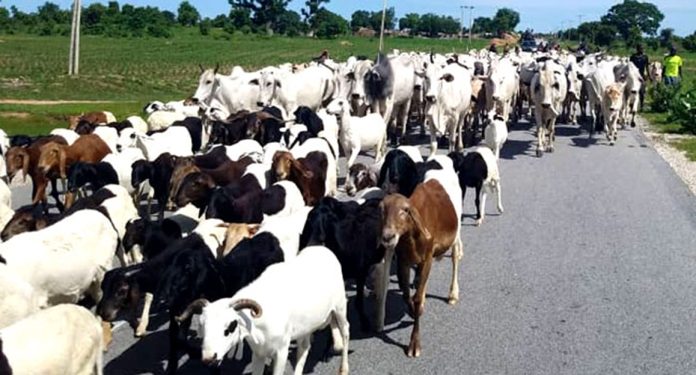
Cattle rearers with their livestock on the road

President Bola Tinubu has called for strong action to address the constant conflict between farmers and herders in the country.

Speaking just before the Federal Executive Council (FEC) meeting commenced at the State House in Abuja on Wednesday.

Tinubu asked Vice President Kashim Shettima, working with the National Executive Council (NEC), to look for villages or grazing reserves that can be salvaged or rehabilitated into ranches and livestock settlements.

He said, “We must eliminate the possibility of conflicts and turn the Livestock reform into economically viable development. The opportunity is there, let’s utilise it.

“And it is in NEC, if we exercise the constitutional requirement which states that the land belongs to the states, whichever one they can salvage, convert to a livestock village, let us stop this conflict area and turn it into economic opportunities and prosperity.” Credit: channelstv.com

Ex-army spokesman backs Nigerian troop deployment to Benin, cites regional security risks

0
President Bola Tinubu visits the Nigerian Troops stationed in Bissau

A former spokesman of the Nigerian Army, Brigadier General Usman Sani, has backed the country’s deployment of troops to help stabilise the Benin Republic following a failed military coup in the Francophone nation.

According to Sani, as a request from the Benin Republic, Nigeria, as neigbhours needed to step in to avoid an escalation.

“Now, the problem— any slightest problem in any of these countries has corresponding consequences on Nigeria, regardless of the fact that sometimes some of the countries are not even as populous as a state out of the 36 states of the federation,” Sani said on Wednesday’s edition of Channels Television’s The Morning Brief.

“But that notwithstanding, take, for instance, if there is any problem—the issue of a humanitarian problem, for instance. How do we contend with refugees from the Benin Republic? And remember again, there is an understanding or kind of relationship in terms of commerce, trading, and all the rest of it; it will affect the economy and the rest.”

The Senate on Tuesday approved President Bola Tinubu’s request for the deployment of troops.

During the plenary session, the lawmaker backed their approval with Section 5, Part 11 of Nigeria’s Constitution and voted unanimously in favour of the deployment.

Senate President Godswill Akpabio tagged the move as a step in the right direction, noting that instability in any neighbouring country poses a threat to the entire West African region.

“An injury to one is an injury to all,” the lawmaker said.

The approval has been met with stiff criticism from Nigerians who believe that with the myriad of security challenges facing the country, sending troops to neighbouring Benin Republic is a misstep.

However, Sani believes the Federal Government’s decision is needed to help in the stability of democracy and the West African region.

“So people should understand the reason why there is a need to stabilize democratic governance in that country. Beyond the initial intervention of quelling the coup, there is a need to also stabilize [Benin Republic],” the former Army spokesman said.

Credit: channelstv.com

Adeleke emerges Accord Party governorship candidate

0
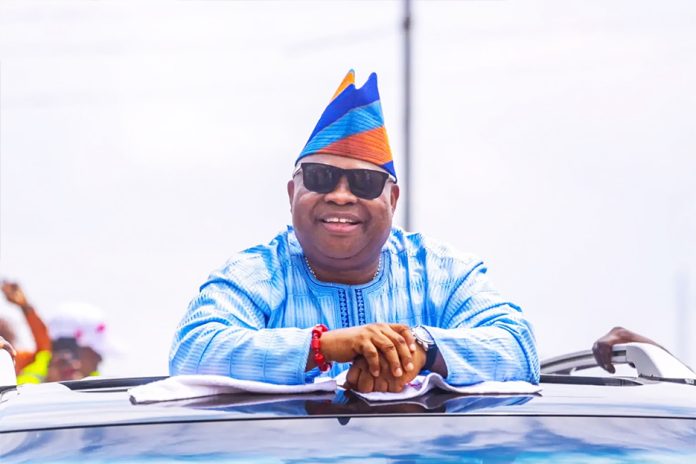
Governor Ademola Adeleke

Governor Ademola Adeleke of Osun State has emerged the governorship candidate of the Accord Party for next year’s governorship election.

The election came as he is the sole candidate of the Accord Party in the governorship primary that was held on Wednesday in Osogbo.

DAILY POST reports that no fewer than 150 delegates were accredited while five ballots were invalid making a total of 145 valid votes at the end of voting.

The Chairman of the Electoral Committee, Hajia Mariam Saleh, represented by the Secretary, Abulazeez Salaudeen, while announcing the result said Governor Adeleke pulled 145 votes to win the Osun Accord Party governorship ticket at the end of ballot counting exercise.

According to her, the electoral committee had delivered on its mandate to ensure a free and fair governorship primary.”

Saleh further stated that this was done after voting and counting witnessed by the agents and INEC representatives.

The Accord Party national chairman, Maxwell Mgbudem presented the party flag and certificate to Governor Ademola Adeleke and charged him to continue with his good works even as he seeks a second term in office as governor under the banner of the party.

Adeleke, while accepting the election result, thanked the Accord Party, the members and the electoral committee for deeming him fit to be their candidate for the 2026 election, urging all party members and electorates to vote for the Accord Party in the election.

“I accept my nomination as candidate of Accord Party for the Osun 2026 governorship election. The confidence you repose in me will not be regretted.

“My candidacy signals the success of the journey of development as it continues to shine across our state in the service of our people,” Governor Adeleke said.

The governor reiterated that Osun State would never go back to the dark days after witnessing failed promises for a long time, adding that with his endorsement by the Accord Party, the opposition against the will of the people has been rejected.

Credit: dailypost.ng

Burkina Faso releases 11 Nigerian military officers, aircraft after emergency landing

0
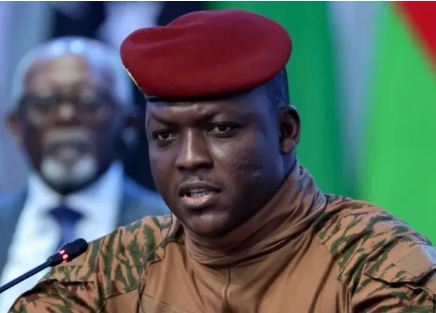
Ibrahim Traoré, Burkina Faso president

Burkina Faso has freed 11 Nigerian military personnel who were detained following the unscheduled landing of a Nigerian Air Force C-130 aircraft at Bobo-Dioulasso airfield, a move Ouagadougou authorities described as unauthorised.

The group, consisting of two crew members and nine passengers, was held for questioning amid suspicions that the flight might be connected to the recent failed coup in Benin Republic.

They have since been cleared of any wrongdoing and returned safely to Nigeria.

While Nigerian authorities maintained that the aircraft made a technical emergency landing on its way to Portugal, Burkinabe officials insisted the plane entered their airspace without prior authorisation, triggering an immediate security response.

Burkina Faso’s Minister of Territorial Administration, Emile Zerbo, said authorities were acting strictly in accordance with national security protocols.

In a joint declaration, the military governments of Burkina Faso, Mali, and Niger, members of the Alliance of Sahel States (AES), called the incident a breach of sovereign airspace and described it as an “unfriendly act.”

The bloc added that the episode had placed their air forces on high alert.

The Nigerian Air Force, meanwhile, emphasized that the crew followed international aviation safety procedures and highlighted that its personnel were treated respectfully during the detention.

The episode adds another layer of tension to the already fragile relations between Nigeria and the AES, which recently announced its withdrawal from ECOWAS.

Credit: dailypost.ng

Kumawu DCE Engages Opportunity International to boost local Economy

0
The DCE (second left) in a group picture with Management of Opportunity International

The District Chief Executive for Sekyere Kumawu, Mr. Akwasi Amankwah, has held discussions with staff members of Opportunity International, a financial institution dedicated to supporting livelihoods through innovative financial solutions.

The engagement aims to explore collaborative opportunities to boost the local economy, enhance farming initiatives and equip residents with entrepreneurial skills. DCE Amankwah expressed enthusiasm for the partnership, stressing its potential to transform the district’s economic landscape.

According to him, partnership, when fully realized, will empower our farmers, create job opportunities, and strengthen economic growth in our communities.

He noted that Opportunity International’s engagement is anticipated to catalyze progress in agricultural productivity and entrepreneurial ventures, enhancing the quality of life for residents.

Stakeholders call for expansion of disinfection health services at ports

0
The stakeholders in a hearty discussion

Stakeholders in Ghana’s Shipping, Trade, and Logistics sectors have unanimously called for the expansion of the Disinfection Health Service operated by the Ghana Health Service through its Crisis Management partner, LCB Worldwide Ghana Limited.

This call was made during a stakeholder meeting on the Ghana Health Service’s Disinfection Health Service held in Accra on Wednesday, December 3, 2025.

Representatives from key industry associations including the Ghana Institute of Freight Forwarders (GIFF), Customs Brokers Association of Ghana (CUBAG), Ghana Union of Traders Association (GUTA), Freight Forwarders Association of Ghana (FFAG), Importers and Exporters Association of Ghana (IEAG), Food and Beverage Association of Ghana (FABAG), Exim Frozen Foods Association of Ghana (EFFAG), Traders Advocacy Group Ghana (TAGG), Association of Customs House Agents Ghana (ACHAG), and the Joint Association of Port Transport Unions (JAPTU) commended the effectiveness of LCB Worldwide’s operations at the ports and points of entry.

They expressed satisfaction with the disinfection process, emphasizing that it causes no delays in the clearance chain and has significantly strengthened Ghana’s preparedness for pandemics and public health emergencies.

A key highlight of the meeting was a presentation by Dr. Raphael John Marfo, international public health and biosecurity expert at LCB Worldwide, and former Director of Port Health at the Ghana Health Service.
Dr. Marfo elaborated on the concept of biosecurity and its critical importance to Ghana’s maritime operations. He noted that Ghana has taken a continental lead in implementing the World Health Organisation’s International Health Regulations (IHR) through the disinfection of cargo at the ports and points of entry.

He added that Tanzania and Nigeria have begun studying Ghana’s model implemented jointly by the Ghana Health Service and LCB Worldwide, with the aim of replicating it. Dr. Marfo cited increased port-entry efficiency, enhanced shipping and travel safety, improved international credibility, and reduced operational costs as key benefits of the program.

In a presentation on sustaining Ghana’s biosecurity, Fiifi Buabeng-Baiden, Lead for Partnerships and Programs at LCB Worldwide Ghana, outlined the hidden dangers of global trade and highlighted the necessity of WHO-endorsed biosecurity interventions, such as disinfection at designated points of entry.

He revealed that, unlike Ghana which implements the program at no cost to the government, other countries spend significant amounts annually on similar interventions:

  • Belarus: USD 5–10 million
  • China: USD 10–20 million
  • Japan: USD 25–30 million
  • Russia: USD 5–10 million

Mr. Buabeng-Baiden added that key aspects of Ghana’s approach is benchmarked against countries such as the United States, Australia, Kenya, and South Africa.

Mr. Bernard Brown, Deputy Director in charge of External Health at the Ministry of Health, commended LCB Worldwide Ghana Limited for its excellent work at ports and points of entry. He reaffirmed the government’s commitment to protecting the country from pandemics and diseases through ongoing fumigation and disinfection efforts.

Chairing the engagement, Dr. Joseph Obeng, Former President and Council Member of GUTA, pledged his continuous support for the program and backed calls for its expansion across the country. He urged the government to assess the program’s benefits, noting that it has positioned Ghana as a regional safe haven in terms of health security.

Dr. Obeng recalled earlier in the year when LCB met stakeholders and they agreed that they put on hold an increment of their fees because of the exchange rate volatility. This, to him, demonstrated the company’s sensitivity to the plight of the Ghanaian trader and the general public.

An executive member of the Food and Beverage Association of Ghana (FABAG), Mr. Samuel Aggrey, on his part, touted the implementation of the International Health Regulations at the ports as the key and major policy initiative of the Ministry of Health and the Ghana Health Service, and called for its expansion.

Head of Research and Public Relations, Ms. Esinam Adukpo, expressed profound appreciation to stakeholders for their overwhelming support and continued collaboration. She assured them of the company’s unwavering commitment to serving Ghana diligently and efficiently.

She further assured that improved equipment, upgraded monitoring systems, and strengthened protocols are being implemented to keep Ghana’s disinfection regime at points of entry responsive to evolving threats. She reiterated the commitment of the company to continue to undertake its Corporate Social Responsibility of fumigating and disinfecting market centers and schools across the country in partnership with government and stakeholders.


Ghanaian artist sets Guinness World Record with a giant leaf print painting

0

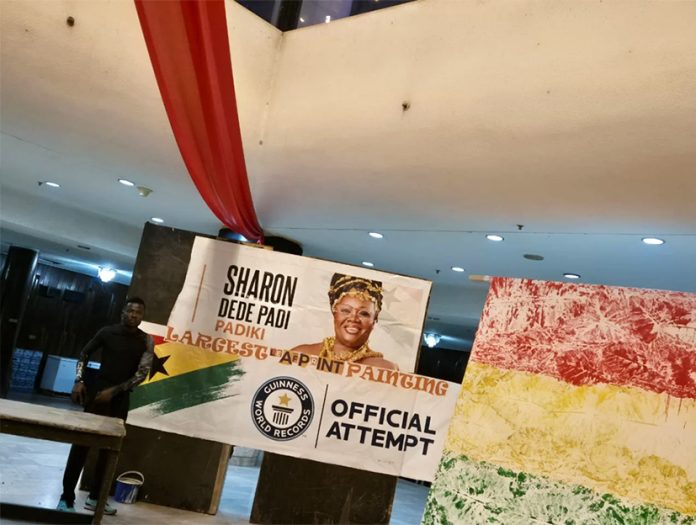
Ghanaian visual artist and architect Sharon Dede Padi has etched her name into the history books after setting a Guinness World Record for the largest leaf print painting, projecting Ghanaian creativity onto the global stage.

The record-breaking masterpiece, completed at the National Theatre in Accra, spans an astonishing 54.3 square meters. Using only leaf prints, Padi meticulously recreated the Ghanaian national flag, transforming a familiar symbol into a sprawling canvas of texture, colour, and cultural pride.

Her journey to the record has been anything but overnight. Padi first attempted the feat on 28 December 2024 at the National Museum, where she produced an experimental work measuring about 39 square meters. That initial attempt became the foundation for months of research, planning, and refinement, culminating in the final phase in July 2025 and the official confirmation of her Guinness World Record.

Speaking after the achievement was confirmed, Padi said her motivation went beyond personal recognition.

“This record is a platform to project Ghanaian art and culture to the world,” she said. “Through this work, I hope to inspire young artists in Ghana and across Africa to pursue creativity, innovation, and excellence.”

The artwork showcases more than technical ingenuity. Each leaf print, layered and repeated, pays homage to Ghana’s relationship with nature, resilience, and identity, while the bold red, gold, green, and black stars echo the country’s enduring symbols of struggle, wealth, growth, and unity.

Sharon Dede Padi now holds the Guinness World Record for the largest leaf print painting, a milestone that cements her status as a pioneering figure in contemporary Ghanaian art.

About Sharon Dede Padi

Sharon Dede Padi is a Ghanaian visual artist and architect known for blending traditional techniques with contemporary forms. Her practice centers on cultural storytelling, innovative materials and large-scale public works that celebrate and elevate Ghanaian heritage on the world stage.

Credit: starrfm.com.gh

Celestine Donkor launches road-safety campaign in collaboration with Road Safety Authority

0
Celestine Donkor

Ghanaian gospel artiste Celestine Donkor has partnered with the Road Safety Authority (RSA) to launch a road-safety campaign aimed at reducing the rising toll of traffic accidents in Ghana.

Under the initiative, she will compose new music and produce video content to raise awareness about the causes of road accidents. She also plans to use her public profile to engage communities in activities that encourage safer driving and responsible road use.

In relation to this, Celestine has urged drivers to obey speed limits and avoid distractions.

“Wear your seat belt always. And be patient on the roads,” she said.

The campaign comes amid grim statistics: from January to August 2025, 1,937 people reportedly died in road accidents, a figure that equates to roughly six to eight fatalities in Ghana every day.

This is not Celestine Donkor’s first effort in social responsibility. She has also led efforts through a group for female gospel musicians to support sick and elderly veteran artistes, providing donations and assistance without fanfare or public display.

A few years ago, she served as a vaccination ambassador for the Ghana Health Service, using her platform to encourage public confidence in COVID-19 vaccines.

With this road-safety campaign, Celestine Donkor hopes to highlight how everyday choices on Ghana’s roads can have profound consequences and encourage citizens to take responsibility for safer driving.

Credit: myjoyonline.com

The Ghanaian Chronicle