Home Blog Page 381

Sky Train Trial Adjourned to January 14

0
Law Courts Complex, Accra

The trial of the former Chief Executive Officer and Board Chairman of the Ghana Infrastructure Investment Fund (GIIF) has been adjourned to January 14, next year, by the Criminal Division Four of the High Court in Accra.

The adjournment, granted by the court presided over by Her Ladyship Justice Audrey Kocuvie-Tay, followed a request after the first prosecution witness, Mr Yaw Odame-Darkwa, was reported to be indisposed.

Mr Odame-Darkwa, a former board member of GIIF, is testifying in the ongoing US$2 million Accra Sky Train Project case.

Mr Odame-Darkwa, who is appearing as Prosecution Witness One (PW1), has already given his evidence-in-chief and is currently under cross-examination by Mrs Victoria Barth, defence counsel for the former Chief Executive Officer of GIIF, Mr Solomon Asamoah.

In his testimony, PW1 told the court that the Accra Sky Train Project did not receive express approval from the GIIF Board.

He explained that while the Sky Train concept was introduced at one of the Board meetings, no substantive proposal was ever presented for detailed deliberation or formal decision-making.

He further stated that the Investment Committee of GIIF – the body mandated to evaluate projects and make recommendations to the Board — did not recommend the Sky Train initiative for approval, funding, or endorsement.

Mr Odame-Darkwa also emphasised that during his tenure on the Board, no funds were approved or committed by GIIF towards the Sky Train Project, contrary to public speculation that the Fund had financed the initiative.

However, during Monday’s proceedings, defence counsel Mrs Barth sought to demonstrate that the Board had indeed discussed the project. She referred the court to Board minutes, which captured a presentation made by the former CEO on the Sky Train concept.

The defence also tendered copies of email correspondence exchanged among Board members on the subject matter to support its position that the project had been discussed at Board level.

Mr Solomon Asamoah, former Chief Executive Officer of GIIF, and the former Board Chairman are facing six counts, including conspiracy, wilfully causing financial loss to the state, and intentional dissipation of public funds.

Both accused persons have pleaded not guilty to all the charges and are standing trial before the High Court.


For more news, join The Chronicle Newspaper channel on WhatsApp: https://whatsapp.com/channel/0029VbBSs55E50UqNPvSOm2z


Col. Kwadwo Damoah Granted GH¢50m Bail in SML Contract Case

0
Col Damoah

The High Court in Accra has granted bail in the sum of GH¢50 million with two sureties to the Member of Parliament for Jaman South, Colonel Dr. Kwadwo Damoah (Rtd.), in the ongoing Strategic Mobilisation Limited (SML) contract case.

Dr. Kwadwo Damoah, a former Commissioner of the Customs Division of the Ghana Revenue Authority (GRA) was admitted to bail after pleading not guilty to all charges preferred against him by the Office of the Special Prosecutor (OSP).

Mr Kissi Agyebeng – Special Prosecutor

He is the sixth accused person in the case, Republic v Ofori-Atta & 7 Others, in which eight accused persons are standing trial on a total of 78 counts.

Col. Damoah is answering to eight substantive charges and two conspiracy charges.

Bail Conditions

Under the bail terms imposed by the court, Col. Damoah is required to execute a GH¢50 million bail with two sureties; deposit his passport and other travel documents at the Registry of the court and to ensure that his sureties deposit copies of their Ghana Cards at the court Registry. Also should be placed on the Ghana Immigration Service stop list at all points of entry and exit and report to the lead investigator once every week.

However, the court ordered that the execution of these bail conditions be suspended until December 31, 2025 to enable the sixth accused person to secure the required sureties.

In the interim, Col. Damoah is to remain on the bail terms earlier imposed on him by the Office of the Special Prosecutor.

Court Proceedings

During proceedings, the prosecution, led by Adelaide Kobiri for the OSP, informed the court that the first and second accused persons were absent, noting that mutual legal assistance proceedings were being used to notify them to appear before the court.

With respect to Col. Damoah, the prosecution indicated that although he was absent at the previous sitting, his counsel had appeared in protest, pursuant to Article 117 of the Constitution. Kobiri prayed the court to take his plea, which was subsequently done.

Counsel for the accused urged the court to grant bail, arguing that Col. Damoah is not a flight risk and is a serving Member of Parliament.

While the prosecution did not oppose bail, it initially objected to granting him additional time to meet the bail conditions.

The court, nonetheless, granted bail with the suspension of execution until the end of 2025.

Other Orders

The court further directed the prosecution to file disclosures and witness statements and serve them on the accused persons at least two clear days before the next adjourned date for Case Management Conference (CMC).

Additionally, the third to eighth accused persons were ordered to file the names and addresses of witnesses they intend to rely on, and to file witness statements if they so wish, at least two clear days before the next hearing.

The case has been adjourned to January 29, 2026 for CMC.

Background

Col. Damoah has been charged alongside former Finance Minister Kenneth Nana Yaw Ofori-Atta and seven others over alleged financial loss to the state, exceeding GH¢1.4 billion arising from revenue assurance contracts awarded to Strategic Mobilisation Limited (SML).

The other accused persons include Emmanuel Kofi Nti and Rev. Ammishaddai Owusu Amoah, both former Commissioners-General of the GRA; Isaac Crentsil, former Commissioner of Customs; Ernest Darko Akore, a former aide to Mr. Ofori-Atta; Evans Adusei, Chief Executive Officer of SML and SML and Strategic Mobilisation Ghana Limited itself.

In a charge sheet signed by the Special Prosecutor, Kissi Agyebeng, it was alleged that the accused persons engaged in a “criminal enterprise” beginning in 2017 to use the SML contracts to defraud the state.

According to the OSP, the contracts were secured through “self-serving patronage and promotion” based on false and unverified claims, with no genuine need for the services purportedly rendered by SML.

The alleged acts, the OSP said, resulted in an estimated financial loss to the Republic of GH¢1,436,249,828.53.All accused persons with the exception of Ofori Atta and Ernest Darko Akore, have pleaded not guilty to the charges.


For more news, join The Chronicle Newspaper channel on WhatsApp: https://whatsapp.com/channel/0029VbBSs55E50UqNPvSOm2z

From Bus Ride to National Concern: Costly, Shoddy Government Projects  

0
Opinion

Yesterday, while travelling in a public transport vehicle from Accra to Takoradi, a heated conversation erupted among passengers over the high cost and poor quality of government-funded projects across the country.

Many expressed frustration that public infrastructure projects were not only excessively expensive but often delivered below acceptable standards. Questions were raised about the roles of engineers within Metropolitan, Municipal and District Assemblies (MMDAs), as well as officials at the Ministry of Works and Housing, and why substandard projects frequently passed inspection.

Some passengers attributed the situation to political interference, corruption, bureaucratic delays, poor planning, weak supervision, delayed payments to contractors and financial mismanagement. Others argued strongly that public officials who supervised such projects should be prosecuted to serve as a deterrent.

Beyond these immediate explanations, poor project outcomes are often compounded by budget overruns linked to broader macroeconomic challenges such as inflation and exchange rate volatility. Ghana’s infrastructure deficit remains significant, with chronic underfunding, lack of sustained investment and limited fiscal space constraining government’s ability to close the gap efficiently.

Ensuring Accountability

Improving accountability in public infrastructure delivery remains critical. Tools such as transparency measures, publication of project and contract information, citizen monitoring platforms, simplified procurement processes and reporting mechanisms for defects and delays can significantly enhance outcomes.

Mr Isaac Aidoo, Sekondi-Takoradi Manager of the local chapter of the Infrastructure Transparency Initiative (CoST), an international organisation operating in over 20 countries, told the Ghana News Agency that multi-stakeholder assurance processes, social accountability frameworks and digital platforms that enable community reporting had proven effective in enforcing value for money and quality standards.

He said communities and Civil Society Organisations (CSOs) played crucial watchdog roles by representing local interests, demanding transparency, reporting poor execution and amplifying stakeholder concerns throughout the project lifecycle.

“Their engagement ensures participatory governance, protects communities from ineffective projects, and promotes environmental and social accountability,” Mr Aidoo said.

He added that responsibility for accountability rested with government institutions, procurement agencies, legislators, the media, CSOs and local communities.

Public Participation and Institutional Capacity

Public participation and institutional capacity building are essential to sustaining accountability mechanisms. A recent Infrastructure Transparency Index report scored Ghana 26.35 per cent in citizen participation, highlighting the urgent need for more structured community involvement in project planning and implementation.

Mr Samuel Harrison-Cudjoe, Programme Officer at the Ghana Anti-Corruption Coalition, noted that corrupt practices had contributed to abandoned and poorly executed projects, worsening deficits in hospitals, schools, roads and other essential services.

He warned that normalising corruption would have devastating long-term consequences and urged citizens to actively monitor projects within their communities.

Ghana’s Special Prosecutor, Lawyer Kissi Agyebeng, has also emphasised the need for homegrown anti-corruption strategies tailored to sectors such as public infrastructure procurement. His approach prioritises prevention over prosecution by targeting procurement breaches and politically exposed persons involved in public projects.

Political Will and Institutional Reforms

Experts agree that political will and institutional independence are fundamental to Ghana’s fight against corruption. Strengthening independent regulators such as the Public Procurement Authority, with real enforcement powers including debarment of corrupt firms and officials, is essential.

Some stakeholders have proposed the establishment of a specialised anti-corruption court, extension of multilateral development bank sanctions to public borrowers, and aggressive asset recovery initiatives to retrieve funds lost through inflated or shoddy projects.

Monitoring and Accountability

Mr Aziz Mahmoud, Monitoring, Evaluation and Learning Officer at the Infrastructure Transparency Initiative, said government must implement performance-based monitoring systems supported by real-time audits, forensic reviews and citizen reporting platforms.

He recommended continuous training for procurement staff on anti-corruption practices, enforcement of pro-social corporate responsibility policies, and prosecution of high-profile cases to deter bribery, kickbacks and tender manipulation.

As the voices from that crowded bus reflected, the call is growing louder: Ghanaians want infrastructure that delivers value for money, meets quality standards and serves present and future generations. Ensuring accountability is no longer optional—it is imperative.

By Mildred Siabi-Mensah 

GNA

Editor’s note: Views expressed in this article do not represent that of The Chronicle

Editorial: Breach Of Security Protocols Is Getting Out Of Hand, Let’s Check It!

0
Editorial

A video circulating on social media and spotted by The Chronicle shows a police officer filming an alleged presidential jet at the Ho Airport. In the footage, the officer is seen capturing detailed visuals of the aircraft and its components.

In the video, the officer captures detailed images of the jet, including its exterior and visible parts, while narrating the scene. Although The Chronicle cannot independently confirm the ownership of the aircraft or the full context of the recording, the conduct displayed in the video raises serious concerns.

The central issue is not the identity of the jet but the act itself. A uniformed police officer, by virtue of his position and access, was seen filming a sensitive asset within a restricted environment. This action, regardless of intent, constitutes a potential breach of security protocols and reflects a worrying level of carelessness by a state security official entrusted with the protection of critical national interests.

Even without confirmation of the jet’s ownership, the implications of such conduct are far-reaching and dangerous. Security is as much about perception as it is about protocols and when those entrusted to protect the state appear careless, public confidence inevitably erodes.

At this initial stage, the most alarming aspect was the ease with which the recording was made. Access to such spaces is not accidental. It is granted on the basis of trust, training, and adherence to strict protocols.

When an officer uses that access to create content for public consumption, it signals a serious breakdown in professional judgment. Even if the jet does not belong to the President, the act of filming and circulating detailed visuals of an aircraft in a controlled security zone is itself reckless.

This brings us to the second phase of concern: the broader implication for presidential and national safety. A President cannot be secure when officers tasked with maintaining law and order behave in this manner.

Security lapses do not always announce themselves through dramatic failures; often, they begin with small acts of indiscipline that are ignored or excused. Today it is a video; tomorrow it could be the disclosure of far more sensitive information.

The Chronicle is, therefore, calling on the Ghana Police Service to immediately investigate the officer involved and to delve deeper into how such conduct was possible. In countries with mature security cultures, this incident would trigger swift inquiries and firm sanctions. Ghana must aspire to no less. Our security institutions cannot operate on goodwill alone; they must be governed by rules that are enforced without hesitation.

Following the public circulation of the video and the growing concern it generated, the Ghana Police Service released a statement announcing the interdiction of five officers for misconduct related to the unauthorised use of police uniforms on social media. While this action was not directly linked to the Ho Airport incident, it is relevant in context. It demonstrates that the Police Service recognises the dangers posed by unregulated online behaviour by officers in uniform.

However, interdiction, commendable as a first step, must not become a public relations shield. If the officer who filmed the alleged presidential jet is among those interdicted, then the matter must not end there. Interdiction is temporary, accountability must be final.

The investigation must follow the issue to its root, establish culpability, and apply the law fully. If, on the other hand, the officer is not among those interdicted, then the Police Service must act with the same urgency and decisiveness it has shown in other cases.

Ultimately, this episode should serve as a turning point. The Ghana Police Service must reinforce the message that the uniform is not a licence for recklessness but a symbol of trust.

In an age where social media rewards attention over responsibility, security officers must be held to higher, not lower, standards. National security depends on it.


For more news, join The Chronicle Newspaper channel on WhatsApp: https://whatsapp.com/channel/0029VbBSs55E50UqNPvSOm2z

Customs, CUBAG strengthen alliance to boost revenue and trade efficiency

0
Nana Fredua Ofori-Atta - President of CUBAG

The Customs Brokers Association of Ghana (CUBAG) and the Customs Division of the Ghana Revenue Authority (GRA) have reaffirmed their commitment to deepening collaboration to enhance revenue mobilisation, trade compliance and efficiency at Ghana’s ports and border points.

This renewed partnership emerged at CUBAG’s 2025 Annual General Meeting (AGM) held in Koforidua, which brought together customs brokers, regulators, traditional authorities and private sector stakeholders under the theme “Empowering Progress: CUBAG’s Commitment to People, Technology and Partnerships for Sustainable Growth.”

Speaking on behalf of the Commissioner of Customs as the Special Guest of Honour, the Deputy Commissioner in Charge of Operations at the Customs Division of GRA, Aaron Kanor, described customs brokers as indispensable to Ghana’s trade and revenue ecosystem.

According to him, the accuracy of customs declarations, proper valuation, correct classification of goods and adherence to customs laws directly influence national revenue performance, cargo clearance times and border security.

“Customs brokers serve as the bridge between importers, exporters, Customs and other regulatory agencies. Their professionalism has a direct impact on revenue assurance and trade facilitation,” Mr. Kanor stated.

He commended CUBAG for promoting ethical conduct and capacity building among its members and urged brokers to continue supporting Customs’ revenue mobilisation efforts, noting that customs revenue remains a critical pillar of national development.

Mr. Kanor assured the Association of the Customs Division’s commitment to stakeholder engagement, constructive dialogue and collaborative problem-solving to address operational challenges within the supply chain.

Delivering the keynote address, Director of Operations at Ghana Link Network Services Limited, Raymond Amaglo, commended CUBAG for its instrumental role in the success of the Integrated Customs Management System (ICUMS), five years after its deployment.

Mr.Amaglo described ICUMS as a product of resilience and partnership, noting that feedback and cooperation from customs brokers have contributed significantly to system improvements, compliance and operational efficiency.

“The success of ICUMS is inseparable from the professionalism of customs brokers. Digital transformation works best when people trust the system and work together,” he said.

He also announced the completion of an ultra-modern Tier-4 Data Centre, which is expected to deliver near-zero downtime, enhanced cyber security and faster processing capacity to support Ghana’s 24-hour economy agenda.

President of CUBAG, Nana Fredua Ofori-Atta, pledged the Association’s continued cooperation with Customs, stressing that strong partnerships are essential for the survival and relevance of customs brokers, particularly in the face of global trade disruptions, rising protectionism and financial volatility.

He noted that global trade in 2025 has remained resilient despite pressures, but warned that smaller firms and developing economies face heightened risks without strategic planning and institutional support.

The AGM concluded with calls for sustained public-private collaboration to modernise customs operations, strengthen compliance frameworks and improve Ghana’s competitiveness in international trade.


For more news, join The Chronicle Newspaper channel on WhatsApp: https://whatsapp.com/channel/0029VbBSs55E50UqNPvSOm2z


Minority criticise handling of lithium deal

0
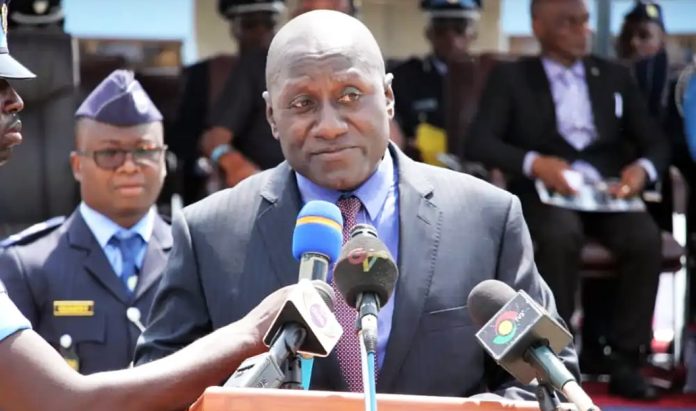
Vincent Ekow Assafuah - addressed the media

The Minority Caucus in Parliament has mounted pressure on the Minister of Lands and Natural Resources, Emmanuel Armah-Kofi Buah, calling for his resignation or dismissal from his position by President John Dramani Mahama, over his handling of the revised lithium agreement between the Republic of Ghana and Barari Ghana Limited from Parliament.

Lithium metal

Addressing the media in Accra on Wednesday, December 17, 2025 the Minority expressed disappointment and concern over Emmanuel Armah-Kofi Buah’s conflicting stance on the lithium agreement, which led to its withdrawal from Parliament. Such an action, the group further noted, betrayed Parliament in its oversight responsibility.

“Buah had assured Parliament and Ghanaians that the revised lithium agreement laid before it satisfied all necessary requirements.

However, the recent withdrawal of the agreement from Parliament and the reasons given by the Lands Minister clearly contradicts the assurances that were given by the Minister”, Ranking Member on the Committee for Youth & Sports, Vincent Ekow Assafuah, who addressed the media on behalf of the Minority Caucus noted.

He added that “When a Minister gives Parliament firm and unequivocal assurances that all legal, technical and procedural requirements have been satisfied and the same agreement is later withdrawn on the basis that those requirements were not, in fact, fully met, accountability must necessarily follow.

“In every democracy, Ministers bear personal responsibility for that. In the circumstances, the Minority in Parliament is of the firm view that the course of action is for Buah to resign or be relieved of his position”.

Last month, when the revised lithium agreement was laid before Parliament for consideration and approval, both the Minority and Majority Caucuses attacked each other over the proposed carried interest in the agreement.

The Majority Caucus argued that the previous administration’s ten percent carried interest proposal deviated from the existing Minerals and Mining Act, 210 (Act 794), which fixes the country’s carried interest at five percent.

However, the Minority Caucus disputed the claims and cited the Minerals and Mining (Amendment) Act, 2015 (Act 900), which repealed the fixed five percent carried interest and made the royalty rate flexible.

The group noted that the amended Act allows the government to negotiate a carried interest rate, including the proposed ten percent rate, further adding that the five percent carried interest rate the government was seeking in the new lithium agreement was not in the best interest of the country.

After back and forth disagreements between the two caucuses coupled with pressure from Civil Society Organisations (CSOs), the government on December 10, 2025 through the Deputy Minister for Lands and Natural Resources, Yusif Sulemana, withdrew the revised lithium mining agreement, noting that the action was to allow for further consultations and review with key stakeholders.

Speaking further on the issue, the Minority Caucus noted that the sequence of events orchestrated by Buah amounts to an implicit admission that Parliament was asked to proceed on the basis of information that was, at best, incomplete.

“While the Minority recognizes that consultation and stakeholder engagement are essential elements of responsible governance, such engagement must occur before an agreement is defended and laid before Parliament, not after it has been withdrawn under public pressure”, the group noted in part of its statement that was read by Assafuah.

The Minority emphasizes that lithium is a strategic mineral requiring careful management and that Buah’s handling of the agreement has exposed Parliament to embarrassment.

The group demands Buah’s resignation or dismissal, citing his implicit admission of misleading Parliament and undermining Ghana’s interests.


For more news, join The Chronicle Newspaper channel on WhatsApp: https://whatsapp.com/channel/0029VbBSs55E50UqNPvSOm2z

I will not be vice president to anybody –Amaechi rejects deputising Atiku

0
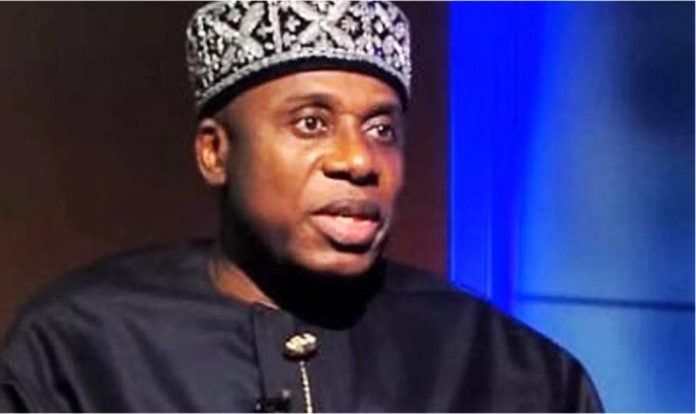
Former Minister of Transportation, Rotimi Amaechi

Former Minister of Transportation, Rotimi Amaechi has vowed not to deputize any presidential candidate in the 2027 general elections.

There has been speculation that the former governor would deputize ex-vice president, Atiku Abubakar, who is likely emerging as the flagbearer of the African Democratic Congress, ADC.

But speaking at an event in Abuja, Amaechi clarified that he is too presidential to be anybody’s vice.

“I will not be vice president to anybody. There are too many reasons why I won’t be vice president to anybody. The first reason is that I’m too presidential to be vice”, he said.

According to Amaechi, who is also eyeing the presidential ticket of the ADC, the problem with the office of vice president is not ceremonial, it is structural.

The former governor of Rivers State claimed that in Nigeria, the office of the vice president is designed to be subordinate, often powerless, and depend entirely on the temperament of the president.

“We will quarrel, instead of that, I would rather be a minister than be a vice president”, Amaechi said.

Credit: dailypost.ng

Your comment on Tinubu, was reckless –Lagos APC replies Kenneth Okonkwo

0
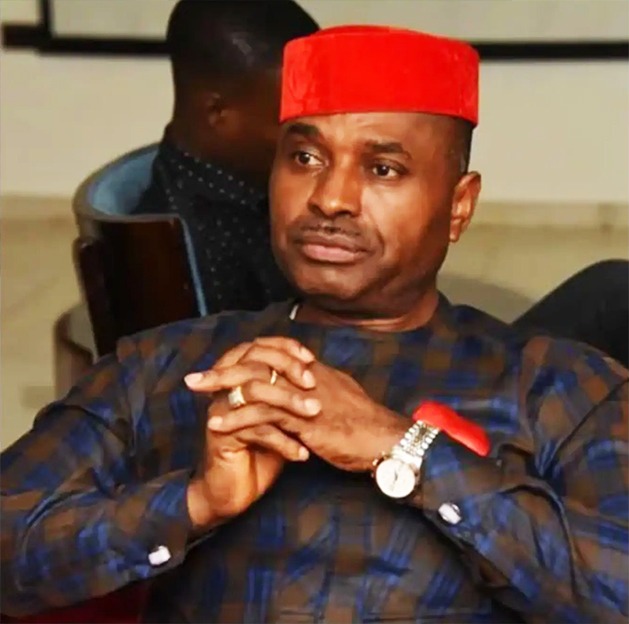
Kenneth Okonkwo

The Lagos State chapter of the All Progressives Congress, APC, has described remarks attributed to a chieftain of the African Democratic Congress, ADC, Kenneth Okonkwo, suggesting that President Bola Tinubu can now “rule Nigeria with the military” following a Supreme Court verdict relating to the emergency rule in Rivers State, as “reckless and misleading”.

The party said such remarks by Okonkwo were not only false but also “intellectually dishonest”, stressing that Supreme Court verdicts are not military decrees.

Mogaji Seye Oladejo, spokesman of the state arm of the party, said the Supreme Court did not suspend democracy in Rivers State but merely interpreted the law as empowered by the Nigerian Constitution.

In a statement he signed, Oladejo said that in a constitutional democracy, court decisions may disappoint political actors, but they are binding on all.

According to Oladejo: “A Supreme Court judgment is the highest expression of constitutional authority in a democracy. It is neither a military fiat nor an executive directive. To deliberately conflate a judicial verdict with military rule is to either misunderstand the basic workings of democracy or to willfully mislead the public for partisan ends.

“President Bola Ahmed Tinubu, contrary to the alarmist narrative being peddled, has neither sought nor exercised extra-constitutional powers. His democratic credentials are well established.

“He was a frontline opponent of military dictatorship, a victim of repression, and a contributor to the restoration of civil rule in Nigeria. The suggestion that such a leader would now govern by military proxy is as absurd as it is insulting.”

Credit: dailypost.ng


Makinde speaks on possible defection to APC

0
Oyo State Governor, Seyi Makinde

Oyo State Governor, Seyi Makinde, has addressed speculations regarding his potential defection to the All Progressives Congress, APC, amid recent moves by some opposition governors to join the ruling party.

Makinde spoke on Wednesday in Abuja during the public launch of ‘Headlines and Soundbites: Media Moments that Defined an Administration’, a book authored by former Minister of Information and Culture, Lai Mohammed.

“I am not APC, and I am not about to become APC,” the governor declared.

He stressed that Nigeria’s progress depends on sincere collaboration among leaders across political divides to advance the country.

Governor Seyi Makinde stated that Nigeria’s deepening divisions are largely fueled by the ambitions of the political elite rather than the desires of ordinary citizens.

He noted that while most Nigerians aspire for unity and peaceful coexistence, they are often manipulated along religious, ethnic, and regional lines by politicians chasing personal interests.

Makinde warned against the “winner-takes-all” approach in politics, stressing that it promotes exclusion and weakens national cohesion.

He underscored the importance of reaching a consensus among the political elite that prioritizes good governance and addressing current national challenges, instead of reviving old political rivalries.

Drawing from his own experience, Makinde highlighted that political success depends on divine timing. He shared that both he and former President Muhammadu Buhari experienced electoral setbacks before eventually attaining office.

Reflecting on Nigeria’s history, he observed that whereas early leaders were focused on uniting a post-war nation, today’s challenges are different and demand fresh solutions.

The governor called for intentional efforts to establish political and governance systems that ensure fairness, inclusion, and stability.

Credit: dailypost.ng

Trump Imposes Partial Travel Restriction On Nigeria

0
President Donald Trump

United States President Donald Trump has imposed a partial travel restriction on Nigeria, as part of a series of new actions.

This was contained in a statement titled “Restricting and Limiting the Entry of Foreign Nationals to Protect the Security Of The United States,” signed by the US president and published on the website of the White House on Tuesday.

The restriction, which takes effect in January, 2026, will affect Nigerians hoping to travel to the US, as it cites security concerns and difficulties in vetting nationals.

The travel restrictions also affect citizens of other African as well as Black-majority Caribbean nations.

According to the statement, the Secretary of State, in consultation with the Attorney General, the Secretary of Homeland Security, and the Director of National Intelligence, had been directed by Proclamation 10949 of June 4, 2025 (Restricting the Entry of Foreign Nationals To Protect the United States From Foreign Terrorists and Other National Security and Public Safety Threats), to submit a report to the President, through the Assistant to the President for Homeland Security, describing his assessment and recommending whether any suspensions and limitations imposed by the proclamation should be continued, terminated, modified, or supplemented.

“After reviewing the report described in subsection (d) of this section, and after accounting for the foreign policy, national security, and counterterrorism objectives of the United States, I have determined to partially restrict and limit the entry of nationals of the following 15 countries: Angola, Antigua and Barbuda, Benin, Cote d ‘Ivoire, Dominica, Gabon, The Gambia, Malawi, Mauritania, Nigeria, Senegal, Tanzania, Tonga, Zambia, and Zimbabwe.

“These restrictions distinguish between, but apply to both, the entry of immigrants and nonimmigrants,” the president stated.

Credit: channelstv.com

The Ghanaian Chronicle