There is a version of climate diplomacy that lives entirely in conference rooms, negotiating texts, and high-level bilateral meetings. And then there is the version that Mr. Liam Cosgrave, Australia’s Counsellor for Climate Change in Africa, was practising in Ghana earlier this month.
Over the course of his visit to Accra, Cosgrave convened a dialogue with Australia Awards alumni, met with one of Ghana’s leading energy policy think tanks, and travelled to an off-grid island community in the Volta Region to assess a solar project his government helped fund. Taken together, the engagements amounted to something deliberate: a listening exercise as much as a diplomatic one, conducted with Australia’s role as President of Negotiations for COP31 very much in view.
At the alumni meet and greet held on 9 June at the Australian High Commissioner’s Residence, Cosgrave sat with a group of Ghanaian professionals whose connection to Australia runs through education and exchange. The conversation was frank. Participants raised concerns about the over-bureaucratisation of climate negotiations, the slow translation of commitments into on-the-ground impact, and the risk that youth engagement in climate processes remains consultative rather than consequential. They pressed on climate finance access, on loss and damage, and on what it means for African countries to meet their obligations under the Paris Agreement with limited institutional support.
Cosgrave’s role in that room was not to defend the system but to engage with its critics from within it. He acknowledged barriers to climate finance access, including complex procedures and high transaction costs, and framed Australia’s approach to COP31 as one that places genuine weight on hearing from stakeholders across regions. He encouraged alumni to provide structured inputs aligned with COP thematic areas, describing them as knowledge brokers with a direct role in shaping how negotiations are approached.
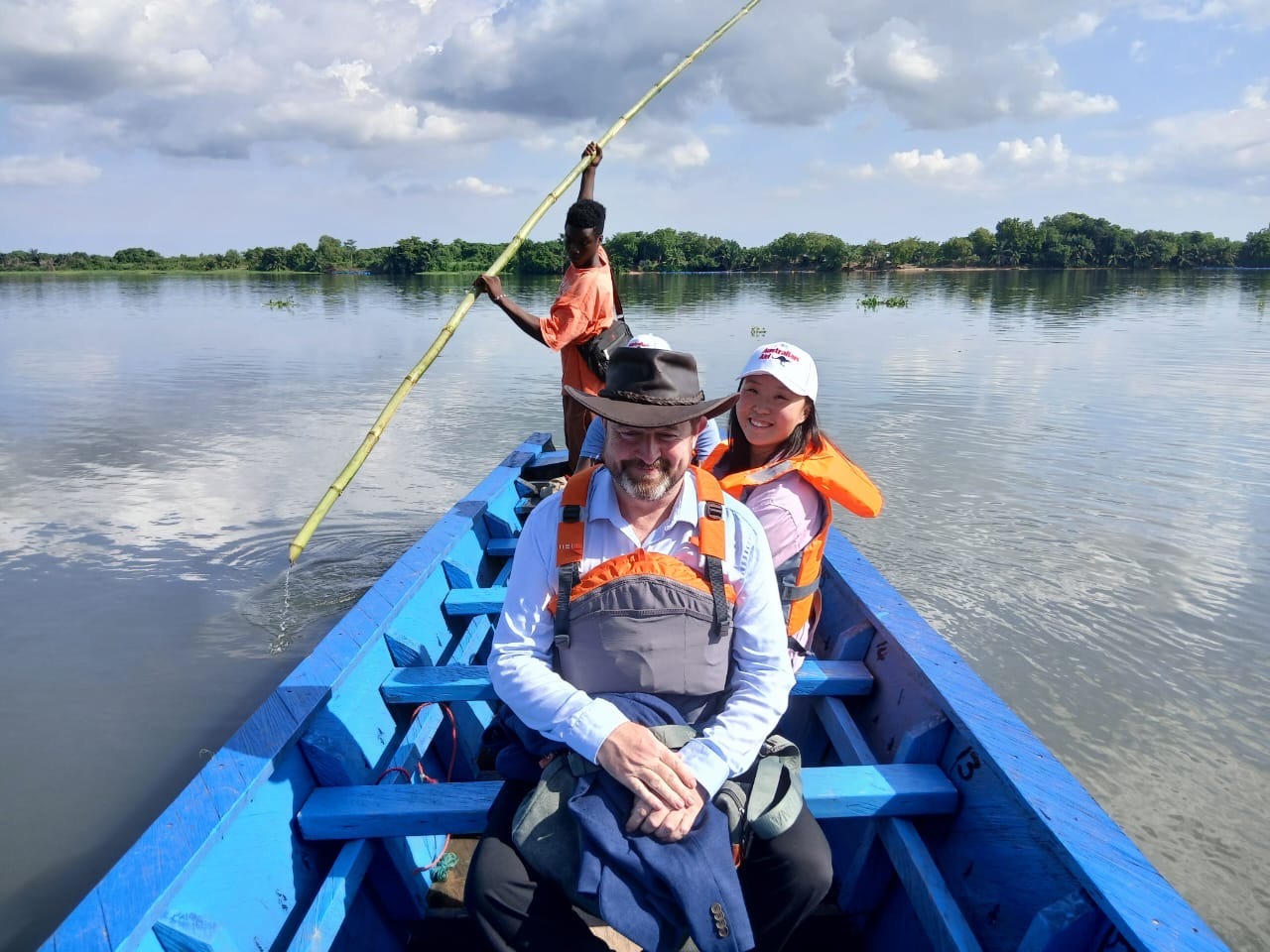
The field visit to Siamekome Island a few days earlier had made the stakes concrete. The community, accessed by water in the Central Tongu District, is living with the consequences of climate variability in the most immediate terms: flooding that damages infrastructure and destroys fishing equipment, energy poverty that limits educational opportunity, and livelihood pressures that leave little margin for additional shocks. The DAP-funded solar project implemented by LiftUs Foundation has made a measurable difference to children’s ability to study and to the community’s sense of safety after dark. But it also has unresolved technical problems and unmet expansion goals, and the delegation documented both honestly.
That combination, high-level dialogue and community-level fieldwork, reflects how Australia is positioning its climate diplomacy in the lead-up to COP31. The argument being made, implicitly through engagements like these, is that effective climate negotiations require not just technical expertise and political will, but a genuine understanding of what is at stake for the people furthest from the negotiating table.
Ghana, in that framing, is not simply a country on the receiving end of climate action. It is a test case for whether global commitments translate. Cosgrave’s visit suggested that Australia is paying attention to the answer.