Home Blog Page 379

Wesley Old Girls Reject claims of religious discrimination

0
Signage of the Wesley Girls Senior High School

The Wesley Girls’ High School Old Girls’ Association (OGA) has dismissed recent allegations of religious discrimination at Wesley Girls’ High School, Cape Coast, insisting the school has always embraced students from diverse religious backgrounds within its long-standing Methodist tradition.

The Association made its position known in a statement issued in Accra, following renewed public debate over claims that the school’s rules and guidelines undermine the rights of students of certain faiths.

According to the OGA, Wesley Girls’ High School has, throughout its history, admitted and nurtured students from various Christian denominations as well as other faiths, all of whom have performed well under what it described as a “well-structured environment deeply rooted in Methodist values.”
It therefore rejected what it called any attempt “to portray the School as intolerant or discriminatory.”

The Old Girls emphasised that the school stands in loco parentis to its students and has a responsibility to enforce standard guidelines that uphold discipline, safety, and health in line with the 2024 Memorandum of Understanding guiding faith-based schools.
“These guidelines, which align with the letter and spirit of the 2024 MOU, apply without discrimination to all students,” the statement said, noting that not every individual preference can be accommodated if it risks altering the school’s curriculum, schedule, or supervision systems.

The OGA further stressed that because Wesley Girls’ is home to students of multiple faiths, any exemption granted to one group must be extended to all others, which it argued would be neither practical nor sustainable.
“It is neither practical nor sustainable to expect individualised religious accommodations that could eventually compromise the School’s order, safety, and long-standing traditions,” it added.

The statement highlighted the long relationship between the Methodist Church Ghana and the State, saying this partnership attests to the school’s reputation for discipline, academic excellence, and strong moral grounding.

While reiterating respect for constitutional religious freedoms, the OGA noted that such freedoms must be exercised with an appreciation for the clearly defined ethos of a faith-based, government-assisted institution.
“This freedom is symbiotic with the reciprocal appreciation of institutional guidelines,” the Association stated.

Positioning itself as a key stakeholder representing generations of alumnae and current parents, the OGA declared full support for the Methodist Church Ghana, which founded the school more than a century ago, and endorsed the stance of the Headmistress and School Board.

“The OGA stands firmly with the Headmistress, the School Board, and the Methodist Church Ghana in safeguarding the cherished values and standards that have shaped generations of godly, confident, capable, and principled women,” the Old Girls said.

They urged the public to approach the matter with restraint, respect, and a focus on students’ welfare.

Wesley Girls’ High School, the Association concluded, “remains a home for all students who choose to be part of its community,” and the Old Girls’ Association will continue to work to preserve the school’s legacy of excellence.


For more news, join The Chronicle Newspaper channel on WhatsApp: https://whatsapp.com/channel/0029VbBSs55E50UqNPvSOm2z


JM’s Government Swallows A Bitter Pill …Withdraws Controversial Lithium Mining Lease Agreement From Parliament After Approbating & Reprobating For Months

0
Emmanuel Armah Kofi-Buah-Minister for Lands and Natural-Resources

The sudden royalty posture of the governing National Democratic Congress (NDC) on the Ewoyaa Lithium deal has opened a Pandora’s box about public trust in the government, as the party appears to be retreating from its long-held position.

Though the controversial new contract between the government and Barari DV Ghana Limited was withdrawn from Parliament yesterday by Alhaji Yusif Sulemana, Deputy Minister for Lands and Natural Resources and industry players are still worried that the government would even send such a contract to parliament for ratification.

Barely a year ago, while in opposition, the NDC fiercely criticised the Akufo-Addo–Bawumia administration’s negotiated 10% royalty rate for the Ewoyaa Lithium Project between the Government of Ghana and Barari DV Ghana Limited.

They called the 10% rate mediocre and far below what Ghana deserved for such a high-value green mineral.
At a press briefing at the time, NDC Communications Officer, Sammy Gyamfi, argued that the 2015 amendment to the Minerals and Mining Act permitted Ghana to negotiate any royalty rate above 6%, giving the government full flexibility to demand a more competitive rate.

Sammy Gyamfi insisted that lithium should not be compared to gold, which attracts a 5% royalty, because critical minerals command higher global rates and require modern royalty frameworks.

He cited Chile, where lithium royalties range from 8% to 21% depending on profitability, as a model Ghana should have followed.
The NDC stressed that 10% should have been only a baseline, with structured provisions for upward adjustments in the event of windfall profits.

Without such mechanisms, they warned, Ghana risked losing significant revenue from its first major venture into the lithium value chain.

The party, therefore, urged Parliament not to ratify the deal until the royalty structure and other fiscal components were renegotiated to safeguard the national interest.
They further questioned government claims of 30% Ghanaian participation in the project.

“Beyond Ghana’s Free Carried Interest of 13% and the wholly inadequate 6% equity acquired by MIIF, there are no specific provisions in the lease agreement that provide, with certainty, a Ghanaian participation rate of 30% in the foreseeable future,” the NDC stated.
They also raised concerns about an unexplained 4.4% equity stake allocated to so-called “Previous Land Owners,” demanding full disclosure of the identities of the beneficial owners of that stake in the interest of transparency.

For these reasons, the NDC dismissed the deal as fundamentally flawed.“In the face of all these pertinent issues particularly the non-existence of a feasibility report and the absence of mandatory provisions for local processing, the NDC is of the view that the Ghana–Barari lithium deal is not in the best interest of Ghana,” the party declared.
Accordingly, they insisted that Parliament should not consider ratifying the lease agreement until all issues were satisfactorily addressed.

NDC Reverses Position After Taking Office

However, barely a year after assuming power, the NDC government has quickly reversed its stance on the Ewoyaa Lithium deal, raising sharp questions about credibility and consistency.

In a surprising turn of events, the Minister for Lands and Natural Resources, Emmanuel Armah-Kofi Buah, presented what he described as a revised deal to Parliament during the 13th sitting of the 3rd Meeting of the 1st Session of the 9th Parliament.
Mr. Buah explained that at the time of the original agreement, global lithium prices were around US$3,000 per tonne, but had since fallen to about US$630 putting the project’s viability at risk.

“The company appealed that if they were to go forward, certain key provisions must be looked at,” he told lawmakers.
He revealed that three key elements had been renegotiated: royalty rate adjustment, VAT deferral on capital inputs, and the feasibility of the Saltpond transshipment facility with Cabinet’s approval. The Speaker of Parliament, Alban Bagbin, subsequently referred the revised lease to the Parliamentary Select Committee on Lands and Forestry.

Africa Policy Lens Raises Red Flags

Despite the government’s justification, the Africa Policy Lens (APL), a policy think tank, has sharply criticised the NDC’s decision to slash Ghana’s lithium royalty rate from 10% to 5%. The group warns that the move could hand over as much as US$630 million in potential state revenue to Barari DV Ghana Limited—an economic loss Ghana can ill afford.

APL argues that halving a previously agreed and Cabinet-approved royalty rate amounts to a massive financial concession with no reasonable economic basis. They note the irony that figures within the current NDC administration who previously attacked the 10% rate as too low are now advocating for a 5% rate, sparking disbelief among policy experts and civil society.
The think tank further debunked the government’s explanation that declining lithium prices justify the cut.

According to APL, royalty rates are typically insulated from short-term market volatility. Countries with sliding-scale royalty systems still maintain protective minimum thresholds. Zimbabwe, for example, responded to price declines by introducing an additional 2% lithium levy, not by reducing royalties.
APL supported its argument with strong financial analysis. Barari DV’s Ewoyaa project remains highly profitable even under current price pressures.

With all-in sustaining costs estimated at US$610 per tonne and spodumene prices ranging between US$1,000 and US$1,195, the company stands to make 40–62% pre-royalty margins.

Using projected output of 350,000 tonnes per year over a 12-year mine life, APL calculates that reducing the royalty rate from 10% to 5% would cost Ghana between US$210 million and US$630 million in foregone revenue, money that would be “effectively ceded to the company, with no mechanism for recovery.

The think tank even contends that a 30% royalty rate would not jeopardise the project’s viability under the current price regime, making the original 10% rate not only defensible, but economically prudent.

A Growing Controversy
As public concern intensifies, critics warn that the revised royalty rate risks becoming one of the most contentious economic decisions of the Mahama administration.

Many fear it represents an avoidable and costly concession—one that threatens to undermine public confidence and reignite debates about policy reversals, transparency and the protection of Ghana’s natural resource wealth.

Voter Demand For Calm, Credibility Propels Boamah, Opong-Fosu Into Spotlight

0
Mr Akwasi Opong-Fosu

A growing shift in voter sentiment, prioritising credibility, calm and competence over partisan theatrics, is driving convergence of political discourse around two figures from opposing parties – the New Patriotic Party’s Patrick Yaw Boamah and the National Democratic Congress’s Akwasi Opong-Fosu.

Across media and public fora, analysts yearn for disciplined governance, positioning the two men as the standard-bearers of this new sentiment.

Political observers point out that Patrick Boamah and Akwasi Opong-Fosu have not actively sought media attention, yet their perceived steadiness has made them central figures in discussions about the type of leadership required for national recovery.

NPP’s unifying prospect

Patrick Boamah, a three-term MP for Okaikwei Central and a seasoned lawyer, is gaining significant traction.

Although not in the immediate flagbearer race, he is now widely seen as a top candidate for the NPP’s 2028 running mate slot and a future leader, who could recalibrate the party.

Respected across the aisle for his measured contributions, Patrick Boamah’s calm authority and clean image are viewed as vital assets to unify the NPP and reconnect with voters.

NDC’s Anchoring force

Within the NDC, Akwasi Opong-Fosu is emerging as a stabilising figure. As previously reported, there are strong indications he will contest the party’s 2028 flagbearership race. With a monumental four-decade career as Ghana’s longest-serving District Chief Executive, former MP and Minister in two portfolios, he is framed as the epitome of a governance expert.

His reputation, built on decentralisation reforms and quiet competence, is resonating.

Party insiders note a growing consensus that Opong-Fosu possesses the principled and steady demeanour needed to unify the NDC and attract national support based on his record of tangible achievement.

A defining electoral shift

This simultaneous rise signals a tangible shift in Ghana’s political mood. In a landscape long dominated by heated rhetoric, the growing admiration for discipline and results is telling.

Whether it leads immediately to high office or not, this momentum reflects an electorate demanding more than partisan loyalty and seeking leadership anchored in proven integrity, technical competence and a unifying presence.

OSP Scares Politicians? – 2 NDC MPs Initiate Move To Scrap It

0
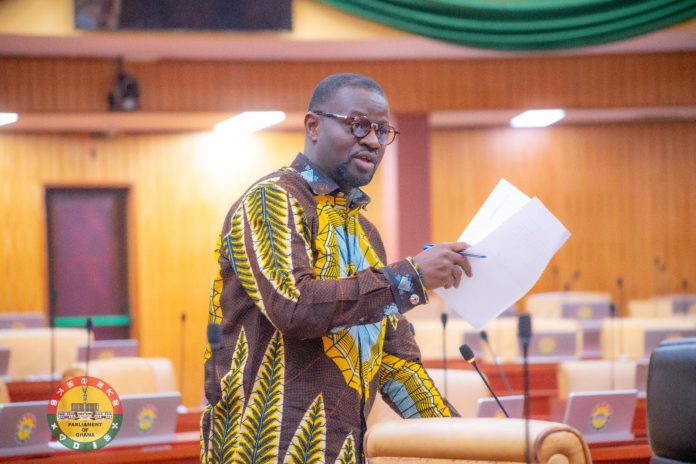
Mr Mahama Ayariga - one of the sponsors of the Bill

A bill to scrap the Office of the Special Prosecutor is currently in Parliament, days after the office had suffered huge public backlash over its performance.

Titled the Office of the Special Prosecutor (Repeal) Bill, 2025, it is a Private Member’s Bill being sponsored by two key National Democratic Congress (NDC) Members of Parliament.

The sponsors, Mahama Ayariga, MP for Bawku Central, who is the Majority Leader and Rockson-Nelson Etse Dafeamekpor, the MP for South Dayi and the Majority Chief Whip, sent the document to Parliament on Wednesday, 10 December 2025.

According to the Sponsors, “the object of the Bill is to repeal the Office of the Special Prosecutor Act, 2017 (Act 959).”

CLAUSES

The memorandum of the new bill contains seven clauses, with Clause 1 repealing the Office of the Special Prosecutor Act, 2017 (Act 959) and Clause 2 providing for the transfer of the assets and liabilities of the OSP to the AG.
Clause 3 deals with the transfer of staff to the Office of the AG, and Clause 4 provides for the books, records, case files, electronic data, databases and information, including classified or confidential information in the custody of OSP, to be transferred to the AG.

Clauses 5 to 7 say an investigation, inquiry, prosecution, or any other matter commenced by the OSP will be continued as if commenced by or under the authority of the Attorney-General.

ARGUMENT

The draft bill, which is yet to be considered by the House, proposes that the Attorney-General should regain the powers of the OSP to prosecute corruption and corruption-related offences.

Already, Article 88 of the Constitution vests the power to institute, conduct and discontinue criminal proceedings in the Attorney-General.

This, the document argues, is in order to enhance efficiency, accountability, coordination and prudent use of public resources.

If approved, the Bill is expected to “reduce administrative overheads as a result of the elimination of parallel governance, logistics and support services; provide better value for money through consolidation of prosecutorial resources; improve budgetary control under a single vote head within the justice sector; and ensure a more efficient deployment of skilled prosecutors and
investigators across the national criminal justice system.”

Established in 2017 as a specialised independent body to focus on corruption and corruption-related offences, proponents of the repeal bill argued that operational experience since the establishment has revealed persistent challenges.

They mentioned the duplication of constitutional prosecutorial functions of the Office of the Special Prosecutor and the Attorney-General, institutional friction and jurisdictional overlap resulting in delays and inefficiencies.
Other challenges, the document mentions, include high operational costs of the Office of the Special Prosecutor with limited demonstrable impact relative to budgetary allocations.

Considering the challenges, they opine that if the AG is strengthened and retooled, it could effectively exercise the national anti-corruption prosecutorial mandate.

PREMATURE

Meanwhile, the President, John Dramani Mahama, has shared a contrary view to the scrapping of the OSP, saying that it is “premature” for such consideration.

Minutes after news broke of the draft bill arriving in Parliament on Wednesday, President Mahama, on the other hand, made the premature remark.

He argued in his address to the National Peace Council that the OSP remained the only anti-corruption body with full prosecutorial independence.

“I think it’s premature to call for the closure of that office. The unique thing about that office is that it is the only anti-corruption agency that has prosecutorial powers to prosecute cases itself without going through the Attorney-General,” he stated.

The President made the case that the public views the AG as part of the government and will be reluctant to prosecute his own, making the OSP very useful.

However, President Mahama urged the OSP to speed up some of these investigations and show that the office is still very relevant.

The Speaker of Parliament, Alban Sumana Kingsford Bagbin, last week urged on the OSP to live up to expectations, stressing that the public would not be satisfied that their taxes are expended on an office that yields no results.

On that day, December 4, 2025 the Majority Leader, Mahama Ayariga, insisted that Parliament must reconsider its earlier decision to approve the creation of the OSP.

He argued that after almost eight years since its establishment, the OSP has not demonstrated any meaningful results in tackling corruption.

Retooling Police: JM Walks The Talk

0
IGP Christian Tetteh Yohuno

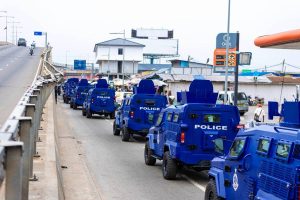
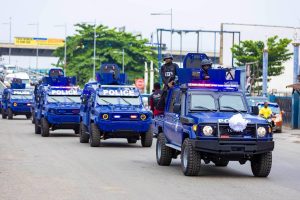
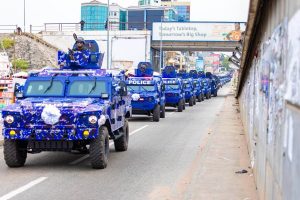
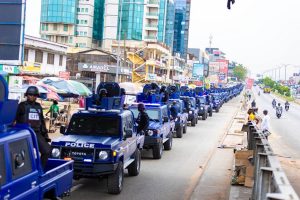
President John Dramani Mahama has walked the talk when on Thursday, December 4, 2025 he delivered forty special purpose combative armoured vehicles to the Ghana Police Service at a ceremony in Accra.

New armoured vehicles as part of security readiness for the Christmas festivity

The President, who did not hide his zeal to motivate the security agencies to fight crime and render the country as safe haven for these criminals, put on a combat crash helmet as a sign of solidarity with his men and women in the security services.

No wonder, at a separate occasion in the Volta Regional capital, Ho, on Friday December 5, 2025 during the commissioning of the National Signals Bureau Regional Command Centre, His Excellency promised to deploy over sixty thousand (60,000) additional security surveillance cameras to augment the existing security cameras dotted across the country.

The deployment of these additional cameras are seen as the President’s commitment to retooling the security institutions, so as to unsettle the miscreants.

This is because, the latest armoured vehicles to the police are designed to tackle crimes in rugged terrains, but without functioning or inadequate cameras, their impact may be limited.

Speaking at the National Police Headquarters during the handing over, President Mahama described the ceremony as a renewal of government’s covenant with Ghana to defend peace and ensure the nation remains secure, stable and just.

“Today, as we hand over these forty advanced armoured vehicles, we are renewing our covenant with the people of Ghana.

“That, this nation will protect its citizens, that peace will be defended and that Ghana remains secure, stable and just”, President Mahama said.

He disclosed that, the vehicles are only the first batch of new equipment, announcing that by the end of this month, the Police Service will receive two tow trucks, ten (10) covert operational vehicles and special drone training for a dedicated police detachment.

He stressed responsible use of the new assets, saying that these equipment are expensive and hard to procure.

Newly received armoured vehicles for the Police Service

So you must use them judiciously and according to the rules. He continued that, your safety is important, always follow safety instructions, wear seatbelts, use them professionally, lawfully and ethically.

On the deployment of the multiple security surveillance cameras, His Excellency stated that they are intended to strengthen national security, tackle cybercrime and provide sophisticated surveillance and modern intelligence capacity to support the government’s 24-hour economy policy.

The President further went on that the deployment is part of a larger plan that also includes installing 500 new 4G and 5G communication sites and constructing a new data and cyber defense center, Accra.

He also announced that the Volta Region would host a National Signals Bureau Training Academy for personnel from Ghana and other Economy Community of West African States (ECOWAS) countries.

The Interior Minister, Alhaji Mohammed Muntaka, emphasised government’s determination to build a modern, intelligent and well-equipped internal security architecture.

He warned that, attacks on security personnel would no longer be tolerated and be met with a firm and decisive response.

The Minister urged police officers to serve with professionalism, discipline, integrity and to avoid abusing their authority.

The Inspector General of Police (IGP), Mr Christian Tetteh Yohuno, stated that he and the Police Management Board, officers and men of the service were excited and grateful to His Excellency, President Mahama, and government for the retooling.

The IGP gave a breakdown of the equipment as fifteen (15) armoured pickup vehicles, twenty (20) Cobra-3 and five (5) Cobra-4 high grade armoured vehicles.

He noted that over the years, the service had seen a steady rise in the levels of risk as officers are confronted daily in the course of performing duties by criminals.

According to him, this calls for critical logistics that would enable personnel to rise above these threats, take on criminal elements head on, while ensuring the safety of our officers.

“As part of your agenda to reset the nation, one of your priority areas has been retooling of the security services, you have always expressed concerns about the safety of our officers and the need to ensure their protection,” he said.

“I am, therefore, not surprised that your administration has acquired these armoured vehicles for the police service to enhance officer safety, improving our operational efficiency and ensure a high level of security across the country,” he added.

The Chief Constable revealed that his team have deployed several strategic preventive measures to ensure security, law and order across the country.

According to IGP Christian Tetteh Yohuno, apart from several robbery attempts that have been foiled through sustained intelligence operations, police have also successfully arrested notorious suspects who operated under the illusion that they could get away with crime.

He mentioned suspects behind the rural banks robberies, attack at Radiance Filling Station at Mpasatia, raids on mobile money vendors, Wa and Bole serial murders, vehicle theft syndicate, fake online food delivery platforms, just to mention a few.

In all these cases, the IGP stated, that police’s response was decisive and effective, as the suspects are before the law courts.

He further told President Mahama that during these operations, his men had to go into very challenging territories in the pursuit of very dangerous criminals who are mostly armed and ready to do anything, including opening fire on the personnel.

“It is against this backdrop that I am particularly delighted that today, we are receiving these combative armoured cars, which are going to ensure utmost protection for our officers as they gallantly execute the mandate of protecting live and property, ensuring the safety, security of all persons across the country”, the IGP stressed.

Mr Tetteh Yohuno assured that, these vehicles are going to completely change the face and dynamics of Police operations and that they are immediately going to launch very bold, robust and targeted operations throughout the country, ready to dismantle any existing criminal networks.

He concluded by using the opportunity to send strong word of caution to persons who have decided to disturb the security of this country that, police are coming for them, no matter where they have gone to hide.


COCOBOD, REGSEC must unite to clamp down on Cocoa smuggling –Ofosu Ampofo

0
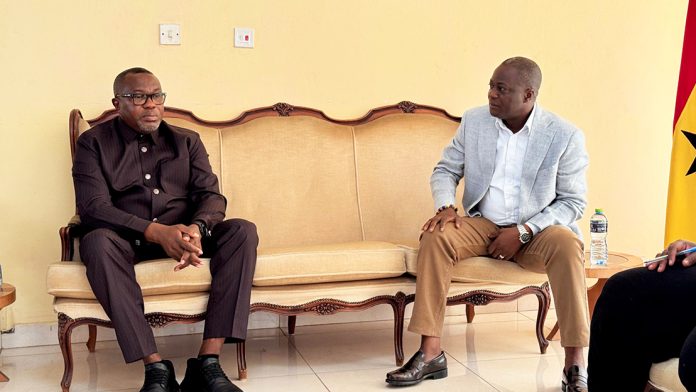
Dr Ofosu-Ampofo (L) holding discussion with Minister Nelson

COCOBOD Board Chairman, Samuel Ofosu Ampofo, has called for a stronger, more coordinated partnership between the Ghana Cocoa Board and Regional Security Councils (REGSECs) to clamp down on the growing menace of cocoa and farm-input smuggling.

He made the call during a three-day working visit to the Western Region, where he held discussions with the Western Regional Minister, Joseph Nelson and other key stakeholders.

Mr Ofosu Ampofo revealed that COCOBOD has this year alone distributed US$5.8 million worth of free agricultural inputs to cocoa farmers across the country.

He expressed concern that the huge investment is at risk as some farmers divert both the inputs and their cocoa beans onto illegal markets.

According to him, the smuggling challenge has evolved beyond cocoa beans to include fertilisers and other inputs supplied at no cost to farmers. This, he said, undermines government efforts to boost yields and threatens national revenue.

He stressed that enhanced collaboration with REGSEC would enable security agencies to better understand smuggling networks, track the movement of subsidised inputs and strengthen monitoring systems along the country’s borders.

Responding to the concerns, the Western Regional Minister, Joseph Nelson, admitted that gaps in communication and coordination between COCOBOD and the Regional Coordinating Councils have hindered the fight against smuggling.

He called for immediate measures to streamline information flow and strengthen joint operations.

In a related development, COCOBOD’s Deputy Chief Executive in charge of Operations, Dr. James Kofi Kutsoati, disclosed that the Board is implementing reforms in its input-distribution model.

The new strategy will transition corporatised farmer groups into a more efficient task-force system aimed at improving the management of cocoa pests and diseases.

Kpandai Blues: This Decision Will Not Stay -Minority

0
Frank Annoh-Dompreh

The Minority Chief Whip, Frank Annoh-Dompreh, has launched one of the strongest challenges yet to the Speaker’s recent actions, accusing him of applying parliamentary rules selectively and endangering the foundations of Ghana’s democratic order.

Raising the matter on the floor, Mr. Annoh-Dompreh said Parliament had acted unlawfully by transmitting a letter to the Electoral Commission, declaring the seat of NPP MP, Maximin Yindam vacant, despite a pending application for stay of execution, which, by established practice, automatically halts any enforcement process until determined.

“Speaker, it is not right that when an application for stay of execution is pending, any proceeding for execution shall be stayed. That is why the events of 24th November, 2025 matter so much,” he said.

According to him, on that date the Speaker delivered a ruling affirming that no action could be taken against Majority MPs until their own stay application was disposed of. He argued that the Speaker’s earlier clarity stands in stark contrast to his current position.

“What explains this abrupt departure from the binding reasoning you yourself articulated on 24th November, 2025, why does the stay rule apply in one instance, but not the other, when the factual and procedural circumstances are virtually identical?, ”the Chief Whip queried.

Mr. Annoh-Dompreh suggested that political bias may be influencing the Speaker’s decision.

“Ghanaians are asking and we in this House must also ask: is this because Honourable Maximin Yindam belongs to the New Patriotic Party?. The law does not discriminate. The law binds all of us,” he fired.

The Minority argued that if Parliament begins to treat clear rules as optional depending on political convenience, it would set a destructive precedent.

“If we abandon principle today, we leave fture Parliaments with a trail of inconsistency that invites retaliation, weakens the Chair and erodes public trust.

“Such a path fractures confidence in this institution and threatens the stability of our democratic order.”

Calling the letter to the EC “unfortunate” and “in flagrant violation of procedural justice,” the Minority Chief Whip demanded its immediate withdrawal saying the letter must be recalled forthwith. We, the Minority, do not agree with it. As a cradle of democracy, we must set a good example. “

He added that despite frequently cooperating with the Majority to enable parliamentary business “even when you don’t have your numbers”, the Minority cannot endorse a decision he says “flies in the face of logic, law and fairness.”

“This decision will not stay,” he repeated emphatically. “As Speaker, I humbly call on you to instruct the Clerk to withdraw that letter immediately and act according to the law.”

Mr. Annoh-Dompreh concluded by urging the House to return to “principled leadership, procedural fidelity and consistency,” warning that Parliament’s legitimacy depends on it.

Bono Police Declare Total War On Robbery Gangs

0
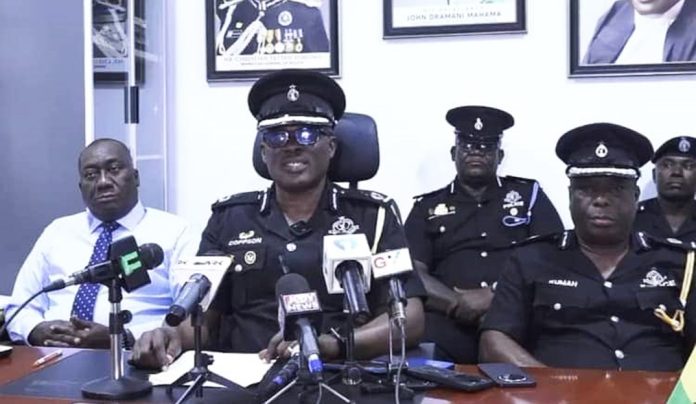
DCOP Joshua Coppson addressing the media

The Bono Regional Police Command has issued a stern warning yet to the criminal elements, announcing an uncompromising and sustained war against robbery gangs and organised crime syndicates operating in the region.

Addressing  a news conference in Sunyani, Regional Commander, DCOP Joshua Coppson declared that the Bono Region was no longer a safe haven for criminals, insisting that the police are fully prepared to “hunt down, break down, and neutralise” all the gangs terrorising communities. His message was clear and forceful: “Criminals can run, surrender or be smoked out – but they will not escape justice.”

DCOP Coppson disclosed that the Command had recorded major breakthroughs with several notorious suspects already arrested in special intelligence-led operations.

This he said had disrupted criminal activities along major highways and within vulnerable communities. As part of these decisive actions, key gang leaders and accomplices, DCOP Coppson noted, have been picked up, interrogated, charged and put before the courts in Sunyani and Fiapre.

One suspected ringleader, Johnson Amponsah Kwame Diawuo, together with his accomplices Shadrach Owusu and Kwafo Samuel, appeared before the Fiapre Circuit Court on charges of conspiracy and attempted robbery.

Presiding Judge Her Worship Akua Adoma Addae wasted no time in remanding them into police custody to reappear on 22nd December, 2025 sending a direct signal that the judiciary is fully aligned with the police in stamping out violent criminality.

In a related operation, the Bono Police arrested Latif Mustapha, alias Star Boy, and Mosby Owusu, after a dramatic attempt by Latif to hide in the ceiling of his residence.

A search of his room uncovered a disturbing collection of weapons and items, including military camouflage uniforms, a toy Glock pistol, a Taser, knives, talismans, laptops, pepper spray and soft foam bullets.

Further investigations revealed a Hungarian-made R-9 Parabellum pistol loaded with live ammunition, allegedly sold to Mosby for GHS 9,000.

Both suspects were arraigned before the Sunyani District Court B, where His Worship Eric Daning also remanded them into custody to reappear on December 15, 2025.

Another breakthrough came with the arrest of Kofi Iddrisa and Baba Kumi Foster at Ewiakrom, near Nkrankwanta.

The duo is believed to be involved in receiving and transporting stolen motorcycles and tricycles to neighbouring Côte d’Ivoire.

Three motorcycles and a tricycle were retrieved as exhibits. They have been granted police enquiry bail pending further investigations.

DCOP Coppson revealed that the Command is actively pursuing the remaining accomplices who have gone into hiding.

He indicated that investigators are following solid leads and will not relent until every member of the criminal syndicates is arrested and every illicit weapon retrieved.

“We have activated all intelligence channels. No fugitive involved in these crimes will be allowed to regroup or resurface. We are closing in,” he assured.

Calling for stronger collaboration from the public, the Bono Police Commander urged residents, traditional authorities, transport unions and community watchdog groups to provide timely and credible information that can help track down criminals.

He noted that community support was essential for sustaining gains made in the fight against organised crime. “The safety of this region is a shared responsibility. We will do our part and we urge the public to stand with us,” he added.

He pledged the Bono Regional Police Command’s readiness to reclaim peace, restore public confidence and dismantle every criminal network operating within the region.

By Edmond Gyebi

Editorial: Crackdown On Illegal Foreign-Exchange Trading Is Good But…

0
Editorial

The Criminal Investigation Department (CID) has arrested 41 suspects in a major crackdown on illegal foreign-exchange (forex) trading in Accra, recovering over GH¢1.2 million in cash during the operation.

The joint raid, carried out with the Bank of Ghana (BoG) targeted known forex “black-market’’ hotspots such as Tudu, Circle, the Airport area and Cantonments. At a press briefing, CID Director-General, Lydia Yaako Donkor, revealed that 29 suspects (including Togolese, Beninois, Nigerians and Ghanaians) were arrested in the initial swoop, with 12 more taken into custody during a follow-up raid.

Alongside the arrests, authorities seized GH¢1,266,770 in cedis, 100,000 CFA francs, 3,383,570 Nigerian naira (some stored digitally) and US $5,105. All cash exhibits have been secured and will be handed over to BoG, with suspects to be charged and brought before court.

The Chronicle finds the mass arrests by the CID and BoG commendable and long overdue. For years, black-market foreign exchange trading has thrived in Accra’s crowded markets and street corners with the kind of illicit activity that undermines formal economic systems.

The operation sends a strong signal that Ghana’s authorities are serious about enforcing the laws laid out under the Foreign Exchange Act, 2006 (Act 723), which prohibits foreign-exchange business without a valid licence from BoG.

But applauding the arrests should not blind us to the deeper structural malaise that fuels the black market. Economic experts, including Godfred Bokpin of the University of Ghana, warn that thriving parallel-market forex activity stems not simply from criminal opportunism, but from a widespread distrust of official exchange-rate mechanisms.

Many Ghanaians, businesses and individuals alike, view rates quoted by banks and licensed forex bureaus as artificially managed, lagging behind real demand and supply. Indeed, the informal forex market continues to draw customers because it offers convenience, quick transactions, flexible pricing and no paperwork. As long as official channels remain slow, bureaucratic, or fail to meet demand, people will gravitate toward illicit dealers.

The damage, however, extends far beyond individual deals. When forex trading is pushed underground: The value of the Ghana cedi weakens, as demand for foreign currency outstrips what official channels can supply. This accelerates inflation, raises import costs and erodes purchasing power.

The informal system becomes a channel for money-laundering, tax evasion, and other illicit financial activities, undermining transparency and regulatory oversight. Businesses especially import-dependent small and medium enterprises find it harder to plan or budget, because of unpredictable access to foreign currency and volatile exchange rates.

What the arrests do, therefore, is not just punish a handful of wrongdoers. They are part of a broader effort to restore trust in the formal forex market, to reinforce the primacy of the Ghana cedi as the sole legal tender, and to bring transparency back into currency exchange.

Yet if Ghana is serious about stamping out the “parallel” forex economy permanently, enforcement alone will not suffice. What is needed urgently is structural reform: Official channels must become more efficient, responsive, and accessible.

This means streamlined processes at licensed forex bureaus and banks, more liquidity and better services that meet real demand.

Transparency in rate-setting: exchange rates quoted by official bureaus must reflect real supply/demand conditions and institutions must rebuild public confidence in their integrity.

Stronger public education: many do business informally because they believe the unofficial rates are “fairer” or more real.

Robust public information campaigns are required to explain why dealing outside the system imposes hidden costs on the currency and ultimately on citizens.

Moreover, the recent policy shift by the government mandating that all government contracts be priced strictly in cedis further underscores the urgency of these reforms.

It is a vital move to defend the cedi and reduce overreliance on foreign currencies in the domestic economy.

The crackdown on 41 undocumented forex traders is a necessary jolt. But if Ghana is to decisively end the era of black-market forex, the authorities must go beyond enforcement.

They need to restore trust, improve official systems, and show that the regulated market can meet citizens’ real-world needs.

Otherwise, today’s arrests will just be a temporary disruption, and the underground forex economy will bounce back because the problem was never just about illegal dealers. It was, and remains, about structural failure in the regulated system.

In short: arresting black-market operators is essential. But more essential still is earning the public’s trust by fixing the official forex system so well that no one wants or needs to trade on the streets again.


Tinubu Calls For Stronger Measures To Address Farmer–Herder Conflicts

0
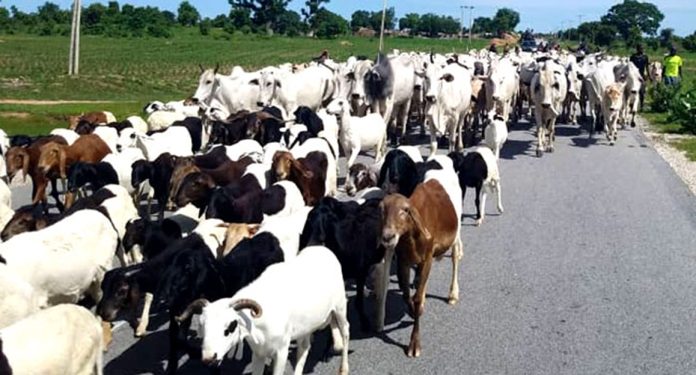
Cattle rearers with their livestock on the road

President Bola Tinubu has called for strong action to address the constant conflict between farmers and herders in the country.

Speaking just before the Federal Executive Council (FEC) meeting commenced at the State House in Abuja on Wednesday.

Tinubu asked Vice President Kashim Shettima, working with the National Executive Council (NEC), to look for villages or grazing reserves that can be salvaged or rehabilitated into ranches and livestock settlements.

He said, “We must eliminate the possibility of conflicts and turn the Livestock reform into economically viable development. The opportunity is there, let’s utilise it.

“And it is in NEC, if we exercise the constitutional requirement which states that the land belongs to the states, whichever one they can salvage, convert to a livestock village, let us stop this conflict area and turn it into economic opportunities and prosperity.” Credit: channelstv.com

The Ghanaian Chronicle