Home Blog Page 2538

Editorial: President to address the nation; better late than never

0
Editorial

The Ghanaian economy, like its peers across the world, is facing huge turmoil. Projections from economic analysts do not give any hints of immediate hope, as they fear further contractions.

The IMF’s World Economic Outlook, released last week forecasts that global economic growth will slow from 3.2 percent this year to 2.7 percent next year.

The outlook said countries accounting for about a third of the global economy are estimated to have a two-quarter contraction in real gross domestic product this year or next.

The outlook is also fraught with uncertainty, as the IMF estimates that there is a one-in-four probability that global growth will fall below 2 percent next year and that there is a likelihood of 10 percent to 15 percent that it will drop below 1 percent.

In Ghana, rapid growth halted post 2019, owing to the COVID-19 pandemic. The economy has known no peace thereafter, with economic analysts trying to agree to disagree on whether the economic crisis is domestic or exogenous.

The resultant inflation over the last few months has been driving people leaving the country into an abyss. Business owners complain about capital losses, while buyers complain about daily exorbitant price increases. The currency is still in the ring with the dollar, receiving heavy punches at a time the government is yet to finalise a programme with the IMF for policy credibility.

We heard the Minister for Information, Kojo Oppong Nkrumah, say yesterday that the President is expected to address the nation this Sunday.

It is welcome news, though we observe that the same is long overdue. To us, the President should have formally addressed the nation on the economic challenges sometime last month to calm nerves because there is tension in the country.

During the dark days of COVID-19, the President’s regular addresses, which had the tag “Fellow Ghanaians,” were not vaccines or cures for the virus in itself but gave some comfort and assured the nation that things would get better.

We recall a statement he made which attracted the world’s attention, that “we know how to bring the economy back. What we do not know is how to bring people back to life.”

This statement in particular reminded the world that the economy could not be protected at the expense of the lives of the people. Lives have been saved as the COVID-19 situation has been brought under control.

But while working to bring back the economy, it is prudent that the president talks to the people and we dare say this address is long overdue. Ghanaians will want to feel that there is a leader who appreciates the current situation and proffers hope, not the rather loud silence.

We are also informed of marathon meetings by government which started yesterday through to Saturday and culminating in the President’s address on Sunday.

The Economic Management Team is currently meeting, deliberating on some recommendations on how to save the economy. They will brief the Cabinet, which is also meeting from Thursday to Saturday. During that meeting, the Minister of Finance will provide an update to Cabinet on the status of the IMF negotiations.

The Bank of Ghana, on the other hand, is also meeting bankers and forex operators tomorrow to discuss measures to arrest the currency’s downfall.

We find these meetings very necessary. However, we hope it will not be business as usual. The economy, for want of a better word, is in a coma and so this is not the time to shillyshally with the living conditions of the citizens.

Ghanaians cannot wait to hear you speak, Mr. President, but please prove in your address that you appreciate their condition and assure them of realistic measures to save the day. Better late than never.

Controlled population growth crucial for development -NPC

0
NPC Executive Director Dr Adelaide Appiah

The Executive Director of National Population Council (NPC), Dr Leticia Adelaide Appiah, has warned that uncontrolled population growth would have dire consequences on public health, environment, economy, education, social infrastructure and overall development of the state.

According to her, population growth must correspond with development, but if the nexus between these factors disconnects, it becomes a recipe for disaster.

Speaking at a workshop organised for journalists in Accra last week, Dr Appiah indicated that the current environmental degradation, particularly illegal mining (galamsey), which the country is facing has everything to do with uncontrolled population growth, which does not match Ghana’s development.

She said people are finding it difficult to fit into the system and, therefore, had to rely on whatever means to survive and causing threats to the environment, water and other facets of life.

Dr Appiah said although population growth is as a result of small decisions taken by individuals – termed as “tragedy of the commons”- to have large or small family size, can cause a tremendous ripple effect on the country’s development.

She explained that the likelihood of parents with large family to fault on their parental obligation is high and that could result in children from such homes engaging in social vices and other practices that endanger the security of the country.

Dr Appiah added that that social fabric would be destroyed because it is impossible for any grandparent to pass on culture to his or her grandchildren if they are so many.

By a simple calculation, she said a family with four children, by three generations, had increased the population by 68 people.

As a result of ballooned population size, she asserted that instead of the country improving on its social infrastructure, it would be making adjustment to accommodate more people.

The NPC Executive Director proposed that the government through social policy can put a ceiling on the number of children individuals can have, citing China as a shining an example.

She argued that the government, as part of birth control policy could provide financial and social assistance to up to three children and anything above it must be the sole responsibility of the family. She also called on society to frown on childbearing below the age 18 years and above 35 years.

The workshop

She mentioned that the ultimate goal of the workshop was knowledge sharing between the NPC and the inky fraternity, to develop the needed communication tools for behavioral change.

Since knowledge sharing and use is key to development, she said “It is the main engine for the development of any individual or nation and no responsible family, community or government would neglect its education or knowledge sharing practices, be it formal, informal or function.”

Dr Armah identifies qualification framework gap in Ghana’s education

0
Dr Hamid Armah (m)

Member of Parliament for Kwesiminstim, Western region, Dr Prince Hamid Armah, says there is a need for credit and qualification framework to address challenges existing in the education system.

The MP, who doubles as the Vice Chairman of the Education Committee in Parliament, explained that the importance of having a national qualification framework was to ensure that there’s transparency and accountability in the qualifications that people possess and how they can transit from one sector of the academic ladder to the other.

According to him, if a person studied Technical and Vocation Education Training (TVET) and later wants to transit into general education in Nigeria or another Africa country, that should be easy with the qualification framework.

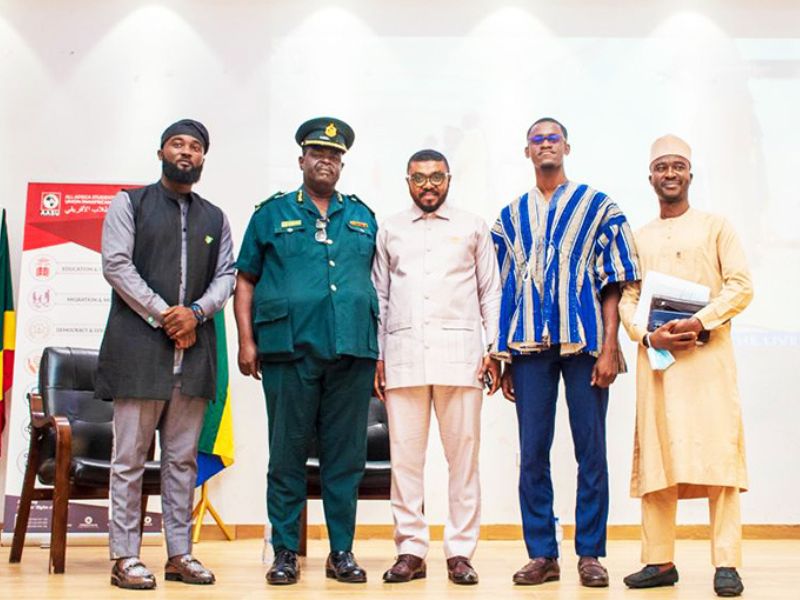
He was speaking at the Pan Africa Students Conference-Ghana, 2022,dubbed:“Bridging the educational engagement gap: Immigration and inter-cultural dialogue,”held at the Pentecost University College in Accra.

The Legislator emphasised that the national qualification framework will bring about transparency and accountability in respect of students’ qualifications.

“If you study a first degree, first year at Pentecost University and you want to travel to Nigeria, the question will be, will you be able to continue from second year from the course you were doing in Ghana …it’s not possible… in fact, in Ghana, in time past, people who had HND and wanted to do degree had to start from level 100.

“So what the qualification framework does is to recognize that a piece of learning has taken place which is then quantified and converted into a credit or number which can follow you wherever you want to move to,” Dr. Armah noted.

Additionally, he mentioned that the national qualification framework will in quest need “a whole national credit and qualification authority that will be responsible for credit transfer.

“Well-structured countries that have qualification systems also have qualification authorities and so one of the key policy changes that we will require is to decouple the qualification evaluation, certificate evaluation and create a whole national credit and qualification authority that will be responsible for credit transfer, because it is a huge business on its own, that cannot be left under a unit of an agency.”

He, therefore, recommended thatWest Africa Examination Council, the Ghana chapter be converted into the Ghana National Credit Examination Authority responsible for credit and qualifications for the pre tertiary level.

Speaking on mobility challenges facing international students in the country, he said the continent’s policy space is not conducive to foster student mobility.

“Students in Africa are struggling in terms of mobility, not only on immigration issues, but because policy imperative of credit transfer, policy imperative of qualification evaluation. So, every country is working in silos.

“The impact of student mobility is so much that it can even have impact on our economic development. In terms of human resources, when people study abroad and they decide to stay there, the knowledge they acquire are kept there to the benefit of that country.

“But if we are able to evolve, not only Ghana qualification framework but also a continental qualification framework, then it becomes easier for people to easily crisscross Africa in their academic pursuits,” he added.

He also urged policy makers across Africa to conceptualise these mobility problems as an Africa problem and create solutions, which will aid the eradication of the problem.

The conference had global dignitaries such as; Deputy Head of Mission for the Embassy of Algeria, Atmane Boudjemia, Ambassador for Suriname, H.E Fidelia Graand-Galdon and the Director for Community Education and Youth Development, Dr. Akosua Abdallah, gracing the occasion.

MTN-Ghana Foundation offers scholarships to 50 Tertiary students

0
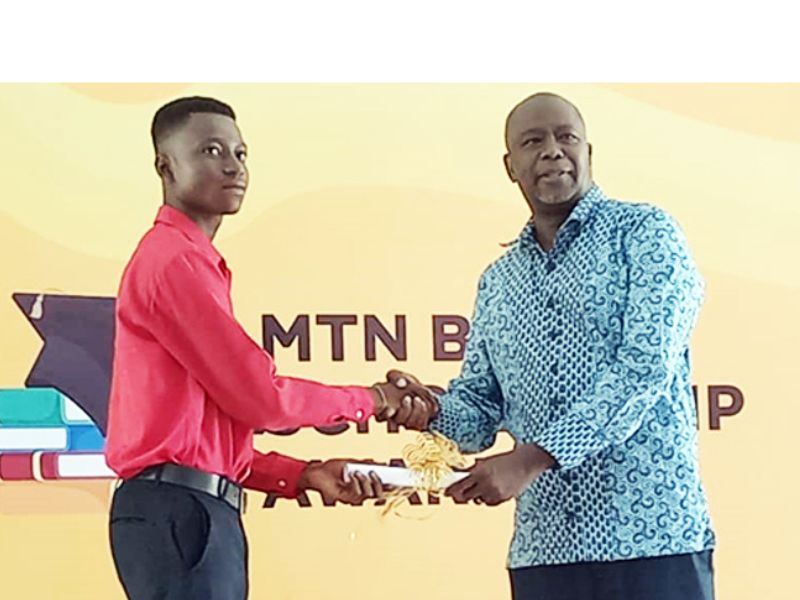
A male beneficiary receiving the scholarship package from Sam Koranteng
The turn of a female student

The MTN-Ghana Foundation has offered scholarships to 50 Tertiary Students selected from various universities in the 16 regions across the country under its Bright Scholarship Awards.

Mr. Robert Kuzoe, Senior Manager, Sustainability and Social Impact at the ceremony at the Law faculty at the Kwame Nkrumah University of Science and Technology (KNUST) explained that the gesture is to improve the quality of livelihood of communities in the areas of health,

education and economic empowerment.

He disclosed that the needy but brilliant beneficiaries were selected from the various public universities in the 16 regions to pursue high level of education.

The beneficiaries were selected from about one 1,600 applicants, which process started from June 2 to July 4 2022, after which 200 were shortlisted.

Fifty students, including males, females and the disabled were successful and offered scholarships based on gender balance for equity.

Mr. Sam Koranteng, Board Member of MTN Ghana announced that MTN-Ghana Foundation is poised to ensure that the beneficiaries’ education realised their dreams.

The 50 beneficiaries in a group pix with officials of MTN

According to him, most of the beneficiaries were on the verge of dropping out of school because of lack of funding and for that matter, the reloaded Bright Scholarship become a turning point to

them, adding that the focus would be in the studies of Science, Technical and Vocational, Engineering, Mathematics and ICT courses, in line with the government’s STEM programme.

He said the beneficiaries would be provided with laptop computers to facilitate their studies in other to have the peace of mind to study and complete their studies under the MTN four years development plan for both human and economic development and progress.

He indicated that, the beneficiaries would be provided with hostel fees and GH¢1,100.00 in every semester.

Deputy CEO of NYA calls for investment in green jobs

0
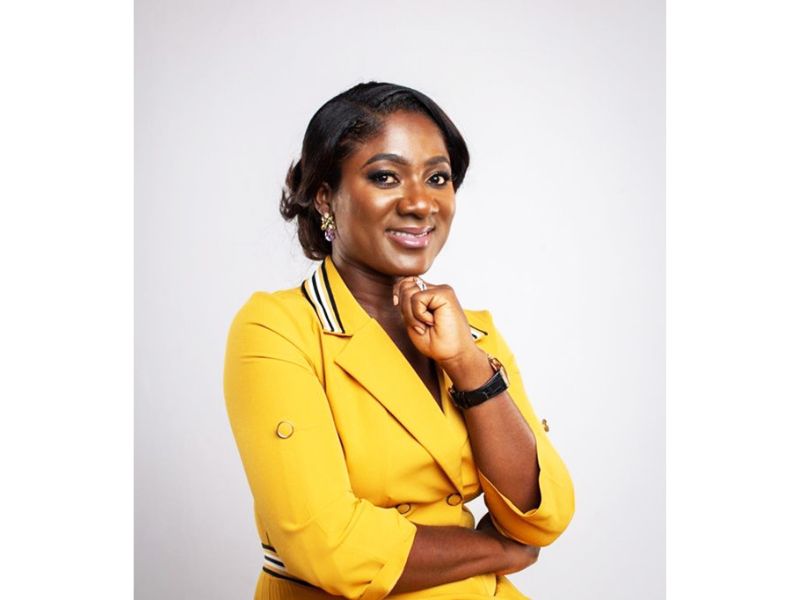
Deputy CEO of NYA, Akosua Manu

The Deputy Chief Executive Officer of the National Youth Authority, Akosua Manu, has urged world leaders and investors to channel resources into green jobs. She made the remark at a panel discussion at the just-ended Blue Earth Summit held in Bristol, in the United Kingdom.

The politician/climate activist opined that government, private sector and relevant stakeholders must allocate grants to young people, especially those in rural areas, to accelerate youth innovations and initiatives on climate change.

She further called for the empowerment of the youth to take up green jobs and provide the necessary resources to create a green economy. “I believe that young people have the capacity to effect change through creativity and innovation.

“They need to be supported with funding and resources to be able to fulfill to enable them to champion the green economy,” she emphasised.

The Deputy CEO of the National Youth Authority further urged developed countries to fulfill their financial commitments and pledges toward addressing climate change.

She reiterated that developing countries in the global south are the hardest hit by climate change and require urgent funding to develop adaptation strategies.

She also called for global north-global south collaboration to address climate change effectively.

Akosua Manu hinted at efforts by the National Youth Authority to collaborate and support young climate activists to champion Ghana’s climate agenda.

According to her, the National Youth Authority, under the leadership of its CEO, Pius Enam Hadzide, is committed to advancing the work of climate activists and youth-led organisations in Ghana.

This was evident in the NYA’s sponsorship and participation at the just-ended Local Conference of Youth on Climate Change (LCOY Ghana).

Speaking on the issue of illegal mining in Ghana, she reiterated the government’s commitment to addressing the menace. She further argued that tackling illegal mining and other environmental crimes require a concerted effort.

The Deputy CEO of the National Youth Authority shared the stage with Nadia Owusu, (Youth Advocate), Abraham Bugre (climate change consultant and researcher) and Emmanuel Ameyaw (Ghanaian journalist and Communications Specialist).

They espoused diverse stories on climate reality in the global south and youth mobilization for climate action.

BACKGROUND

Blue Earth Summit is a movement. A dynamic mix of communities driven by a love for the outdoors and a determination to do business better. The Blue Earth Summit features over 70 speakers and provides a platform for knowledge sharing and partial steps to address environmental issues, including climate change.

The Blue Earth Summit also champions energy transition, green jobs and youth inclusion. The Blue Earth Summit was held in Bristol, the United Kingdom, from the 11th to the 13th of October 2022.

I got a hair transplant worth $7,500 -Akon

0
Akon

Senegalese-American singer, record producer, and entrepreneur, Akon has confirmed that he got a hair transplant in Turkey and it cost him $7,500.

In a conversation with Bootleg Kev, the singer admitted he went to Turkey for “a procedure” to restore his hairline.

“In the beginning, my whole front was loose, it was really thin,” the 49-year-old revealed. When asked if it was a painful procedure, the ‘Ghetto’ crooner said; “Nah, no. The painful part is the beginning when they gotta numb you up. That numbing ain’t no joke. They stick a needle like this big, non-stop.”

Akon confirmed that they took a graft, and overall he appears happy with what the doctors did despite the pain.

“It looks amazing,” he added, to which Kev joked that Tory Lanez should’ve gone to the same doctor.

“I told him,” the artist replied. “I said, ‘Tory should’ve come to my man.’ Like, bro, you know.”

He went on to suggest Turkey is known “for two things,” one of which is the hair and the other is teeth. “They’re really good on both,” he said, later divulging that he can’t grow hair on his face.

Akon also took to social media to respond to the memes that have been circulating about his hairline and took all of the jokes in good stride.

Akon has recently been on a run of rather revealing interviews, and his admission of his hair transplant comes not long after he admitted he employed his brother Abou “Bu” Thiam to perform as his double when he couldn’t make a show.

Last month, he also said that he had plans to open music schools in Africa with Michael Jackson, but then the iconic popstar passed away before they could go through with the idea.

We cannot pretend all is well –Samini to Prez. Akufo-Addo

0
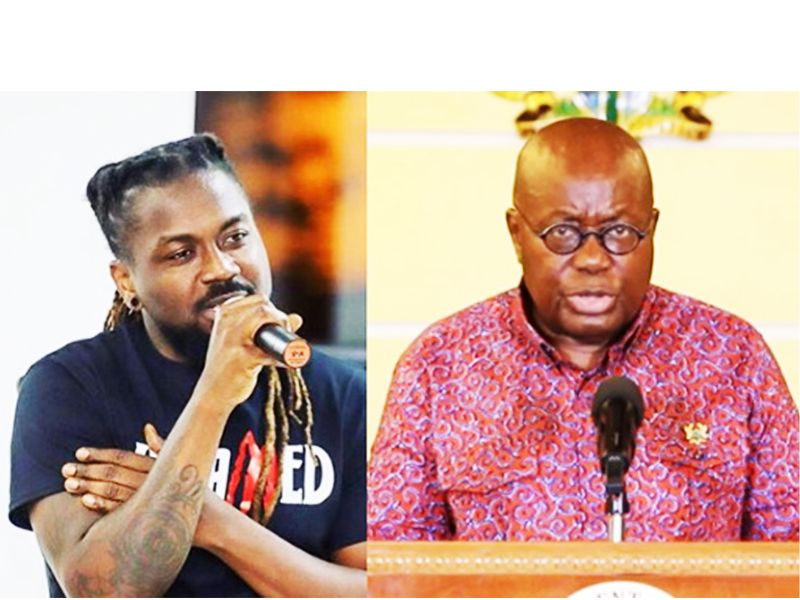
Samini and President Akufo-Addo

Dancehall Artiste, Samini has questioned President Akufo-Addo’s ability to solve the economic hardship in Ghana, adding that “we cannot pretend all is well.”

Samini in a Facebook post said that because he believed in the President’s message of change, he campaigned for him to win power in the 2020 elections.

Registering his disappointment with the turn of events, the ‘My Own’ hitmaker stated that, his soul bleeds.

“Our investments wash away daily as the dollar openly whips our cedi. We cannot pretend all is well. But if God has blessed Ghana with anything, it is our ability to stare difficulty right in the face and say, it will #bealright,” Samini bemoaned.

“Ghana must work again! Where is the Nana Addo who begged us for the mandate,” he added.

Samini’s lamentations follow a sharp depreciation of the cedi in the past month with a dollar now selling for GH¢14.7.

Inflation is in excess of 40% and fuel prices skyrocket with transport unions saying fares will go up from Monday, October 24, 2022.

Government spokespersons insist external factors are responsible for the economic decline while sector experts including the World Bank and the opposition National Democratic Congress (NDC) blame poor economic decisions for the challenges.

“The indiscipline in high and low places of government must be checked. We go keep hope alive and continue to soldier on. What’s a man without hope? We can only continue to pray for a better tomorrow. To all my high graders out there, I say it again, we will #bealright!!!”

Meanwhile, Samini has urged Ghanaians to keep their faith and pray for a better Ghana.

Kwadwo Nkansah Lilwin opens up on divorce

0
Lilwin

Kumawood Actor, Kwadwo Nkansah Lilwin, has opened up on why he divorced the mother of his child for another woman.

Most of the netizens who decided to verbally attack Lilwin could not understand why the actor cum musician would leave the woman he reportedly struggled with when he had nothing for another lady after he became rich and prominent.

Lilwin has finally spoken and addressed these issues.

Speaking to Zionfelix which was monitored by The Chronicle, he stated that marriage is not a ‘do or die’ affair, stressing any of the partners can leave at any point in time when he or she feels the marriage is not working anymore.

Lilwin also used the analogy of a ‘road journey’ to explain why his marriage with his ex-wife, Patricia Afriyie could not last forever.

According to him, a lot of the time when a car sets out for a journey, it is not every time it will get to its destination which is similar to most marriages.

“It’s not by force to stay in marriage till the end. Just as you impregnated two women at the same time, it’s not your wish but things happen. You can’t force it, it’s a journey. For instance, it’s not all cars that travel from Accra to Kumasi that arrive safely.

Some either get burnt, collide and damaged on the way. That’s how life is. You start with someone and the person gives up at a point. You cannot force that person to continue. A lot of wealthier men have even left their wives,” he stated.

Is Russia’s silent majority waking up?

0
Opinion

On September 21, I woke up to the news that my country had announced a “partial mobilisation”. The details given by President Vladimir Putin were vague; reports by independent media claimed that unpublished parts of his draft decree put a mobilisation target of one million people.

Almost immediately after the announcement, I started receiving calls for help on Telegram, asking for advice on how to flee Russia. Some of my friends who had left before the war and I organised a chat group to answer questions on which countries do not require a visa, how to rent a cheap apartment and set up a bank account.

The chat accumulated more than 150 potential draftees fleeing the country in just three days. Some of them had already received notices from the military office, but most had not and had no intention of risking getting one. This was one of many social media initiatives which, along with various organisations, have helped Russians flee the draft.

Within hours of the announcement, flights out of Russia were bought out and long queues formed at border crossings with neighbouring countries, including Georgia, Kazakhstan and Mongolia. According to Russian media reports, by October 4, some 700,000 people had left the country.

Millions of Russians were affected directly or indirectly, whether they and their family members decided to stay, were drafted or left. It was clear that in his desperation, Putin was dragging Russians into a war that nobody but he needed.

The negative reaction to the “partial mobilisation” was registered even by pollsters – long seen as unable to provide an accurate reflection of public opinion in Russia.

A poll conducted by independent pollster Levada Center registered a sharp increase in the number of people who said they were “very concerned” about the war in Ukraine – from 37 percent in August to 56 percent in September; that is in addition to 32 percent who say they are “rather concerned”.

Putin’s approval rating also took a hit. It dropped from 83 percent to 77 percent. But to many, 77 percent may still look like a large number for a president who is sending hundreds of thousands to a brutal war.

How can that be reconciled with the 88 percent who say they are “very concerned” and “rather concerned” about the war in Ukraine? How can this be?

Since the war started, there has been a lot of debate about whether Putin’s popularity is as high as polls show. If one dives deep enough into how these surveys are conducted, it’s easy to see that the outcome couldn’t have been any different.

As Dmitry Muratov – the Nobel Peace Prize laureate and chief editor of the independent newspaper Novaya Gazeta – explained in a recent interview, pollsters have much more information about people they call than just their phone number.

Russians are aware of that and when they get a call, asking whether they support Putin, they are much more likely to answer “yes”, fearing that a “no” may have negative consequences for them.

Furthermore, as Muratov points out, the rate of those who refuse to respond in the first place is quite high – possibly around 75 percent. With such skewed analytics, no wonder the official results show that Putin’s approval rating is high.

But there is also another factor: the Kremlin’s industrial-sized propaganda machine, which is aimed at keeping the Russian population misinformed and politically passive.

This machine, along with a lack of political freedom and the recent purge of all major independent media outlets, has contributed to the formation of a layer of society known as “vatniki” “(from the Russian word for a type of warm coat). These people live shrouded in apathy generated by Putin’s propaganda, as if wrapped in a comfortable cotton coat.

They do not necessarily support the war or killing Ukrainians, but if Putin says that is what must be done, then, according to them, perhaps, he is right.

Or, at least, that is how it has been for the past two decades: through the war with Georgia and the illegal occupation of its territories in 2008; the illegal annexation of Ukraine’s Crimean peninsula and the start of the war in the Donbas in 2014; and the intervention in the war in Syria in 2015.

The disappearance of imported European cheese and currency fluctuations aside, the vatniki never felt the impact of these reckless decisions by Putin.

The Kremlin made sure that people lived their lives in isolation of these events, watching them on TV screens from the comfort of their living rooms, packaged as glorious conquests by media propagandists. War and international policy were, to the vatniki, nothing more than entertainment.

In a recent conversation about the inertia of the majority in Russia, a friend summed up the world of the vatniki quite well. She reflected on her grandmother’s behaviour:

“She chooses nothing in her life or her country. She is not an active Putin supporter, she simply accepts everything she sees on TV. There’s no buffer of reflection between watching TV and creating an opinion. It’s not that she doesn’t express her opinion directly; it simply doesn’t exist.”

But the mobilisation shook things up. It put many Russian families at risk of losing their comfortable life and even their breadwinner – which is still a man in most Russian families. That made a lot of vatniki feel quite worried. It is one thing watching the news, cheering Russian soldiers as they grab territories of other countries, it is another having your grandson get drafted and die from a HIMARS strike.

Waking up from a peaceful slumber of propaganda manipulation is hard and, as in the case of the older generation of Russians, almost impossible at times. The Russian state media creates the illusion that politics is hard and that Putin is the only one able to handle it – so the Russian people might as well support him.

My grandmother, in her mid-sixties, who has two grandsons, said, “[This mobilisation] is the right thing to do, I am sure, but it would be better not to have it.” Then, as if catching herself saying something outrageous, she added, “Our country was simply forced into all these actions, and I would very much like it all to end as quickly as possible.”

A friend observed a similar reaction in her mother, a retired history teacher living in Saint Petersburg: “She asks not to talk about politics. Since the beginning of the war, she said that the government knows better. After the mobilisation, she just cries non-stop. But she will never say that he is against Putin. She’s afraid.”

Having fed the Russian people lies and the illusion of safety all these years, on September 21, Putin suddenly broke an unwritten social contract with them: guarantee stability and comfort, and avoid dragging them into his foreign policy adventures.

Now the illusory feeling of security under Putin’s rule is gone for many Russians. The mobilisation decree states no specific criteria on who might get drafted.

And while government officials have tried to sugarcoat the draft by – for example – adding the word “partial” to it – there have been many reports of people being rounded up for military service without regard to the rules of who can and cannot be drafted.

But most of these violations of draft rules have happened far away from Moscow and St Petersburg, the country’s political centre, where the Kremlin wants to preserve peace and quiet. This has created a false sense of security among many of their residents.

As the first wave of mobilisation started to subside and some people realised they weren’t directly affected by it, they returned to their old habit of pretending the war didn’t concern them.

My mother, a middle-aged woman living in Moscow, is one of them. “At first, it was scary. Then it became calmer … in the end, none of my acquaintances was taken away. Perhaps the authorities decided to soften the pressure. But I don’t know what to expect next, and I don’t believe anyone,” she told me.

It is unclear how long the majority will be able to delude themselves that all is good. In the immediate future, at least, protest seems unlikely. As a friend of mine, an aspiring twenty-something politician who decided to stay in Moscow, even at the risk of getting drafted, to fight against the regime, told me: “The biggest problem in Russia is that people can’t unite; they’re atomised, and left feeling helpless.”

But as Russia’s disorganised army continues to face setbacks in the “annexed” regions, the screws will tighten. On October 19, Putin announced martial law in the occupied territories and imposed strict security measures in Russian regions. We might see the next stage of the mobilisation start, even if now Putin is saying that it will end in two weeks – a cheap attempt to calm down the people.

In the coming months, we may see more Russians receiving notices from all over the country. More families may lose loved ones on the battlefield; more people may lose friends and acquaintances. More people may be labelled “missing in combat” to not to inflate the Russian death toll in the war.

This, in addition to a collapsing economy – due to Western sanctions and Russia’s disproportionate military spending – may finally wake people up to the truth: Russia is a criminal state, with an illegitimate political system, broken judiciary and a government of crooks.

If the full-scale invasion of Ukraine was not enough to awaken people, then the corpses of sons and grandsons may be the ones to strip the vatniki of their cushioned lives and push them to the streets.

Source: Aljazeera.com

The views expressed in this article are the author’s own and do not necessarily reflect The Chronicle’s stance.

I’ll fix flooding problem if elected president –Peter Obi 

0
Presidential candidates of Labour Party, Peter Obi

Presidential candidate of the Labour Party (LP), Peter Obi has given insight into how he plans to fix the flooding crisis ravaging the country if elected president in 2023.

Speaking on Arise Television on Monday, Obi noted that the flooding crisis could be avoided by predicting the calculation of rainfall and dredging major rivers to hold the water.

He said, “What will I do to curb this flooding? There’s a combination of things that I need to do. There is the issue of Lagdo dam but even the minister said the rainfall caused the flooding and not the dam. But if you take the average rainfall in the past 20 years — since 2001 — it remains the same, which means it is predictable.

“But the issue is that we have refused to dredge some rivers. We need to dredge the River Benue and Niger from Baro, Niger state down to the Atlantic Ocean. But there’s currently no ability to hold this drainage, and tributaries are also part of what is causing this problem. The rivers are no longer contributing to our economic growth as they should be.

“These are the things we should do to be able to contain this,” he said.

Recall that Obi had announced suspension of his political campaign to visit some some states the affected by flooding.

He also commiserated with residents the affected states over the impact of flooding on their communities.

Most part of Nigeria is currently battling with flooding, with the United Nations International Children’s Emergency Fund (UNICEF) saying 34 out of the 36 states have been affected and 1.3 million people displaced.

Credit: vanguardngr.com

The Ghanaian Chronicle