Gospel Musician, Diana Hamilton, has opened up about how she had to wait for long to conceive after marriage.
Speaking in an interview on Joy Prime, the ‘Mo ne yo’ crooner revealed she cried for some years before she conceived and when God listened to her prayers, she was short of words.
“When God blesses you with a child, you just have to praise Him. There is a young lady who has been in a long time of waiting. I heard her speaking with another guy and she is like, when I am going through it, just pray for me in your closet and when God does it, praise him with me,” the award-winning Gospel musician stated.
“When I was waiting on God, the comments came. I am an easy-go person; yes, we will come home and cry. I cried at the end of every month when I was hopeful and it didn’t happen. Like a Christian, you don’t cry like an unbeliever, you cry as somebody who has hope but if you don’t cry then you are being a hypocrite, I trusted God and when he did it, I cried. I was short of words,” she divulged.
Diana Hamilton and her husband, Dr Joseph Hamilton have given birth to twins, Michael and Michaela.
The Socialists have ruled Ghana for 45 years, including28 straight years from 1972 to 2000. The Capitalists have ruled Ghana for only 20 years to date. And so, if Ghana’s economy is what it is today, who is to blame?
Rawlings who was anti-West, went to the IMF eight times, six times under PNDC and twice under NDC; and he also crawled to the West and begged Ghana to be signed into a binding trade agreement, where we are compelled to import products that are fare cheaper than the same, we produce here, kicking our local producers out of business.
In my opinion, to strengthen our economy and our currency, we must do the following:
Negotiate with foreign businesses to cut down on monies they repatriate and make them to reinvest the rest here.
Introduce low levies on foreign currency transactions in the forex and in the banks.
3. Ban importation of things we can produce hereand place very high import tariffs on importation of such items.
4. Renegotiate with companies drilling our oil and minerals and dealing in, other resources, so that we have majority shares and profit.
5. Renegotiate all investment and other agreements for Ghana and Ghanaian own businesses to have absolute majority shares and profit.
6. Promote Ghanaians to own businesses and industries by lowing mandatory requirements and invite Ghanaian owned companies, overseas, to come home.
7. Make Ghanaian dishes, state dishes and allow only our local foods to be served at state functions.
8. Open up South-South cooperation,with more tradingwith African and Southern Hemisphere
In poultry, Ghana should start breeder farms to produce commercial stocks from our local pedigree so that we do not import day old chicks. There is an expert called Dr. Okling is an expert in this field, but try as he would, no government is looking at him.
When President Kufuor made the attempt to withdraw from those binding trade agreements, Ghana signed into under Rawlings, the NDC MPs told him it can’t happen. Then IMF came knocking loudly with harsh warnings.
It is about time we went for broke and bear whatever consequences that would come.
One of the means whereby economies stay resilient is when majority of businesses and industries are in the hands of the indigenes. That was how it was in the 70’s when Ghanaians owned, breweries, mattress factories, pharmaceutical companies, tobacco firms, poultry farms and in addition we had functional state owned GIHOC with 16 divisions. Ghana exported to the sub region and abroad markets. There was Tema Shipyard which was tops in West Africa, where ships come for servicing.
Unfortunately, in 1981, a revolution came and all Ghanaian businesses were collapsed, both state and privately owned, and sold cheaply to wives and cronies and left to collapse. In 1995, came a decree that Ghanaians should not patronise certain made in Ghana products.
Rose Pillars would have grown into the likes of Shoprite but it was collapsed in the 80s. A-Life blossomed in the 90s but went down quickly due to greediness of bankers and politicians.
Today most big-time businesses are owned by foreigners who repatriate dollars to their home countries after converting our cedis.
Due to the unnecessary binding trade agreement, PNDC signed Ghana into in the 90s, we import chicken which effectively collapsed our once vibrant poultry industry. We import rice, when we have rice farms here. It is cheaper buying from outside than producing here in Ghana because we are not to support our farmers.
Unless, government goes into negotiations, it will be difficult to easily get out of this mess. NDC could use TV3, on prime time to condemn local rice.
The 1992 Constitution spelt out the separation of powers in the three arms of government, yet this same constitution gave presidents a hold on Parliament.
At least 51% of all ministerial appointees are to come from Parliament. The president also appoints an MP as minister of Parliamentary Affairs who becomes a member of cabinet.
To this end, MPs from ruling parties will die to protect the president and blindly follow all the president says.
Today, the NPP MPs have demonstrated that MPs are representatives of the people and not of government.
The NDC MPs had lots of opportunities like this, to stand up against their leader and president and speak for the people. An example was the Woyome Scandal in which they defended that crook and swept his case under the carpet, which they converted from criminal to civil.
Under an NDC government Woyome was not only allowed to go freely but also to go with what he stole. Hebastardised the legendary principles of the highly disciplined people of Anlos.
Guess what, I am proud to be Ghanaian because now Parliament has grown teeth to bite.
In 2008, the world economic crunch was about knocking out our Cedi. But JAK and his EMT came out with solutions that protected our economy. When world price of petroleum shot up Kufuor pegged ex-pump price of fuel products. He maintained the price when the world price dropped so that he could reap funds to repay what government spent when world prices went high. And we had no problems with food. He imported rice from India.
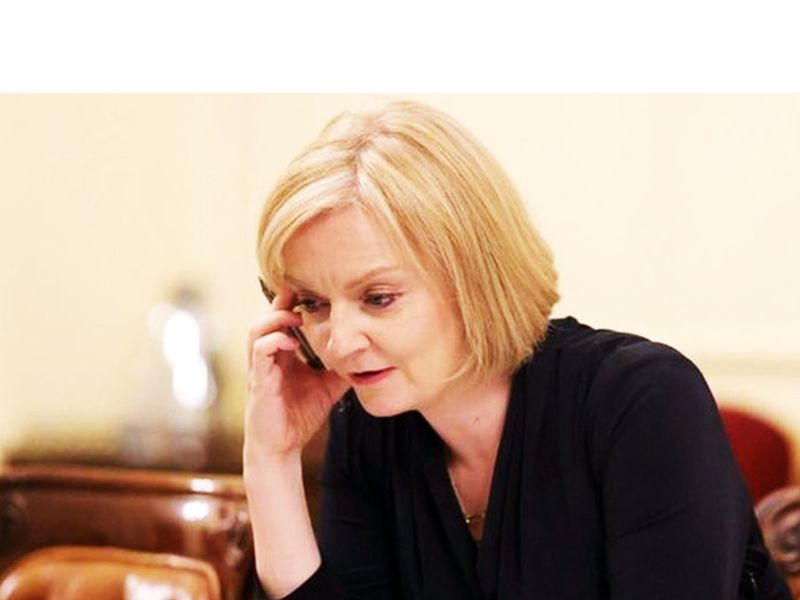
The government has been urged to open an investigation into claims former prime minister Liz Truss’s phone was hacked while she was foreign secretary. The Mail on Sunday reported private messages between Ms Truss and foreign officials, including about the Ukraine war, fell into foreign hands.
The hack was discovered during the summer Tory leadership campaign but the news was suppressed, the paper said.
The government said it had “robust” cyber-threat protection in place.
Levelling Up Secretary Michael Gove told Sky News he did not know the full details “of what security breach, if any, took place” but said the government took these issues “incredibly seriously”.
Details about the hack were suppressed by then-prime minister Boris Johnson and Cabinet Secretary Simon Case, The Mail on Sunday claimed, citing what it said amounted to a “news blackout” imposed by Mr Case.
The newspaper also said private messages exchanged between Ms Truss and Kwasi Kwarteng were also uncovered by the alleged hack.
UK Prime Minister Rishi Sunak and French President Emmanuel Macron in their first call since Sunak took office agreed on Friday on greater cooperation to prevent migrants crossing the Channel, the British government said.
A UK PM’s office spokesperson said the leaders were “committed to deepening our partnership to deter deadly journeys across the Channel that benefit organised criminals”.
Sunak stressed the “importance for both nations to make the Channel route completely unviable for people traffickers”.
This year, a record number of 37,570 people have crossed the Channel to England in small boats. The issue has caused a major political headache for the UK government, which promised tighter border controls after leaving the European Union.
Tensions have risen between London and Paris, with the UK government accusing France of not doing enough to stop the crossings. Sunak wants to tighten up terms of a draft deal with France on cross-Channel cooperation and make it “more ambitious”. Sunak wants the draft deal with France to include a minimum number of French officers patrolling beaches, the report said.
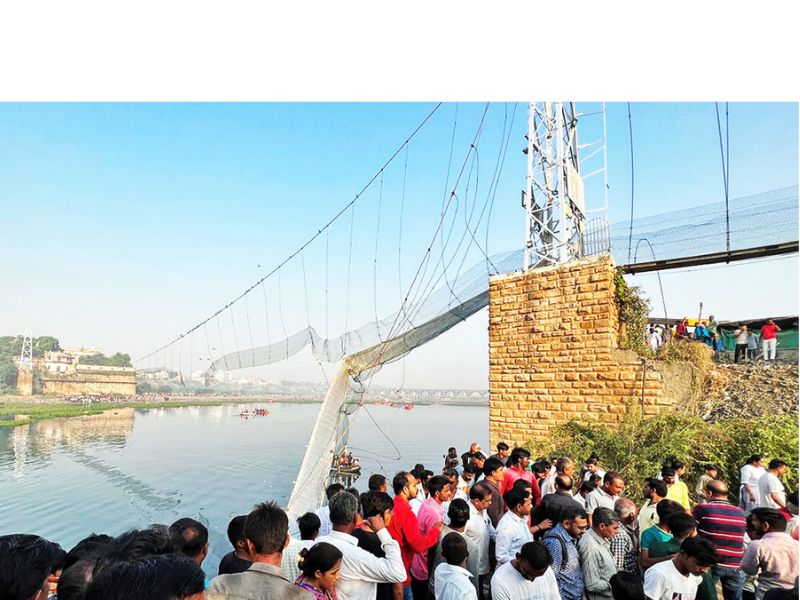
The death toll has risen to 134 after a suspension bridge collapsed in India’s western state of Gujarat on Sunday, as authorities revealed the structure had only recently reopened following repairs.
Gujarat Home Minister Harsh Sanghavi said Monday some 200 people are estimated to have been on the bridge in the town of Morbi when it collapsed into the river below on Sunday evening. A cable at one end appears to have snapped, he added.
The state of Gujarat has lodged a criminal complaint against the agency that was handling the maintenance of the 230-meter long bridge, which was built in the 19th century and reopened last week after renovations, he said.
Photos from the scene Monday showed people gathering on the bank of the river Machchhu beside the mangled metal walkway, which hung at a sharp angle into the water, where rescue workers in inflatable dinghies searched for survivors.
A five-person special investigation committee has been established to investigate the incident.
The two men whose convictions for the 1965 assassination of Malcolm X were overturned last year will receive $36m from the city and state of New York, their lawyer confirmed.
The tragedy of Malcolm X’s murder was felt all over the world, and compounded by the fact that it led to the convictions and imprisonment of two innocent, young, Black men in America.
The two men, Muhammad Aziz and Khalil Islam, always maintained they did not commit the murder. Aziz, 84, had sought $40m after serving about two decades in prison and more than 55 years after being wrongly blamed in the case that raised questions about racism in the criminal justice system.
Aziz is married and has six children. Islam, who died in 2009 at age 74, also spent more than 20 years in prison and was exonerated in November 2021.
His estate had also filed a $40m suit. They were released in the mid-1980s, but it was not until November 2021 that their names were fully cleared by the New York State Supreme Court.
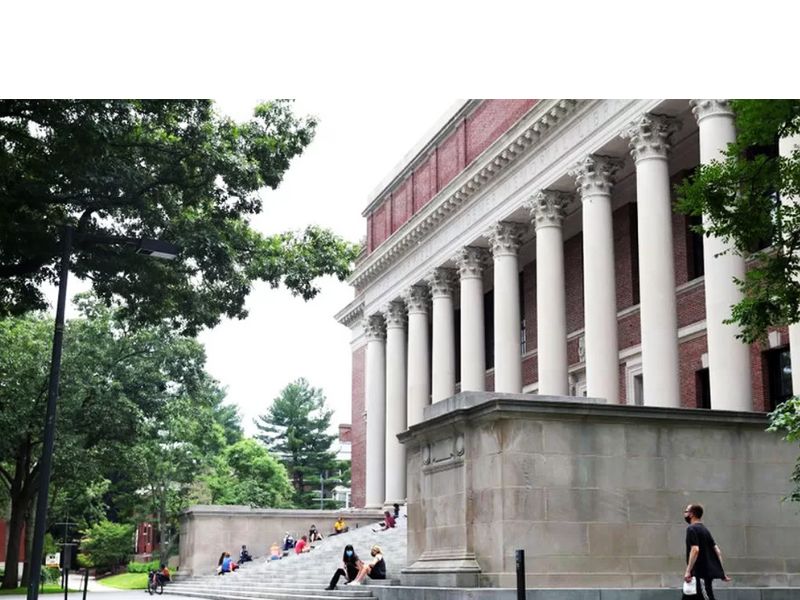
The cases concern admissions at Harvard University
The US Supreme Court is set to hear two cases that could dramatically alter the extent to which universities can consider an applicant’s race during the admissions process. The eventual ruling could end decades-old affirmative action policies and significantly affect how universities manage admissions. Arguments in both cases will begin at the Supreme Court on Monday.
Affirmative action is among the most contentious issues in US education. The cases concern admissions at Harvard and the University of North Carolina. The court is hearing challenges to their admissions policies, which consider race among many factors when evaluating applications.
The policies are designed to boost the number of Black and Hispanic students, and are intended to ensure minority groups are fairly represented among university student bodies.
But the question to be weighed by the court is whether they are discriminatory and violate civil rights laws. Its eventual decision could radically impact the admissions plans of hundreds of institutions of higher education across the US.
The plaintiffs, a non-profit group called Students for Fair Admissions, accuse Harvard of discriminating against Asian American applicants in order to boost representation from other groups.
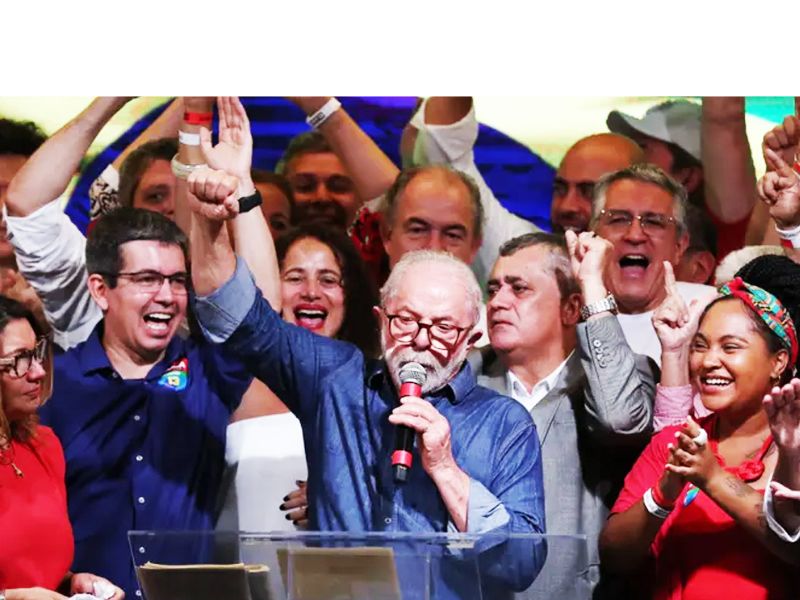
Brazil has taken a turn to the left as former president Luiz Inácio Lula da Silva beat far-right incumbent Jair Bolsonaro in the presidential election. After a divisive campaign which saw two bitter rivals on opposite sides of the political spectrum go head to head, Lula won 50.9% of the votes.
It was enough to beat Jair Bolsonaro, whose supporters had been confident of victory.
But the division which this election has highlighted is unlikely to vanish. It is a stunning comeback for a politician who could not run in the last presidential election in 2018 because he was in jail and banned from standing for office.
He had been found guilty of receiving a bribe from a Brazilian construction firm in return for contracts with Brazil’s state oil company Petrobras.
Lula spent 580 days in jail before his conviction was annulled and he returned to the political fray.
“They tried to bury me alive and here I am,” he said. Opinion polls suggested from the start that he would win the election.
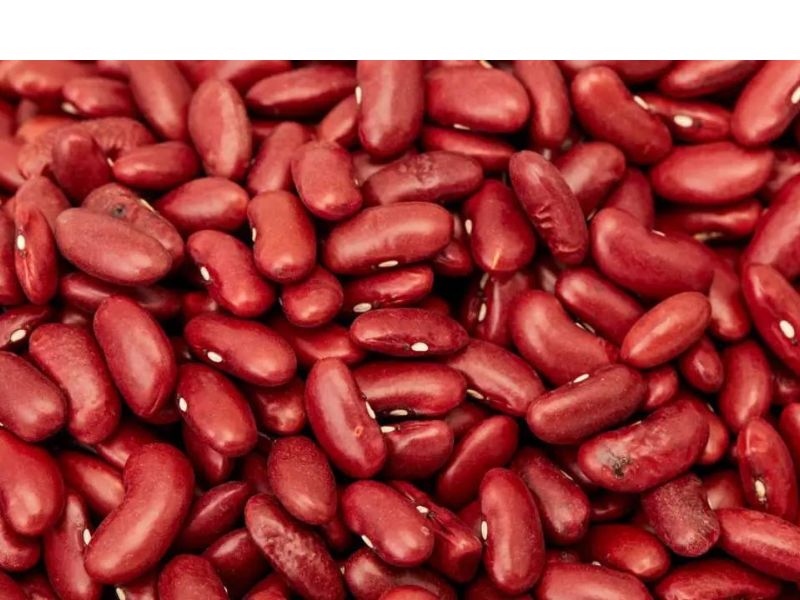
Named for their red color and their shape, kidney beans are a type of legume that commonly comes in two varieties: light red and dark red. Both kinds tend to be firmer than most other kinds of beans, but the light-colored ones are a little softer in texture than their darker cousins.
Kidney beans are a type of “common bean” that share an ancestor with black beans, pintos, and navy beans. European explorers first discovered this ancestor bean in Peru and helped spread common beans around the world. Today, kidney beans remain an important part of the cuisine in South and Central America and the Caribbean.
Health Benefits
Nutritionists often recommend beans as part of a healthy diet because of their high nutritional value. Like other beans, kidney beans can be counted as both a protein source or a vegetable.
Eating at least a half-cup of beans per day can improve overall health. According to one study, people who eat beans daily consume less fat and saturated fat while taking in more fiber, protein, folate, iron, and other important minerals.
Beans may have a positive impact on health when eaten as a replacement for meat or other protein sources that are high in cholesterol. Reducing cholesterol is one way to lower your risk of heart disease and improve your heart health. Kidney beans are one of the healthiest types of beans to use as a protein source, with slightly less fat and saturated fat than other varieties of bean but with comparable amounts of fiber and protein.
Prevent Colon Cancer
Research shows that colon cancer may develop less often in people who regularly eat common beans, such as kidney beans. The non-digestible fiber in common beans plays a positive role in regulating cell growth in the colon, which may help reduce the risk of developing colon cancer. Further study is needed to discover exactly how this mechanism works.
Control Blood Sugar
Beans are a low-glycemic index food, so they don’t cause spikes in blood sugar when you eat them. They can also help moderate the effects of foods that do cause spikes in blood sugar. For example, kidney beans or other common beans can be eaten with rice to slow the rate at which the rice digests.
Weight Management
Many people struggle with dieting, especially when adopting a low-carbohydrate diet. Eating a diet high in fiber may offer an alternative way to lose weight. Because fiber is filling, it can help people feel fuller longer and avoid overeating. Studies have shown that eating beans as part of a high fiber diet may help people who are trying to lose weight.
Things to Watch Out For
A natural protein occurring in beans can cause gastrointestinal distress, including nausea, vomiting, and diarrhea. Of all the common beans, kidney beans have the largest amount of this toxin, called phytohaemagglutinin (PHA). Cooking destroys the toxin, so be sure to cook kidney beans thoroughly.
Canned beans are fully cooked during the canning process, so they are completely safe to eat. However, using a slow cooker to cook fresh or dried beans may not heat the beans sufficiently to destroy the toxin.
Like most beans, kidney beans can cause gas. If you are cooking dried beans, the hot soak method may be best for reducing the compounds in kidney beans that create gas.
How to Prepare Kidney Beans
Kidney beans are a favorite of many cooks. Available dried, canned, and in food pouches, they hold their shape well when cooked and add visual appeal to any dish with their rich colors.
People who generally dislike most beans because of their soft texture will often still eat kidney beans due to their firmer texture. Because they are colorful and easy to pick up, they also make a healthy finger food for toddlers.
Kidney beans make a great addition to hot and cold salads, side dishes, soups, and even pastas. Here are some different ways you can add kidney beans to your diet:
Toss with green beans and wax beans to create a classic three-bean salad.
Combine with chili powder, seasonings, and other beans to make a vegetarian chili.
Try the classic Italian soup pasta e fagioli that includes kidney beans.
Mix kidney beans with rice and seasonings for a side dish with a Caribbean flair.
If Ghana secures its 17th IMF programme in 56 years, it will almost certainly return for another in roughly six years, if the past is any indication. The most recent programmes were in 2003, 2009, and 2015, and, like those before them, they failed to transform the post-colonial economy into a dynamic and resilient one that is able to withstand any shocks, including pandemics, external wars, or a rising dollar.
IMF
The reason is simple. Fund programmes are typically short-term and based on analytical tools and policy prescriptions that are ill-suited, often counter-productive, for a post-colonial economy like Ghana’s, which was structured to serve external interests, not improve the living conditions of its people.
The Fund’s debt sustainability analysis, for example, focuses almost entirely on how to service current and future debts (including debt owed to the Fund) and ignores the more fundamental question of how some of the debt came to be in the first place.
When I served on the transition team on the economy in 2001, I coined the term “dirty debt” after reviewing documents on Ghana’s debts dating back decades.
Dirty debts arise mainly from factors like inflated contracts and dubious external loans from shadowy commercial interests, or donors out to promote exports from their home countries through “soft” loans.
Because their actual contribution to economic growth is doubtful, even harmful, dirty debts can only be repaid by diverting resources from critical sectors such as education, health, and infrastructure.
In one notorious case, a project was inflated by US$100 million. A retrospective debt analysis, instead of the prospective one favoured by the Fund, would identify the beneficiaries of such dirty debts, retrieve their ill-gotten wealth (with interest), prosecute them, and take measures to deter recurrence as part of an IMF programme.
(I estimate that 20-30% of Ghana’s public debt is dirty debt that can only be repaid through resource diversion).
Most of the Fund’s performance indicators, especially those based on GDP, are also unfit for a post-colonial economy with weak institutions like Ghana’s. The 2015 programme, for instance, was based on the belief that government’s wages and salaries were too high at 7.1% of GDP. The correct figure turned out to be 5.8% after the GDP was rebased in 2018.
All other indicators – debt, budget deficit, tax revenue, capital expenditure, and exports – based on GDP, therefore, turned out to be wrong, although they formed the basis for the programme.
This may partly explain why Ghana is back at the Fund only two years after completing that programme (with waivers). The ongoing negotiations is heavy with GDP ratios.
The 40-Year Development Plan has the answers
The latest IMF programme, therefore, should be treated as a stop-gap measure, at best, and placed in a Wider Crisis Response Framework (WCRF) based on the 40-Year Development Plan (2018-2057), which has the specific objective of transforming Ghana’s economy and sparing the country the ritualised embarrassment of running to the Fund every time it encounters headwinds in its development.
The first of the five strategic goals of the Plan was to transform the economy by building an “Industrialised, Inclusive and Resilient Economy”. What follows largely draws from it.
Creating the conditions for transformation
Economic transformation requires not only a long-term vision but also a sound and predictable policy environment with low inflation, a stable exchange rate, and responsible fiscal policy that strikes the right balance between revenue and expenditure.
In such an environment, consumer inflation and the exchange rate, for instance, are two sides of the same coin. If inflation rises from 10.0% to 12.0%, for example, the cedi will have to depreciate by 2.0% to keep Ghana’s exports competitive.
If the depreciation overshoots, because of external factors or what economists call “animal spirits” (irrational speculation in currency markets due to growing uncertainty or spooky pronouncements by government officials or their misinformed proxies), this would lead to imported inflation, and the cycle will continue.
One way to break the cycle is to curb excessive and wasteful public spending, but for decades successive governments have failed to do that. Table 1 is a snapshot of this “curse” of reckless spending from 2008 to 2021.
Wages and salaries overshot their budgetary allocations in each of the 14 years, even though government met its revenue targets in only three of those years.
Equally disturbing are the shortfalls in capital expenditure, a driver of economic growth, which generally followed the electoral cycle, with spending spikes in election years and a steady reduction afterwards.
The cedi also suffers from inherent or structural weaknesses that will take longer to address, but whose policy responses must be formulated now. Figure 1showsthe inherent weaknesses of the cedi compared to other currencies, and on its own merit. Between 2000 and 2021, the cedi, the Nigerian naira, the Kenyan shilling, and the South African rand depreciated, but the cedi depreciated the most – by an average of 10.2% per year, compared to 5.7% for the naira, 2.6% for the rand, and 1.6% for the shilling.
On its own, in 2007, one cedi bought $1.08 after redenomination. By December 2021, the cedi could buy only $0.17(Figure 2), a cumulative depreciation of 84.3%, which extended to about 94.4% by mid-October 2022. Between January and October 2022, it lost about 67.1% of its value against the dollar, compared to 8.0% for the Kenyan shilling. Both countries operate in the same global environment.
What accounts for the inherent weakness of the cedi? The culprits are many, but one stands out: low diversification of exports and a disproportionate dependence on cocoa inflows, as most of the proceeds from gold and crude oil (two of the three largest exports) are kept offshore.
But cocoa is a seasonal crop, and so are its forex inflows, resulting in the boom-and-bust inflows shown in Figure 3, from 2015 to the first half of 2022.(It’s been like that since Tetteh Quarahie). Inflows surge every October/November, as the cocoa season opens, and begin to decline between December and February until September the following year.
These logoligi inflows contrast sharply with the steady rise in the demand for dollars during the year. Government has to borrow to close the gap during the period of forex decline as foreign firms and investors repatriate profits and businesses import.
The refusal of foreign lenders to give Ghana any more loans due to unsustainable debt is partly responsible for the current crisis.
The instability of cocoa inflows is aggravated by an unhealthy dependence on COCOBOD’s annual syndicated dollar loans that are used to buy cocoa beans from October onwards.
The highest such loan since the 2009/2010 cocoa season was US$2.0 billion in 2011/2012. Since then, the loan amounts have generally declined (along with cocoa output), to US$1.3 billion in 2020/2021 (Figure 4) and further to US$1.13 in 2022/2023, even as Ghana’s population rose from 24 million in 2010 to nearly 32 million in 2022 and its imports needs to be increased accordingly. Banning certain imports will not save the cedi.
Aggressive exports diversification will. (Significantly, as many as 28 foreign financial firms, plus Ghana International Bank in London, combined to raise the US$1.3 billion in 2020).
Industrialisation and inclusive growth
Determinants, policies and strategies for industrialisation and inclusive growth are outlined in the 40-Year Plan. They include nine “structural enablers of growth”, three “cyclical enablers of growth”, and 13 “catalytic initiatives for industrialisation and growth”.
The cyclical enablers, for instance, include a proposed cedi depreciation range of 0-5% per year, with the upper limit “reserved” for unexpected shocks, and actual depreciation averaging 2.5% per year based on the policies of the Plan.
Electricity being the life blood of industrialisation, the Plan proposed an increase in electricity consumption from 348 kWh per capita in 2015 to 850 kWh per capita by 2021 and 1,433 kWh per capita by 2025. As of 2019, consumption had risen to only 461 kWh per capita.
Besides other proposals, such as an Export Advisory Council made up of local and foreign Ghanaian business leaders, the catalytic initiatives include three that have moved to the top of development discourse since Covid: (1) A Productivity development strategy; (2) a Future of Work Strategy; and (3) a Strategy for Transforming the Informal Sector.
The informal sector: transformation, not taxation
The myth that the informal sector sits on massive wealth that government only needs to find creative ways to tax to end its fiscal woes has led to many misguided policies, such as the e-levy, which hamper formalisation and subvert government’s revenue mobilisation efforts.
The sector makes up 90.0% of all enterprises and accounts for about 70.0% of employment but contributes only 26.0% of GDP (or, roughly, national income). This suggests low productivity and low incomes, especially for the 67.0% of the labour force involved in survivalist activities like petty trading.
What the sector needs is not taxation but transformation, to raise productivity, household incomes, and living standards, whilst accelerating its formalisation and the growth of its tax base for inclusive development. The ILO’s Recommendation 204 would be a great start.
Jobs, jobs, jobs, and more jobs!
Ideally, employment and decent work (as defined by the International Labour Organization) should be the top-most objective of Ghana’s development agenda.
The 40-year plan recognised this and projected an annual average of 375,000 jobs, mainly in the private sector, compared to the 320,000 people who enter the labour force annually, for a total of 15 million jobs over the Plan period.
According GSS, there were 1.5 million unemployed Ghanaians in 2021, up from 1.2 million in 2016. Of those working, over70%arein vulnerable employment, otherwise known as the working poor.
Populist and impractical programmes such as those for “youth entrepreneurship” have failed because not every unemployed youth is an entrepreneur waiting to be made.
Most youth in fact require wage employment as their first entry into the labour market, and studies have shown that about 80% of new jobs are created by existing businesses.
Besides, countries with higher levels of wage employment tend to have lower levels of poverty with high degrees of economic formalisation.
Creating 15 million jobs will be based on a three-dimensional integrated strategy of (1) Labour demand (economic growth), (2)Labour supply (skills development), and (3)Labour markets (laws and policies).
The strategy in turn will be nested in a new framework for Local Economic Development (LED) based on business development, infrastructure development, and social development as part of an aggressive push to accelerate decentralisation. The Business Climate Survey pioneered by GIZ in some districts in 2009/2010 would be a useful complement.
However, the effective implementation of the strategy will require extensive institutional reforms, especially of the sector ministry, which has not had a single labour economist in decades and has been marginalised in the ministerial pecking order for just as long.
The labour market information (LMIS), only partially developed after more than 15 years, must be finalised to provide quarterly labour market statistics on employment, wage growth, and other indicators in line with global best practice.
Alternative indicators, such as the employment rate, which measures the ability of the economy to absorb labour, should replace or supplement popular but misleading indicators like the unemployment rate, which is unsuitable for developing countries and can undermine employment policy by providing conflicting information about the labour market.
To accelerate economic growth and labour demand, government should amend the Bank of Ghana Act to make economic growth and employment the primary objectives of monetary policy, followed by price stability, with the establishment of a labour economics department to guide policy.
The current approach to monetary policy is anti-growth and anti-jobs.
De–dollarise the economy
A country that gives its officials US dollar car loans in the midst of a pandemic to import luxury vehicles should be the least surprised when its currency later collapses because of lack of dollars.
Indeed, during the crisis, the public was treated to periodic reports of public officials seeking “medical reviews” abroad, despite the presence of the Bank Hospital, built by the Bank of Ghana to provide world-class health services and thus help relieve the cedi of the constant pressure of dollar demand from those seeking medical treatment abroad. Everything from hotels to business and residential accommodation to port
charges is priced in dollars, while politicians make campaign promises in dollars without regard for their effect on the cedi. Even the Black Stars are paid in dollars (while the cocoa farmers who bring in the dollars are paid in a depreciating cedi).
Government must launch an ambitious agenda for de-dollarisation as part of a broader agenda for transformation and resilience.
The 40-Year Plan contains a 20-year spatial development framework to address such things as open gutters, slums, informal settlements, and to promote proper management of the built environment, broadly.
The Plan also contains a 30-Year Infrastructure Plan that, among other things, proposes light rail systems in Accra, Kumasi, Tamale, and Sekondi-Takoradi as part of the modernisation of public transportation in Ghana.
The tagline for the framework is, “Space, Efficiency, Growth”. Both documents are crucial to a growth and transformation agenda and must be implemented.
Confront corruption
No country has smashed the development barrier without first smashing the corruption barrier, which diverts resources for development into private pockets and undermines development.
The doubling of the price of a school desk through corruption, for example, means only half the number needed can be bought. The same would apply to stationery, hospital beds, and other forms of government procurement for development.
In short, corruption undermines development, and any serious plan for development and transformation must have explicit targets for combating corruption, such as the number of criminal prosecutions in a year and the amounts of money retrieved for the public fiscus.
Finally, face economic reality
In his 2020 budget to Parliament in November 2019, the minister of finance announced declining economic growth rates from 7.0% in 2019 to 6.8% in 2020 all the way to 4.6% in 2022, before rising slightly to 6.5% in 2023.
These forecasts followed negative growth in key sectors of the economy, such as construction and water and sanitation sectors (-4.4% each), and the near collapse of the financial sector, which posted successive negative growth for 24 months (between 2017 and 2019). Clearly, the economy was in a state of distress long before Covid and later Ukraine.
Acknowledging this fact and identifying the policy flaws that dealt such body blows to the economy in three short years is critical to understanding the policy prescriptions of the 40-Year Plan and implementing them for the successful transformation of Ghana’s economy.