Home Blog Page 2159

Former banker charged with GH¢72,750 fraud

0
Court

Victoria Odamea Agbemavah, 37 and a former banker, has been charged for defrauding Seabeige Ghana Limited off the sum of GH¢72,750.00.

She was charged before an Accra Circuit Court, presided over by His Honour Samuel Bright Acquah. Victoria is facing one count of defrauding by false pretences, and two counts on issues of false cheques.

The accused pleaded not guilty to the charges and was granted bail in the sum of GH¢50,000 with one surety. Narrating the brief facts of the case, the prosecuting officer, Chief Inspector Isaac Anquandah, said the complainant was George Baadu Adams, Sales Manager for Seabeige Ghana Limited.

The company is the producer of Safare Tissue products, while Victoria Odamea is a former banker. He said, on January 31, 2023, the complainant was introduced to the accused as a businesswoman and needed some of the tissue products.

Based on this assertion, the complainant supplied the accused with 100 pieces of Ahomka tissue valued GH¢20,000, 200 pieces of Jumbo wrapped tissue valued at GH¢22,000, and 50 pieces of mini kitchen tissue valued at GH¢4,500.

The accused was also supplied with 200 pieces of Gye Nyame lite tissue valued at GH¢14,100,

50 packs of Gye Nyame 2 ply tissue valued at GH¢5250.00, and 50 quantities of Skuul pack tissue valued at GH¢6,900.00.

This brings the total sum of the goods supplied to the accused to GH¢72,750.00.

The accused, after obtaining the said products, issued two Consolidated Bank Ghana cheques, with a face value of GH¢36,375.00 each, to be drawn on February 15 and March 1, 2023 respectively.

However, when the complainant was about to present the cheques on the scheduled dates, the accused called him and asked him not to present the cheques and promised to pay the said amount in cash, but failed.

On April 12, 2023, the issue was reported to police and the accused was arrested. It came to light during investigations that the accused sold some of the products to the tune of GH¢49,491.00, but could not account for them.

The accused admitted the offences in her cautioned statement and refunded GH¢10,000 as part of the proceeds.

The court was further told that the accused had subsequently paid GH¢3,000 and pleaded for time to pay the complainant.

After investigations, the accused was charged with the offences and put before the court.

Education on Sexual and Gender-Based Violence is the way to go

0
Editorial

Over the years, sexual and domestic violence have remained a pressing issue in Ghana; one that requires a comprehensive and multi-faceted approach.

Sexual and Gender-Based Violence (SGBV) such as child marriage, domestic violence and rape against women and young girls has been allowed to escalate to epidemic proportions. Today, one in three women worldwide experience gender-based violence, suffering the stigma, while offenders commit these acts with impunity.

In Ghana, approximately 94% of children between the ages of one and fourteen are said to have experienced one form of gender-based violence. Over 48% of Ghanaian women and girls have been sexually abused.

A lot of women face barriers in reporting domestic violence. These obstacles are rooted in cultural beliefs, and that domestic and sexual violence are private matters that should be addressed at home.

A public health report shows that 33 to 37 percent of women in Ghana have experienced physical, sexual and emotional violence from their partners in the course of their relationships.

Girls are also victims of sexual abuse, and 52 percent have experienced gender-based violence. The situation can get worse as most of these girls do not report these crimes for fear of reprisal.

To help address this, the Ministry of Gender, Children and Social Protection, in collaboration with the United Nations Population Fund (UNFPA), has organised a two-day training session for selected women leaders in the Tamale Metropolis to serve as paralegals, so as to educate women traders and other people on domestic and sexual violence, and the sanctions that come with it.

In the fight to address this sexual and gender-based violence issue, women trained as paralegals have emerged as crucial agents of change.

The paralegals were made up of leaders of the Aboabo Market in Tamale and surrounding communities to educate traders and other people about domestic and sexual violence, and to help victims to consult the right channels with their problems in order to get the requisite legal, psychological, and social support.

The paralegals were taken through topics such as Sexual Abuse, Domestic Violence, Child Labor, Verbal Abuse, Rights of Males and Females and Right to Property.

The Chronicle commends the Ministry of Gender, Children and Social Protection for its commitment to empowering women and creating a safer society for all. The training represents a significant step towards ensuring justice and support for survivors of sexual and domestic violence.

By equipping women with legal knowledge, these programs empower them to assist survivors in navigating the complex legal processes. With their acquired expertise, the women paralegals will ensure that the women and girls understand their rights, enabling them to make informed decisions and pursue legal remedies.

In a society where cultural norms and taboos often hinder women from speaking openly about their experiences and are forced to seek solace outside of the criminal justice system, the presence of women paralegals offer a safe and empathetic space to seek justice and healing.

The women paralegals are trained to provide emotional support and share their experiences without judgment or fear. Their empathy and understanding foster trust and encourage victims and survivors to seek justice and rebuild their lives.

By lending a compassionate ear, these paralegals empower survivors to reclaim their voice, strengthening their resolve to end the cycle of violence.

The Chronicle also believes that engaging directly with community members women paralegals foster a collective responsibility to prevent violence, creating a safer environment for all. Survivors of sexual and domestic violence often face immense stigma and shame, making it difficult for them to come forward and seek help, especially from men.

Women paralegals, with their deep understanding of the cultural context and the challenges faced by women in Ghana, provide a crucial bridge. They create an environment where survivors feel comfortable to share their problems with their fellow women.

It is in this light that The Chronicle pleads with the Ministry of Gender, Children and Social Protection to extend this initiative to other regions of the country and also advise women and girls to make use of this opportunity and report all gender violence related issues to the appropriate channels.

Orphans at Akwadum Christian Village pray for New Juaben North parliamentary aspirant

0
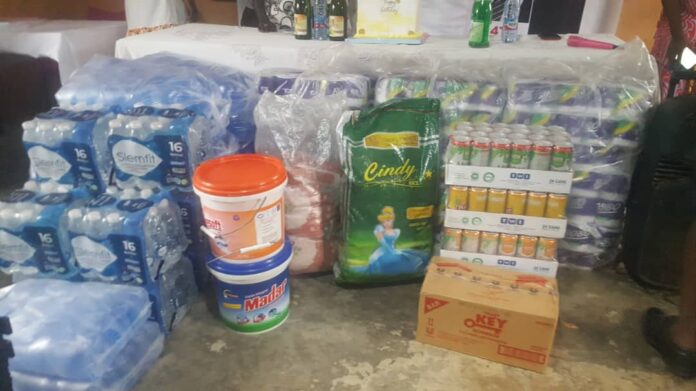
Some of the items donated to the village by Mr. Philip Twum Yeboah during the visit

The Akwadum Christian Village, an orphanage in the New Juaben North Municipality of the Eastern Region, was turned into a temporary worship centre, as orphans and their caregivers sung religious songs amidst fervent prayers for Philip Twum Yeboah.

This happened when Philip Twum Yeboah, an aspiring Member of Parliament (MP) for the New Juaben North Constituency on the ticket of the ruling New Patriotic Party (NPP), decided to celebrate his birthday with the Village.

Philip Twum Yeboah (in all white) mobbed by some family members and management of the village

He donated bags of rice, boxes of soaps, buckets of detergents, soft drinks, diapers, bottles and sachet of drinking water among others to the children.

Speaking to a cross-section of media practitioners in the Eastern Regional capital, the birthday celebrant who was accompanied to the village by his family described the reception as awesome and emotional.

He disclosed that the gesture of the children had taken him to another level of school of life, whilst he charged the kids to take their lives seriously in order to improve their standard of living.

To him, a vision was better understood at the end and not the beginning, and it was, therefore, refreshing for the children to cherish themselves as there was hope and a brighter future for them.

He urged them to take their education seriously as it would enable them to become independent, confident, and courageous, adding that it also helped to realise true potentials, sharpening critical skills and giving more opportunities to younger people.

The New Juaben North parliamentary aspirant, who is a native of Koforidua Oyoko, is a Phd candidate in Management and Strategy at the Ghana Institute of Management and Public Administration (GIMPA).

He holds the following qualifications to his credit, Bachelor of Commerce from the University of Cape Coast, an Msc in Industrial Finance and Investments from the Kwame Nkrumah University of Science and Technology (KNUST), and a Master of Philosophy (MPhil) in Leadership from the University of Professional Studies, Accra (UPSA).

He is a Certified Financial Consultant and a member of a host of professional bodies including CIMA, IoD-G, IIA, CFC-USA, IFA MIPA UK.

He is currently a LLB final year student of the University of London.

As part of his contributions towards addressing the relatively poor economic environment within the constituency, Mr. Twum Yeboah has provided agriculture machines to lower the burden for small and medium scale farmers.

KIA Motors and World Vision save lives in Fanteakwa South …with fully furnished Health Center and Mobile Clinic van

0
Group photograph of members of the community and management of KIA Automobile

KIA Motors, in collaboration with World Vision, has handed over a medical facility, known as KIA Green Light Health Center, to the Ghana Health Service (GHS) and Akyem Saaman community in the Fanteakwa South District of the Eastern Region.

The KIA Green Light Health Center, which is funded by the KIA Automobile Company, Korea, is part of a five-year project, which was started in July 2018, and would be completed in September this year.

Symbolic presentation of the KIA Mobile Van

It is situated on four acres of land dedicated to the KIA Green Light Health project, and boasts of a number of consulting rooms, maternity with labour wards, a laboratory, dispensary, storerooms and other equipment, as well as a Mobile Clinic van.

The total cost of the two projects was $1,090,000 and is to contribute to the reduction of maternal and child mortality, and morbidity in the Osino sub-district of Fanteakwa South District through the improvement of access and quality of health care services provided by health staff and volunteers.

Addressing the gathering during the handing over ceremony over the weekend, the Head of KIA SM team, Eunjoo Lee, said the facility had become a seed for sustainable growth and catalyst for positive change towards the future.

According to him, the project aims to improve the health, nutrition and social well-being of the most vulnerable populations, including infants and young children within the district.

The KIA Green Light Health Center is expected to serve 14,363 beneficiaries (5,723 men, 5,855 women, 1,492 girls and 1,263 boys) in five communities, namely Saaman, Abompe, Dwenase, Gyampomani and Nsuapemso

From an original design for a Community Health Post, known in Ghana as “Community Health Planning and Services (CHPS) Compound, the facility has been upgraded to Health Centre status, with the relevant facilities and services in place.

The KIA Mobile Van supports the health outreach programme of the KIA Green Light Health Center to hard-to-reach communities.

In an effort to ensure the provision of 24-hour healthcare services, a staff accommodation facility has been provided, as well as the construction of a mini theater as part of efforts to upgrade the facility to deliver essential health care services to the project beneficiaries.

Joshua Baidoo, Integrated Programmes Director, World Vision, said the Health Center project had attached to it a poultry farm project with an initial 2,000 birds to shore up the internally generated fund, create jobs, and increase the nutritional needs of the people.

In a speech delivered by Dr. Banabas Kwame Yeboah on behalf of the Director General of the Ghana Health Service, who lauded the collaborative initiative, stated that it would significantly prevent avoidable deaths.

He assured the gatherings of the readiness of the GHS to augment logistics needed and protect the life span of the facility.

The District Chief Executive for Fanteakwa South, Mr. Ernest Ofosu, said the district had no hospital, therefore access to health care was a challenge to the people resulting to an incidence in maternal deaths.

He was convinced that with the provision of the Kia Green Light Health Center, and government efforts in building and equipping CHPS compounds in the district, the mortality and morbidity rates would significantly reduce.

Begoro PRESEC receives bags of cement …after The Chronicle publication

0
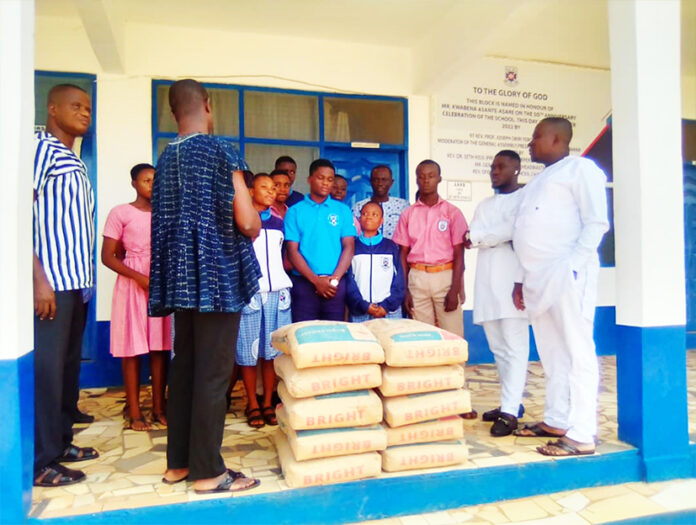
Mr Gabriel Keesi Yeboah (in white) donating some bags of cement to the Begoro Presbyterian Senior High School (SHS)

An aspiring Member of Parliament (MP) for Fanteakwa North Constituency on the ticket of the ruling New Patriotic Party (NPP), Mr. Gabriel Keesi Yeboah, has donated some bags of cement to the Begoro Presbyterian Senior High School (SHS).

Speaking to the Eastern File after the short but impressive presentation ceremony at the forecourt of the school’s administration block, the Fanteakaw North parliamentary hopeful stated that he was touched after reading the publication in The Chronicle Newspaper.

According to him, it was unfortunate to see the deteriorating nature of the only SHS in the district regardless of the academic and other curriculum performances.

Mr. Gabriel Keesi Yeboah, who is affectionately known in the political space as One Gabby, assured management of the school of his commitment to use his network and contacts to woo individuals from within and outside the district to come to the aid of the school.

On the same day, the aspirant donated some bags of rice, oil, ram, and goats among others to the Muslim community in the district for the Eid al-Adha Mubarak or the Feast of Sacrifice, which is the second and largest of the two main festivals celebrated in Islam.

It would be recalled that Mr. Gabriel Keesi Yeboah, on May 23, 2023, presented hospital equipment to the Begoro District Hospital in an effort to improve health care delivery in the area.

The items include infant scale, toddler scale, examination lamps, multifunctional beds, delivery sets, baby warmer, delivery bed, bandage adhesive, alcohol pads, lanats, scan gel, drip stands and BP monitor.

Background to the donation

The Chronicle, in its June 7, 2023 edition, carried a story under the headline “Begoro PRESEC in ruins”

It was reported that the school, which is the only SHS in the Fanteakwa North District and located in Kradaso, a community close to the district capital, Begoro, had suffered many infrastructure deficits, a situation which was gradually affecting teaching and learning negatively.

The school was initially started as the Presbyterian Middle Girls Boarding School in the early forties by the Basel Mission, and later converted into the Begoro Women’s Training College on December 10, 1965.

It was later converted to Begoro Secondary School following the phasing out of the Begoro Women’s Training College on August 31, 1972, and has since produced very important personalities who have and are contributing to the socio-economic development of the country.

Notwithstanding its contributions towards national development, it has seen little or no infrastructure development since its inception, as past and present headmasters, teaching and non-teaching staff improvised for teaching and learning to take place.

‘KATH needs to tap into experience of Oheneba Danso’

0
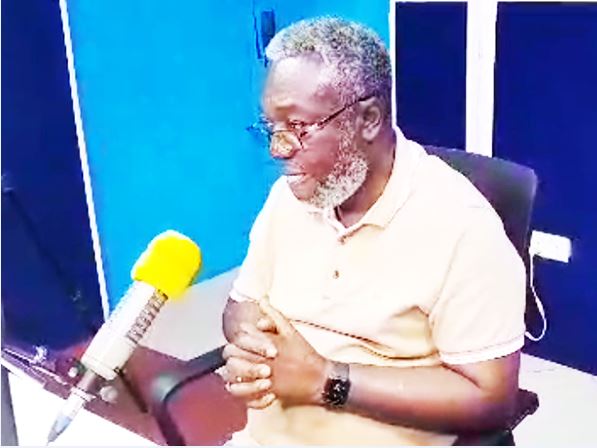
The Presidential Advisor on Health, Dr. Anthony Nsiah-Asare speaking at the studios of Silver FM at Bantama, Kumasi

The Presidential Advisor on Health, Dr. Anthony Nsiah-Asare has urged staff of the Komfo Anokye Teaching Hospital (KATH) to exercise patience about the re-appointment of the immediate past Chief Executive Officer (CEO), Dr. Oheneba Owusu-Danso, to work at the facility.

According to him, should Dr Danso’s appointment be approved, he would have nothing to do with the management of the hospital he once handled.

“He cannot sit at home, he is doctor –a Consultant in plastic surgery and he cannot sit at home. I do not understand why the doctors are afraid of his presence at the hospital. He is not part of the core management of KATH,” he said.

Dr. Anthony Nsiah-Asare was speaking in an interview with a Kumasi based radio station, SILVER FM, monitored by The Chronicle over the week-end.

According to the Presidential Advisor on Health, Dr. Oheneba Danso has gone on retirement but he applied to provide a consultancy service to the hospital and this is an acceptable practice everywhere.

Dr. Anthony Nsiah-Asare, a medical officer, academic and health management expert, who once served as CEO of KATH during the erstwhile administration of President John Agyekum Kufuor, used the Kwame Nkrumah University of Science and Technology (KNUST) as an example, where after one has served at the high office of the university as a Vice-Chancellor, can go back and lecture.

He contended that Dr. Oheneba Danso is going back to KATH as a practising doctor and nothing else.

Dr. Anthony Nsiah-Asare underscored that had he been at the helm of affairs at KATH and that he would have loved to have the caliber of Dr. Oheneba Danso around him.

“If I were a CEO at KATH, these are the kind of people I would like to have around me, so we do not turn people away, the doctors must exercise patient.”

Nevertheless, he told the listeners that the current CEO of KATH, Prof. Otchere Addai Mensah is a great person who would like to tap into the experiences of his predecessors.

CSOs Ready to Collaborate to Co-create Open Parliament Reforms

0
Sammy Obeng, Executive Director of Parliament Network Africa (PNAfrica)

The Executive Director of the Parliamentary Network Africa (PNAfrica), Mr. Sammy Obeng, has indicated that Civil Society Organisations (CSOs) are ready to collaborate with parliaments to co-create open parliament reforms.

This, he noted, was evident in West Africa over the past year, following the launch of the maiden Open Parliament Index (OPI) report.

Mr. Obeng made this remark during a webinar organised by PNAfrica, under the auspices of the African Parliamentary Monitoring Organisations Network (APMON), in commemoration with the International Day of Parliamentarism, which marks the anniversary of the Inter-Parliamentary Union (IPU), a time to review the progress that parliaments have made over the period in the discharge of their core functions.

The event brought together stakeholders, partners and CSOs from all over the continent of Africa and beyond to engage and discuss the progress made after the launch of the maiden African Open Parliament Index 2022.

The event gave opportunities to CSOs to assess the Impact, share lessons and Identify challenges of the index with their respective Parliaments.

In his open remarks, Mr. Obeng noted that the OPI report, since its launch in 2022 has received lots of positive feedback from all the 13 West African countries that were assessed.

Evidences of these, he indicated, are discussions made on the index on the floor of parliaments, and parliamentarians pledging their willingness to do more in ensuring open parliament.

In furtherance to this evidence, the Executive Director noted that press conferences, statements, and speeches have been made by high-level officials in parliament including speakers of parliament, with some countries challenging themselves to do more to maintain and attain better results in the next index.

The Executive Director also cited downloads of the report, which is in three languages by the public, all over the continent, as proof of the success of the report.

He indicated that the willingness of countries to support the index has proved that the project is a great initiative and the 2024 second edition will be expanded beyond West Africa to include the Eastern and Southern African countries and if possible, the North and Central part of the continent as well.

“This has become necessary as a result of calls to include other African countries thus the need to increase from the 25% of Africa to 50% and beyond,” Mr. Obeng underscored.

According to him, the measure of the next OPI, which from January to June 2024 will be intense based on improved methodology, data, facts and figures from parliament, CSOs, Media and other sources.

It’s in light of this that Mr. Obeng announced to close to a hundred participants at the event that the second OPI report will be launched at the first African Parliamentary Monitoring Organisation Network (APMON) national conference to be held next year.

The conference he indicated will discuss parliament and parliamentary engagement, and will provide a menu of options to the various countries on the continent to identify where they are lacking and to also learn what other countries are doing in these areas.

By Florence Gbolu

2024 elections is about economic recovery, not about Mahama                    -Political activist

0
Precious Agbenya - Political activist

Mr. Precious Agbenya, a political activist and member of the opposition National Democratic Congress (NDC) has stated that the upcoming 2024 general elections is not about the former President John Dramani Mahama or the National Democratic Congress (NDC) as a political party, but an agenda to recover the collapsed economy and to rescue the country from the current corrupt leadership of the governing New Patriotic Party (NPP).

According to him, the recent Assin North by-election is a clear indication that the Ghanaian electorate are not happy with the current managers of the economy, which is now at the verge of total collapse.

Mr. Agbenya is of the view that power has eaten into the marrow of the ruling NPP, to the extent of being arrogant and would not listen to any counsel from well meaning Ghanaians, hence the collapsed economy.

He stated that, the governing NPP is corrupt and that nothing is working from all sectors for the good people of Ghana who gave them the mandate through the ballot.

He assured Ghanaians that the only means to rescue the country from the current corrupt leadership is to bring the NDC back to pursue a holistic economic recovery agenda and to better the lives of every Ghanaian, irrespective of political affiliation or place of origin.

Mr. Agbenya also reminded the NDC fraternity to remain vigilant and cautioned that it would be suicidal to leave the electoral process in the hands of the Electoral Commission to manage the electoral processes all alone before, during and after the elections.

He urged the party to approach the 2024 elections with the same strategy and commitment demonstrated in the recent by-elections at Assin North to ensure a convincing victory in the 2024 general elections and to save the country from the corrupt NPP government that has performed abysmally and plunged the country into economic hardship.

Mr. Agbenya commended the people of Assin North for demonstrating to the ruling NPP that they know what is good for them, despite the financial and material inducement during the by-elections.

NPP wasn’t proactive enough in Assin North -Chair

0
Lawyer Richard Asante - 2nd Vice Chairman for Suame constituency

Mr. Richard Asante, the Second Vice Chairman for Suame Constituency of the New Patriotic Party (NPP), has expressed his disappointment in the outcome of the Assin North bye-election in which the opposition National Democratic Congress (NDC) defeated the ruling New Patriotic Party (NPP) to retain the seat.

The Second Vice Chairman stated that, the ruling party lost the Assin North bye-election because the government was not proactive before the election.

According to him, Members of Parliament (MPs) from both the Majority and Minority and other government officials and National Executives of the parties were aware that the Supreme Court would obviously kick out Hon James Gyakye Quayson from Parliament.

He stated that knowing very well about the development in the Apex court, the ruling New Patriotic Party (NPP) should have been proactive enough with all seriousness in preparation towards the bye-election, yet the party waited until the seat was officially declared vacant, before trooping to the constituency for campaigning.

Speaking to a section of the media in Kumasi, Mr Asante disclosed that before the delivery of the judgment by the Supreme Court, government should have started channelling developmental projects, including construction of roads, through the District Chief Executive.

Mr. Asante was of the view that the constituents would have testified to such projects even before the conduct of the bye-election.

He said being pro-active could have made the electorate to repose trust and confidence in the ruling party.

He noted that the ‘later-day’ developments served as a strategy to buy votes which the electorate became aware of through the campaign message of the opposition National Democratic Congress (NDC).

The NPP Vice Chairman, therefore, reminded the government to focus on developing the Ashanti Region, which is the stronghold of the party and to expand the electoral fortunes of the New Patriotic Party (NPP) in subsequent elections.

Feature: Navigating the Challenges of Energy Transition in Africa

0
Clime change

The energy transition, a global shift from fossil fuels to cleaner and more sustainable sources of energy, is a critical endeavor to combat climate change and foster sustainable development. While this transition presents enormous opportunities for Africa, it also poses significant challenges.

In this article, we will explore the difficulties faced by Africa in achieving an energy transition and discuss the importance of ensuring that no one is left behind in this process.

Challenges in Energy Transition in Africa:

One of these challenges are Limited Infrastructure, Africa faces a significant infrastructure deficit, particularly in the energy sector. Many regions lack access to reliable electricity grids, hindering the adoption of renewable energy sources.

Building the necessary infrastructure, including transmission lines, storage facilities, and distribution networks, requires substantial investments and technical expertise.

Also, Financing and Affordability: Funding the energy transition in Africa remains a formidable challenge. Renewable energy projects often require upfront capital investments, which can be difficult to secure, especially for countries with limited financial resources.

Moreover, affordability remains a concern, as the cost of renewable energy technologies, although decreasing, may still be comparatively high for low-income populations.

Moreover, Policy and Regulatory Frameworks: Establishing supportive policy and regulatory frameworks is crucial for fostering a successful energy transition. However, many African countries face governance issues, such as corruption and inconsistent policies, which can hinder progress.

Additionally, outdated or inadequate regulations may create barriers for renewable energy development, impeding private sector participation.

Technology Transfer and Capacity Building: Access to clean energy technologies and knowledge is essential for a successful energy transition. Africa often relies on technology transfer from developed countries, which can be slow or limited due to intellectual property rights and commercial considerations.

Building local capacity through training and knowledge sharing is vital to ensure the effective implementation and maintenance of renewable energy systems. Socioeconomic Inequalities: Energy poverty affects millions of people in Africa, particularly those in rural areas and marginalized communities.

The energy transition must prioritise the needs of these vulnerable populations, as they are at risk of being left behind. Inadequate access to clean energy can exacerbate existing inequalities and hinder progress in health, education, and economic development.

Resolving the Challenges and Ensuring Inclusion:

To resolve these challenges, there is the need to ensure collaborative Partnerships, addressing the challenges of energy transition requires collaborative efforts between governments, international organisations, and the private sector.

Cooperation can leverage expertise, technology, and funding to support the development of renewable energy projects and improve infrastructure.

Innovative Financing Mechanisms: Exploring innovative financing mechanisms, such as public-private partnerships, impact investments, and green bonds, can mobilize the necessary capital for energy transition projects.

International financial institutions can play a crucial role in providing financial support and facilitating access to affordable financing options.

Also, policy Reforms and Capacity Building: Governments should prioritise policy reforms to create an enabling environment for renewable energy investments. This includes streamlining regulatory processes, providing incentives, and ensuring transparency and accountability. Capacity building programs can enhance local expertise and foster innovation in renewable energy technology.

There is the need for decentralised Energy Systems: Embracing decentralised energy systems, such as off-grid and mini-grid solutions, can accelerate energy access in remote areas. These systems empower local communities, reduce reliance on centralised infrastructure, and promote inclusive development.

Social Inclusion and Empowerment: Energy transition efforts must prioritise social inclusion and empower marginalised communities. Targeted programs, such as subsidies for low-income households, can ensure affordability and accessibility.

Community engagement and participation in decision-making processes can also foster ownership and drive sustainable energy development.

The 28th Conference of the Parties (COP28) to the United Nations Framework Convention on Climate Change (UNFCCC) holds immense potential for Africans.

As the continent most vulnerable to the impacts of climate change, Africa stands to gain significant benefits from this global climate conference. African stands to benefit a lot from the COP28 this year.

The COP28 provides an opportunity for African countries to advocate for enhanced adaptation and resilience measures. Through negotiations, Africans can push for increased financial support, technology transfer, and capacity building to effectively address climate vulnerabilities.

This support can help develop robust adaptation strategies, build climate-resilient infrastructure, and protect vulnerable communities from the impacts of climate change.

Africa is blessed with abundant renewable energy resources such as solar, wind, hydro, and geothermal power. COP28 offers a platform for African countries to showcase their renewable energy potential and attract investments for clean energy projects.

By advocating for technology transfer and financial support, African nations can accelerate their transition to renewable energy, improving energy access, reducing greenhouse gas emissions, and promoting sustainable economic growth.

Also, access to climate finance is crucial for African countries to implement climate change mitigation and adaptation initiatives. COP28 provides a forum for African nations to advocate for increased financial support and improved access to climate funds.

By doing so, African countries can secure funding for priority projects, including those related to renewable energy, sustainable agriculture, water management, and ecosystem conservation. Increased climate finance will unlock investment opportunities, stimulate economic growth, and create jobs across various sectors in Africa.

COP28 negotiations can facilitate technology transfer from developed countries to Africa. Access to clean and climate-resilient technologies is essential for Africans to overcome development challenges while mitigating climate change.

By advocating for technology transfer agreements, African countries can acquire knowledge and expertise in areas such as renewable energy, sustainable agriculture, and climate-smart infrastructure.

Additionally, capacity building programs can empower African scientists, engineers, and policymakers to drive innovation and address climate-related issues effectively.

It provides a platform for African countries to strengthen international partnerships and collaboration. Through networking and knowledge sharing, Africans can forge alliances with other nations, international organisations, and the private sector.

These partnerships can facilitate the exchange of best practices, foster innovation, and enable collective action in addressing climate change challenges. Collaborative efforts can enhance Africa’s capacity to implement climate solutions and ensure a sustainable future for its people.

It presents an opportunity to integrate climate action with sustainable development agendas in Africa. By aligning global climate goals with the African Union’s Agenda 2063 and the United Nations’ Sustainable Development Goals (SDGs), African countries can promote a holistic approach to development.

This integration can enhance economic growth, poverty reduction, social inclusion, and environmental sustainability in Africa. It will also ensure that climate actions support broader development objectives, benefiting all sectors of society.

In conclusion holds immense potential for Africans, offering opportunities to address climate vulnerabilities, accelerate renewable energy transition, secure climate finance, promote technology transfer, strengthen partnerships, and integrate sustainable development agendas.

By actively participating in the conference and advocating for their interests, African countries can unlock these benefits and contribute to global efforts in combating climate change.

COP28 represents a significant milestone in shaping a sustainable and prosperous future for Africa, where climate action is deeply embedded in the continent’s development trajectory.


The Ghanaian Chronicle