Home Blog Page 2160

GRA Touts Success Of Invigilation Exercise

0
Joseph Ajeikwei Annan, Area Manager, Accra Central Enforcement Unit, GRA

The Ghana Revenue Authority has touted the successes of its ongoing VAT invigilation exercise that it has embarked on.

The exercise, which began in the last quarter of 2022, is a demonstration of one of the many tools to check tax compliance and enforce tax responsibilities.

One may spot a GRA official at a couple of big supermarkets verifying the books of these commercial operators.

According to a Chief Revenue Officer, Joseph Ajeikwei Annan, through the exercise, GRA has recovered a lot of revenue owed to the state through Value Added Tax, citing cases of millions of cedis recovered from a single tax payer under one month.

Speaking with Kennedy Mornah on the GPHA powered Eye on Port programme on Accra based Metro TV, Mr. Annan who is also the Area Manager at the Accra Central Enforcement Unit of the GRA detailed some of the gains of the exercise.

“One taxpayer whose VAT declaration for September 2022, ahead of GRA’s intervention was 33,738.63 cedis, when the invoice invigilation was done on this tax payer the invoice declaration shot up to 197,457.11 cedis for a month,” he revealed.

“We have another tax payer who happens to be manufacturer who declared an average of 3 million a month and it shot to 8 million in a month, after our intervention,” he added.

He said the exercise was an intervention by management and board of the Revenue Authority to address the dip in revenue collection as far as VAT is concerned.

Mr. Annan explained that hitherto taxpayers were notorious for VAT evasion schemes through various unscrupulous methods.

“There are circumstances where tax payers put a card between the first page of our invoice book so that whatever is written on the first sheet does not show on the other sheet. So after they have issued the actual amount to the client, they take their time to write whatever figure they will like to show to us,” he cited.

The Area Manager at the Accra Central Enforcement Unit of the GRA said since the invoice invigilation exercise, the presence of tax officials at shops make it near impossible to engage in such illegalities.

However, the Chief Revenue Officer, admitted that the Authority is undermanned to cover the hundreds of enterprises in this exercise, explaining that efforts are being made to find innovative ways to capture all taxpayers.

Nonetheless the GRA official said it will continue to use other methods such as mystery shopping and test purchasing to spot defaulters of tax laws.

He argued that the cries by some business persons that VAT invigilation is crippling business is hard to comprehend, as VAT does not form part of the profit margin of taxpayers.

He disagreed because technically “it’s the end-consumer who pays VAT and not the provider of services.”

Mr. Annan disclosed that management and taxpayers are engaging to arrive at some solution for defaulters for their inappropriate actions.

He charged all taxpayers who attempt to evade the payment of VAT proceeds to the GRA, to discontinue the act else, they will face the full rigors of the law.

The Christian Walk In Ephesians 5 And 6

0
Dr. Joyce Rosalind Aryee, Executive Director, Salt and Light Ministries

So then, just as you received Christ Jesus as Lord, continue to live your lives in Him, rooted and built up in Him, strengthened in the faith as you were taught, and overflowing with thankfulness. – Colossians 2:6-7

INTRODUCTION

Ephesians 5 and 6explores the profound message of living in the light and holds crucial insights into the Christian walk as well as providing us with guidance on how to embrace God’s truth and live as children of light.

Paul addresses various relationships within the Christian household—marriage, parenting, and the workplace. He emphasizes the need for mutual submission, love, and respect in these relationships, modeling them after the sacrificial love of Christ.

Paul closed with a call to be prepared for the spiritual battle the Christian life inevitably demands. We live prepared by putting on the armour of God, always available to His children. No matter what we face, we must rely on the immovable strength and protection of God. Enjoy and share with others.


EPHESIANS 5:1-33

Follow God’s example, therefore, as dearly loved children and walk in the way of love, just as Christ loved us and gave Himself up for us as a fragrant offering and sacrifice to God.

But among you there must not be even a hint of sexual immorality, or of any kind of impurity, or of greed, because these are improper for God’s holy people. Nor should there be obscenity, foolish talk or coarse joking, which are out of place, but rather thanksgiving.

For of this you can be sure: No immoral, impure or greedy person—such a person is an idolater—has any inheritance in the kingdom of Christ and of God. Let no one deceive you with empty words, for because of such things God’s wrath comes on those who are disobedient. Therefore do not be partners with them.

For you were once darkness, but now you are light in the Lord. Live as children of light (for the fruit of the light consists in all goodness, righteousness and truth) and find out what pleases the Lord. Have nothing to do with the fruitless deeds of darkness, but rather expose them.

It is shameful even to mention what the disobedient do in secret. But everything exposed by the light becomes visible—and everything that is illuminated becomes a light. This is why it is said:

“Wake up, sleeper, rise from the dead, and Christ will shine on you.” Be very careful, then, how you live—not as unwise but as wise, making the most of every opportunity, because the days are evil.

Therefore do not be foolish, but understand what the Lord’s will is. Do not get drunk on wine, which leads to debauchery. Instead, be filled with the Spirit, speaking to one another with psalms, hymns, and songs from the Spirit.

Sing and make music from your heart to the Lord, always giving thanks to God the Father for everything, in the name of our Lord Jesus Christ.

Submit to one another out of reverence for Christ. Wives, submit yourselves to your own husbands as you do to the Lord. For the husband is the head of the wife as Christ is the head of the church, His body, of which He is the Saviour. Now as the church submits to Christ, so also wives should submit to their husbands in everything.

Husbands, love your wives, just as Christ loved the church and gave Himself up for her to make her holy, cleansing her by the washing with water through the word, and to present her to himself as a radiant church, without stain or wrinkle or any other blemish, but holy and blameless. In this same way, husbands ought to love their wives as their own bodies.

He who loves his wife loves himself. After all, no one ever hated their own body, but they feed and care for their body, just as Christ does the church— for we are members of his body. “For this reason a man will leave his father and mother and be united to his wife, and the two will become one flesh.

” This is a profound mystery—but I am talking about Christ and the church. However, each one of you also must love his wife as he loves himself, and the wife must respect her husband.


EPHESIANS 6:1-20

Children, obey your parents in the Lord, for this is right. “Honour your father and mother”—which is the first commandment with a promise— “so that it may go well with you and that you may enjoy long life on the earth.” Fathers, do not exasperate your children; instead, bring them up in the training and instruction of the Lord.

Slaves, obey your earthly masters with respect and fear, and with sincerity of heart, just as you would obey Christ.  Obey them not only to win their favor when their eye is on you, but as slaves of Christ, doing the will of God from your heart. 

Serve wholeheartedly, as if you were serving the Lord, not people, because you know that the Lord will reward each one for whatever good they do, whether they are slave or free.

And masters, treat your slaves in the same way. Do not threaten them, since you know that he who is both their Master and yours is in heaven, and there is no favoritism with him.

Finally, be strong in the Lord and in his mighty power. Put on the full armor of God, so that you can take your stand against the devil’s schemes. 

For our struggle is not against flesh and blood, but against the rulers, against the authorities, against the powers of this dark world and against the spiritual forces of evil in the heavenly realms.

 Therefore put on the full armor of God, so that when the day of evil comes, you may be able to stand your ground, and after you have done everything, to stand. Stand firm then, with the belt of truth buckled around your waist, with the breastplate of righteousness in place, and with your feet fitted with the readiness that comes from the gospel of peace.

 In addition to all this, take up the shield of faith, with which you can extinguish all the flaming arrows of the evil one. Take the helmet of salvation and the sword of the Spirit, which is the word of God.

And pray in the Spirit on all occasions with all kinds of prayers and requests. With this in mind, be alert and always keep on praying for all the Lord’s people. Pray also for me, that whenever I speak, words may be given me so that I will fearlessly make known the mystery of the gospel, for which I am an ambassador in chains. Pray that I may declare it fearlessly, as I should.

Conclusion

We are called to walk in love and light, imitating Christ and shining as beacons of His truth. In our relationships, we are to practice mutual submission and love, cultivating an environment that reflects God’s character.

Finally, let us be aware of the spiritual battle around us, putting on the armour of God and relying on His strength. May we embrace the teachings of Ephesians 5 and 6, allowing them to transform our lives and empower us to walk as children of light in this world.

Remain Blessed!

Please continue to join us on Asempa 94.7 FM – Sundays 5.30 am., Sunny 88.7 FM – Tuesdays 5:30 am; and YFM 107.9 – Sundays 6.30am; for our Radio Bible Study as well as Sunny FM 88.7 FM every Sunday at 3:30 pm. for Hymns and their Stories.


Feature: Tinubu Biting the Bullet from Day One

0
President Bola Ahmed Tinubu

President Bola Ahmed Tinubu is under fire for announcing that petrol subsidy is gone from day one. His inauguration address also touched on a unified currency exchange, high interest rate and power, among others.

Of all these, however, the one that got the headlines was petrol subsidy and the most frequently expressed concern, is why now?

To say, in his first speech, that fuel subsidy was gone, that a unified exchange rate was vital, and that the current interest rate was anti-people and anti-business, was the economic equivalent of an earthquake.

Of the four preceding presidential inauguration speeches since 1999 from Olusegun Obasanjo to Buhari, none that I reviewed was nearly as audacious and as provokingly clear as Tinubu’s position was on perhaps the most crucial economic decisions as he took office.

Obasanjo, for example, talked about corruption, loss of confidence in government and the Niger Delta crisis. His three successors spoke about infrastructure, corruption and unemployment. But none was bang on the nail, as frontal and clear, as Tinubu’s was. We’re struggling because we’re used to being lied to.

Interestingly, in campaigns before the last general election, the other leading presidential candidates – Atiku Abubakar of the Peoples Democratic Party (PDP) and Peter Obi of Labour Party – said they would remove subsidy. Obi, in fact, called it an “organised crime” and he was right.

For a man who has his work cut out for him, Tinubu does not have the luxury of philosophy or poetry. Not when organised criminals trading on a yearly petrol subsidy of about N4.4trillion as of 2022, have left the country bleeding nearly to death. He had to make his own structural earthquake or risk uncontrolled seismic explosion. If not now, then when?

Tinubu’s dilemma reminds me of the story of a number of leaders confronted with extremely difficult choices before they had time to settle in office. The first of them is the Israeli Prime Minister, Benjamin Netanyahu, who told his story eloquently in his autobiography, “Bibi: My story.”

Israel might have had some important military successes before, but at the time Netanyahu became prime minister in 1996 the country was an economic basket case and inflation was in double digits.

Netanyahu ran for and won the premiership against his father’s advice, against principalities in his own Likud Party and against veterans in the ruling Labour Party. Winning was hard, but making his victory count was even harder. The press and the unions hated him and didn’t hide it.

As he rolled up his sleeves, he was shocked at what he found when he entered the cabinet room for his first meeting. The room was like a banquet hall, lined with omelets, cheese, assorted bread, tomatoes, cucumber, jam, cookies and so on.

“The cabinet ministers were already busy munching away,” he wrote, “passing dishes to one another. It reminded me of the Shabbat Breakfast Club in the synagogue in Hull, Massachusetts.”

It was the sort of executive indulgence that President Obasanjo also saw in Nigeria when he assumed office in 1999 and his response then, like Netanyahu’s on that day, was to scrap the nonsense immediately.

But cabinet menu reform was the least problem on his plate. The real challenge was how to free the country from a semi-socialist nanny economy, state control, exposure to future global vulnerabilities, the dominance of monopolies, and union fat cats.

“By far the most important reform I enacted,” he said reflecting on that very difficult period, “was to liberate Israel’s rigid foreign currency controls. In 1998, Israel still resembled many third-world countries with regards to currency.

Israelis could not take more than $7,000 out of the country without special authorisation from Israel’s central bank. Returning from abroad, they had to redeposit and register all foreign currency they held inside the country.”

His finance minister and other bureaucrats opposed his decision to announce immediate currency reforms. They argued that such a drastic step would seriously devalue the country’s currency. He bit the bullet, and his finance minister resigned in anger.

By 2004, in spite of dire warnings of the disastrous consequences of his actions, Netanyahu had removed all foreign exchange restrictions. He transformed Israel’s economy from third to first world by following a simple rule: “Whenever possible, remove barriers to trade. Money, trade and investments generally flow to the freer economies away from the more controlled ones.”

Of course, to unleash innovation and creativity, he also tackled the archaic educational system. He told university administrators at one point that although he had the utmost respect for the study of humanities, if he had to share government shekel between Tibetan poetry and microelectronics, he would have no hesitation putting the money in the latter.

It wasn’t easy for China’s Deng Xiaoping either. In the face of very serious economic challenges, Xiaoping made painful decisions not very different from those of Netanyahu. He liberalised the economy, unleashed the energy of the private sector and the small businesses, and introduced one of the most controversial – yet most consequential social reforms: the one-child policy.

Also, India remained a nearly-there economic success story until nine years ago when Prime Minister Narendra Modi took some of the most far-reaching economic reforms, restructuring the tax system and expanding financial literacy and inclusiveness to cover the so-called “untouchables.”

From Netanyahu to Modi, the lesson is clear: a leader who inherits a broken country and an underperforming economy must take tough decisions or risk failure. Of course, tough decisions do not necessarily guarantee success. But shying away from them guarantees failure.

Since Tinubu said on Monday that petrol subsidy was gone, he has been criticised for a speech “lacking in empathy and philosophy.” If the current subsidy regime would officially end on June 30, why did he make an obviously unpopular decision on his first day on the job without first laying out how it was going to work?

For decades in this country, I have listened to empathetic and philosophical speeches about how subsidy only benefits the rich and how the country is being robbed to indulge them, yet nothing fundamental has been done to correct the situation. Government after government just kicks the can down the road.

I have heard union leaders, probably the greatest obstacles to a more transparent and efficient supply system, call for “greater stakeholder engagement”, when all they really want to do is exploit and milk public disaffection by holding the system hostage with threats of strikes, the sort of attitude that makes Margaret Thatcher’s handling of the unions in the UK look like redemption moment.

President Goodluck Jonathan came very close to scrapping subsidy in 2012. He was snagged, not by his good intention, but by the discovery that $6.8 billion collected to mitigate the impact of subsidy removal between 2009 and 2011 after petrol prices were raised from N65 to N120, had been cornered and stolen by his own government officials.

For eight years, President Muhammadu Buhari toyed with subsidy removal. In spite of strong support even by key members of his own party, however, he couldn’t quite overcome an approach-avoidance conflict, a catastrophic hallmark of his government.

In 2020 the minister of finance said subsidy had been removed from the budget. Yet Buhari, the minister of Petroleum Resources who once said subsidy was a scam, turned a blind eye as subsidy returned in full force reaching an all-time high according to Reuters of N4.4trillion in 2022 alone.

For lovers of philosophy and poetry, eight years of prevarication and temporising under Buhari was enough orchestra. One more day after would have unleashed the same forces that have held us hostage for this long. Not a luxury we can afford anymore.

The immediate fallout of Tinubu’s announcement would be messy, even ugly, with spikes in general price levels. Even though NNPC Limited has not issued import franchises in the last two weeks at least, which means the market had been hedging and anticipating Tinubu’s announcement, he had barely finished speaking when petrol queues surfaced all over the country and pump prices per litre tripled in some places.

That’s not new or unforeseen. Nor would the outcome have been significantly different even if Tinubu had waited another year before making the announcement or if NNPC had waited another six months before confirming the removal of pump price caps.

My guess is that after the initial inevitable chaos, the market would gradually adjust and consumers, used to the easy road, would adapt. Prodigal states, faced with shrinking handouts from Abuja, would also have to examine their fiscal choices.

There would be a need to reduce the impact on the weak and vulnerable, the bulk of who are outside the major cities and beyond the reach of the self-serving arguments of the city elite and the unions. But even intervention cannot start unless subsidy stops immediately to free funds.

Petrol subsidy is gone, means petrol subsidy is gone. Anything short of saying so on day one, would have amounted to kicking the can down the road, again. And that, we have seen, has been the graveyard of speeches in the last several decades full of economic philosophy and poetry but meaning nothing. Enough.

By AzuIshiekwene, our Nigerian writer

Ishiekwene is Editor-In-Chief of LEADERSHIP

Treble-chasing Man City lock horns with Man United in FA Cup derby

0
Kevin De Bruyne and Christian Eriksen in a midfield tussle

The 142nd FA Cup final will see a Manchester derby take centre stage for the first time beneath the famous arch of Wembley Stadium as treble-chasing Manchester City lock horns with bitter rivals and EFL Cup winners Manchester United on Saturday afternoon.

While the Citizens are seeking to lift England’s oldest trophy for the seventh time in their history, the Red Devils are hoping to get their hands on the prestigious prize for a 13th time.

Four years on from winning the first-ever domestic quadruple in English football, history beckons once again for Man City as they endeavour to become the first English team since rivals Man United in 1998-99 to win the Premier League, FA Cup and Champions League in the same season.

EYE ON THE TREBLE

The Citizens already have one trophy in the bag after clinching the top-flight title for a third successive year and for a fifth time in six seasons, with Pep Guardiola‘s side ending the Premier League campaign five points clear of their nearest challengers Arsenal.

Pep Guardiola, Manchester City manager

With one eye on their pursuit of the treble, a much-rotated City side were beaten 1-0 at Brentford in their final league fixture of the season last Sunday, a result that ended their exceptional 25-game unbeaten run in all competitions.

Nevertheless, Guardiola has wisely managed the minutes of his first-team stars over the last two weeks and hopes they have taken his advice on briefly ‘disconnecting’ from the rigours of their hectic schedule in preparation for Saturday’s behemoth battle with their bitter rivals.

FOCUS ON THE FA CUP

A journey to Istanbul for a Champions League showpiece event with Inter Milan awaits in a weeks’ time, but Man City’s focus is now on the FA Cup and their 12th final in the competition.

Man City have seen off Chelsea, Arsenal, Bristol City, Burnley and Sheffield United to book their Wembley appearance, with Guardiola’s side yet to concede in this year’s competition.

The Citizens, who are also the highest scorers in this season’s FA Cup with 17 goals, have a perfect record in major domestic cup finals under Guardiola – winning five in total since his arrival in 2016 – although they have lost four of their last six visits to Wembley and have failed to score in three of those.

The carrot of FA Cup glory against Man United to boost their treble hopes is certainly alluring, but Man City will not take their opponents lightly after losing 2-1 at Old Trafford in the most recent derby showdown in January.

UNITED IN BUOYANT MOOD

Indeed, Man United enter their 21st FA Cup final – the joint-most of any team in the competition’s history along with Arsenal – in buoyant mood after winning their last four Premier League matches to secure third place and Champions League football for next season, albeit finishing 14 points behind champions Man City.

Erik ten Hag, Manchester United manager

After beginning the 2022-23 campaign with harrowing losses to Brighton and Brentford back in August, few would have envisaged Man United bouncing back in such impressive fashion, and after guaranteeing a top-four finish, Erik ten Hag is seeking to steer the club to their first-ever domestic cup double.

The Dutchman ended United’s six-year trophy drought by guiding his team to EFL Cup glory at the end of February and the Red Devils will certainly take great pleasure in halting Man City’s pursuit of the treble by winning the FA Cup on Saturday.

HISTORY MAKERS

Man United are competing in their first FA Cup final for five years after successfully navigating their way past Everton, Reading, West Ham United, Fulham and Brighton.

Only Arsenal (14) have ever won the FA Cup on more occasions than Man United (12), although the latter do hold an unwanted record for the joint-most defeats (eight) in the competition’s showpiece event along with both Chelsea and Everton.

Man United will, on this rare occasion, head into Saturday’s final as slight underdogs having lost three of their last four derby clashes with Man City by an aggregate score of 12-4, including a heavy 6-3 Premier League defeat earlier this season.

However, they can take some inspiration from their FA Cup head-to-head record with the Citizens as they have won five of the last six meetings with their noisy neighbours, most recently winning 3-2 away from home in January 2012 – the only exception being a 1-0 semi-final loss at Wembley in 2010-11.

WHO’S IN AND WHO’S OUT

Man City quartet Kevin De BruyneJack GrealishRuben Dias and Manuel Akanji are all doubtful after missing the defeat at Brentford due to minor injury or fitness concerns.

Nathan Ake started against the Bees and played for just over an hour on his return from a hamstring injury, and the Dutch defender is in contention to retain his place on the left side, while John Stones is set to return and take up his hybrid midfield role alongside Rodri.

FA Cup

Captain Ilkay Gundogan is set to return in centre-midfield, and Bernardo Silva will likely battle with Phil Foden and Mahrez for a spot on the right wing, while goal machine Erling Braut Haaland will lead the line and seek to increase his astonishing goal tally of 52 in all competitions.

As for Man United, Anthony Martial has been ruled out with a hamstring injury and is joined in the treatment room by Lisandro Martinez (foot), Marcel SabitzerDonny van de Beek (both knee) and Tom Heaton (ankle).

However, Antony has a “good opportunity” to recover in time for the final according to Ten Hag. The Brazilian is unlikely to be thrown straight back into the first XI, though, so Alejandro Garnacho and former Man City youngster Jadon Sancho will most likely occupy the flanks.

Left-back Luke Shaw is fit to return to the starting lineup after recovering from a minor back issue.

PREDICTION

Whether we see an end-to-end classic or a more closely-fought contest remains to be seen, but Guardiola and Ten Hag should have few problems motivating their players for arguably the biggest Manchester derby in history.

One of these teams is guaranteed to lift a second trophy of the season, but we believe that the superiority that Man City possess in all departments, particularly in attack with the presence of Haaland, will come to the fore, with sky blue ribbons to be attached to this year’s FA Cup.

POSSIBLE LINE-UP

Manchester City: Ederson, Walker, Dias, Ake; Stones, Rodri; Bernardo, De Bruyne, Gundogan, Grealish; Haaland

Manchester United: De Gea; Wan-Bissaka, Varane, Lindelof, Shaw; Casemiro, Eriksen; Sancho, Fernandes, Garnacho; Rashford

Source: sportsmole.co.uk

Alan Cash affirms presidential ambitions …As Market Women Pick Up Form For Him

0
The market queens who picked up the form for Alan

The former Minister for Trade and Industry, Alan Kwadwo Kyerematen, yesterday officially joined the race to contest in the November presidential primary of the New Patriotic Party (NPP).

The nomination form was picked on his behalf by a group of market queens from the Ashanti and Greater Accra Regions, who on their own volition, embarked on that journey for him.

The group members, numbering about 30, were dressed in beautiful traditional cloths and regalia to depict their status as queens.

They introduced themselves as leaders of the various traders’ associations in the Kumasi Central Market, as well as in Accra and Tema Markets.

The group said they were made up of tomato sellers, fish sellers, pepper sellers, onion sellers, and a host of other items sold at the markets.

Speaking at the headquarters of the ruling New Patriotic Party, the leader of the group, Madam Comfort Serwaa, who is the President of the Tomatoes Sellers Association said they had contributed money to pay for the cost of the form.

Explaining what motivated them, she said the personality of Alan Kyerematen, coupled with his trading prowess, convinced them that he was the right person to take over the seat as the next president of Ghana.

According to her, “when the central market went up in flames, Alan came to console us and encourage us. Periodically, he will come to advise us on how to trade and invest our monies, and this has helped us a lot in our business.”

She said the market and the majority of them want Alan Kyerematen as the next president of Ghana.

“So, we want to tell all the other delegates to listen to the cry of Ghanaians and vote for Alan Kyerematen to lead the NPP and become the next president of Ghana,” she said.

PROMISE

Former General Secretary of the NPP, Nana Ohene Ntow, who introduced the group to the party executives at the head office, said the market queens had promised Alan that they would pick up the form for him.

He continued that, “true to their words, they took the step when the party opened the nomination and we had to lead them here.”

CLEAN CAMPAIGN

The Director of Election and Research, Evans Nimako and the Director of Finance were available to receive the banker’s draft after which they gave the market queens a receipt, as well as the nomination forms.

Prior to that, he asked for an authorisation letter from Alan, which the group produced in earnest, confirming that they had the green light from the man nicknamed ‘Alan Cash’.

The group was also led by former Attorney General, Ayikoi Otoo and former Members of Parliament for Madina and Adentan, Boniface Abubarkar and Buaben Asamoa respectively.

Mr. Nimakoadvised the group to relay to their preferred aspirant to run “a clean campaign with the future of the party at heart.”

He reminded them that the main goal was 2024, making it imperative for them to ensure that they went through the internal process peacefully, especially as they would need the party to forge ahead in the future.

Mr. Nimako advised themto rather resort to the party to address any issues that may arise during their campaign, in order to solidify unity ahead of 2024.

Bawumia to launch campaign soon

0
Dr Bawumia with the form

The Vice President, Dr. Mahammudu Bawumia, will officially launch his campaign this month, The Chronicle has learnt.

Though the exact date and location for the much-awaited outdooring are yet to be announced, information indicates that it will be a few days after filing his nomination, which is about two weeks away.

The Chronicle has also reliably gathered that the Vice President’s campaign launch may happen in either Ashanti or the Central Region, on a weekend.

Launching his campaign would officially commence strategies to solicit votes to lead the New Patriotic Party (NPP) as its flagbearer for the 2024 presidential election.

Fred Oware handing over the nomination forms to Dr Bawumia at Jubilee House while Sammi Awuku (r) looks on

On Tuesday, a member of his campaign team for the flagbearer position, Mr Fred Oware, went to the Asylum Down head office of the NPP to pick up nomination forms, which was later presented to him at Jubilee House.

TIMELINES

The NPP, at its National Executive Committee (NEC) and National Council meetings held on Monday, April 3, 2023 approved the timelines for holding the party’s presidential primaries.

The party opened nominations on Friday, May 26, 2023 and is expected to close them on Saturday, June 24, 2023.

A special electoral college would take place on Saturday, August 26, 2023 and the national congress is slated for Saturday, November 4, 2023.

In all these, the Vice President has yet to openly speak on his bid, apart from his meeting with the Majority Caucus not long ago, where he informed them of his decision.

On some platforms, the Vice President has also made indirect statements, including the famous “it is possible,” leaving no reason to doubt that he was sending a message about his desire to become the next president after his boss, President Akufo-Addo.

It was not long after making that statement at an event, which subsequently went viral on social media, that he met the Majority Caucus.

Social media is awash with expectations for the Vice President, who entered politics as an economist but metamorphosed into a digitalizer. Ghanaians are in an expectant mood to see the policy proposals Dr. Bawumia will make at his lunch. However, the vice president picking nomination forms this week has now confirmed his readiness to lead the NPP in the 2024 elections.

DECLARATION

The Vice President made his intentions known to the NPP parliamentarians last month. Earlier, some members of parliament, numbering about 98 out of the 136 members of the NPP, openly declared their support for his candidacy.

The Vice President later met with the Majority Caucus in Parliament and officially informed them of his intention to contest the presidential primary slated for November 4 this year.

This disclosure to the Majority Caucus in Parliament was reiterated at an informal meeting with NPP supporters in Hohoe over the weekend.

“I want you to know that I appreciate your support. We are going to break the 8. First of all, we are going to file for the flagbearership, which I’m going to do, win the flagbearership, break the eight, and go to Jubilee House. That is what I’m going to do,” Dr. Bawumia noted.

Meanwhile, party supporters have resorted to leveraging social media to champion the cause of the Vice President, Dr. Mahammudu Bawumia.

Several posts are made of him at the speed of light to the effect that “he is next to lead,” even before he would officially communicate publicly about his ambition.

Africa must protect its oceans & marine life –Akufo-Addo

0
Prez Akufo-Addo and dignitaries who attended the conference

President Akufo-Addo has charged blue economy, marine life and ocean experts meeting in Accra to as a matter urgency propose policies that will help Ghana and the rest of the African continent protect its oceans and marine life.

The ocean, according to President Akufo-Addo, “is the life blood of our planet, Covering some 70% of the earth’s surface”, the President observed and added that “the ocean generates half of the world’s oxygen supply, drives global economy through transport and trade, and provides food and livelihoods as well as cultural and recreational value for billions of people around the world”.

Prez Akufo-Addo speaking at the conference

Speaking  on the theme: “Our Ocean’s Health, Our Prosperity, Our Planet’s Security” at the National Blue Economy Summit held at the Movenpick Ambassador Hotel in Accra, President Akufo-Addo said “the ocean, however, is changing” because “it is under increasing pressure from unsustainable fishing practices, pollution, marine debris, habitat loss, ocean acidification and of course climate change”.

“The consequences of neglecting the ocean are dire, not just for the millions of people who depend on it for their livelihoods but also for the health of our planet.

“We need to take decisive actions now to safeguard the oceans capacity to regenerate and continue to deliver substantial economic, environmental and social value for our development,” President Akufo-Addo told participants of the summit.

State of Ghana’s Ocean

Touching on the importance of the ocean to Ghana, President Akufo-Addo noted that the country’s “coastline is some five hundred and fifty kilometres (550 km), extending to some 200 nautical miles seaward, making up a total exclusive economic zone area of some 218,000 square kilometres. Our costal area is home to some 7.5 million people.

“Like many other coastal African countries, the blue economy provides us with food, employment and income. For instance, some 10% of Ghana’s workforce is employed in the fishing sector which also accounts for 4.5% of the country’s GDP.

“Additionally, 70% of Ghana’s trade is carried by sea through the ports of Tema and Takoradi. We are well positioned to benefit from the ocean resources if sustainably managed,” Akufo-Addo said.

“Sadly, Ghana’s coastal and marine resources face significant threats in the form of pollution, biodiversity loss, ocean dumping, over fishing and other marine threats including overexploitation, illegal, unreported and unregulated fishing, piracy and trafficking,” he added.

The blue sea conference in session

The threats identified by the President, he said, “are avoidable” and the nation’s inability to deal with them threatens “the livelihoods of many people, they affect food security prospects, critical infrastructure, important ecosystems and indeed, the security and stability of the entire region”.

Five-point Ocean Agenda

To this end, President Akufo-Addo proposed a five-point agenda for urgent action at the country and continental levels to contribute to protecting the ocean, the planet and the wellbeing of all.

“Firstly, we have to prioritise sustainable management of our oceans.

This means establishing and enforcing a robust regulation to prevent over fishing and promote responsible fishing practices.

“We must work closely with our international partners as well to establish marine protected areas, safeguarding critical habitats and promoting biodiversity conservation.

“Secondly, we have to deepen our strategic partnerships and build a progressive coalition for enhanced ocean health and the accelerated development of our communities and country at large. The central role of the private sector, academia, civil society organisations and community leaders including community leaders is key in this regard.

“Thirdly, we must be deliberate in ensuring greater and smarter investments into ocean action. Ghana’s oceanscape is financed largely through public philanthropic resources while Ghana’s private capital investment landscape in the past decade has seen significant growth, not much of capital is deployed to the blue economy. To attract private capital into more sustainable marine based projects, we must encourage private-public partnership.

“Fourthly, we have to invest in research and technological advancements and innovation. The challenges facing our oceans are vast and complex, from the warming of our planet to the degradation of marine ecosystems, we are witnessing the consequences of human activity. By harnessing the power of research and innovation, we can navigate these challenges and pave the way for a brighter future.

“Lastly, we have to recognise the inter-connectivity of our global community and the need for international collaboration. The challenges facing the ocean transcend borders and no single nation can tackle them alone. By fostering international cooperation, sharing data and research findings and collaborating on joint projects, we can leverage the collective wisdom and expertise of nations worldwide.

“Together, we can drive innovation, develop sustainable solutions and address the pressing issues that threaten the ocean. The ocean is the life source of our planet, a health ocean, human wellbeing and sustainable ocean management are inseparably interconnected,” the President remarked.

The NBES

The National Blue Economy Summit is aimed at mobilising transformative ocean action to achieve the United Nations (UN) Sustainable Development Goals (SDGs). The NBES also aims to provide an opportunity to bring national attention to the importance of ocean action for achieving the SDGs.

Organisers are also seeking to engage with key stakeholders to mobilize action to sustainably manage 100% of Ghana’s national waters and to foster entrepreneurship and innovation to drive smart solutions to the challenges facing the ocean.

The summit organisers expect an outcome document that will drive the mainstreaming of ocean action in national development, bridge the gap between academic research findings and industry and establish an annual summit in Ghana.

Jomoro MP, challenger hold reconciliatory meeting

0
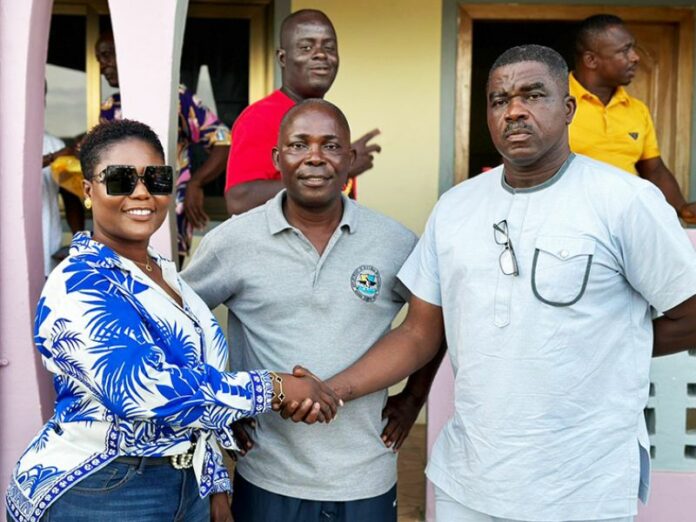
MP Dorcas Toffey (left) exchanging pleasantry with Francis Kwaidoo who challenged the MP in the internal contest.

The Member of Parliament (MP) for the Jomoro Constituency in the Western Region, Dorcas Affo-Toffey, who has been retained as Parliamentary Candidate on the ticket of the National Democratic Congress (NDC) hasmet her challenger, Francis Katia Kwaido and his supporters to iron out their differences.
The meeting, dubbed ‘reconciliatory meeting’, which was held on Tuesday, this week,was also attended by the constituency executives of the party. MP Dorcas Toffey polled1,574 votes to beat her challenger who garnered 175 votes.

A group picture of supporters of both candidates, including party executives

Information available to this paper indicates that the reconciliatory meeting which was initiated by the sitting MP was also to encourage the supporters of both candidates to unite for a successful campaign in 2024.
Speaking after the meeting, MrKwaidoo expressed his readiness to help Jomoro retain the seat in the 2024 election.

He conceded that, in an internal contest, one was expected to either win or lose, but what is important is when candidates come together to ensure victory.
Kwaidoo expressed the willingness of himself and supporters   to join the campaign of the candidate to secure victory for both the candidate and the party in the next general election.
Madam Affo-Toffey on her part said the meeting was meant to ensure victory in the 2024 election.

She confessed that without unity, the party would not be able to win the 2024 election. Madam Affo-Toffey who is arguably first to hold reconciliatory meeting with her challenger after the primary contest promised to work with all to retain the seat in 2024 election.

Afriyie Akoto to attend Agriculture, Food and Industry Forum in Turkey

0
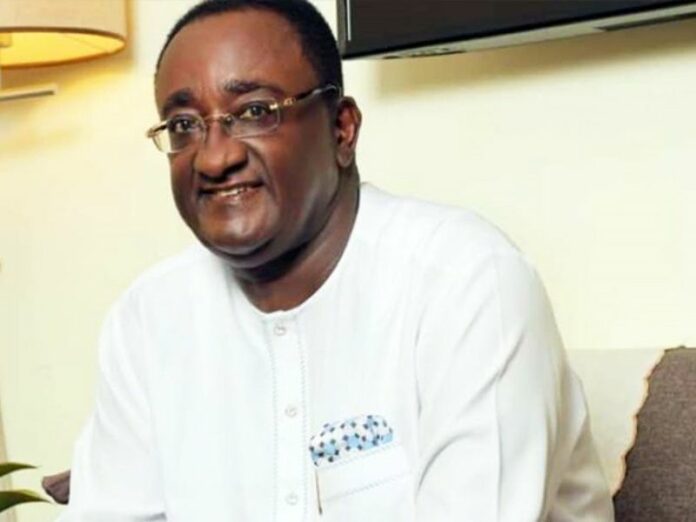
Dr Afriyie Akoto

Flagbearer hopeful of the governing New Patriotic Party(NPP) and immediate past Minister for Agriculture, Dr Owusu Afriyie Akoto, is set to attend the African Agriculture, Food and Industry Forum in Istanbul &Tekirdağ, in Turkey.He leaves Accra on Sunday, June 4, 2023.

The Agricultural Economist, who has worked in the UN system for over 18 years will be Special Guest of Honour at the event, where he is expected to address thousands of captains of Turkish Agribusiness industries on Tuesday, June 6, 2023.He is expected to return home on Wednesday, June 7, 2023.

The event is organised by the African Investors Council(AIC). It will be held from Sunday, June 5, 2023 to Friday, June 10, 2023.

Dr. Afriyie Akoto’s invitation to the event was spurred by his deep knowledge and vast experience in the field of Agriculture as an Economist, industry player and policy expert.

The world business and cooperation forum gathers various sectors and institutions working for the development, modernisation and technification of agriculture, textile, agribusiness and renewable energies, food and livestock farming, construction and infrastructure.

The forum offers a platform for captains of agribusiness industries to meet and exchange ideas with Turkey’s largest agricultural producers and investors.

AIC’s mission is to bring together companies and entrepreneurs with the common goal ofbeing a pioneer for the development of the African continent, in the fields of sustainable and innovative agriculture and food, within a cooperative of professionals from all over the world.

A statement issued by the organisers said the Council’s objective is to connect the various public and private actors in order to share their experiences, knowledge and investment opportunities for the continent.

“Turkey and Africa have a long history of encounters, dialogue and peace for centuries. Wehope that this Summit will further strengthen these ties and create economic opportunities for both sides,” it added.

Editorial: Illegal Miners on rampage again, what’s government doing?

0
Editorial

On Wednesday this week, The Chronicle carried a story about members of the anti-galamsey task force set up by the Adansi Traditional Council (ATC) have allegedly been assaulted by a group of illegal miners at Amponyaase, in the Akrofrom district of the Ashanti region.

This happened when the task force was reported to have attempted to halt the operations of the illegal miners. The group of illegal miners were busily digging for gold at a village called Amponyaase.

Information available to The Chronicle indicates that the four-member task force was attacked by over forty illegal miners with machetes, stones and clubs among others.

A land rover vehicle with registration number GT 4777-09, which was being used by the task force was vandalised, with one of the taskforce members reportedly struggling to gain his sight in the hospital.

The police later rushed to the scene to rescue the task force members and also arrested some of the illegal miners who were granted police enquiry bail.

Barely twenty four hours after we reported the above story, another group of illegal miners, this time from Obuasi, in the same traditional area, have also gone on rampage over the arrest of some of their colleagues.

They reportedly invaded the Obuasi Municipal Assembly and the police headquarters to demand that their colleagues who have been arrested for illegally entering the concession of AngloGold Ashanti to mine be freed.

The sudden attack by the illegal miners, numbering over five hundred, forced the deployment of the armed military personnel to the mining town. The illegal miners were reported to have blocked roads, burnt lorry tyres and prevented the free-flow of traffic and pedestrians.

A military reinforcement team had to be sent to the area to contain the situation.

The Chronicle is astonished by the increasing number of the youth turning away from their roles in protecting the forests and water bodies and rather engaging in illegal mining. This may be mainly due to lack of economic opportunities but it cannot be an excuse for the wanton degradation of the environment.

The surge in galamsey activities across the country has got to the point where people are selling out their farmlands for illegal mining.

It has been six years of relentless fight against galamsey, when President Nana Addo Dankwa Akufo-Addo put his presidency on the line with an avowed resolve to halt the menace and bring sanity to the small-scale mining sector.

The jury is still out there as to whether the president’s ultimatum to eradicate the problem of galamsey has been successful.

What has also happened to the government’s programme to provide illegal miners with alternative livelihoods in the mining communities?

The Community Mining Scheme was one of the many interventions introduced to fight illegal mining, with the introduction of the National Alternative Employment and Livelihood Programme for community members who were dependent on illegal mining.

It was meant to pave the way for the commencement of regulated, responsible and sustainable community mining aimed at helping to get rid of illegal mining and to provide livelihoods for members in the mining communities.

One of the most significant policy challenges in Ghana today revolves around the question of how to address illegal small-scale mining, popularly known as galamsey.

Government must tackle the menace by ensuring that all small-scale mining activities fall under the Small-Scale Gold Mining Law and all those who fall foul of the law must not be spared

The Ghanaian Chronicle