Home Blog Page 2158

Ways Cherry Juice benefits us

0
Cherry juice

Cherry juice is not only refreshingly delicious, but it provides some solid health benefits, too. With about 120 calories per 1-cup serving, it’s rich in nutrients like potassium and iron.

There are many different varieties of cherry juice. Look for juices that use 100-percent cherry juice with no added sweeteners. Cherry juice “cocktails” typically add sugar and preservatives.

You will also see juice “from concentrate” and “not from concentrate.” Both options are nutritionally similar.

“Not from concentrate” means they put the fresh juice directly into the bottle. “From concentrate” means they squeezed and then filtered the juice, extracting water. It is then rehydrated and packaged.

There are also different types of cherries used to produce juice. Tart cherry juice is sour to taste and provides a higher amount of anthocyanins compared to black cherry juice, which is sweeter in taste and has less anthocyanins. Anthocyanins promote anti-inflammatory processes in the body. Both are great, nutritious options.

  1. Helps post-workout recovery

Cherry juice may help recovery post-exercise. It is naturally high in potassium, which conducts electrical impulses throughout the body.

This mineral also helps maintain blood pressure, hydration, muscle recovery, nerve impulses, digestion, heart rate, and pH balance. Cherries contain about 330 milligrams (mg) of potassium per cup, which is almost 10 percent of your daily recommended value.

Fight off inflammation with high-quality, natural ingredients — at a low price. Amazon Elements Turmeric Complex provides an affordable way to support your immune system.

  1. Fights inflammation and arthritis pain

Research shows that the antioxidants in tart cherry juice can reduce pain and inflammation from osteoarthritis (OA).

A 2012 study showed that drinking cherry juice twice a day for 21 days reduced the pain felt by people with OA. Blood tests also showed that they experienced significantly less inflammation.

  1. Reduces swelling

When people experience pain from swelling, they often turn to nonsteroidal anti-inflammatory drugs (NSAIDs). However, the effects of these drugs can be harmful, especially when you take them too often or have allergies.

A 2004 study found that cherry juice supplements can reduce inflammation and pain-related behavior in animals, showing promise as a treatment for swelling in humans.

  1. Boosts immunity

Like all fruits and vegetables, cherries pack a powerful antioxidant and antiviral punch. Flavonoids, a type of antioxidant in cherry juice, are made by plants to fight infection. Research shows that these chemicals can have a significant impact on immune system function.

  1. Regulates metabolism and fights fat

There is some evidence in animals that tart cherries can help adjust your body’s metabolism and your ability to lose abdominal body fat. One study showed that anthocyanins, a type of flavonoid responsible for cherries’ red color, act against the development of obesity.

Another study in rats found that tart cherries can help reduce inflammation and abdominal fat, and lower the risk of metabolic syndrome.

  1. Helps you sleep

The anti-inflammatory properties of cherry juice combined with a dash of sleep-regulating melatonin may help you sleep better, according to a small 2010 study. The results suggest that tart cherry juice has similar effects as insomnia medications like valerian or melatonin on older adults.

  1. Blocks cancer growth

In a 2003 study, researchers pitted cherry juice against the NSAID sulindac, which is the most common preventive anti-inflammatory treatment for colon tumors. Although an animal study, it is notable that cherry juice — unlike the NSAID — reduced the growth of cancer cells.

Even without its antioxidants and nutrients, cherry juice is deliciously tart and refreshing. Try replacing sodas and sports drinks with something that can really make a difference to your health.

Source: www.healthline.com

Feature: Is a global debt bomb about to explode?

0
Feature

The United States Treasury secretary, Janet Yellen, World Bank chief Ajay Banga and a host of world leaders looked on as Hakainde Hichilema, the president of Zambia, took the microphone. The occasion: a Paris summit hosted by French President Emmanuel Macron on June 24 to brainstorm solutions to a debt crisis sweeping the developing world.

It was a moment of respite for Zambia, which in 2020 had become the first African country to default on its sovereign debt following the devastation of COVID-19. In Paris, its biggest lenders including China and Western nations agreed to restructure $6.3bn of Zambia’s loans under an initiative driven by the G20.

Yet, after thanking France, China, South Africa – which played a key role in the negotiations – and others, Hichilema struck a note of caution. It had taken more than two years of talks for the approval of Zambia’s debt restructuring plan, he pointed out.

“For the countries that are coming after us, there is a need to expedite the processes,” Hichilema said. “Every day we don’t deliver these things that are within our control, we are basically increasing the costs and the damage gets compounded.”

The majority of low-income developing countries are today either already in or near debt distress. Meanwhile, the world’s two large economies, the US and China, are expected to see a jump in their public debt at higher levels than before the pandemic.

Ghana and Sri Lanka defaulted on their external debt in 2022, two years after Zambia did. Pakistan and Egypt are on the verge of a default. On June 30, Pakistan secured a tentative $3bn funding deal with the International Monetary Fund (IMF), promising it potential, short-term relief.

Global public debt levels remain high – at 92 percent of gross domestic product (GDP) at the end of 2022 – despite falling from the record levels seen during the COVID-19 pandemic, when they touched 100 percent of GDP at the end of 2020.

So, is the debt crisis a global contagion? Are low-income countries at a much higher risk than the others? Would countries be forced to accept tough conditions for bailouts? And what can richer countries and financial institutions like the IMF and World Bank do to ease the pain?

The short answer: The growing debt of poor countries is alarming but there is no evidence of a contagion that could trigger a global crisis. Yet. However, economists and debt-management experts say richer countries need to act fast to bring relatively new creditors, including China and the private sector, on board for debt restructuring deals for a quicker economic recovery and to avoid a repeat of the 1980s debt crisis that hobbled dozens of less-developed nations for years.

Protesters march during a demonstration against the depreciation of Ghana’s cedi currency, a hike in fuel prices and the general economic hardship amid the West African country’s debt crisis, in Accra, Ghana, on November 5, 2022 [ Nipah Dennis/AFP/File]

The collapse

The COVID-19 pandemic crushed economic activity globally, leading to revenue shortages and increased spending by governments to shield the economy from the adverse effects of a slowdown and layoffs.

As a result, global public debt shot up the highest in a year from 84 percent of GDP at the end of 2019 to 100 percent a year later.

Poorer nations, which were hit the worst by the public health crisis, had to depend more on external loans to survive.

About 60 per cent of low-income developing countries are now either high risk or in debt distress and have either had, or are about to start, a debt restructuring process. This figure was 40 percent before the pandemic.

The debt situation was compounded by Russia’s full-scale invasion of Ukraine in February 2022, which led to an increase in global commodity and food prices.

“Now, the resurgence of inflation means major central banks have increased interest rates, making the cost of debt servicing costly and this is a problem for both low-income and middle-income countries,” Ugo Panizza, a professor of economics at the Geneva-based Graduate Institute of International and Development Studies, told Al Jazeera.

In all, 52 developing countries – home to half the world’s population living in extreme poverty – are facing severe debt problems and high borrowing costs.

As often happens amid crises, the dollar’s value strengthened over 2022 compared with most emerging and advanced-economy currencies as investors’ demand grew for the US currency, viewed as a safe asset.

This, in turn, has made it even costlier for lower- and middle-income countries to meet their debt obligations as most cross-border loans and international debt is denominated in US dollars.

“A lot of global liquidity coming up for refinancing is in dollars and if your currency deteriorates, as it happened in the case of Ghana, where the cedi collapsed, your ability to meet the debt payments is hugely damaging,” Judith Tyson, a research fellow who specialised in private investment and financial development at the Overseas Development Institute (ODI), told Al Jazeera.

“There’s probably going to be some more years of high levels of dollar and interest rates and that’s a significant problem. ”

Ghana’s currency, the cedi, lost more than 50 percent of its value between January and October 2022, causing Ghana’s debt burden to rise by $6bn.

Ghana defaulted on most external debt in December and now aims to reduce its external debt repayments of $20bn by half over the next three years to secure a $3bn loan deal from the IMF as a part of its debt restructuring.

Yet, the struggles of Ghana, Sri Lanka, Zambia and dozens of other nations teetering on the edge of default are not unprecedented.

A protester holds a sign that reads, in Spanish, ‘Get out IMF, World Bank’, near police blocking protesters from getting any closer to the venue where the IMF and World Bank were holding their annual meetings in Lima, Peru, Friday, October 9, 2015 [Geraldo Caso Bizama/AP Photo/File]

‘The lost decade’

The oil price shocks of the 1970s led to high spells of inflation, pushing the global economy into a recession in 1981 as central banks hiked interest rates to control the high price rise.

As many as 16 Latin American countries, led by Mexico, and 11 other less-developed countries, had to reschedule their debts, prompting the first global debt crisis.

The period of the 1980s is also referred to as the “lost decade” as many less-developed countries agreed to spending cuts on infrastructure, health and education in exchange for debt restructuring, with several nations ending the decade with income levels that were lower than in 1980.

More than 30 cases of unsustainable debt from poor countries, especially in sub-Saharan Africa, led to the creation of a joint debt-relief measure by the IMF and the World Bank, known as the Heavily Indebted Poor Countries Initiative, in 1996.

Countries had to meet certain criteria and commit to policy changes to reduce poverty to receive 100 percent relief on eligible debts from the IMF, the World Bank and the African Development Fund.

Jeromin Zettelmeyer, the director of Brussels-based economic think tank Bruegel, who co-authored a paper in April titled “Are We Heading for Another Debt Crisis in Low-Income Countries?”, told Al Jazeera there are similarities and differences between the present debt situation and past shocks.

“Most sovereign debt crises are preceded by periods of higher (budget) deficits, built up of debt, and some are triggered by higher real interest rates,” he said. “So, these ingredients of a sovereign debt crisis are present right now.”

Yet, other “ingredients” are missing, he said, pointing to how this crisis is not just a repeat of what the world has seen previously. Many previous crises have come in the wake of lower commodity prices.

Several poorer nations are also major exporters of oil, gas and minerals. A decline in commodity prices hurts their incomes. “But the commodity prices are relatively high right now,” Zettelmeyer said.

Zettelmeyer said the debt crisis does not look global in scale for now and, in the worst case, could be confined to developing countries. In their April paper, he and his colleagues concluded that debt vulnerabilities in low-income countries were substantially less alarming than they were in the 1990s.

Zettelmeyer said the economic fundamentals of poorer nations also look stronger than in the 1980s and 1990s.

In the case of Sri Lanka and Zambia, Zettelmeyer said their defaults were the result of poor domestic economic management, with the COVID-19 pandemic exacerbating the situation.

But in both instances, the search for a solution to their debt crises has spilled over from the world of global finance to geopolitics, because of the emergence of a major new player: China.

Source: Al Jazeera

Elon Musk, Mark Zuckerberg prepare for mega-fight set to generate 25m pay-per-view purchases

0
Elon Musk (right) underwent a gruelling training session with UFC legend Georges St Pierre (red shorts)

Elon Musk underwent an exhausting training session with a UFC Hall of Famer and ex-world champion as he further teases a battle of the billionaires with Facebook founder Mark Zuckerberg.

Twitter and Tesla owner Musk provided supporters with an update on his condition ahead of the mentioned mega-bout after undergoing further intense preparations.

It appears the 52-year-old has taken UFC legend Georges St Pierre (GSP) up on his offer to train him after taking part in what appears to have been a gruelling practice on Monday evening.

Musk posed for a photo alongside GSP, popular American podcaster host and combat expert Lex Fridman, and martial arts instructor John Danaher as preparations are ramped up ahead of a proposed meeting with Zuckerberg.

The picture shows Musk grinning and wearing a grey workout top that appears drenched with sweat, while his colleagues appear to look reasonably cool and at ease.

Fridman labelled the training session as ‘epic’ and posted the image of the four fight enthusiasts on his Twitter profile with the caption: ‘Had a great training session with Elon Musk, Georges St Pierre and John Danaher last night. Everything about this was epic!’

Supporters applauded Musk for taking his training seriously, despite there being no official agreement with Zuckerberg on the proposed cage match that has been claimed could generate 25m pay-per-view purchases.

Credit: dailymail.co.uk

Tottenham set to seal £30m Wolfsburg defender Micky van de Ven 

0
Micky van de Ven

Tottenham have reportedly edged closer to sealing a £30m deal with Wolfsburg for Dutch defender Micky van de Ven.

The Netherlands U21 star has been on the radar of Spurs boss Ange Postecoglou for some time and the Premier League club appear to have got a deal over the line.

Van de Ven has apparently agreed a five-year deal with Spurs that will keep him at the Premier League club until 2028, according to De Telegraaf.

The 22-year-old enjoyed a stellar breakout 2022-23 season, where he started 33 Bundesliga games for the Wolves, sparking interest from clubs across Europe.

Liverpool were also reportedly interested in pursuing a deal, however it appears Tottenham have come out ahead in the race for the Wolfsburg star.

The north London club have been in direct talks with the Bundesliga side over negotiating a price for Van de Ven and are now reportedly on the verge of signing off on the deal.

Personal terms have been agreed between the player and Spurs, with a medical and final agreement with Wolfsburg appearing to be the only matters left to resolve.

Van de Ven was part of the recent Netherlands U21 squad at the ongoing European Championships that saw the nation draw all three group stage matches and exit the competition.

He played 90 minutes in every group stage clash against Belgium, Portugal, and Georgia, conceding just two goals in the process.

The Dutch prospect previously talked up a transfer while away on international duty, stating that he had been contacted by potential suitors.

Credit: dailymail.co.uk

AC Milan are weighing up move for Jeremie Frimpong

0
Jeremie Frimpong

AC Milan are weighing up spending some of their Sandro Tonali windfall on former Manchester City youngster Jeremie Frimpong.

The Serie A side sold midfielder Tonali to Newcastle for £52million, his move being confirmed on Monday.

And Bayer Leverkusen full-back Frimpong is among the players in their sights as they look to further strengthen their squad boosted by the funds received for Tonali and having already brought in Ruben Loftus-Cheek from Chelsea in this summer window for an initial £15m.

AC’s interest in Frimpong, who started his career at City before leaving for Celtic in 2019, puts them on collision course with their biggest rivals Inter who are also keen on the 22 year-old.

The Dutch defender, who has two years left on his current deal, had a standout season for Leverkusen. 

Primarily a right back, Frimpong also impressed further up the flank as a wing back and winger, displaying his attacking qualities with nine goals and 11 assists for the Bundesliga side last season.

He is also admired by Manchester United who have previously held talks over a move for Frimpong. But their focus is currently on strengthening in other positions leaving the door open for the Milan duo to steal a march.

Credit: dailymail.co.uk

Mason Mount heads to Manchester to put finishing touches to his £60m move

0
Mason Mount

Mason Mount has been spotted leaving his Cheshire Hotel on Tuesday with the midfielder expected to imminently complete his £60m move to Manchester United.

The England star appeared at United’s Carrington training facility on Monday for his medical with the Red Devils at last set to secure the Chelsea star’s services.

Erik ten Hag‘s side were rebuffed several times in their approach for Mount this summer, but agreed a fee at the fifth time of asking.

Mount was pictured on Tuesday morning drinking a coffee as he prepared to head back to United’s Carrington training ground to shoot his media commitments for the club.

He was surrounded by several members of his entourage and a few security guards ahead of adding the final touches to his transfer.

On Monday, the player was accompanied by a few individuals when he arrived at United’s training ground in a Mercedes early on in the morning, entering through the back gate.

With an initial £55m figure, followed by £5m in add-ons finally agreed between the rivals after weeks of negotiations and rejected advances, the player then completed his medical.

The 24-year-old is set to put pen to paper on his contract at Old Trafford, signing a five-year deal worth £250,000-a-week with the option of another year.

And he appears to be arriving at the perfect time for Ten Hag and Co, who are due to begin their pre-season training this week ahead of a friendly against rivals Leeds in Oslo next week.

Mount could make his debut for his new club in the match in the Norwegian capital.

The English star arrives at United on the back of a trying 2022-23 season with Chelsea, in which he struggled for both form and fitness.

Credit: dailymail.co.uk

Oseadeeyo Agyeman Badu Jumps Into Lion’s Den … Attorney General, Majority Leader, Okudzeto criticise him over call to drop Gyakye Quayson’s case

0
Oseadeeyo Agyeman Badu II, Dormaahene
Godfred Dame – AG

The Attorney General and Minister for Justice, Godfred Yeboah Dame, has described as unhealthy a statement by the Dormaahene, Osagyefo Oseadeeyo Agyemang Badu II, on the ongoing criminal trial of the Assin North Member of Parliament-elect, James GyakyeQuayson.

According to him, statements of that sort have the tendency to sabotage the administration of justice, a situation that portends doom for the nation. The AG was responding to journalists on the matter on Monday, July 3, 2023 in which he advised that such comments would jeopardize the democratic dispensation.

However, the obviously unhappy Minister for Justice indicated that he would soon make a “proper statement” on the matter.

“I will come out with a proper statement on the matter, and it will be in respect of all comments generally that have the tendency to subvert the administration of justice. I think that it is very unhealthy for our democratic dispensation and we must not countenance the same,” he retorted.

The Dormaahene, who is a judge, has made a direct appeal to the President and the AG to discontinue the GyakyeQuayson criminal trial after he won the by-election.

CONSTITUTIONAL MATERS

The Majority Leader, Osei Kyei-Mensah-Bonsu, has also waded into the discourse, expressing his disagreement with the position of the prominent paramount chief, who made the comments outside the courtroom.

Speaking to a Kumasi-based radio station, Pure FM, the Suame MP, Kyei-Mensah-Bonsu held that the matter had to do with the constitution and as such it must take its course. The argument of the leader of government business in parliament is that the revered chief may not say the same for a murder trial, adding that a sitting judge ought not to make such utterances.

He could not fathom whether the paramount chief, who is also a judge, meant that offenders of the law should not face the consequences. No, I disagree with him…,” he said.

“We are talking about constitutional matters here. Is it the case of the chief that he would call for the same to be discontinued if it was a murder charge or any other?

“Is the respected chief saying that if someone flouts the law, we should let it go? I disagree. I think he should come out to explain further.

“He is a judge; is it his position that should the case be before him, he would have rejected or made similar utterances?” he quizzed.

“It is right for us all to allow the law to run its course. We can ask the question of whether the State has a case or not, but beyond that, we cannot abuse the process.

“As an Appeals Court Judge, he is a potential candidate for the Supreme Court. Comments like this might haunt him and affect his chances when posed to him at vetting. I disagree with him,” he concluded.

SHOCK, SURPRISE

Meanwhile, a member of the disciplinary committee of the General Legal Council, Mr. Sam Okudzeto, said he was “shocked and surprised” at the statement because the chief “is a sitting High Court Judge.

“It is repugnant. It is just bad manners in every way – that is my opinion. It is just not decent for a judge to make such utterances,” he articulated.

He told the host that if he was a member of the disciplinary committee of the Judicial Council, he would have asked the high court judge to “resign or ask him to be sacked as a judge.”

He would rather the chief spoke to the AG in private, adding that a code of conduct “forbids” judges from interfering in matters in court “that is definitely not allowed.”

According to the member of Council of State, who granted Accra based JoyFM an interview on the matter on Monday, the Dormaahene making such statements in his capacity as a chief “makes it worse,” arguing that the platform was also wrong.

He stated that if the Judicial Council does not take up the matter, any citizen could petition the council.

ABANDONMENT

The Dormaahene, who is the President of the Bono Regional House of Chiefs and a sitting High Court Judge, speaking at the Professor John Evans Atta Mills Commemorative Lecture in Sunyani on Saturday, July 1, said the AG should file a nolle prosequi on the Assin North MP-elect’s trial.

The chief argued that after the court ordered Quayson’s name and records to be expunged from the books of parliament, he contested again and won massively, thus the advice to allow the MP to work.

“As a matter of urgency, I am appealing to the President of the Republic [Akufo-Addo], if he has any role to play, that trial should be aborted, and the Attorney-General should as a matter of urgency file a nolle Prosequi to end that particular decision and abort the criminal case against Mr. Quayson,” the Dormaahene added.

Meanwhile, he stated that if he were on the Supreme Court panel, he would have had a divergent view.

The High Court Judge revealed that he was not happy with the decision by the Supreme Court, adding that “If I were on the Supreme Court, I would have gone left and not right.”

By Maxwell Ofori & Francis Owusu-Ansah

Gov’t constructs €11.5m water systems for Adaklu & others

0

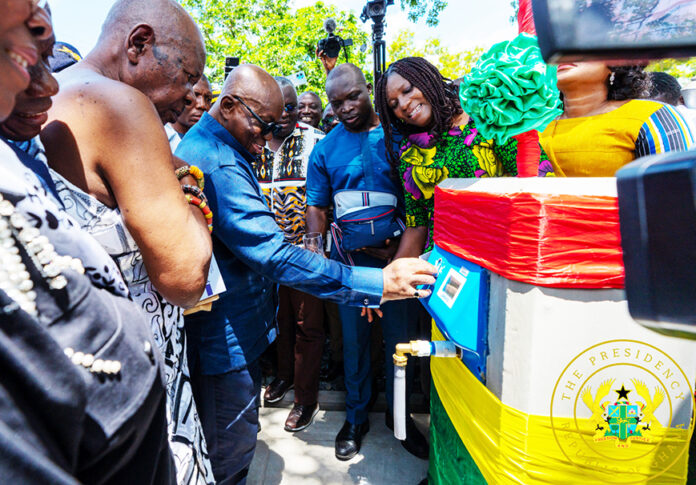
President Akufo-Addo on Monday, July 3, 2023 commissioned Phase Three of the Five Districts Water Supply Project at Adaklu Waya, in the Volta Region, a project for which he cut the sod in September 2020.

The project, financed by a concessionary facility from Raiffeisen Bank International AG of Austria, at a cost of €11.5 million, will benefit some 89,150 people in 95 communities in Central Tongu, Adaklu and Agotime-Ziope.

According to President Akufo-Addo, who addressed a gathering in Adaklu, some of the key components of the Project are the construction of three (3) concrete tanks at Adaklu Kpeleho, Adaklu Sofa and Adaklu Kpatove, to help keep the water safe from any bacteria; the completion of a water booster station at Adaklu Kpeleho to transport water to Adaklu and Agotime-Ziope communities and the laying of one hundred and seventy-five (175) kilometres of water pipelines.

With designs for Phase IV of the Project ongoing, the President told the gathering that the focus of Government is to ensure that all Regions across the country are provided with adequate, safe, affordable and reliable water services.

“We are also committed to ensuring that we practice safe sanitation and hygiene by the year 2030, in line with the attainment of the 2030 United Nations Sustainable Development Goals (SDGs).

Our strategic goal is to use a multi-faceted approach, with emphasis on governance and sector institutional strengthening, to accelerate access to equitable WASH services throughout Ghana,” he said.

Towards the goal of providing clean water and sanitation for all, President Akufo-Addo noted that his government has made significant progress towards this.

He cited the commissioning, in September 2020, of completed projects under the Water Supply Improvement Project of the Ghana-Spain Debt Swap Development, implemented by the Community Water and Sanitation Agency (CWSA) at a total cost of US$3.78 million for a beneficiary population of 75,000.

“That Project seeks to expand access to and ensure sustainable services in thirty-six (36) rural and small towns/communities in the Ho, Ho West, Agotime-Ziope and South Dayi Districts. Outstanding works are expected to be completed by March next year,” he said.

President Akufo-Addo continued that, “Again, on 30th June, 2020 I also commissioned Cluster Water Systems at Bontrase and Amasamkrom in the Central Region, as part of the Sustainable Rural Water and Sanitation Project (SRWSP).

These commissioning ceremonies were done to symbolise the completion of similar water systems implemented in eleven (11) out of the sixteen (16) regions of the country, and it was financed from a US$47.5 million credit facility from the International Development Association (IDA) of the World Bank.”

The other beneficiary Regions, he stressed, were Ahafo, Bono, Bono East, Western, Western North, Northern, North East, Savannah, Upper West and Upper East.

The Project components, he added, included the construction of piped water supply systems, support for construction of household latrines, health and hygiene education and environmental and social safeguards for one hundred and sixty-four (164) beneficiary communities, with a total population size of 154,826.

Under the Rural Communities and Small Towns Water Supply Project (RCSTWSP), Government is improving access to sustainable water delivery within the Volta, Oti, Greater Accra, Ashanti and Eastern Regions to benefit a total population of some two hundred and eighty-two thousand (282,000) at thirty million Euros (€30 million).

The Project is ongoing and some seventeen percent (17%) complete.

Urban Communities – “Water for All”

Touching on the “Water for All” Agenda in urban communities, the President stated that the Keta Water Supply Project, being implemented by the Ministry of Sanitation and Water Resources, through the Ghana Water Company Limited, would also improve the reliability and sustainability of water supply to a beneficiary population of some 422,160 in Keta and surrounding communities, at an estimated cost of €85,112,854.

Works under this Project, he indicated, are expected to be completed by December 2024.

Additionally, the Wenchi Water Project, being constructed at a cost of €39 million involves the construction of a new water treatment facility, and the rehabilitation of the existing ground water system to meet current and future water requirements of the community until 2045.

“The Project is expected to serve some 101,870 people living within Wenchi and its environs,” he said

On the Sekondi-Takoradi Water Supply Project, which would cost some €70 million and which would serve a beneficiary population of some 1.4 million within Sekondi-Takoradi communities, President Akufo-Addo stated that the project is expected to be completed by September 2025.

“The feasibility studies for the proposed Sogakope-Lome Transboundary Water Supply Project are ninety-eight percent (98%) complete and funding would be sought to achieve sustainable improvement to access to drinking water for four million consumers in the Project area.

“In Ghana, the Project beneficiaries will include the Southern Volta area, more specifically the Municipal/Districts of Keta, Ketu South, Ketu North, South Tongu and Akatsi South,” he added.

Court of Appeal strikes down order to start Opuni trial De Novo

0
Dr. Stephen Kwabena Opuni

The Court of Appeal, in a unanimous decision, has set aside the ruling of the High Court to start the trial of Dr. Stephen Kwabena Opuni and two others ‘De Novo.’

The decision was delivered yesterday following an appeal filed by the Attorney General (A-G), Godfred Yeboah Dame, against the High Court ruling. The High Court will, therefore, adopt proceedings from where the retired Supreme Court Justice, Clemence Honyenuga, left off after almost six years.

Justice Kwasi Anokye Gyimah, who took over the case in March this year, ruled that the criminal trial starts afresh on April 4, because it would be unfair for him to adopt the proceedings of Justice Honyenuga, which had been “saddled” with numerous allegations.

Justice Gyimah charged the prosecution and accused persons to file witness statements, following his ruling to start ‘De Novo’.

Before this present decision by the appellate court, the prosecution had requested that the High Court adjourn the case twice to enable it locate its witnesses, which some had refused to testify again.

The unwillingness on the part of the prosecution witnesses to testify became a major hurdle for the A-G and his team to file their witness statements.

The trial court, in granting the prosecution’s prayer to find its witnesses to comply with its orders, adjourned to July 12, 2023, for continuation.

However, it has been reported that a third judge had been appointed to take over the case, as Justice Gyimah had been transferred to Kumasi in the Ashanti Region.

Dr. Opuni is a former Chief Executive Officer (CEO) of Ghana Cocoa Board (COCOBOD), and he has been accused alongside businessman Seidu Agongo and his company, Agriculture Ghana Limited.

They are being tried for allegedly causing GH¢217 million financial loss to the state in the supply and purchase of Lithovit Liquid Fertiliser.

Gyakye Quayson’s relentlessness won us the seat -Sammy Gyamfi

0
Sammy Gyamfi

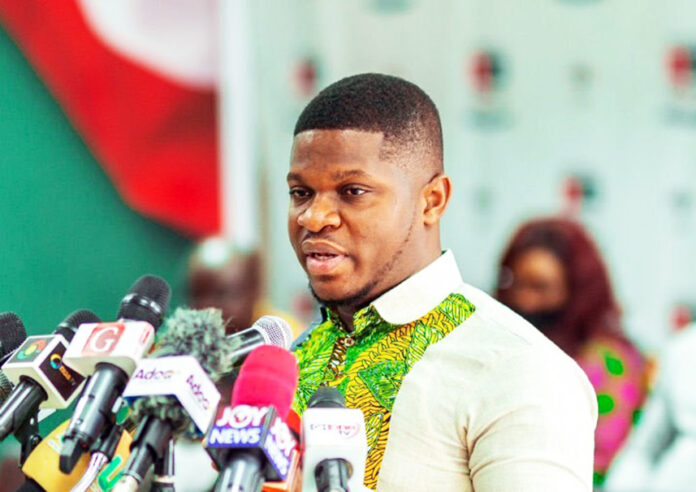
The National Communication Officer of the NDC, Sammy Gyamfi, has attributed his party’s landslide victory in the Assin North by-election to the relentlessness of Mr James Gyakye Quayson.

In the view of the NDC Communicator, but for the relentlessness of the Member of Parliament-elect, victory would have eluded the NDC as a political party.

In a Facebook post, Lawyer Gyamfi indicated that Mr Quayson was not just resilient, but also relentless in his efforts to sacrifice for the constituency.

He said: “His personal conviction and determination to fight for justice against all odds, even at the risk of losing his civil liberties is the reason we are smiling today.

“They tried to bribe him to back-off. When they failed, they threatened him with jail. But in all these things, he was unwavering in his commitment and love for his people,” he added.

He called on his followers to join him celebrate Mr James Gyakye Quayson, whom he described as the “First Gentleman of the good people of Assin North [and an] Old Soldier.

Meanwhile, several key actors who followed and keenly monitored events in the run up to the final day of the elections have said that lawyer Sammy Gyamfi was pivotal in the massive victory for the NDC.

It is said that he virtually took over the communication of not just the party in the constituency, but was also in charge of Mr James Gyakye Quayson’s personal communication.

According to some journalists who spent days in the constituency, Sammy Gyamfi outwitted his opponents with succinctly couched messages which addressed the concerns of the electorate.

The NDC defeated the ruling New Patriotic Party in the Assin North by-election which was generally peaceful, free, fair and credible.

NDC’s James Gyakye Quayson polled a total of 17,245 votes representing 57.56% of total valid votes cast, whilst his main contender, Charles Opoku, on the ticket of the NPP garnered 12,630 votes representing 42.15%.

A third force, Sefenu Bernice Enyonam, who represented the Liberal Party of Ghana (LPG) recorded an insignificant 87 votes, which stood at 0.29 percent.

The Ghanaian Chronicle