Home Blog Page 2118

157 Advanced Emergency Medical Technicians graduate

0
A section of the graduands during the passing out parade

One hundred and fifty seven Advanced Emergency Medical Technicians (AEMTS), including 42 females, have graduated from the Paramedic and Emergency Care Training School (PECTS) at Nkenkaasu in the Offinso North District of the Ashanti Region.

The graduants, constituting the fourth batch, bring the number to 472 AEMTs to have graduated at the school, thus adding up to 2,958 Emergency Medical Technicians staff of the National Ambulance Service (NAS) Emergency Medical Service (EMS) team nationwide.

They have since sworn the EMT Oath to deliver on their mandate and pledged to promote health as EMS practitioners to handle more complex cases as part of their duties to the credit of the profession.

Their graduation last Thursday, which was climaxed with a passing out parade, reviewed by Mr. Collins Augustine Ntim, Deputy Minister of Local Government, comes after a two-year intensive course of study in the areas of Anatomy and Physiology, Patient Assessment and Vital Signs, I.V. Access and Pharmacology, Trauma and Emergency Care, Medical, Behavioural, Environment and Obstetrics and Gynaecological Emergencies among others.

The course comprised classroom lectures, clinical attachments to hospitals, and ambulance station attachments.

Mr. Ntim, im addressing the passing out parade, stated that, despite the achievements chalked by the NAS, the Service was bedeviled with numerous challenges, which include lack of dedicated source of funding leading to inadequate financing of various activities, and lack of adequate infrastructure and capacity building facilities at the Paramedic and Emergency Care Training School.

He, however, pledged to make personal efforts to support and tackle the challenges and infrastructure inadequacies of the School.

He called on organisations, agencies and well meaning individuals to support the government to address the infrastructure deficits towards upgrading the School to University status to run Emergency Medicine programme.

He commended Prof. Ahmed Nuhu Zakariah, Chief Executive Officer of the NAS, for performing admirably during national emergencies and disasters, especially during the fight against the COVID-19 pandemic.

Nana Wiafe Ababio, the NAS Board Chairman, stated that the Service had seen a facelift under the government by giving it legal status with the institution of a Governing Board.

He assured the school that, the Board would work hand in hand with the management of the NAS and the Ministry of Health to strengthen and expand their services, to ensure that quality emergency care reached every corner of the country.

He advised the graduands to put up their best in serving the interests of their patients, by providing critical interventions in life or death situations.

He reminded the graduands that the trust bestowed upon them by society was immeasurable, and that it was essential that they approached their responsibilities with the utmost professionalism and empathy.

Nana Wiafe further reminded the graduands to remember that every call for help they received represents an individual or a family in crisis, and that their skills and actions would determine their fate.

He urged them to embrace privilege with humility, empathy, and unwavering commitment to excellence.

Nana Opoku Asiedu, Offinso Kokotihene and acting President of the Offinso Traditional Council, noted that, the NAS played a critical role in our health sector, and required the necessary support from the government to fulfill its mandate effectively.

According to him, the Training School was the sole institution that produced paramedics, and called on the government to develop it to international standards.

Awards were presented to AEMTs who excelled during their two-year period of training.

Christian Asare Bempong, emerged the Best Cadet in Academics, as well as the Overall Best Graduant.

He received a flat screen TV and a table top fridge for the two awards, in addition to a GH¢500 cash prize and a GH¢10,000 life insurance cover by Hollard Life Insurance.

The other awardees were Fati Larley (CEO’s Award), Kassim Pihkaga Zakaria (Best in Practicals) and John Kwabena Quansah (Best in Foot Drill).
Vote for Kennedy Agyapong to bring another Dubai to Africa -Lawyer Kusi

0
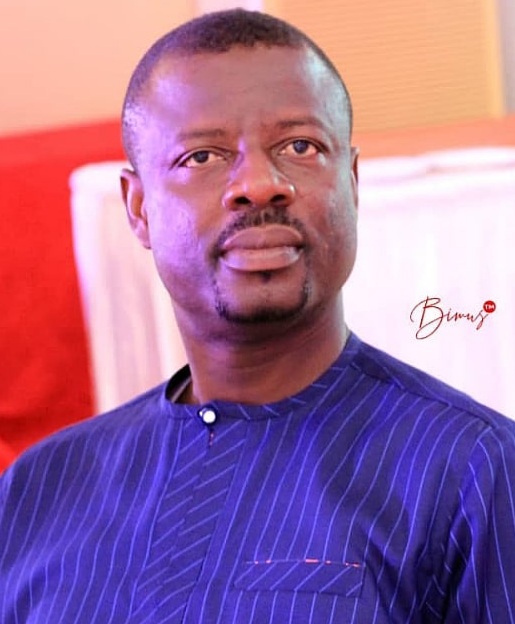
Lawyer William Kusi - Legal, campaign team member

A Kumasi-based legal practitioner, William Kusi Esquire, has urged delegates to give the Assin Central Lawmaker, Kennedy Ohene Agyapong, the nod to lead the New Patriotic Party (NPP).

The legal luminary explained that the firebrand MP was a self-made man, who had excelled in unprecedented job creation.

Kennedy Agyapong – NPP flagbearer hopeful

Lawyer Kusi, who is a leading member of Kennedy Agyapong’s legal and campaign teams, said the presidential aspirant was a man of his own class, and, therefore, had no match in the flagbearership race of the NPP.

According to the campaigner, save his idol, Dr. Bawumia, and Mr. Alan Kyerematen, all the other flagbearer aspirants were not relevant in the race.

Lawyer Kusi noted that having created jobs from the Starch factory at Amantin, a cold store, the funding of $6 million a Cardio Centre, a steel factory and the provision of 600 pickup vehicles for the party among others across the country, the presidential hopeful was even capable of employing Dr. Bawumia and Mr. Kyerematen to promote digitisation and trade policies to grow the economy.

He told The Chronicle in an interview that the delegates would give the nod to Kennedy Agyapong, because he was a visionary leader who eschewed tribalism and religious sectionalism and was capable of emerging the leader to break the 8 for the NPP.

He advised people in positions of trust not to use their influence and resources to intimidate the delegates at the expense of victory for the party.

He said the party foot soldiers would not tolerate any other candidate, because they wanted to see a change.

Lawyer Kusi emphasised that if Kennedy Agyapong emerged the winner of the impending flagbearer race, Ghana would experience a change, stressing that “we will see another Dubai in Africa.”

Lawyer Kusi, however, discounted alleged propaganda by the Dr. Bawumia campaign team that the NPP is an Akan party saying he (Dr. Bawumia) would not have been the running mate and subsequently the Vice President of an Akan party if the claim happened to be true.

He also dispelled the claim that Dr. Bawumia had stood for the NPP during the 2012 Election petition and must be credited and explained that he (Dr. Bawumia) was only a witness whose “You and l were not there” comments did not make any meaningful impact at the election petition hearing.

The lawyer also debunked seeming division among Christians and Muslims and cautioned the Vice President’s campaign team to avoid whipping tribal sentiments.

Editorial: Ablekuma Fan Milk killers must be found dead or alive!

0
Editorial

Despite the fate suffered by Constable Reindolph Gyimah Ansah (Pablo) of the Ghana Police Service and his team of James Town armed robbers, the criminals have still not learnt any useful lesson and continue to unleash havoc on police personnel whose ‘crime’ is protecting the state and its assets.

In 2022, Constance Emmanuel Osei, who was then escorting a bullion van was cruelly murdered by armed robbers who were trailing them at James Town in Accra.

Constable Emmanuel Osei was shot and killed whilst sitting in front of the vehicle carrying money that belonged to one of the commercial banks. It was later discovered that the killing, which shook the foundation of our dear nation, was executed by some personnel of the Police Service, led by the late Pablo. Pablo and his gang did not have mercy on one of their own, but rather opened fire and killed Osei.

As fate would have it, Pablo himself was gunned down by his colleagues when he allegedly tried to escape, somewhere along the Accra-Tema Motorway. The suspect (Pablo) had led his colleagues (uniformed officers) to locate the hiding place of some of the suspects involved in the crime, but attempted to escape and the resultant firing of gunshots led to his death.

Since the police did not spare their wayward colleague, one would have expected that enough warning had been sent out there to the criminals that they would be dealt with ruthlessly, should they try to take the life of any police personnel. But, alas, this has not happened!

The criminals have mastered courage to gun down another police officer escorting a bullion van, this time, at Ablekuma Fan Milk, a suburb of Accra. Like the James Town case, allegedly executed by Pablo and his team in 2022, the robbers shot and killed the police officer who was sitting in front of the vehicle.

The police have, so far, not issued any statement indicating that they had made any breakthrough in their investigations into the case. The Chronicle, however, believes that the police are seriously working on the case to ensure that the perpetrators are brought to book.

Though we trust the police to get to the bottom of the case, they will still need the support of the public. The Chronicle is, therefore, appealing to the general public to volunteer information that will lead to the arrest of the suspects.

In a video that has since gone viral on social media, the face of one of the alleged armed robbers is clearly seen. Whether the suspect is a Ghanaian or a foreigner, he is definitely living among the civilian population, who must be prepared to expose him (suspected killer) to the police.

Though there were rumours in the past about the exposure of informants by the police to the criminals, we do not think such a conduct, if it was true, can happen under the current George Akuffo Dampare administration.

These criminals, who have committed the latest heinous crime, should not be allowed to go unpunished, especially when they have killed a police personnel, who is the breadwinner of his family.

They must, at all costs, dead or alive, be located and arrested to face the full rigours of the law. But, whilst we wait to hear the good news that the criminals have been arrested, the ease with which the front door of the bullion van was opened by one of the robbers must be investigated.

As seen in the video that we have earlier referenced before the bullion van could properly park, one of the robbers had already rushed to the side where the police officer was sitting, opened the door, and fired at him at close range.

We assume that since the doors of most modern vehicles are centrally controlled from the driver’s side, The Chronicle is wondering the motivation to release the central lock when the vehicle had not fully parked. It could be a mistake, but it is only an investigation that can prove or disapprove such a claim.

Again, since the armed robbers have seen a loophole, which they are exploiting, The Chronicle advises the police hierarchy to force the banks to install cameras on the Bullion vans that can capture all movements and activities around the vehicle whilst it is in motion.

We believe when this is done, the passengers in the vehicle can monitor all the cars and motorbikes following them and capturing their activities as well.

The Chronicle also wants relevant stakeholders like banks, the Bank of Ghana, Ghana Police Service and the Association of Bullion Operators Ghana (ABOG) to expedite the deployment of armored bullion vans to prevent the loss of lives, particularly among police escorts.

The war against armed robbery and killing of police personnel must certainly be won. All hands must, therefore, be on deck.

Gov’t wasted 70 per cent tax revenues in 2022 -ILAPI Report

0
Peter Bismark Kwofie (middle), ILAPI's Executive Director, at a Q&A time with the media

A report compiled by ILAPI in 2022 has disclosed that on the average, Government of Ghana wastes GH¢0.70 out of every GH¢1.00 received as revenue, representing 70 per cent of every GH¢1.00 of the taxpayers’ contribution.

The Institute for Liberty and Policy Innovation (ILAPI) is a Tema-based think tank with expertise in Free Enterprise Public Policy Research.

Contained in its ‘2022 Poll and Data Analysis’, ILAPI said 92 per cent of Ghanaians were of the view that the government wasted their taxes, with 90.5 per cent of Ghanaians expressing their lost of trust in the government due to corruption, lack of accountability and transparency in the implementation and execution of policies and programmes.

Government wasteful spending refers to the inefficient allocation of resources by state entities, resulting in unnecessary costs and financial loss.

This issue, to ILAPI, poses significant challenges to the sustainability of public finances, hindering economic growth and diminishing public trust in government’s ability to manage taxpayer funds effectively.

The ILAPI-conducted perception representative poll which had 2,000 respondents across the country was conducted using a digital/online platform, including the ILAPI website, Facebook page, Instagram, Twitter and WhatsApp.

Volunteers across Ghana’s 16 regions were also engaged to assist in the poll.

ILAPI said the poll was a convenient online survey which utilised random sampling within four months. It said the sampling methods gave every respondent, who is a Ghanaian, an easy and equal chance of being part of the study within the period.

One key factor that contributed to the wastage of public funds, according to the ILAPI August-November ‘2022 Poll and Data Analysis was the lack of transparent and accountable procurement processes, which includes inefficient bidding systems, inadequate oversight mechanisms and instances of corruption, leading to inflated contract prices.

Another contributing factor, it mentioned, was the presence of redundant or obsolete government programmes and agencies which often duplicate functions, resulting in inefficient resource allocation and unnecessary administrative costs, insufficient evaluation of project feasibility, unrealistic cost estimates and poor monitoring of expenditures, often amounting to cost overruns and improper allocation of resources.

Further major factors discovered through the Representative Perception Polls included Presidential travels, the National Cathedral project, the abandoning of state projects like the Saglemi Housing units, government size, youth employment programmes, the Banking sector Clean-up Exercise and the fight against Galamsey.

To mitigate wasteful spending and gain citizens’ trust, the Report, whose Conceptual Review, Definition and Methodology were prepared by ILAPI’s Executive Director, Peter Bismark Kwofie, Poll and Data Analysis conducted by Stephen Dansu and with a public policy contribution made by Dr Mohammed Jamal of the Koforidua Technical University, suggested the strengthening of budgetary processes and introducing effective oversight mechanisms in promoting a culture of fiscal responsibility within the government financial architectures.

It went on to suggest fiscal covenant responsibility laws and rules, which would regulate government spending to enhance transparency and accountability.

Additionally, ILAPI suggested that a comprehensive review of government programmes to identify redundancies and inefficiencies. It explained that eliminating or merging redundant entities or institutions can result in cost savings and improved service delivery.

Besides, it said the implementation of robust monitoring systems, promoting competitive bidding and imposing strict penalties for fraudulent practices would help save the taxpayers’ contributions.

Above all, the ILAPI Report was of the view that fostering citizens’ engagement and participation in scrutinising government expenditures could play a significant role in curbing the government’s wasteful spending.

Ghana strategises for development of her Blue Economy

1
Deputy Director and Advisor, SDG Unit, Office of the President, Dr Felix Addo-Yobo

A Deputy Director and Advisor at the SDG Unit at the office of the President, Dr. Felix Addo-Yobo, has revealed that as part of the ongoing Sustainable Ocean Plan project, a financing structure will be included, to invite the requisite capital needed to support Ghana’s Blue Economy development.

The Sustainable Ocean Plan (SOP) serves as a unifying umbrella for national ocean-related governance which lays the foundation for implementing the Ocean Panel’s Transformations agenda.

This piece of information will draw a huge sigh of relief from many stakeholders in Ghana’s maritime industry who identify the lack of financing as the major stumbling block to the development of the sector.

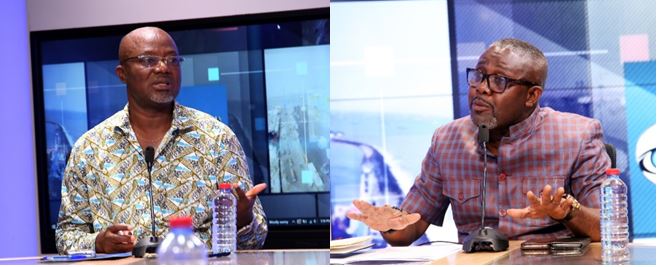
Dr. Addo-Yobo was speaking on the latest edition of the Eye on Port panel programme on Metro TV on the subject, ‘Relying on a Science-based Ocean Management Approach for Ghana.’

He said, ahead of the SOP, an Ocean Governance Study (OGS) was conducted to come up with a strategic analysis of the national frameworks supporting ocean governance including an overview of the nation’s legal and institutional frameworks for oceans to identify and prioritise capacity gaps in the development and implementation of existing frameworks.

The Government of Ghana did this with the Division for Ocean Affairs and Law of the Sea of the United Nations Office of Legal Affairs (DOALOS) and the Norwegian Agency for Development Cooperation (Norad).

According to him, key findings from the OGS include unresolved maritime border issues, Illegal, Unreported and Unregulated fishing and Maritime Security.

In line with these findings, six pillars were outlined for necessary action namely ocean health, ocean wealth, ocean equity, ocean knowledge, maritime security and ocean finance.

He said, reviewing the reports submitted by the various agencies and institutions, one common challenge was the lack of finance to support corrective and developmental projects.

This, according to him, led government to consider including a financing framework to mobilise resources to support the country’s ocean action.

Dr. Addo-Yobo indicated that government’s obligations render it very difficult to allot resources to the implementation of the various interventions under the SOP but believes that: “if we are able to structure opportunities then there is potential to attract private funding.

Critical to the Sustainable Ocean Plan financing framework would be consideration for where we will get money, who are the investors we need and how we can package the various needs within the needs as investment opportunities for private funding.”

As part of the SOP arrangement, the National Development Expert revealed it will be a monitoring and evaluation framework to consistently track progress of implementation with the help of scientific research.

These actions are directly tied to the National Blue Economy Summit organised a few weeks ago aimed at mobilising transformative ocean action to achieve the Sustainable Development Goals.

GRA educates stakeholders on new tax laws 

0

The Ghana Revenue Authority has met with members of the Ghana Institute of Freight Forwarders in Tema, to educate them on new tax laws introduced this year.

The Revenue Authority deemed it crucial to engage freight forwarders on the nuances of these tax laws due to the indispensable role the freight forwarders play as intermediaries between state actors and traders at the point of clearance of goods at the various ports of entry.

They were sensitized on the 12.5% Upfront VAT payment and the Growth and Sustainability Levy Act. The GRA beginning June 6 of this year began the imposition of 12.5% on the customs value of taxable goods at all ports of entry, imported by persons who are required by law to register for VAT, in addition to import duties and taxes.

A Chief Revenue Officer at the Community 9 Tax Payer Center, Kwame Adu Kwakye emphasized that this is not a new tax, but a compliance tool.

“The good thing about this compliance measure is if you register with us and you have paid already, you have an opportunity to recover the tax once you register the VAT.

If you are not even supposed to pay the 12.5% because probably the commodity you have imported is a personal commodity, is a personal use and not for sale then you can apply for a waiver even before your container lands at the port for clearance,” he said.

A Principal Revenue Officer at the Tema Community 1 Taxpayer Service Center, Stephen Baffour Gyau also revealed that the Growth and Sustainability Levy is a new tax aimed at shoring up government coffers for national development.

“The levy is not operating as the upfront VAT. The levy is on your profit before tax that is why I said we will project in the beginning of the year so latest by the time that the first payment is due profit is due,” he averred.

‘Science must lead policy in Ghana’s ocean management’

0
Executive Director, Blue Economy and Governance Consult, Richster Nii Armah Amarfio

Experts are calling for government to allow science lead policy when it comes to Ghana’s ocean management.

According to stakeholders within Ghana’s maritime sector, the hopes of a prosperous blue economy relies heavily on the use of scientific and historical data, the consistent application of modern technology and a generally positive attitude towards taking care of the ocean.

This was the running theme of the recently held maiden edition of the National Blue Economy Summit where government, industry, and academia assembled for one cause – the health, prosperity and security of Ghana’s oceans.

The National Blue Economy Summit was aimed at mobilizing transformative ocean action to achieve the Sustainable Development Goals.

The summit was also a fulfilment of Ghana’s responsibilities as a member of the Ocean Panel, a high level panel for sustainable ocean economy made up of seventeen governments across the world.

Following the summit, pundits are asking government to walk the talk and place premium on driving investment into ocean science in the country’s bid to rake in the full benefits of her ocean territory while preserving it for future generations.

Speaking to Kennedy Mornah on the award-winning Eye on port program on Accra based Metro TV and Ghana Television, the Executive Director of the Blue Economy and Governance Consult, Richster Nii Armah Amarfio rehashed the idea that Ghana has to right the wrongs of the past, and allow science to lead policy.

“Everything about the ocean is science. And I think that the biggest challenge we face as a country is allowing the policy to lead the science instead of the other way round. Until we turn that around we may continue to hold a lot of talk shops without getting the full benefits of our ocean space,” he bemoaned.

He chronicled that historically, science had been applied by older generations through myths and rituals leading to the preservation of the ocean’s health for the current generation.

Mr. Amarfio who has served as the Secretary of the National Fisheries Association of Ghana and the Ghana Tuna Association, intimated that it is more incumbent upon government and industry to submit to the counsel of modern science for policy formulation and implementation.

“We no longer value the science we read in school. You will have scientists advising someone in a policy position but the latter views it from the perspective of how much votes that policy will garner. That is not sustainable,” he said.

He lamented the non-availability of a single research vessel in Ghana stating that the opposite is true for more prosperous jurisdictions.

“If you go to Rhode Island, the state has a research vessel, the universities have research vessels and the New England region has its own vessel and they have been doing this for decades so they produce scientific results which become the basis of decision making.

When they say our stocks are breaking, they know what they mean. They’re able to do proper trend analysis of what has happened over the period of time.”

Sadly, he said Ghana’s last research vessel was sunk in the 1990s leaving the country to rely on periodic assistance from the Norwegians since then.

Adding his voice to the calls, the head of the marine and fisheries sciences department at the university of Ghana, professor Francis Nunoo, asked for increased impetus from government to drive investment into ocean science.

“The ocean is vast and got a number of habitats. It has got mountains, valleys, very dark areas, untapped areas that are 20,000 kilometers below and a diversity of undiscovered organisms and plants.

If you study the ocean, you realize it’s a wonderful place. The ocean is very dynamic, biologically and chemically. We derive a lot of minerals and vital nutrients in the ocean.

The ocean also has a wide of organisms that we know of and those we don’t know of. It’s out of the ocean that the fossils we derive our crude oil from. If we have found oil in Ghana, then it means our ocean is very rich.

We need various subsea equipment, those that can provide conductivity and depth measurements. We need technology and as a county we are lacking in this, accounting for the poor management over the years.”

He said Ghana’s under-explored blue economy is a result of culture, lack of technology use and unavailability of funds.

The academic who is also the chairman of the governing board of the fisheries commission proposed 1% of the national gross domestic product (GDP) to be dedicated to a fund for scientific research.

He said this will help demystify ocean science and launch Ghana on a path of development so far as the blue economy is concerned.

Kumasi High School launches 60th Anniversary celebrations

0
The Education Minister being assisted by dignitaries to unveil the Anniversary logo

The Kumasi High School has launched its 60th Anniversary celebrations, which falls in July 2024.

The theme for the launch is “60 Years of Holistic Education in a safe school environment, what next?”, with Prof. Joseph Opoku-Buabeng, Consultant and ENT Surgeon at the Komfo Anokye Teaching Hospital and School of Medical Department of the Kwame Nkrumah University of Science and Technology (KNUST), as the Special Guest of Honour.

The Minister of Education, Dr. Yaw Osei Adutwum, an alumni of the school, in his keynote address, assured the audience of the government’s commitment to transformation through education as a way of avoiding the pangs of poverty, hence, the Free Senior High School policy, which was currently benefiting about 1.4 million students against 830,000 in 2017.

The Minister, who is also the Member of Parliament for Bosomtwe, disabused the notion that increasing admissions did not affect academic performance and achievements of students positively.

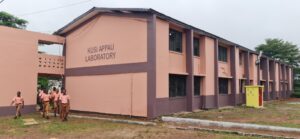
The new Kusi Apparently Science laboratory

According to him, 2022 witnessed the best results in the schools, following teacher motivation and supply of teaching and learning materials.

The Education Minister disclosed that a Science, Technology, Engineering and Mathematics (STEM) laboratory centre, as part of a major agenda for transformation, would be established at the Kumasi High School next year for interested students to pursue Engineering and Computer Science Engineering to augment training of engineers in Ghana.

He commended the outgoing Headmaster, Mr. Bernard Hall-Baidoo, for improving on the 78% intake of students into the tertiary school in 2017 to 91.1% currently, which he described as a great accomplishment worthy of celebration.

Dr. Yaw Osei Adutwum advised the students to always develop a growth mindset as a key to success, and discard a fixed mindset in defining their future.

Prof. Kwame Adom Frimpong, Chairman of the Public Interest Accountability Committee of Parliament, who presided over the Anniversary launch on Saturday, urged the students to strive and uphold the core values and excellence contributed by alumni in various areas of endeavour towards nation building.

He also urged the students to protect the image of the school, while the alumni reconnected to make the school strong.

Meanwhile, the Kumasi High school has proposed the construction of an ultra modern Sports Complex as a flagship project of the 60th Anniversary celebrations.

According to the chairman of the Anniversary Planning Committee, Rev. Peter Owusu Mensah, the proposed Sports Complex project would need GH¢11,200,000 to be raised through contributions by alumni of the various year groups to be completed.

Health workers trained on Sickle Cell, Asthma management

0
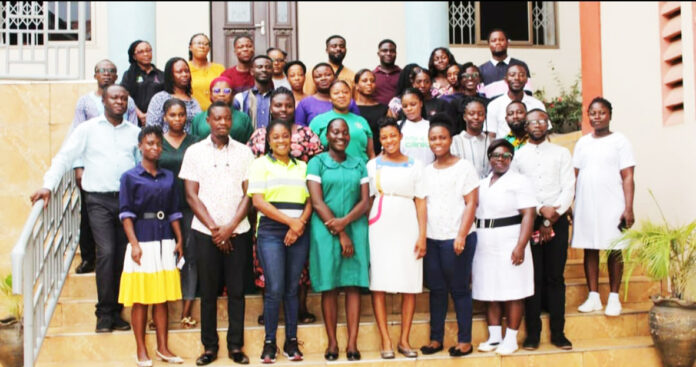
Participants at the training programme

Health workers in the Obuasi Municipality of the Ashanti Region have undergone training in Sickle cell and Asthma management. Sickle cell disease is one of the most common genetic diseases affecting millions of people worldwide, while Asthma on the other hand is the most common non-communicable disease in children and remains one of the most common throughout life course.

The Healthcare professionals play an important role in providing support and care for patients and families with Sickle cell disease, yet there is a gap in the availability of open-access education for healthcare professionals.

There is a reported challenge of inadequate human resource with the capacity to manage Asthma.

Dr. John Gyasi Banin, an Emergency Physician Specialist at AngloGold Ashanti Health Foundation explained that the capacity building programme, which was sponsored by AngloGold Ashanti Ghana, Obuasi Mine, aimed to equip the health professionals with the skills and knowledge to provide care and support for patients.

The Emergency Physician Specialist disclosed that, in other to bridge the gap, it was important to organise the capacity building for health professionals in both the Obuasi East and the Obuasi Municipality.

According to him, the training forms part of efforts by AngloGold Ashanti to improve the health care needs of the people in its operational area, as contained in the 10-year Socio-Economic Development Plan of the mining company.

He stressed that, they are conscious of the technicalities involved in managing Sickle cell and Asthma and, therefore, decided to join forces with AGA and the Health Directorates of the two districts to roll out the capacity building, which they believe will bridge the existing knowledge gap within the health sector.

He stressed the need to promote peer review as one of the key factors needed to improve performance in the health sector.

Masam Elizabeth Boateng of the Environmental Department of AngloGold Ashanti said the exercise was intended to create the platform for health workers to learn from one another, in terms of different approaches in solving problems. She indicated that AngloGold Ashanti has since 2019 rolled out plethora of capacity building programmes for healthcare workers in Obuasi.

She stated that, the intention is to ensure that the people within their operational areas have access to quality healthcare, new methods and approaches to deal with Sickle cell and Asthma

Mad. Linda Mensah, of Sanso Health Centre and other participants at the workshop, lauded AngloGold Ashanti for the training programme.

She said the programme has broadened their knowledge on new methods and approaches to manage the two conditions, saying it is an upgrade of what they were taught in school.

Nurses at the AGA Health Foundation confirmed that Asthma and Sickle cell form part of the common diseases reported at the Hospital and said the programme has given them an on the field training on how to deal and manage patients with the diseases.

Parliament and LGBTQ+ Debate, May the Lord Guide You

0
Opinion

It was announced last week, that the much-awaited debate on LGBTQ+ on the floor of the House of Parliament will begin this week. I can imagine what is happening to Satan and his demons in the spiritual realm with this debate coming on.

Why am I beginning this opinion with Satan and his demons. It has to be so, because as things are going now, the darkness of evil is gradually overshadowing the world.

It will have take men and women gifted with the virtue of courage and fear of God to stand up and say “No,” to those who have surrendered their minds and souls to the evil forces.

In the mortal world, LGBTQ+ is being used as a weapon against Africa, even as many may not know.

Whenever God sets a purpose for man, Satan will make sure he finds ways to profane that purpose. God created man and He did so through Jesus Christ and by the Power of the Holy Spirit. Once creation of man was completed, God ordered a way in which mankind could multiply.

God then ordered a gift called sex, which is sacred and should be between only those joined together in marriage. And this marriage is the foundation of the family of which God is the Head.

When Satan came into the picture, sex was turned into a common event like consumption of drinks, whenever one felt like. Sex, is now free for all and at any age.

Then LGBTQ+ waded into the confusion and now a human being can look God in the face and say, “I am not what You created me to be, I am of the opposite sex.” All of God’s laws against LGBTQ+ are being bastardized.

Homosexuality (Lev. 18:22, 20:13), incest (18:7-18; 20:11-21), bestiality (Lev. 18:23; Deuteronomy 27:21) and transgender (Deuteronomy 22:5) are all sins against the Most High, yet in this day and age some people are accepting these as the right form of life.

Because the Sacred Scriptures frowns upon such unholy acts, today the banning of the Bible in schools has started in the United States. Today the Bible is said to be a book of violence.

The West is now keen on abandoning the Word of God and taken up the statutes of Satan and they want the world to go down with them.

We cannot defy the laws of the One Being who created us. Our common sins are enough, we should not add up to them.

Removing God from the minds of children, hence no Bible in the schools, then removing the family system by having two males as parents and two females as parents, is the only way to orientate the growing child into accepting LGBTQ+ as the normal way of life.

This is what our honourable members in the House of Parliament will debate from this week. Uganda has set the pace for the rest of Africa to follow. I pray for a successful section in Parliament, so that God is glorified.

Another reason for LGBTQ+ is to implement the depopulating agenda of Africa. When Covid-19 came, many were Westerners who saw the virus as a means of reducing the African population or even wiping it from the surface of the earth.

Fortunately, that did not happen and the total number of people who got affected by the virus, in the whole of Africa, were much lower than figures coming out from some individual Western nations like the US, Canada and few others.

Now the only way to achieve that diabolical agenda is to find ways of getting Black Africa to accept LGBTQ+.

One area which the West uses, is through IMF conditionalities. Since all of Black Africa economies are remote-controlled by the West, there are times when out of economic mismanagement or external crisis, African economies would get into ditches.

Here comes the IMF to ease the burden and this is done with conditionalities attached. One conditionality which cuts across, is either a ban on employment or a drastic cut down on it.

Without any option, such poor Black African nations will accept these terms. And for the period of the IMF programme, no youth is employed. These young men and women become desperate and here is when the LGBTQ+ propagators come in.

Engaging with these poor and desperate youth, any offer that will be beyond their dreams will make them do anything and that anything includes engaging in LGBTQ+ activities. Soon, these unemployed youth will be flaunting wealth and will not know tomorrow and there will be no turning back.

If the West are allowed to pollute the minds of Black African youths with this LGBTQ+ which comes with cash and material benefits, there will be a time when the Black African population will reduce and gradually be wiped out.

How long this programme will take, I do not know. But what I know is that, when majority of the people can no longer procreate, the wiping out of African Blacks will take a permanent course.

And soon, all of our side of this continent will be without the indigenes, and the Whites will recolonise our land, this time they will not meet a single soul to resist them.

Ghana Parliament has taken a good course and all Ghanaians must pray for the parliamentarians.

Hon. Daniel Dugan

The views expressed in this article are the author’s own and do not necessarily reflect The Chronicle’s stance.

The Ghanaian Chronicle