Home Blog Page 1288

Rent Control Department Launches Online Platform

0
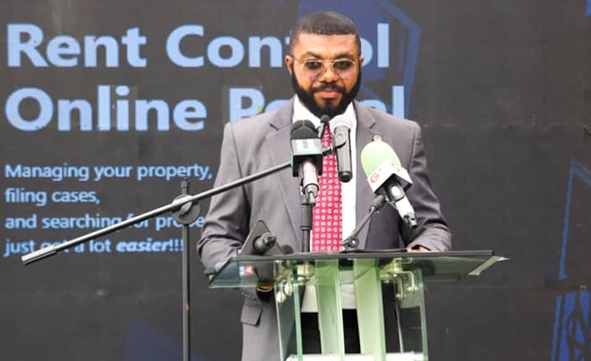
Deputy Minister for Works and Housing, Dr. Hamid Armah addressing the guests

In a move to modernise public service delivery and make rental services more accessible to all Ghanaians, the Rent Control Department has launched its new digital platform.

The platform was launched on Thursday, September 12, 2024 at an event held at the forecourt of the Architecture and Engineering Services Limited (AESL).

The Deputy Minister for Works and Housing, Dr. Prince Hamid Armah, described the launch as “the beginning of a bold new chapter in Ghana’s drive toward modernisation, efficiency and inclusivity in our rental housing sector.”
Deputy Minister for Works and Housing, Dr. Hamid addressing the guests.

In his speech, Dr. Armah emphasised the critical role of the Rent Control Department in fostering peaceful coexistence between landlords and tenants and ensuring that every Ghanaian has access to safe, adequate and affordable housing, in line with the Rent Act 220.

He noted that for too long, the manual processes of the department had caused delays, frustrations and inefficiencies for all involved.

Dr. Armah recalled a pivotal moment on July 15, 2020 when Vice President Dr. Mahamudu Bawumia visited the Rent Control Department and observed long queues of citizens waiting to access essential services.

He noted that many Ghanaians had traveled great distances only to face lengthy processes that did not reflect the modern Ghana that the government aims to build.

“It was then that the Vice President made a promise, one that would turn frustration into progress and inefficiency into empowerment.”

He pledged to digitize the operations of the Rent Control Department, making it more accessible, efficient and responsive to the needs of the people,” Dr. Armah said.

The new digital platform, developed in collaboration with SuperTech Limited, a leading technology solutions provider, will transform the Rent Control Department into a digitally equipped institution.

Dr. Armah announced that Phase I of the project has successfully digitized 15 offices across 11 regions, allowing landlords and tenants to access services remotely from major cities and towns across the country.

He explained that the digitalization of the department offers numerous benefits to various stakeholders in the rental market. For landlords and tenants, the platform allows them to interact with the department online, eliminating the need for in-person visits.

“Whether you need to register property, file a complaint, or resolve a dispute, you will now be able to do so from the comfort of your home or office,” he added.

The platform also introduces automated processes that will streamline tasks such as registering properties, processing complaints, and handling paperwork electronically.

Additionally, digital tenancy agreements, unique digital property addresses and online advertising of rental properties are among the new features designed to simplify the rental process and enhance market transparency.

The launch is part of the Ministry of Works and Housing’s broader vision for public sector transformation, as plans are advanced to extend this digitalization project to all 16 regions, ensuring that no Ghanaian is left behind.

Kwesi Essel, Business Development Manager of SuperTech Limited, the company responsible for developing the digital platform, highlighted the groundbreaking nature of the project. He noted that the system allows Rent Control officers to log and manage complaints seamlessly, maintain comprehensive databases, and generate advanced reports.

For property owners, the online portal provides an easy interface to manage properties, submit applications, and advertise vacant premises.

“For the general public, this system opens up a world of convenience at your fingertips,” he remarked.

The Chief Rent Manager of the Rent Control Department, Twum Ampofo, also took the opportunity to reflect on the department’s journey since its inception and how this digital transformation will help bridge existing gaps and enhance service delivery.

He acknowledged the challenges of the past and expressed optimism about the future, noting that the new system will ensure more efficient and accessible services for all Ghanaians.

He said with the unveiling of the digital platform, the government has also launched a new website, rentcontrol.mwh.gov.gh, a one-stop portal for all rent-related transactions, encouraging Ghanaians to embrace the digital future.

By Jesse Otoo
Sports Minister Mustapha Ussif & His NSA Boss Must Go! …We can’t even grow grass under their watch

0
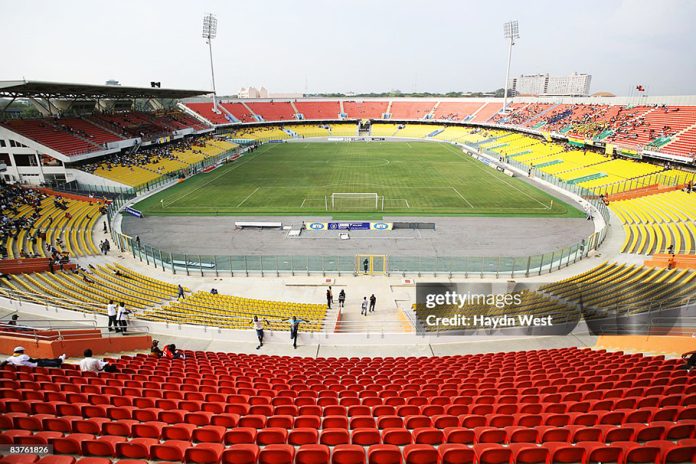
Ohene Djan Stadium

Someone should tell me why Sports Minister Mustapha Ussif and Chief Executive Officer of the National Sports Authority (NSA) Mr. Dodzi Numekevor should report for work this morning.  They deserve the boot.I am disappointed in my senior friend and President of the Republic of Ghana, Nana Addo Dankwa Akufo-Addo for failing to raise a finger after the Confederation of African Football (CAF) banned our only remaining pitch, the Baba Yara Sports Stadium, from hosting any international football tournament with immediate effect.

With the ban on Baba Yara Stadium, Ghana does not have any football arena for organising any international tournament. The OheneDjan Stadium in Accra, the Cape Coast Stadium, Essipong Stadium in Sekondi and the AliuMahama Stadium in Tamale have all been condemned as unsuitable for hosting the rest of the world in association football.

What this means is that this country, the first to gain independence and the first nation to play football as an organised sport in Sub-Saharan Africa, has to go to our neighbouring countries of Nigeria or La Cote d’Ivoire, on our knees, begging for an arena to host our international matches.

For me, the disgrace and inconvenience these two leaders have plunged this nation into by their inactions and abysmal failure to execute their core functions, is tantamount to what begat ‘Government Official One’ and subjected this proud nation to ridicule at the Southwark Crown Court in London and indictment prosecution papers in France and the United States of America.

For meand most reasoning Ghanaians, it is an indictment for a sitting Head of State to negotiate with his own blood brother, Samuel ForsterMahama and two Britain-based accomplices to buy three aircrafts for Ghana, during which Airbus paid Three million Euros in blood money. Mahama as Government Official One has brought the state of Ghana into disrepute and should have NEVER been allowed for his effigy to appear on the ballot box as a contender for the highest office of the land.

The pronouncement by the Office of the Special Prosecutor that Government Official One might not have benefitted from bribery is BUNKUM. There is clear evidence that his brother was bribed.

In the same vein, the Minister of Sports, Mustapha Ussif and his Chief Executive Officer at the National Sports Authority, Dodzie Numekevor, should be sent packing for disgracing the whole country.

According to CAF officials, this country cannot even grow grass at our international arena and cannot keep simple lessons in sanitation, with our washrooms smelling badly.

Football in Ghana is not everything, in terms of the average Ghanaian’s source of satisfaction. It is the only thing. Many may not know this. But football was pioneered in Ghana before the game was taken to Nigeria, East Africa and the Southern parts of the continent. Along the West Coast, the game was taken to Cote d’Ivoire, Sierra Leone, Guinea and Senegal. Burkina Faso, Mali and Niger also drunk from the experimental pool in Ghana.

For the uninitiated, football was pioneered by school boys of the Philip Quarcoo Government Boys School in1903. Two selected teams from the same club-Exelsoir, made up of boys of Philip Quarcoo Boys School, later named Government Boys School, outdoored the game under moonlight at the Victoria Park, now Jubilee Park, Cape Coast.

It is interesting to note that the school boys had been organising secret trainingsessions in preparation for the outdooring, under Mr. Briton, a Jamaican-born head teacher of the school.

There had been elaborate preparation for the big day. Jerseys and boots had been ordered from Liverpool. On the grand day, therefore, the boys were in brand new jerseys and wore boots.The experiment in Cape Coast excited the rest of the country, leading to the formation of many football clubs.

Most of these pioneering clubs have since fallen on bad times and collapsed. The oldest existing club is Accra Hearts of Oak, founded on November 11, 1911. Football was played at street corners and any available space in cities, towns and villages in the then Gold Coast, until the 1948 disturbances, which also speeded up the process to independence.

In its recommendation, the Coussey Committee, which probed some aspects of the 1948 disturbances, recommended to the British Colonial masters to construct a stadium. The committee established that lack of a standard stadia for the youth, especially to exercise,was one of the reasons why the riots were so devastating.

Following this recommendation, the British Colonial masters constructed the Accra Sports Stadium for the people of the Gold Coast.Following the success of the Accra Stadium to provide amenities for sports, the colonial government asked the multi-national company,United African Company (UAC), which was benefitting a lot from cocoa purchases in the Ashanti Province, to build a stadium in Kumasi.

Consequently, the UAC put up a magnificent Stadium. The new edifice opened in 1960 and together with the Accra Stadium provided facilities for the upsurge in sports in Ghana over its rivals in sub-Saharan Africa. In 1963, the two stadia provided the venue for the Black Stars’ maiden triumph in the African Cup of Nations.

This country used the two stadia, until President John Agyekum Kufuour’s regime decided to bid and host the 2008 African Cup of Nations. To the glory of God, I played a useful role in helping to win the bid to host 15 other nations in the 2008 Cup of Nations in January and February 2008.

The expansion of the participating nations from eight to 16 meant Ghana had to look for other options, beyond the Accra and Kumasi Stadia.

The nation constructed the Sekondi (Essipon) and the Aliu Mahama Sports Stadia. There was one snag though. During the inspection stage by CAF, one Tunisian official kept raising red flag about the suitability of Tamale to host such a monumental event.

To cater for any eventuality, the Cape Coast Stadium was proposed as a standby, in case of any eventuality. Apparently, the Local Organising Committee (LOC) was using a shorter route from the Tamale Airport to the construction site of the now Aliu Mahama Sports Stadium.

The by-pass went behind the township of Tamale, raising fearsin the visitors that Tamale may not be a town and that the President wanted the stadium in Tamale for political reasons.

Unfortunately, none of us, the Ghanaian hosts, understood what the Tunisian and his delegation meant, until an incident happened that changed the whole narrative.

As had been the norm, the LOC planned for lunch in Cape Coast after a round trip by air from Accra, through Sekondi. On one auspicious day, the mission was late. Dinner was, therefore, served at Gariba Lodge in downtown Tamale. It was the first time the contingent had driven through the Tamale township.

You would hear the visitors’ sigh of relief. ‘TAMALE- TOWN,’they all screamed. Tamale was, therefore, accepted as avenue for the championship and Cape Coast was developed after the championship.

In effect, Ghana has five standard stadia for international matches. That we cannot grow grass on any of them and cannot stem the appalling sanitation at all the five stadia is an indictment on Sports Minister Mustapha Ussif and his NSA boss Mr. Dodzie Numekevor.

They have no place in sports promotion in Ghana anymore, I am afraid. If they would not resign dis-honourably, I expect Show-Boy Nana Addo Dankwa Akufo-Addo to withdraw their appointments. They have disgraced this nation enough.

I shall return!

Ebo Quansah in Accra

$40m Goil Bitumen Plant Commissioned in Tema

0

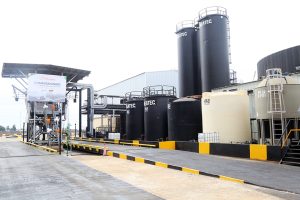
The President, Nana Addo Dankwa Akufo-Addo, has commissioned the GOIL/SMB Bitumen Plant, the largest bitumen processing facility in Tema, Greater Accra region.

The state-of-the-art plant, commissioned on Thursday, September 12, 2024 is a $40 million joint venture between Ghana’s GOIL PLC and Côte d’Ivoire’s Société Multinationale de Bitumes (SMB).

The front view of the African Bitumen Plant in Tema.

President Akufo-Addo expressed profound pride in the achievement, emphasising the significance of regional cooperation. He described the plant as a testament to the power of shared vision and resources within the Economic Community of West African States (ECOWAS).

“This facility is more than just a plant; it symbolises the strong ties between Ghana and Côte d’Ivoire and exemplifies the benefits of regional collaboration,” he stated.

CAPACITY

The President said that the GOIL/SMB Bitumen Plant boasts a total storage capacity of 7,500 metric tons. He said that it will process base bitumen imported from Côte d’Ivoire into high-quality Polymer Modified Bitumen (PMB) and bitumen emulsions.

These products, according to President Akufo-Addo, are crucial for developing durable road infrastructure, offering enhanced performance under extreme weather conditions and heavy traffic loads.

PMB

PMB is known for its superior elasticity, strength and resistance to cracking, making it ideal for high-stress areas such as highways and airport runways. Bitumen emulsions are environmentally friendly and economically efficient, used in road maintenance and construction without the need for high temperatures during application.

RELIANCE

The establishment of this plant is set to reduce Ghana’s reliance on bitumen imports, lowering construction costs and improving the quality of road infrastructure.

President Akufo-Addo highlighted the plant’s timely arrival amid ongoing efforts to expand the country’s road network.

“Since 2017, we have embarked on the most extensive road construction program in Ghana’s history, with over 12,000 kilometers of roads built. This facility will complement our efforts by producing the necessary volumes of bitumen products to meet the growing demands of our infrastructure sector.”

The new plant is also expected to foster regional integration, with President Akufo-Addo praising the joint venture as a model for future collaborations within ECOWAS.”

The President also commended the leadership of GOIL PLC and the dedication of the contractors, Orsam, and workers from both GOIL and SMB for their efforts in completing the project on schedule and to high safety standards.

PRIME MINISTER

The ceremony was attended by President Nana Addo Dankwa Akufo-Addo and His Excellency Robert Beugré Mambé, Prime Minister of Côte d’Ivoire, who represented President Alassane Ouattara.

In his address, His Excellency Robert Beugré Mambé urged Goil and SMB to do well to maintain their partnership. He pledged the support of the government and people of his country to the joint venture.

SUSTAINABILITY

The Minister of State at the Ministry of Energy, Herbert Krapa, in his speech spoke on sustainability.

According to him, being responsible in the carbon emissions has now left the realm of being an option, adding that all the signs of a fast-warming globe are here “and we know; we can’t wait any longer to take decisive action.”

He said the plant must be a zero-carbon emission model for others to follow. He said it must contribute directly to efforts to reach net zero in the next few years and it must ensure energy efficiency at all levels.

While commending Goil and SMB for having the highest bitumen standard certification, he also implored them to look more within than without.

“Your internal ethical standards are what will make the real difference. Look to those and stick to them,” he remarked.

COMMENDATION

The Board Chairman of GOIL PLC, Reginald Daniel Laryea, thanked President Akufo-Addo ministries of Energy, Roads and Transport for their contributions.

He assured the gathering that GOIL PLC and SMB will continue to take further steps to deepen their cooperation.

“I believe that together we can achieve even greater milestones and point much closer ties,” he said and welcomed the guests.

The Group Chief Executive Officer and Managing Director of GOIL PLC, Mr. Kwame Osei-Prempeh, urged the President to make every effort to prevent the influx of bitumen into the country through unapproved routes.

Editorial: Wa Hospital’s Swift Action Against Erring Staff Commendable

0
Editorial

Management of the Wa Municipal Hospital has directed 19 staff of the facility to refund various sums of money believed to have been illegally earned from clients of the facility. The decision for reimbursement was arrived at after a six-member disciplinary committee found the 19 workers culpable for engaging in indiscriminate sales of non-drug medical consumables, making improper demands from clients and collecting unauthorised fees at the maternity ward of the hospital.

According to the Management, the refunds, ranging between GH¢4 and GH¢286 are part of other punitive measures imposed on the affected staff by the six-member disciplinary committee tasked to investigate complaints of extortion, insubordination and charging of illegal fees, as well as the illegal sale of non-drug consumables at the hospital.

The administrator of the Wa Municipal Hospital, Sampson Abu, confirming the issue on Channel One TV, indicated that management decided to investigate the staff after receiving several complaints of inappropriate behaviours.

“The hospital’s administration has recently received significant public criticism for its awful staff conduct towards customers. One of the most serious concerns was the alleged illegal indiscriminate sale of non-drug medical consumables to clients at the maternity ward, notwithstanding management precautions.

“So in our quest to demonstrate commitment to upholding the dignity of both clients and staff, a committee was formed to investigate the issues and the investigations came out with evidence implicating a number of midwives in grave violations.”

The administrator cited surgical gloves, urinary catheters, urine bags, pads and bed mats as some of the non-drug medical consumables sold by the midwives to expectant mothers at the maternity ward, on the blind side of the hospital’s authorities.

It is very appalling and sad to see our healthcare providers extorting money from patients. By their nature, hospitals are where patients and their families seek care, comfort and assistance. For expectant mothers, who often face vulnerable moments in their lives, the idea of being exploited in a hospital is not only distressing but also deeply unethical.

The sale of items like surgical gloves, urinary catheters, urine bags and other non-drug consumables is an obvious violation of hospital regulations and exposes patients to further financial strain. For many families, the extra costs may be unbearable and worse still, it places a burden on patients already navigating the physical and emotional demands of pregnancy and childbirth.

The amounts involved may appear modest on the surface, but they signify a much larger problem. It is not just the amount of money that matters but the principle behind the actions of those staff members. These illegal practices have diminished the dignity of the patients who should have been treated with respect and empathy.

Moreover, the unlawful collection of fees, however small, speaks to a broader culture of impunity that, if left unchecked, can metastasise within the institution and compromise the integrity of healthcare delivery.

What is more troubling is that this misconduct was carried out despite clear management policies designed to safeguard patients from such exploitation. The fact that these violations occurred under the noses of hospital authorities suggests a deeper institutional weakness in oversight.

It raises a question of how effective are the systems in place to prevent such abuses? While the disciplinary committee’s investigation has brought these malpractices to light, it begs the question of whether such issues are isolated incidents or symptomatic of a wider problem within the hospital, and possibly, other healthcare facilities across the country.

The swift action taken by the Wa Municipal Hospital’s administration is commendable. The hospital’s management is demonstrating a commitment to restoring the trust that has been shattered by these unethical practices.

The decision to refund the illegally obtained sums of money, while a necessary step, should only be the beginning. The punitive measures imposed on the staff involved must serve as a deterrent, signaling that such behavior will not be tolerated.

However, a punitive approach alone is insufficient. The hospital must take proactive measures to prevent future occurrences, including strengthening its internal monitoring systems and ensuring that there are clear, accessible channels for patients to report any misconduct without fear of retaliation.

Moreover, other healthcare system in Ghana must learn from this incident. It is a reminder that even in environments where trust and care are paramount, there is the potential for unethical behavior if the proper checks and balances are not in place.

Hats Off to the Ministry of Education and the Ghana Education Service on the Innovative “Post Yourself” Policy

0
Wisdom Koudjo Klu, the writer

The education sector in Ghana has undergone numerous changes over the years, each aimed at improving the quality of education and the welfare of teachers. Among these changes is the recent policy initiative by the Ministry of Education (MOE) and the Ghana Education Service (GES). It allows newly recruited teachers to post themselves to schools of their choice.

This is a significant shift from the traditional practice where teachers could only indicate their preferred regions, leaving the GES to determine their exact school placements. As a matter of fact, this policy will help fill the gaps in all areas that teachers do not want to go. While the policy is a commendable step forward, it is not without  potential challenges. I will like to explore the implications, highlight  its benefits and the obstacles that may arise.

A Positive Step Towards Teacher Autonomy

One of the most significant advantages of the policy is the empowerment it gives to teachers. Allowing teachers to post themselves to specific schools will enhance their autonomy and satisfaction in their profession. As an indisputable fact,  many newly trained teachers were posted to schools in regions they may have preferred but not necessarily the exact schools they would have chosen. This often led to dissatisfaction, as they had little control over their specific posting, which in turn affected their morale and, by extension, their performance in the classroom.

With the “post yourself  policy”, newly trained teachers have the opportunity to choose schools that align with their personal and professional preferences. This could mean selecting a school closer to home, one with better resources, or even one with a specific cultural or linguistic environment they are comfortable with. By giving teachers this level of choice, the GES and the Ministry of Education are likely to see an improvement in teacher retention rates.

Equitable Distribution of Teachers

Another benefit of the policy is its potential to address the long-standing issue of inequitable distribution of teachers across the country. In the past, certain schools, particularly those in rural or underserved areas, struggled to attract and retain qualified teachers. This was often due to the fact that in the past, it was believed that some newly trained teachers were assigned to areas without their input or areas where their services were not needed.

The self-posting policy could mitigate this issue by encouraging the newly trained teachers to choose schools that suit their needs and preferences. For instance, teachers from rural areas or those with a passion for serving underprivileged communities might be more willing to post themselves to schools in less desirable locations. Also, per the nature of the declared vacancies, even the most remote schools would be adequately staffed.

Potential Challenges

Despite the uncountable merits of the new self-posting policy, it is not without challenges. One of the concerns that should be attended to is the issue of language barriers. Ghana is a multilingual country. Teachers who post themselves to schools in regions where they are unfamiliar with the local language may struggle to communicate effectively with their students, which could hinder the teaching and learning process.

Let me fasten to stipulate that,  the possibility that some teachers may refuse to post themselves altogether, either because they are unable to find a school that meets their needs. This could result in these teachers remaining unemployed, which would only add to the already high unemployment rate among teachers in the country.

Policy Impact on Married Teachers and Those with Health Concerns

It is undebatable that, many newly trained teachers who are married may be reluctant to post themselves to schools that are far from their spouses.

Similarly, teachers with health concerns may face difficulties in finding suitable postings. For instance, a teacher with a chronic health condition and goes for dialysis in Accra would not be willing posting themselves to a village in the northern region where dialysis service would be difficult to access. If such options are limited, these teachers may opt not to post themselves, leading to a further increase in the unemployment rate among teachers with health issues.

Recommendations

The GES and the Ministry of Education as a matter of urgency will need to:

  • Address this issue by ensuring that there are adequate incentives and support systems in place to encourage teachers to take up postings in all regions of the country.
  • Address the issue of language barriers through targeted training programs. Teachers who are posted to regions where they are unfamiliar with the local language should receive language training to help them communicate effectively with their students and the community. This could be done in partnership with local education authorities.
  • Special consideration should be given to newly trained teachers who are married and those with chronic health concerns. The GES should work with these teachers to find suitable postings that meet their needs.

Conclusion

The new teacher self-posting policy a commendable step towards improving the education sector in Ghana. By giving teachers the autonomy to choose their postings, the policy has the potential to improve teacher satisfaction, retention, and the equitable distribution of teachers across the country.

However, it is essential that the GES and the Ministry of Education address the perceived challenges associated with it, particularly those related to language barriers, teacher unemployment, and the needs of married teachers and those with health concerns. With the right support and incentives, this policy could lead to a more effective and efficient education system in Ghana, benefiting both teachers and students alike.

Written by:

Wisdom Koudjo Klu,

Educationist/Columnist,

Greater Accra Region.

wisdomklu@gmail.com


The views expressed in this article are the author’s own and do not necessarily reflect The Chronicle’s stance.

MP Duker presents 4 Jeski Motorbikes to Tarkwa Police

0
MP Duker handing the keys of the Motor bikes to the Police

The Member of Parliament for Tarkwa Nsuaem, George Mireku Duker, has presented four Jeski Motor bikes to the Tarkwa Divisional Command of the Ghana Police Service (GPS), at a short ceremony in Tarkwa.

This is not the first time MP Duker has extended a hand of help by way of presenting logistics to the police.

Last year, he presented a brand new pickup to the Ghana Police Headquarters in Accra.

Presenting the four Jeski Motor bikes, MP Duker indicated he knew what the security situation was like, when he was Municipal Chief Executive (MCE) and how it is now.

“There is no doubt security has improved and given the fact that Tarkwa is now a regional police command, it is important we help the police.”

He indicated the police needed logistics to enhance its visibility, as their presence helps in combating crime.

“We are now experiencing quality policing given the decrease in crime activities in the municipality. So it’s important we help the Police.”

In that direction, he appealed to corporate Ghana to also extend a hand of help to the Police.

ACP Bismarck Agyapong, Deputy Commander for Western and Central Region who received the four Jeski Motorbikes, thanked the MP for the donation.

He said what the MP has done was an indication he would do more, given what he has personally told the Command.

Given that the MP comes from Tarkwa, ACP Agyapong admitted that security matters were of great concern to the Legislator.

GREL offers GH¢144K scholarships to 22 tertiary students

0
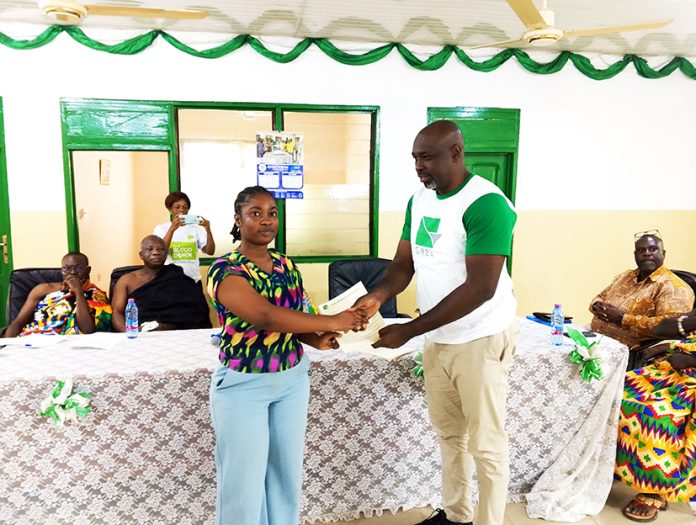
Perry Acheampong Corporate Affairs Manger of GREL presenting scholarship to a female beneficiary

Ghana Rubber Estate Plantation (GREL), which has large swaths of rubber plantation in the Western region, has awarded scholarships to 22 tertiary students from its host communities for the 2023/24 academic year.

GREL’s rubber plantations extend across three regions namely Western, Eastern and Central regions and covering over hundred host communities.

Every year, the company awards scholarships to tertiary students. Last year, a total of 24 tertiary students were awarded a GHC100,000 scholarship packages for the 2022/23 academic year.

This year, though the number of beneficiaries appears to have reduced by two, the monetary package is, however, on the high side.

At a short ceremony to formally present the Beneficiaries with their letters, it came to light that the rubber plantation company is spending a whooping GHC143,880 on the Beneficiaries for the 2023/24 academic year.

The scheme would run for a period of four years and the amount would cater for their tuition and accommodation amongst others.

The figure does not cover continuing students who are also on the company’s scholarship scheme.

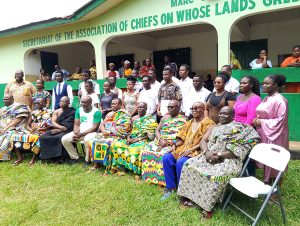
The GREL scholarship beneficiaries pose with chiefs

Addressing the Beneficiaries, Peter C.K. Atuora, Community Relations Manager/External Communication, reminded the Beneficiaries that they are in a knowledge-based world and that those without it would be left behind.

As a result, it is important to support education, which is the reason why GREL is offering scholarships to them.

Peter Atuora, therefore, advised the Beneficiaries to utilise the opportunity and give out their best. He cautioned them not to allow the company to regret giving out the scholarship.

The company, he indicated, would be monitoring the Beneficiaries’ progress to make sure the investment being made in them is worth it.

“As you have been given this opportunity, make sure you also open the doors to others. We are helping you, so you will also have to help others.”

It is on record that a total of 64 applicants applied for the GREL scholarship. Out of the number, 53 Beneficiaries availed themselves for the aptitude test and 22 were shortlisted for the scholarship.

The Beneficiaries are coming from Breman, Abirem Agona, Asamakese, Lower Dixcove, Agona Nkwanta, Nzema East, Gwira and Wassa Fiase among other communities.

Present at the ceremony were Nana Kwesi Agyeman, Omanhene of Lower Dixcove; Obrempong Hima Dekyi, Omanhene of Upper Dixcove; Awuale Attibrukusu III, Omanhene of Lower Axim; Awulae Amihere Kpanyile III, Omanhene of Atuabo and Acting President of the Western Regional House of Chiefs (WRHC), Awulae Amgamatuo Gyan III, Omanhene of Gwira and Perry Acheampong, Corporate Affairs Manager of GREL.

Nana Kwesi Agyeman, who is the president of ACLANGO, on his part, applauded GREL for the scholarship scheme.

He assured the company that Nananom would make sure the scholarship scheme does not go waste. This they would do by monitoring the progress of the Beneficiaries.

In that direction, he advised the Beneficiaries to give out their best to make the company proud for investing in them.

Nana Agyemang, however, did not mince words when he told the Beneficiaries that the company would not hesitate to withdraw the scholarship if their output did not commensurate with why they were awarded the scholarship.

Obrempong Hima Dekyi, Omanhene of Upper Dixcove, on his part, said the GREL scholarship is one of the best scholarships in the country.

This is because GREL absorbs tuition and accommodation fees, unlike other scholarships which put a cap on tuition payments.

Tinubu approves N108bn for states to tackle flood

0
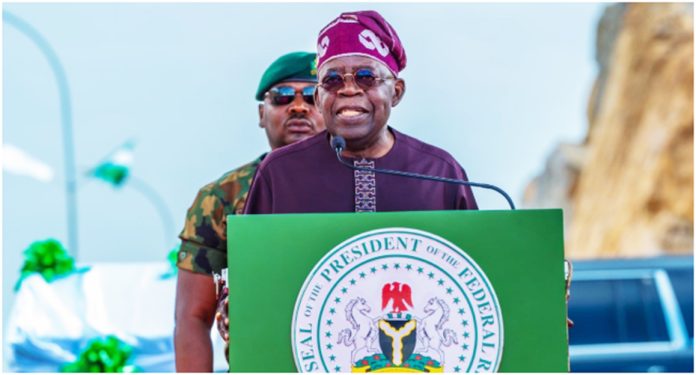
President Bola Tinubu

President Bola Tinubu has approved N108 billion for the 36 states of the federation to tackle flooding and other natural disaster. This was disclosed on Wednesday by Vice President Kashim Shettima at the State House in Abuja, the nation’s capital.

Receiving the Speaker of the House of Representatives Speaker Abbas Tajudeen, the Vice President described the situation in Maiduguri as a “national calamity”.

“The President has shown his zeal, willingness and commitment to partner with the states towards addressing these issues,” Shettima said.

“Recently, he approved the release of N3 billion to each state of the federation to address some of these challenges so that all parts of the federation should have buy-in and belonging.”

Shettima also commended the Speaker for what he described as his “stellar leadership in the National Assembly,”  saying despite having nearly 70 per cent of the members as newly sworn-in, the Speaker has been able to keep the flag flying.

Credit: channelstv.com

Court grants N10m bail each to #EndBadGovernance protesters

0
EndBadGovernance protesters

A Federal High Court sitting in Abuja has granted N10 million bail on each to the ten members of the #EndBadGovernance protesters who were charged with attempt to overthrow President Bola Tinubu between August 1 and 4th this year.

While delivering ruling in their bail applications, Justice Emeka Nwite said the protesters must produce sureties who must be property owners in Abuja and must deposit documents of the properties to the court in addition to swearing to affidavit of means.

The court equally ordered the defendants to produce one surety each who are based in Abuja and must be willing to deposit their international passports and three recent passport photographs with the court.

Justice Nwite, while rejecting the objections of the Inspector General of Police against the bail applications, however, ordered the defendants not to participate in any public rally throughout their trial.

The judge also ordered that the defendants be remanded in prison custody pending the perfection of their bail conditions.

The accused persons are said to have committed the treason offence during their one week nationwide protests when they allegedly levied war against Nigeria.

The court has fixed the 27th of September for the commencement of trial.

Credit: channelstv.com

Workers block Akwa Ibom Poly gates to demand 65yrs retirement age

0
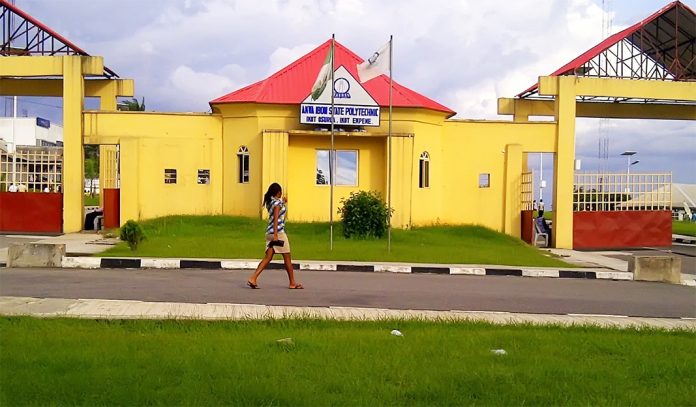
Akwa Ibom Polytechnic

The ongoing strike by the Non-Academic Staff Union of the Akwa Ibom State Polytechnic, Ikot Osura, took another dimension on Thursday as the members barricaded all the gates leading into the institution to press home their demand for 65 years retirement age.

Students and lecturers rushing for early morning lectures were denied access to the compus as all the gates were barricaded by the aggrieved union members.

The workers in a banner at the gate called on the state government to “please come and salvage the situation by directing the implementation of 65 years retirement age”.

The ongoing strike by the Non-Academic Staff Union of the Akwa Ibom State Polytechnic, Ikot Osura, took another dimension on Thursday as the members barricaded all the gates leading into the institution to press home their demand for 65 years retirement age.

Students and lecturers rushing for early morning lectures were denied access to the compus as all the gates were barricaded by the aggrieved union members.

The workers in a banner at the gate called on the state government to “please come and salvage the situation by directing the implementation of 65 years retirement age”.

It was gathered that it took the intervention of the chief security officer of the Polytechnic to bring the situation under control as he ordered the gates to be thrown open.

However, all the issues being agitated for by the union are yet to be resolved as the strike enters the second week.

But a lecturer who spoke on condition of anonymity said the strike is a “case of jealousy against the academic staff who were granted 65 years as retirement age”.

He noted that the non-academic staff have gone too far by locking the gates, barring other workers and students from having access to the institution.

Credit: dailypost.ng

The Ghanaian Chronicle