Home Blog Page 1282

Editorial: Suicide Among Security Officers: A National Security Threat

0
Editorial

The Head of Therapy and Wellness Department at the 37 Military Hospital, Dr. Erica D. Dickson, has raised concerns over the suicide deaths among police officers in the country.

A study conducted between 2015 and 2021, which she referred to, as reported by the Daily Graphic, revealed that the nation lost 69 police officers to suicide.

In another recent study, the findings are equally alarming—28% of police officers surveyed had lifetime suicidal ideations, 3% were planning to take their lives, and 26.9% had considered suicide within the past year.

Several inter-related factors, such as the unique stressors of the job, a lack of mental health support and personal challenges drive the complex issue of suicide among security officers.

We are not well versed in the causes of suicide among security services, but experts attribute it to factors including exposure to traumatic events.

Security officers regularly encounter potentially traumatic situations such as violent crimes, accidents, deaths, fires and disasters, and repeated exposure to these events can lead to post-traumatic stress disorder (PTSD), depression and feelings of helplessness.

Also, the demands of the job often involve long hours, dangerous situations and high levels of responsibility. Officers are expected to make split-second decisions that can have life-or-death consequences, while maintaining composure. Chronic stress can lead to burnout, anxiety and a sense of hopelessness, pushing some officers to contemplate suicide as a way to escape their overwhelming reality.

The job of most of the security officers demands that they often have easy access to firearms, which increases the risk of impulsive suicide attempts. In moments of distress, the availability of lethal means can turn suicidal thoughts into tragic actions.

Readers may recall that just last month, a police officer who was off-duty and on his side job as a ride-hailing driver shot and killed his client with his firearm over a misunderstanding. The availability of the weapon made it easier for him to reach out for it at that time. Imagine this same officer was contemplating suicide, with access to the firearm, he could easily pull the trigger to commit suicide.

Some experts also say security officers contemplate suicide due to financial stress. Though issues of financial stress are not synonymous to the security officers alone, they feel their job is risky and demanding and thus expect more remuneration.

Like any other individual, financial stress adds another layer of pressure to an already demanding job, increasing feelings of inadequacy and hopelessness, which may trigger suicidal thoughts, especially when one is unable to meet ends meet.

Dr. Dickson, speaking at the 2024 World Suicide Prevention Day Forum, raised crucial points about the broader issue of mental health struggles across Ghana’s security services. While the statistics focus on the police, it is probable that similar trends exist in other branches such as the Ghana Armed Forces (GAF), Ghana Immigration Service and the Ghana Prisons Service, though information on this remains scarce, due to the tight-knit nature of these institutions.

The issue of suicide among security officers is a grave concern that demands immediate attention. They are the men and women who protect us – the citizens and our properties – at the peril of their lives. It is thus non-negotiable to ensure security to address issues of mental health with the services.

It is our view that addressing this issue requires more than just raising awareness. It calls for the establishment of robust mental health support systems, regular psychological screenings and access to confidential counseling services for security personnel.

We think that by normalising mental health care in these institutions, it is possible to reduce the stigma associated with seeking help and ensure that officers receive the care they need to manage the emotional demands of their roles.

When those entrusted with safeguarding society are themselves at risk, the entire system is jeopardised.

The Chronicle opines that suicide among security officers is a serious and multifaceted issue that poses a threat to national security.

As such, addressing the challenges requires a holistic approach that includes mental health services, peer support, stigma reduction and workplace reforms.

Ada clan, groups resist Electrochem from harvesting salt in sacred area

0
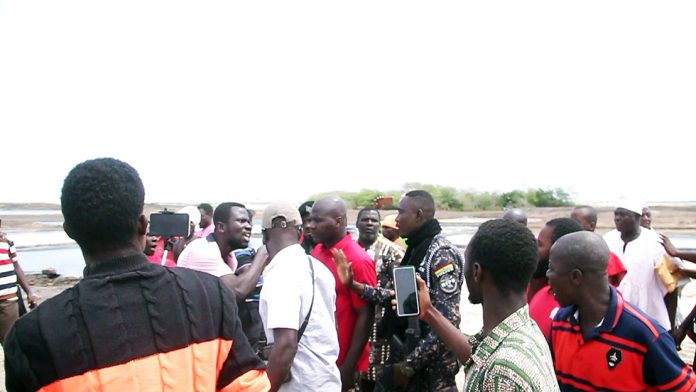
A cross-section of angry Terkperbia We indigenes at the site

The Terkperbia We (clan), one of the landlords of the Ada Traditional Area in the Greater Accra Region, has stopped Electrochem from harvesting salt in their Yomo sacred ground (grand deity) at Midie.

The earth-moving machines

Led by Nomo Amate Apedo Ayornu, the Libi Wornor (Salt Priest of the Ada Traditional Area), Nomo Tetteh Ablerdu Ayornu, the Terkperbia We Stool Father, Asafoatsengua Glorgo Dadebom V, the Chief Warlord of the Terkperbia We, with scores of the youth and two pressure groups -Ada Songor Lagoon Association (ASLA) and Dangme East Salt Producers Association (DESPA) – stormed the Yomo sacred ground to stop two brand new earth-moving machines, the properties of Electrochem Ghana Limited, a private salt mining company, from working.

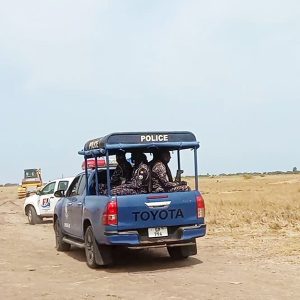
Not intimidated by armed police personnel who arrived in two pick-ups to provide security to the workers of Electrochem in Yomo, the resistance of the agitators compelled the police to instruct the operators of the two earth-moving machines to desert the area with their equipment.

Though the aggrieved members of the clan admitted that the Government of Ghana had granted a lease and salt mining licence in the Songor Lagoon to Electrochem Ghana Limited for a period, they argued that the said lease has gone far beyond the boundaries of the Songor Lagoon by over ten thousand acres to include their bare lands, villages, ancestral cemeteries, schools and now their sacred shrines.

At the site where the indigenes mounted their fierce protest and strong resistance last Friday, the Libi Wornor said, “Electrochem has bitten more than it can chew by moving machines into our sacred grand deity, Yomo, and its shrine, which forms part of the Lagoon.

“At all material times, the Yomo is considered a Reserve area where any breach on its preservation amounts to the soul and spiritual backbone of the Terkperbia We. Moving into the Yomo is like touching our soul and breaking our backbone and this is unheard of, Electrochem!

One of the police pick-up vehicles behind the earth-moving machines exiting from the Yomo

“Electrochem can use the police, thugs and persons dressed in military uniforms to intimidate and brutalise us, but the Terkperbia We (clan) wants the Investor to know that there comes a day…either this generation or the one after this one, who will teach somebody a bitter lesson.”

The aggrieved indigenes acknowledged the recommendations by the Parliamentary Select Committee on Mines and Energy and Forestry, which recently sat on the rising tension in the Songor Lagoon area.

However, “we hold the view that it would not holistically solve the chaotic situation on the ground unless the objectives of the PNDC Law 287, which envisages the development of a salt industry in Ada, with the participation of both small-and large-scale salt producers, is followed to the letter.

“We are not against the industrial commercialisation of salt mining in the Songor Lagoon, but it must be done, having due regard to proprietary ownership in land and acknowledgement and preservation of customs and traditions that have held the heart and soul of the Terkperbia We,” Asafoatsengua Glorgo Dadebom V, the Chief Warlord of the clan said.

Tinubu’s Cap Design Now Symbol Of Political Deception -Atiku’s Aide

0
Tinubu’s Cap Design

The Special Assistant on Communications to former Vice President Atiku Abubakar, Phrank Shaibu, has said the design on President Bola Tinubu’s cap has become a symbol of political deception and disappointment to his supporters.

Shaibu stated this in a statement titled “De-cap-itated!” released on Monday.

According to him, the once-highly sought-after item has also become a burden for merchants selling it.

He said, “The defeat of the German army led to the swastika becoming an item never to be displayed anymore in the public space.

“So, too, has the Emilokan caps become relics of political deception and disappointment in the wardrobes of those who used to wear it.

“Even the once-eager vendors who proudly displayed the Emilokan caps at bustling traffic lights and strategic street corners now find themselves burdened by them.

“What was once a prized symbol of political fervour has become an unwanted relic, gathering dust as no one bothers to ask for them anymore.

“The caps, once seen as a beacon of hope and power, have now turned into silent reminders of promises unfulfilled, leaving these sellers with a product that has lost its allure and meaning.”

Credit: channelstv.com

Kinsmen ask FG, Sokoto govt to secure release of body of murdered Sarkin Gobir

0
Kinsmen of murdered Sarkin Gobir

The Elders of Gobir Kingdom have called on the federal and Sokoto State governments to as matter of urgency secure the release of the body of the murdered Sarkin Gobir, Alhaji Isa Muhammad Bawa, who was killed by bandits on 27th July, 2024.

The Gobir elders who spoke to newsmen at the Kano NUJ Press Center on Monday, frowned at the inability of the government to secure the release of the body of their king.

Reading a communique signed by the Gobir Development Association (GDA) at a meeting on 7th September 2024, Professor Illiyasu Yusuf Gobir, the spokesperson of the group, who spoke alongside Alhaji Idris Alhassan Gatawa, the Chairman, and Prof. Yakubu Aliyu Gobir, Secretary, accused the Sultan of Sokoto of refusing to commiserate with the Gobir people on the death of the king.

“The good people of Gobir Kingdom condemns and frowns at the Sultanate Council of Sokoto’s non-commiseration with them over the late Royal Father’s abduction and subsequent gruesome murder by Fulani bandits,” he said.

In the same vein, Illiyasu noted that “the efforts made by the Sokoto State Government to secure the release of His Royal Highness after being abducted on his way back home from an official engagement in Sokoto was not enough”.

He said that the people of Gobir Kingdom appreciates the overwhelming condemnation of the late monarch’s abduction and subsequent gruesome murder by Fulani bandits.

He said while acknowledging the recent military operations that led to the annihilation of one of the Fulani bandits kingpin, Halilu Sububu, “both Sokoto State and Federal Government are hereby called upon to sustainably intensify these military operations so as permanently solve the Fulani banditry activities in North-West in general and Sokoto East in particular”.

They urged Hausas in general and the Gobir people in particular to exercise maturity and restraint in the face of provocation for peace to reign.

Calling on the government to “do the needful to ensure that the spate of senseless and wanton killings and abductions are brought to a decisive end”, the elders added, “Our patience is fast running out”.

Credit: dailypost.ng

Inflation rate declines for 2nd consecutive month in August

0

Nigeria’s inflation rate dropped to 32.15 percent in August 2024, from 33.40 percent in July.

This is according to National Bureau of Statistics, NBS, latest Consumer Price Index and Inflation Data released on Monday.

According to the data, the country’s headline inflation cooled off by 1.25 percent in August compared to the 33.40 percent recorded in July.

Similarly, the report showed that food inflation stood at 37.52 percent in August 2024, from 39.53 percent in July.

According to NBS data, this is the second consecutive time the country’s inflation decreased.

The inflation decline comes despite the recent fuel pump price hike.

Speaking during a Channels Television interview on Monday, Johnson Chukwu, the Managing Director of Cowry Asset Management, noted that the effect of the recent petrol price adjustments would be felt in the coming months.

In the past months the Central Bank of Nigeria Monetary Policy Committee meeting had continued to raise the interest rate. The latest was in July when the rate to 26.75 percent.

Meanwhile, Nigerians have continued to lament the increase in the prices of goods and services.

Credit: dailypost.ng

UN Team Visits Maiduguri, Seeks Urgent Support For Flood Victims

0
Drone view of the Maiduguri flood

Officials from the United Nations and humanitarian organisations have visited Maiduguri over the devastating floods ravaging the area.

The team, comprising of international and national Non-Government Organisations (NGOs), was led by UN Resident and Humanitarian Coordinator in Nigeria, Mohamed Fall.

They arrived in the Borno State capital on Saturday on an assessment visit over the Alau Dam flood disaster.

This was disclosed in a press release to journalists on Sunday by the National Information Officer of the UN Information Centre, Oluseyi Soremekun.

Soremekun said the team met with affected residents, government officials, and Borno State Governor, Professor Babagana Zulum, to assess the damage and outline immediate support measures.

“The flood-affected people are facing a crisis within a crisis, as the floods occurred during a severe food insecurity and malnutrition crisis.

“I witnessed firsthand the devastation and hardship caused by the flooding, including the destruction of homes, businesses, and infrastructure. I also saw the suffering of the affected communities,” Fall stated.

The delegation promised swift action to alleviate the suffering of displaced families, including the provision of food, clean water, sanitation facilities, and shelter.

It stated that many people affected by the floods, reported to be the worst in 30 years, already had humanitarian needs prior to the disaster, having been displaced multiple times by conflict and insecurity, and are now even more vulnerable.

Flood waters have displaced more than one million people in and around Maiduguri, which serves as the hub for the responses to the humanitarian crisis in the northeast, in one of the worst ever floods in Africa’s most populous country.

Thousands of homes were engulfed by rapidly rising waters after a dam burst following a weekend of torrential rain in northeastern Nigeria.

Credit: channelstv.com

Ghana Navy Holds Band Concert

0
Ghana Navy Band

The Ghana Navy plays a crucial role in protecting the country’s territorial waters from piracy and other illicit activities.

In addition to this important duty, the Ghana Navy also takes time to enjoy good music at the right moments.

Over the weekend, the Ghana Navy organized an end-of-course band concert to showcase the musical talents of its members to stakeholders at the Eastern Naval Command.

Graduates of the Ghana Navy Music School, grouped into the Regimental Band and the Dance Band, treated the audience to various genres of live band music.

The Guest of Honour for the occasion, Flag Officer Commanding the Naval Training Command, Commander Solomon Asiedu-Larbi, urged the graduates to continue exhibiting discipline and hard work in the discharge of their duties to achieve the ultimate objectives of the Ghana Navy.

“As we enjoy the music today let us remember that this concert is not just an end but the beginning of a new chapter in your lives as musicians in the Ghana Navy and the Ghana Armed Forces at large. You have been equipped with the skills, knowledge and discipline to serve your nation with pride”

Certificates were presented to graduates who excelled during the six-month music course.

Ghana Must Invest in Science to Save Fisheries Sector-Experts

0
Executive Director of the Blue Economy and Governance Consult, Richster Nii Amarh Amarfio (left), Executive Director of Fisheries Commission, Fred Antwi-Boadu (middle) and Director for the Africa Centre of Excellence in Coastal Resilience, University of Cape Coast Prof. Dennis Aheto (right)

As the country’s ocean resources continue to dissipate at an alarming rate dueto irresponsible human activities, the conversation around Ghana’s fisheries management has regained momentum.

Experts are urging all stakeholders to dedicate efforts to science, to redeem the sector from the quagmire it has placed itself in, and to redirect Ghana towards a sustainable path. Experts now view investment in scientific methods not as an alternative, but as the sole path to success.

Ghana’s fisheries sector is crucial for the country’s food security and economic stability, with an estimated 10% of Ghanaians dependent on fishing for their livelihoods. However, the sector continues to suffer from overfishing, habitat destruction, and ineffective policy implementation. It is no secret that fish resources are now scarce. However, despite the challenges, there is a renewed focus on investing in science as a solution.

While the Fisheries Commission and their local and international partners have spearheaded some commendable ongoing initiatives, such as gear audits, close season moratoriums, surveys, and stock assessments, among other research, they have proven insufficient to bring Ghana’s fisheries to a desirable state.

As pointed out by the Executive Director of the Commission, Fred Antwi-Boadu, last Sunday on the Eye on Port TV program, “something is being done, but it is not enough.”

“Currently, ongoing research includes the status of the marine environment, plastic pollution and climate change, industrial trawl gear audit, and modification of the industrial trawl gear,” Mr. Antwi stated, among other topics.

He disclosed that the Finance Ministry had pledged to supply a research vessel and two patrol boats. While the Commission waits for the government to deliver on its promise, the Executive Director of the Fisheries Commission appealed to industry to provide vessels to use for research.

He admitted that the acquisition of a research vessel will be a game changer to help the Commission monitor events in the ocean ecosystem and measure the impact of management activities on fish resources.

The fact that Ghana does not own a single fisheries research vessel leaves the nation at the mercy of international programs like the EAF-Nansen program, which isn’t under Ghanaian control.

The Executive Director of the Fisheries Commission recalled observing first-hand the results that the availability of a fisheries research vessel at the University of Rhode Island has generated, highlighting Ghana’s urgent need for one.

The Director for the Africa Centre of Excellence in Coastal Resilience, University of Cape Coast (ACECoR), Prof. Dennis Aheto, who was a panellist on the same TV program, also supported the call for immediate acquisition of a research vessel. A research vessel, according to him, will offer a platform for conducting real-time, on-site observations of marine life and stock assessment, marking a significant enhancement over current practices.

“The stock assessment we do in Ghana relies on a system where we document catches at landing beaches, and this means we do not even know where the fish are coming from,” he lamented.

However, he was keen to factor in maintenance costs and management equally when considering a research vessel, given its high capital intensiveness.

He argued that acquiring and managing research vessels at a regional level is more sustainable. Acknowledging the transboundary nature of fisheries, Prof. Aheto advocated for a regional approach to managing fisheries resources, which includes sharing data, collaborating on research, and coordinating enforcement efforts.

Additionally, Prof. Aheto recommended a more integrated approach to policy development that involves stakeholders from academia, industry, and the government.

A range of policies and regulations designed to promote sustainability and protect marine resources govern Ghana’s fisheries sector, he said. However, the implementation of these policies has been inconsistent. “While we have comprehensive policies, their enforcement is often lacking,” Prof. Aheto explained.

The Director for the Africa Centre of Excellence in Coastal Resilience, University of Cape Coast (ACECoR), who was also part of the two-week study tour to the University of Rhode Island in the USA, noted that the disconnect between successful countries and countries like Ghana is enforcement of laws and dedicated funding.

Over the years, he noted, academia has made significant contributions by collaborating with private and international entities to conduct research and participate in coastal management advocacy. However, government and industry need to support these efforts through dedicated funding.

Industry expert and Executive Director of the Blue Economy and Governance Consult, Richster Nii Amarh Amarfio, highlighted the pressing need for an overhaul in how Ghana manages its fisheries resources, adding his voice to the discourse. He advocated for a shift in fisheries management from a food and agriculture perspective to a natural resource perspective that pays critical attention to habitat conservation.

He lamented that habitat degradation has become the primary destroyer of fisheries resources in Ghana, with the infamous Galamsey and plastic pollution being major culprits.

“If you go to the Western Region, particularly areas that take their source from the Pra and Ankobra, you realise all the water is polluted,” Mr. Amarfio lamented that it is impossible to separate management of water resources from that of fisheries, as fish rely on water for survival.

He urged the government to definitively stamp its authority on this matter to preserve the integrity of the nation’s water bodies.

The Tuna operator also stated that one major challenge is the disconnect between policymakers and the realities faced by those in the fisheries sector. He also pointed out that political influences and partisanship have become major obstacles in fisheries management in Ghana.

Richster Amarfio, a lifelong supporter of the acquisition of multiple research vessels, asserted that policymakers should follow the guidance of technocrats and collaborate closely with universities. This approach is considered the international best practice, as demonstrated by institutions such as Rhode Island University, which he has visited numerous times on study tours.

Forget about our marriage issue – Ohemaa Mercy’s ex husband

0

The ex-husband of Gospel musician Ohemaa Mercy has come out to address the controversial statement made by the musician days ago about their divorce.

Ohemaa Mercy days ago claimed that he divorce was sanctioned by the holy spirit a claim many people are using against her.

Many people are of the view that it saddens them that Ohemaa Mercy would make such a statement but still head to court to get alimony from her ex-husband.

Her ex-husband Mr Isaac Twum Ampofo has remained silent on the matter until now and is asking people to forget about the statement from Ohemaa Mercy and rather look at the good side of her just-ended Tehila concert.

“Let’s keep our focus on God’s goodness. The thousands who encountered God. The miracles and testimonies. Let’s keep the conversation centered on God’s goodness and the impact of this event,” he wrote.

He also seized the opportunity to commend his ex-wife. “Congratulations to the woman of God for dedicating herself to the master’s work. Your commitment to fostering worship and praise is truly admirable. May God continue to use you mightily.”

Credit: ghpage.com

‘I hate Taylor Swift!’ – Donald Trump

0
Donald Trump and Taylor Swift

Republican U.S. presidential candidate Donald Trump on Sunday levelled an attack against Taylor Swift, declaring his “hate” for her just days after the pop mega-star endorsed his Democratic opponent, Kamala Harris.

Trump wrote in an all-caps posting on his Truth Social media account, “I HATE TAYLOR SWIFT!”

Immediately following last week’s Trump-Harris debate, Swift informed her 284 million Instagram followers that she planned to vote for Harris, currently the U.S. vice president, “because she fights for the rights and causes I believe need a warrior to champion them.”

Trump, who has 7.71 million followers on Truth Social, initially had dismissed Swift’s endorsement of Harris by saying he was “not a Taylor fan.”

But since then, with public opinion polls showing Harris gaining significant ground on Trump in what is expected to be a close Nov. 5 presidential election, the former president has ratcheted up his rhetoric against one of the most successful recording artists in history.

Swift’s backing of Harris has drawn over 9 million “likes” to her Instagram post, fueling speculation that it could boost the Democrat’s chances of winning the presidential election.

After the Trump post, Harris’ vice presidential running mate Tim Walz wrote on X: “Swifties: With your help we’re gonna defeat the smallest man who ever lived.”

One of Swift’s songs is titled “The Smallest Man Who Ever Lived.”

Trump’s rage against Swift brought a torrent of supporters to proclaim on X, “I LOVE TAYLOR SWIFT,” while others came to Trump’s defence by attacking the administration of Democratic President Joe Biden.

Trump and Swift have been trading barbs for years.

After she supported Democratic candidates in the 2018 elections, Trump said in response to reporters’ questions at the White House: “Let’s say that I like Taylor’s music about 25% less now.”

The Ghanaian Chronicle