Home Blog Page 1148

Bawumia Likely To Win December Polls –Survey

0
Vice President Dr. Mahamudu Bawumia

As the country heads towards the December 2024 general elections, Dr. Mahamudu Bawumia, the flagbearer of the New Patriotic Party (NPP) appears to be in a strong position to win the Presidential race, according to the latest survey by Outcomes International, Ghana.

According to a recent survey, Dr. Mahamudu Bawumia is leading with 49.4% compared to John Dramani Mahama, the National Democratic Congress (NDC) candidate with 45.1%.

The data reveals a notable regional divide, with Bawumia showing strong support in key areas, positioning the NPP for potential victory in the upcoming elections.

The Survey

The survey was conducted from August 15 and September 15, 2024 and interviewed over 65,000 registered voters, puts the National Democratic Congress (NDC) in second place. The findings highlight that the NPP is favored to win in key regions.

The survey revealed that Dr. Bawumia is leading 11 regions out of the 16 regions in the country, while John Dramani is leading in the remaining 5 regions.

NPP’s Strong Hold

Ashanti Region

Dr. Bawumia’s strongest support was seen in the Ashanti Region, where 63.7% of voters favor him as their presidential candidate. This comes as no surprise given the Ashanti Region’s long-standing loyalty to the NPP.

According to the survey, Bawumia holds a slight lead in the Greater Accra Regionwith 45.2% of the vote while Mahama trails behind with 45.0%.

The race appears to be closer in another region particularly in the Western North Region, where the NPP is projected to win 47.1% with the NDC close behind at 45.9%.

Eastern Region

Dr. Bawumia also leads in the Eastern Region, where he has 60.4% of voter support his appeal in this region, combined with his strong showing in the Bono, Bono East, and Ahafo Regions, places the NPP in a solid position heading into the election.

In addition, the report indicated that Dr. Bawumia is likely to lead in the Northern Region, with 53.8% votes while John Mahama takes 45.0% of the votes.

NDC Stronghold

Despite Bawumia’s dominance, John Dramani Mahama retains firm control over his stronghold, the Volta Region, where he commands 73.1% of the vote. The Volta Region has historically been a base of support for the NDC, and this trend is expected to continue in 2024 per the report.

Mahama also leads in the Upper West Region, where 58.1% of voters favor him over Bawumia with 40.9%

In the Upper East Region, the NDC is set to win with 61.6% of the vote, compared to the NPP’s votes of 37.6%.

The Flagbearers

The flagbearers of the two dominant political parties (NPP & NDC) are both from the Northern part of the country. The NPP is determined to break the usual eight-year cyclical rule with a Muslim sitting Vice-President.

The NDC is presenting a former President who lost in both the 2016 and 2020 general elections.

Editorial: Democracy Hub Demo: Police Deserve Commendation And Not Condemnation

0
Editorial

A former Deputy Attorney General, Dr Dominic Ayine, according to myjoyonloine.com, has condemned the recent clashes between protesters and the police, describing the physical altercations as unacceptable and counter-productive.

His comments come after reports surfaced of protesters engaging in fisticuffs with law enforcement officers, during a demonstration organised by Democracy Hub, leading to arrests and subsequent detention.

According to the report, Dr Ayine emphasised that while the right to protest is protected under the constitution, violence should never be a part of such activities.He stressed that peaceful demonstrations are an essential part of democracy, but the actions of some protesters who resorted to violence undermine the cause they are advocating for.

According to him, the news portal continues, such behaviour only escalates tensions and complicates the relationship between citizens and law enforcement agencies. The Chronicle is happy that no mean a person than Dr Ayine, a leading member of the National Democratic Congress, has added his voice to the condemnation of the conducts exhibited by some of the Democracy Hub demonstrators.

We wish to put on record that we are not against the street protests organised by the pressure group against illegal mining in the country. No right thinking person, in our opinion, will support the devastation being caused to our environment in the name of looking for gold. Just last week, JoyNews television, an affiliate of the myjoyonline.com, whose report we are referencing, reported that some community members in the Western Region are having skin rashes, which they have attributed to the polluted water they are drinking.

As others have already argued, it would be wrong for a resident in Accra to think that what is going on the mining areas does not concern him or her. This is because it is the same polluted water they are using to grow the cabbages, water melons, cucumbers and others, which are transported to Accra for the urban dwellers to consume. In a nutshell, should there be any outbreak of diseases as a result of the pollution of our water bodies by illegal miners, those living in the big towns and cities will not be immune.

In view of this danger, if a group decides to demonstration to draw public attention to the danger starring all of us in the face, it should not raise any eyebrow. However, such protests should be conducted with civility. Unfortunately, per the reports that have come out, this is not what happened during the Democracy Hub demonstration. Pictures released by the police and civil society organisations show that some of the demonstrators engaged the police in physical battle.

Apart from the ignition to the police towing truck, which was illegally removed by one of the protesters, others were also seen playing football in the middle of the road and thus obstructing the flow of traffic in such a sensitive area as the 37 Military Hospital. What even exacerbated the situation was the pushing down of the barriers that have been mounted by the police.  In all these provocations, the police did not react in a violent way as witnessed in the past.

Elsewhere, the removal of the ignition key to the police car and running away with it would have attracted gun shots, but this never happened. Neither was the one who pushed down the police barriers arrested immediately, after committing the offence.

This means the police as an institution has completely reformed in line with tenets of democracy. But despite all these modern policing methods adopted by the Inspector General of Police, Dr George Akuffo Dampare and his team, there are others who are still trying to fault their efforts because some of the protesters were arrested.

We remember the case of the late George Perry Floyd Jr., an African American from the US. George was murdered by a white police officer in Minneapolis, Minnesota, claiming that he resisted arrest. Apart from this infamous case, there have been several occasions that police in most of these advanced countries have opened fire on people deemed to have offended the law.

Here in Ghana, we also have stories of police officers beating up demonstrators. But as we earlier alluded to, despite all the provocations, peace officers dispatched to police the Democracy Hub demonstration never used maximum force when they came under attack. In our opinion, they used very civil ways in arresting those they deemed to have offended the law.

To us, the way the police handled the demonstrators deserves commendation and not condemnation. We hope this new method of handling crowds will not be a nine days’ wonder, but will continue in years to come for the betterment of our democracy.

Democracy Hub And Democracy

0
Opinion

I remember sitting with my Auntie Adjoa Kraah and my younger siblings during our student days when we had to define demonstration in the Akan/Twi. We settled on “Yen di, yen di.” That was the clarion call for students to rise up and challenge authority to answer for the bad food served in the dining hall.

And so it is in life, whenever the authorities served something bad to the people, they rise up in demonstrations to challenge and condemn.

The definition of demonstration comes from the Latin, “to point out, to indicate.”

And in a democratic era, with democracy as the order of the day, the word democracy comes from the Greek, “‘demos’, meaning ‘people’ and ‘kratos’ meaning, ‘rule’.” Democracy is a system of government in which state power is vested in the people or the general population of a state. By this definition, is power truly vested in the people, in this day and age, with Ghana as a case study?

The president is in his high office and discusses national matters with his cabinet where none of the people whohave the power could contribute in the discussions. As for Parliament, the MPs will only passionately discuss matters that affect the people when it will benefit them politically or socially. In both cases, the people are not directly involved in the discussions of matters that affect their daily lives.

Currently, galamsey and its devastating effects on this country has aroused the passion of the people, but this does not seem to be on the top of the agenda for the Executive and Legislative arms of government. The president had put his presidency on the line, promising to eradicate galamsey. But with reports on galamsey and how to stop it, on his table, the problem keeps escalating and getting out of hands. MPs in galamsey areas, for example, have not protested in Parliament withphotographs to show the state of devastation being caused by galamsey, maybe for fear of losing their seats. It was only recently that the House started baring its teeth against illegal mining.

Now the people who have the “power”have begun drawing the attention of government and MPs to this.

Last week, a group of demonstrators, calling itself the Democracy Hub were up in arms against authority, pressing demands that galamsey must be banned, without delay.

Demonstration by its definition is supposed to point out something. The process can be cool, civil and cultured or can be unruly, riotous and violent. There were lots of times when demonstrations in this country had been civil and one was even apolitical.

On Tuesday July 1, 2014, during the Mahama administration a peaceful demonstration against economic hardship and poor governance was organised by Occupy Flagstaff House, it decided not to have any politician on board. So, when Hon. Asamoah Boateng, who believed in the agenda, decided to join,he was pulled out of line.

There were also cases of demonstrations that went bad, with indiscipline high on the agenda. What Ghanaians saw in the Democracy Hub demonstrations was samples of indiscipline. The Police who were to supervise the demonstrations may have applied high-handedness when they felt people were becoming lawless. However, can we blame them? Rules are there,to be obeyed. With whatever good intentions Democracy Hub had, the conduct of the organizers and picketers was something else to desire.

In the very first place, the picketers took over the 37 Roundabout, and blocked all access in or out of the 37 Military Hospital, a very important and major hospital in Accra. During the three days’ siege of that area, all emergency cases could not access the hospital, and the dying could die, no one cares, with a health facility only an arm’s length away.

I will suggest that areas close to hospitals and other emergency units should be a no-go area for picketers. If Democracy Hub was bent on protecting life and nature by demanding the ban on galamsey, but turn round to stand in the way of people going to the hospital to save their lives, then the Hub’s agenda is to deceive Ghanaians.If to the Hub democracy means, to prevent people from accessing health care, then its true intentions are hidden from the people.

Indiscipline took over the demonstration which was very unfortunate. How can it be that one of the conveners, Oliver Barker Vormawor was so lawless to have entered a police vehicle and take the keys. As Prof. Vladimir Antwi-Danso, rightly asked that do members of the Democracy Hub believe they have the democratic right to do anything they want, however lawless, all in the name of democracy?

Even though I fully support activities that will make government ban illegal mining, I will not support any acts of lawlessness.

Media landscape has also been thrown into confusion as one story had it that one of the protesters who was arrested was pregnant but another disputed this. It looks as if Democracy Hub has a political agenda to make government and NPP more unpopular during this Election Year and its intention of demonstrating against galamsey was only a camouflage. After all, Ghanaians in the USA, who demonstrated in support of Democracy Hub cried out to the world that the demonstrators in Ghana were protesting for illegal mining. The qualifying article was “For,”and not “Against.”

Hon. Daniel Dugan

Editor’s note: Views expressed in this article do not represent that of The Chronicle

Tepamanhene launches Silver Jubilee anniversary, GH¢5 million ultra modern social centre project

0
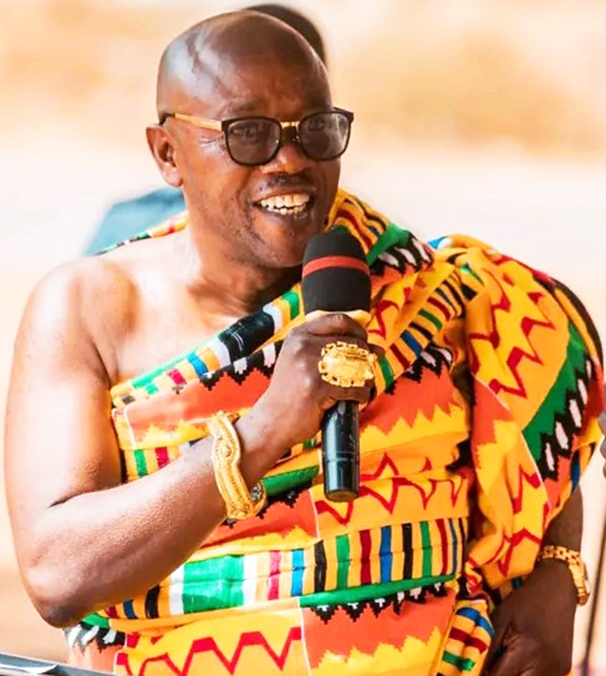
Nana Adusei Atwenewaa Ampem I, Tepamanhene

Nana Adusei Atwenewah Ampem I, has launched a programme of activities to mark the 25th anniversary of his enstoolment as the Omanhene  of the Tepa  Traditional  Area,  in the  Ahafo  Ano  North district of Ashanti region.

The anniversary will be climaxed with a grand durbar on November 16, 2024 to commemorate his ascension on the Darfour stool in 1999.

The launch last Friday also marked the 62nd birthday of the Omanhene who has pledged to give a vivid account of his stewardship over the 25 year period.

The Omanhene also launched a fundraising in aid of a GHc5 million ultra-Modern Social Centre project to add to the numerous infrastructural developments in the jurisdiction.

Nana AtwenewahAmpem ascended the Darfour  Aduana stool of Tepa in November 1999 at age 37, to succeed  his late uncle and  predecessor, Nana Kwame Awuah II who died  in 1983.

He has since his enstoolment demonstrated outstanding leadership during, which period of his reign Tepa has experienced massive development through his instrumentality.

Tepa now boasts of a District hospital, Divisional Police headquarters, a Nursing Training College, Mid Country Immigration Training School, improved internal transport system following improved Town roads and a National Fire Service Station.

The establishment of a STEM university at Tepa is under consideration while plans are far advanced to get a Forces Operations Centre (North West) at Tepa by the Ghana Armed Forces, which facilities tend to make the area a security and education hub.

The Tepahene thanked Otumfuo Osei Tutu II, the Asantehene tremendously for the opportunity given him to serve his people and pledged to do more for the area, but with the support of the people.

Meanwhile, donations  towards the GHc5 million events centre intended  to add  to  architectural  beautification of the town has  started  pouring in.

Movement for Change founder and presidential candidate, Alan Kwadwo Kyerematen who graced the launching programme as the Guest of Honour, donated GHc20,000 towards  the chief’s vision.

Other initial donations include  Agate Group of Companies GHc100, 000; Ahenema of Tepa GHc200,000 including cement; Kofi Frimpong and Rikof Enterprise GHc11,000; K. Badu Rentals GHc10,000; Kwaku Fosu Frimpong GHc5,000; Mr. Nyampong and MG Grant GHc60,000; Tepa market traders GHc1,000 and Bishop  Kwabena Boakye Asiamah of Ajagurajah Movement GHc200,000; Tepa Rural Bank GHc5,000; Mr. Addai of New Love Enterprise GHc2,000; Tepa Chief Imam GHc500 while Security Services at Tepa jointly contributed 17 cartons of  bottled mineral water for the launching ceremony among other contributions from churches, educational institutions  and well wishers.

Hemanghene woos Ghanaians in Diaspora to invest back home …Releases acre of land to Asanteman Kuo of Germany

0
Nana Appau Wiafe Ababio Sanwoansan, Chief of Hemang

Nana Appau Wiafe Ababio Sanwoansan, Chief of Hemang in the Kwabre South district of Ashanti region has donated an acre of land to Asanteman Kuo in Germany.

The gesture is to encourage Ghanaians, particularly Ashantis living in Germany, to unite and engage in development projects back home.

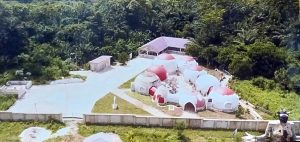
Aerial view of the Gyamadudu Museaum

Nana Sanwoansan, while sharing his experience with The Chronicle on his return from Dusseldorf in Germany, where he was the Special Guest of Honour at the Asanteman Europe Afahye also announced that he has earmarked 100 building plots for acquisition by prospective developers at a discount at two sites for those from Europe and America.

The objective is to help Ghanaians abroad to prepare towards settlement back home in Ghana.

Hemanghene has also created a site at a Museum under construction for the burial of African-Americans who recognise Ghana as their ancestral home at a fee.

The chief urged Ashantis resident in the Diaspora to rise up to preserve our cultural values by adding value to traditional norms and deepen the spirituality of the Asante traditional and norms.

The Gyamadudu Museum at Hemang

Nana Ababio Sanwoansan, who hates to see Ashanti customary practices adulterated, has appealed to all chiefs to promote our cultural heritage and move away from the dominance of western culture by preserving cultural norms and values in their respective areas.

The chief of Hemang encouraged the Africans and Ghanaians to cherish their tradition and culture by adding value to culture and showcase their cultural inheritance for the benefit of future generations.

He said the African should count himself blessed for being born an African and contribute to preserving African cultural values and identity.

His position and vision about African culture is the reason for the construction of a multi-million cedi Gyamadudu Museum at Hemang, which seeks to promote and preserve African culture.

The proposed Gyamadudu Museum at Kwabre Hemang in the Ashanti Region, which construction started in 2020 and might be completed and commissioned in June 2025.

When completed the Museum will add to the existing ones in Ashanti and Ghana in general to help preserve cultural heritage of the people of Ashanti and sustain traditional norms, customs and practices and usage as Nana Sanwoansan’s legacy.

The chief noted that heroes in their own rights abound in Ghana and all traditional areas who should be honoured for their contribution to the development of society.

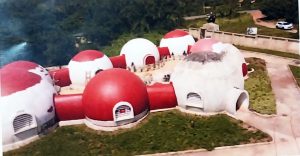
The Gyamadudu Museum, which sits on a 10-acre piece of land, comprises nine interlinking domes to accommodate precious cultural exhibits, collections and artefacts.

It has spaces for statutes and images of Ashanti Kings and Queen mothers and eminent personalities including the occupant of the Golden Stool, Opemsuo  Otumfuo Osei Tutu II, the Asantehene, Nana Nyarko Kusi Amoah, the first Asantehemaa, the Otumfuo Opoku Ware II and the legendary Nana Yaa Asantewaa of Ejisu.

The Museum also has a place of honour for Statesmen like Osagyefo Dr. Kwame Nkrumah, Ghana’s first President; Nelson Mandela of South Africa; Col. Muamar Gaddafi of Libya, Emperor Haile Selaisie.

Images of freedom fighters across the globe would also be featured prominently within the walls of the Museum, decorated with Adinkra symbols.

The Museum also has space to showcase mummies of three ancestors of about 265 years as a side attraction to attract tourists to Ghana.

Among the collections at the Museum are the Centre for the production of designer Kente cloths and African stool regalia to add value to such cultural items for packaging and branding.

River Anyinasu, which passes through the designated Museum area.

Along the Anyinasu River is a Cottage whose walls are dedicated to African Americans who visit Hemang periodically as their Home of origin.TheGyamadudu Museum comes as a huge legacy ten years after Nana Appau Wiafe Ababio Sanwoansan ascended the EkuonaApau and Brefo stool of Hemang as chief on June 22, 2015 succeeding Nana Owusu Brefo II, who died in 1995.

Nana Appau Wiafe Ababio Sanwoansan, has encouraged colleague chiefs to replicate such projects in their Traditional Areas to bring meaning to the oral tradition and history of Asanteman, as well as create employment opportunities for the youth while boosting tourism to increase foreign exchange earnings.

China donates big cash to LEKMA Hospital to provide Free Eye Care 

0
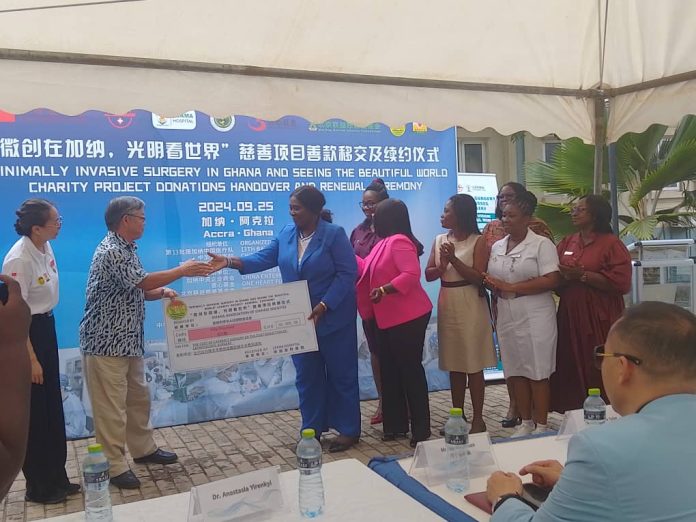
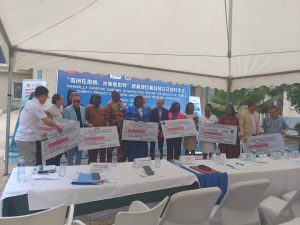
The Chinese donors handing over a dummy cheque to their Ghanaian counterpart.

The Government of the People’s Republic of China and various charitable organizations have donated GH¢819,000 to LEKMA Hospital, aiming to improve free eye care services for Ghanaian citizens.

This donation marks the third significant contribution from the Chinese community to cataract initiatives in Ghana.

The dummy cheque received by Lekma Hospital

The charitable efforts began with the “Bright Trip Charity” in 2015, followed by a comprehensive surgery project launched in 2022, which encompasses both cataract and laparoscopic procedures. To date, over 94 patients have benefited from these programs.

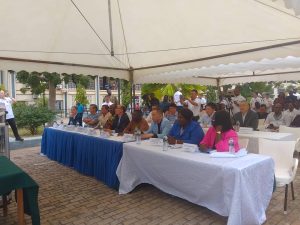
During the recent donation and renewal ceremony for the “Minimally Invasive Surgery in Ghana and Seeing the Beautiful World” project, the Chinese Ambassador to Ghana, H.E. Mr. Tong Defa highlighted the ongoing collaboration with LEKMA Hospital, as the project receives the 13th batch of the Chinese Medical Team and the First Affiliated Hospital of Jinan University.

He emphasised the 64-year diplomatic relationship between China and Ghana, noting the success of joint health initiatives, including training programs for Ghanaian medical staff.

Dr. Zhang Rijia, leader of the 13th Chinese Medical Team, expressed her gratitude to all supporters and outlined the project’s achievements, including 87 cataract and 25 laparoscopic surgeries. Looking forward, the project plans to support 100 additional cataract surgeries and 50 laparoscopic surgeries, along with providing free glasses for post-operative cataract patients.

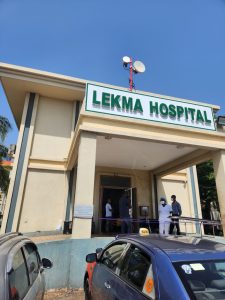
LEKMA Hospital

Dr. Hafez Adam Taher, Director for External Health Cooperation at the Ministry of Health, praised the re-launch of the charity project. He highlighted the advantages of minimally invasive surgery, including reduced recovery times and alleviation of hospital bed shortages, known as “no bed syndrome.”

Since the project’s inception on December 5, 2022 under Dr Yu Dang Nang from Guangzhou Province People’s Hospital, generous contributions totalling GH¢800,000 have funded crucial surgeries.

Dr. Taher announced an initial disbursement of GH¢80,000 for life-saving services, with further funds planned for the 2024/2025 service year.

“This initiative showcases the power of international cooperation in overcoming barriers to quality healthcare,” he stated, emphasising the importance of the partnership between Ghana and China. He commended the dedication of LEKMA Hospital management and local health authorities in ensuring the project’s success.

Dr. Akua Gyimah Asante, medical superintendent of LEKMA Hospital, echoed these sentiments during the relaunch event. She noted that the initiatives have successfully restored vision to many Ghanaians and highlighted the recent training of 70 healthcare professionals in minimally invasive techniques.
With an initial deposit of GH¢100,000 announced for the next phase, Dr. Asante expressed optimism for the future, reiterating the commitment to expanding access to high-quality, affordable healthcare in Ghana.

“We look forward to building on our successes and transforming lives through these vital healthcare initiatives,” she concluded.

Kwame Dei Asamoah-Okyere appointed NBA new CEO

0
Kwame Dei Asamoah-Okyere appointed NBA new CEO

President Nana Dankwa Akufo-Addo, following the advice of the National Biosafety Authority (NBA) Governing Board and in consultation with the Public Services Commission, has appointed Mr. Kwame Dei Asamoah-Okyere as the new Chief Executive Officer of the NBA.

He succeeds Mr. Eric Amaning Okoree, the NBA’s first CEO, who concluded his eight-year tenure in March 2024 and is recognized for establishing the NBA’s regulatory framework and advancing biosafety in Ghana.

Before this appointment, Mr. Asamoah-Okyere served as the Director of Business Development and International Partnerships at the Food and Drugs Authority (FDA) for over 20 years.

He is expected to bring his extensive experience in regulatory practices, strategy development, business development, and quality management systems.

In recent years, Mr. Asamoah-Okyere has significantly enhanced FDA operations and revenue through digital transformation and by fostering vital local and international partnerships that bolster regulatory capabilities.

His connection with the NBA dates back to 2012 when he contributed to the first Technical Advisory Committee of the National Biosafety Committee, reviewing the initial five confined field trial applications.

He later served on the inaugural Governing Board from 2015 to 2017, shaping the Authority’s organizational structure and strategic direction.

Notably, in 2015, he led a national consultation involving various stakeholders to develop a consensus on labeling genetically modified organisms, culminating in published guidelines by the FDA.

Mr. Asamoah-Okyere holds a Master of Arts in Monitoring and Evaluation from the Ghana Institute of Management and Public Administration (2021), a Master’s in Biosafety in Plant Bio-Technology from Marche Polytechnic University (2011), a Master of Science in Food Biotechnology (Merit) from the University of Strathclyde (2008), and a Bachelor of Science in Biochemistry (1st Class) from Kwame Nkrumah University of Science and Technology (2001). He is also an alumnus of Presbyterian Boys Secondary School (PRESEC), Legon.

As the new CEO, Mr. Asamoah-Okyere is dedicated to enhancing Ghana’s biosafety regulations through a results-driven approach, ensuring that research and applications of genetically modified organisms are conducted safely, with robust safeguards to prevent any unintended consequences.


BoG introduces Ghana Gold Coin to Boost Investment Opportunities 

0
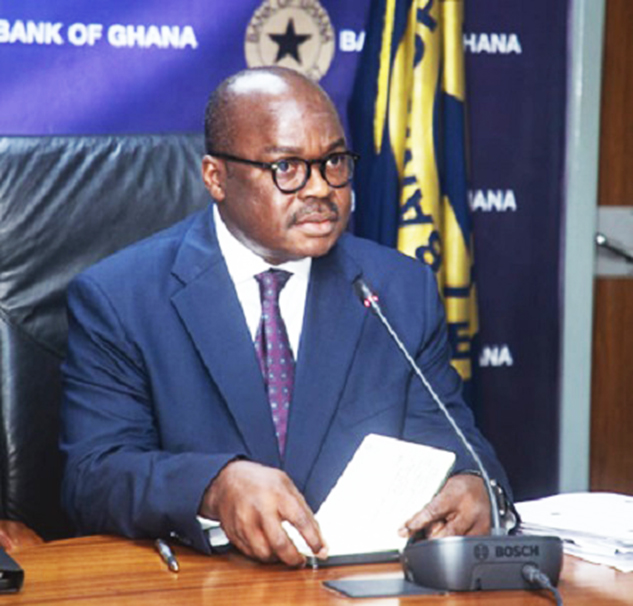
Dr. Ernest Addison, Governor of Bank of Ghana

The Governor of the Bank of Ghana, Dr. Ernest Addison, has officially launched the Ghana Gold Coin (GGC), a new financial instrument designed to deepen the country’s financial markets and offer alternative investment options.

Speaking at the launch on September 27, 2024 Dr. Addison emphasised that the introduction of the GGC marks a significant milestone in the Bank of Ghana’s history.

“This initiative is a testament to our unwavering commitment to deepen financial markets by offering other avenues for savers to invest,” he stated.

The governor also noted that the coin is symbolic of Ghana’s rich gold heritage, reminding attendees of the nation’s historical ties to the precious metal.

The Ghana Gold Coin, manufactured from dore gold refined to 99.99% purity is available in three sizes: 1 ounce, 1/2 ounce and 1/4 ounce.

Dr. Addison elaborated on the design, saying “Each coin has the Ghana Coat of Arms in front and the Independence Arch at the back. The packaging includes the gold coin, a wooden storage box, a transparent coin holder, and a certificate of ownership.”

In addition to its aesthetic and symbolic value, the issuance of the GGC offers practical economic benefits.

Dr. Addison explained, “The GGC issuance enables the Bank of Ghana to mop up extra cedi liquidity in the banking sector and will supplement the use of the Bank of Ghana Bills” and overnight deposit for our open market operations.”

He added that the coin offers an alternative investment avenue for savers, particularly those within Ghana, while also providing a hedge against economic instability.

“Gold has shown remarkable resilience as a financial asset and can serve as a natural hedge during periods of economic turbulence,” he remarked.

The governor assured the public that the GGC can be easily purchased and traded through commercial banks in Ghana using the cedi.

The coin’s price will be based on the London Bullion Marketing Association (LBMA) Auction PM Price from the previous day, and exchange rates will be determined using the United States Dollar against Ghana Cedi rate from Bloomberg’s close of the previous day.

“The price of the GGC will be published on the Bank of Ghana website daily by 9:00 a.m. GMT, and applicable charges will apply,” he explained.

In line with global standards, the GGC has been manufactured using gold sourced from traceable, responsibly mined sources within Ghana.

Dr. Addison assured stakeholders that the issuance adheres to the Bank’s Responsible Gold Sourcing Framework, adding “Anti-Money Laundering/Countering the Financing of Terrorism (AML/CFT) safeguards are in place to ensure that the buying and selling of the GGCs is devoid of criminal financial activities.”

He concluded his address with optimism for the future, highlighting the Bank’s commitment to innovation and deepening financial markets in the country.

“The issuance of the GGC is a testament to our commitment to innovation, deepening of our financial markets, and providing more avenues for residents to invest in Ghana. Long live Ghana! and make our nation great and strong!” Dr. Addison declared.

Ghana has enough reserves to meet food import demands –BoG

0
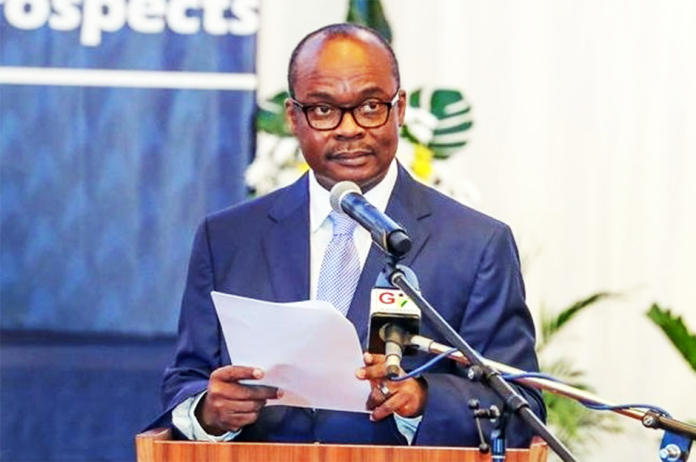
Dr. Ernest Addison, Governor of the Bank of Ghana

The Governor of the Bank of Ghana, Dr. Ernest Addison, has assured the public that the central bank is well-prepared to manage the anticipated demand for foreign exchange, driven by the need to import food due to the ongoing drought crisis. During the 120th Monetary Policy Committee (MPC) Press Briefing, Dr. Addison emphasised that Ghana’s foreign reserves are robust enough to withstand any shocks related to food imports, offering much-needed reassurance amid concerns over domestic food shortages.

“The Bank of Ghana has built up sufficient reserves to handle any pressures that may arise from the increased demand for foreign exchange due to food imports.” Dr. Addison said.

His comments come at a time when the country is grappling with the fallout from severe drought, which has resulted in a ban on grain exports and a significant drop in local agricultural output.

The country is now bracing for an inevitable increase in food imports to stabilise domestic supply, which could potentially place pressure on foreign exchange reserves.

The drought, which has severely affected crop yields, particularly in the northern regions of Ghana, has left the government with no choice but to rely on imports to meet the country’s food needs.

Dr. Addison contended that the central bank’s proactive management of country’s external reserves has left the country in a solid position to handle these challenges.

He pointed to the significant build-up in foreign exchange reserves, which have risen to $7.5 billion by the end of August 2024, representing 3.4 months of import cover.

“The current level of reserves provides a strong buffer, ensuring that we can meet any demand for foreign exchange to import food,” he noted.

According to Dr. Addison, the country has recorded a provisional trade surplus of $2.78 billion in the first eight months of 2024, a notable increase from the $1.66 billion surplus recorded during the same period in 2023.

This positive performance has largely been driven by a surge in gold exports, which rose by 62.2% to $7.27 billion, providing critical support to the country’s reserves.

“Gold exports have been a key contributor to the strong performance of our external sector. The growth in gold export revenues has significantly boosted our foreign reserves, helping to offset some of the challenges we face in other areas, such as agriculture,” Dr. Addison explained.

He acknowledged that while cocoa exports, a major contributor to the economy, have declined sharply due to the drought, the strong performance of other key export sectors, such as gold and crude oil, has helped maintain a positive balance of payments.

Crude oil exports, he added, also played a role in shoring up the external position, with export revenues increasing by 16.7% to $2.77 billion.

These positive trends in export earnings have helped Ghana, weather the adverse effects of the drought, particularly the sharp drop in cocoa exports, which fell by 42.7% in the same period due to the extreme weather conditions.

While the country’s food supply is expected to rely heavily on imports in the coming months, Dr. Addison reassured the public that the Bank of Ghana is closely monitoring the situation and is committed to maintaining the stability of the foreign exchange market.

“We are aware of the potential pressures on the foreign exchange market, but we have taken the necessary steps to ensure that the market remains adequately supplied,” he stated.

The Governor also highlighted that the exchange rate has stabilized in recent months, following earlier pressures.

From the beginning of the year to September 2024, the cedi depreciated by 24.3% against the US dollar, but the pace of depreciation has slowed to 7.1% in the second half of the year.

This stabilisation is attributed to the tight monetary policy stance and improved forex liquidity.

In terms of inflation, Dr. Addison noted that headline inflation has been on a downward trajectory, easing to 20.4% in August 2024 from 22.8% in June.

This decline has been driven primarily by lower food prices, as food inflation dropped to 19.1% in August from 24% in June. “We are seeing positive signs that the disinflation process is on track, and the reduction in food inflation has been a key factor in this,” he remarked.

Despite the challenges posed by the drought and the need for increased food imports, Dr. Addison expressed optimism about the country’s economic resilience.

He reiterated the Bank of Ghana’s commitment to maintaining stable macroeconomic conditions, particularly in the face of external shocks.

With Ghana’s foreign reserves holding strong and a solid external trade balance, the central bank is confident that the country can navigate the economic challenges posed by the drought and the need for increased food imports.

Electricity and Water tariffs up by 3.02%, 1.86%

0

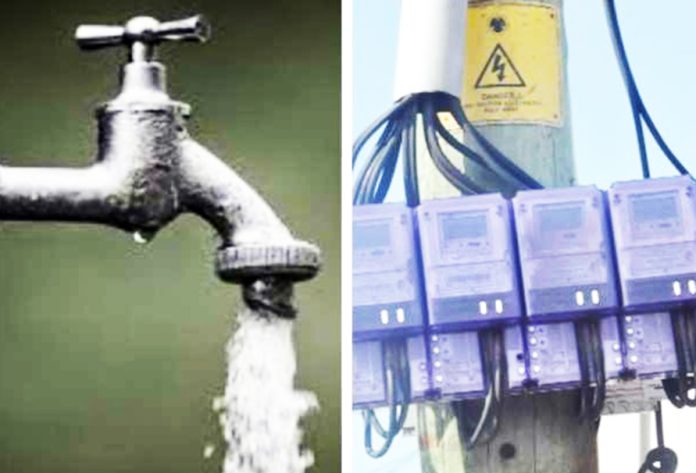
Ghana’s economic regulator for electricity and water, the Public Utilities Regulatory Commission (PURC) has announced a 3.02 per cent and 1.86 per cent increase in electricity and water tariffs respectively, effective October 1, 2024.

This was contained in a statement issued by Dr Ishmael Ackah, Executive Secretary for the PURC.

The latest increment is on the account of the US Dollar/Ghana Cedi exchange rate, domestic inflation rate, cost of natural gas and electricity generation mix.

The statement explained that, “By incorporating changes in the values of these indicators in the quarterly tariff reviews, the Commission ensures that the real value of the tariffs are maintained to provide for the financial viability and ability of  utility service providers to deliver on their mandate.”

The new tariff, the Commission defended, is necessary to keep the light on and the water flowing.

Dr Ackah mentioned that the hydro-thermal generation mix considered for the projected period remained unchanged, with hydro sources contributing 34.81 per cent to generation, while thermal sources contributed 65.19 per cent to the generation mix.

“There was, however, a 4.96 per cent depreciation of the Ghana Cedi against the US Dollar between the second and third tariff quarters.

“Projected inflation rate for the period declined marginally from 24.38 per cent to 22.27 per cent. Similarly, the Weighted Average Cost of Gas (WACOG) declined from US$/MMBtu 8.0422 to US$/MMBtu 7.8368 for the third quarter.

“The overall changes in these factors under consideration amounted to a total under-recovery of GH¢173.98 million, which translates to a 3.02 per cent increase in electricity tariffs.

“In the case of water, a revenue gap of GH¢12.01 million was recorded, which translates to a 1.86 per cent increase in water tariffs,” he said.

Dr Ackah’s statement said the Commission expects the regulated utilities, including the Electricity Company of Ghana (ECG), Ghana Water Limited (GWL) and Northern Electricity Distribution Company (NEDCo) to strictly adhere to the PURC’s regulatory benchmark of 98 per cent for revenue collection and, consequently, pay what is due to all stakeholders in the value chain.

“This is very necessary for the sustainability of both the energy and water sectors,” the statement concluded.

The Ghanaian Chronicle