Home Blog Page 106

Amin Adam: BoG’s 2025 Accounts Signal Fiscal Pressures

0
Amin Adams, Former Minister for Finance

The Member of Parliament for Karaga, Dr. Mohammed Amin Adam, has called for careful policy attention, following the release of the Bank of Ghana’s audited 2025 financial statements, noting that certain trends could have implications for Ghana’s fiscal outlook and post-programme economic management.

In a communication to the International Monetary Fund (IMF) Mission Chief, Dr. Amin Adam acknowledged the progress made under Ghana’s Extended Credit Facility (ECF) programme, particularly in stabilising inflation and strengthening external reserves.

However, he emphasised the importance of safeguarding these gains as the country transitions into a post-programme phase.

A key issue raised relates to the Bank of Ghana’s balance sheet position. The central bank’s negative equity widened from GH¢61.32 billion in 2024 to GH¢96.28 billion in 2025.

While this reflects the lingering effects of recent economic shocks and policy interventions, the MP noted that it may require a structured and transparent recapitalisation plan over the medium term.

“Even if addressed gradually, this remains an important consideration for fiscal planning,” he indicated, pointing to the need for clarity on the scale, timing and financing approach for any recapitalisation efforts.

Operating Costs and Financial Performance

The central bank’s financial results also show an increase in losses, from GH¢9.49 billion in 2024 to GH¢15.63 billion in 2025, despite growth in operating income.

This development, Dr. Amin Adam explained, appears to be driven largely by higher costs associated with monetary policy operations, including liquidity management and exchange rate-related adjustments.

In particular, the cost of Open Market Operations (OMO), a key instrument for managing inflation, rose to GH¢16.73 billion in 2025, up from GH¢8.60 billion the previous year.

While such costs are often part of efforts to stabilise prices, he noted that their scale warrants ongoing monitoring to ensure sustainability.

The MP also drew attention to the role of gold-related transactions in shaping the Bank’s financial position. The accounts show a significant gain from refined gold sales, which contributed to a reported positive policy solvency position.

However, he suggested that distinguishing between recurring operational income and one-off gains could provide a clearer picture of the Bank’s underlying financial strength. He also encouraged enhanced disclosure around gold transactions to improve transparency and public understanding of their economic impact.

Another area highlighted is the movement in the Bank’s revaluation reserves, which declined sharply in 2025 due to exchange rate and asset valuation changes. While such adjustments are consistent with international accounting standards, they underscore the sensitivity of the Bank’s balance sheet to market conditions.

Broader Fiscal Considerations

Dr Amin Adam further noted that developments within the central bank have broader implications for fiscal policy.

He explained that potential recapitalisation requirements, together with other financial sector obligations, should be factored into medium-term fiscal planning.

This, he said, would help ensure that sufficient fiscal space is preserved for priority areas such as infrastructure, healthcare, and education.

He also emphasised the importance of viewing fiscal performance in a broader context beyond the central government budget to include central bank operations and other contingent liabilities.

To support long-term stability, the MP proposed a number of policy considerations, including the development of a transparent recapitalisation framework for the Bank of Ghana, enhanced reporting of quasi-fiscal operations, and the publication of a clearer measure of policy solvency that excludes one-off items.

He also encouraged continued adherence to safeguards that limit monetary financing of government expenditure, as well as ongoing engagement with international partners to strengthen policy credibility.

Dr. Amin Adam concluded by reaffirming the importance of maintaining policy discipline as Ghana exits the IMF programme. While acknowledging the progress achieved in recent years, he stressed that careful management of emerging risks would be key to sustaining macroeconomic stability and supporting inclusive growth.

The observations come at a time when Ghana is preparing for its next phase of economic management, with policymakers seeking to consolidate recent gains while navigating a complex global and domestic environment.


For more news, join The Chronicle Newspaper channel on WhatsApp: https://whatsapp.com/channel/0029VbBSs55E50UqNPvSOm2z



PMI Global Summit Series heads to Cape Town

0
George Asamani, MD, PMI SSA.jpg

Following a landmark gathering in Kigali that brought together over 1,000 project professionals, industry leaders, and government officials, the PMI Global Summit Series will take place in Cape Town from 14 to 15 September 2026 at the Cape Town International Convention Centre. Hosted by Project Management Institute (PMI) Sub-Saharan Africa, the Summit has become Africa’s largest platform for advancing project delivery, leadership, and innovation.

Cape Town provides a fitting backdrop for this year’s Summit. As one of Africa’s leading hubs for business, infrastructure, and innovation, the city reflects the scale of ambition and execution required to deliver transformative projects across the continent. Building on the momentum of last year’s event in Rwanda, the Cape Town edition will be anchored in a bold and timely theme – Africa Delivers M.O.R.E Together.

The theme reflects a fundamental shift in how projects are delivered today. At its core, M.O.R.E. is a mindset that encourages project professionals to go beyond execution, manage perceptions, own project success, respond to change, and expand their focus to the broader impact of their work. In Africa, however, the theme carries an even deeper meaning.

Africa Delivers MORE Together reflects the continent’s longstanding progress, says George Asamani, Managing Director, PMI Sub-Saharan Africa. “From regional blocs such as the Economic Community of West African States (ECOWAS), Southern African Development Community (SADC), and the East African Community (EAC), to transformative initiatives like the African Continental Free Trade Area (AfCFTA) and Mission 300, Africa’s greatest achievements have been built through partnership, coordination, and shared purpose.

This spirit of collective progress echoes the philosophy of Ubuntu, ‘I am because we are’, reinforcing the idea that Africa’s success is inherently interconnected. As the Summit moves to Cape Town, it aims to translate this philosophy into practical action by aligning governments, industries, and communities to deliver projects that create lasting value.

The urgency of this message was evident at last year’s Summit in Kigali, where leaders from the African Development Bank (AfDB) emphasised that Africa’s greatest obstacle is not a shortage of capital, but a shortage of bankable projects, well-prepared, investable opportunities capable of unlocking funding and delivering impact.

This challenge is further compounded by a widening talent gap. According to PMI’s Talent Gap report, global demand for project professionals is set to rise significantly, with as many as 30 million additional professionals needed by 2035. In Sub-Saharan Africa alone, demand is projected to grow by up to 75%, underscoring the urgent need to build project management capacity across the region.

“Without the right skills and capability, even the most promising initiatives stall. The Global Summit Series Cape Town is designed to change that, moving beyond conversation to build the talent and expertise Africa needs to deliver at scale,” adds Asamani.

The Kigali edition convened some of the continent’s most influential voices, including Dr. Akinwumi Adesina, then President of the African Development Bank, who underscored the need for projects to move beyond plans and deliver meaningful impact. Featured speakers included Armand Nzeyimana and Eric Ogunleye from the African Development Bank, Pierre Kayitana, Zipline Rwanda, and Kusobile Kamwambi, Government of Zambia, alongside globally recognised figures such as Dr Moses Adoko, formerly with NASA, entrepreneur and artist Olubankole Wellington (Banky W), and Guinness World Record holder Tunde Onakoya.

The programme was further enriched by leading academic perspectives, including Professor Kayihura Muganga Didas, Acting Vice Chancellor of the University of Rwanda, Dr Sanele Nhlabatsi, Senior Lecturer, UNISA, and Prof Lavagnon Ika, Telfer School of Management.

Together, these leaders shared practical insights on delivering complex, high-impact projects in an increasingly dynamic environment, highlighting the importance of collaboration, adaptability, and value-driven execution. As the Summit arrives in Cape Town, it will build on these conversations with a renewed focus on delivering impact at scale.

Attendees will engage with practical tools for managing mega-projects, explore AI applications in African infrastructure, and network with the continent’s leading project delivery experts. “Critically, the Summit will continue to redefine what success looks like. In today’s context, project success is no longer measured solely by timelines and budgets, but by the value it creates, whether in economic growth, social inclusion, environmental sustainability, or improved quality of life,” adds Asamani.

Early-bird registration is now open, with discounted rates available until 12 May 2026.

Celebrating ten years of convening the region’s project leaders, the PMI Global Summit Series comes full circle. From its first edition in Johannesburg to this year’s gathering in Cape Town, the journey reflects a decade of growth, connection, and impact.


For more news, join The Chronicle Newspaper channel on WhatsApp: https://whatsapp.com/channel/0029VbBSs55E50UqNPvSOm2z


Top of Form

Bottom of Form

Top of Form

Bottom of Form


Editorial: Gov’t Must Find Solution To Accra-Kumasi Road Palaver

0
Editorial

The Accra–Kumasi National Highway (N6) has, in recent weeks, returned to the spotlight for the wrong reasons – Its steadily deteriorating condition. As a critical economic corridor linking Ghana’s two most important commercial hubs, the state of the N6 is no minor inconvenience, it is a national concern. The worsening condition of the road is not only compromising commuter safety, but also disrupting economic activity and, increasingly, affecting the physical and mental well-being of road users.

Despite being one of the busiest highways in the country, large sections of the N6 remain in disrepair. The 250 kilometres (160 miles) road is riddled with potholes, uneven surfaces and in many areas, abandoned or incomplete construction works. The result is a corridor that has effectively become a chokepoint for both passenger and freight transport.

Journeys that should ordinarily take four to five hours are now stretching between six and ten hours or even longer. The situation is particularly dire around Nkawkaw and Nsawam, where traffic congestion has reached intolerable levels. Heavy-duty trucks, frequent vehicle breakdowns, road crashes and a sharp increase in vehicular traffic all combine to worsen the gridlock.

The consequences are far-reaching. Beyond the obvious discomfort to commuters, the extended travel time translates directly into lost productivity, increased transport costs and wear and tear on vehicles. For businesses that rely on timely movement of goods between Accra and Kumasi, the inefficiencies on the N6 are a significant economic burden.

It must be emphasised that the challenges confronting the N6 are not new. They have persisted for years and have, in fact, been one of the justifications for the proposed Accra–Kumasi expressway project, which many Ghanaians eagerly anticipate. However, the promise of a future expressway cannot be an excuse to neglect the existing road.

While the country awaits new infrastructure, the current lifeline between the south and the middle belt must not be allowed to deteriorate further. Allowing the N6 to decay while waiting for an expressway risks deepening the hardships already being experienced by commuters and businesses alike.

Over the past three weeks, The Chronicle has taken note of the alarming condition of the highway. One of the most pressing concerns is the number of partially completed bypasses, particularly around Nkawkaw. These bypasses were intended to divert traffic from congested town centres, reduce travel time and minimise accidents within communities.

Yet, in their current incomplete state, they offer little to no relief. Instead, they compound the problem, leaving motorists to navigate confusing and often unsafe road conditions.

We believe it is imperative that government prioritises the completion of these ongoing projects. There is little sense in initiating new infrastructure while existing ones remain unfinished. Completing these bypasses would provide immediate, tangible relief to road users and improve traffic flow along critical sections of the highway.

The Chronicle, therefore, urges the authorities to expedite work on the N6 as a matter of urgency. Addressing the current challenges on the highway is not just about convenience, it is about safeguarding economic efficiency and national productivity.

The prolonged travel hours on the N6 are not merely an inconvenience, they represent lost man-hours, increased operational costs and heightened stress for commuters. These are costs the nation can ill afford.

While we welcome the government’s commitment to constructing a new expressway, the N6 must not be relegated to the background. It continues to play a pivotal role in the country’s transport network and will remain relevant even after the expressway is completed, particularly for communities in the Eastern and Ashanti regions.

President John Dramani Mahama has assured the nation that the N6 will not be abandoned. That assurance must now be matched with decisive action. The distress on the N6 is real, persistent and costly. It is time for the government to move beyond assurances and deliver practical solutions that restore efficiency and dignity to one of Ghana’s most important highways.


For more news, join The Chronicle Newspaper channel on WhatsApp: https://whatsapp.com/channel/0029VbBSs55E50UqNPvSOm2z


Water Resources Commission marks world  water day with schools’ quiz competition

0
An official presenting a certificate of participation to one of the students.

The Water Resources Commission (WRC) has intensified efforts to promote water conservation and environmental stewardship among young people through an inter-school quiz competition organized in the Abuakwa South Municipality of the Eastern Region to commemorate World Water Day 2026.

The educational initiative formed part of broader activities aimed at deepening awareness on water resource management, sanitation, and environmental protection while encouraging the younger generation to become active champions in safeguarding Ghana’s rapidly threatened water bodies.

The competition tested pupils’ knowledge on a range of issues, including the importance of protecting rivers and streams, access to safe drinking water; sanitation rights; sustainable water use practices; and the environmental dangers posed by irresponsible human activities—especially illegal mining.

Participating schools included Asikam Presbyterian Basic School, Ahwenease Presbyterian Basic School, Kibi State Basic School, Kibi Methodist Basic School, and Okanta Presbyterian Basic School.

Speaking to The Chronicle, Water Management Officer at the Densu Basin Secretariat of the WRC, Festus Aidoo Larweh, said the quiz was strategically designed to make learning about water conservation practical, memorable, and community centered.

He noted that education remains one of the most effective tools in shaping environmentally responsible behavior among young people.

According to him, instilling water conservation values in children at an early age is essential in building a future generation that understands the importance of preserving the country’s natural resources.

Mr. Larweh used the occasion to caution the youth against involvement in illegal mining activities, stressing that galamsey remains one of the greatest threats to Ghana’s water security due to its devastating pollution of rivers, streams, and underground water sources.

He urged young people to prioritize education, become ambassadors of environmental protection, and actively support national efforts to preserve water bodies for present and future generations.

The competition, held at the Anglican Church in Kyebi, was keenly contested, with Ahwenease Presbyterian Basic School emerging champions with an impressive 37 points.

Asikam Presbyterian JHS secured second place with 26 points, while Kibi Methodist Basic School placed third with 24 points. Okanta Presbyterian Basic School and Kibi State Basic School tied for fourth position with 22 points each.

As part of the awards, all participating schools received exercise books in recognition of their involvement, while winners received cash prizes, GH¢500 for third place, GH¢700 for second place, and GH¢1,000 for the winning school.

Earlier in the celebrations, the WRC, together with stakeholders, held a community sensitization program at Potrase, where concerns were raised over the alarming degradation of water bodies in the area.

The engagement brought together traditional leaders and representatives from Ghana Water Limited, the Forestry Commission, the Minerals Commission, A Rocha Ghana, and the Concerned Citizens of the Atewa Landscape, all of whom underscored the urgent need for collective action to combat water pollution caused by illegal mining.

This year’s World Water Day, observed globally under the theme “Water and Gender,” highlighted the critical connection between access to safe water, sanitation, and gender equality.

The international campaign, led by UN-Water, UNICEF, and UN Women, drew attention to the disproportionate burden that water scarcity places on women and girls while also recognizing their essential role in water governance, sanitation advocacy, and sustainable resource management.

For the Water Resources Commission, the message remains clear: protecting water is a shared responsibility, and educating the next generation is central to winning that fight.


For more news, join The Chronicle Newspaper channel on WhatsApp: https://whatsapp.com/channel/0029VbBSs55E50UqNPvSOm2z
 

Renewed drive to protect Atewa Forest gains momentum

0
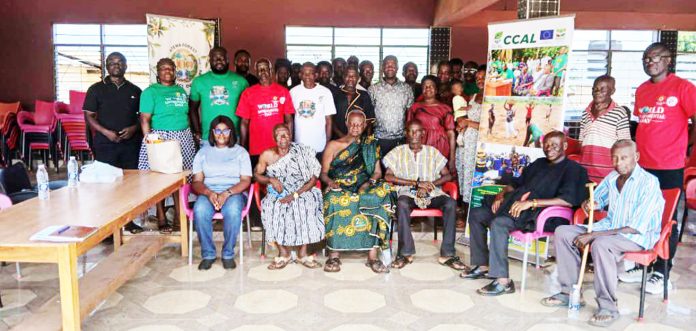
Concerned Citizens of Atewa Landscape (CCAL), traditional leaders, and other stakeholders in a group photograph

A renewed drive to protect the Atewa ecological landscape and promote environmental sustainability has gained momentum following a major stakeholder consultation convened at Osino-Saman in the Fanteakwa South District of the Eastern Region under the European Union-supported Building Resilient and Active Communities in Extractive Landscapes (BRACE) programme.

The engagement, organized in collaboration with the Concerned Citizens of Atewa Landscape (CCAL), brought together community members, traditional authorities, environmental advocates, and state regulatory institutions to deliberate on the growing ecological threats facing the Atewa enclave, particularly from illegal mining and unsustainable extractive activities.

Representatives from key regulatory agencies, including the Forestry Commission, Water Resources Commission (WRC), Environmental Protection Agency (EPA), Minerals Commission, and the Ministry of Lands and Natural Resources, participated in the forum, which focused on fostering dialogue, strengthening public awareness, and promoting community participation in environmental governance.

Public Relations Officer of CCAL, Baffour Ampem Darko-Amponsah, explained that the consultation formed part of efforts to deepen public understanding of the critical ecological importance of the Atewa Forest and encourage local communities to actively participate in protecting one of Ghana’s most valuable biodiversity hotspots.

He noted that Atewa remains a vital national environmental asset, serving as a source of major river systems, rich biodiversity, and forest resources that sustain thousands of livelihoods.

According to him, protecting the Atewa landscape requires a collective effort involving government institutions, local communities, civil society organizations, and traditional authorities.

Mr. Darko-Amponsah said the stakeholder consultation also sought to bridge the information gap between communities and state agencies by clarifying the mandates of environmental and mining regulatory bodies, outlining citizens’ responsibilities and creating space for open engagement on pressing environmental concerns.

He indicated that discussions at the forum centered on the devastating impact of illegal mining on rivers, forests, and farmlands, as well as broader issues of environmental justice, biodiversity conservation, and responsible natural resource governance.

“The engagement also provides an opportunity for community members to raise concerns, ask questions, and seek clarity on environmental issues that directly affect their lives and livelihoods,” he stated.

Convener of CCAL, Paul Asumaku, reaffirmed the organization’s commitment to sustained advocacy aimed at protecting the Atewa Forest and empowering communities to become frontline defenders of their environment.

Speaking on water conservation, Kaba Abakeh of the Densu Basin Secretariat under the Water Resources Commission stressed that water pollution in mining-affected communities has reached worrying levels and requires urgent intervention.

He warned that illegal mining continues to contaminate rivers and streams that serve as critical water sources for both domestic use and agriculture, thereby threatening public health and long-term water security.

Also addressing participants, Madam Regina Abbey, principal inspector of mines in charge of environment at the Minerals Commission in Koforidua, commended the organizers for creating a platform that promotes public education and stakeholder engagement.

She explained that the Minerals Commission’s role includes regulating mining operations, monitoring compliance with environmental standards, and ensuring that extractive activities are undertaken responsibly and sustainably.

Community members who participated in the consultation expressed deep concern over the continued destruction of water bodies and forest resources, attributing much of the environmental damage to illegal mining activities.

Some residents also raised concerns that communities hosting licensed mining concessions often receive little meaningful benefit from such operations, despite bearing the environmental and social costs.

The consultation ended with renewed calls for stronger enforcement of environmental laws, greater community inclusion in natural resource governance, and sustained public education to safeguard the Atewa landscape for future generations.


For more news, join The Chronicle Newspaper channel on WhatsApp: https://whatsapp.com/channel/0029VbBSs55E50UqNPvSOm2z
Government Lifts Curfew In Amasiri Three Months After Killings

0
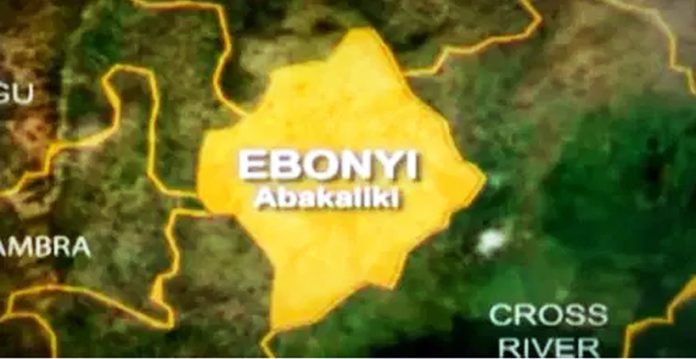
Amasiri in Ebonyi State

The curfew imposed on the Amasiri community in Afikpo Local Government Area of Ebonyi State has been lifted, three months after the attack and killing of four indigenes of Okporojo, Oso-Edda in Edda Local Government Area.

The Director of State Security Service, Ene Kolawole, announced that the curfew has been completely lifted while briefing journalists after a security meeting held at the Conference Room of the Governor’s Office, Ochudo Centenary City in Abakaliki.

She noted that security personnel would remain in the area to sustain peace, adding that suspects still at large would soon be declared wanted.

“We resolved that a minimal security presence will remain in the area to sustain peace. Those involved in the crime who are yet to be apprehended will soon be declared wanted,” Kolawole.

Meanwhile, the Commissioner for Justice and Attorney General, Ben Odoh, explained that the decision followed several letters of remorse written by the people of Amasiri Community and accepted by the people of Okporojo Village.

He noted that the letters were submitted through the traditional leadership of Amasiri, assuring the government of their commitment to peace.

Odoh further revealed that appeals from the founding fathers and the council of elders influenced the government’s decision to reject a bill seeking to delist Amasiri Development Centre from the state’s 64 development centres.

“Consequently, the state government has rejected the bill and communicated its position to the State House of Assembly in the interest of justice.

“Amasiri Development Centre remains, and we still have 64 development centres in the State,” he added.

In her part, the State Head of Service, Mrs. Rita-mary Okoro, said her office would oversee the lifting of restrictions on schools and hospitals.

Credit: channelstv.com


IPI Nigeria to unveil Freedom Hub in Abuja for World Press Freedom Day

0
IPI

The Nigerian chapter of the International Press Institute (IPI) is set to launch a new headquarters and Press Freedom Hub in Abuja as part of activities marking World Press Freedom Day.

The unveiling, scheduled for Wednesday, May 6, 2026, will take place at the facility located along Kado Expressway in the Federal Capital Territory.

According to the organisation, the centre will serve as a strategic base for advancing press freedom and safeguarding journalists and media professionals across Nigeria.

In a statement issued in Abuja, IPI Nigeria Secretary, Ahmed I. Shekarau, said the hub would function as the organisation’s operational headquarters for advocacy and interventions aimed at protecting media practitioners.

Providing further insight into the initiative, IPI Nigeria President, Musikilu Mojeed, said, “The centre will anchor our media advocacy programmes and accelerate efforts to promote press freedom and protect journalists facing threats and censorship.

“It will also function as a venue for periodic reviews of media freedom and journalist safety, drive policy and legal reforms to strengthen independent journalism, and foster dialogue between the media and government,” Mojeed added.

The new hub is expected to strengthen institutional responses to challenges facing the media, including censorship, harassment, and safety concerns, while also serving as a platform for engagement between journalists, policymakers, and other stakeholders.

According to the statement, IPI Nigeria is affiliated with the International Press Institute, a global network of editors, media executives, and leading journalists operating in over 100 countries.

“Founded in 1950, the organisation has played a significant role in defending press freedom worldwide for more than seven decades.

“Registered under Nigerian law, IPI Nigeria was established in the 1970s by prominent media leaders, including the late Alhaji Lateef Jakande, the late Alhaji Ismaila Isa Funtua, Chief Segun Osoba, the late Malam Wada Maida, and Chief Sam Amuka-Pemu.

“Since its inception, the organisation has been at the forefront of advancing press freedom, strengthening independent journalism, and promoting journalist safety in Nigeria,” the statement added.

Credit: channelstv.com

Rainstorm kills two, destroys over 50 houses in Kaduna

0
Rainstorm destroys houses

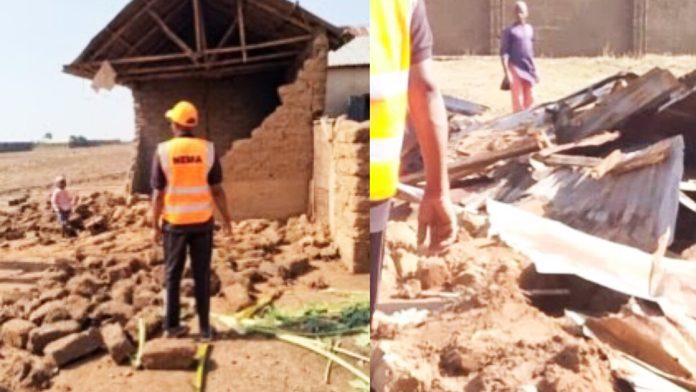
A devastating rainstorm has claimed the lives of two persons and destroyed more than 50 houses in Dokan Mai Jama’a community, Chikun Local Government Area of Kaduna State.

The Village Head of Dokan Mai Jama’a, Alhaji Hamisu Tukur, confirmed the incident, describing the storm as “violent and sudden,” which left many residents displaced and homeless.

He said “The rainstorm came with very strong winds and destroyed over 50 houses in the community. We have also recorded two deaths”.

Eyewitnesses said the heavy downpour began around 6:41 p.m. on Monday, uprooting roofs, collapsing walls, and damaging properties across the community.

Residents were said to be seen struggling to salvage belongings from destroyed homes, while others sought temporary shelter with neighbours and relatives.

Affected households have appealed to the Kaduna State Government, NEMA, and SEMA for urgent relief and humanitarian support as many families remain exposed.

The storm also reportedly affected nearby areas within Chikun LGA, worsening the level of destruction in the locality.

Credit: dailypost.ng


Oshiomhole tells govt to retaliate against South African companies in Nigeria

0
Senator Adams Oshiomhole

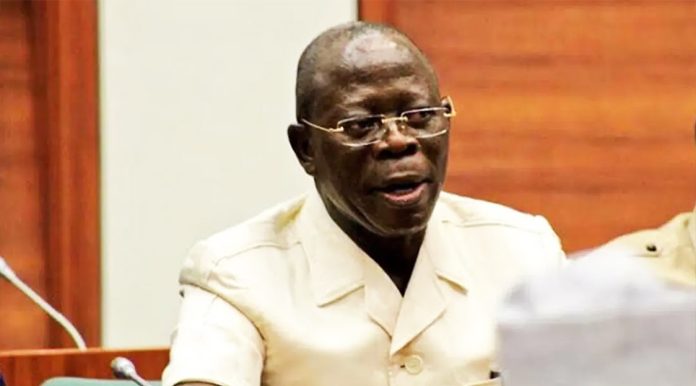
Senator Adams Oshiomhole has called on the Federal Government to retaliate against South African businesses operating in Nigeria following the recent attacks on Nigerians in South Africa.

Speaking during plenary on Tuesday, Oshiomhole said the Federal Government should consider revoking the working license of South African owned companies such as MTN and DSTV.

He argued that Nigeria must respond firmly to what he described as persistent hostility against its citizens.

“I am not going to shed tears. If you hit me, I hit you. I think it is appropriate in diplomacy. It is an economic struggle,” Oshiomhole said.

He argued that while some South Africans accuse Nigerians of taking their jobs, Nigerians should return home and take over employment opportunities created by major South African companies operating in the country, including MTN and DSTV.

“When we hit back, the President of South Africa will not only talk but will also go on his knees to recognise that Nigeria cannot be intimidated.

“We will not condone any life being lost. If a crime has been committed under the South African law they have the right to bring any such person to justice, but to kill our people as if we are helpless, we will not allow that,” Oshiomhole added.

DAILY POST reports that several Nigerians in South Africa have reportedly been attacked, and their businesses destroyed, in ongoing xenophobic attacks in the country.

Credit: dailypost.ng

No crisis at BoG despite negative equity -Bank assures nation

0
Bank of Ghana headquarters

The Bank of Ghana (BoG) has dismissed concerns over its worsening financial position, insisting that its 2025 losses and deepening negative equity do not signal institutional distress or a weakening of its core functions.

In a detailed Questions and Answers document released alongside its 2025 audited financial statements, the central bank maintained that its financial results should be interpreted within the context of its policy mandate, rather than as a measure of commercial performance.

“They do not represent a cash loss, a depletion of reserves, nor a sign of institutional distress,” the Bank stated, addressing concerns about the reported operating loss of GH¢15.63 billion and an additional GH¢19.32 billion loss recorded under Other Comprehensive Income.

The combined effect of these losses pushed the Bank’s negative equity position from GH¢61.32 billion at the beginning of 2025 to GH¢96.28 billion by year-end.

Despite this, the BoG stressed that negative equity does not carry the same implications for a central bank, as it would for a private sector institution.

“Negative equity at a central bank does not have the same significance as it does at a commercial entity… [and] does not impair the Bank’s capacity to conduct monetary policy,” the document explained.

According to the Bank, the losses recorded in 2025 primarily reflect the financial cost of aggressive monetary policy actions aimed at stabilising Ghana’s economy following a period of macroeconomic instability.

These measures included large-scale open market operations to absorb excess liquidity in the banking system, as well as interventions under the Domestic Gold Purchase Programme to strengthen foreign reserves.

The Bank noted that these policy actions yielded significant macroeconomic gains during the year.

Inflation declined sharply from 23.8 percent at the end of 2024 to 5.4 percent by December 2025, while the cedi appreciated by over 40 percent against the US dollar. Gross international reserves also rose from $9.11 billion to $13.83 billion over the same period.

The BoG explained that part of the reported losses particularly those recorded under Other Comprehensive Income were driven by exchange rate movements rather than operational inefficiencies.

Specifically, the appreciation of the cedi reduced the cedi value of foreign currency-denominated assets, resulting in accounting losses that do not reflect an actual outflow of resources.“The OCI loss is a translation effect, not a depletion of reserves,” the Bank clarified.

The central bank further emphasised that financial losses are not unusual for monetary authorities during periods of aggressive policy intervention, noting that several global central banks have recorded similar outcomes in recent years.

Looking ahead, the BoG expressed confidence that its financial position would improve as macroeconomic conditions stabilise. It indicated that the cost of open market operations the main driver of the 2025 loss is expected to decline as inflation eases and interest rates normalise.

The Bank also pointed to ongoing discussions with government on a recapitalisation plan, as well as structural reforms such as the transition to the Ghana Accelerated National Reserve Accumulation Policy (GANRAP), which are expected to reduce the cost of reserve accumulation.

In its closing remarks, the BoG reiterated that its primary responsibility remains the delivery of price stability and financial system stability, stressing that the economic benefits of its policy actions are already evident.

“The financial cost of macroeconomic policies is recorded on the central bank’s books. The economic benefit is recorded in the country’s macroeconomic outcomes,” the Bank stated.


For more news, join The Chronicle Newspaper channel on WhatsApp: https://whatsapp.com/channel/0029VbBSs55E50UqNPvSOm2z
The Ghanaian Chronicle