Home Blog Page 105

Callistus Mahama: Before The Race Begins; A Call For Discipline, Reflection, And Duty

0
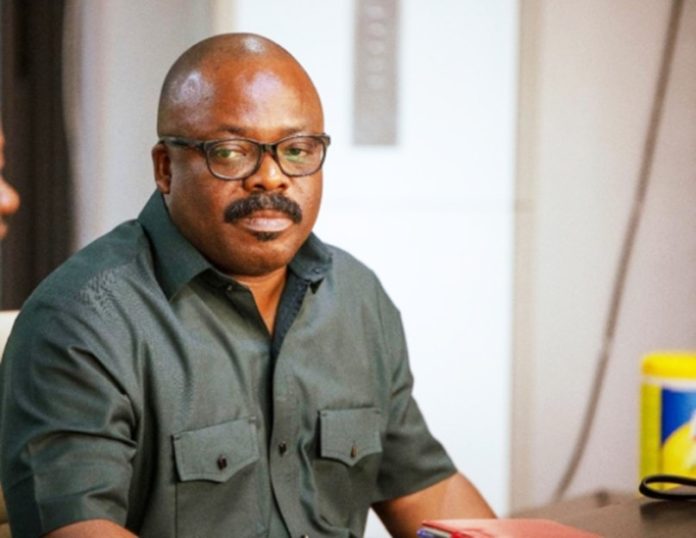
The Writer Callistus Mahama

There is a quiet danger that sometimes creeps into political life, not with noise, but with whispers. It begins subtly, like a conversation here, a suggestion there, and a quiet alignment of interests. Before long, attention shifts from the work at hand to the question of “what comes next.” That moment appears to be approaching far too early.

When John Dramani Mahama took office in January 2025, the country stood at a difficult crossroads. The economic headwinds were not abstract; they were real, immediate, and deeply felt by ordinary Ghanaians. Expectations were high, but so too were the constraints. The task before his administration was not simply to govern, but to steady a nation, restore confidence, and chart a credible path forward. That work is still underway.

Barely a year and a half into this mandate, it is sobering to reflect on how quickly attention can drift. The conversation, subtle as it may be in some quarters, about succession in 2028 risks arriving before the foundations of recovery have even been firmly laid.

The weight of the present moment

Governance, especially in times of recovery, demands concentration. It demands a certain humility – the recognition that the work before us is larger than any one individual’s future ambitions.

President Mahama still has more than two and a half years to deliver on the commitments made to the Ghanaian people. Those years are not excess time; they are the core of the mandate, that is to say, what is done or left undone within this period will shape not only the judgment of this administration, but the credibility of those who may seek to lead after it. To turn, even partially, from that task toward personal political calculations is not just premature; it is a quiet form of neglect.

A party yet to complete its own journey

Within the National Democratic Congress, the internal democratic journey is itself incomplete. At the most basic level, the branch, the party has yet to renew its structures through elections. From there will come the constituency, regional, and ultimately national processes.

These are not procedural formalities; they are the lifeblood of the party’s legitimacy. Leadership, if it is to endure, must emerge from this order, not from anticipation of it, and certainly not from attempts to outpace it.

There is something deeply instructive in this moment: even the foundation has not yet been settled, yet thoughts are already drifting to the summit.

The burden of responsibility

For those entrusted with roles in government, the obligation is even clearer and heavier.

Public office is, at its core, a trust. It demands presence, attention, and a full measure of commitment. It does not lend itself easily to divided focus. The pursuit of personal ambition, when it begins to compete with the demands of governance, creates a quiet erosion of performance, discipline, and ultimately trust. It must be said plainly: those who cannot subordinate ambition to duty risk doing injustice to both.

And where that tension becomes irreconcilable, there is honour, not weakness, in stepping aside. The nation deserves full service; ambition deserves honest pursuit. The two must not be confused.

The fragility of a national reset

The reset agenda that underpins this administration is not indestructible. It is fragile in its early stages and depends on consistency, discipline, and collective alignment. It requires that those entrusted with responsibility act not as individuals advancing separate interests, but as custodians of a shared national project.

To fragment that focus, to reduce it to parochial platforms or emerging factions, is to place the entire effort at risk. Nations have lost momentum this way before: not through dramatic failure, but through gradual distraction.

A time for reflection, not positioning

There will be a time, inevitably, for leadership contests, for ideas to be tested, for ambition to find its proper expression. That time will come through the party’s structures and the rhythms of the democratic process. But this is not that time.

This is a time for quiet discipline, for reflection, for work that is often unglamorous but essential, and for an understanding that the legitimacy of tomorrow’s leadership will be built on the integrity of today’s service.

Conclusion

There is something sobering in recognising how easily focus can be lost, not through crisis, but through premature anticipation. The question before us is not who leads in 2028. The question is whether, by 2028, we would have delivered enough, done enough, steadied enough, to justify the trust that was placed in this administration in 2025.

Discipline is what will answer that question. The clock is not yet ticking toward succession; it is ticking toward delivery, and for now, discipline must prevail over ambition.

By Callistus Mahama 

Source: Myjoyonline

Editor’s note: Views expressed in this article do not represent that of The Chronicle

US, Ghana Sign Bilateral Debt Restructuring Agreement

0

The United States and Ghana have signed a bilateral debt agreement to restructure the sovereign debt Accra owes to the Export-Import Bank of the United States (US Exim Bank).

The agreement, signed on May 6, 2026, forms part of Ghana’s broader debt restructuring programme, which the country has been pursuing following its sovereign default in 2022.

The US Mission in Accra, announcing the development, stressed that the timely servicing of American debt obligations remains a prerequisite for continued US economic engagement in Ghana.

It further urged Accra to make demonstrable progress in clearing outstanding arrears owed to US private sector companies and American higher education institutions operating in the country.


For more news, join The Chronicle Newspaper channel on WhatsApp: https://whatsapp.com/channel/0029VbBSs55E50UqNPvSOm2z

3i Africa Summit: Partnerships Driving Ghana’s Digital Finance Success — GhIPSS

0

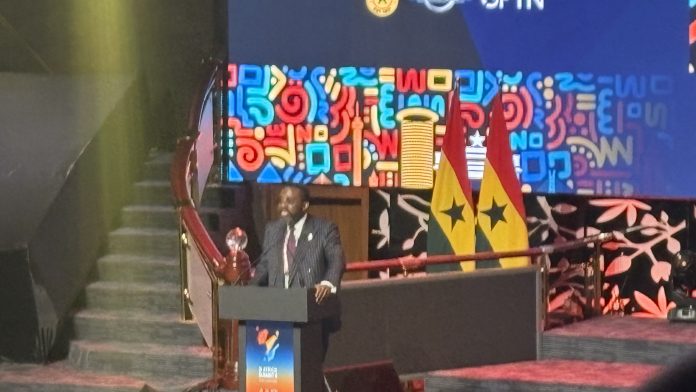
The Chief Executive of the Ghana Interbank Payment and Settlement Systems, Clara B. Arthur, has underscored the critical role of partnerships and infrastructure in driving Ghana’s digital finance transformation.

Delivering a keynote address at the 2026 3i Africa Summit in Accra, she said Ghana’s progress in digital payments is the result of deliberate collaboration among regulators, financial institutions and fintech players.

The three-day summit has brought together policymakers, central bank governors, fintech leaders and investors to explore how innovation, investment and collaboration can shape Africa’s financial future.

Mrs. Arthur illustrated Ghana’s progress with a simple example from Makola Market, where a trader expressed preference for mobile money without concern for the sender’s platform.

“That expectation is the result of interoperability,” she said, explaining that seamless transactions across banks and mobile wallets reflect years of coordinated effort led by GhIPSS in partnership with industry players and the Bank of Ghana.

She noted that since its establishment in 2007, GhIPSS has led the development of a connected national payments ecosystem, including systems such as gh-link, mobile money interoperability, instant payments and cheque clearing platforms.

According to her, these systems have significantly improved access, reduced transaction costs and strengthened trust in digital financial services across the country.

“As the industry evolves, sustaining this progress will require deeper collaboration and leadership guided by innovation,” she said.

Mrs. Arthur announced that GhIPSS is migrating Ghana’s payment infrastructure to the ISO 20022 global messaging standard to enhance efficiency and enable seamless cross-border transactions.

She added that the organisation is also positioning to work with virtual asset service providers following recent regulatory developments, to support innovation within a structured framework.

Beyond Ghana, she stressed the importance of continental integration, noting that the future of digital finance lies in connecting payment systems across Africa.

“GhIPSS is ready to connect with other instant payment systems across the continent,” she said.

She further called on financial institutions and fintech firms yet to connect to the national switch to come onboard, stressing that shared infrastructure is key to reducing duplication and achieving scale.

Mrs. Arthur concluded that Ghana’s digital finance success story is rooted in leadership and partnership, noting that collaboration remains essential to sustaining growth and delivering real impact.

CIPA Holdings Founder honoured at GEA 2026 as Gulf News feature highlights role in Ghana’s renewable energy transition

0

The Founder and Chief Executive Officer of CIPA Holdings Group, Kwaku Osei-Sarpong, has been named Most Respected Entrepreneur in Renewable Energy for 2026 at the Ghana Entrepreneurs & Corporate Executives Awards held at the Movenpick Ambassador hotel on 25th April 2026, further reinforcing the company’s growing influence in Ghana’s energy and infrastructure landscape.

The recognition comes at a time when CIPA Holdings is also gaining international visibility, following its recent feature in the Gulf News UAE Global FDI Report (Focus on Ghana), a flagship publication connecting investors from the Gulf region to high-growth opportunities across emerging markets.

Together, these milestones reflect a broader validation of CIPA’s role, both locally and internationally, in advancing renewable energy deployment and structuring investment-ready infrastructure in Ghana.

“This recognition speaks to the importance of trust, execution and long-term thinking in the energy transition,” Osei-Sarpong said. “At CIPA, our focus is on building platforms that can attract capital and translate it into infrastructure that delivers real impact.”

The Gulf News feature places CIPA among a select group of institutions engaging investors from the United Arab Emirates and the wider Gulf region, where capital is increasingly being directed toward renewable energy, low-carbon technologies and climate-aligned infrastructure.

As these economies expand their focus beyond hydrocarbons and strengthen their role in the global energy transition, markets such as Ghana are emerging as attractive destinations for long-term capital deployment.

In this context, the ability to structure and execute bankable projects has become critical. CIPA’s integrated model, which combines project development, financing and delivery, positions it as a platform through which such capital can be deployed effectively.

Over the past several years, the company has delivered renewable energy solutions across industrial, commercial and public-sector clients, deploying solar, battery storage and hybrid systems that improve reliability while reducing energy costs and carbon emissions.

A key part of this strategy is its focus on industrial decarbonization, where renewable energy is aligned with productivity and competitiveness. By enabling businesses to transition to clean energy without upfront capital investment, CIPA is helping to shift sustainability from a compliance requirement to a commercial advantage.

“At the core of our work is the belief that sustainability must be economically viable,” Osei-Sarpong noted. “When clean energy supports business performance, adoption becomes scalable.”

Beyond distributed energy solutions, CIPA is also advancing utility-scale renewable energy projects aimed at strengthening Ghana’s energy security and supporting industrial expansion. At the same time, the company is developing electromobility infrastructure, integrating clean energy with emerging transport and logistics systems.

This combined focus reflects a broader view of the energy transition as an interconnected system, linking power generation, industrial demand and mobility.

For local stakeholders, the GEA recognition provides an important signal of institutional trust. Awards such as the Ghana Entrepreneurs & Corporate Executives Awards are widely regarded as reflections of peer recognition and industry credibility, reinforcing confidence in companies that are actively delivering results.

“For investors, credibility is built not just on vision, but on execution,” said Bright Yamoah, Chief Financial Officer of CIPA Holdings. “Our role is to ensure that projects are structured to meet both market needs and investor expectations, with transparency and long-term value at the core.”

The latest recognition adds to a growing list of honours for Osei-Sarpong and CIPA Holdings, including a Forbes Africa feature, Rising Star of the Year at the Ghana Energy Awards 2024, the 40 Under 40 Award for Environmental and Climate Sustainability, and listings among Africa’s 100 Most Influential Young Leaders and the 100 Ghanaians of Noble Disposition.

Taken together, these milestones position CIPA as a Ghanaian institution with both local credibility and international relevance, capable of bridging global capital with Africa’s infrastructure opportunities.

As Ghana continues to advance its renewable energy and industrial development agenda, the role of companies that can combine credibility, financing capability and execution will become increasingly important.

“Ghana presents a compelling opportunity,” Osei-Sarpong said. “Our responsibility is to ensure that this opportunity is translated into infrastructure that drives growth, attracts investment and delivers long-term impact.

Ghana Police Arrests Four Suspected Armed Robbers in Bolgatanga

0

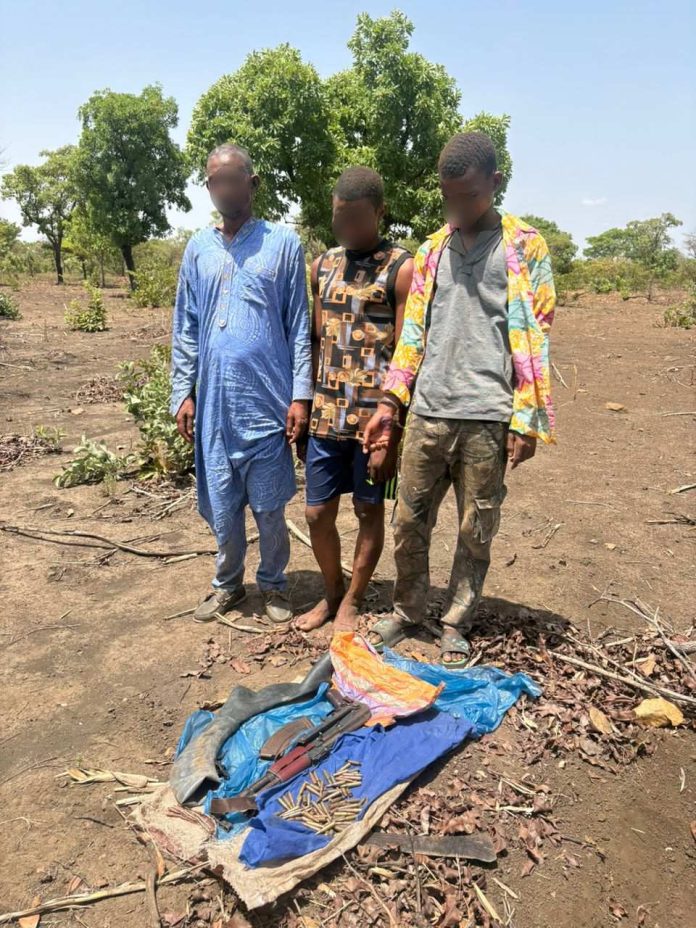
The Ghana Police Service has arrested four suspected armed robbers following an intelligence led operation in Bolgatanga, in the Upper East Region.

The suspects, identified as Abdulai Ibrahim, Amadu Rahman, Amadu Sulemana (alias Saaga), and Adu Yakubu, were arrested on May 5, 2026.

Investigations indicate that on May 4, 2026, the suspects converged at Gbane, a mining community in the Talensi District, having travelled from Yagaba and Fumbisi to execute a robbery operation. During the operation, they robbed four motorcyclists of their motorbikes and seized several mobile phones from victims.

Upon interrogation, the suspects admitted to a series of robberies within the Talensi District, including incidents along the Yagaba Fumbisi road and the Yagaba Nanguruma road in the North East Region.

They also confessed to an armed robbery at the Vikandi Phone Shop in Bolgatanga on March 22, 2025, an incident captured in a widely circulated video in which the perpetrators were seen brandishing an AK47 assault rifle.

The suspects further admitted to multiple robberies at Gbane mining sites, during which gold and large sums of cash were taken from victims.

The suspects subsequently led police to a farm near Biung, in the vicinity of Gbane, where the gang leader, Amadu Rahman, had concealed an AK47 rifle. A search of the location resulted in the recovery of the weapon, bearing serial number 68100563, along with 87 rounds of live ammunition, which had been hidden inside a fertiliser sack.

During the search operation, suspect Amadu Rahman collapsed and was immediately transported to the Bolgatanga Regional Hospital, where he was pronounced dead on arrival.

His remains have been deposited at the hospital morgue pending preservation and autopsy.The three remaining suspects are currently in police custody and will be arraigned before court to face the full rigours of the law.


For more news, join The Chronicle Newspaper channel on WhatsApp: https://whatsapp.com/channel/0029VbBSs55E50UqNPvSOm2z


3i Africa Summit: Partnerships Driving Ghana’s Digital Finance Success — GhIPSS

0

The Chief Executive of the Ghana Interbank Payment and Settlement Systems, Clara B. Arthur, has underscored the critical role of partnerships and infrastructure in driving Ghana’s digital finance transformation.

Delivering a keynote address at the 2026 3i Africa Summit in Accra, she said Ghana’s progress in digital payments is the result of deliberate collaboration among regulators, financial institutions and fintech players.

The three-day summit has brought together policymakers, central bank governors, fintech leaders and investors to explore how innovation, investment and collaboration can shape Africa’s financial future.

Mrs. Arthur illustrated Ghana’s progress with a simple example from Makola Market, where a trader expressed preference for mobile money without concern for the sender’s platform.

“That expectation is the result of interoperability,” she said, explaining that seamless transactions across banks and mobile wallets reflect years of coordinated effort led by GhIPSS in partnership with industry players and the Bank of Ghana.

She noted that since its establishment in 2007, GhIPSS has led the development of a connected national payments ecosystem, including systems such as gh-link, mobile money interoperability, instant payments and cheque clearing platforms.

According to her, these systems have significantly improved access, reduced transaction costs and strengthened trust in digital financial services across the country.

“As the industry evolves, sustaining this progress will require deeper collaboration and leadership guided by innovation,” she said.

Mrs. Arthur announced that GhIPSS is migrating Ghana’s payment infrastructure to the ISO 20022 global messaging standard to enhance efficiency and enable seamless cross-border transactions.

She added that the organisation is also positioning to work with virtual asset service providers following recent regulatory developments, to support innovation within a structured framework.

Beyond Ghana, she stressed the importance of continental integration, noting that the future of digital finance lies in connecting payment systems across Africa.

“GhIPSS is ready to connect with other instant payment systems across the continent,” she said.

She further called on financial institutions and fintech firms yet to connect to the national switch to come onboard, stressing that shared infrastructure is key to reducing duplication and achieving scale.

Mrs. Arthur concluded that Ghana’s digital finance success story is rooted in leadership and partnership, noting that collaboration remains essential to sustaining growth and delivering real impact.

3i Africa Summit: Africa Must Move Beyond Payments – BoG Governor

0

The Governor of the Bank of Ghana, Dr. Johnson Asiama, has called for a decisive shift in Africa’s digital finance agenda, urging stakeholders to move beyond basic payment systems towards value-driven financial solutions.

Speaking at the opening of the 2026 3i Africa Summit in Accra, he said the continent’s progress in financial inclusion must now translate into real economic impact.

The three-day summit, running from May 6 to 8, has brought together policymakers, central bank governors, fintech leaders and investors to explore how innovation, investment and collaboration can drive Africa’s financial transformation.

“The next phase of digital finance will not be defined by payments alone,” Dr. Asiama stated. “The opportunity now lies in building the next layer of value.”

Citing data from the World Bank, the Governor noted that about 49 per cent of adults in sub-Saharan Africa now have access to digital financial accounts, describing it as significant progress.

“We are starting from momentum. The task now is to make it count,” he said.

Dr. Asiama outlined the next frontier of financial development, pointing to areas such as digital credit, embedded finance, supply chain finance and cross-border services as critical to deepening inclusion.

He explained that these innovations are essential to meeting the needs of small businesses, women, young people and the informal sector, who remain underserved despite gains in access.

The Governor emphasised that while mobile money and branchless banking have laid a strong foundation, Africa must now build more sophisticated systems that deliver tangible value.

He also highlighted the importance of effective regulation, noting that it must both protect the financial system and support innovation.

“Regulation and growth are not opposing forces. They must reinforce each other,” he said.

To support this transition, the Bank of Ghana is advancing new frameworks, including guidelines for digital credit, open banking initiatives, and measures to support cross-border fintech activity.

He further stressed the need for stronger digital identity systems and improved coordination among institutions to build trust and reduce risks such as fraud.

Dr. Asiama urged stakeholders to work together to unlock the full potential of digital finance, stressing that Africa must move beyond participation to shaping the future of global finance.

For more news, join The Chronicle Newspaper channel on WhatsApp: https://whatsapp.com/channel/0029VbBSs55E50UqNPvSOm2z


Police Choppers Now ‘Flying Coffins’ … COP Bright Oduro (Rtd) Calls For Probe Into Acquisitions

0
COP Bright Oduro, former CID boss

Independent inquisition carried out by The Chronicle suggests that police personnel are reluctant to fly three H125 helicopters, which were acquired in 2023 due to concerns over their age.The helicopters, each with a maximum capacity of four (4) persons, made their first public appearance on March 6, 2023 during that year’s Independence Day Anniversary celebration in Ho.

One of the police choppers

Our checks revealed that the Choppers were supplied by South African firm, PARAMOUNT, and were over fifty (50) years at the time of purchase.They were procured for millions of dollars few months to that year’s independence anniversary.

Some of the Service Personnel who spoke to The Chronicle on condition of anonymity wondered whether the decision to purchase was for the ‘anniversary fanfare’, to depict that fighting crime in Ghana had assumed high-tech or the true operational needs of the police service.

These questions, according to the Interviewees, were based on the fact that apart from being overaged, the Choppers could carry only four passengers.

The Chronicle has been reliably informed that after being flown to Ho for the Independence Day celebration, the Choppers have remained in the Hangar at the National Police Training School, Tesano, Accra.

A deep-throat source within the police service confided in this reporter that the officers want the H125 helicopters to be swapped for larger helicopters, such as the MI 17, which can carry up to eighteen (18) persons and used mainly by Special Forces.

Beyond the safety concerns, the personnel are also questioning the maintenance cost of these Choppers.

Officers argue that given the limited capacity of the H125, the funds could have been better used to procure more armoured vehicles and motorbikes to strengthen the ground operations.

A former Director General of the Criminal Investigation Department (CID), Commissioner of Police (COP), Mr Bright Oduro, when contacted by The Chronicle for comment on the story, regarding the acquisition of the Choppers, did not hesitate to call for an independent probe into their purchase.

According to him, the said probe would unearth the purpose and relevance for the acquisition of helicopters with limited capacities for the police.

Even if it becomes necessary for such acquisition, they must be deployed to only high risk zones for tactical operations, but the capacities of these craft do not warrant it, he said.


For more news, join The Chronicle Newspaper channel on WhatsApp: https://whatsapp.com/channel/0029VbBSs55E50UqNPvSOm2z

BoG Loss Saved Businesses From Collapse –Majority

0
The Majority addressing the media

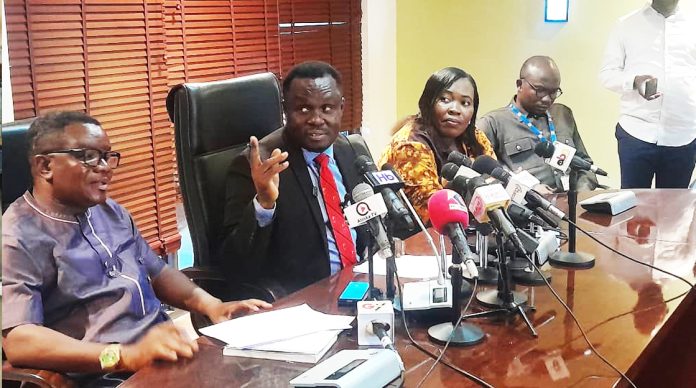
The Majority Caucus of Parliament has said the financial losses recorded by the Bank of Ghana (BoG) in 2025 were a decisive factor in preventing widespread business collapse and deeper economic hardship across the country.

Addressing a news conference in Accra on Tuesday, May 5, 2026 the Chairman of Parliament’s Committee on Economy and Development and Member of Parliament for Amenfi West, Eric Afful, argued that the BoG’s negative equity position should be understood not as institutional failure, but as the price paid to stabilise the economy and protect Ghanaian enterprises during an exceptionally difficult period.

“The Bank of Ghana absorbed the shock so Ghanaian businesses would not collapse. If these losses had not been incurred through decisive policy interventions, many firms, especially small and medium-sized enterprise would simply not have survived,” Eric Afful noted.

The BoG reported a net loss of GH¢15.6 billion in 2025, alongside deterioration in its equity position.

These figures have triggered renewed public debate with many, especially the opposition New Patriotic Party (NPP) and the Minority Caucus, arguing that the actual Bank of Ghana loss is GHS44billion.

However, Mr. Afful maintained that focusing solely on the accounting numbers ignores the broader impact of the Bank’s actions on the real economy.

According to the Amenfi West MP, one of the most significant benefits to Ghanaians and businesses is the sharp reduction in inflation, which had previously driven up production costs and eroded consumer spending.

“High inflation was choking businesses. Prices were rising faster than incomes, demand was collapsing and margins were being wiped out,” he said.

The Amenfi West MP added that “by aggressively tightening monetary conditions, the Bank brought inflation down to single digit, giving businesses room to recover and plan again.”

Mr Afful noted that the cost of open market operations (OMO), which contributed heavily to the BoG’s losses, was necessary to mop up excess liquidity and prevent a full-blown price spiral that could have crippled firms across manufacturing, trade and services.

He also pointed to the sharp appreciation of the Ghana cedi in 2025, as a “lifeline” for businesses dependent on imported inputs or servicing foreign currency obligations.

“When the cedi stabilised and strengthened, businesses importing raw materials, machinery and fuel got immediate relief,” Mr. Afful said, adding “Yes, the Bank recorded valuation losses on its foreign assets, but those same movements saved companies from massive exchange losses that would have pushed them into insolvency.”

Mr Afful further argued that the Domestic Debt Exchange Programme (DDEP), while reducing the Bank’s interest income, was critical in easing pressure on interest rates and supporting private sector credit.

“Without restoring debt sustainability, government borrowing would have crowded out businesses completely. The pain was shared, but the alternative would have been far worse – a total freeze in credit and widespread business failures,” he underscored.

While acknowledging the hardship the programme caused, particularly for some bondholders, he said it ultimately prevented the collapse of the financial system on which businesses depend.

The Chairman of the Committee on Economy and Development emphasised that central banks do not operate like commercial entities and should not be judged by profit alone.

“Central banking losses in times of crisis are like an insurance premium. The Bank of Ghana’s balance sheet took the hit so factories could keep operating, traders could restock, jobs could be preserved and confidence could return,” he noted.

He pointed to improving indicators such as lower inflation, stronger reserves, easing interest rates and renewed growth as evidence that the strategy worked.

“As Legislators, our responsibility is to look beyond headlines. The real story is not the loss on the BoG’s books, but the businesses that are still standing today, because the Bank stepped in when the economy needed it most,” he stressed.

Mr. Afful said Parliament would continue to exercise its oversight role while supporting efforts to recapitalise the central bank over the medium term, noting that a stable and credible BoG remains essential for sustained private sector growth.

By Stephen Larbi


For more news, join The Chronicle Newspaper channel on WhatsApp: https://whatsapp.com/channel/0029VbBSs55E50UqNPvSOm2z

Gold Fields Makes Compelling Case For Tarkwa Mine Lease Extension

0
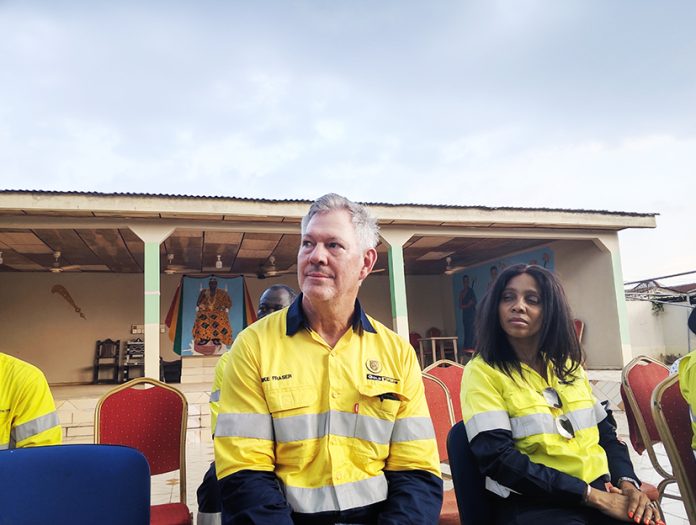
Mike Fraser, CEO of Goldfields Tarkwa Mine

The Chief Executive Officer of Goldfields, Mike Fraser, has declared that the company will not back down in its pursuit of a lease extension for its flagship Tarkwa mine, signalling a major long-term investment plan tied to the asset. The Tarkwa mine lease expires in April 2027.

Speaking during a historic and landmark visit to the chiefs of Apinto, the traditional landowners of Tarkwa, Mr Fraser emphasised the strategic importance of the mine to the company’s global operations and its deep-rooted commitment to Ghana.

“We are not going to give up in any way on Tarkwa,” he stated firmly, revealing that Goldfields submitted an application in November last year, seeking a lease extension that would allow mining operations to continue for at least another 20 years.

According to him, the proposed extension will require substantial reinvestment, including the acquisition of additional equipment, expansion of operational capacity and increased manpower to sustain production levels over the long term.

The Tarkwa mine is a cornerstone asset for Gold Fields, contributing approximately 20 percent of the company’s global gold output.

Mr. Fraser described Ghana as a critical hub within the firm’s international portfolio, noting that the country’s operations represent a significant share of its production.

The CEO’s remarks come against the backdrop of recent developments involving the Damang Mine, where the Government of Ghana declined to extend the company’s lease.

Mr. Fraser said though the government recently failed to renew the lease for the Damang Mine,

Tarkwa remains a top priority, with the company actively engaging key stakeholders, including the Ministry of Lands and Natural Resources, the Minerals Commission and the Ministry of Finance, to make its case for renewal.

A significant part of those engagements, he indicated, involves demonstrating the company’s broader value beyond gold production.

Goldfields, he said, is focused not only on delivering returns to shareholders, but also on making a “meaningful difference” in host communities.

“Our strategy is not just about mining gold. It is about creating lasting impact in the communities where we operate,” Mr. Fraser told the chiefs, highlighting ongoing investments in local development and the company’s efforts to build strong community relations.

He underscored that global mining success increasingly depends on social partnerships, citing the company’s operations in countries such as Chile, Peru, Australia and Canada, where agreements with host communities are central to project development.

Mr. Fraser also apologised to the Apinto traditional authorities for the delay in his visit, acknowledging the importance of direct engagement with local stakeholders as a cornerstone of Goldfields’ operational philosophy.

“We believe that if we do not make a positive impact, we will not be welcomed,” he said, reaffirming the company’s commitment to strengthening its relationship with the Tarkwa community.

Goldfields has operated in Ghana for over 30 years and continues to position itself as a key player in the country’s mining sector.

The outcome of the Tarkwa lease discussions is expected to have significant implications for employment, local economic activity and investor confidence in Ghana’s extractive industry. Mike Frazer was accompanied by Jongisa Magagula, EVP for external Affairs.


For more news, join The Chronicle Newspaper channel on WhatsApp: https://whatsapp.com/channel/0029VbBSs55E50UqNPvSOm2z

The Ghanaian Chronicle