Home Blog Page 1002

Russian General Igor Kirillov killed in Moscow bomb blast

0
Russian General Igor Kirillov killed

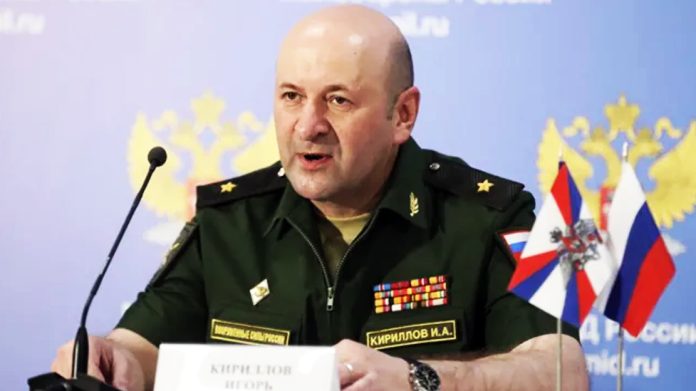
A top general in charge of Russian nuclear protection forces has been killed along with an aide by a bomb hidden in an electric scooter in Moscow, according to Russia’s investigative committee. A source in the Security Service of Ukraine says the agency claims responsibility for the killing of Lieutenant General Igor Kirillov. Ukraine has yet to officially comment.

As head of Russia’s Radiation, Chemical and Biological Protection troops, Igor Kirillov – who has died in an explosion in Moscow – was accused by the West of overseeing the use of chemical weapons on the battlefield in Ukraine.

In Russia, he was viewed as a tireless patriot, fighting for the truth and exposing Western “crimes”.

Sources from Ukraine’s SBU security service said it it was behind the blast and referred to a special operation against a “war criminal” and a legitimate target.

Kirillov and an aide were killed by explosives planted in an electric scooter, according to Russian officials, which was blown up as he left the building he lived in on Ryazansky Prospekt in south-eastern Moscow.

He had become notorious for outlandish briefings at the Russian defence ministry which prompted the UK Foreign Office to label him as a “significant mouthpiece for Kremlin disinformation”.

Kirillov was far more than just a mouthpiece, heading Russia’s Timoshenko Radiation, Chemical and Biological Protection Academy, before going on to lead the Russian army’s Radiation, Chemical and Biological Protection Troops in 2017.

Credit: bbc.com

Canadian Prime Minister in peril after Trump spat sparks political crisis

0
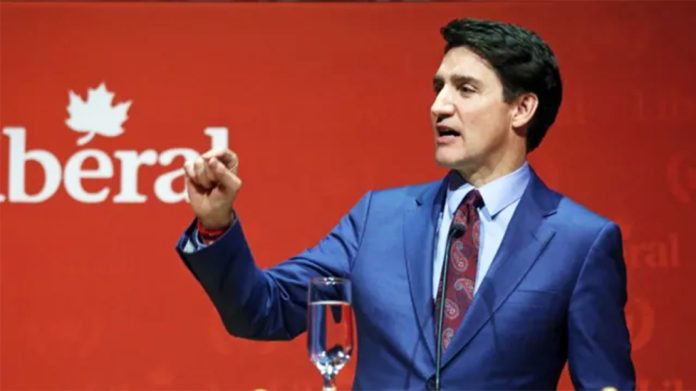
Canadian Prime Minister Justin Trudeau

Canadian Prime Minister Justin Trudeau’s government has been thrown into fresh disarray with the abrupt departure of his finance minister, Chrystia Freeland.

By the end of a frenetic Monday, a new finance minister was in place, but Trudeau was facing calls from members of his own Liberal Party to quit.

Without directly referring to the news, the prime minister told party donors at an event in Ottawa: “It’s obviously been an eventful day. It has not been an easy day.”

In her scathing resignation letter – published on the day she was due to deliver an economic statement – Freeland cited disagreements with her long-time ally on how to respond to the threat of tariffs from Donald Trump.

The US president-elect, who will return to the White House in January, has vowed to impose a levy of 25% on imported Canadian goods unless the shared border is made more secure.

Economists say the tariffs could have a devastating effect on Canada’s economy.

In her letter, Freeland accused Trudeau of choosing “costly political gimmicks” over addressing the threat posed by Trump’s “aggressive economic nationalism”.

Trump himself later responded to Freeland, posting that her “behaviour was totally toxic, and not at all conducive to making deals which are good for the very unhappy citizens of Canada”.

Freeland said her decision came after Trudeau told her last week that he no longer wanted her to be the government’s top economic adviser.

Her departure blindsided the government, leaving the fate of the scheduled economic update in the air for hours and bringing Trudeau and his shaky minority Liberals to the brink.

Credit: bbc.com

Gaza ceasefire talks in final stage, says Palestinian negotiator 

0
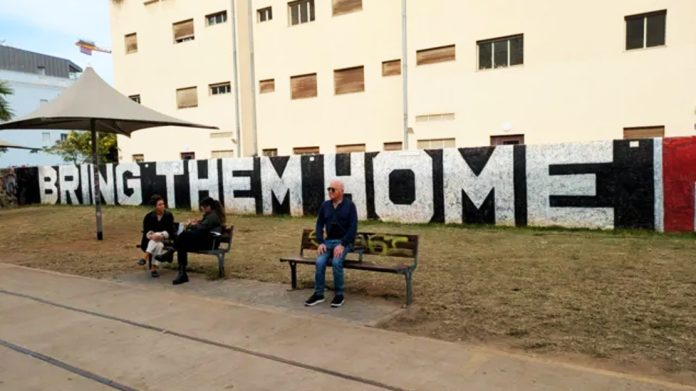
The plan would see hostages released in step with Israeli withdrawals in Gaza

After months of deadlock, there are new signs that Israel and Hamas could be moving closer to a Gaza ceasefire and hostage release deal.

A senior Palestinian official involved in the indirect negotiations told the BBC that talks were in a “decisive and final phase”.

Israel’s defence minister, Israel Katz, has also said an agreement is closer than ever.

In recent weeks, the US, Qatar and Egypt have resumed their mediation efforts – reporting greater willingness by both sides in this 14-month war to conclude a deal.

An Israeli delegation described as “working level” is currently in the Qatari capital Doha amid a flurry of diplomatic comings and goings in the region.

The Palestinian official outlined a three-phase plan which would see civilians and women soldiers held hostage in Gaza released in the first 45 days, with Israeli forces pulling out of city centres, the coastal road and the strategic strip of land along the border with Egypt.

There would be a mechanism for displaced Gazans to be able to return to the north of the territory, the official said.

A second stage would see remaining hostages freed and troops withdrawn before the third stage ending the war.

Of 96 hostages still held in Gaza, 62 are assumed by Israel to still be alive.

The plan appears to be based on the deal US President Joe Biden outlined on 31 May and reports from all sides stress there are key details to work out.

A round of talks in mid-October failed to produce a deal, with Hamas rejecting a short-term ceasefire proposal.

According to his spokesman, Katz told members of the Israeli parliament’s foreign affairs committee on Monday: “We have not been this close to an agreement on the hostages since the previous deal,” referring to an exchange of hostages and Palestinian prisoners in Israel in November 2023.

Credit: bbc.com

GHS administers 290,000 cholera vaccines in first two days in W/R  

0
Ghana Health Service

The Western Regional Directorate of the Ghana Health Service (GHS) has so far administered about 290,000 doses of cholera vaccines out of a targeted 641,851 to persons aged one year and above, within the first two days of its Cholera Vaccination campaign. The campaign is being carried out within four identified hotspots areas in the region.

The campaign, which commenced on Sunday, December 15, 2024 and would end on Thursday, December 29, 2024 is aimed at offering immunity and protection against cholera infections for residents within Sekondi-Takoradi Metropolis, Effia-Kwesimintsim, Shama and Ahanta West municipalities.

Dr Nana Yaw Ofori Yeboah, the Western Regional Director of the GHS, who spoke to the Ghana News Agency (GNA) in an interview, said all persons from one year and above were eligible to take the vaccines, except pregnant women.

He stated that vaccines were safe with no health complications, and appealed to the targeted individuals to participate in the exercise to help stem the spread of cholera in the region.

He said as part of strategies to ensure they met their target the vaccination team would visit homes, schools, churches, mosques, workplaces, markets and other vantage points, including healthcare facilities.

The cholera outbreak has been on the rise in the Western region, with recent updates showing that 1,633 cases have been recorded since the outbreak, with about 15 deaths.

Aside from the vaccination campaign, health authorities have instituted various measures to contain the spread of the disease, including a ban on the sale of vegetables by food vendors.

This was after the Environmental Surveillance investigations revealed that about 96 per cent of cholera infections were linked to food vendors, particularly through the sale of contaminated vegetables.

From Emmanuel Gamson, Takoradi   

GNA 

GWL suspends industrial action in Kumasi

0
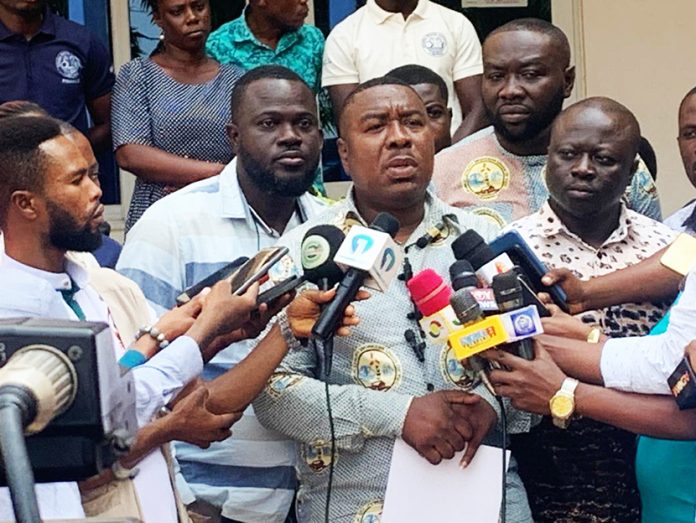
Mr Emmanuel Okpoti Kodua , speaking to the media in Kumasi

The Ghana Water Limited (GWL) workers in Ashanti Region have suspended an industrial action they embarked upon last week, in protest against the demolition of bungalows belonging to the company.
The suspension of the strike follows an appeal by the Directors of the Company and some major stakeholders and in solidarity with the general public, who have had to bear the brunt of their actions.

Last week the staff of GWL in Ashanti embarked on an industrial action following a demolition of a senior staff bungalow at Denyame, a suburb of Kumasi. The development rankled the workers who subsequently embarked on industrial action.
Addressing a news conference in Kumasi recently, Mr. Emmanuel Okpoti Kodua, Vice Chairman, Senior Staff Union, noted that his organisation was aware of the challenges their action has had on the masses.

“The Union acknowledges the significant challenges faced by our valued customers during the three-day shutdown of operations and recognises the importance of resuming water supply to prevent further inconvenience and hardship.
The Senior  Staff Union of Ashanti GWL stated that the GWL -Ashanti had been assured by the authorities that issues concerning their bungalow, which had become a bone of contention was being addressed.

“We have received assurances from the Dirctors of their commitment to addressing the unlawful demolition of the residence of the Chief Managers in the Ashanti Region and the increasing threat to our properties.

“The Directors have pledged to take swift and decisive steps to secure the properties under attack and ensure justice is served,” he said.
He, however, warned that though they have agreed to back down, if their grievances are not addressed, the industrial action, which resulted in scarcity of water in Ashanti region would be resurrected.

“While we temporarily suspend the industrial action, we wish to emphasise that the Union shall closely monitor the progress of the promises made and will not hesitate to resume industrial action, should the need arise”, he said.

GEOP Lot 7B’ launched toempower 500 street children

0
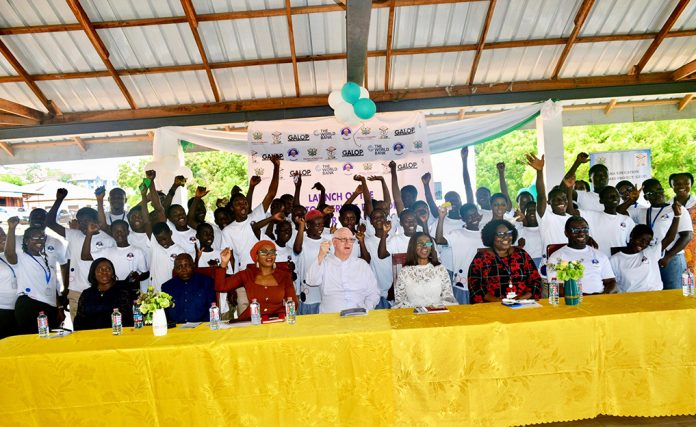
Reverend Father Campbell with some of the beneficiaries

A two-year project to take at least 500 out-of-school children off the streets of Greater Accra and Kumasi in order to improve their well-being and livelihoods has been launched in Accra.

The initiative by the Father Campbell SVD Foundation, a charitable Non-Profit Organisation, targets adolescents, 15 to 17 years, to provide them with literacy, numeracy and essential life skills for a nine-month period, after which they would be transitioned into formal or technical and vocational institutions, as well as various apprenticeship programmes.

With funding support from the World Bank to the tune of $6 million, the project is being implemented under the Ministry of Education’s (MOE) Ghana Education Outcomes Project (GEOP), which was launched in January, last year, with the goal of returning 70,000 out-of-school children across the nation back to the classrooms.

Launching the initiative dubbed: ‘GEOP Lot 7B,’ the Chief Director of the Ministry of Education, Mrs Mamle Andrews, said the intervention was to reduce streetism in Ghana and offer children a better standard of living.

According to her, beneficiaries would be awarded a proficiency certificate at the end of the programme to serve as the basis for their move to higher horizons and help them achieve their dreams in life.

Mrs Andrews entreated the learners to take full advantage of the programme to transform their lives and not to be distracted by the desire for money on the streets.“You are the maiden group on this project and the learning outcomes you demonstrate will provide grounds for our development partners to continue investing and scale up this project to impact more lives.

You are the future of this nation so work hard to position yourselves to help develop our dear nation. With determination and commitment, you can achieve your dreams,” she explained.

A Senior Educational Specialist at the World Bank Ghana, Eunice Ackwerh, referenced  data from the 2021 population and housing census (PHC), which estimates 1.2 million children between ages 4 and 17 being out-of-school in Ghana.

“The World Bank is delighted to be part of this programme, which will bring real change in the lives of these children and I believe with the hard work of all key stakeholders, this project will achieve great results,” she added.

For his part, Reverend Father Campbell, a retired parish priest of Christ the King Catholic Church in Accra, stated that the project was an extension of his charitable works to support the needy and vulnerable in society having come from the same background.

He said the growing number of street children in Ghana, especially in urban areas like Accra, was not only an infringement of the rights of children, but also a developmental risk.

Father Campbell then appealed to all kind-hearted or benevolent Ghanaians to support the project, saying “we need your assistance to get more of these children off the streets and get them education, get them a home, get them a place where they can work and together provide a brighter future for our children.”

By Felix Baidoo

Helpful Exercises to Lower Your Injury Risk

0

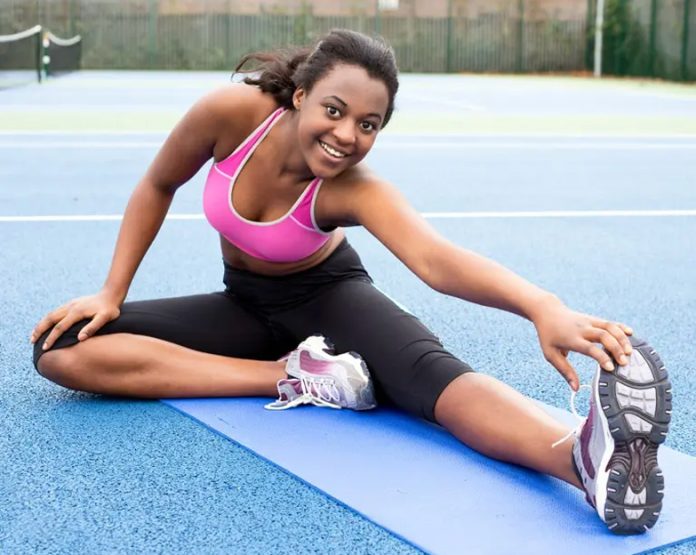
Everyone knows that working out is good for them. But carrying more weight makes certain moves harder on the body – and riskier.

The problem: Extra weight puts more stress on the joints, such as your knees or wrists, says Lisanne Cruz, MD, a rehabilitation medicine doctor at New York City’s Mount Sinai Hospital. That can raise your risk of a strained muscle, torn ligament, or other injury.

Don’t let that stop you. Modifications make most moves simpler to do, and safer. Here are six to try.

  1. Jumping Jack

Jumping jacks can get your heart rate pumping and warm up your muscles before strength training. But obesity makes them riskier because each time you land, joints in your spine, hips, knees, and ankles absorb the impact, says certified personal trainer Carla Baccio, director of health coaching at Mindful Wellness, a weight loss center in Manhattan Beach, CA.

Modification: Step jack

Take the “jump” out of it with this low-impact alternative.

  1. Stand with your feet together and hands by your sides.
  2.  Step your right leg to the side as you bring both arms above your head.
  3. Lower your arms as you step your right leg back to the starting position.
  4. Step your left leg to the side as you bring both arms above your head.
  5. Lower your arms as you step your left leg back.

How many: Aim for two sets of 10 repetitions. (This means doing it 10 times, taking a short break, and then doing 10 more.) Over time, build up to three sets of 12.

  1. Move: Squat

This exercise strengthens the muscles in your lower body, but it can put too much pressure on your knees and ankles. Weight gain can also shift your center of gravity, which may lead to a slip or fall.

Modification: Sit-to-stand

A bench or a chair makes this move more doable.

  • Sit on a chair or bench with a firm surface.
  • Place your feet shoulder-width apart, flat on the ground, and slightly behind your knees.
  • Lean your upper body slightly forward and stand all the way up.
  • Slowly lower back down into the chair with control. Pause and repeat.

How many: Start with two sets of 10 repetitions. Build up to three sets of 12. “After a few weeks, if you feel strong enough, try to do the squat without touching the chair,” Baccio says.

  1. Move: Plank

This core strengthener may set the stage for a wrist injury. “Some people with obesity have difficulty getting onto and off of the floor, so a standing move is a good option,” says Christian Jones, MS, an exercise physiologist at Duke Health & Fitness Center in Durham, NC.

Modification: Wall plank 

Instead of planking on the floor, do it against a wall. Here’s how:

  1. Stand facing a wall with your hands flat against the wall. (If this puts too much pressure on your wrists, place your forearms on the wall.)
  2.  Step back so that your arms straighten, keeping your wrists in line with the shoulders and feet hip-distance apart.
  3.  Engage your core by tightening your core like someone is going to punch you in the stomach while keeping your body in a straight line from head to knees.

How long: Hold for a few seconds, building up to 15 seconds. Gradually add more time.

  1. Move: Push-Up

This classic exercise strengthens your chest, arms, and back muscles. Doing it standing up takes some pressure off of your shoulders and wrists.

Modification: Wall push-up

  1. Stand facing a wall with your hands flat against the wall.
  2. Step back so your arms straighten, keeping your wrists in line with the shoulders and feet hip-distance apart. (If this feels too hard, step closer to the wall.)
  3. Slowly bend your elbows downwards to a 45-degree angle (not out to the side) and lower your chest toward the wall with control. Keep your back and hips straight.
  4. Slowly push back to the starting position.

How many: Aim for two sets of 10 repetitions. Build up to three sets of 12.

  1. Move: Sit-Up

This core exercise puts pressure on the spine. It also may be too much for your hip flexors, the muscles that run from the top of your thighs to your lower back. If your hip flexors are too tight – and that’s common for people who sit a lot – sit-ups pull on your lower back muscles. “I wouldn’t recommend sit-ups for people with obesity,” Baccio says.

Modification: Imprint

  1. Stand with your back against a wall, hands by your sides and knees slightly bent.
  2. Slowly press all the vertebrae of the spine against the wall as you tighten your core muscles like someone is going to punch you in the stomach and slightly tilt your pelvis backward.
  3. Hold for a few seconds, and then return to your starting position.
  4. You can also do this move lying on the ground, with your knees bent and feet flat on the floor, Baccio says.

How many: Aim for two sets of 10 repetitions. Build up to three sets of 12.

  1. Move: Bridge

Unlike some of the other exercises, Baccio recommends bridges for people with obesity. “It engages your hamstrings and gluteal muscles without straining the back,” she says. But she also provides a modification if it’s hard to get down to the floor.

To do a bridge, lie on your back, knees bent and feet flat on the ground. Tighten your glutes and stomach muscles as you raise your hips off the floor. (Ideally, your hips will be in a diagonal line from your knees to your shoulders. If not, that’s OK; make it a goal to work toward.) Hold for a few seconds before you return to the starting position.

Or try this modification, done standing up:

Modification: Standing kickback

  1. Stand facing a wall an arm’s-length away, with your palms flat on the wall and your elbows slightly bent.
  2. Tighten your gluteal muscles as you lift your right leg behind you off the ground with control. Raise it as high as you’re comfortable while keeping your upper body still.
  3. Lower your leg back to the ground.

How many: Aim for two sets of 10 repetitions. (That means 10 times on each leg, and then repeat.) When you’re ready for more, build up to three sets of 12 repetitions.

Credit: webmd.com

Feature: OMOV, the Answer to NPP’s Current Predicament

0
NPP

The New Patriotic Party (NPP) is a center-right liberal democratic party with roots from the United Party Tradition. It is a Tradition which encourages freedom of expression, acceptance of diverse views and collective participation for the common good of members and Ghanaians.

Unfortunately, a strange form of political ideology which I will call democratic dictatorship found its way into the party. Why this name? In a dictatorship, only one person can express his thoughts and only he can decide on which way the state should go. He or she would have people to support those ideas which are mostly baseless and gross violations on rights. A dictator is the one who would decide who should succeed him and anyone against that is considered an enemy and would be treated as such.

Initially, the NPP had a selected group of delegates who would elect party officers, parliamentary and presidential candidates. Things run coolly until in 1998, attempts were made to influence the delegates with money to vote a certain way during the presidential primaries in Sunyani, Bono. The principle stands, taking by Hon. Dan Botwe, resulted in him sealing the voting arena and making sure that no moneybag entered. This saved the day and H.E. J.A. Kufuor was re-elected flag bearer by some 1,993 delegates.

Kufuor went on to win the 2000 presidential election to become the first person from the UP Tradition to become leader of this country, in 29 years, after Dr. K.A. Busia of the Progress Party was removed from office in January 1972.

The next presidential primary was in 2007, with 2,293 delegates and which Nana Akufo-Addo won after Alan ceded to him.

The elders of the Party, felt that the number of delegates was not representative enough and so expanded the electoral college to include all polling station, electoral area and constituency executive members to add on to the regional, national and other officers of the party. This was to prevent buying of votes and to ensure that no one was influenced before casting his or her votes. Initially, this took the numbers to over 106,000 delegates for the 2010 presidential primary.

But something very undemocratic was forced unto the Party. It is called the Super Delegates Congress. The job of this congress is to pick five aspirants ‘fit’ enough to contest in the main primary, if the number of aspirants exceeded five.

The Super Delegate Congress, according to the Party’s Constitution consists of the following: the National Council, the National Executive Committee, Regional Executive Committees, National Council of Elders, the Party’s members of Parliament, three representatives of each special organ of the Party, past National Officers, three representatives each from the external branches, Founding Members of the Party and card bearing ministers of state, if the party is in power.

In the last Super Delegates Congress, less than 1,000 people made up the Electoral College. Now here we are. If the elders of the party are saying 2,000 people can be easily influenced to vote a certain way, so the college was expanded to over 100,000, what is the business of a so-called Super Delegates Congress, which does not make up even 1,000 people? Can 1,000 people not be more easily influenced to vote a certain way, than 2,000 people?

And so, it happened, the Institution was established. Just having one powerful person handling affairs can turn the whole of the Super Delegates Congress and the National Delegates Congress to vote in a certain way. And this is what can also be called democratic dictatorship.

The Super Delegates who are considered highly in the Party could influence the National Delegates Congress and showed them the way to vote. One thing is that if the Institution notices that an aspirant is a threat to it, it can make the Super Delegates Congress to vote that person out.

In November 2023, over 192,000 members of the Party participated in the presidential primary which elected Dr. Bawumia, as the flag bearer.Even that huge number was influenced financially and with other gifts.

In the NPP at the moment any powerful person can decide who gets elected into office as flag bearer and parliamentary candidate. By this method, the ordinary party supporter could have different opinion and either vote against the party’s choice or not vote at all.

In the recent Super Delegates Congress, taking Ashanti region as an example, for reasons to explained further, only three aspirants had votes there. Kennedy Agyapong had 6 votes (5.1%), Alan Kyerematen had 10 votes (8.5%), Afriyie Akoto had 5 votes (4.2%) and Bawumia had 97 votes (82.2%) making up 118 votes.

Suddenly, Ghanaians were told the NPP will win over 80% of Ashanti votes in the presidential race on December 7, 2024. Unfortunately, that did not happen.

There is another electoral body in the NPP, another group of delegates, who votes only on General Elections Day. This body will meet at lorry stations, markets, barbers’ shops, hair dressing salons, drinking bars, after church and mosques and where have you, in very small and insignificant numbers take decision on how to vote.

So, it happened all over Ghana, but most significantly in Ashanti region. The NPP supporters decided to deny their party the votes needed to win the elections. While the Super Delegates in Ashanti region gave Bawumia 82.2%, the main body of party supporters gave him only 65% and meanwhile the NDC who pleaded with Ashanti region to give it just 30% of the valid votes cast, to be able to win the presidential election was awarded 33%, for its humility.

On an NPP platform, made up of some respected people of the Party, there is discussion on bringing on board, OMOV or One-Man-One-Vote which will make all card bearing members of the Party eligible to vote in all internal elections in the Party.

This will mean the ordinary supporter of NPP can decide who should lead the Party. Since these people are not going to be under the influence and control of the Institution, they will always pick, firstly those who can work for the NPP and those best to be elected as presidents and MPs. Their jurisdiction is expansive and they can meet anywhere and anytime and using findings of how things are going on, can rightly decide who can be the winner.

OMOV will encourage full participation in party activities and politics in general. What will make the people elect you will not be about what you have, but what you can do and what you are made up of. This is where virtues will be practiced in the Party. Pride, arrogance and impunity will make way for humility and respect for everyone.

OMOV will mean to register all the ordinary supporters of the Party and make them card-bearing members. Measures should be taken to make sure double-agents do not infiltrate. Firstly, the polling station executive members of the Party must indicate whether the applicant is indeed an NPP supporter. Secondly, there should be a moratorium period of five years, which should cover at least one General Election before the applicant can be allowed to vote in any internal election.

The elections should be in two parts. The first part should be all inclusive election of party officers, from the polling stations, electoral areas, constituencies, regional and national levels. And after a year, the second elections will take care of parliamentary and presidential candidates. Polling stations should be located in each electoral area.

Aspirants will have to do town hall meetings to meet with the party faithful before election day. This will make them very active. Those who want to be national or regional officers, will have to travel to all regions or all constituencies to show themselves to the party faithful, just as presidential aspirants will do.

With this form of elections, Super Delegates Congress and National Delegates Congress will be scrapped. The main decision-maker of the Party will be that card-bearing member who will sit under a drier at the hair dressing salon or in a bar, engaging in a debate as to who best fits to be given the nod. Since their decision will be mainly on grassroot level, whoever they decide on, could win the elections.

OMOV will remove the powers from regional, national and other leaders who take unilateral decisions and impose candidates who cannot fly on the party. No one can sit in his or her office and decide who should be parliamentary or presidential candidate. Feeling he or she has the power, they could demonize the best candidates because of some misunderstanding between them and pick favorites who will lose and bring disgrace to the party.

The power will be in the hands of the true members of the Party who will be only influence by the goodness and servitude they see in the aspirants and with clean hearts and minds they will choose the best.

By Hon Daniel Dugan

Wolves agree deal for Pereira to become new boss

0
Vitor Pereira

Vitor Pereira has agreed an 18-month deal to become Wolves’ new manager.

The Premier League strugglers are paying around 1m euros to bring the boss of Saudi Pro League club Al-Shabab to the Midlands.

Portuguese Pereira, a former Porto and Olympiakos manager, was due to travel to England on Tuesday and, although a contract is yet to be signed, no late problems are expected after negotiations went smoothly.

The 56-year-old’s first game will be at Leicester on Sunday with Wolves second-bottom, five points behind the 17th-placed Foxes.

Wolves have lost 11 of their Premier League 16 games and sacked previous manager Gary O’Neil on Sunday following Saturday’s 2-1 defeat by fellow strugglers Ipswich.

They sounded other possible replacements, including ex-West Ham, Everton and Manchester United boss David Moyes.

Pereira joined Al-Shabab in February, finishing eighth in the Saudi Pro League last season. They currently sit sixth with seven wins from 13 games.

Pereira won two Primeira Liga titles with Porto in 2011-12 and 2012-13 and the Greek Super League with Olympiakos in 2014-15.

Credit: bbc.com

Chelsea’s Mudryk ‘in shock’ at failed drugs test

0
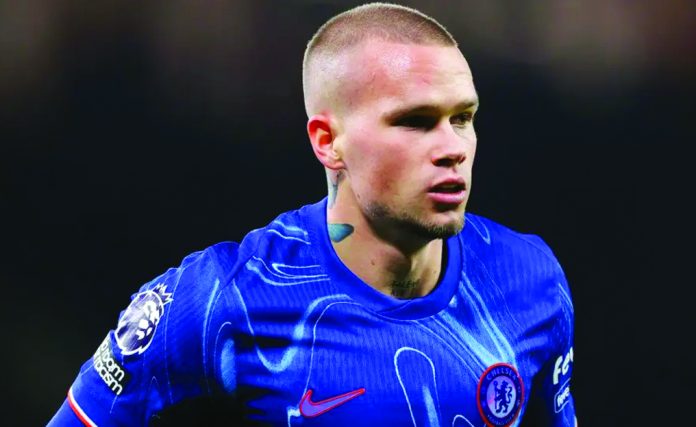
Mykhailo Mudryk joined Chelsea in 2023

Chelsea winger Mykhailo Mudryk says he is in “complete shock” after testing positive for a banned substance.

The club confirmed on Tuesday that they had been contacted by the Football Association (FA) after an “adverse finding in a routine urine test” provided by the Ukraine international.

The attacker, who has been provisionally suspended by the FA following the positive result, denies knowingly using a banned substance.

Chelsea say they will work to establish what caused the failed test.

“This has come as a complete shock as I have never knowingly used any banned substances or broken any rules, and am working closely with my team to investigate how this could have happened,” Mudryk wrote on Instagram.

“I know that I have not done anything wrong and remain hopeful that I will be back on the pitch soon.”

Under FA guidelines, players can be provisionally suspended from football following a positive drugs test.

When contacted by BBC Sport, the FA refused to comment on Mudryk’s suspension or when the failed test took place.

Players found to have intentionally taken a banned substance can be banned for up to four years under Fifa guidelines.

Mudryk last played for Chelsea on 28 November and has missed the past five matches in all competitions.

He was included in the matchday squad for the Blues’ win against Aston Villa on 1 December but did not feature.

Head coach Enzo Maresca had said publicly that Mudryk’s absence was because of illness.

Mudryk, who signed from Ukrainian club Shakhtar Donetsk in a deal worth up to £89m in 2023, has scored 10 goals in 73 appearances for Chelsea.

The Professional Footballers’ Association is expected to contact Mudryk to offer support.

Credit: bbc.com

The Ghanaian Chronicle