In the early hours of last Saturday morning, at Brahabobome, long before the medical team officially began work, hundreds of residents had already formed queues, clutching health cards, water bottles and had hopes of receiving medical attention, which many say is often difficult to access.
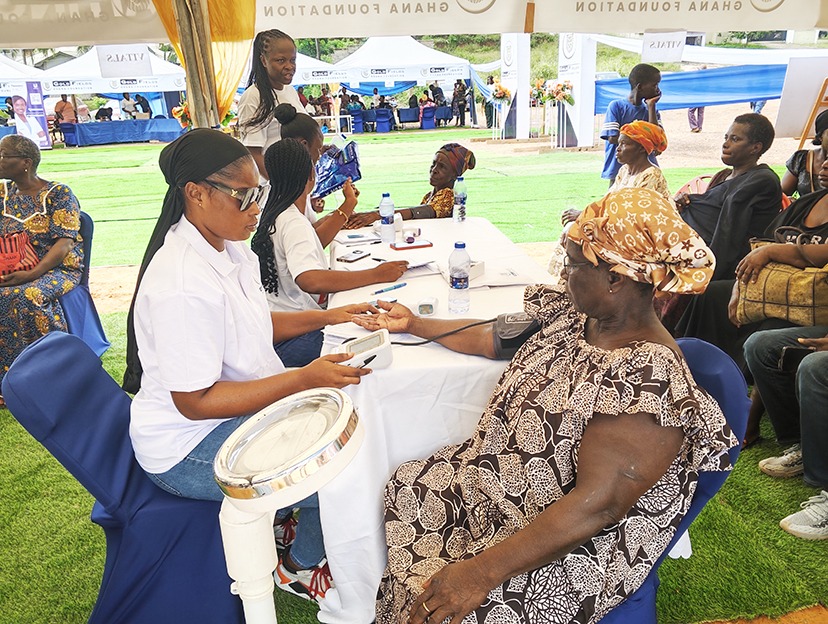
By 8am, Doctors, Nurses and Volunteers, under the Gold Fields Ghana Foundation’s Health Education and Livelihood (HEAL) outreach programme had begun screening patients for hypertension, diabetes, respiratory infections, skin conditions and other illnesses affecting residents in mining host communities around Tarkwa.
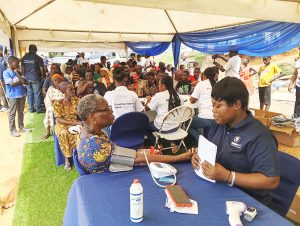
For many residents, the outreach was more than a routine health screening. It was an opportunity to detect silent illnesses early, receive free medication and in some cases gain access to lifesaving referrals.
According to Dr. Baaba Damoah, leader of the medical team and a member of the Society of Family Physicians of Ghana, the response from residents was overwhelming. “We targeted about a thousand people for the screening and before we even arrived, we already had close to 500 people seated and waiting,” she said.
Dr. Damoah explained that children who arrived at the outreach mostly presented acute conditions such as coughs, fever and skin infections. The adults, particularly the elderly, were diagnosed with chronic illnesses like hypertension, diabetes and musculoskeletal conditions.
“Most of the cases we are seeing today are chronic conditions. Many people do not even know they are sick until they come for screening,” she noted.
Medical officers at the outreach conducted blood pressure checks, diabetes screening, sickle cell testing and general consultations, while patients requiring urgent care were referred to the Tarkwa Municipal Hospital for further treatment and follow-up.
Dr. Damoah stressed that community screening exercises remain critical in reducing barriers to healthcare access. “This programme is important because we are bringing healthcare to the doorstep of the people. It removes challenges of accessibility and even financial barriers to quality healthcare,” she said.
Beyond treatment, the outreach also focused heavily on preventive healthcare. Residents received education on healthy eating, stress management, exercise and the dangers of excessive alcohol consumption, smoking and drug abuse.
The Executive Secretary of the Gold Fields Ghana Foundation, Abdel Razak Yakubu, said the decision to turn the outreach into a quarterly programme, followed growing concern over health conditions within mining host communities.
“After our engagement with the Ghana Health Service, especially the Municipal Directorate, we realised that the health conditions of people in our host communities required critical attention,” he explained.
He expressed concern about the increasing number of premature deaths in mining communities, particularly among people in their 30s and 40s.
“When you look at obituary posters around the Tarkwa area and see very young people dying, it tells you something serious is happening and requires investigation,” he said.
According to him, data gathered during the outreach exercises helps the Foundation and health authorities identify prevailing diseases and design targeted interventions.
Among the worrying trends being observed, he said, is the growing incidence of opioid and substance abuse, particularly among young people involved in illegal and small-scale mining activities.
“We are identifying high rates of drug abuse, especially opioids. We do not yet fully understand the causes, but these outreach programmes help us gather data that can influence future interventions,” Mr. Yakubu said.
He noted that the Foundation’s investment in healthcare is not merely charity, but an essential part of responsible corporate practice.
“Corporate social responsibility should not be treated as an afterthought. If you invest in the health of your host communities, you are investing in the sustainability of your own business,” he said.
Mr. Yakubu disclosed that over 70 percent of Gold Fields Ghana’s workforce comes from host communities, making community health directly linked to productivity and business continuity.
“Diseases do not know boundaries. If there is an outbreak in the community, it will definitely affect us as well,” he added.
The Foundation, he said, spends an average of GH¢600,000 on each outreach exercise, although partnerships with organizations including Unilever and the Society of Family Physicians of Ghana helped reduce this year’s direct expenditure to slightly above GH¢500,000.
Beyond statistics and screenings, however, stories of survival continue to define the programme’s impact.
Mr. Yakubu recalled the case of an elderly woman diagnosed with breast cancer during an earlier outreach programme at Damang.
According to him, the Foundation supported her through treatment until she recovered fully.
“She has become like family,” he said with a smile adding “anytime she sees us, she comes to express her gratitude.”
As medical officers attended to patients under canopies and community members waited patiently for their turn, the outreach at Brahabobome reflected a growing reality in Ghana’s mining communities — that access to healthcare, early diagnosis and preventive education may prove just as valuable as the minerals beneath the ground.
For more news, join The Chronicle Newspaper channel on WhatsApp: https://whatsapp.com/channel/0029VbBSs55E50UqNPvSOm2z