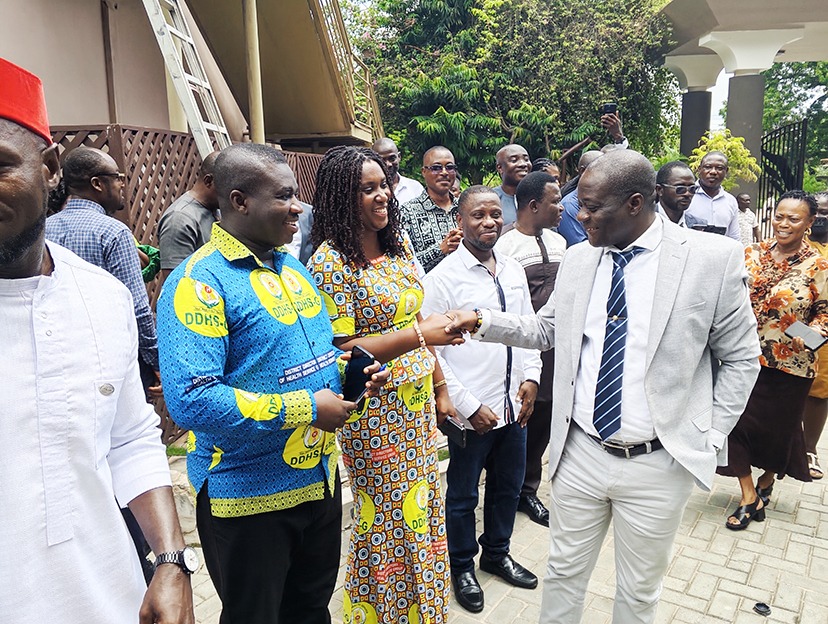
The Government’s flagship Free Primary Health Care Initiative (FPHC) has been officially launched in the Western Region, with authorities describing the programme as a transformative intervention aimed at removing financial barriers that prevent many Ghanaians from accessing essential healthcare services.
The initiative, which forms part of government’s broader agenda to achieve Universal Health Coverage, was launched in Takoradi on Monday by the Western Regional Minister, Joseph Nelson, under the theme: “Contributing to National Efforts in Removing Financial Barriers Towards Achieving Universal Health Coverage.”
The policy seeks to address longstanding challenges within the healthcare system, including financial constraints, inequalities in healthcare access, and gaps in preventive healthcare services.
It is expected to strengthen healthcare delivery at the community level while ensuring that more citizens can access essential services without suffering financial hardship.
Under the first phase of implementation, five districts in the region — Ellembelle, Jomoro, Wassa East, Wassa Amenfi West and Wassa Amenfi Central — have been selected to benefit from the programme.

Nationwide, 150 Districts will participate in the initial rollout, while all 251 Districts across the country are expected to come on board during the second phase by 2027.
The policy will be implemented through existing healthcare structures, including Community-based Health Planning and Services (CHPS) compounds, health centers and polyclinics.
Launching the initiative, Mr. Nelson described primary healthcare as the foundation of every resilient healthcare system and stressed the need for increased investment in community-based healthcare delivery.
According to him, primary healthcare serves as the first point of contact between individuals, families and the health system, making it critical to disease prevention, early diagnosis and treatment.
“Strong primary healthcare systems reduce disease burden, improve maternal and child health outcomes, support early diagnosis and treatment, and contribute significantly to national productivity and well-being,” he said.
Mr. Nelson noted that the Free Primary Health Care Initiative represents a significant shift towards preventive and community-based healthcare, which he said would help ensure that essential healthcare services become more accessible to ordinary citizens, particularly those living in rural and hard-to-reach communities.
He explained that government was determined not only to make healthcare available, but also to ensure that citizens receive care early enough to prevent illnesses from becoming severe and financially burdensome.
The Regional Minister further emphasized that quality healthcare delivery extends beyond infrastructure, medicines and professional competence.
“Healthcare delivery is also about the experience of the patient — how clients are received, guided, attended to and treated with dignity and compassion,” he stated.
He urged healthcare professionals and facility managers across the region to continue demonstrating professionalism, empathy, discipline and responsiveness in their interactions with patients.
Mr. Nelson also highlighted government’s commitment to strengthening healthcare infrastructure, revealing that under the 2025 budget, every Metropolitan, Municipal and District Assembly is expected to construct at least two CHPS compounds using allocations from the District Assemblies Common Fund.
He expressed confidence that the additional facilities would support the effective implementation of the Free Primary Health Care Initiative and improve healthcare access in underserved communities.
The Acting Western Regional Director of the Ghana Health Service (GHS), Dr. David Owusu, described the launch as a significant milestone in the country’s efforts to improve access to healthcare services.
He observed that out-of-pocket healthcare expenditure continues to pose a major challenge for many Ghanaians and often prevents people from seeking medical attention when needed.
“We all know that self-financing for healthcare can serve as a barrier for a good number of our population and as such, any effort to improve citizens’ access to healthcare is greatly welcome,” he said.
Dr. Owusu noted that the initiative comes at a critical period when non-communicable diseases such as hypertension, diabetes and cardiovascular diseases are increasing at an alarming rate globally and within Ghana.
According to him, the programme’s focus on preventive care, early detection and community-level treatment is expected to contribute significantly to reducing morbidity and improving life expectancy among the population.
“The Free Primary Health Care Initiative focuses on preventive care, early detection of chronic diseases and community-level treatment. We can all attest to the importance of early detection in the management of chronic diseases as a sure way of reducing illness and extending the life expectancy of our people,” he stated.
He commended the government, the Ministry of Health and the Ghana Health Service for implementing what he described as a robust policy intervention and called on stakeholders to support the programme with practical ideas and constructive engagement.
Patron of the Ghana Health Service, Georgina Teddy, also underscored the importance of collaboration in ensuring the success of the initiative.
She described the programme as one of government’s flagship interventions and stressed that effective implementation would require active participation from all stakeholders, including healthcare providers, local authorities, traditional leaders and community members.
According to her, healthcare financing remains the responsibility of the National Health Insurance Scheme, while service providers are responsible for ensuring the effective delivery of healthcare services.
She said both components must work together seamlessly if the policy is to achieve its objectives. Teddy urged communities to appreciate that the programme is being rolled out in phases and cautioned against unrealistic expectations during the early stages of implementation.
“Not all facilities within our communities will immediately provide free primary healthcare services. The implementation is being done gradually and it will eventually reach all communities,” she explained.
She further encouraged community leaders and residents to actively engage health authorities whenever challenges arise, noting that local communities often identify problems that policymakers may overlook.
“We need communities to speak up when they identify challenges because those on the ground often see things that people making policy decisions may miss,” she added.
Nana Kwesi Agyemang who chaired the programme welcomed the initiative and described it as a timely intervention that could bring relief to many households struggling with healthcare costs.
He observed that healthcare challenges often become more apparent when families are confronted with serious illness and therefore welcomed government’s efforts to ease the burden on citizens.
Nana Agyemang, however, expressed concern about the possibility of delays in the release of funds needed to support implementation.
He warned that inadequate financing could undermine the programme’s effectiveness and called on authorities to ensure that resources earmarked for the initiative reach healthcare facilities and communities on time.
For more news, join The Chronicle Newspaper channel on WhatsApp: https://whatsapp.com/channel/0029VbBSs55E50UqNPvSOm2z