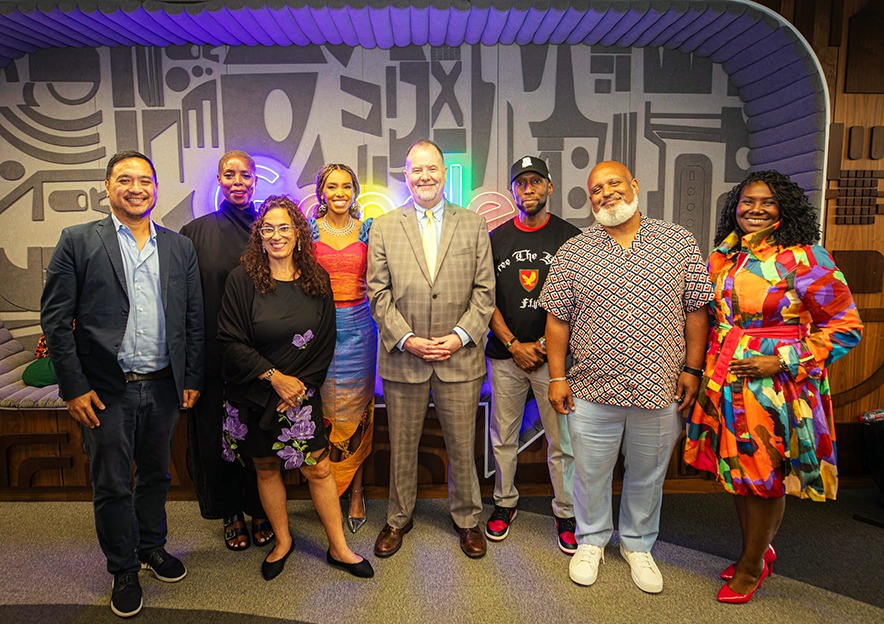
Hollywood filmmakers, Ghanaian creatives and international industry leaders have urged Ghana to strategically invest in its creative sector, saying it can generate thousands of jobs, boost tourism, attract foreign investment and become a key pillar of the economy.
The call was made at a panel on “Content, Tourism and Collaboration” during the Creative Economy Summit in Accra, organised by the U.S. Embassy with support from Google.
The summit brought together filmmakers, producers, actors, entrepreneurs and creatives from Ghana, Nigeria, Kenya and the diaspora to explore partnerships aimed at strengthening Africa’s creative economy and expanding its global cultural reach.
The event was attended by the Chargé d’Affaires of the U.S. Embassy in Ghana, Rolf Olson, and the Director of Diaspora Affairs at the Office of the President, Kofi Okyere-Darko (KOD), alongside industry leaders from Hollywood and Africa.
One of the key sessions was moderated by American producer Sidra Smith, who steered discussions on how investment in talent, storytelling and cultural exchange can deepen tourism, strengthen collaboration and position Ghana more firmly within global creative markets.
Opening the discussion, Sidra Smith challenged the perception that film and television primarily benefit actors, stressing instead that the industry supports a wide and interconnected economic ecosystem.
Hollywood producer and S.W.A.T. creator Aaron Rahsaan Thomas expanded on this point, explaining how a single production can generate significant economic activity and transform local communities.
He noted that long-form television productions employ hundreds of professionals, including camera operators, costume designers, make-up artists, caterers, transport providers, security personnel and location managers.
According to him, each episode of S.W.A.T. cost between US$4 million and US$5 million, with a full season ranging from US$100 million to US$150 million.
“The economic impact goes far beyond the crew. Every department spends money locally, creating a ripple effect across businesses,” he said.
Thomas added that while about 300 crew members are directly employed on a production, an additional 500 to 600 people benefit indirectly through supporting services.
He further explained that film production drives demand for transport, accommodation, catering, equipment rentals and location services, creating opportunities for small and medium-sized enterprises.
To sustain this growth, he emphasised the importance of technical training, citing Hollywood, Nollywood, Bollywood and Hong Kong as examples of industries built on strong skills development systems.
“We have been having this conversation for 20 years in Ghana. It is time to be intentional about investing in content because it builds communities and strengthens the economy,” he said.
Ghana’s Creative Potential and Emerging Infrastructure
Building on the discussion, Hollywood actor and filmmaker Damien Smith described Ghana as one of Africa’s most promising destinations for creative investment.
Having previously worked on productions in the country, he said Ghana has a unique opportunity to develop a globally competitive creative ecosystem from the ground up.
Smith revealed that he has acquired land in Elmina to establish Saint Elsewhere, a creative hub designed to serve filmmakers, writers and artists from Ghana and the wider African diaspora.
The facility, he said, will soon host its first production while also providing hands-on training for cinematographers, grips, sound engineers and other technical professionals.
He stressed that Ghana’s long-term success in the industry will depend on the establishment of structured training institutions capable of producing a skilled workforce for large-scale international productions.
Distribution Gaps and Investment Constraints
Award-winning actress and producer Joselyn Dumas highlighted weak investment structures and limited distribution channels as the most pressing challenges facing Ghana’s film industry.
She noted that while the country is rich in talent, it still lacks a fully developed ecosystem to support creatives from production through to global distribution.
“We have products. We have talented people. We simply need an ecosystem that allows creatives to thrive,” she said.
Dumas explained that although Ghanaian filmmakers consistently produce quality content, many struggle to reach international audiences due to underdeveloped distribution networks.
She therefore called for stronger partnerships with global streaming platforms and international distributors to expand the reach of Ghanaian productions.
“I want my work to be seen everywhere in the world, but that remains very difficult from where I sit,” she added.
Strengthening Distribution for Sustainable Growth
Reinforcing the discussion on market access, producer Paul Garnes argued that the industry’s biggest challenge is not only financing but the absence of sustainable distribution systems.
He explained that investors are more willing to fund productions when there is clear and reliable access to profitable markets.
“The real investment needs to be made in distribution. Once that works, production investment will follow,” he said.
Earlier, summit organiser Dorina Amina Abubakar welcomed participants and expressed appreciation to partners, including Becky Mwikia, for helping bring together leading creative professionals from across Africa and the diaspora.
She expressed optimism that the summit would deepen collaboration and open new pathways for investment, innovation and cultural exchange within the creative sector.
A Call for Coordinated Action
Participants collectively agreed that Ghana possesses the talent, cultural richness and global appeal needed to become a major creative economy hub.
However, they stressed that unlocking this potential will require coordinated and deliberate action—particularly in the areas of investment, technical training, distribution infrastructure and sustained collaboration between government, private investors and international partners.