On September 10, at the 28th China Mining Conference and Exhibition in Tianjin, Ghana’s Minister for Lands and Natural Resources called for deeper cooperation with China on mineral processing, technology transfer, skills development, and infrastructure. The China Minerals Resources Group was in the room. So were the China Petroleum and Chemical Industry Federation and the China Non-Ferrous Metals Industry Association. A door has opened. Negotiations of real strategic weight will now follow.
I do not want to argue about whether or not the partnership is a good idea. It might be. Our minerals are under processed, we capture a thin slice of the value chain, and a technology-transfer relationship with a state that has processing capacity at scale is a legitimate thing to want. That is not the question worth arguing over.
But this one, I think should matter to us: has the Ghanaian state, anywhere in the run-up to this announcement, actually produced the analytical foundation a negotiation of this size requires?
Because the answer decides everything else. Either Ghana walks into these talks as a sovereign state making informed choices, or it walks in as a state whose choices were shaped in advance by someone else’s homework. There is no third door here. You have done the work, or you have not. And if you have not, the negotiation gets shaped by whoever has.
So what does a serious state actually do before a moment like this?
Long before any minister stands at a podium, that state’s intelligence architecture has already built the strategic foundation the eventual decision rests on. What is the mineral base actually worth, not this year, but across twenty- and forty-year horizons, even 100 years under different price and demand scenarios? Which stages of processing carry the real leverage in the global chain? What does Chinese demand for these specific minerals look like against China’s own thirty-year strategic requirements?
What alternatives exist, Japan, Korea, the Gulf, India, Europe and on what terms? And what has China actually delivered, not promised, in comparable deals with Zambia, the DRC, Guinea, Zimbabwe, Indonesia, anywhere? Where did those partnerships work out for the other side, and where did they quietly go wrong and why?
None of this is exotic. It is the baseline. Any state entering a deal at this scale needs assessed answers to these questions sitting on a desk somewhere before the announcement is even made. And the honest thing to say, looking at what is publicly visible, is that Ghana historically to date doesn’t appear to have them.
No published strategic assessment on mineral processing options. No documented priorities framework steering the intelligence machinery toward questions like these. Nothing resembling a standing analytical function inside the Presidency, the Cabinet Office, or the Ministry of Lands, built to produce this kind of work as a matter of course.
Then there’s the next phase, and it’s a different animal entirely.
Once direction is set, the work turns toward the people across the table. A negotiation isn’t conducted with an abstract “China.” It is conducted with named individuals, from named institutions, carrying specific mandates, specific incentives, and specific relationships to their own political leadership plus track records from previous negotiations. These are, in most cases, a matter of record. The Chinese negotiating team Ghana will sit across from in the coming months is knowable. Assessing them individually is not a nice-to-have. It’s the difference between knowing what they’ll actually accept and guessing.
The Chinese side has already done this work on us. The Ministry of State Security has. The embassy’s own analytical function has. So have the state enterprises already operating across West Africa, and the commercial intelligence arms of the institutions that stood at Tianjin. They will know our negotiators’ political constraints, their fiscal pressures, their relationships to the current administration, and where their fall-back positions probably sit.
None of that is sinister; by the way, that is the game. It’s just what serious states do to each other, routinely, without embarrassment. The problem was never that China did the homework. The problem is that we didn’t.
During the negotiation itself, the job shifts again, this time to something closer to real-time.
A properly supported negotiating team gets briefed session by session. What did they ask for today, and why does the specific wording matter? What did they concede, and does that concession tell you something about where their actual limits are? What did they refuse to even discuss; is that a red line, or just an opening position?
There is technical support running alongside all of this too: what does “technology transfer” actually cash out to on the ground, based on what similar language has produced elsewhere? What are the royalty and tax structures worth over twenty and forty years, not just on paper this quarter?
This isn’t a hypothetical description of best practice. It is what the British do. The Americans, the French, the Japanese, the Koreans, the Singaporeans, all of them run a standing analytical apparatus that briefs the negotiating team daily, tests its assumptions, models the alternatives, and helps it actually read the room. That apparatus is not decoration. It is the thing that separates a negotiation from a signing ceremony dressed up as one.
And then, after the ink dries, this is where most states without the machinery quietly lose whatever they thought they had won.
A signed agreement is not the end of the relationship. It is the start of a new phase of it, one in which the other side will interpret, extend, and probe every ambiguity the text left open, accumulating leverage the agreement never explicitly granted them. So the intelligence work has to keep going long after the ministers have moved on to the next announcement.
Is the technology transfer actually happening, or is it being slow-walked through contractual manoeuvring? Are the skills programmes producing anything measurable, or are they theatre? All of it needs to feed back to the political principals on a steady rhythm, so that when renewal or expansion comes up, the country is negotiating from knowledge rather than from years of accumulated not-knowing.
Pre-conceptualisation. Counterparty assessment. Negotiation support. Implementation monitoring. Four phases, each requiring its own capabilities, its own institutional rhythm, its own relationship between the analysts and the people they serve. None of it has been visible in Ghana’s current setup. What is visible instead: a minister announcing a partnership at an investment fair, and negotiations that will now proceed on sector-level technical advice, cabinet-level political guidance, and whatever reading officials manage to squeeze in between meetings.
That is not intelligence support. That is its absence, dressed in the language of engagement. And the cost of that absence will show up, quite specifically, in the gap between the terms Ghana signs and the terms Ghana could have won.
This is the deeper thing this whole episode exposes, and it is not really about China at all. Chinese strategic thinking runs on twenty-, forty-, sometimes hundred-year horizons, not because anyone there is unusually patient, but because the institutions are built to reward that kind of thinking.
Ghanaian strategic thinking, by contrast, tends to run on the horizon of the electoral cycle, or the length of a ministerial appointment. That is an institutional feature too. Good intentions do not close that gap. Only the machinery does; the kind that lets a state think in horizons long enough to actually see what its counterparties are pursuing.
The risk in the coming negotiations was never that we’ll be tricked. The Chinese team will behave professionally. Their offers will look reasonable on the surface. They will sign something that reflects, more or less, what was discussed in the room. The real risk is quieter than that: the offers we respond to, the terms we weigh, the choices we believe we’re freely making, all of it will have been shaped in advance by analysis only one side bothered to do. We’ll feel sovereign the whole time. We’ll experience the room as a conversation between equals. And it may take years before we understand what we actually signed.
That is the delusion I’ve been circling in this series, what happens to a state that enters engagements like this without a forward-looking analytic picture of its own. It is not a question about China’s intentions and capabilities. It is a question about whether Ghana, right now, at this specific moment, starts building, recruiting and training for the architecture that would let it walk into this negotiation and every one after it with clarity instead of hope.
The window is short. Negotiations that haven’t started yet can still be preceded by the analysis they need. Once they’ve started, that foundation has to be built alongside the process, at worse quality and higher cost. Once they’ve concluded, it’s too late to shape anything. All that will be left is watching the consequences unfold.
There is a serious country to be built on the back of moments like this one. The Ghana-China mineral processing partnership could be part of that story, or part of the story of what the country failed to become. Which one depends on whether the analytical work gets done by whom, on what rhythm, to what standard. The choice is still available. It won’t stay that way.
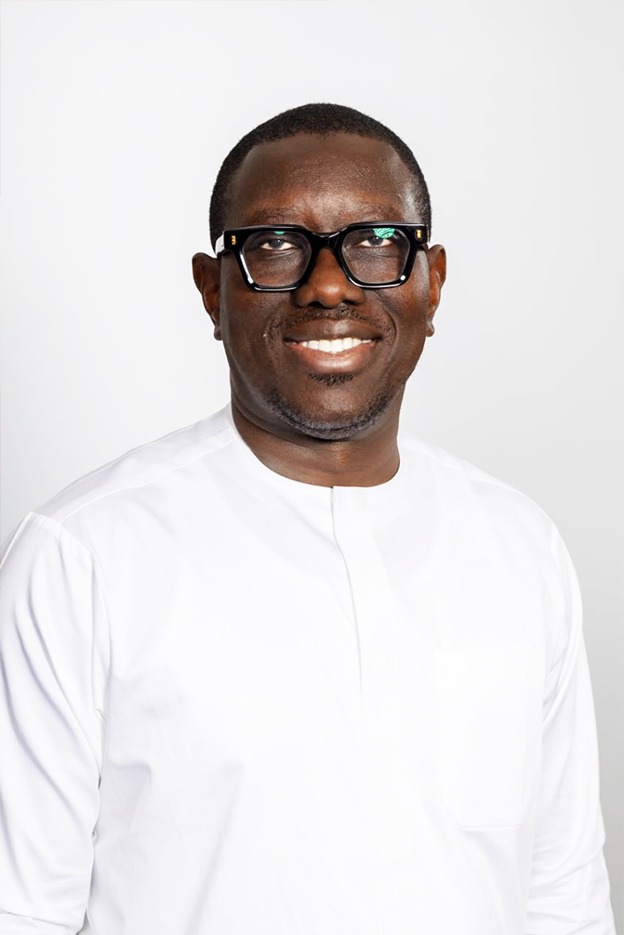
By Nana Attobrah Quaicoe
Nana Attobrah Quaicoe is an Intelligence and National Security Analyst and former Director General of the Bureau of National Intelligence (2022–2025). He writes on national security, intelligence sector reform, risk and integrity assessment, and institutional governance in the Ghanaian context.