For years, the people of Bandahu, a remote farming community at the far end of the Prestea Huni-Valley Municipality have lived with the burden of isolation. Poor road access, limited social amenities and the complete absence of mobile network connectivity have made life difficult for residents, especially school children and teachers.
At Bandahu, receiving quality education has often depended not only on the willingness of children to learn, but also on whether teachers were prepared to accept postings to such a deprived area.
Many teachers reportedly declined postings to the community because they could not communicate with their families or access basic conveniences enjoyed in other towns.
For parents, the dream of seeing their children study in a conducive environment remained distant.
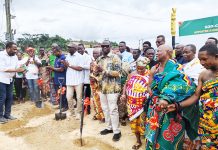
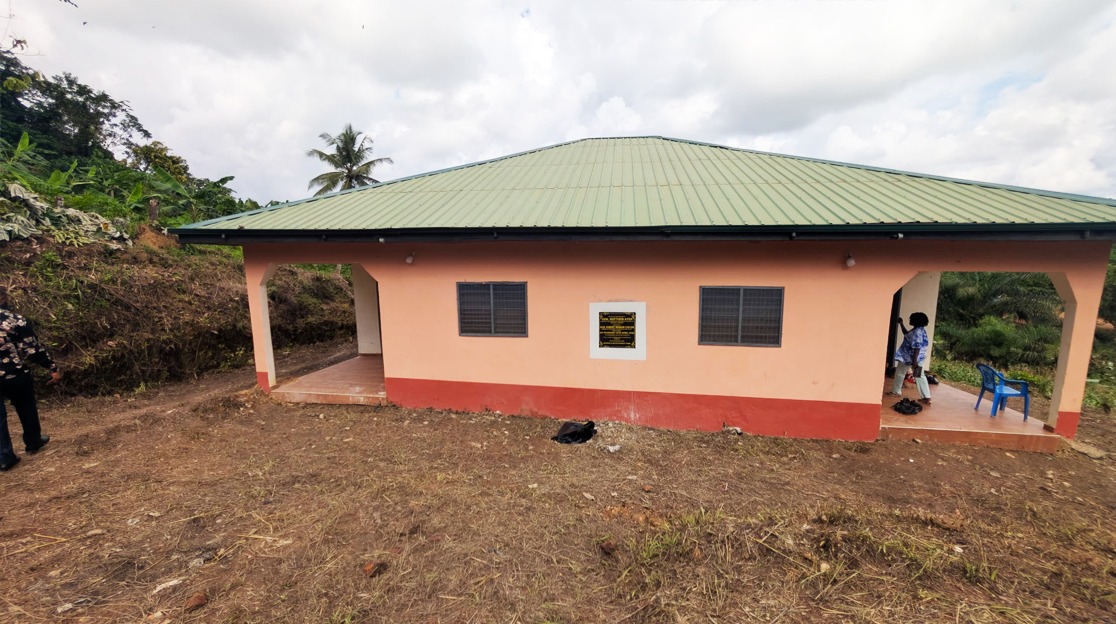
However, hope arrived at Bandahu this week as the Prestea Huni-Valley Municipal Assembly officially commissioned a newly completed kindergarten block and teachers’ quarters for the community.
The project, funded through the Assembly’s Internally Generated Fund (IGF), is expected to improve early childhood education and help attract and retain teachers in the area.
The commissioning ceremony brought together traditional leaders, residents, Assembly officials and political leaders, with many describing the facility as a turning point in the educational development of the community.
Speaking at the ceremony, the Municipal Chief Executive (MCE) for Prestea Huni-Valley, Matthew Ayeh, acknowledged the hardships facing the people of Bandahu and described the completion of the project as part of efforts to bridge development gaps in deprived communities.
According to him, the project was inherited at about 40 percent completion from the previous administration, but was completed under the directive of the government to ensure that abandoned and legacy projects are delivered to benefit communities.
“The commissioning of the KG block and teachers’ quarters is good news for the people of Bandahu. Bandahu is disadvantaged because of its location, but government is committed to ensuring that no community is left behind,” he said.
Mr. Ayeh noted that the Assembly used its own Internally Generated Funds (IGF) to complete the facility, emphasizing that the investment demonstrates the Assembly’s commitment to education and community development.
He urged residents to take good care of the infrastructure and maintain the facility properly to encourage government and development partners to undertake more projects in the area.
“Take it as your own property and maintain it well. Whether additional projects will come to this community will depend on how this facility is maintained,” he advised the people.
The MCE also revealed that efforts are underway to address one of the community’s biggest challenges, the absence of mobile network connectivity.
According to him, the Member of Parliament (MP) for the area, Robert Wisdom Cudjoe, was working to ensure that telecommunications network is extended to Bandahu as part of the next phase of development interventions.
For many residents, access to mobile network would not only improve communication, but also reduce the feeling of isolation that has affected the community for years.
The Member of Parliament commended the Assembly for what he described as strong teamwork and collaboration in bringing development projects to the people.
He stressed the need for unity among political leaders and local authorities in addressing the needs of deprived communities, saying development should not be politicised when it concerns the welfare of ordinary citizens.
The MP used the occasion to donate books to the learners.
In a light-hearted remark that drew laughter from the gathering, the MCE observed that the MP appeared to be “in competition” with the Assembly because of the number of development projects being rolled out across the municipality.
Beyond the speeches from political leaders, the emotions of traditional authorities and residents reflected the significance of the project to the community.
The Tufuhene of Mbease-Nsuta, Nana Kojo Baah, appealed passionately to parents to make good use of the new school facility.
He said the community did not want a situation where parents would refuse to enroll their children in the school, after the facility had been handed over. “So parents should release their children to enter the block,” he urged.
His appeal painted a common challenge in some rural communities where poverty, farming activities and social conditions sometimes affect school enrollment among young children.
For residents of Bandahu, however, the new facility represents more than just a school block and accommodation for teachers. It symbolises recognition, hope and inclusion.
Parents at the event expressed optimism that the presence of teachers’ quarters would encourage teachers to stay longer in the community and help improve academic performance among pupils.
Others believe the project may finally open the door for more development initiatives, including improved roads, electricity expansion and mobile network access.
For more news, join The Chronicle Newspaper channel on WhatsApp: https://whatsapp.com/channel/0029VbBSs55E50UqNPvSOm2z