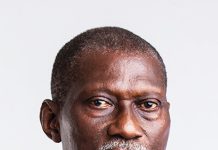
“The three characteristics of ignorance are vanity, pride and arrogance.” – Samuel Butler
Controversial — this would be an apt description of any objective political analyst would give for Alexander Kwamina Afenyo-Markin, the 48-year-old MP for the Effutu Constituency since 2016 when he defeated NDC’s parliamentary candidate Mike Allen Hammah.
Son of 80-year-old Moses Apetorgbor, Afenyo-Kwofie of Keta, a retired agricultural technician. After his Senior High School at St. Augustine’s College in 1977, Afenyo went to University of Cape Coast, but left the place at Level 300 and was recruited by Ghana Post, leading to the establishment of his own courier service, Excel Courier Ghana Limited. He studied law at the University of Buckingham and later at the Ghana School of Law, receiving his Barrister-at-Law degree (2007–2009).
He was an Associate at Dehenya Chambers and later became a Partner managing partner at Afenyo-Markin Okutu and Associates.
In 2012, Afenyo-Markin won the ticket of Member of Parliament for Efutu becoming Chairman of the Board of Ghana Water Company Limited (GWCL) in 2017.
No doubt, Afenyo-Markin was one of the cheer-leaders of the NPP who has gradually reduced the high-calibre NPP into a laughing-stock by his deeds and his non-deeds. How can we explain Akufo-Addo’s gargantuan-sized government; how can we justify the corruption of the Akufo-Addo regime, how can we justify the unnecessary waste of public funds in the deep hole for the building of the National Cathedral of Ghana – $97 million, with $39 million owed to the contractor….
Other notable politicians of the United Party heritage had occupied the office occupied now by Afenyo-Markin (Minority Leader), but none of them was as controversial as Afenyo-Markin. J. H. Mensah, Paapa Owusu-Ankomah, Osei Kyei-Mensah-Bonsu
Afenyo-Markin questioned the qualification of the judge who tried Kwame Baffoe (Abronye DC), throwing up words like “unethical” and “unprofessional” at the circuit court judge’s refusal to grant Abronye bail. The Ghana Bar Association (GBA) stepped in and stated that “judges and grievances belong to appeal courts” and not public briefings.
Readers may recall the controversial clash of Afenyo-Markin at the ECOWAS Parliament sitting despite a parliamentary resolution excluding him from Ghana’s delegation. Most of the parliamentary boycotts by the Minority can be traced to Afenyo’s aggressive approach. What happened on Thursday, May 29, 2025, he led the Minority MPs to the EOCO office to stage a sit-in protest on the road, blocking traffic outside the EOCO headquarters in sympathy with the arrest and detention of Chairman Wontumi. This was an unwarranted show of solidarity when the MPs sought “the immediate release of Wontumi.”
After Justice Gertrude Torkornoo was removed, Afenyo-Markin led a group of MPs to do a demonstration at which Afenyo-Markin stated: “… it was a ‘grand conspiracy’; when we come to power in 2028, Justice Gertrude Torkornoo will be reinstated as C. J.
Discerning people are asking, what is the evidence to suggest that NPP is coming back 2028? And taunt the NPP to repeat the reckless management of the economy, and allowing Finance Minister (Ofori Atta) to enjoy his booty in the United States of America? And the other Justices of the Supreme Court whose ages are approaching retirement will go home C.J.-less?”
Politicians of the make of Afenyo-Markin are called “demagogues” or a “rabble rouser.” “Demagogue” from Ancient Greek: demos – people; agogos – guiding, and is defined as a political leader in a democracy who gains popularity through oratory to whip up passions of the crowds, appealing to emotions, exaggerating dangers, using fear for emotional effect — thereby overturning established norms of political conduct.
Reinhard Luthin defines “demagogue” as “a politician skilled in oratory, flattery and invective, evasive in discussing vital issues, promising everything to everybody, appealing to passions rather than the reason of the public and arousing racial, religious, and class prejudices, a man whose lust for power prevents the principle leads him to seek to become a master of the masses … a ‘man of the people’ …”
In short, a demagogue’s approach appeals to the masses, the down-trodden, “without thought for decency or decorum.”
James Fenimore Cooper in 1838 listed four characteristics of a demagogue; first, they present themselves as men or women of the common people, opposed to the elites; second, their politics depends on a visceral (automatic, emotional) connection with the people, exceeding ordinary political popularity; third, they manipulate this connection, and the raging popularity it affords, for their own benefit and ambition; fourth, they threaten outright break of established rules of conduct, institutions and even the law. Hitler of Germany blamed the Jews of making Germany lose the First World War, and got support for annihilation of 6 million Jews.
In Africa, we now have politicians whose style approaches “demagoguery”.
The political demeanour of Julius Malema, leader of the Economic Freedom Fighters (EFF) tends to fit into this characterization Malema would say. “They wear suits, that’s why they are lazy, you can’t build an RDP house with a tie; you don’t have to be educated to be a president; The farms you poor blacks live in will be yours for free”
The last display of extreme arrogance, hubris, vainglory, superciliousness and haughtiness by Afenyo-Markin was during the vetting of the Supreme Court judges by Parliament’s Appointments Committee. The affected judges were: Justice Sophia Bernasko-Essah, Justice Edward Amoako Asante and private legal practitioner Anthony Forson Jr.
The Minority members of the Vetting Committee led by Afenyo-Markin boycotted the vetting, arguing that there was no vacancy on the Supreme Court Bench to warrant the urgency attached to the appointments, insisting that the nominees are being considered to add to the existing complement of Justices rather than fill vacant position.”
Bernard Ahiafor, Chairman of the Appointments Committee, dismissed the minority’s objection as “being hollow and baseless.” He noted: “If you are aggrieved by the decision of the House, the material available for you to reverse that decision is contained in our own Standing Orders. … I will not preside over this committee and purport to vary the order and/or decision taken at the plenary by the entire House…”
“You are my study mate … (but) I was called [to the Bar] before you.” Now you guys are taking this majority thing too far… Majority Leader, stay out of this matter…” He claims “it’s a matter of maintaining your own principles… don’t stray from your principles and don’t let others control the narrative…” “Wh-a-a-a-t! Parliament playing to the gallery? No wonder, Kwesi Pratt will react.”
“We are spending precious time on Afenyo-Markin’s display of concrete illiteracy … with such people leading the party it will sink.” A die-hard NPP, Alhaji at Madina, asks: “With Afenyo-Markin’s assertion of brilliance at law, does that not create a closure of access to Parliament to the illiterates…? Should all disagreements come into the public domain?
Does Afenyo-Markin know that he was sent to Parliament to represent people and not himself? Listen to the arguments between himself and Sammy Gyamfi over GoldBod. We would have wished to hear sound arguments from both sides; whether GoldBod is performing better than PMMC and the Gold for oil under AAkufo-Addo; whether the analysis by Afenyo-Markin is sounder than Sammy Gyamfi’s , whether or not Sammy Gyamfi’s tag of “extortionist” on Afenyo-Markin is justifiable by available evidence; whether or not the song by Asafo Companies One/Two led by Afenyo-Markin “GoldBod aton gold abo ka” was meant to humiliate Sammy Gyamfi; whether or not Sammy Gyamfi’s expensive display at his father-in-law’s funeral is evidence of “stealing” from GoldBod … whether or not GoldBod’s performance follows the law (section 18 of Goldbod Act). Yes, we are interested in transparency and accountability… the audited book, the IMF Report, how does Afenyo-Markin react to Sammy Gyamfi’s assertion “not to take moral lessons from the brothel”.
Africanus Owusu-Ansah